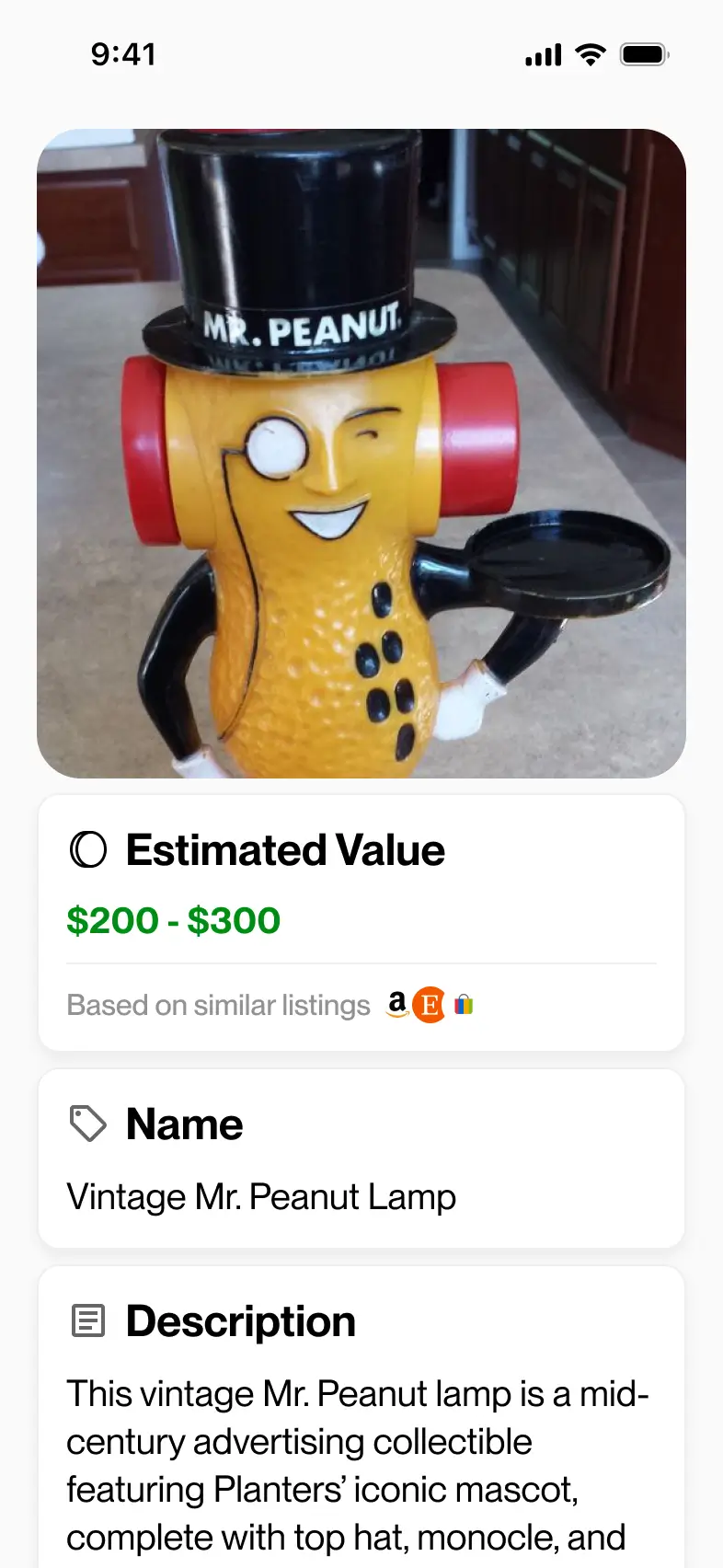
That Dusty Pitcher Might Be a Masterpiece—Identify Your Antique Glassware in Seconds

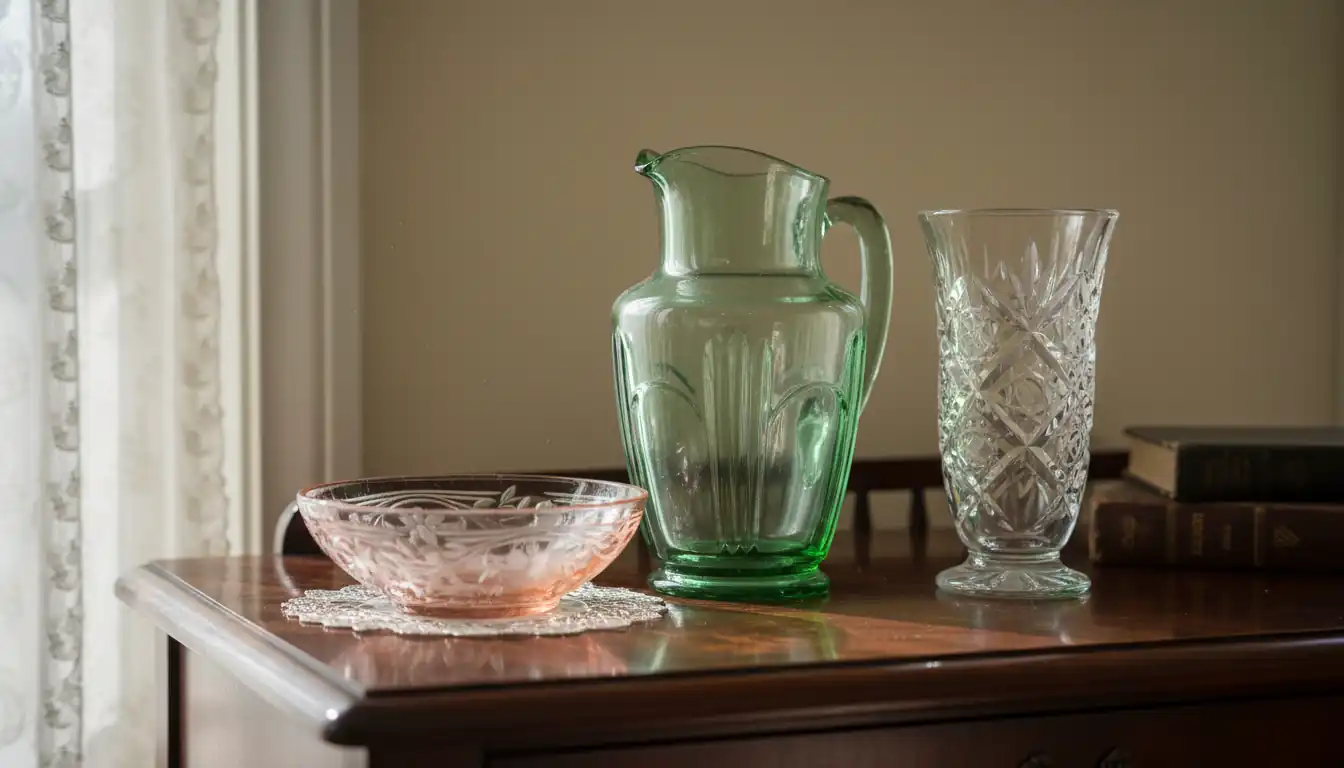
You might be looking at a piece of history every time you reach for that heavy, green-tinted pitcher on the top shelf of your pantry. Antique glassware is one of the most common family heirlooms, yet it remains one of the most misunderstood categories of collectibles. For many, these items are just "old glass," but for those who know what to look for, they are windows into the craftsmanship of the 19th and 20th centuries.
Identifying these pieces isn't just about reading a maker's mark on the bottom—in fact, many of the most valuable pieces have no marks at all. It requires a blend of sensory observation and historical context. You have to learn how to read the glass itself, feeling for the texture of a mold line or holding a vase up to the light to see the subtle glow of hidden minerals.
By the time you finish reading this, you will have the skills to distinguish a mass-produced 1950s reproduction from a hand-blown Victorian masterpiece. You’ll understand the chemistry that gives certain glass its haunting glow and the manufacturing "mistakes" that actually prove an item’s age. Most importantly, you’ll discover how modern technology can bridge the gap between a curious hunch and a professional appraisal in a matter of seconds.
Visual Clues Hidden in Plain Sight
Before you start searching through digital archives or flipping through price guides, you need to look at the object with a critical eye. Glass tells the story of its own creation through tiny physical imperfections. When you understand how glass was made at different points in history, these imperfections become your most reliable evidence.
Pontil Marks and Mold Lines
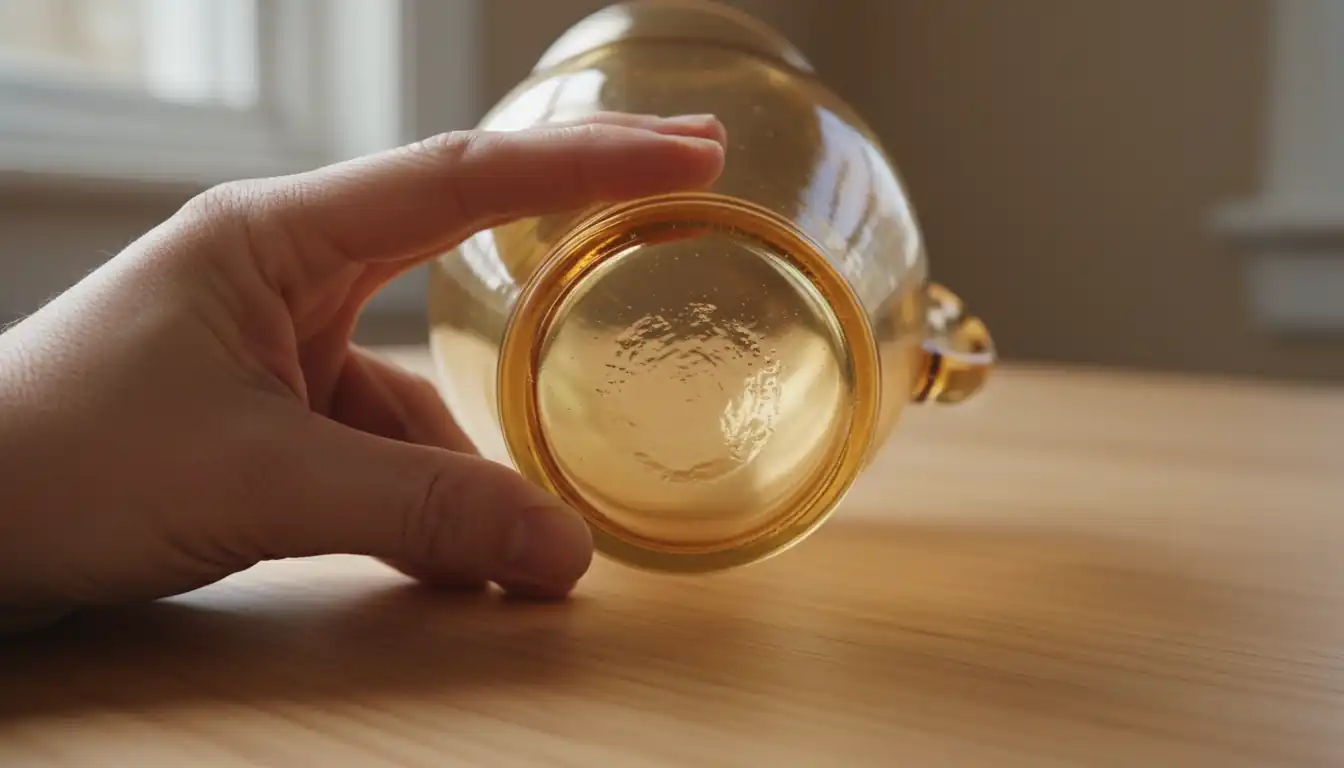
The most important place to start your investigation is the base of the item. If the glass was hand-blown, it had to be attached to a metal rod called a pontil (or punty) during the shaping process. When the glassmaker finished the piece, they would break it off the rod, leaving a scar.
- Snapped Pontil: This looks like a rough, jagged chip in the center of the base. It feels sharp to the touch and indicates the piece was likely made before the mid-19th century or by a traditional artisan.
- Ground Pontil: To make high-end glassware sit flat on a table, makers would often grind down the rough scar. This leaves a smooth, circular indentation that looks like a shallow thumbprint. It’s a hallmark of quality craftsmanship.
- The Absence of a Mark: If the base is perfectly smooth with no indentation or scar, the piece was likely made using a mold or a "snap case" tool that gripped the glass without leaving a mark.
Mold lines offer a different kind of clue. These are thin, raised ridges that run vertically up the sides of a piece. They occur where the two halves of a metal mold met during production. If you see mold lines, the piece was pressed or blown into a mold, which generally points to mass production from the Industrial Revolution onward. Hand-blown glass will be seamless, showing a perfectly smooth surface all the way around.
Color Profiles and UV Reactions
Color is often the first thing that draws us to a piece of antique glass, but it’s more than just an aesthetic choice. Certain colors were only possible during specific eras due to the availability of minerals and the chemical knowledge of the time.
| Glass Type | Identifying Color | Chemical Secret |
|---|---|---|
| Vaseline Glass | Pale yellow or lime green | Contains small amounts of Uranium |
| Cranberry Glass | Deep, translucent pink/red | Created by adding 24k gold chloride |
| Cobalt Glass | Intense, deep blue | Created using cobalt oxide |
| Amberina | Gradient from red to yellow | Heat-sensitive gold-infused glass |
One of the most exciting ways to identify glass is by using a UV light (blacklight). If you have a piece of "Vaseline glass," it will glow a bright, neon green under UV light because of its uranium content. This was a popular technique from the 1880s until the 1940s. Similarly, some older "colorless" glass contains manganese, which will glow a faint peach or yellow under a blacklight. These chemical reactions are nearly impossible to fake and provide an immediate window into the era of production.
Iconic Eras of Collectible Glass
Once you’ve noted the physical characteristics, you can begin to place your item into a historical context. Glassware design followed the broader art movements of the day, moving from the ornate and delicate to the bold and geometric.
Depression Glass and Anchor Hocking
During the Great Depression, American families needed a bit of brightness in their homes, but they couldn't afford luxury items. Manufacturers like Anchor Hocking, Federal Glass, and Hazel-Atlas stepped in to produce "Depression Glass." This was inexpensive, machine-made glass that was often given away for free in boxes of oatmeal or at movie theaters.
You can identify Depression Glass by its distinct pastel colors—think pale pink, light green, amber, and "Ritz" blue. The patterns are usually molded into the glass rather than etched. Anchor Hocking, for example, is famous for the "Moonstone" pattern (white opalescent edges) and the "Bubble" pattern. While these pieces were cheap at the time, certain rare patterns and colors are now highly sought after by collectors. Look for "straw marks" (tiny cooling lines) and small air bubbles, which are common in this type of mass-produced glass.
Art Deco and Bohemian Masterpieces
If Depression Glass represents the practical side of history, Art Deco and Bohemian glass represent the height of artistic expression. Art Deco glass, popular in the 1920s and 30s, is defined by its symmetry and bold, geometric shapes. You won't find many floral patterns here; instead, look for stepped bases, zig-zags, and stylized figures.
Bohemian glass, originating from what is now the Czech Republic, is a different beast entirely. It is world-renowned for its "cut-to-clear" technique. This involves taking a piece of glass with two layers—a colored outer layer and a clear inner layer—and cutting through the color to create intricate patterns.
Bohemian glass is often heavier than it looks because of its high lead content, which gives it a brilliant sparkle and a clear "ring" when tapped gently with a fingernail.
Czech glassmakers were also masters of "Art Glass," creating vases and bowls with swirling colors, iridescent finishes, and applied glass decorations like "rigaree" (crimped ribbons of glass). If your piece looks like a miniature explosion of color and texture, there’s a high probability it has Bohemian roots.
Instant Identification Through Advanced AI
For decades, identifying a piece of glass meant spending hours in a library, leafing through heavy reference books filled with black-and-white photos of patterns. Even then, you might misidentify a "Mayfair" pattern for a "Federal" pattern because the differences are so subtle. The margin for error was high, and the process was exhausting.
This is where technology has finally caught up with the needs of the modern collector. Instead of guessing or relying on generic search engines that often get confused by reflections and transparency, you can use specialized tools designed for the task. The Relic app is a prime example of this shift. It uses advanced AI specifically trained on thousands of antique patterns, marks, and manufacturing styles to provide an instant identification.
Beyond Reverse Image Search
Generic image search tools often fail with glassware because glass is reflective and translucent. A standard search engine might see a green bowl and show you every green bowl ever sold on the internet. Relic works differently. It analyzes the specific geometry of the pattern, the thickness of the glass, and the unique "visual signature" of the era to narrow down exactly what you’re holding.
Getting Professional Appraisals via Relic
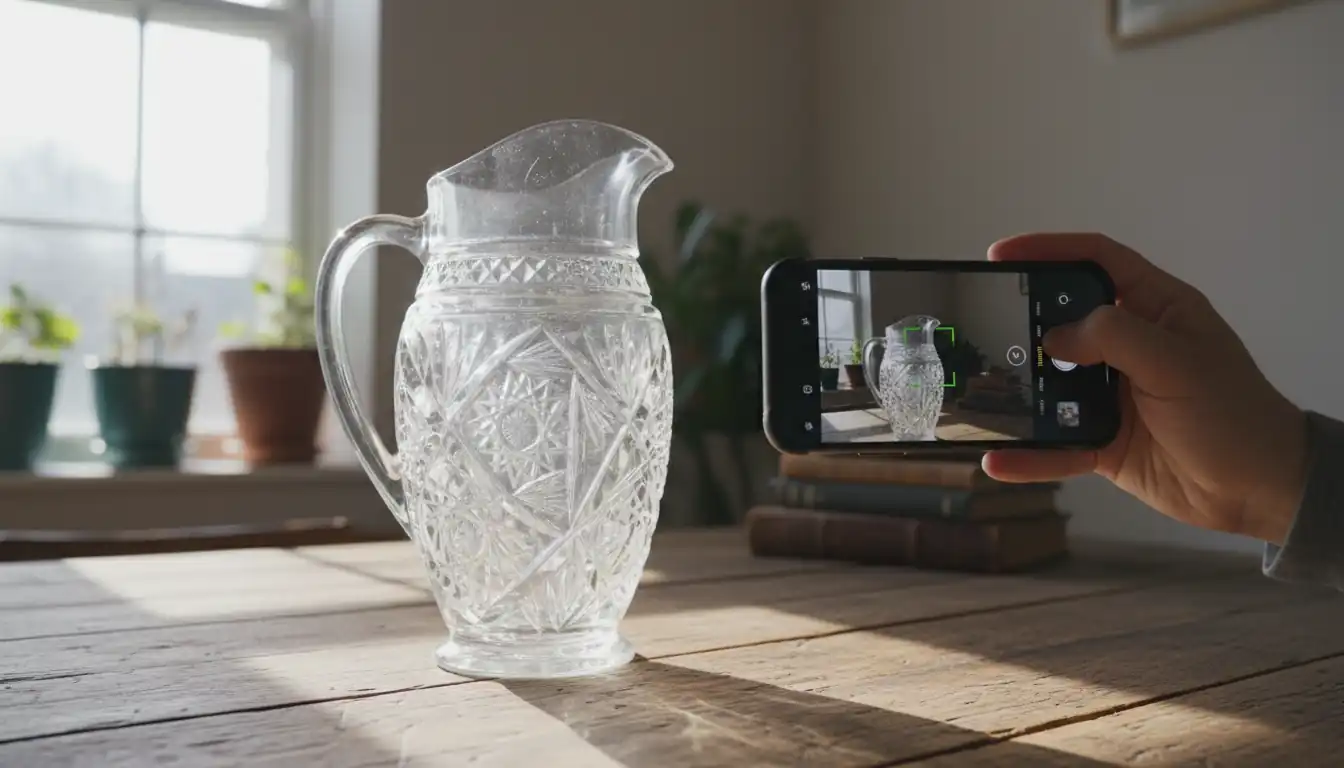
The journey doesn't stop at just knowing the name of the pattern. When you use Relic, you aren't just getting a label; you're getting a comprehensive history and a real-world appraisal. You simply take a clear photo of your item—ideally from a few angles to capture the base and the rim—and upload it.
The AI processes the image to provide:
- Origin and Manufacturer: Who made it and where.
- Historical Context: When it was produced and what movement it belongs to.
- Market Value: A current appraisal based on recent sales data and rarity.
For a collector or someone who just inherited a box of "old stuff," this turns a weekend-long research project into a five-second scan. It’s particularly useful for professionals like estate executors or antique dealers who need to process large volumes of items quickly without sacrificing accuracy.
Determining Authenticity and Market Value
Once you know what your item is, the next question is always: "Is it real, and what is it worth?" The market for antique glass is flooded with reproductions. In the 1970s and 90s, many companies began remaking popular Depression-era patterns. While these are beautiful, they don't hold the same value as the originals.
Spotting Modern Reproductions
The secret to spotting a fake is often in the "wear." A piece of glass that is 100 years old should show its age in specific ways that a factory can't easily replicate.
- Base Wear: Look at the bottom of the piece. A genuine antique will have "shelf wear"—tiny, random scratches caused by being moved across tables and cupboards for decades. If the base is perfectly pristine, be suspicious.
- Color Consistency: Modern reproductions often have colors that are "too perfect" or slightly off-shade. For example, a reproduction of a pink Depression Glass plate might have a slightly more orange tint than the original.
- Weight and Thickness: Reproductions are often heavier and thicker than the originals because modern manufacturing uses different cooling processes and glass formulas.
Factors Influencing Current Market Prices
Value is determined by a combination of rarity, condition, and current demand. You might have a genuine 19th-century vase, but if it suffers from "sick glass," its value drops significantly.
- Sick Glass: This is a cloudy, milky appearance that doesn't wash off. It’s caused by a chemical reaction where the minerals in the glass begin to leach out due to prolonged exposure to moisture. It is generally considered permanent and is a major detractor for collectors.
- Rarity of Pattern: In Depression Glass, some patterns were only made for a single year. These "short runs" are the holy grail for collectors.
- Completeness: For sets, having the original lid for a butter dish or the matching saucers for teacups can exponentially increase the value compared to individual pieces.
| Factor | Impact on Value | Why? |
|---|---|---|
| Chips/Cracks | High Decrease | Glass cannot be "repaired" without losing its integrity. |
| Rare Color | High Increase | Some patterns were made in common green but rare red. |
| Provenance | Moderate Increase | Knowing the item came from a famous estate adds "story value." |
| Original Labels | High Increase | Paper labels from the manufacturer are rare and prove authenticity. |
Professional Care for Fragile Treasures
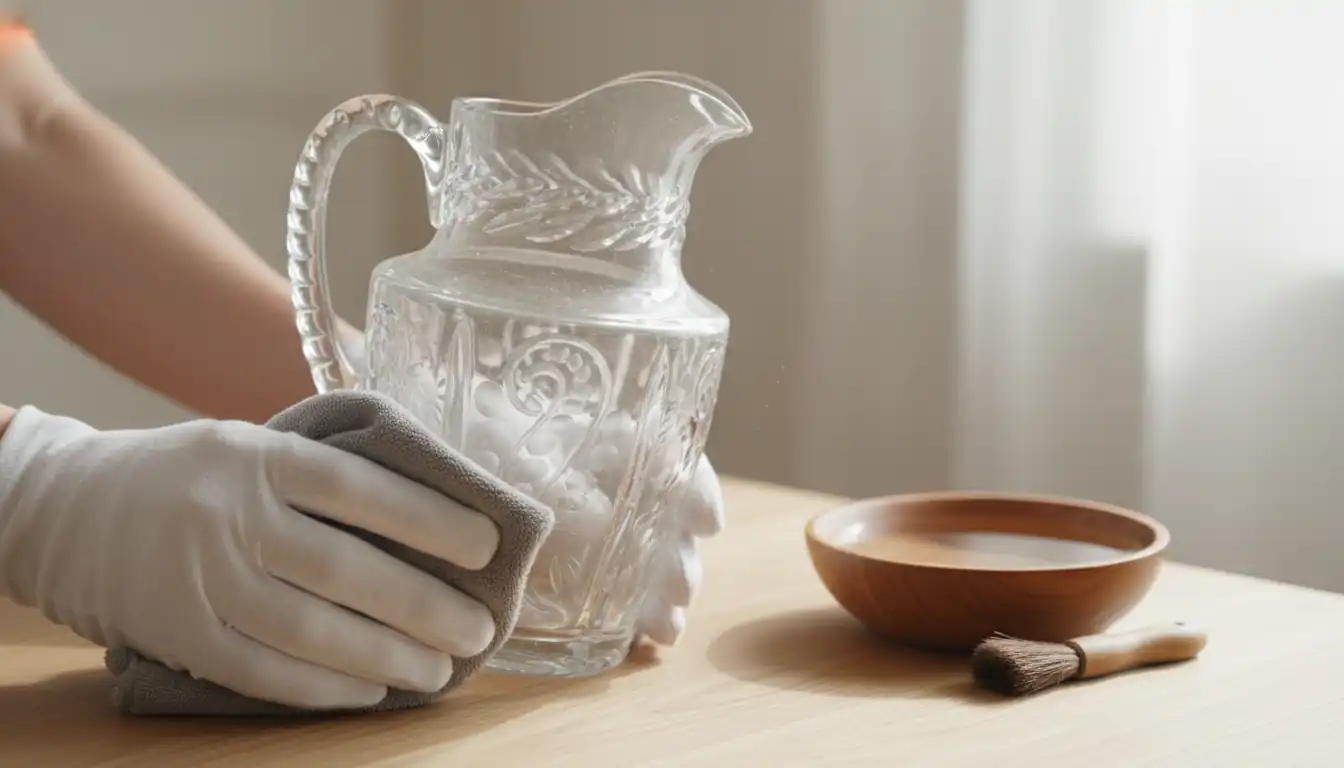
If you’ve discovered that your dusty pitcher is actually a valuable piece of Art Deco history, you need to treat it with the respect it deserves. Antique glass is more chemically unstable than modern glass and requires specific care to ensure it lasts another century.
Cleaning Techniques for Antique Surfaces
Never, under any circumstances, put antique glassware in a dishwasher. The high heat and abrasive detergents can etch the surface, leading to the "sick glass" cloudiness mentioned earlier.
- The Gentle Soak: Use a plastic basin (to prevent chipping if you drop the item) filled with lukewarm water and a few drops of mild, pH-neutral dish soap.
- Soft Touch: Use a soft microfiber cloth or a natural sponge. For intricate patterns or cut glass, a very soft-bristled toothbrush can help remove dust from crevices.
- Gold Leaf Care: If your glass has gold or silver leaf (common in Bohemian glass), do not scrub those areas. Use only cool water and your fingertips to gently clean the gilded sections, as the metal is often just "fired on" and can flake off easily.
- Drying: Air dry your items on a thick, soft towel. Avoid using paper towels, which can be abrasive.
Safe Display and Storage Environments
Where you keep your glass is just as important as how you clean it. Glass is sensitive to temperature fluctuations. Storing it in an uninsulated attic or a damp basement can cause "thermal shock," leading to spontaneous cracks.
- Avoid Direct Sunlight: While it’s tempting to put colored glass in a window to see it glow, prolonged exposure to UV rays can actually change the chemical composition of some antique glass, causing it to darken or change hue over time.
- Shelf Wear Prevention: If you are stacking plates, place a piece of felt or a soft paper napkin between each one. This prevents the foot of the top plate from scratching the surface of the one beneath it.
- Crowding: Leave space between items on a shelf. "Glass disease" can sometimes spread if "sick glass" is in direct contact with healthy glass in a humid environment, and it also prevents accidental chips when you're reaching for a piece.
Conclusion
That "dusty pitcher" in your cupboard might be more than just a vessel for water; it could be a masterpiece of 1920s design or a rare survivor of the Great Depression. By learning to identify pontil marks, recognizing the glow of uranium glass, and understanding the hallmarks of iconic eras like the Art Deco movement, you transform from a casual observer into a steward of history.
Identifying antiques no longer requires a degree in art history or a library of reference books. With your new knowledge of visual clues and the assistance of tools like the Relic app, you can uncover the origin and value of your treasures in an instant.
Take a look around your home today. Grab a flashlight, check for those mold lines, and perhaps download Relic to see what stories your glassware is waiting to tell. You might just find that the most valuable thing you own has been hiding in plain sight all along.
Identify antiques instantly
Point your camera at any antique, collectible, or vintage item. Get valuations, history, and market insights in seconds.
Download for iPhone