That Dusty Plate Could Be Worth a Fortune—Here’s How to Identify It Instantly

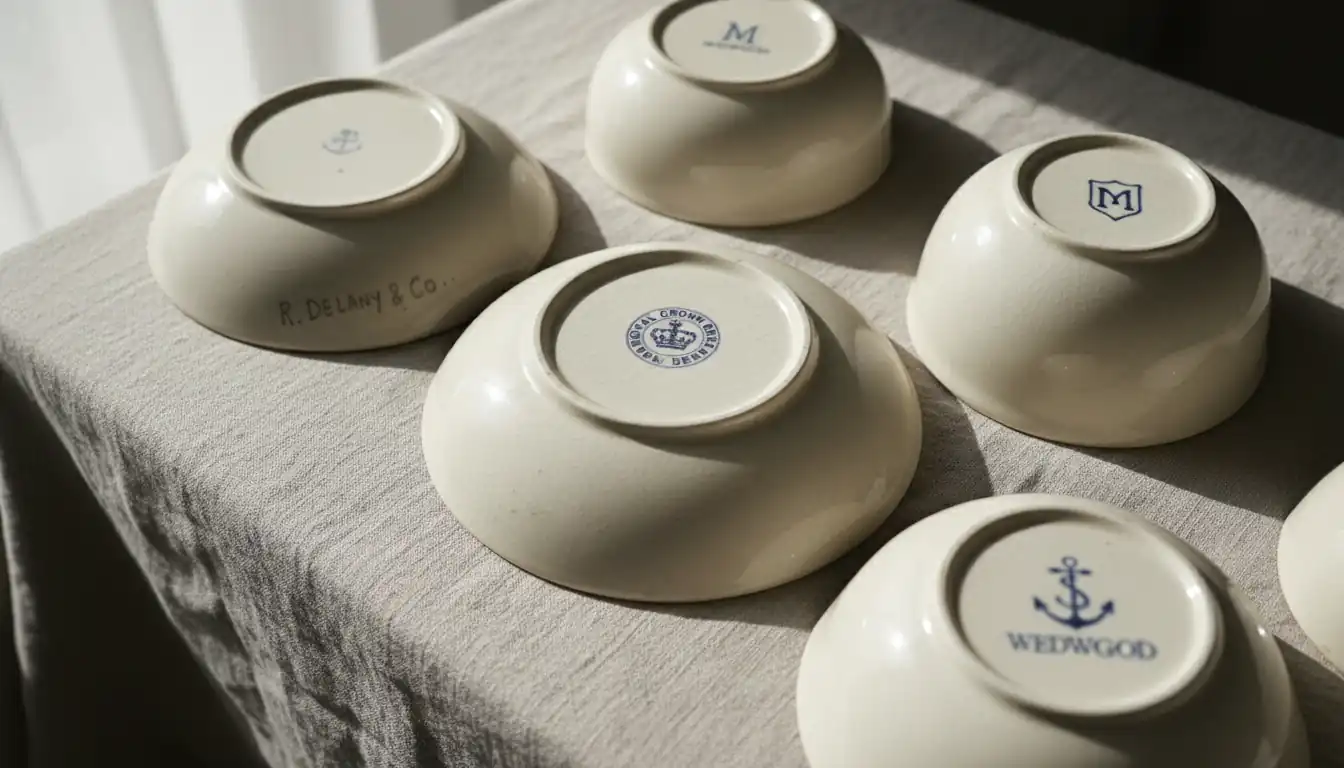
You are standing in a crowded thrift store, holding a heavy, cream-colored plate with an intricate cobalt blue design. You flip it over, hoping to find a clear signature, but all you see is a faded, blurry smudge that might be a crown—or perhaps a lion. Is this a rare piece of 19th-century English ironstone worth hundreds of dollars, or a mass-produced souvenir from the 1970s?
The difference between a treasure and a trinket often comes down to a few millimeters of ink or impressed clay. For decades, identifying these marks was a skill reserved for seasoned dealers who spent years memorizing encyclopedias of ceramic history. For everyone else, it was a guessing game that usually ended in frustration or a missed opportunity.
In this guide, you will learn how to move past the guesswork. We will explore the traditional hurdles of manual identification, the best digital archives currently available, and the technical "language" of pottery marks. Finally, we will look at how modern technology is making it possible to identify and appraise these items in seconds, ensuring you never leave a fortune sitting on a dusty shelf again.
The Frustrating Reality of Manual Pottery Identification
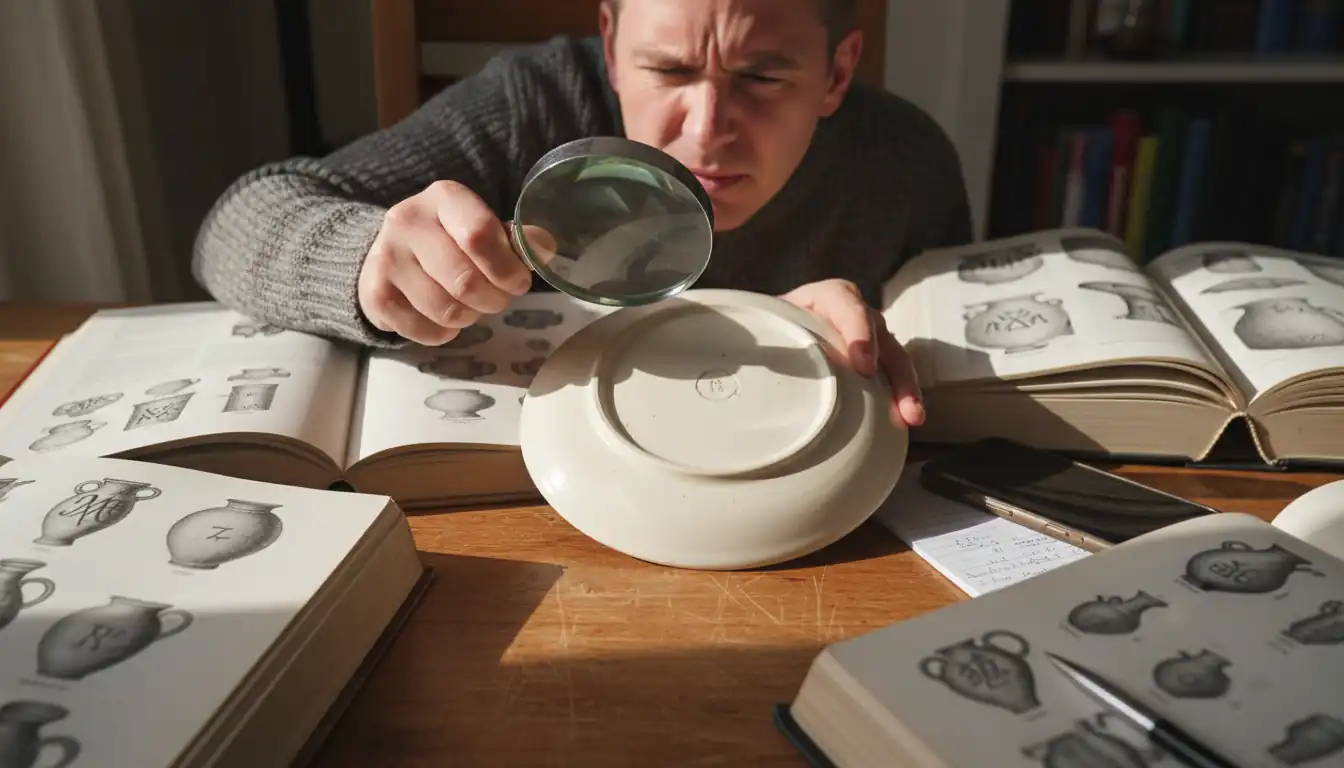
If you have ever tried to identify a piece of pottery by flipping through a physical reference book, you know how daunting the task can be. The sheer volume of information is overwhelming. Since the dawn of the Industrial Revolution, thousands of potteries have opened and closed, each using multiple variations of their marks to denote different time periods, clay bodies, or artist collaborations.
Deciphering Faded and Partial Stamps
The first hurdle is the physical condition of the mark itself. Unlike a printed book, pottery marks are subject to the whims of the kiln and the passage of time. A mark applied under the glaze might have "run" during firing, turning a crisp name into an illegible blue cloud. Marks impressed into the damp clay can be filled with thick glaze, obscuring the fine lines that distinguish one maker from another.
Then there is the issue of wear. A plate that has been used for a century will have "shelf wear" on the bottom rim. This constant friction can sand away the very information you need. You are often left with a partial wing, the bottom half of a date, or a single letter. Trying to find a match for a "partial lion" in a book containing 5,000 different lion marks is a recipe for a headache.
The Limitations of Static Image Libraries
Before the internet, collectors relied on massive volumes like Godden’s Guide to British Pottery and Porcelain Marks. These books were, and still are, incredible feats of scholarship. However, they are static. They require you to know at least something about the piece before you even start looking.
If you don't know if your plate is English, French, or American, where do you begin? You might spend hours in the "C" section looking for a crown, only to realize later that the mark was actually a stylized portcullis. Early 2000s-era websites attempted to digitize these libraries, but many remain difficult to navigate. They often rely on low-resolution scans and clunky search interfaces that require you to describe a visual symbol using only text.
The primary challenge of manual identification isn't a lack of information; it's the lack of a bridge between the physical object in your hand and the data hidden in a book or database.
Navigating the World's Largest Digital Archives
While manual searching is difficult, the digital age has brought some order to the chaos. Several reputable organizations have spent years building online databases that serve as the gold standard for researchers. Knowing which archive to use depends largely on the style and suspected origin of your piece.
Specialized Databases for European and American Ware
If you suspect your item is American, specifically from the 20th-century studio pottery movement, The Marks Project is an essential resource. It is a searchable database dedicated to American studio ceramics from 1946 to the present. It is particularly useful because it includes artist signatures and monograms that are often missing from broader industrial databases.
For European porcelain, the challenges are different. Factories like Meissen (Germany) or Sèvres (France) have been in operation for centuries. Their marks have evolved, but they often retain a core symbol—like the famous Meissen "crossed swords." To verify these, you should look toward specialized museum archives or dedicated factory registries. These sites allow you to see the minute changes in the shape of the swords or the addition of dots and Roman numerals that signify specific decades.
Using Museum Collections for Verification
When a database fails you, museum collections are your next best bet. Institutions like the Victoria and Albert Museum (V&A) in London or the Metropolitan Museum of Art in New York have digitized vast portions of their ceramics collections.
- Search by Attribute: Instead of searching for "the mark," search for the pattern name, the shape of the handle, or the specific color of the glaze.
- Accession Numbers: Museums often list the "accession number" which can lead you to more detailed scholarly papers about that specific line of pottery.
- High-Resolution Zoom: Museum sites often provide high-resolution photos that allow you to compare the "hand" of the artist on your piece to a verified museum-quality example.
"Is there a pottery Marks database online?" Yes, but there isn't just one. The "pottery marks database" is actually a fragmented network of specialized sites. Success requires you to act like a detective, moving from one archive to another as you narrow down the clues.
Anatomy of a Professional Pottery Mark Search
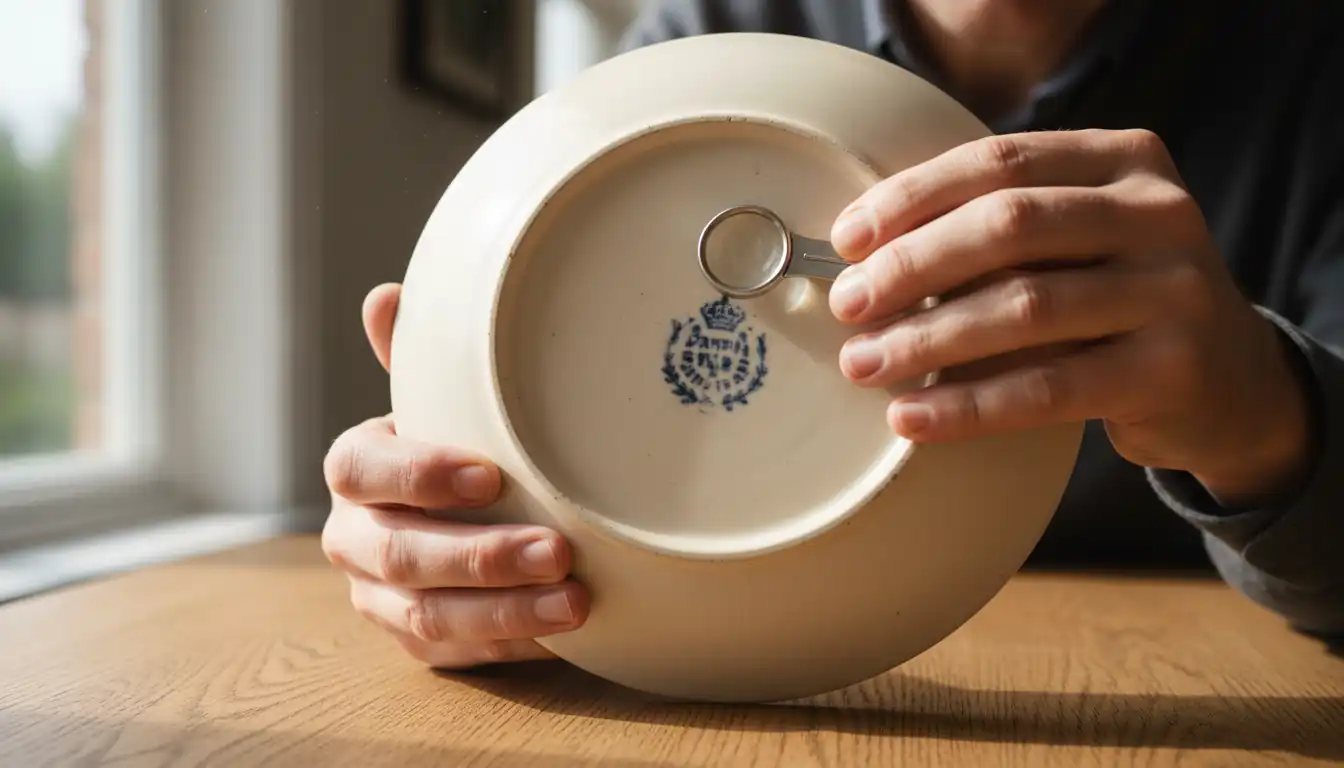
To use these databases effectively, you need to understand the "language" written on the bottom of your ceramics. A mark is rarely just a logo; it is a coded history of the object's creation.
Interpreting Monograms and Artist Cyphers
There is a significant difference between a factory mark and an artist’s mark. The factory mark tells you who owned the building and paid for the kiln. The artist’s mark (or cypher) tells you who actually painted the flowers or turned the clay.
In high-end potteries like Rookwood or Minton, the artist's signature can drastically change the value. A standard Rookwood vase might be worth $200, but if it bears the "cypher" of a famous decorator like Kataro Shirayamadani, that value could jump into the thousands. These cyphers are often just two or three overlapping letters, looking more like a doodle than a name.
Dating Pottery via Registry Diamonds and Year Codes
One of the most reliable ways to date British pottery is the Registry Diamond. Used between 1842 and 1883, this diamond-shaped mark contains a series of letters and numbers in its corners that tell you the exact day, month, and year the design was registered.
| Position in Diamond | What it Represents |
|---|---|
| Top Circle | The Year Code |
| Right Corner | The Month Code |
| Bottom Corner | The Day of the Month |
| Left Corner | The Bundle/Batch Number |
After 1883, the system changed to a simple "Rd. No." followed by a string of digits. Similarly, companies like Wedgwood and Minton used their own internal year codes. Minton, for example, used a series of symbols—a triangle, a circle with a cross, a bracket—to denote the year of manufacture. If you see a small impressed "O" on a Minton piece, you know it was made in 1855. If it’s a "Z," it’s 1882.
"How to find out who made pottery?" You start by identifying the most prominent symbol (the factory), then look for smaller, impressed marks or hand-painted initials (the artist or date code). This layered approach is how professionals build a timeline for an object.
Instant Identification with Advanced AI Technology
Even with the knowledge of registry diamonds and museum archives, the process remains slow. You might spend three hours researching a plate only to find out it’s a common 1950s reproduction. This is where the gap between traditional collecting and the modern world is finally being bridged.
How Relic Bridges the Gap Between Photo and History
The most significant hurdle in pottery identification has always been the "visual-to-text" translation. You see a symbol, but you don't know how to describe it to a search engine. The Relic app changes this dynamic by using AI-driven visual recognition. Instead of guessing keywords, you simply take a clear photo of the mark.
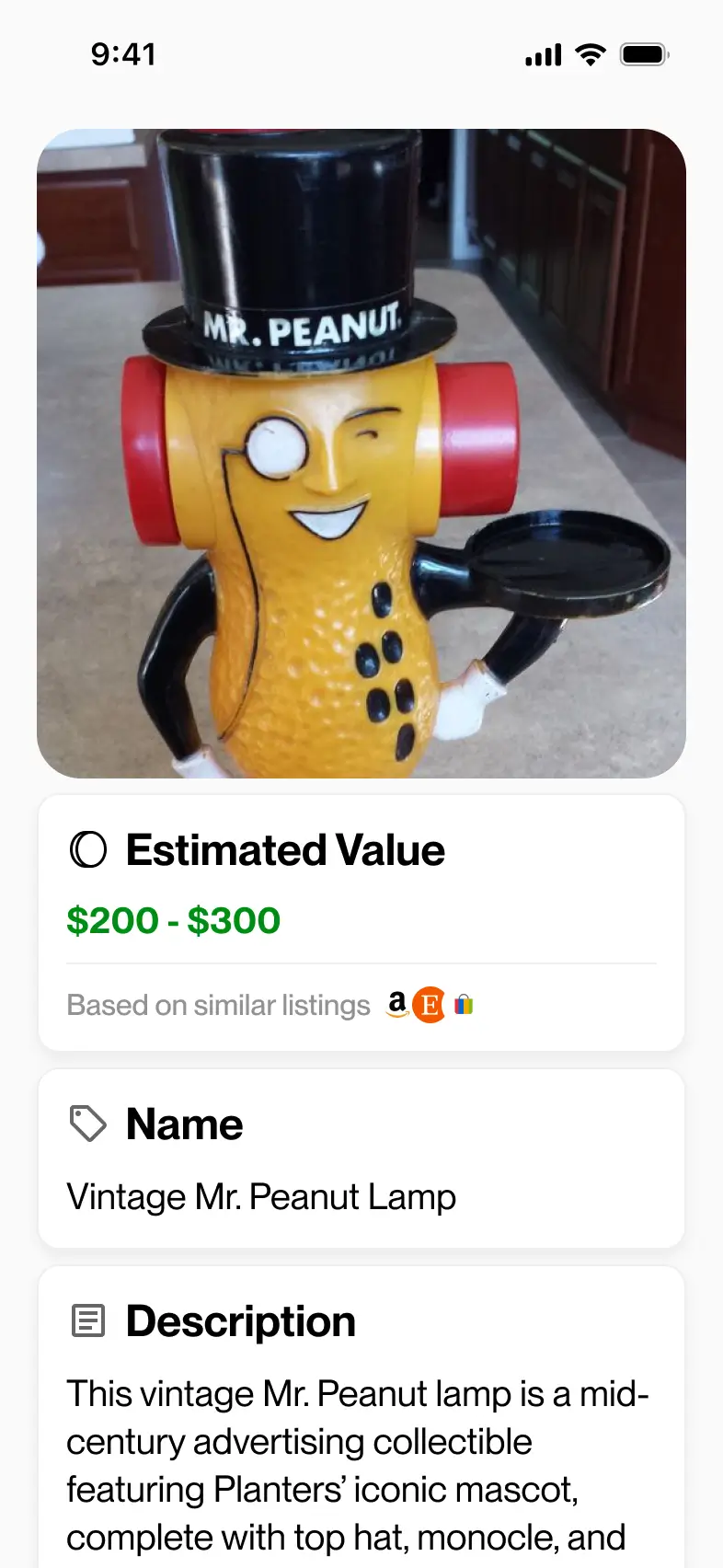
Relic’s AI analyzes the geometry, the style of the font, and the specific iconography of the mark. It then cross-references this image against a vast historical database. Within seconds, it can identify the maker, the origin, and the likely time period. This "point-and-shoot" method eliminates the hours of scrolling through static image libraries and the frustration of misinterpreting a blurry stamp.
The Advantage of Visual Recognition over Keyword Search
Keyword searches are notoriously unreliable for antiques. If you type "blue bird pottery mark" into a search engine, you will get thousands of results ranging from ancient Chinese porcelain to modern Walmart sets.
Relic doesn't just look for "a bird." It looks for the specific wing shape of a 1920s Stangl bird or the particular shade of blue used by a specific Dutch factory. For professionals like dealers or "pickers" who need to make split-second decisions at an estate sale, this speed is vital. It allows you to scan an item, get its history, and decide whether to buy it before another collector even picks it up.
Visual recognition technology acts as a digital expert that has already "memorized" every reference book on your shelf.
From Identification to Real World Market Value
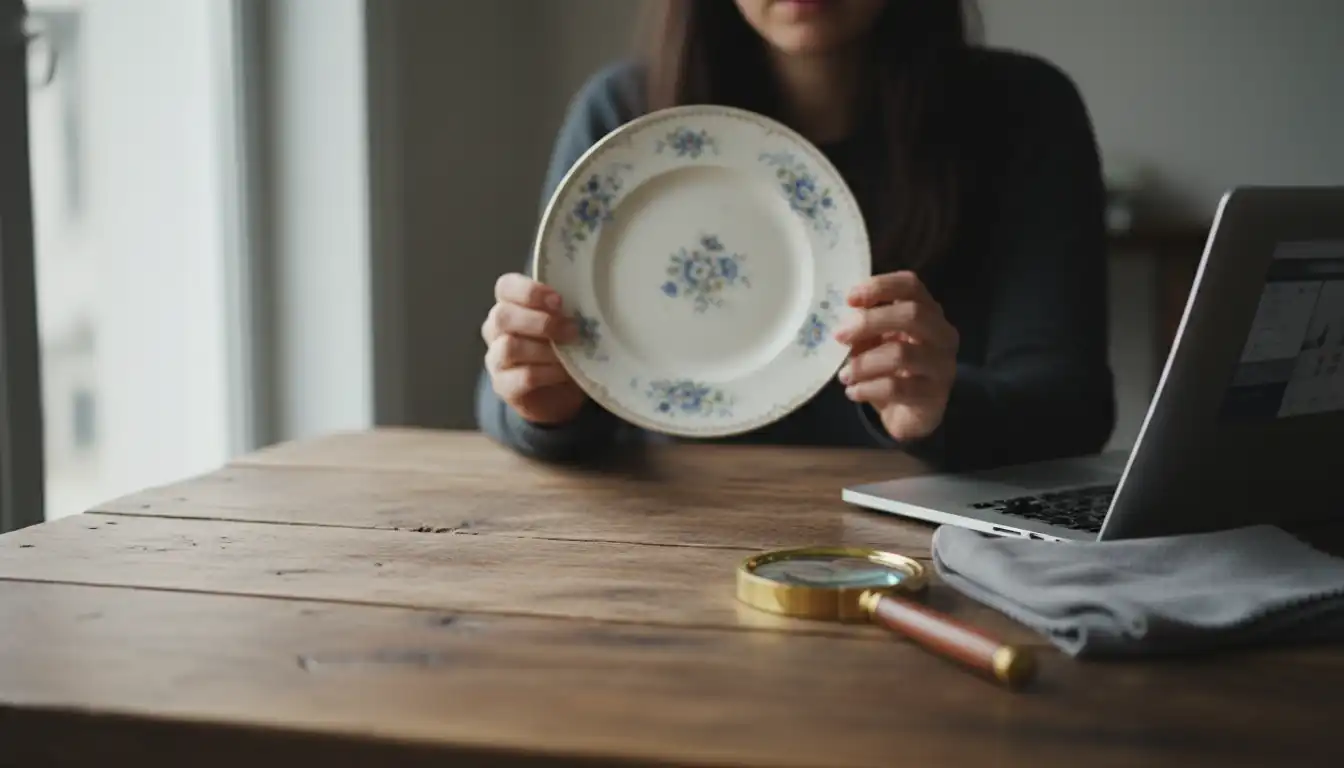
Once you know who made your pottery and when it was made, the next logical question is: "What is it worth?" Identification is the foundation, but market value is a moving target influenced by several external factors.
Factors That Influence Ceramic Appraisal
"How do I find out if my pottery is valuable online?" Identification is only the first step. To get a real appraisal, you must look at the three pillars of value: Rarity, Demand, and Condition.
- Rarity: Was this a mass-produced dinner set or a limited-edition art piece? Even famous makers like Wedgwood produced millions of "Plain Jane" pieces that hold little value today.
- Demand: Trends change. Mid-century modern pottery is currently in high demand, while some Victorian-era "brown furniture" ceramics have seen a dip in prices.
- Condition: This is the most critical factor. In the world of high-end ceramics, a single "flea bite" (a tiny chip) can reduce the value by 50%.
You should also look for crazing, which are the fine spider-web cracks in the glaze. While some collectors don't mind light crazing on very old pieces, it is generally considered a defect that lowers the value of 20th-century items.
Avoiding Common Pitfalls in Online Valuation
A common mistake is looking at "asking prices" on sites like eBay or Etsy. Just because someone is asking $500 for a plate doesn't mean anyone is paying that much. Always look for "Sold" listings to see the actual market clearing price.
This is another area where Relic provides a significant advantage. Beyond just identifying the item, the app provides real appraisals and market insights. It looks at historical sales data and current trends to give you a professional-grade valuation. This prevents you from overpaying for a common item or, conversely, selling a rare masterpiece for a fraction of its worth.
| Condition Issue | Description | Impact on Value |
|---|---|---|
| Flea Bite | A tiny chip, often on the rim or base. | Minor to Moderate |
| Crazing | Fine cracks in the glaze caused by age or temperature. | Moderate |
| Hairline | A crack that goes through the body of the piece. | Severe |
| Repair | Professional or amateur fix of a break. | High (unless extremely rare) |
Conclusion
Identifying a dusty plate or a hidden vase doesn't have to be a chore. By understanding the limitations of manual searching and learning the "language" of registry diamonds and artist cyphers, you are already ahead of most casual collectors. You know that a mark is a story waiting to be decoded.
However, the most effective way to navigate this complex world is to combine traditional knowledge with modern tools. Using specialized databases and museum archives will give you a deep appreciation for the history of ceramics. But when you are in the field—at a flea market, an auction, or in your own attic—speed and accuracy are what matter most.
The Relic app offers that bridge, turning your phone into a professional appraisal tool. By taking a simple photo, you can bypass the frustration of faded stamps and the ambiguity of "lion" marks. You get instant access to the history, origin, and real-world value of your finds.
The next time you see a mysterious mark on the bottom of a piece of pottery, don't just wonder about its history. Use the tools at your disposal to uncover the truth. Whether you are a seasoned dealer or a curious hobbyist, the right information can turn a simple discovery into a life-changing find. Download Relic today and start uncovering the hidden treasures in your own home.
Identify antiques instantly
Point your camera at any antique, collectible, or vintage item. Get valuations, history, and market insights in seconds.
Download for iPhone