That Dusty Plate Could Pay Your Mortgage: How AI Scans Reveal Hidden Porcelain Fortunes

That dusty plate sitting on the top shelf of your pantry might look like a relic of a bygone era, but it could actually be the key to a significant financial windfall. For decades, families have passed down porcelain dinnerware, vases, and figurines, often without any real understanding of their origin or value. These items frequently end up in garage sales or donation bins because the owners simply don't have the tools to identify what they are holding.
The reality is that the antique market is currently experiencing a fascinating shift. While some traditional styles have dipped in popularity, rare porcelain from specific periods—especially high-quality Chinese export pieces or early European masterworks—is fetching record prices at auction. The challenge has always been the "knowledge gap." How do you tell the difference between a mass-produced 1950s reproduction and an authentic 18th-century masterpiece when they both feature similar blue-and-white patterns?
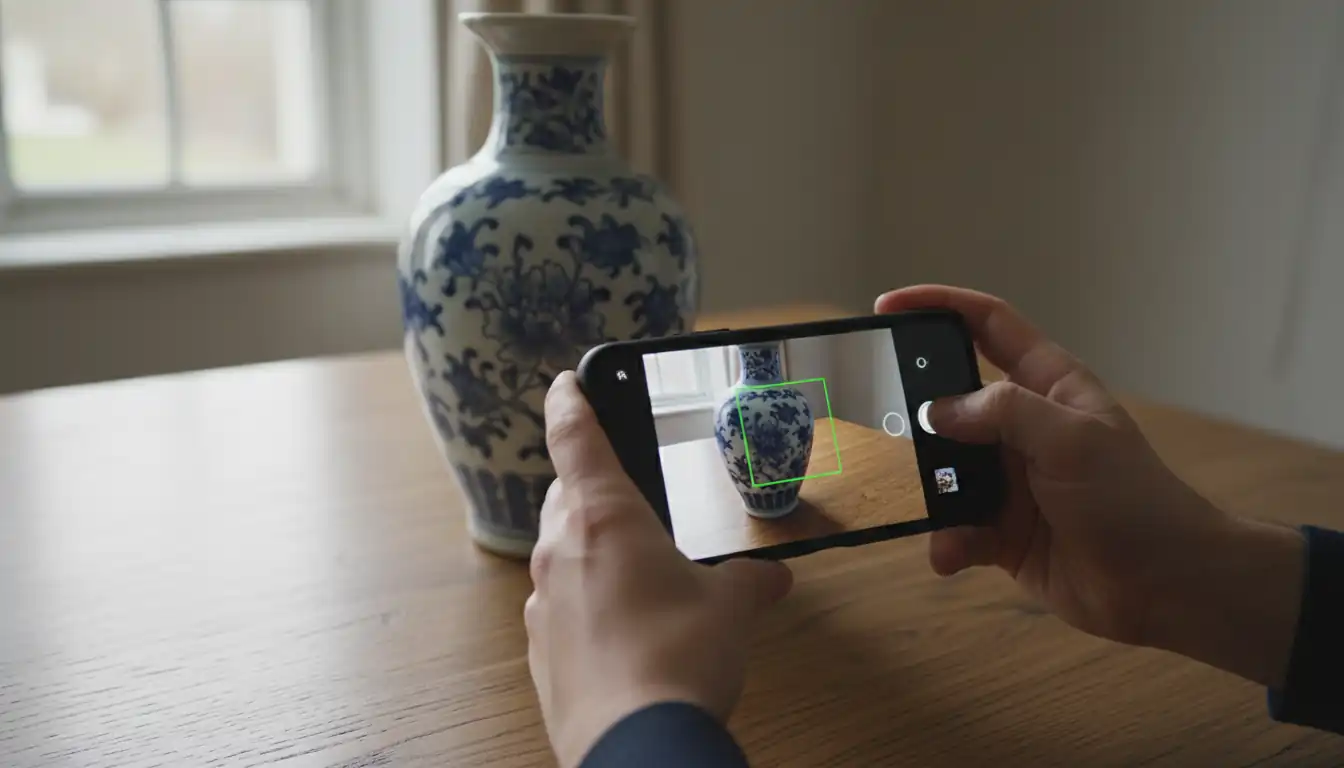
In the past, solving that mystery required a trip to a specialized appraiser or hours spent squinting at grainy photos in thick reference books. Today, the process has been distilled into a single click. By using advanced visual recognition technology, you can now bridge the gap between "old dish" and "valuable asset" in seconds. This article will guide you through the changing landscape of porcelain identification and show you how to turn your smartphone into a professional-grade appraisal tool.
The Evolution of Porcelain Identification
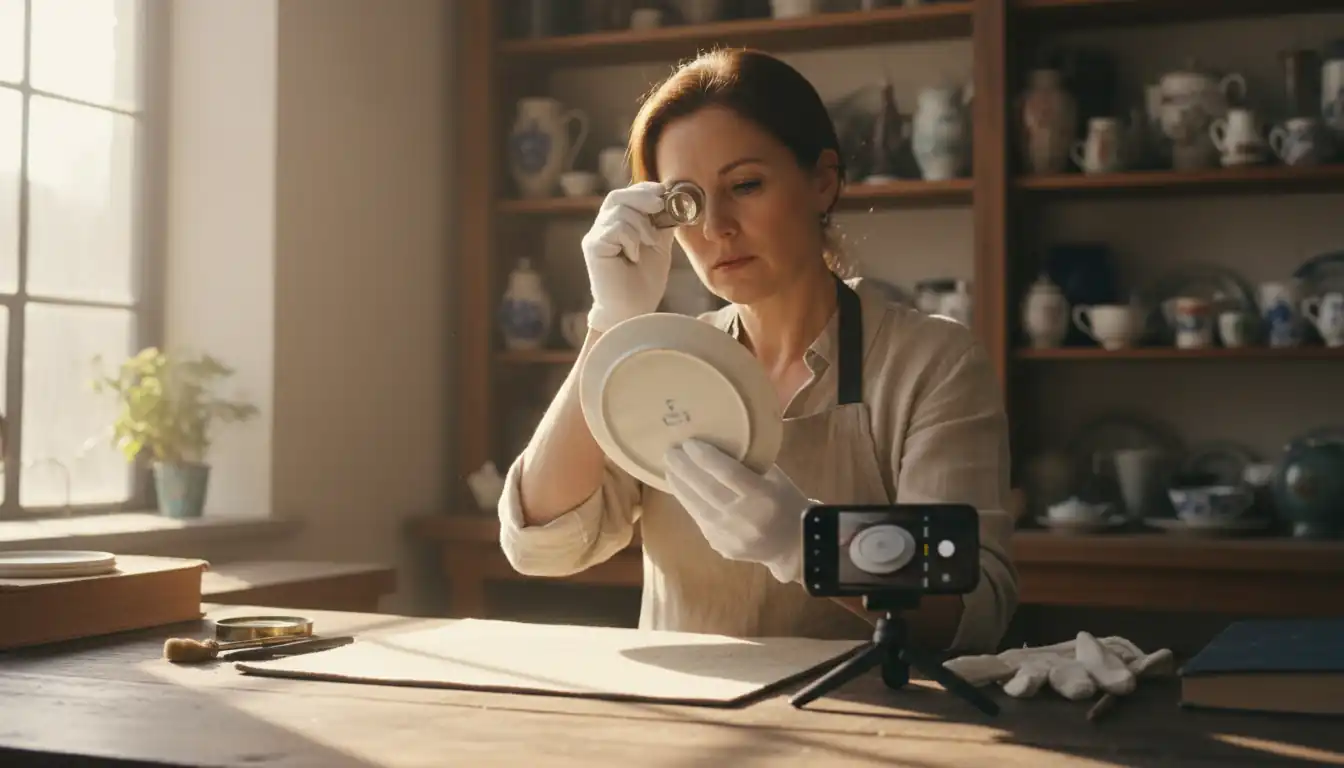
Identifying porcelain used to be a hobby reserved for the patient and the academic. If you found a piece of pottery at an estate sale, your first stop was likely the local library. You would spend hours leafing through "Kovel’s Antiques and Collectibles Price Guide" or specialized volumes on English bone china, trying to match a tiny, faded mark on the bottom of a cup to a hand-drawn illustration in a book. It was a tedious process of elimination that often ended in more questions than answers.
The biggest hurdle was always the "description barrier." How do you describe a specific shade of cobalt blue to a search engine? How do you put into words the exact curvature of a handle or the specific "orange peel" texture of a glaze? If you typed "blue and white plate with flowers" into a search bar, you would be met with millions of results, most of which were irrelevant. This friction kept many potential collectors out of the market and left countless treasures undiscovered in attics.
From Library Books to Instant AI Scanning
The transition from physical books to digital databases was the first step, but the real shift occurred with the advent of computer vision. We have moved from a text-based world to a visual-focused one. Instead of trying to find the right words to describe an object, you can now let the object speak for itself through an image.
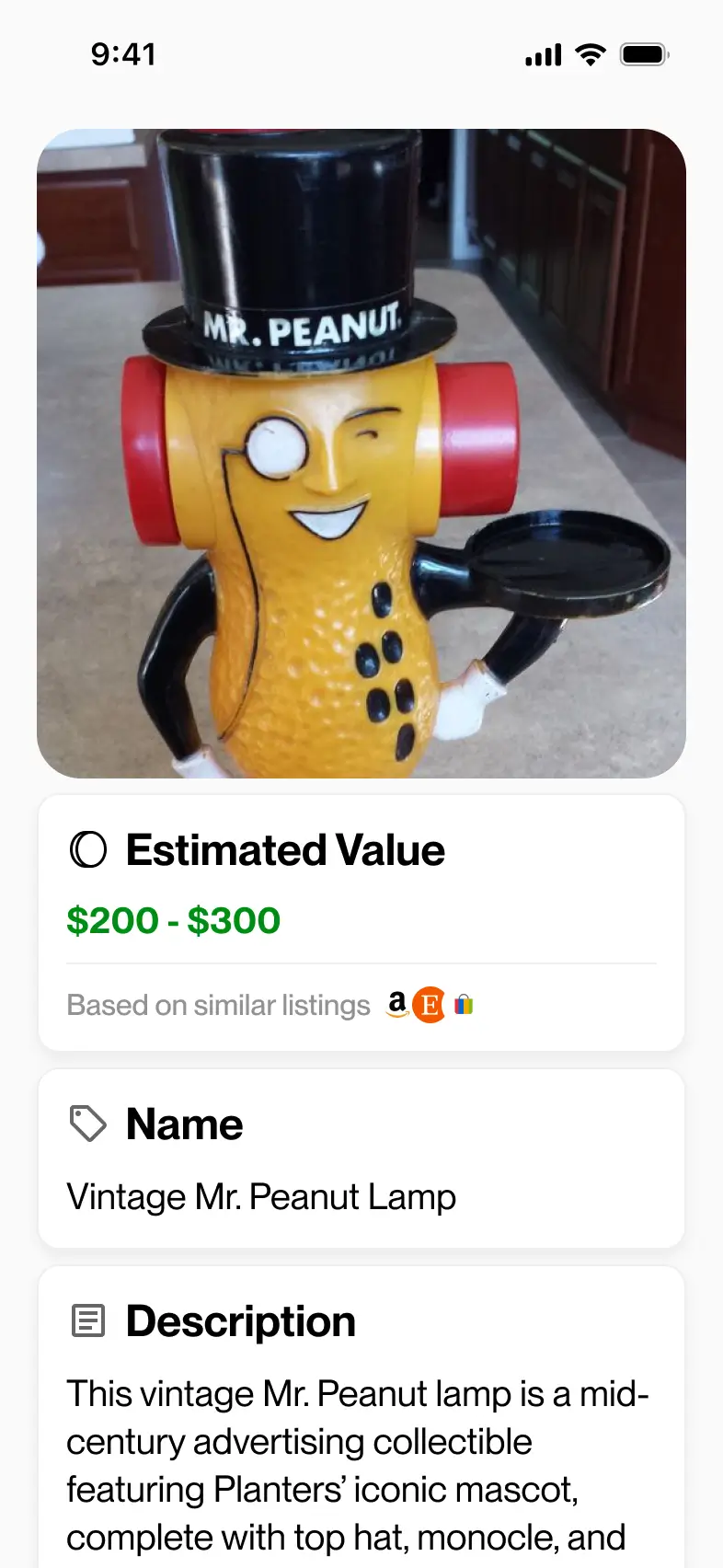
Modern technology has effectively removed the "gatekeeper" aspect of the antique world. You no longer need a PhD in art history to recognize the significance of a piece. When you use an app like Relic, the software analyzes the geometry, color palette, and brushwork of your item instantly. It’s a psychological relief for the casual collector; the fear of "getting it wrong" or being laughed out of an antique shop is replaced by the confidence of having data-backed information in the palm of your hand.
Why Visual Search Beats Manual Keyword Hunting
Keyword searches are inherently flawed because they rely on the user’s existing knowledge. If you don't know that a specific pattern is called "Willow" or "Blue Onion," you can't search for it effectively. Visual search bypasses this requirement entirely.
- Pattern Recognition: AI can distinguish between the hand-painted variations of a pattern and the uniform look of a modern transfer-print.
- Shape Analysis: The specific silhouette of a teapot spout or the foot of a bowl can often date a piece more accurately than the decoration itself.
- Instant Comparison: While a human might take minutes to flip through a book, an algorithm compares your photo against millions of known examples in a heartbeat.
The "description barrier" was the single greatest obstacle to discovering hidden value. By moving from words to images, we have democratized the world of high-end antiques.
Decoding the Secrets Hidden in Porcelain Marks
If you want to know "how to identify vintage porcelain," you have to start by looking at the bottom. The "backstamp" or maker’s mark is the most vital piece of evidence in the forensic trail of a ceramic object. These marks are essentially the DNA of the piece, telling you who made it, where it was made, and often exactly when it left the kiln. However, reading these marks is an art form in itself.
Marks can be printed, painted, or even incised (scratched) into the clay before firing. Some are under the glaze, meaning they were applied to the "bisque" before the final clear coating was added. Others are overglaze, applied on top of the finished surface. Understanding these distinctions is crucial because they help determine authenticity. A mark that should be underglaze but appears to be stamped on top of the finish is a primary red flag for a modern reproduction.
Identifying Maker Marks with Precision
Famous porcelain houses have used iconic symbols for centuries. Meissen, the prestigious German manufacturer, is famous for its "crossed swords" mark. Sevres, the French powerhouse, used interlaced "L"s. But here is where it gets tricky: because these brands were so successful, other smaller factories spent decades trying to mimic their marks to fool unsuspecting buyers.
An AI-driven scan doesn't just look for the shape of the swords; it looks at the precision of the lines, the pigment of the blue ink, and the way the mark has aged relative to the rest of the piece. This level of forensic analysis allows you to distinguish a genuine 18th-century Meissen piece from a "style of Meissen" piece made in a 1920s Japanese factory. The latter might still be beautiful, but the price difference could be thousands of dollars.
Spotting Fakes and Modern Reproductions
The market is flooded with "vintage-style" porcelain that was actually made in the last twenty years. These pieces often feature "distressed" marks or artificial crazing (the tiny cracks in the glaze) to make them look older than they are. When you perform a scan, the technology looks for inconsistencies that the human eye might miss.
| Feature | Authentic Vintage Porcelain | Modern Reproduction |
|---|---|---|
| Mark Application | Often slightly irregular or hand-applied | Perfectly uniform or digitally printed |
| Glaze Texture | May have "pinholes" or slight cooling ripples | Usually glass-smooth and perfectly even |
| Wear Patterns | Natural wear on the "foot rim" where it touches the table | Artificial wear or no wear at all |
| Weight | Varies by material (bone china is light, stoneware is heavy) | Often feels "off" or heavier than expected for the style |
The Tech Behind the Appraisal
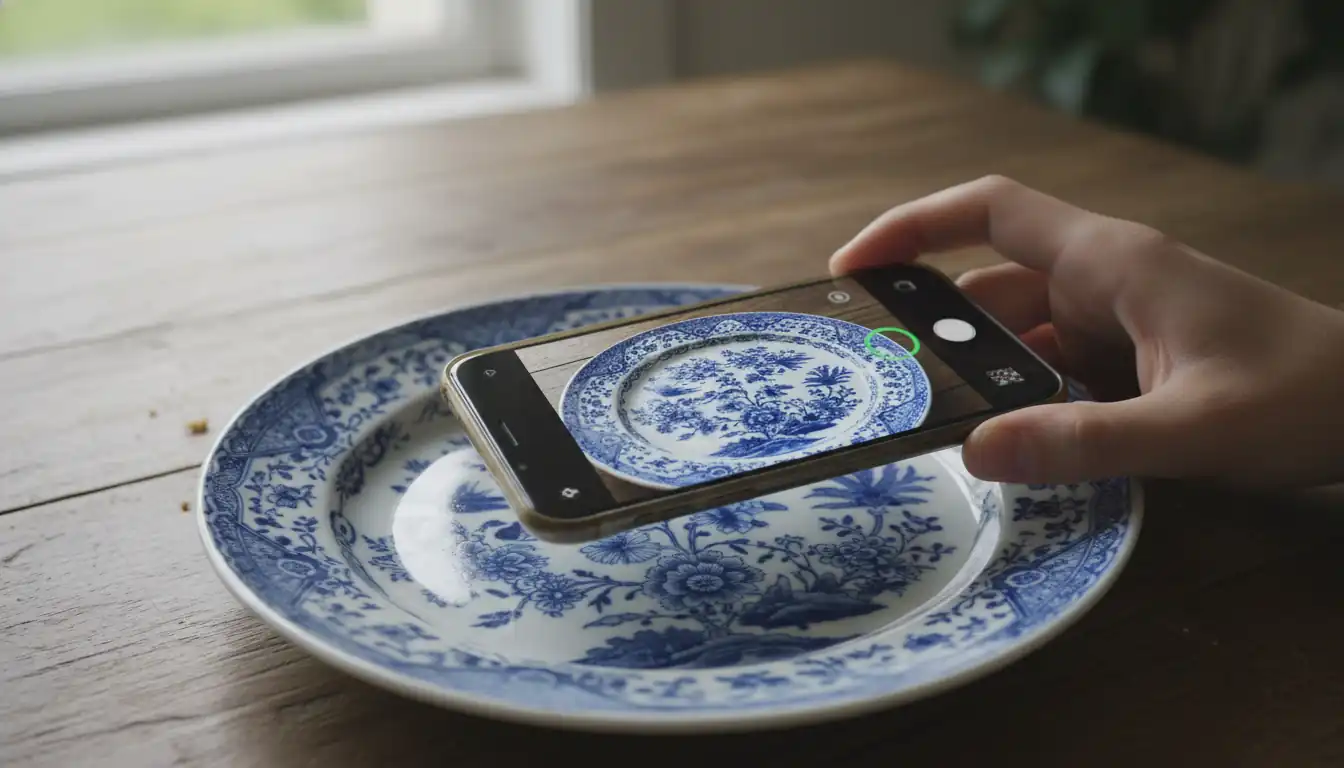
When you use an app to value an item, it can feel like magic. You take a photo, and a few seconds later, a dollar sign appears. But what is actually happening behind the screen? To trust the valuation, you need to understand the engine driving it. Relic doesn't just guess; it acts as a digital expert that has "seen" every major auction and private sale over the last two decades.
The core of this technology is a massive sales database. When the AI identifies your plate as a "Royal Copenhagen Flora Danica" piece, it doesn't just look up a retail price. It scans historical auction records to see what that specific item actually sold for in the real world. This is a critical distinction that many amateur collectors overlook.
How Relic Uses AI to Mimic Expert Appraisers
A human appraiser uses their eyes to look for "tells"—the specific way a flower is painted or the translucency of the porcelain when held up to the light. The AI in the Relic app mimics this by breaking your photo down into thousands of data points. It analyzes the "brushwork signature" of the artist and compares it to known authentic examples.
Think of it as a digital fingerprint. Just as no two people have the same fingerprint, no two hand-painted porcelain factories used the exact same technique. The AI recognizes these patterns with a level of consistency that even a tired human expert might miss after a long day of appraising.
The Role of Global Sales Databases in Real-Time Valuation
One of the biggest mistakes people make is confusing a "listing price" with "realized value." If you go to an online marketplace and see a vase listed for $1,000, that doesn't mean it's worth $1,000. It only means that's what the seller wants. It could sit there for years without selling.
- Realized Value: This is the actual price a buyer paid at the fall of the hammer.
- Market Trends: AI tracks whether a specific style is "trending up" or "trending down" based on recent sales volume.
- Geographic Data: Sometimes a piece is worth more in London than it is in New York; advanced databases account for these global fluctuations.
By prioritizing realized value, the app provides a grounded, realistic number. This prevents the "heartbreak of the high estimate," where a collector thinks they have a fortune only to find out no one is willing to pay that price.
A valuation is only as good as the data behind it. Relying on actual sales records rather than optimistic listings is the difference between a hobbyist and a professional.
Maximizing Your Scan Accuracy
To get the most out of an antique identifier, you need to provide the best possible data. The AI is powerful, but it still relies on the "eyes" you give it—your phone's camera. If you take a blurry photo in a dark basement, you're going to get an "I don't know" or an inaccurate result. Treating your scan like a professional photoshoot will significantly increase the accuracy of your appraisal.
The goal is to capture the "forensic details" of the porcelain. This includes the texture of the glaze, the precision of the painted details, and the condition of the material. Porcelain is notoriously difficult to photograph because of its reflective surface, but a few simple adjustments can make a world of difference.
Lighting and Angle Techniques for Better Results
Glare is the enemy of visual recognition. When a bright light bounces off a shiny plate, it creates "hot spots" that hide the pattern from the AI. To avoid this, never use your camera's flash. Instead, find a spot with plenty of indirect, natural light—near a window on a cloudy day is perfect.
The Perfect Scan Checklist:
- Neutral Background: Place the item on a plain white or grey cloth. Busy patterns in the background distract the AI.
- The 360-View: Take a clear shot of the front, a profile shot to show the shape, and most importantly, a direct shot of the bottom.
- The Foot Rim: Get a close-up of the unglazed ring on the bottom of the piece. This "foot rim" often shows the true color of the clay and the level of authentic wear.
- Macro Details: If there is a specific chip, crack, or unique artist signature, use the macro setting on your phone to capture it clearly.
When to Supplement AI with Human Expertise
While AI is incredibly efficient for 95% of items, there are always outliers. Perhaps you have a piece that is so rare it hasn't appeared at auction in fifty years, or a piece with a unique manufacturing defect that makes it more valuable. In these cases, the "Human Touch" is invaluable.
The Relic app recognizes this by offering features that allow you to supplement the AI scan with expert human review. If the AI flags an item as potentially high-value or highly unusual, having a professional appraiser look at your high-resolution photos can provide that final layer of certainty. This hybrid approach—AI for speed and scale, humans for nuance—is the gold standard for modern collecting.
Beyond the Scan: Managing Your Digital Inventory
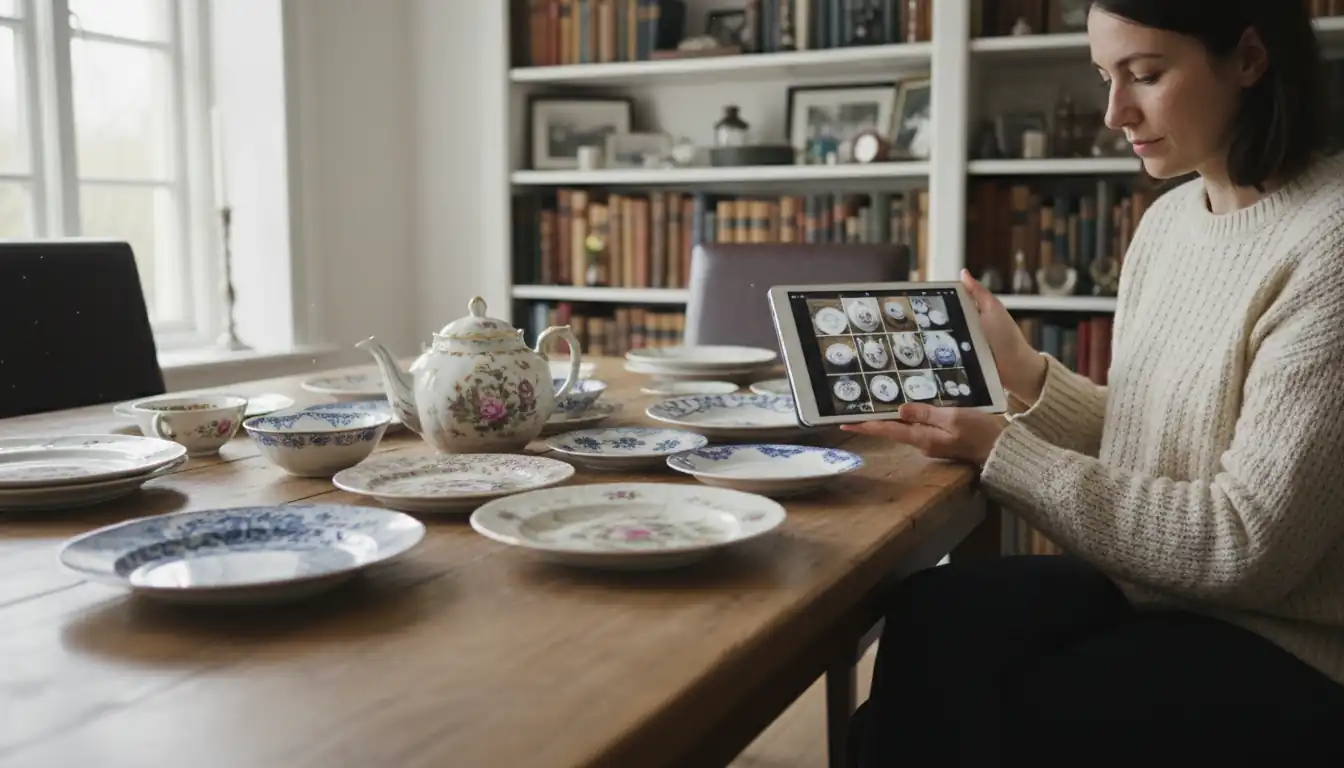
Once you have identified and valued your porcelain, the work isn't over. In fact, for many, this is where the real benefit begins. Many people ask, "What is the app that scans antiques for value?" but they forget to ask, "What do I do with that value once I have it?"
Treating your porcelain collection as a financial portfolio rather than just a set of dishes is a mental shift that can pay off significantly over time. Just as you wouldn't leave a stock portfolio unmonitored for twenty years, you shouldn't let your physical assets sit unrecorded.
Organizing Your Finds for Insurance and Resale
If a pipe bursts or a fire occurs, your insurance company will require proof of what you owned and what it was worth. A "digital inventory" is your best defense. By saving your scans within the Relic app, you create a timestamped, photographic record of your assets.
- Estate Planning: Make it easy for your heirs by having a catalog of what is valuable and what is sentimental.
- Insurance Riders: High-value porcelain often requires a specific "scheduled" item rider on your homeowners' policy. Having a professional-grade appraisal from an app makes this process much easier.
- Damage Documentation: If a piece is ever broken, having "before" photos and a valuation helps in filing an accurate claim.
Tracking Market Fluctuations for Your Porcelain Assets
The antique market is not static. Five years ago, Mid-Century Modern ceramics were the hottest items on the market. Today, we are seeing a massive resurgence in "Grandmillennial" style, where traditional floral porcelain is back in high demand.
By keeping your items in a digital catalog, you can periodically "re-scan" or check the updated market values. This allows you to sell at the peak of a trend. If you see that "Blue Willow" patterns are suddenly spiking in price because of a new interior design craze, you can move your pieces from the pantry to the auction block at exactly the right moment.
| Porcelain Category | 5-Year Trend | Market Driver |
|---|---|---|
| Chinese Export | Increasing | High demand from mainland Chinese collectors |
| Mid-Century Ceramics | Stable | Continued popularity of minimalist decor |
| Victorian Ironstone | Increasing | "Farmhouse" and "Grandmillennial" design trends |
| 20th Century Commemoratives | Decreasing | Oversupply in the secondary market |
Conclusion
The world of porcelain is no longer a closed book accessible only to those with specialized degrees. The "description barrier" has been dismantled, allowing anyone with a smartphone to uncover the history and value hidden in their own homes. By understanding the nuances of maker's marks, the technology behind modern appraisals, and the importance of a high-quality scan, you can transform a casual curiosity into a sophisticated asset management strategy.
Whether you are looking to declutter your home, settle an estate, or start a new collection, the tools are now in your hands. Don't let that dusty plate sit in silence any longer. Download the Relic app today, clear off the kitchen table, and start scanning. You might just find that your "old dishes" are actually the foundation of a hidden fortune.
Identify antiques instantly
Point your camera at any antique, collectible, or vintage item. Get valuations, history, and market insights in seconds.
Download for iPhone