That Dusty Platter Could Be a Payday: How to Decode Ceramic Marks for Instant Value

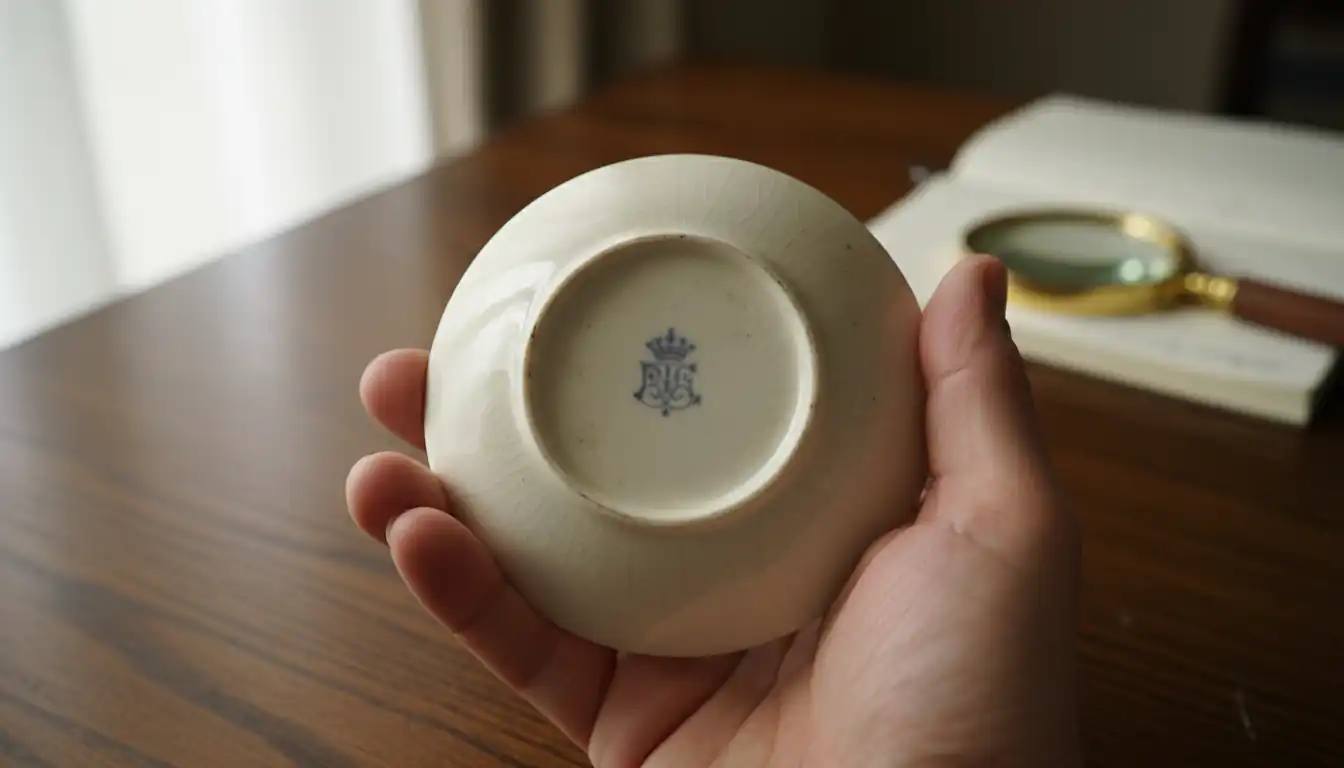
You might be walking past a small fortune every time you visit a garage sale or clear out your grandmother’s china cabinet. That heavy, cream-colored platter sitting under a layer of dust isn’t just a vessel for holiday turkeys; it is a historical document. Every swirl of blue paint and every tiny indentation on the underside tells a story of global trade, industrial secrets, and artistic mastery.
The challenge is that these stories are written in a cryptic language of symbols, initials, and tiny icons known as backstamps. For centuries, potters have used these marks to claim their work, protect their brand, and indicate quality. To the untrained eye, a small crown or a pair of crossed swords looks like a simple decoration. To a collector, those marks are the difference between a $5 thrift store find and a $5,000 museum-grade masterpiece.
Understanding how to decode these marks is the first step in transforming a hobby into a profitable venture. It requires a blend of historical knowledge and a keen eye for detail. By learning the nuances of ceramic identification, you can spot the "sleepers" that others miss and ensure you never let a valuable piece of history slip through your fingers.
The Hidden Language of Pottery Backstamps
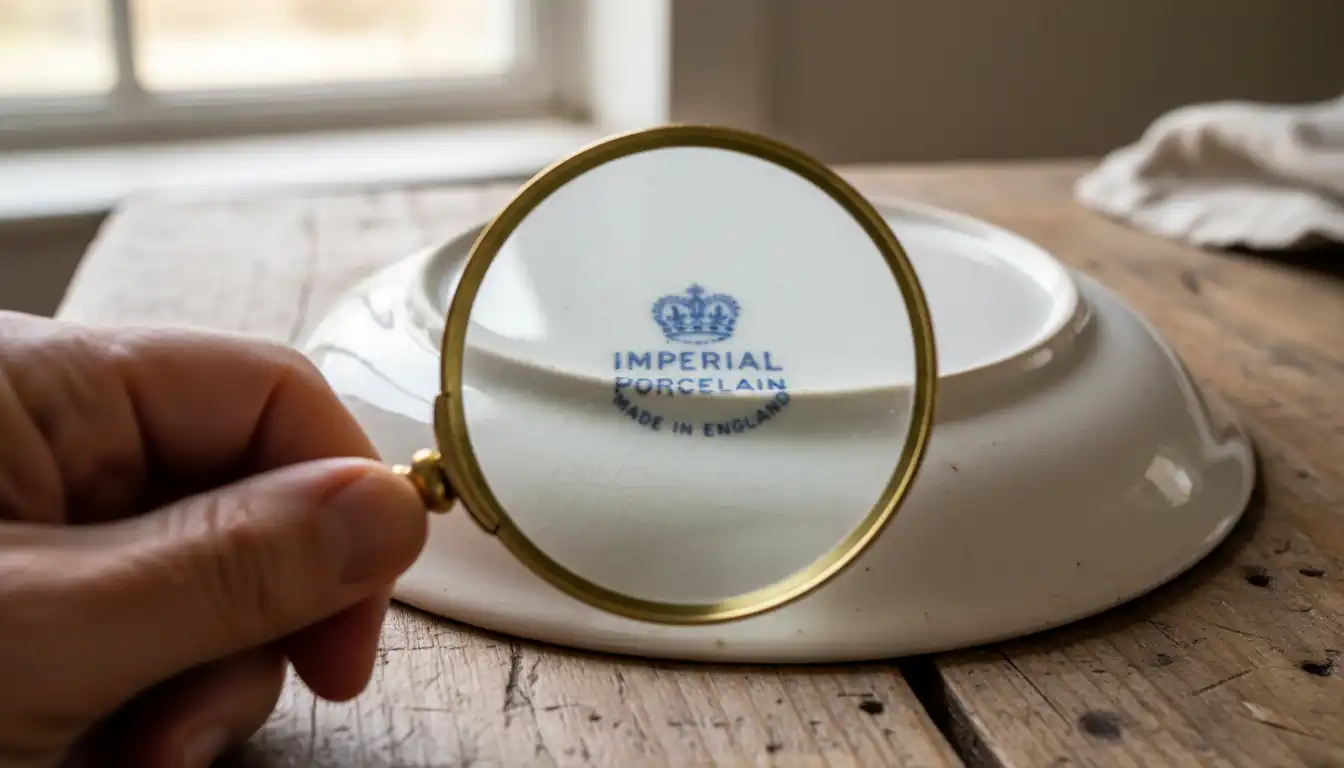
When you flip a plate over, you are looking at the "signature" of the manufacturer. However, unlike a handwritten signature on a check, ceramic marks are layered with technical complexity. The first thing you must determine is whether the mark is underglaze or overglaze. This distinction alone can tell you a great deal about the age and durability of the piece.
Underglaze marks were applied to the "biscuit" (the fired but unglazed clay) before the final clear glaze was added. Because the glaze protects the mark, these symbols remain crisp and vibrant for centuries. Overglaze marks, conversely, were painted on top of the finished glaze and fired again at a lower temperature. These are more susceptible to wear and can often be scratched off with a fingernail or faded by decades of washing.
Deciphering Incised Signatures and Painted Symbols
Before the mid-18th century, many marks were incised—literally scratched into the wet clay with a pointed tool. These are some of the most difficult to read because the glaze often fills the grooves, blurring the lines. As porcelain production became more sophisticated, factories moved toward painted symbols.
Consider the famous "crossed swords" of the Meissen factory in Germany. Introduced around 1722 to protect their reputation from cheap imitations, this mark has undergone dozens of micro-variations. In the early years, the swords were spindly and curved; by the 19th century, they became more rigid and were often accompanied by dots or Roman numerals. A collector doesn't just look for the swords; they look for the specific curvature of the blades to determine if the piece was made in 1740 or 1840.
Similarly, the Sevres factory in France used a system of interlaced "Ls." Inside these Ls, you might find a letter of the alphabet. An 'A' indicates the year 1753, while a 'Z' takes you to 1777. If you see double letters like 'AA,' you’ve moved into the 1778-1793 period. This level of precision was intended to track production, but today it serves as a chronological roadmap for the savvy hunter.
Why Micro-Variations Determine Market Desirability
The market for antique ceramics is obsessed with "firsts" and "period-correct" markings. A tiny variation in a mark can signify a change in ownership of the factory, a shift in the clay recipe, or the work of a specific master decorator. For example, the Wedgwood factory used various marks including "Wedgwood & Bentley" during their partnership years (1768–1780). A piece marked simply "Wedgwood" might be beautiful, but a "Wedgwood & Bentley" mark can triple the value instantly because of its rarity and historical significance.
| Mark Type | Method of Application | Durability | Common Era |
|---|---|---|---|
| Incised | Scratched into wet clay | High (but often blurry) | Pre-1750 |
| Impressed | Stamped into wet clay | High | 18th & 19th Century |
| Underglaze Blue | Painted/Printed under glaze | Permanent | 18th Century to Present |
| Overglaze Enamel | Painted over fired glaze | Low (prone to wear) | Decorative 19th Century |
"The mark is the beginning of the story, not the end. It provides the context that allows the physical beauty of the ceramic to be measured against its historical rarity."
The High Cost of Traditional Antique Appraisals
Once you’ve identified that a mark looks significant, the next logical question is: what is it actually worth? This is where many amateur collectors hit a financial wall. If you are wondering how to get old pottery appraised, the traditional route involves hiring a certified professional.
Members of the International Society of Appraisers (ISA) or the American Society of Appraisers (ASA) are the gold standard for valuations. However, their expertise comes at a premium. Most certified appraisers charge hourly rates ranging from $200 to $500. This fee covers their time spent researching the item, checking recent auction results, and writing a formal report. If you have a single platter that might be worth $300, paying an appraiser $400 to tell you that makes very little financial sense.
When to Hire a Certified Professional Appraiser
Professional appraisals are generally reserved for high-stakes situations. If you are settling an estate, filing an insurance claim for a high-value collection, or donating a piece to a museum for a tax deduction, you need a signed, legal document from a certified professional. In these cases, the cost is a necessary investment.
For the everyday picker or the person who just inherited a box of china, these costs are prohibitive. You might try to find a local antique shop that offers "free appraisals," but be cautious. Often, these are not appraisals but "offers to buy." A dealer might tell you a vase is worth $50 because they want to buy it from you for $50 and sell it for $500.
Navigating Subscription Fees and Hidden Valuation Costs
If you decide to do the research yourself to find the value of antiques for free, you will quickly encounter "paywalls." Major auction databases, which aggregate the actual sale prices of items from houses like Sotheby’s and Christie’s, are rarely free.
- Auction Aggregators: Subscriptions to these services can range from $12.95 per month for basic access to over $300 per month for professional-tier data.
- Price Guides: While you can buy physical price guides, they are often outdated the moment they are printed. The market for Victorian Majolica, for instance, can fluctuate wildly from one year to the next.
- Verbal Approximations: Some auction houses offer free "valuation days," but these require you to transport your fragile items to their location and wait in long lines for a thirty-second opinion.
This creates a "valuation gap." You have an item that you suspect is valuable, but the cost of confirming that value consumes any potential profit. This friction is why so many treasures remain in attics—the barrier to entry for professional knowledge is simply too high for the casual enthusiast.
Instant Identification Through Advanced AI Vision
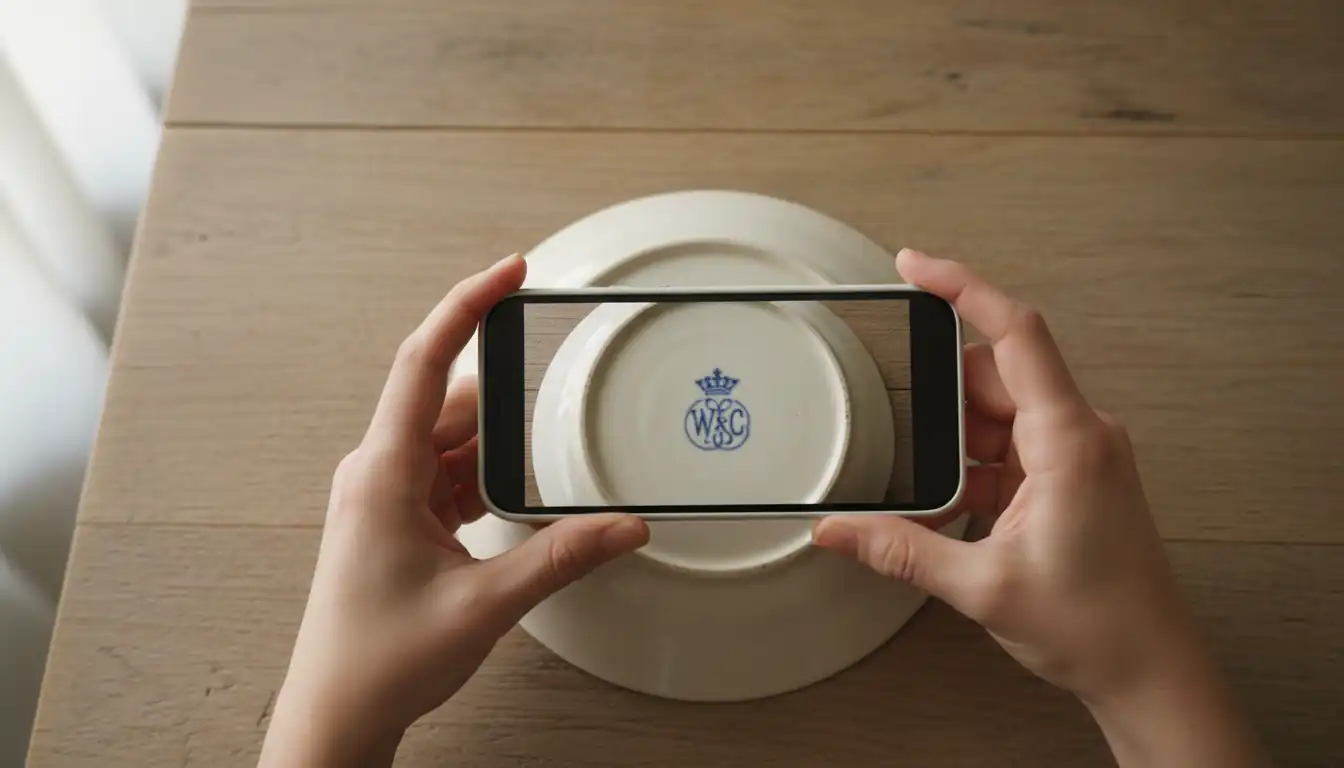
The era of lugging heavy reference books to flea markets is ending. The complexity of ceramic marks that once required a lifetime of study is now being decoded by artificial intelligence. This shift allows you to bypass the expensive gatekeepers of the antique world and get professional-grade information in seconds.
The Relic app is at the forefront of this technological shift. Instead of scrolling through thousands of photos of "blue and white plates" on a search engine, you simply point your phone camera at the item. Relic uses advanced AI to analyze the piece in a way that mimics a human expert. It doesn't just look for a matching image; it evaluates the specific characteristics that define an antique.
How Computer Vision Analyzes Ceramic Glaze and Form
Identifying a ceramic piece involves more than just reading the mark. A true appraisal considers the "body" of the piece. Relic’s AI vision is trained to recognize the subtle differences in glaze texture—such as the "orange peel" effect found on certain 18th-century porcelains or the specific "crazing" patterns (tiny cracks in the glaze) that indicate age.
- Color Palette Analysis: The AI can distinguish between the cobalt blue used in 19th-century Staffordshire and the modern chemical dyes used in reproductions.
- Form and Silhouette: The app analyzes the shape of the handles, the foot rim, and the overall proportions to ensure they match the historical period indicated by the mark.
- Mark Verification: It compares the backstamp on your item against a massive database of verified authentic marks, spotting the tiny discrepancies that suggest a piece might be a later copy.
Getting a Real Appraisal from a Single Smartphone Photo
The power of Relic lies in its ability to provide a comprehensive history and origin alongside a valuation. When you scan a piece, you aren't just getting a name; you are getting the context. You might discover that your "dusty platter" was actually produced by the Spode factory during its peak period of innovation in bone china.
This instant access to data changes the math of antiquing. When you can get a real appraisal and historical background in seconds, you can make informed buying decisions on the fly. You no longer have to wonder if a piece is worth the $20 asking price; you can know its market value before you even reach for your wallet. With over 20,000 reviews and a 4.9-star rating, the app has become a staple for dealers and pickers who need accuracy without the overhead of traditional appraisal fees.
The Free Valuation Trap and Data Accuracy Risks
In the search for quick answers, many people turn to generic image search tools like Google Lens. While these tools are impressive for identifying a pair of shoes or a common household appliance, they are notoriously unreliable for high-stakes antiques. This is the "free valuation trap."
Generic AI is built on a "best guess" model. If you take a photo of a ceramic plate with a floral pattern, a generic tool will show you every other plate with a similar floral pattern. It cannot distinguish between a hand-painted 18th-century original and a mass-produced 1990s reproduction from a big-box store. In the world of ceramics, a "near miss" is the same as a total failure.
Why Generic Image Searches Fail with Antique Ceramics
The primary issue is "hallucination." Generic AI often tries to force a match where one doesn't exist. If it sees a mark that looks vaguely like a crown, it might tell you the piece is "Royal Vienna," even if the clay type and glaze are completely wrong for that factory.
- Context Blindness: Generic tools don't understand that a "Made in England" stamp wasn't legally required until 1891. If they see that mark on a piece they've identified as "18th Century," they won't flag the contradiction.
- Surface-Level Matching: They focus on the most obvious visual element (like a flower) rather than the technical elements (like the way the foot of the plate is unglazed).
- Price Inflation: Generic searches often pull prices from active eBay listings where sellers are asking for unrealistic amounts, rather than showing what items actually sold for.
Identifying Counterfeit Marks Before You Invest
The history of ceramics is also a history of forgery. As soon as a factory like Meissen or Chelsea became famous, others began faking their marks. The "Chelsea Bee" mark, for example, is one of the most faked symbols in the world. Thousands of 19th-century pieces bear a forged 18th-century bee.
A specialized tool like Relic is trained specifically on these nuances. It knows the difference between a genuine 1745 Chelsea mark and the "Sampson of Paris" fakes produced a century later. Using a generic tool to identify these pieces is a massive risk; you might spend hundreds of dollars on a "rarity" that a specialized AI would have flagged as a reproduction in seconds.
Relying on a generic image search for an antique appraisal is like asking a general practitioner to perform heart surgery. They might know where the heart is, but they don't have the specialized tools to handle the complexity.
Turning Your Identification into a Successful Sale
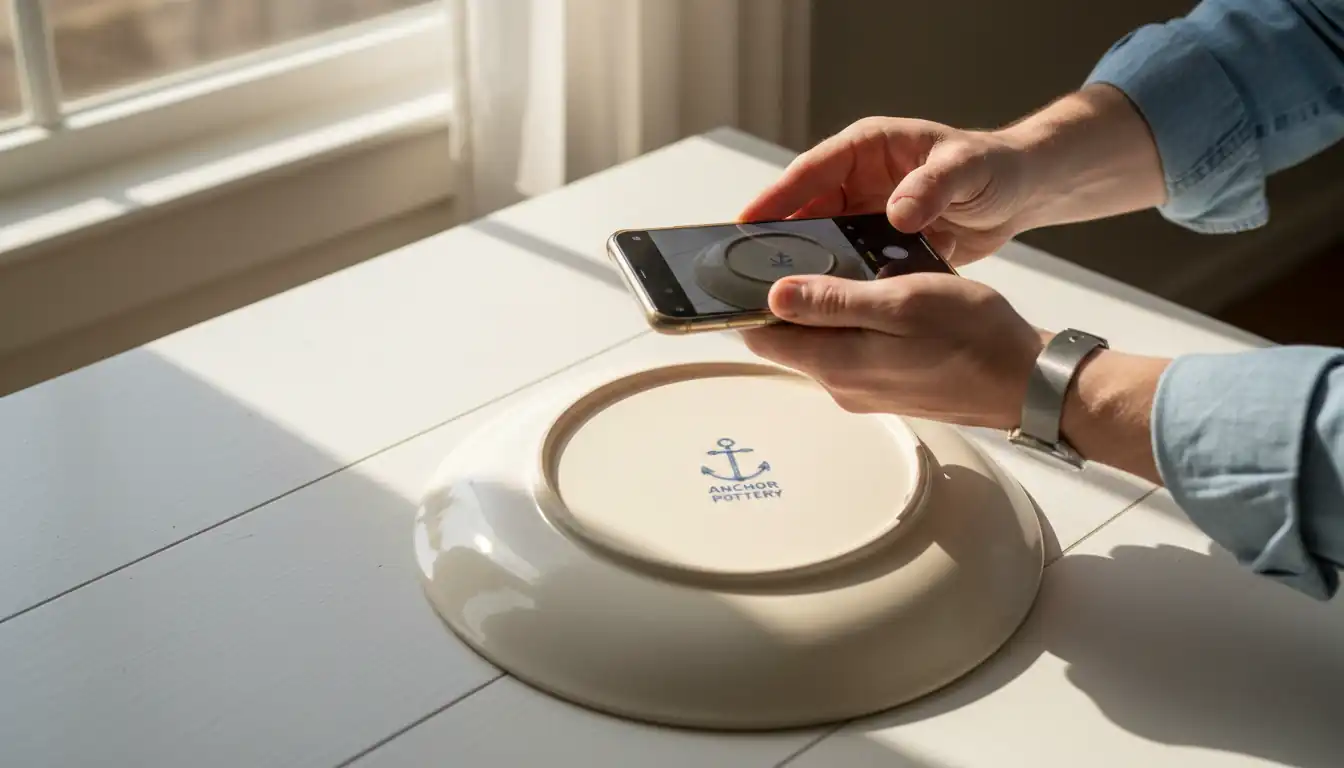
Once you have used Relic to identify your item and confirm its value, the final step is converting that knowledge into profit. The difference between a piece that sits on eBay for months and one that sparks a bidding war is how you present the data you’ve gathered.
In the antiques market, you aren't just selling an object; you are selling "provenance" and "certainty." Buyers, especially high-end collectors on platforms like 1stDibs or Ruby Lane, are willing to pay a premium when they feel confident in the item's authenticity.
Documenting Provenance for Online Marketplaces
Use the historical data provided by your Relic appraisal to write your listing. Instead of saying "Old Blue Plate," your title should be specific: "Authentic 1820s Spode Stone China Platter, Willis Pattern, Underglaze Blue Mark."
- Highlight the Details: Mention the specific type of mark (e.g., "impressed date cipher") and what it signifies.
- Condition Reporting: Be honest about wear, but use professional terms. Mention "light crazing consistent with age" or "shelf wear to the foot rim."
- Digital Records: Mention that the item has been identified and appraised using advanced AI vision. This adds a layer of modern tech-validation to your listing that builds trust with the buyer.
Timing the Market for Specific Ceramic Eras
Market trends in ceramics shift. Currently, there is a high demand for "Grandmillennial" styles—think floral patterns, chintz, and classic English ironstone. If your Relic scan identifies a piece as mid-19th-century Mason’s Ironstone, you are in a strong position to sell.
| Marketplace | Best For | Buyer Profile |
|---|---|---|
| eBay | Common to mid-range items | Bargain hunters and specialized collectors |
| Ruby Lane | High-quality antiques | Serious collectors looking for curated items |
| 1stDibs | Rare, museum-quality pieces | Interior designers and high-net-worth individuals |
| Facebook Marketplace | Heavy or fragile items | Local buyers (saves on shipping risks) |
By using the appraisal data to categorize your item correctly, you ensure it appears in the right searches. A collector looking for "Flow Blue" will never find your item if you just list it as "blue pottery." The identification is the key that unlocks the market.
Conclusion
The world of antique ceramics is no longer a closed circle reserved for those with expensive degrees or decades of experience. The "hidden language" of backstamps is being decoded by technology, making it possible for anyone with a smartphone to spot a payday in a pile of porcelain.
By understanding the history of marks, recognizing the high costs and limitations of traditional appraisals, and utilizing specialized AI tools like Relic, you can navigate the market with confidence. You can avoid the traps of "free" generic searches and the risks of counterfeit items.
The next time you see a piece of pottery with a strange symbol on the bottom, don't just set it back down. Take a photo, run a scan, and see what history—and value—is hiding beneath the surface. Your next great find is likely closer than you think.
Identify antiques instantly
Point your camera at any antique, collectible, or vintage item. Get valuations, history, and market insights in seconds.
Download for iPhone