That Dusty Pocket Watch Could Be Worth a Fortune—Here’s How to Identify It Instantly

You find it at the bottom of a jewelry box, wrapped in a yellowed handkerchief, or perhaps tucked away in the corner of a dusty attic trunk. It feels heavier than you expected. When you hold it, there is a sense of history that modern gadgets simply cannot replicate. This isn't just an old timepiece; it is a mechanical marvel from an era when things were built to last several lifetimes.
The question is, what exactly are you holding? Is it a mass-produced heirloom with sentimental value, or a rare horological treasure worth thousands of dollars? Identifying a vintage pocket watch can feel like learning a dead language, but the clues are all there, etched into the metal and painted on the enamel. You just need to know where to look.
By the time you finish reading this, you will understand how to read the "DNA" of your watch. We will cover everything from the symbols on the dial to the hidden gears inside the case. You will learn why the numbers on the outside often don't matter, and how modern technology can turn a weekend of research into a five-second task.
Visual Markers That Reveal a Watch's Secret History
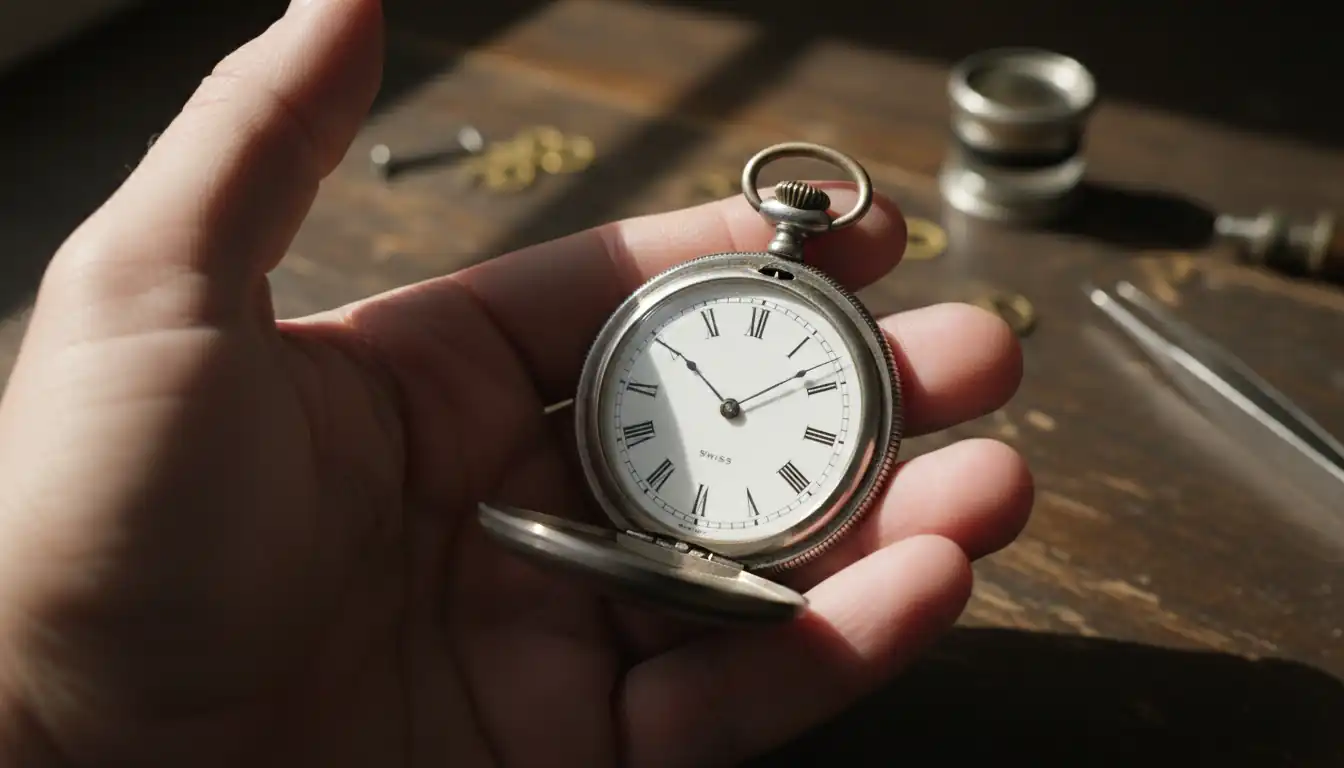
Before you reach for any tools, take a close look at the face of the watch. The dial is the "handshake" of the timepiece—it introduces the watch to the world. However, many beginners make the mistake of assuming the name on the dial is the company that manufactured the entire watch. This isn't always the case.
Decoding Dial Signatures and Logo Variations
When you look at the dial, you might see a famous name like "Waltham" or "Elgin." These are the titans of American watchmaking. If you see "Waltham" written in a simple, blocky font, it likely dates from the late 19th century. If it features a star symbol or a more stylized "W," it might be a later model or a specific grade.
However, you might also see a name like "Tiffany & Co." or a local jeweler's name from a city like Chicago or Philadelphia. This is often a "retailer signature." In the golden age of pocket watches, high-end jewelers would buy movements from manufacturers and have their own names printed on the dial. This doesn't mean the watch is a generic "no-name" piece; in fact, retailer-signed watches from prestigious houses can sometimes be worth more than the standard factory versions.
| Dial Feature | What It Usually Means |
|---|---|
| Manufacturer Name (e.g., Hamilton) | The company that built the internal movement. |
| Retailer Name (e.g., Peacock Jewelers) | The store that sold the watch and likely ordered a custom dial. |
| "Swiss Made" | Produced in Switzerland, often indicating a different set of quality standards. |
| Roman Numerals | Common in 19th-century watches; often suggests an older or more formal style. |
| Arabic Numerals | Frequently found on "Railroad Grade" watches for better legibility. |
Reading the Case Hallmarks and Metal Stamps
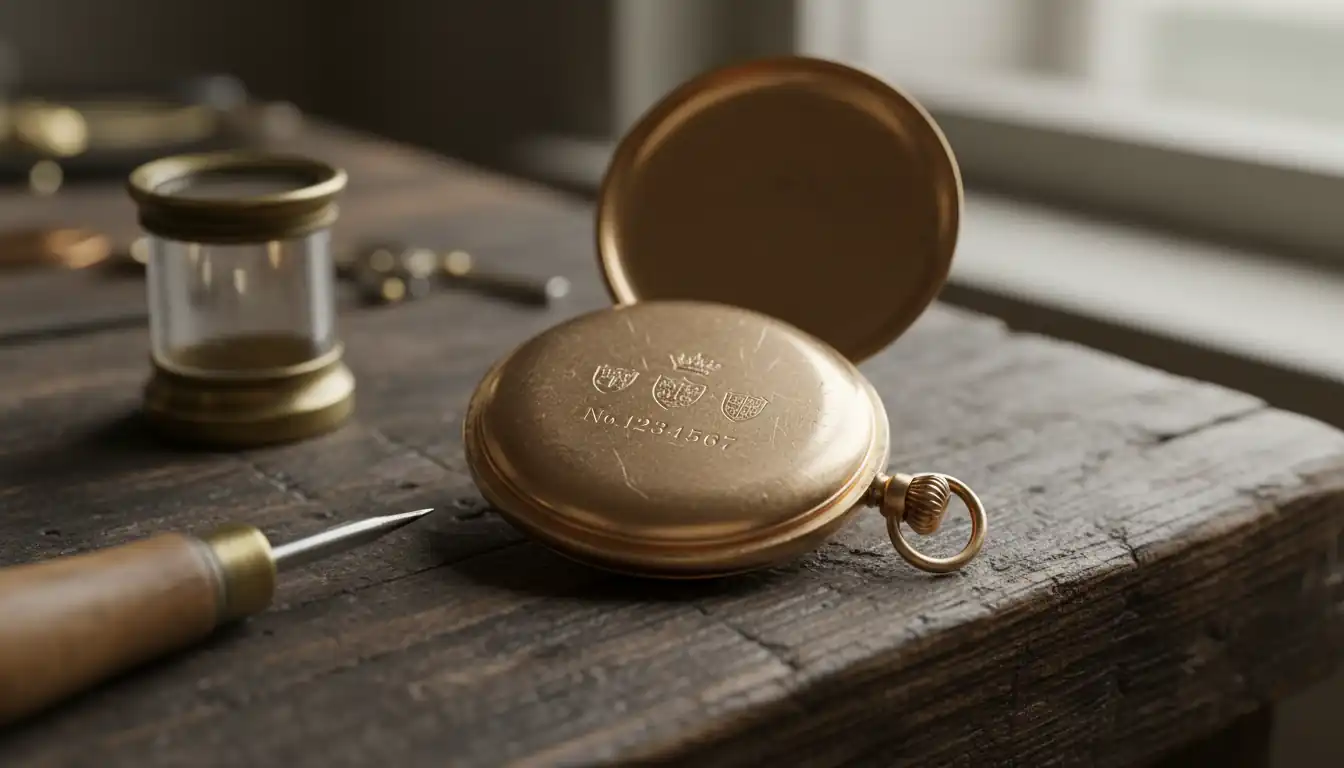
Once you’ve looked at the dial, turn the watch over. The case is the protective shell, but it is often made by a completely different company than the movement inside. This is a crucial distinction: the serial number stamped on the inside of the watch case is almost never the serial number used to identify the watch's age or brand.
Look for small symbols, known as hallmarks, or text indicating the metal content. If you see "Guaranteed 20 Years" or "Permanent," you are likely looking at a gold-filled case. This means a layer of gold was mechanically bonded to a base metal. While beautiful, it isn't solid gold. If the watch is solid gold, you will see stamps like "14K" or "18K," or perhaps a small animal symbol (like a squirrel or a lion) if the case is European.
Key Insight: Never use the serial number on the case to look up your watch in a database. Case manufacturers were separate entities. To find the true identity of the watch, you must look at the movement inside.
Opening the Case to Reveal the Movement's Identity
To truly identify your vintage watch, you have to go "under the hood." The movement is the engine of the watch, and it holds the specific data points required for a definitive identification. If you are nervous about opening it, don't be—most cases were designed to be opened by the owner for regulation.
Locating and Interpreting Serial Numbers
There are two main types of cases: screw-back and snap-back. A screw-back case requires you to grip the back firmly with your palm and rotate it counter-clockwise. A snap-back case will have a tiny, almost invisible lip or "notch" where you can gently insert a thin blade or a case-opening tool to pop it off.
Once the back is off, you will see the movement. This is where the real serial number lives. It is usually engraved directly onto the metal plates (the bridges). This number is the key to the kingdom. You can take this number and the manufacturer's name to online resources like the Pocket Watch Database or the NAWCC (National Association of Watch and Clock Collectors) records. These databases can tell you the exact year the watch was made, the "grade" of the movement, and even how many were produced in that specific run.
Identifying Movement Grades and Jewel Counts
As you look at the movement, you will notice small, colorful circles that look like tiny rubies. These are "jewels." They aren't there for decoration; they are functional bearings made of synthetic or natural gemstones that reduce friction on the spinning gears.
- 7 to 11 Jewels: These are generally considered "standard" or consumer-grade watches. They were reliable but affordable.
- 15 to 17 Jewels: This is the "fully jeweled" threshold. These watches were high-quality and built for precision.
- 19 to 24 Jewels: These are the elite. Watches with this many jewels were often "Railroad Grade," meaning they met the strict timing requirements of the US railroad system, where a few seconds of error could lead to a train collision.
You might also see words like "Adjusted" or "Adjusted to 5 Positions." This means the watch was manually calibrated by a master watchmaker to keep accurate time regardless of whether it was lying flat, hanging from a pocket, or subjected to temperature changes. The more "adjustments" a watch has, the higher its value usually is.
Using AI Image Recognition to Skip the Research Grind
Manual research is a rewarding hobby, but it can be incredibly time-consuming. You might spend hours squinting at blurry forum photos or scrolling through digitized ledgers from the 1920s only to find a conflicting answer. This is where modern technology has changed the game for collectors and casual finders alike.
How Relic Analyzes Watch Components for Instant Identification
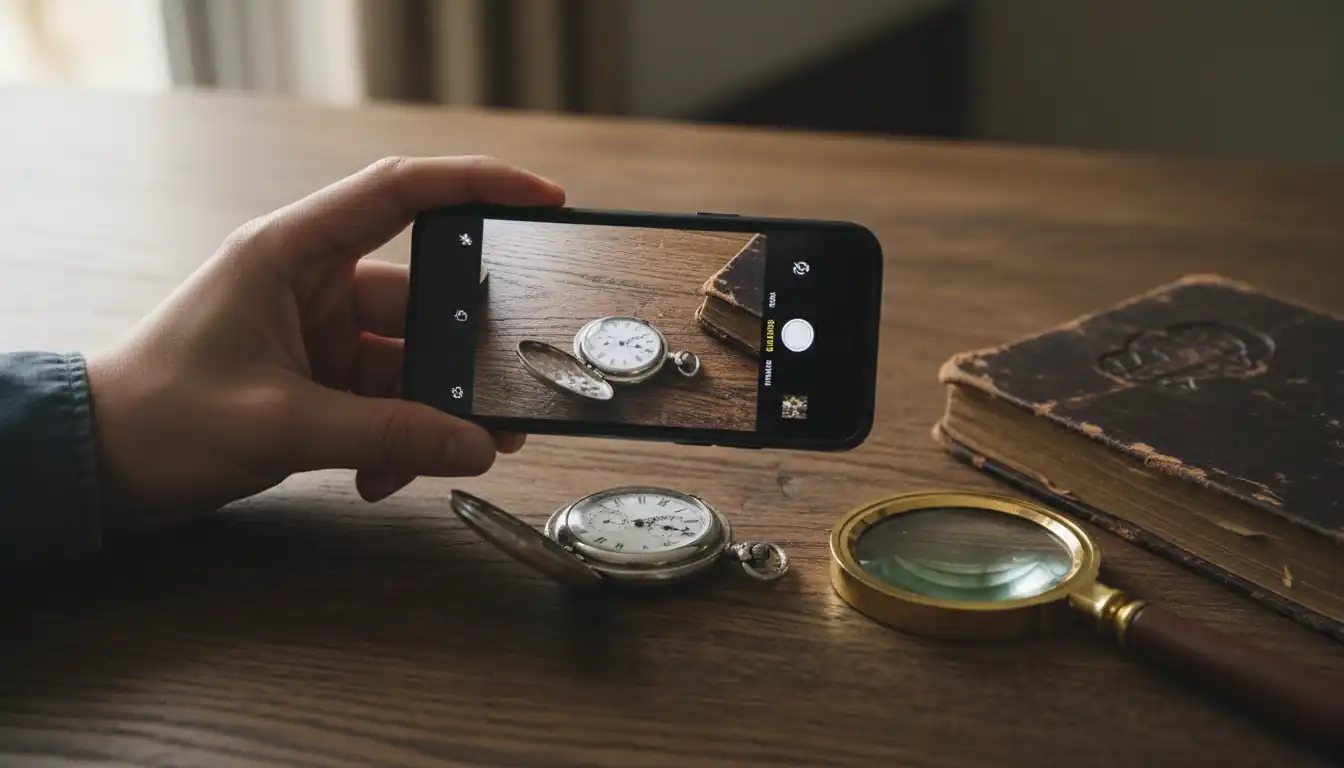
If you want to know exactly what you have without becoming a self-taught horologist overnight, the Relic app is a powerful tool to have on your phone. Instead of manually cross-referencing serial numbers and bridge shapes, you simply take a clear photo of the watch—both the dial and the movement.
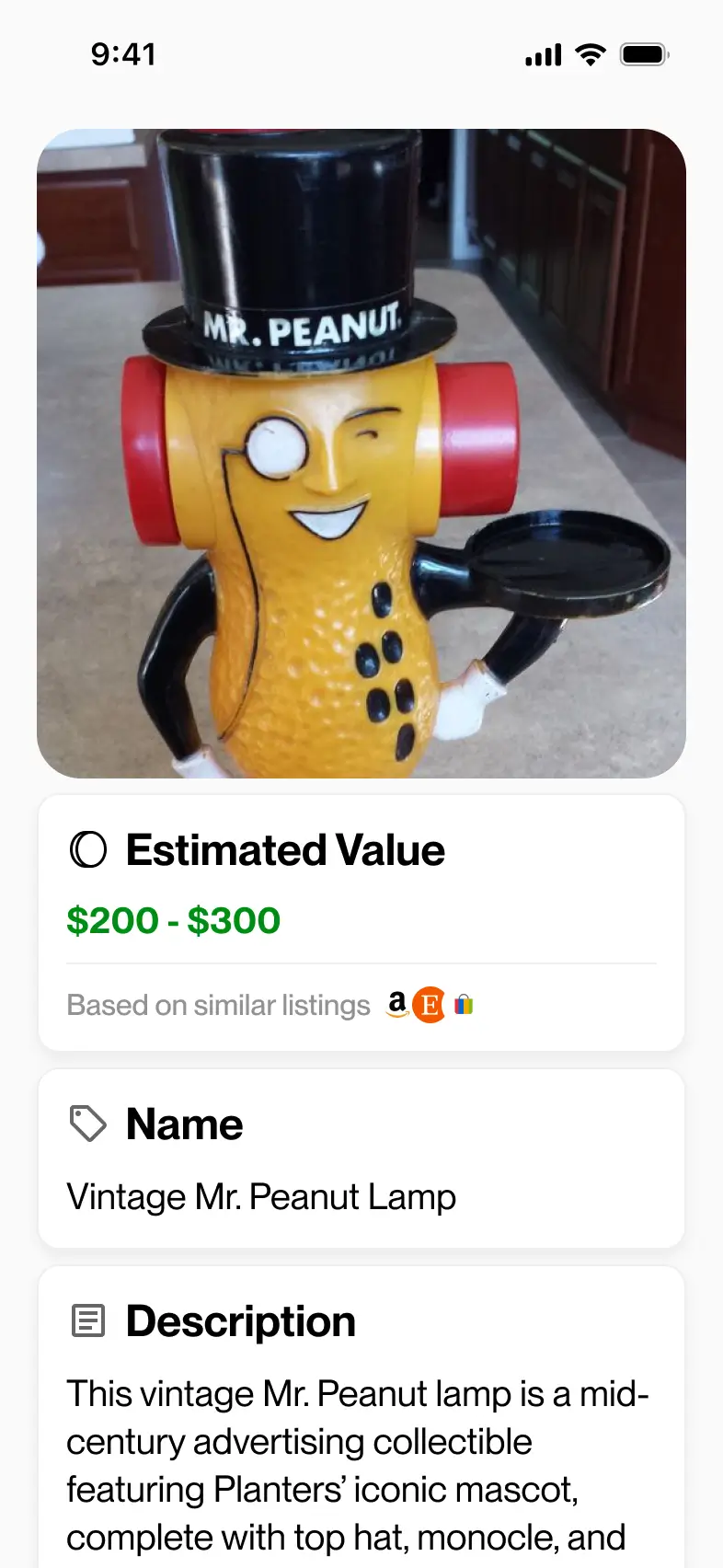
Relic uses advanced AI to analyze the specific architecture of the watch. It looks at the shape of the bridges, the placement of the screws, and the style of the engravings. Because the app has been trained on a massive catalog of antiques, it can recognize patterns that the human eye might miss. It doesn't just tell you the brand; it provides the history, origin, and a real appraisal of the item.
Comparing Visual Search to Manual Database Lookups
Think of manual research like using a paper map, while using an app like Relic is like using GPS. Both will get you to the destination, but one is significantly faster and less prone to human error.
- Manual Lookup: Requires opening the watch, finding a serial number, identifying the manufacturer, and searching a database. If the serial number is worn down or the brand is obscure, you might hit a dead end.
- Relic AI Scan: You upload a photo, and the AI matches the visual "fingerprint" of the movement against thousands of known calibers. It’s particularly helpful for watches where the brand name has faded or the movement is "unmarked" (common in some European watches).
For professionals like estate liquidators or antique dealers, this speed is vital. With a 4.9-star rating from over 20,000 reviews, the app has become a go-to for people who need accurate market insights in seconds rather than days. It bridges the gap between "I think this is an old watch" and "I know this is a 1908 Hamilton 992."
Identifying Private Label and Obscure Swiss Ghost Brands
Not every valuable watch has a household name like Rolex or Longines on the dial. In fact, some of the most interesting finds are "Private Label" watches or pieces from "Ghost Brands."
The Mystery of Retailer-Signed Pocket Watches
A Private Label watch is essentially a "store brand" version of a high-end product. A jeweler in a wealthy city might order 100 top-tier movements from the Illinois Watch Company but request that the factory engrave the jeweler's own name on the plates.
To the untrained eye, these look like "no-name" watches. However, if you look at the movement architecture, you might realize the watch is actually a high-grade masterpiece hidden behind a local jeweler’s signature. These are often sleepers in the market—watches that sell for low prices because the seller didn't recognize the manufacturer hidden beneath the private label.
Spotting High-Quality Movements in Unbranded Cases
During the mid-20th century, the "Quartz Crisis" caused many storied Swiss watchmaking firms to go bankrupt. These are the "Ghost Brands." They produced incredible mechanical movements for decades, but when they went out of business, their records were lost or destroyed.
When you encounter a Swiss watch with no brand name, look for these quality indicators:
- Perlage or Côtes de Genève: These are decorative patterns (circles or stripes) engraved onto the metal plates. High-quality brands took the time to beautify the parts you can't even see.
- Swan Neck Regulator: A small, curved metal spring near the balance wheel used for fine-tuning. This is almost always a sign of a high-end movement.
- Gold Chatons: Look at the jewels. Are they pressed directly into the plate, or are they held in place by tiny gold rings with even tinier screws? Those rings are called chatons, and they are a hallmark of luxury watchmaking.
Determining If Your Identified Watch Is a Collector's Prize
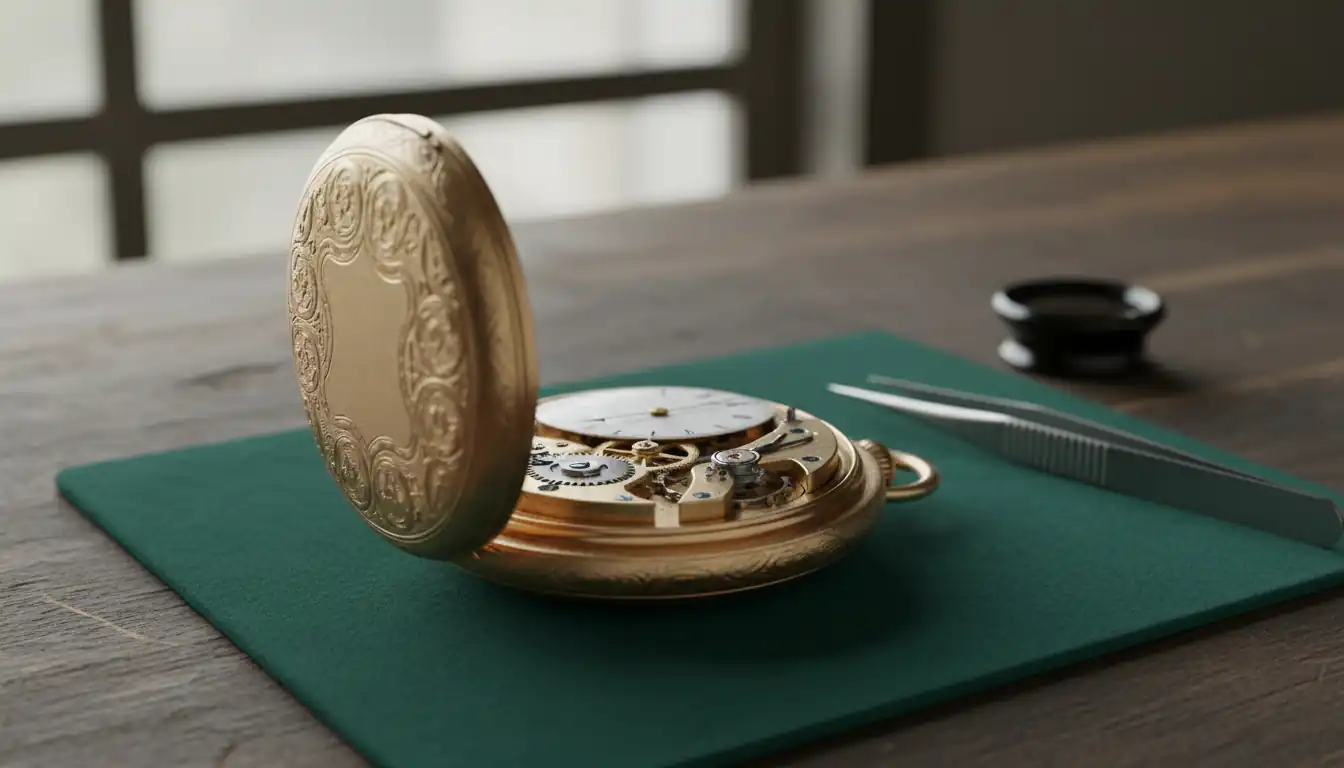
Once you know the brand and the age, you are ready for the most exciting part: determining the value. Identification is the foundation, but valuation is about the nuances of the individual piece.
Factors That Influence Market Value Beyond the Brand
Two watches made in the same factory in the same year can have wildly different values based on their "complications." A complication is any function the watch performs beyond telling the time in hours and minutes.
- Chronographs: Watches with a stopwatch function.
- Repeaters: Highly valuable watches that chime the time when you slide a lever.
- Moon Phases: A window that shows the current phase of the moon.
- Up/Down Indicators: A gauge that shows how much "power" is left in the mainspring before you need to wind it again.
Condition is the other major factor. A "mint" dial with no cracks (hairlines) is significantly more valuable than a cracked one. Collectors also look for "originality." If the hands have been replaced or the case isn't original to the movement, the value can drop.
Documenting Your Watch for Insurance or Sale
If you discover that your watch is indeed a prize, you need to document it properly. This is important for insurance purposes or if you decide to list it for sale on a platform like eBay or at a specialized auction house.
Documentation Checklist:
- Clear Dial Photo: Take this in natural light without a flash to avoid glare.
- Macro Movement Photo: Capture the serial number and any engravings clearly.
- Case Hallmarks: Photograph the inside of the back cover.
- Video of Operation: A 10-second clip of the watch ticking can prove the movement is functional.
Pro Tip: When seeking an appraisal, distinguish between "Insurance Value" (what it would cost to replace the item at retail) and "Fair Market Value" (what a collector would actually pay you for it today).
Using an app like Relic can simplify this documentation process. Because the app provides a real appraisal based on current market data, you have a professional starting point for your valuation. It saves you from the guesswork and helps you avoid the heartbreak of selling a "fortune" for a pittance.
Conclusion
Identifying a vintage pocket watch is a bit like being a detective. You start with the external clues on the dial, move to the "DNA" hidden inside the movement, and use those numbers to unlock a century of history. Whether you have a rugged Railroad watch that timed the expansion of the country or a delicate Swiss piece meant for a tuxedo pocket, every watch has a story to tell.
If you find yourself overwhelmed by serial numbers and hallmark symbols, remember that you don't have to do it alone. Tools like the Relic app can provide instant clarity, turning a mystery into a documented piece of history with a single photo.
Your next step is simple: find a steady surface, a good light source, and open that case. You might be holding a simple tool from the past, or you might be holding a small fortune. There is only one way to find out.
Identify antiques instantly
Point your camera at any antique, collectible, or vintage item. Get valuations, history, and market insights in seconds.
Download for iPhone