That Dusty Shelf Item Could Pay Your Rent: Identifying Hidden Thrift Store Gold

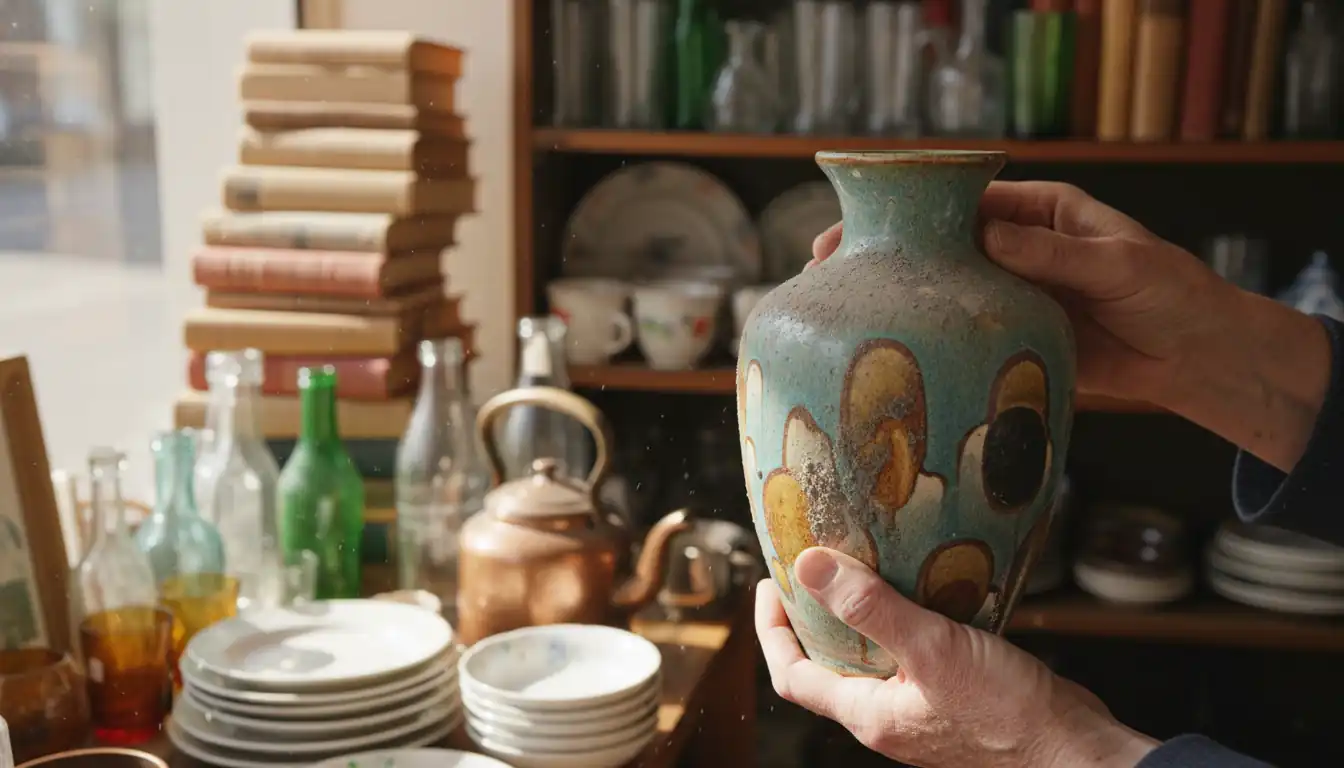
You walk into a local thrift store and the smell of old paper and dust hits you. Most people see a mountain of discarded junk, but you are looking for the one item that doesn't belong. It might be a heavy glass bowl tucked behind a stack of chipped mugs or a sturdy wooden chair painted an ugly shade of neon green. Hidden in plain sight are items that could pay your rent, cover a car payment, or fund your next vacation.
The difference between a casual browser and a professional flipper is the ability to see past the grime. You aren't just looking for things that look "nice." You are looking for indicators of quality, historical significance, and manufacturing techniques that no longer exist in the world of flat-pack furniture and fast fashion. This guide will teach you how to sharpen your eyes and your instincts to spot the gold buried under the dross.
By the time you finish reading, you will know exactly what to keep an eye out for while thrifting. We will cover everything from the weight of a brass candlestick to the specific way a book’s copyright page is laid out. You will learn how to identify valuable thrift finds by understanding materials, brands, and the "nostalgia economy" that drives modern resale prices.
Spotting Hidden Value in Common Thrift Categories
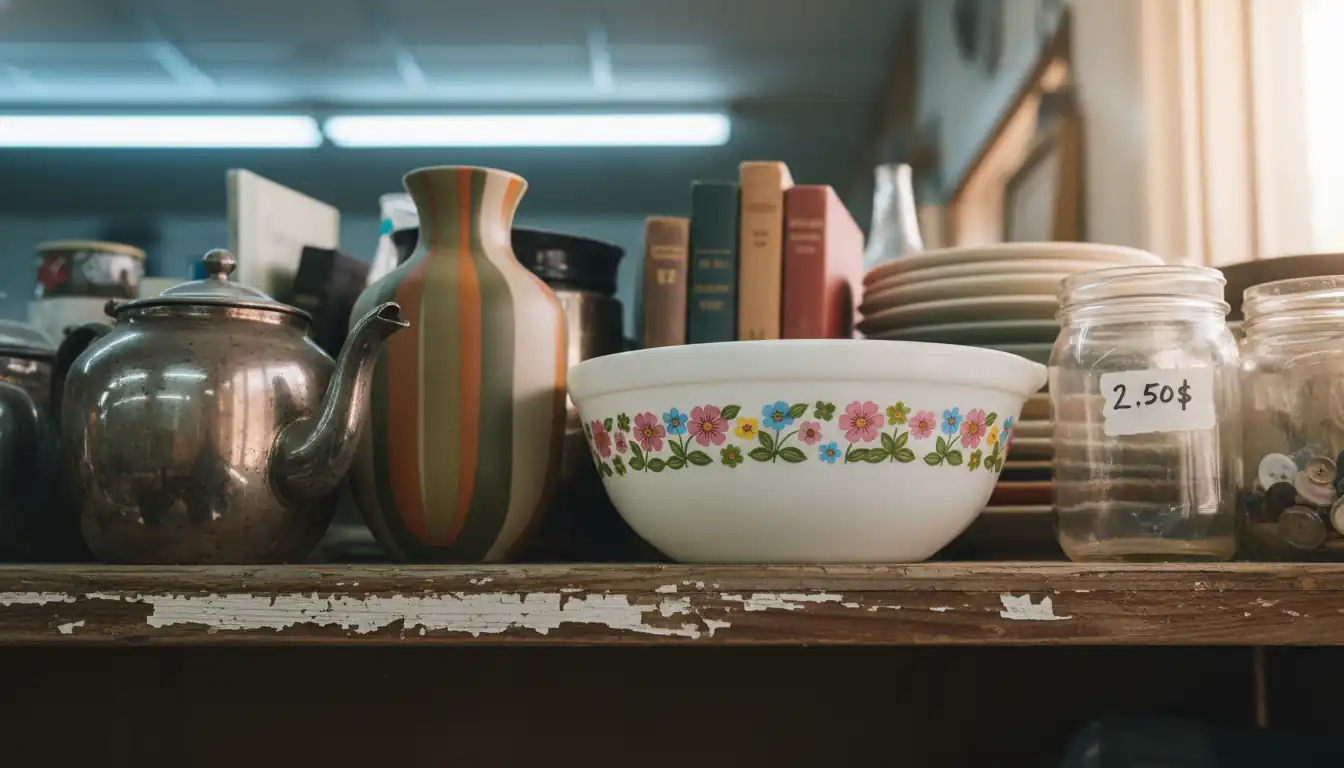
When you first enter a thrift store, the sheer volume of stuff can be overwhelming. To find the hidden gems, you need to filter out the noise. Start by looking at the raw materials. High-quality goods have a specific "heft" and "feel" that mass-produced modern items lack. If a piece of furniture feels light and hollow, it is likely particle board. If a metal item feels like plastic with a thin coating, it’s probably a modern reproduction.
Designer Labels and High-End Textiles
Clothing and textiles are often the easiest places to start, but they require a discerning touch. Don't just look at the style; look at the construction. High-end garments are built to last decades, not weeks. Check the interior seams—are they finished cleanly, or are there loose threads everywhere?
- The "Made in Italy" Factor: This is more than just a label; it is a hallmark of specific tanning and weaving traditions. Italian leather and wool are globally recognized for their durability and texture.
- Natural Fibers: Learn to identify silk, cashmere, and heavy linen by touch. Synthetic blends often have a "squeaky" or overly smooth feel, whereas natural fibers have a complex, rich texture.
- Hardware Quality: Look at the zippers and buttons. Designer pieces often use Riri or YKK Excella zippers, which feel heavy and glide smoothly. Horn or mother-of-pearl buttons are a massive upgrade over standard plastic.
The resale market for vintage high-end textiles is booming. A 1980s silk scarf from a heritage brand can often sell for ten times its thrift store price. Look for hand-rolled edges on scarves—if the hem is stitched by a machine, it’s likely a mass-market item.
Mid-Century Furniture and Antique Bar Carts
Furniture is where the biggest profits often hide, but it requires the most physical effort to inspect. Mid-century modern (MCM) pieces are currently at a fever pitch in the collector world. These items, produced roughly between 1945 and 1970, are prized for their clean lines and functional beauty.
- Dovetail Joints: Pull out a drawer. If you see interlocking wedge-shaped joints connecting the front of the drawer to the sides, you’ve found a sign of quality craftsmanship. These joints are much stronger than simple nails or staples.
- Solid Wood vs. Veneer: While some high-end MCM pieces use beautiful teak or rosewood veneers, you want to avoid "paper" veneers found on cheap modern furniture. Look at the edges; if you see a repeating grain pattern that looks like a sticker, walk away.
- Heavy Brass Hardware: Antique bar carts and side tables often feature solid brass. If a piece is "brass-plated," it will feel light and might show signs of silver-colored metal peeking through scratches. Solid brass is heavy, has a deep golden hue, and can be polished back to a mirror finish regardless of how much tarnish it has.
Pro Tip: Look for furniture with "tapered legs." This is a classic indicator of the Mid-Century style. Even if the wood is scratched, the silhouette alone can make it valuable to a restorer.
| Feature | High-Value Indicator | Low-Value Indicator |
|---|---|---|
| Furniture Joints | Dovetail or Mortise and Tenon | Staples, Glue, or Cam-locks |
| Metal Components | Solid Brass or Chrome-plated Steel | Painted Plastic or Thin Aluminum |
| Wood Type | Teak, Walnut, Oak, or Mahogany | Particle Board or MDF |
| Origin Labels | Denmark, Italy, or USA (Vintage) | Made in China (Modern Mass Market) |
Evaluating Rare Books and Original Art Prints
The media and decor aisles are often the most misunderstood sections of a thrift store. People assume that because a book is old, it must be valuable, or because a painting is in a nice frame, it is an original. Neither is necessarily true. Identifying valuable thrift finds in these categories requires a mix of tactile inspection and historical knowledge.
First Edition Books and Historical Documents
Finding a first edition is the "holy grail" for many book scouts. However, a book being a "first edition" doesn't always mean it is a "first printing." Collectors want the very first batch of books that ever hit the shelves.
- The Price on the Dust Jacket: For modern classics, the presence of a price on the inside flap of the dust jacket is crucial. If the price is clipped or missing, the value drops significantly.
- The Number Line: Open the book to the copyright page. Look for a string of numbers like "10 9 8 7 6 5 4 3 2 1." If the "1" is present, it is often a first printing. If the numbers start at "4," it’s a fourth printing.
- Condition of the Spine: A "cocked" or slanted spine indicates the book was stored poorly. Collectors want "crisp" copies.
Historical documents, such as old maps, pamphlets, or even 19th-century letters, are "pieces of history" that carry significant weight. Look for "foxing"—those little brown age spots on paper. While it sounds like damage, on very old documents, it can actually help verify age.
Original Paintings and Antique Wool Rugs
Distinguishing an original oil painting from a mass-produced print is a skill that will save you from wasting money on "hotel art."
- The "Side-Eye" Test: Look at the surface of the art from an angle. Do you see raised ridges of paint? If the surface is perfectly flat but looks like it has brushstrokes, it is likely a "giclée" or a textured print.
- The Back of the Canvas: Turn the frame around. An old painting will have a darkened, aged wooden stretcher bar. If the wood looks bright and new, but the painting looks "old," it might be a modern reproduction made to look antique.
- Wool Rugs: Flip the corner of a rug over. If you see the exact same pattern on the back as you do on the front, it is likely hand-knotted. If there is a canvas backing glued to the bottom, it is a machine-made rug with very little resale value.
Antique wool rugs are incredibly resilient. Even if they look filthy, a professional cleaning can reveal a $500 rug that you bought for $20. Look for "abrash," which are slight variations in color within the same yarn. This indicates the use of natural dyes, which collectors highly prize.
Profiting from Vintage Toys and Classic Electronics
The "nostalgia economy" is a powerful force. People in their 30s, 40s, and 50s are now at an age where they want to buy back their childhood. This has turned what used to be "garage sale junk" into high-end collectibles.
High-Value Collectibles and Timepieces
When looking at toys, condition is everything, but rarity can trump damage. Even a "played-with" action figure from a popular 1970s franchise can be worth hundreds if it’s a rare variant.
- Mechanical Watches: Ignore the "fashion watches" (brands like Fossil or Michael Kors). Look for names like Omega, Longines, or even vintage Seiko. If you pick up a watch and it starts ticking just from the movement of your hand, it’s a mechanical or automatic movement. These are almost always more valuable than battery-operated quartz watches.
- Die-Cast Cars: Look for Redline Hot Wheels (cars made between 1968 and 1977 with a red circle on the tire). These can be worth thousands in the right circles.
- Professional Musical Gear: Even if you don't play an instrument, learn the logos. A Roland synthesizer or a Boss effects pedal from the 80s is a guaranteed flip. Musicians crave the "analog warmth" of older gear that modern software can't quite replicate.
Retro Kitchenware
Kitchenware is a sleeper category. Many people donate their grandmother's old dishes without realizing they are giving away hundreds of dollars in "milk glass" or "enameled cast iron."
- Pyrex Patterns: Not all Pyrex is equal. Look for bright colors and specific patterns like "Butterprint" (Amish farmers) or "Gooseberry." Avoid pieces that are "DWD" (Dishwasher Damaged), which makes the paint look dull and chalky.
- Le Creuset and Staub: These French brands make enameled cast iron cookware that lasts a lifetime. Even a chipped Dutch oven can be worth $50-$100 because of the brand's reputation for heat retention.
- Vintage Blenders and Mixers: Brands like Hobart-era KitchenAid or early Waring blenders are built like tanks. They are often heavier and more powerful than their modern counterparts.
Why do people buy old electronics that might not even work? Often, it’s for the "aesthetic appeal." A non-functional 1960s tube radio is still a beautiful piece of industrial design that someone will pay to display on their bookshelf.
Instant Appraisal Tools for the Modern Thrifter
You can spend years memorizing hallmarks and furniture styles, but the reality is that the world of antiques is too vast for any one person to know everything. This is where technology bridges the gap. If you’ve ever stood in a thrift aisle staring at a strange ceramic mark, wondering if it’s a masterpiece or a dollar-store trinket, you know the frustration of the unknown.
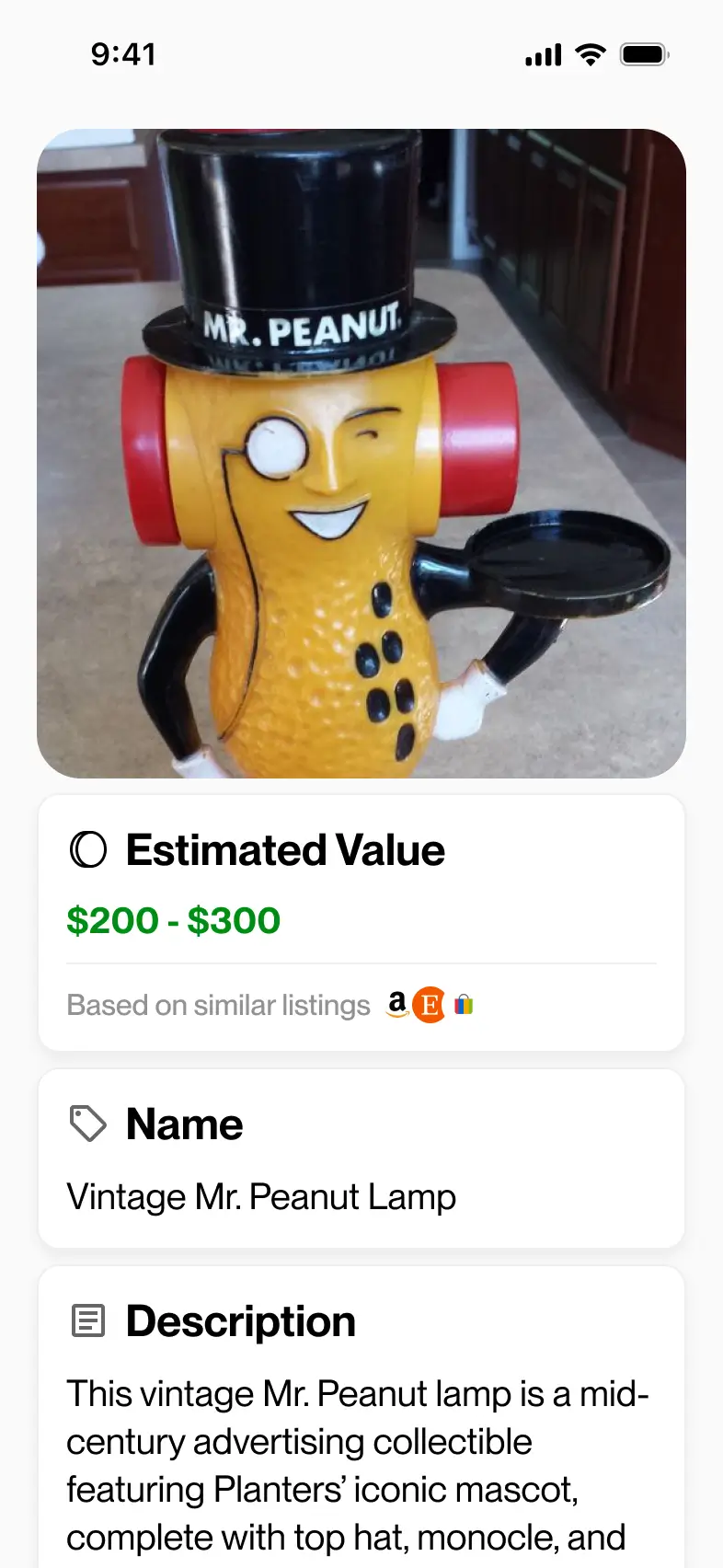
The Relic app is designed to solve this exact problem. Instead of spending twenty minutes trying to describe a vase to a search engine, you can simply take a photo or upload one from your gallery. Relic uses advanced AI to analyze the item and provide a real appraisal, history, and origin. It’s like having a professional appraiser in your pocket while you browse the shelves.
Using AI to Decode Maker Marks and Hallmarks
One of the hardest things to identify is a "maker's mark" on the bottom of silver or porcelain. These marks are often tiny, stylized, or written in a language you might not speak.
- Instant Identification: Relic can scan these marks and cross-reference them with a massive database of historical signatures.
- Bypassing Manual Searches: You no longer have to guess if a mark belongs to a famous 19th-century pottery house or a modern hobbyist. The AI does the heavy lifting, giving you the confidence to buy or pass in seconds.
Real-Time History and Origin Research
Knowing what an item is is only half the battle. Knowing why it matters is what allows you to sell it for a premium. Relic doesn't just give you a name; it provides the historical context.
Was this item part of a specific art movement? Was it manufactured during a short-lived partnership between two famous designers? This information is the "story" that sells the item. When you know the origin, you aren't just selling a "dusty shelf item"—you are selling a piece of history. With a 4.9-star rating from over 20,000 reviews, the app has become a staple for professional pickers and dealers who need accurate data on the fly.
Maximizing Profit Through Strategic Authentication
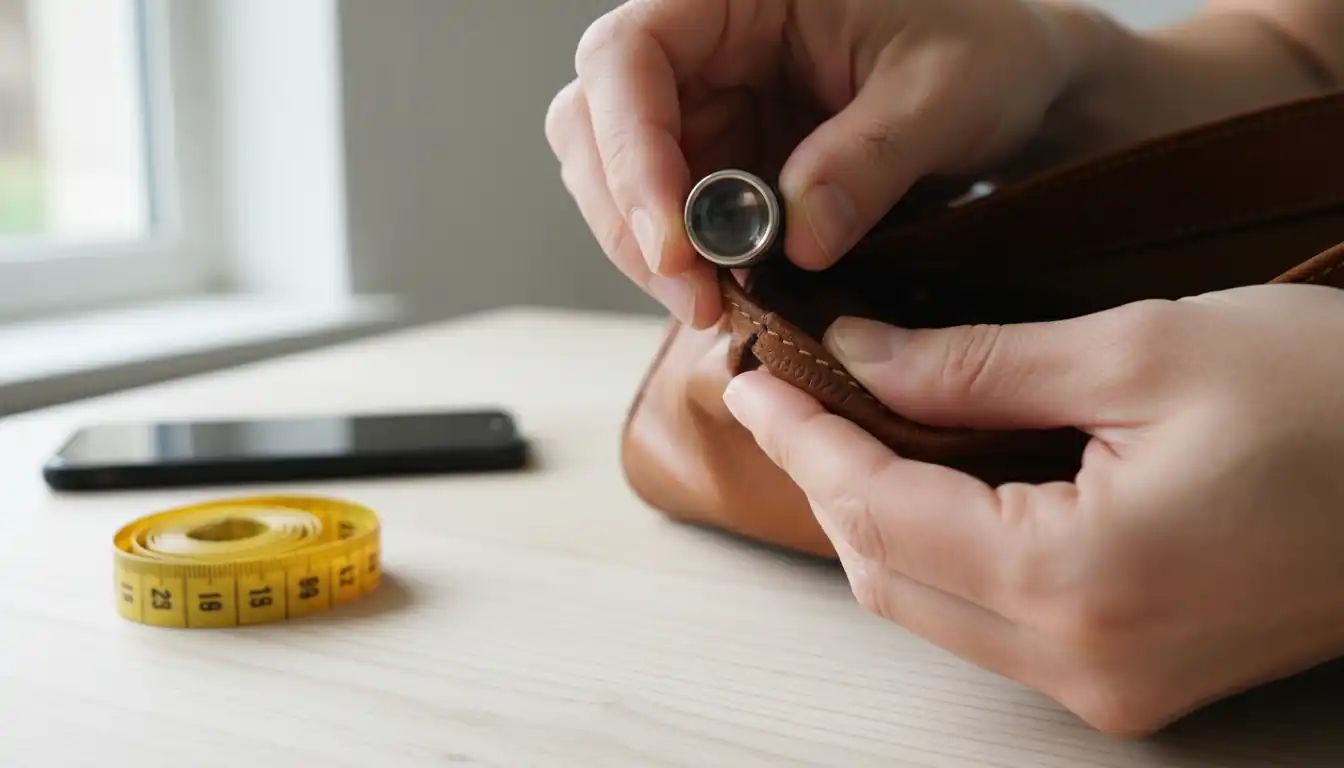
Once you have identified a valuable item and used a tool like Relic to confirm its history and value, the next step is turning that find into profit. This is where many amateur flippers fail. They find a $200 item but sell it for $40 because they don't know how to present it to the market.
Documenting Provenance for High-Value Sales
Provenance is simply the history of ownership of a valued object. While you might not know who owned the item before it hit the thrift store, you can use the data from your research to build a "digital provenance."
- Tell the Story: When listing an item on eBay, 1stDibs, or Chairish, use the historical details you've gathered. Mention the specific years of production, the designer, and the materials used.
- High-Quality Photography: Take photos in natural light. Show the maker's marks clearly. If you used an appraisal tool to verify the item, mention the specific characteristics that prove its authenticity.
- Justifying the Price: Buyers are willing to pay more when they feel they are buying an "authenticated" piece. Providing a detailed history justifies your high price tag and builds trust.
Avoiding Common Pitfalls in Thrift Flipping
The quickest way to devalue a rare find is to "over-clean" it. Many beginners see a tarnished silver tray or a dusty wooden chest and immediately reach for harsh chemicals or sandpaper.
- The Value of Patina: In the world of antiques, "patina" is the visible age an object acquires over time. For many collectors, a 100-year-old bronze statue that has turned slightly green is more valuable than one that has been polished to look brand new.
- Gentle Cleaning Only: Use a soft cloth and mild soap if necessary. Never use abrasive cleaners on ceramics or glass, as you can scratch the glaze or remove delicate gold leaf detailing.
- Research Before Repair: If you find a piece of furniture with a broken leg, research the maker before trying to fix it yourself. A "bad" repair can sometimes be worse for the value than the original damage.
| Mistake | Why it Hurts Value | Better Approach |
|---|---|---|
| Sanding Antique Wood | Removes original finish and history | Use a high-quality wood wax to restore shine |
| Polishing Old Coins | Collectors want original surfaces | Never clean coins; leave them as-found |
| Using Bleach on Textiles | Can rot old fibers and fade dyes | Use specialized, gentle linen soaks |
| Ignoring Small Chips | Can lead to "buyer's remorse" returns | Always disclose every flaw in your listing |
Conclusion
Thrifting for profit is a blend of art and science. It requires a "boots on the ground" approach where you are willing to get your hands dirty, combined with the modern power of AI-driven research. By focusing on high-quality materials like solid brass, identifying the hallmarks of Mid-Century design, and understanding the nuances of the nostalgia economy, you can consistently find items that others overlook.
Remember that you don't have to be an expert in every category to be successful. Use your eyes to spot quality, use your hands to feel for craftsmanship, and use tools like the Relic app to provide the professional-grade appraisal and history you need to confirm your instincts.
The next time you walk past a dusty shelf, don't just see a mess. Look for the dovetail joints, the hand-rolled edges, and the mechanical "tick" of a vintage watch. Your next big find is waiting for you to recognize it. Download an identifier tool, head to your nearest shop, and start turning those hidden gems into real-world profit.
Identify antiques instantly
Point your camera at any antique, collectible, or vintage item. Get valuations, history, and market insights in seconds.
Download for iPhone