That Dusty Tavern Counter Might Be a Victorian Masterpiece—Here’s How to Tell

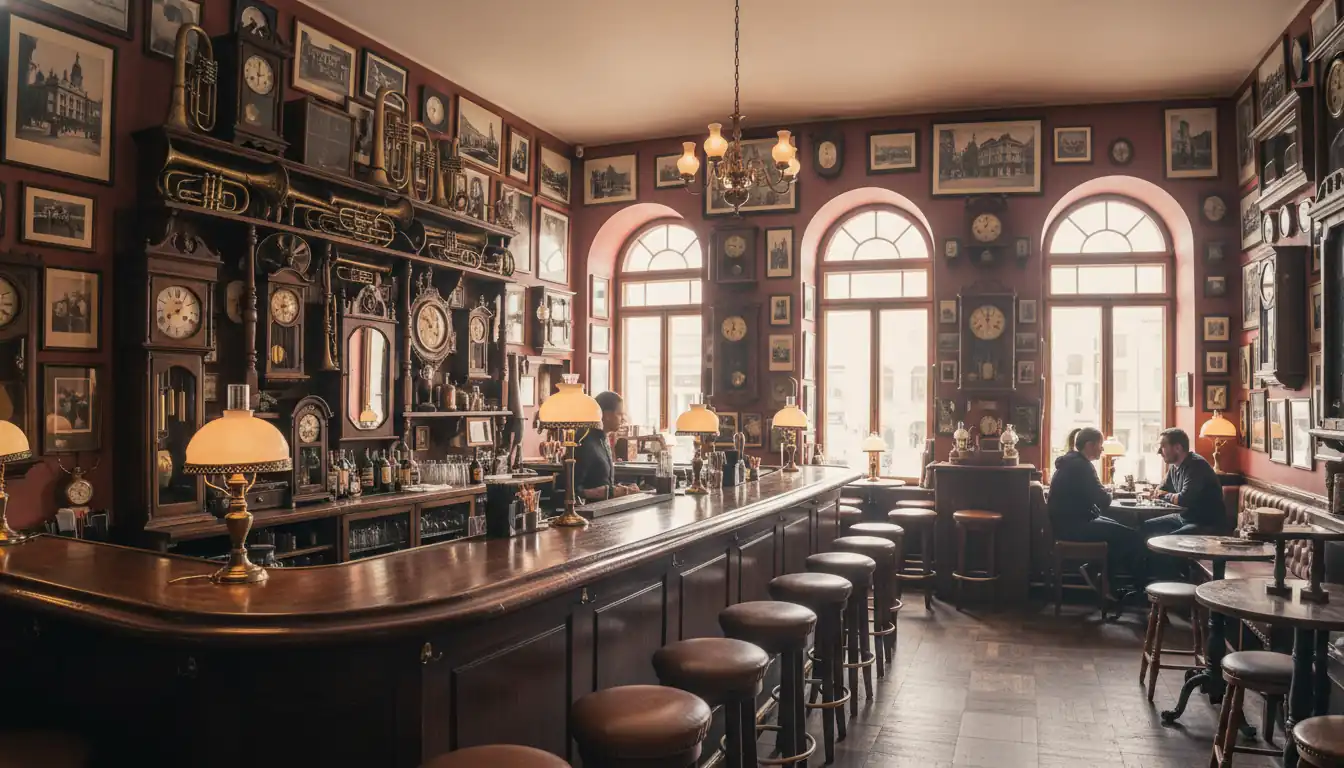
Imagine you are standing in a dimly lit basement or a forgotten corner of an old warehouse. Before you sits a massive, imposing structure of dark wood, thick with dust and obscured by decades of neglect. To the untrained eye, it looks like a relic of a bygone era, perhaps just another piece of heavy, outdated furniture destined for a dumpster. But as you run your hand along the edge, you feel the distinct, rhythmic ridges of hand-carved molding. You notice the way the light catches a sliver of original beveled glass. Suddenly, the "old bar" starts to look less like junk and more like a masterpiece of 19th-century engineering.
Finding an authentic Victorian or Art Deco tavern bar is like discovering a time capsule. These pieces weren't just furniture; they were the focal points of social life, built to withstand the rowdy energy of a gold-rush saloon or the high-society glamour of a pre-Prohibition hotel. Today, they are among the most sought-after prizes for collectors and interior designers looking to anchor a home with a sense of history. But how do you distinguish a genuine 1880s mahogany counter from a 1970s reproduction made of plywood and veneer?
The difference lies in the details that a machine simply cannot replicate. By understanding the specific joinery, wood species, and stylistic hallmarks of the 19th and early 20th centuries, you can transform from a casual observer into a savvy scout. This guide will walk you through the physical anatomy of these giants, the historical shifts that defined their look, and the modern tools you can use to verify their secret histories.
Identifying Authentic Period Craftsmanship in Antique Bars
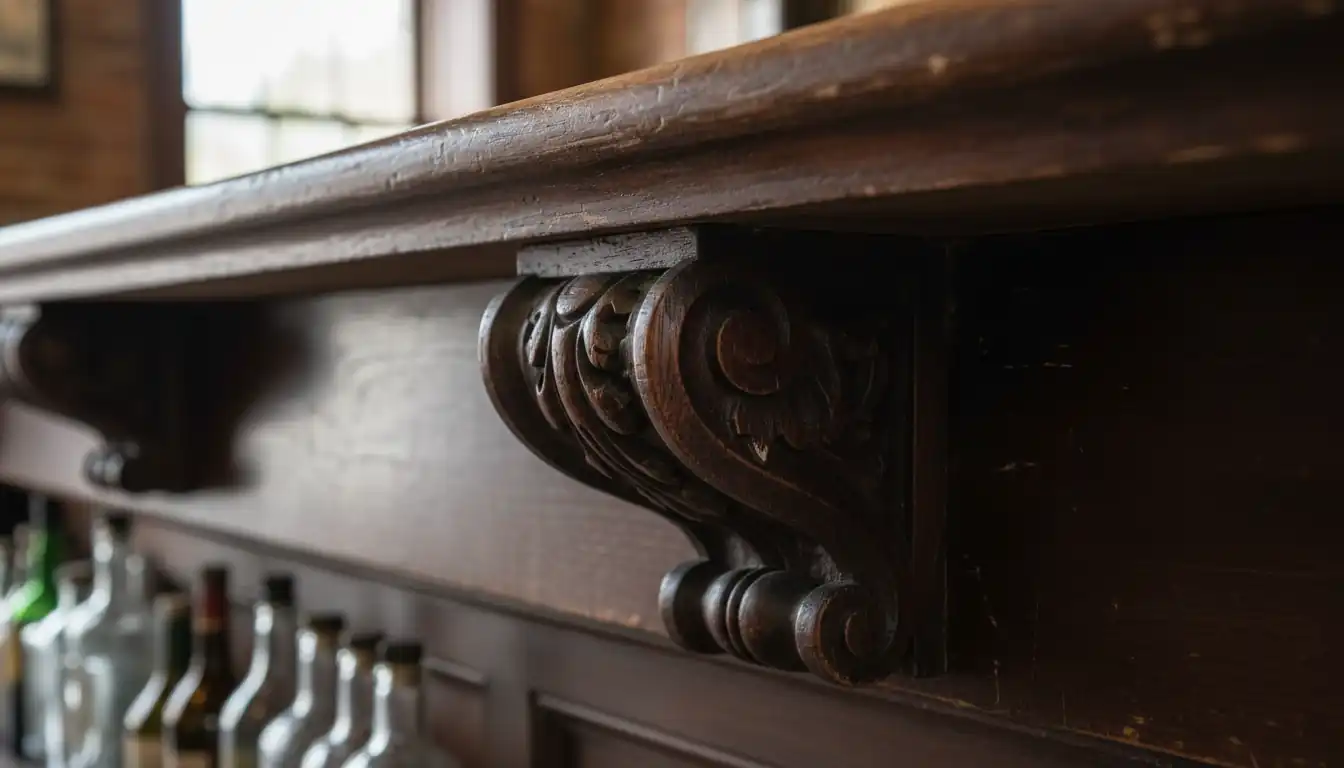
When you are standing in front of a potential find, your first instinct might be to look at the overall "vibe." However, the truth of an antique’s age is hidden in its bones. Before the era of mass production and high-speed assembly lines, furniture was built using techniques that prioritized structural integrity over speed. To find a true Victorian masterpiece, you have to look where the light doesn't shine: the undersides, the back panels, and the interior joints.
Traditional Joinery and Wood Grain Patterns
The most reliable indicator of a 19th-century origin is the presence of hand-cut joinery. Modern furniture relies on staples, glue, and cam-lock fasteners. An authentic bar from the 1800s, however, was held together by the precision of the wood itself.
Hand-Cut Dovetails: Open a drawer if the bar has them. Look at the "tails" and "pins" that join the drawer front to the sides. In a modern piece, these will be perfectly uniform, cut by a router. In a genuine Victorian piece, you will see slight variations in size and spacing. You might even see "scribe lines"—small marks made by a craftsman’s knife to layout the cuts. These "imperfections" are the fingerprints of a master woodworker.
Mortise-and-Tenon Joints: This is the gold standard for heavy-duty construction. A "tenon" (a projecting tongue of wood) is inserted into a "mortise" (a hole). In high-quality tavern counters, these joints were often "pinned" with wooden dowels rather than just glued. If you see a small, slightly raised wooden peg at a structural junction, you are likely looking at a piece built to last centuries, not decades.
The choice of wood also tells a story. During the Victorian era, three species reigned supreme:
- Quartersawn White Oak: This was the workhorse of the American saloon. Quartersawing involves cutting the log at a specific angle to reveal "medullary rays"—beautiful, flake-like patterns in the grain. It is incredibly dense and resistant to warping, which was essential in the damp environment of a barroom.
- Honduran Mahogany: Reserved for high-end hotel bars and private clubs, mahogany offers a deep, reddish-brown hue and a grain so tight it almost looks like silk. It was prized for its ability to take a high-polish finish.
- American Black Walnut: Known for its rich, chocolatey tones and complex "burled" patterns, walnut was often used for decorative panels and ornate carvings.
| Wood Species | Grain Characteristic | Common Usage |
|---|---|---|
| Quartersawn Oak | Flaky, "tiger-stripe" rays | Heavy counters, footrests |
| Mahogany | Straight, tight, reddish | High-end back bars, trim |
| Walnut | Swirling, dark, "burl" | Decorative inlays, carvings |
Signs of Genuine Age in Hardware and Patina
You cannot fake a hundred years of human contact. Patina is the cumulative effect of oxidation, wear, and the oils from thousands of hands touching the wood. On a genuine antique bar, the finish will not be uniform. The areas where patrons leaned their elbows or where the bartender worked will show a "softened" edge. The wood will have a depth of color that looks like it’s glowing from within, rather than a flat, plastic-like sheen of modern polyurethane.
Check the hardware. Original 19th-century screws were not pointed like the ones you buy at a hardware store today; they had blunt ends and slightly off-center slots. If the bar has brass rails or handles, look for "pitting"—tiny, microscopic craters caused by decades of exposure to moisture and cleaning agents. If the brass looks perfectly smooth and shiny like a new penny, it’s either a replacement or a modern reproduction.
Pro Tip: Look at the back of the bar. If the wood is unfinished and shows circular saw marks, it likely dates to the late 19th century. If the marks are straight (from a pit saw), it could be even older.
The Evolution of Tavern Furniture Styles Through the Decades
The design of a bar was never just about utility; it was a reflection of the cultural zeitgeist. As social norms shifted from the rigid formality of the Victorian era to the rebellious energy of the Jazz Age, the furniture followed suit. Understanding these stylistic shifts allows you to date a piece almost instantly.
Victorian Opulence and Ornate Carvings
The Victorian era (roughly 1837–1901) was defined by a "more is more" philosophy. This was the age of the Great Exhibition, where craftsmanship was a competition of complexity. A Victorian tavern bar was designed to look like a cathedral of commerce.
You will recognize this style by its sheer verticality and heavy ornamentation. These bars often featured:
- Mythical Creatures: It is common to find hand-carved griffins, lions, or gargoyles acting as "caryatids" (ornamental pillars) supporting the counter.
- Gothic and Renaissance Influence: Look for pointed arches, fluted columns, and "dentil" molding (which looks like a row of small teeth).
- Deep Relief Carving: The carvings aren't just etched into the wood; they pop out in three dimensions. You should be able to wrap your fingers around the carved leaves or scrolls.
The "vibe" of a Victorian bar is masculine, dark, and imposing. It was meant to provide a sense of permanence and "old-world" stability in a rapidly industrializing world.
Art Deco Sleekness and Geometric Inlays
As we moved into the 1920s and 30s, the aesthetic flipped. The heaviness of the Victorian era was replaced by the "Machine Age" aesthetic of Art Deco. If Victorian style was a cathedral, Art Deco was a locomotive.
- Streamlined Shapes: Instead of ornate carvings, you see smooth, curved "waterfall" edges. The focus shifted from the skill of the carver to the beauty of the wood itself.
- Exotic Veneers: Art Deco designers loved "book-matched" veneers, where two pieces of wood are sliced from the same log and placed side-by-side to create a symmetrical, kaleidoscopic pattern. They used exotic woods like Macassar Ebony, Zebrano, and Birdseye Maple.
- Modern Materials: This is where you start to see the integration of chrome, glass, and even early plastics like Bakelite. A bar from this era might have a black vitrolite (pigmented glass) top or chrome banding around the base.
The transition from Victorian to Art Deco represents a move from the "hand-made" look to the "industrial-chic" look. While Victorian bars feel like they belong in a library, Art Deco bars feel like they belong in a high-speed penthouse.
Spotting High Value Features and Hidden Details
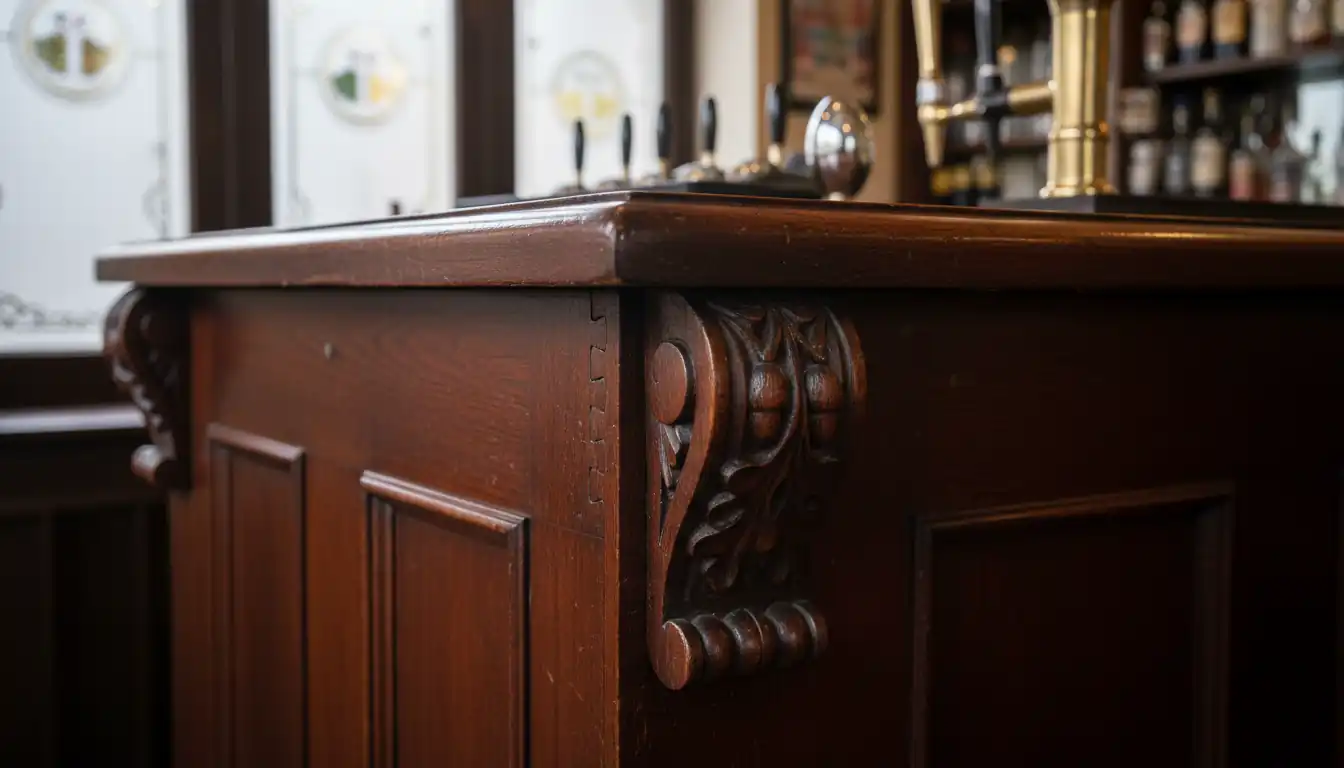
Once you’ve confirmed that a bar is old and identified its style, it’s time to look for the "value multipliers." These are the rare features that can turn a $2,000 find into a $20,000 investment.
The Significance of Original Stained Glass
Many high-end Victorian bars featured stained or leaded glass panels in the upper cabinets of the back bar. Finding original glass is a major win.
How do you tell if it’s original? Look for "seeds" and "reams."
- Seeds: These are tiny air bubbles trapped inside the glass. Modern glass is perfectly clear; 19th-century glass almost always has these small imperfections.
- Reams: These are subtle, wavy lines or "ripples" that appear when you look through the glass at an angle.
If the glass is perfectly flat and uniform, it was likely replaced in the last 50 years. Original lead "cames" (the metal strips holding the glass) should have a dull, greyish-white oxidation. If they are shiny or jet black, they may have been repaired or replaced.
Integrated Back Bars and Functional Secret Compartments
In the world of antique collecting, a "complete" bar is significantly more valuable than just the front counter. The "back bar"—the mirrored section that sits against the wall—is often where the most intricate work is found.
The Mirror Test: Check the mirror on the back bar. Original 19th-century mirrors used a silvering process that often results in "foxing"—small black or silver spots where the backing has begun to lift or oxidize. While some see this as damage, collectors often prefer it as proof of age.
Prohibition-Era Modifications: This is the "treasure hunt" aspect of bar collecting. During the 1920s, many older Victorian bars were modified to hide alcohol from federal agents.
- False Bottoms: Check the floor of the interior cabinets. Does one side seem slightly higher than the other?
- Hidden Latches: Look for decorative carvings that might actually be "deadman" switches. A certain leaf or scroll might slide to the side, revealing a keyhole or a hidden cavity.
- Sliding Panels: Some bars had "slip-panels" in the back that allowed bottles to be quickly dropped into a basement or a hidden floor joist if the police knocked on the door.
Finding a bar with a documented "speakeasy" history or a functional secret compartment can triple its market value instantly.
Using AI to Uncover Your Bar's Secret History
The biggest challenge for any collector is the "information gap." You might have a beautiful bar, but without knowing who made it or exactly when it was built, you are just guessing at its value. This is where modern technology has changed the game for antique enthusiasts.
In the past, you would have to hire a professional appraiser to come to your home, or spend weeks scouring old furniture catalogs in a library. Now, you can get those answers in seconds. The Relic app is a specialized tool designed specifically for this purpose.
Instant Identification Through Visual Analysis
When you encounter a piece with complex carvings or unique hardware, you can simply open the Relic app and take a high-resolution photo. The app’s AI doesn't just look at the "whole" piece; it analyzes the specific "DNA" of the item—the style of the carvings, the type of joinery visible in the photos, and the specific grain of the wood.
For example, if you scan a Victorian bar with a specific lion-head carving, Relic can compare that image against a massive database of historical manufacturer catalogs. It might identify the piece as a "Brunswick-Balke-Collender" model from 1892. Knowing the manufacturer is the difference between having a "nice old bar" and a "documented museum-quality piece."
Verifying Provenance and Origin with Relic
Relic provides more than just a name; it gives you a real appraisal and a history of the item. This is crucial for two reasons:
- Insurance: If you are going to invest thousands of dollars in an antique, you need a documented valuation for your insurance provider.
- Resale: When it comes time to sell, having a digital "logbook" of the item’s history and a professional-grade appraisal makes you a much more credible seller.
With over 20,000 reviews and a 4.9-star rating, Relic has become the go-to resource for "pickers" and high-end dealers. It levels the playing field, ensuring that you don't need a PhD in Art History to spot a fake or value a masterpiece. It’s like having a professional appraiser standing next to you at every estate sale.
Restoring and Valuing Your Find for Maximum ROI
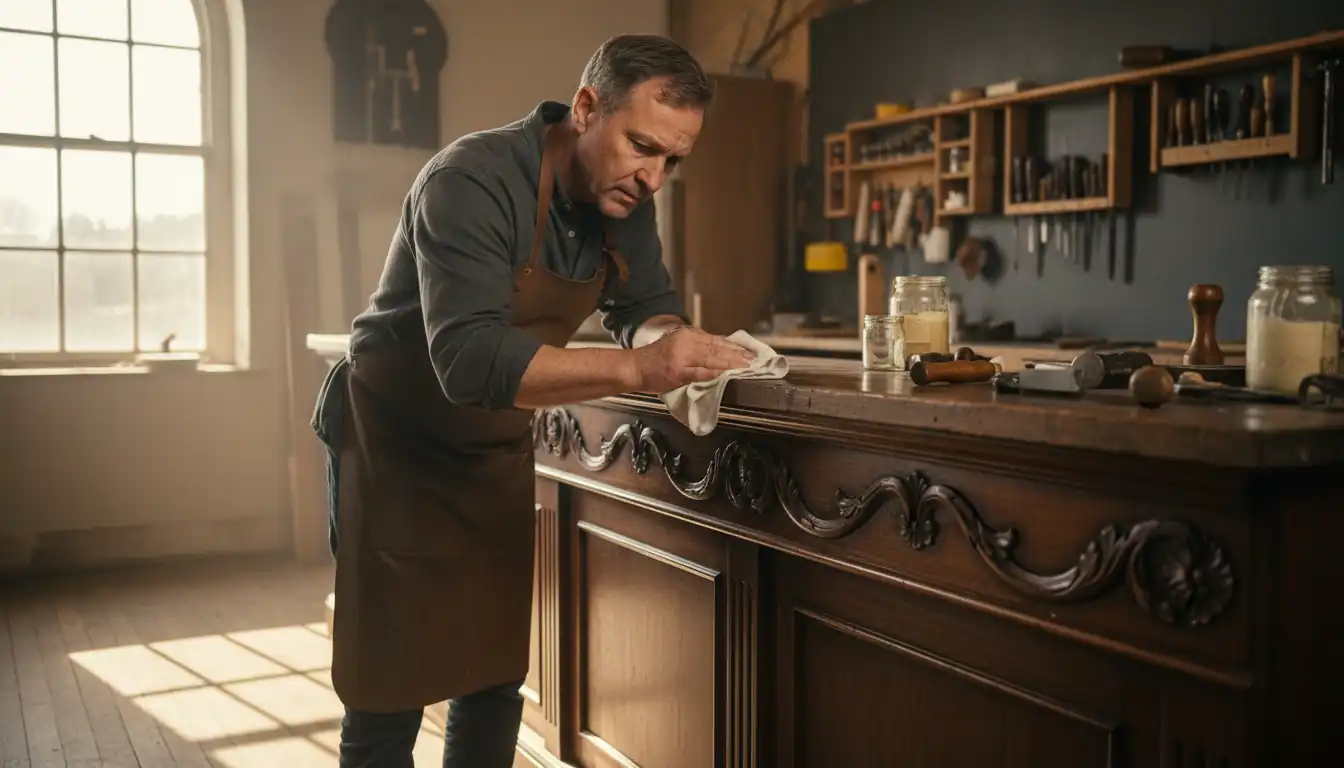
Once you have identified and appraised your bar, the next step is preservation. This is where many well-meaning owners make a fatal mistake that can wipe out 50% of the item's value in a single afternoon.
Professional Restoration Ethics and Preservation
The most important rule of antique restoration is: Do no harm.
Many people see a dark, dirty Victorian bar and think, "I should sand this down and give it a fresh coat of light oak stain." Do not do this. Stripping the original finish (the patina) destroys the historical integrity of the piece.
- Cleaning: Start with the gentlest method possible. A soft cloth and a specialized "wood soap" can remove decades of grime without touching the finish.
- Conserving: If the finish is "alligatoring" (cracking in a pattern that looks like reptile skin), a professional conservator can often "re-amalgamate" the original shellac rather than removing it.
- Hardware: Never use harsh chemical dips on brass hardware. It makes the metal look "new," which is exactly what you don't want. Use a gentle polish that leaves some of the dark oxidation in the recessed areas to maintain the "depth" of the piece.
"A piece of furniture is only original once. Every time you sand it, you are erasing a chapter of its history."
Current Market Demand for Residential Bar Pieces
We are currently seeing a massive resurgence in the "home speakeasy" trend. Modern homeowners are moving away from the "man cave" aesthetic of neon signs and plastic stools, opting instead for authentic, "moody" spaces that feel like a 1920s lounge.
This trend has driven the prices of authentic tavern bars to new heights.
- Where to Sell: If you have a high-value piece identified by Relic, your best bet is a specialized antique auction house (like Sotheby’s or a regional equivalent) or a high-end online marketplace like 1stDibs.
- The "Relic Report": When listing your item, include the appraisal report from the Relic app. Buyers are willing to pay a premium for "certainty." If they know exactly what they are buying, they are less likely to haggle.
| Feature | Value Impact |
|---|---|
| Original Patina | +30% |
| Matching Back Bar | +100% |
| Documented Manufacturer | +25% |
| Stripped/Refinished | -50% |
Conclusion
That dusty, oversized counter in the corner of a warehouse might just be a masterpiece of Victorian engineering or Art Deco design. By focusing on the "witness marks" of craftsmanship—the hand-cut dovetails, the quartersawn grain, and the honest wear of a century of use—you can separate the treasures from the trash.
Remember that an antique bar is more than just wood and glass; it is a survivor of a different era. Whether it’s a heavy Victorian counter with hand-carved griffins or a sleek Art Deco piece with exotic veneers, these items carry a weight and a story that modern furniture simply cannot match.
If you find yourself standing before a potential masterpiece, don't guess. Use the tools available to you. Download the Relic app on your iPhone, take a few photos, and let the AI uncover the history that’s been hiding under the dust for a hundred years. You might just find that you’re not just looking at an old bar—you’re looking at your next great investment. Now, go out there and start hunting; the next great Victorian masterpiece is waiting to be found.
Identify antiques instantly
Point your camera at any antique, collectible, or vintage item. Get valuations, history, and market insights in seconds.
Download for iPhone