That Dusty Thrift Store Find Could Be Worth Thousands—Here’s How to Decode Its Secret Marks

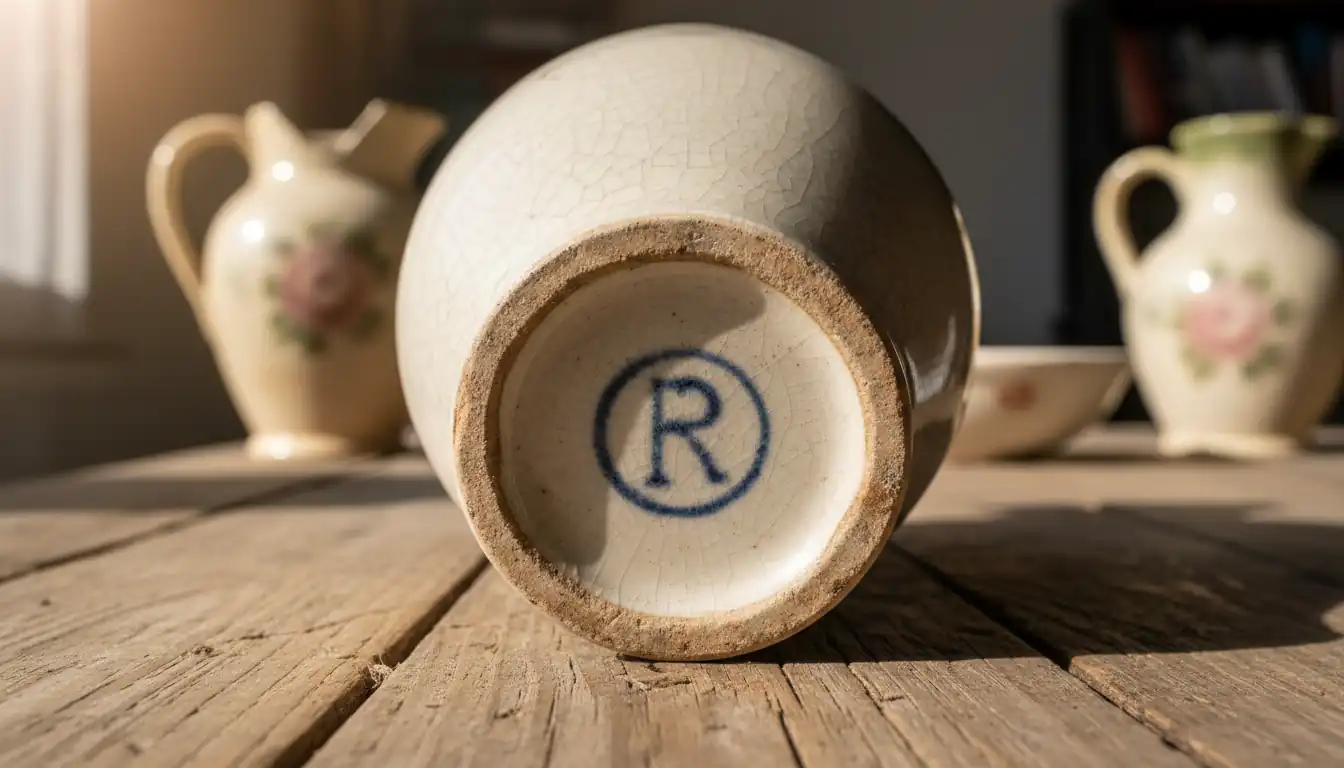
You are standing in the corner of a crowded thrift store, the air thick with the scent of old dust and floor wax. Your eyes land on a small, cream-colored pitcher tucked behind a stack of chipped dinner plates. It looks unremarkable at first glance, but when you pick it up, the weight feels right—substantial yet delicate. You flip it over and see a faint, blue symbol pressed into the ceramic. Is it a mass-produced souvenir from the 1990s, or a rare piece of 18th-century creamware worth more than your car?
The difference between a "good find" and a life-changing discovery often comes down to a few millimeters of ink or impressed clay. Most people walk past fortunes every day because they don't know how to read the secret language written on the bottom of a vase. This guide will transform the way you look at ceramics, moving you from a casual browser to a savvy collector who understands the technical, historical, and digital tools required to decode the past.
By the time you finish reading, you will understand the physical taxonomy of pottery marks, the specific symbols that command high prices at auction, and how to use modern technology to verify your finds in seconds. You will learn to spot the difference between a genuine antique and a clever forgery, ensuring that your next "dusty find" is exactly what you hope it is.
Decoding the Visual Language of Ceramic Bottoms
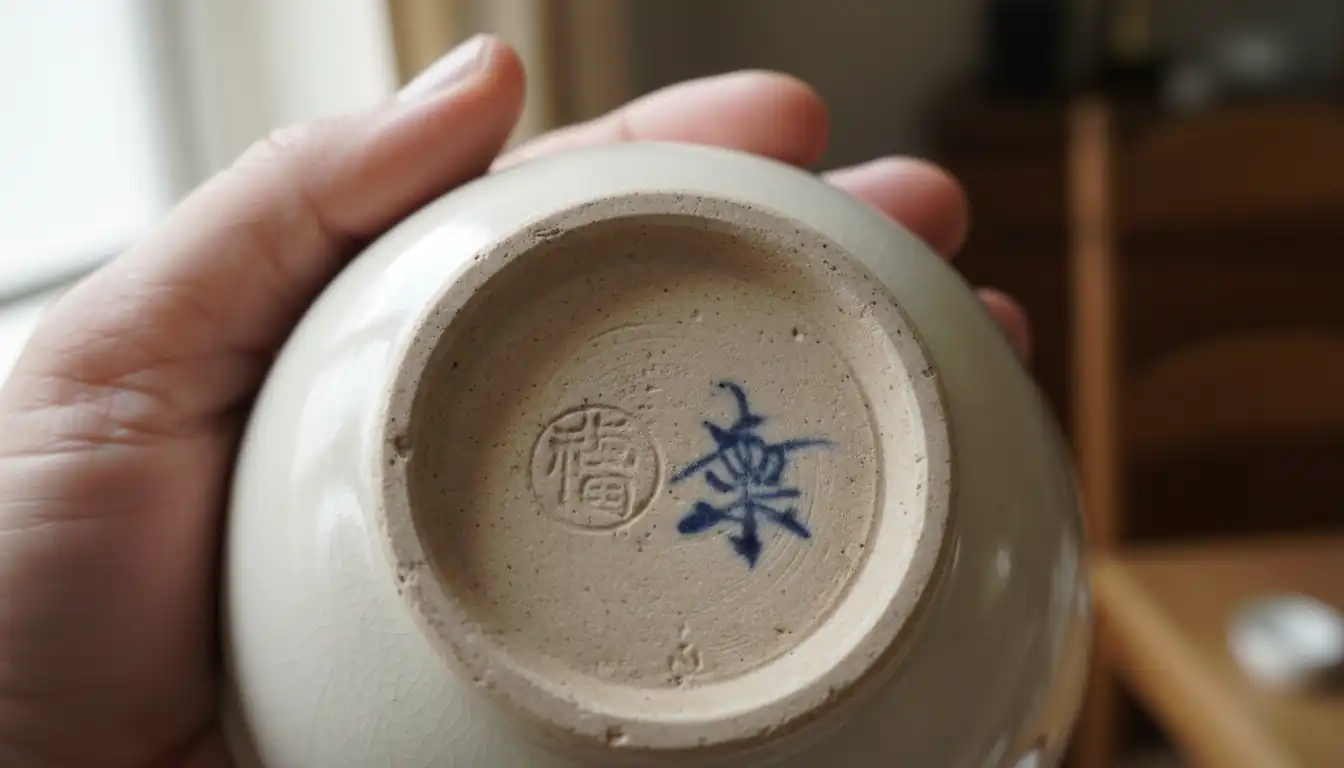
Before you can identify a specific brand, you must understand how the mark was physically applied to the piece. The method of application is often a chronological fingerprint. It tells you about the technology available at the factory when the item was created. If you can identify the technique, you can often narrow down the century of production before you even look up a name.
Incised vs Stamped vs Painted Marks
The earliest pottery marks were often incised. This means the potter used a sharp tool or a stylus to carve a name, a date, or a symbol directly into the wet clay before it was fired. Because this was done by hand, incised marks are often slightly irregular. You will find these most commonly on 18th-century European porcelain or early American stoneware. If you run your finger over an incised mark, you can feel the depth of the groove.
Stamped or impressed marks are different. These were created using a metal or wooden die that was pressed into the clay. This allowed for more consistency than hand-carving. Impressed marks are very common in mid-to-late 19th-century pottery. They are often incredibly crisp and clear, though they can sometimes be obscured by a thick layer of glaze. A stamped mark suggests a higher level of industrialization, as the factory had reached a point where they needed a standardized tool for branding.
Painted marks can be either underglaze or overglaze. An underglaze mark was painted onto the "biscuit" (the fired but unglazed clay) and then covered with a clear protective coating. These marks are permanent and cannot be scratched off. Overglaze marks were applied after the final firing. They often feel slightly raised or "tacked on" to the surface. Overglaze marks are more susceptible to wear and can sometimes flake off over a century of use.
Pro Tip: If a mark looks perfectly symmetrical and "printed" with modern precision, it likely dates from the late 20th century onwards. Early marks almost always show some sign of human handiwork or the slight irregularity of a manual stamp.
Understanding Symbols and Cyphers
Not every mark is a name. In fact, many of the most valuable pieces use a system of symbols, numbers, and cyphers. These were often used to communicate internal factory information that wasn't necessarily meant for the consumer.
- Year Cyphers: Many high-end manufacturers used a rotating system of symbols to denote the year of production. A small clover might mean 1890, while a tiny anchor might mean 1891.
- Workman’s Marks: These are small, often cryptic symbols like a dot, a slash, or a star. They identify the specific individual who threw the pot or painted the decoration. While they don't always add value, they prove the piece was hand-finished.
- Pattern Numbers: Usually written in fine script, these numbers correspond to a factory's pattern book. They are invaluable for collectors trying to complete a specific set.
| Mark Type | Physical Characteristic | Typical Era |
|---|---|---|
| Incised | Carved into wet clay; feels like a groove. | 1700s - Early 1800s |
| Impressed | Pressed with a die; very crisp edges. | 1840s - 1920s |
| Underglaze | Painted under the protective coating; smooth. | 1750s - Present |
| Overglaze | Painted on top; feels slightly raised. | 1800s - Present |
Iconic Marks That Signal High Market Value
When you are scanning the shelves of an estate sale, your eyes should be trained to look for the "blue chips" of the ceramic world. These are the makers whose marks have become synonymous with luxury, craftsmanship, and high resale value. Knowing how to identify old pottery marks from these specific houses can be the difference between a $10 profit and a $10,000 windfall.
European Prestige from Meissen to Wedgwood
The most famous mark in the history of European porcelain is undoubtedly the Meissen Crossed Swords. Introduced around 1722, this mark was inspired by the arms of the Elector of Saxony. However, because Meissen was so successful, it became the most copied mark in history.
To tell a genuine 18th-century Meissen mark from a 19th-century "style" reproduction, look at the swords' shape. Early marks were often spindly and hand-painted with varying degrees of care. By the 1800s, the swords became more standardized, often featuring a pommel (a small circle) at the end of the handles. If you see a mark with a horizontal line or a "dot" between the blades, you are likely looking at a specific period (the Marcolini period, for example) that has its own unique market value.
Wedgwood is another giant. Unlike Meissen, Wedgwood marks are almost always impressed into the clay. The most sought-after pieces bear the simple "WEDGWOOD" stamp in all capital letters. If the mark says "Wedgwood & Co," it is actually a different, less valuable company. If it says "England," the piece was made after 1891. If it says "Made in England," it likely dates to after 1908. This tiny evolution in text can change the value of a vase by hundreds of dollars.
The Complexity of Chinese Reign Marks
Identifying Chinese porcelain is a masterclass in patience. Most high-value Chinese pieces use Nianhao, or reign marks, which identify the emperor under whose rule the piece was made. These are typically six characters written in two vertical columns, often enclosed in a double circle or a square.
The most valuable marks usually reference the Ming or Qing dynasties—specifically the Kangxi, Yongzheng, and Qianlong periods. However, there is a catch: Chinese potters often used "apocryphal" marks. This means a 19th-century potter might put a 15th-century Ming mark on a vase, not to deceive, but as a sign of respect for the earlier era's quality.
Distinguishing a genuine period piece from a later tribute requires looking at the "calligraphy" of the mark. On a genuine period piece, the characters are written with a fluid, confident hand. On later reproductions, the characters can look stiff, shaky, or mechanically perfect. The blue pigment (cobalt) also tells a story; early cobalt often has "heaping and piling," where the blue looks darker and thicker in certain spots.
"The mark is the beginning of the story, not the end. A mark tells you who the maker wanted to be; the clay tells you who they actually were."
Using AI to Solve the Mystery of Unidentified Pottery
For decades, the only way to identify a mysterious mark was to lug a five-pound "Kovels' Guide to Marks" around with you. You would spend hours squinting at grainy black-and-white illustrations, trying to match a blurry smudge on a plate to a drawing in a book. By the time you found a potential match, the item was often sold to someone else.
Manual research often fails amateurs because pottery marks are incredibly diverse. There are tens of thousands of recorded marks, and many are nearly identical. A slight variation in the curve of a crown or the number of petals on a flower can signify a completely different manufacturer. In the high-stakes environment of an auction or a busy flea market, you don't have the luxury of time.
Instant Appraisals with the Relic App
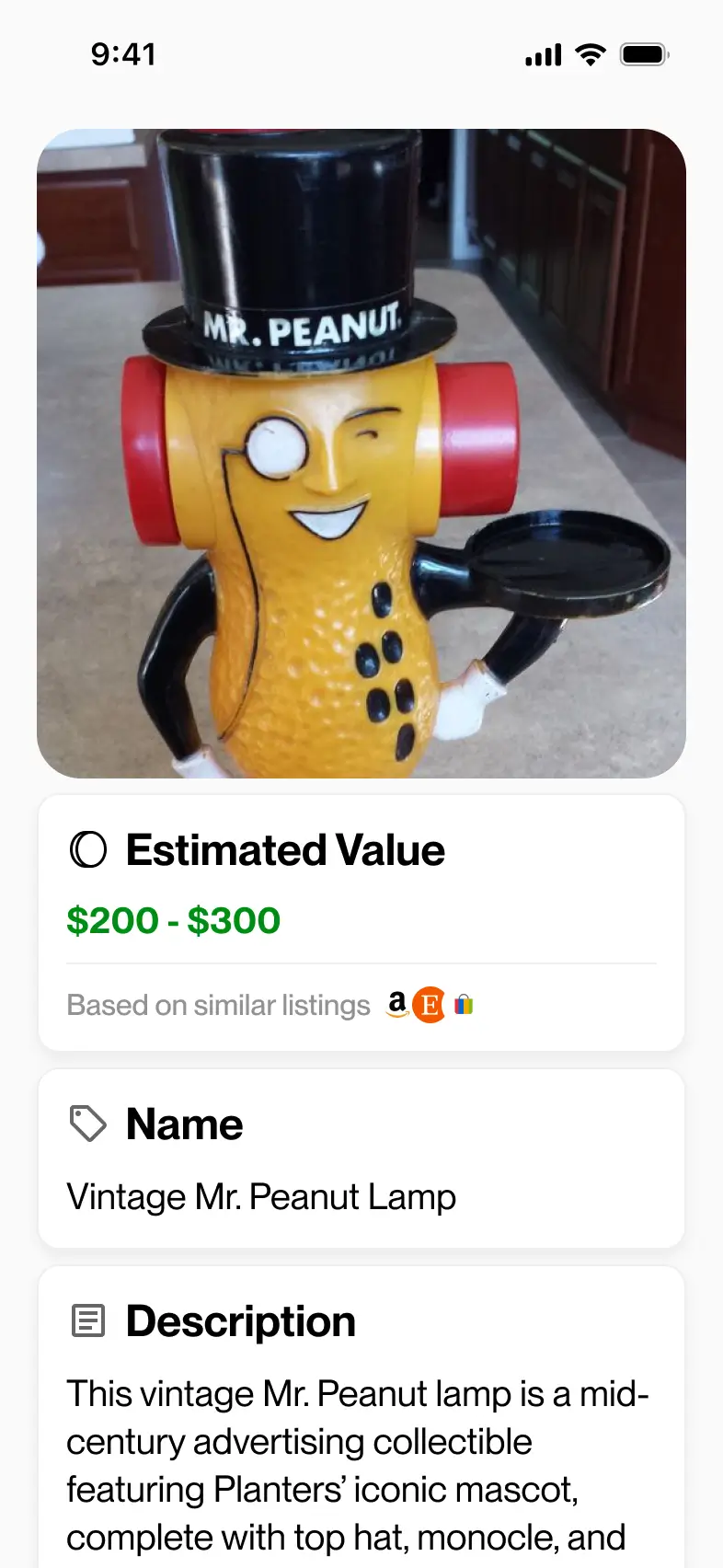
This is where modern technology has completely changed the game for collectors. Instead of guessing, you can now use Relic, an advanced AI-driven antique identifier. Relic acts as a professional appraiser that lives on your iPhone, allowing you to bridge the gap between curiosity and expert knowledge instantly.
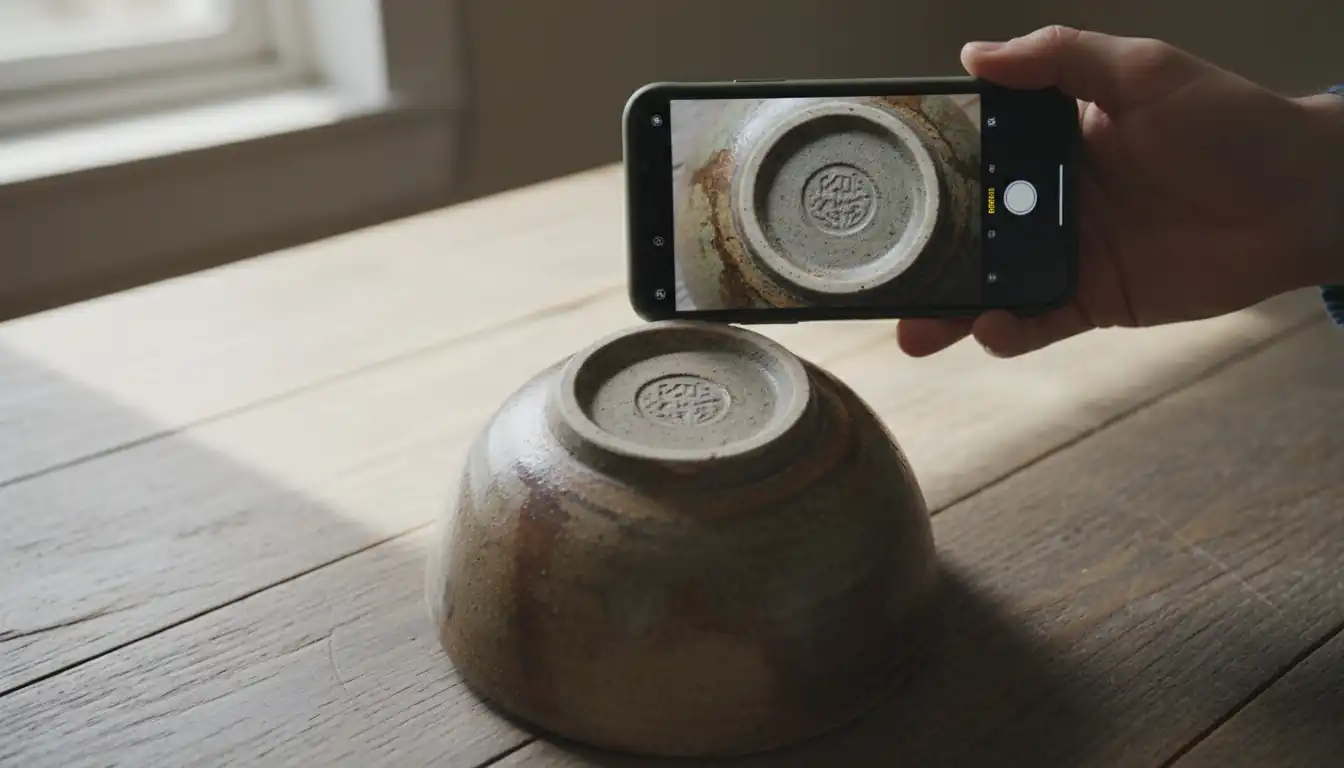
When you encounter a piece of pottery with a confusing mark, you simply open the Relic app and take a clear photo of the underside. The AI doesn't just look for a visual match; it analyzes the texture, the style of the mark, and the historical context. Within seconds, Relic provides:
- Identification: The name of the manufacturer and the specific era of the mark.
- History: A brief background on the maker and the significance of the piece.
- Appraisal: A real-world valuation based on current market data.
For professionals like dealers or "pickers," this speed is vital. If you are at an estate sale with twenty other people, being able to identify a rare piece of Roseville or Minton in five seconds gives you a massive competitive advantage. Relic has earned a 4.9-star rating from over 20,000 reviews because it removes the guesswork that usually leads to costly mistakes. It’s not just about identifying the mark; it’s about having the confidence to make a purchase knowing exactly what the item is worth.
Spotting Forgeries and Determining Age Beyond the Mark
A mark is only as good as the piece it is attached to. One of the most common mistakes new collectors make is trusting a mark blindly. Forgers have known for centuries that a "Crossed Swords" mark or a "Qianlong" seal can increase a piece's value tenfold. To be a successful hunter, you must look past the mark and examine the "body language" of the ceramic.
Wear Patterns and Crazing vs Faux Aging
Authentic age is difficult to fake because it happens on a microscopic level. One of the first things to look for is crazing. This is the network of fine cracks that appears in the glaze over time. Crazing happens because the clay body and the glaze expand and contract at different rates as temperatures change over decades.
Genuine crazing is usually random and varies in density. Forgers sometimes try to mimic this by heating a piece in an oven and then plunging it into cold water, but this often creates "shattered" lines that look too uniform. Another trick forgers use is "tea-staining." They will soak a new, crazed piece in strong tea or tobacco juice to make the cracks look old and dirty. If the "dirt" in the cracks looks too even or smells faintly of tannins, be suspicious.
Shelf wear is another indicator. A vase that has sat on sideboards and tables for 100 years will have a specific type of wear on its "foot rim" (the unglazed bottom edge). This wear should be smooth and slightly darkened from a century of contact with surfaces. If the foot rim is stark white and rough, but the mark says "1850," something is wrong.
The Registry Mark System and Patent Numbers
If you find a piece of British pottery from the Victorian era, you might see a diamond-shaped mark instead of a name. This is the British Diamond Registration Mark. It is a foolproof way to date a piece because it was a legal requirement for design protection.
The diamond mark contains codes in its corners that tell you the exact day, month, and year the design was registered.
| Position | What it Represents |
|---|---|
| Top Circle | The Year Code (e.g., 'H' for 1847) |
| Right Corner | The Month Code |
| Bottom Corner | The Day of the Month |
| Left Corner | The Bundle/Parcel Number |
After 1883, the diamond was replaced by a "Rd. No." (Registered Number). If you see a piece with a "Rd. No." followed by a six-digit string, you can look up that number in a registry table to find the exact year of manufacture. These numbers are much harder for forgers to fake correctly because they require a deep knowledge of 19th-century British patent law.
Turning Your Identification Skills into a Profitable Hobby

Once you know how to identify old pottery marks and verify their age, the world becomes a treasure map. The "junk" section of a local auction or the "everything $5" bin at a yard sale can suddenly yield high-value items. But finding the item is only half the battle; the real profit comes from how you manage your discoveries.
Sourcing Hidden Gems in Unlikely Places
The best deals are found where the seller doesn't know what they have. Look for "mixed lots" at auctions. Often, an auctioneer will group five or six "miscellaneous" vases together. If you spot a single piece of Royal Copenhagen or a small bit of Moorcroft in that box, the entire lot might sell for $20, while that one piece is worth $200.
Flea markets are another goldmine, especially early in the morning. Many sellers are generalists; they know a little bit about everything but aren't experts in ceramics. Use your visual literacy to scan for the "right" kind of glaze and weight. If you find something promising, don't show too much excitement. Use your tools discreetly to confirm the value before you start negotiating.
Documenting Your Finds for Insurance and Resale
If you plan to sell your finds on platforms like eBay, 1stDibs, or Chairish, documentation is your best friend. Buyers are willing to pay a premium for "provenance"—the story and verification of an item's history.
When you use an app like Relic to identify a piece, you aren't just getting a name; you are building a digital catalog of your collection. You can save the scans, the historical data, and the appraisal values. This is crucial for two reasons:
- Insurance: If your home is ever damaged, having a digital record of your $5,000 pottery collection (complete with professional-grade appraisals) ensures you get a fair payout.
- Resale Trust: When you list an item for sale, you can include the specific historical details provided by the app. Instead of saying "Old Blue Vase," you can say "Authentic 1884 Doulton Lambeth Stoneware with Artist Mark for George Tinworth." That level of detail attracts serious collectors and higher bids.
The difference between a hoarder and a collector is documentation.
Conclusion
The world of antique pottery is a vast, silent library. Every mark, every glaze skip, and every tiny incised number is a word in a story that spans centuries. By learning the physical language of how these marks were applied—from the hand-carved grooves of the 1700s to the industrial stamps of the Victorian era—you gain the ability to "read" history.
You now know that the Meissen swords and the Wedgwood stamp are more than just logos; they are marks of prestige that have survived wars, revolutions, and the passage of time. You understand that while forgers may try to mimic these symbols, they cannot easily fake the natural physics of crazing or the honest wear of a century on a shelf.
Most importantly, you have seen how technology like the Relic app has democratized the world of antiques. You no longer need a PhD in art history to spot a masterpiece. With a phone in your pocket and the knowledge in this guide, you are ready to head out to your local thrift store, flip over a dusty plate, and perhaps discover a fortune hiding in plain sight. Your next great find is waiting—go find it.
Identify antiques instantly
Point your camera at any antique, collectible, or vintage item. Get valuations, history, and market insights in seconds.
Download for iPhone