That Dusty Typewriter in Your Attic Could Be Worth $1,000—Here’s How to Tell

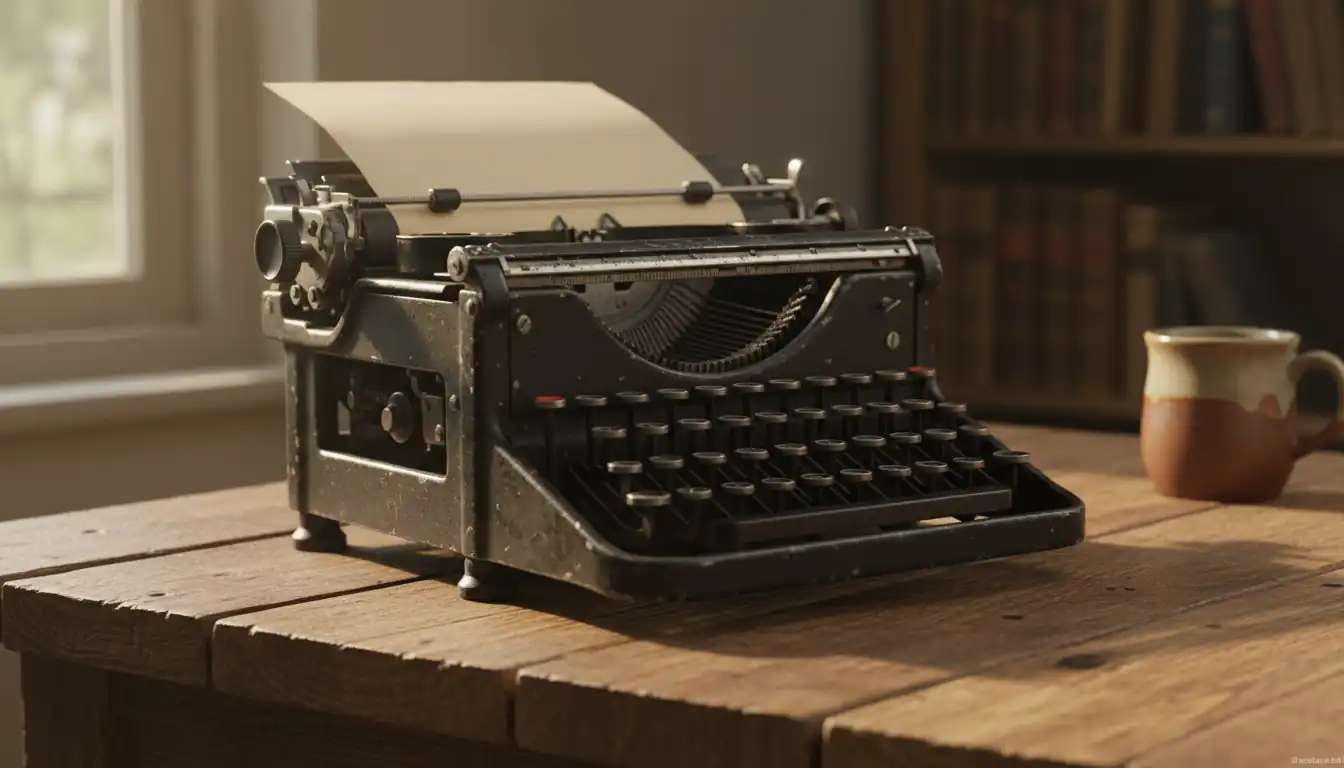
You walk into your attic, move a few dusty boxes of old holiday decorations, and there it sits: a heavy, black, cast-iron beast tucked away in a corner. It belonged to your grandfather, or perhaps it was a "cool" thrift store find from a decade ago that eventually became a permanent paperweight. You might see it as a relic of a bygone era, a cumbersome machine that lost its purpose the moment the first word processor hummed to life. But before you drag it to the curb or list it for twenty dollars on a whim, you should know that the market for vintage typewriters has shifted dramatically.
What was once considered scrap metal is now a highly sought-after piece of functional technology. Collectors, interior designers, and a new generation of novelists are scouring the internet for specific machines, and they are willing to pay a premium for them. That "dusty old thing" could be a standard office model worth a modest amount, or it could be a rare portable treasure that commands a four-figure price tag. The difference often comes down to a few small details that the untrained eye might miss.
This guide will help you identify exactly what you have, determine its mechanical health, and understand why certain models are currently exploding in value. By the time you finish reading, you will know whether you’re looking at a decorative piece or a high-value asset, and you’ll have a clear plan to turn that attic find into a successful sale.
The Heavy Hitters of the Typewriter World
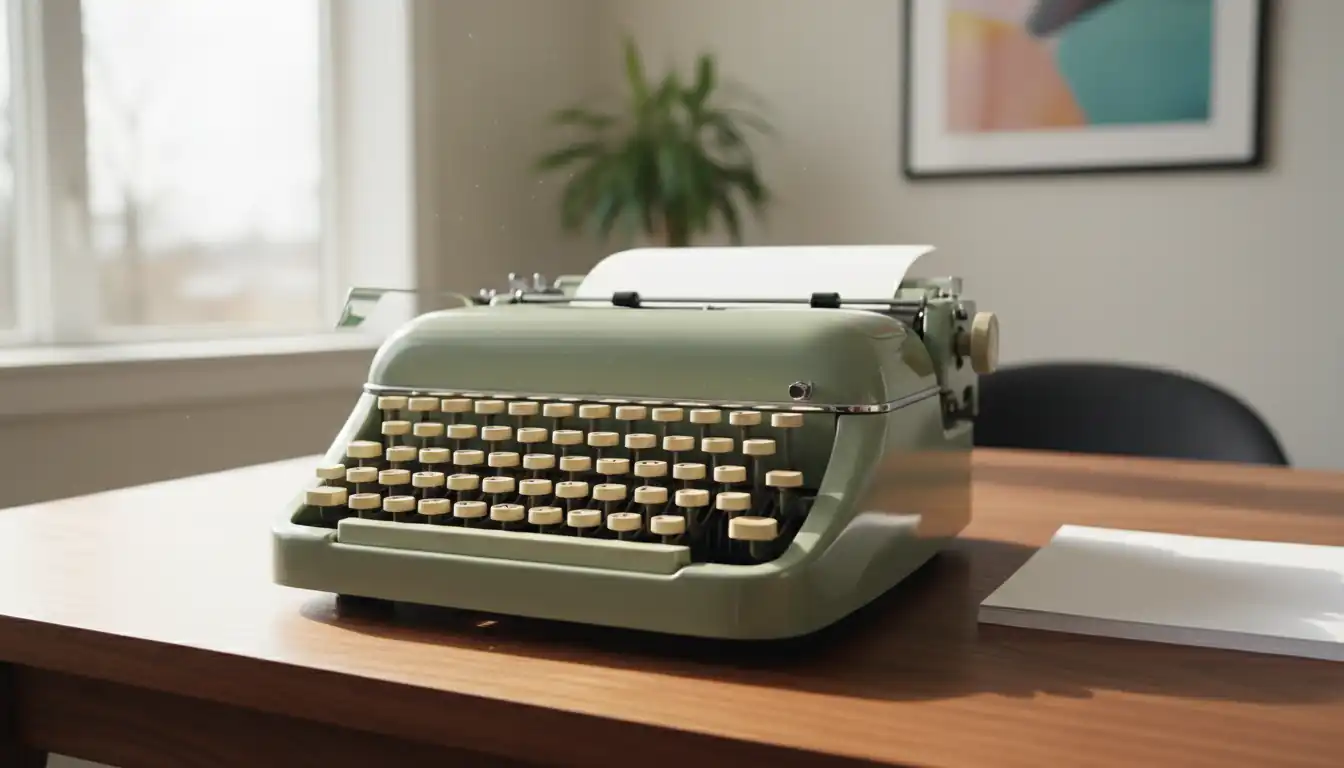
When you first look at a typewriter, the sheer variety of shapes and sizes can be overwhelming. To understand value, you first have to understand the hierarchy of manufacturers. In the United States, the industry was dominated by the "Big Four": Underwood, Remington, Royal, and Smith-Corona. If your machine carries one of these names, you are holding a piece of industrial history. However, because these companies produced millions of units, not every machine they made is a gold mine.
Identifying Rarity and Age
The most common question people ask when they find an old machine is: "How can you tell how old a typewriter is?" The answer is almost always hidden in the serial number. Unlike modern electronics where the model number is printed on a sticker, typewriter serial numbers are usually stamped directly into the metal frame. You might need to move the carriage all the way to one side or look under the ribbon cover to find it. Once you have that number, you can typically cross-reference it with historical databases to find the exact year it rolled off the assembly line.
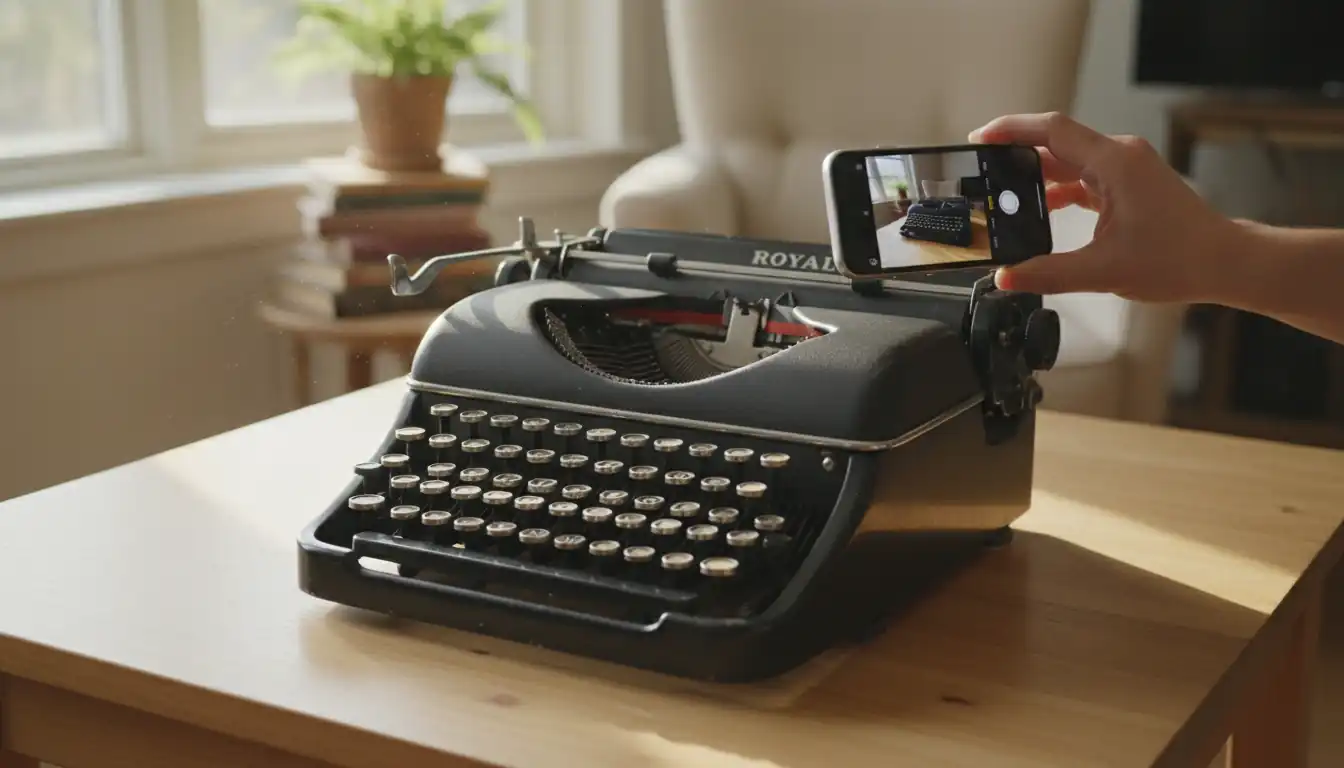
However, hunting through grainy PDF scans of 1940s manufacturing logs is a tedious process. This is where modern technology bridges the gap with the past. The Relic app allows you to bypass the manual search entirely. By simply taking a photo of the machine, Relic uses advanced AI to identify the specific model and production era. It can distinguish between a common 1950s office model and a rare pre-war variant in seconds, providing you with the historical context and origin you need to establish a baseline value.
The Most Collectible Brands and Models
What is the most collectible typewriter? While the Big Four are the most recognizable, the highest prices are often reserved for "boutique" brands or very early mechanical experiments.
- The Malling-Hansen Writing Ball: This is the "holy grail" for collectors. It looks more like a brass pincushion than a typewriter. If you find one of these, you aren't looking at $1,000—you are looking at a potential six-figure auction result.
- Early Hammonds: Known for their "shuttle" typing system rather than individual typebars, these machines have a distinct, curved look and are highly prized by mechanical enthusiasts.
- The "Blick" (Blickensderfer): These were some of the first truly portable machines. Their unique "type wheel" design makes them look like alien technology compared to a standard Underwood.
- The Royal Quiet De Luxe (in color): While the black versions are common, Royal produced these in vibrant colors like "Seashell Pink" and "Heritage Blue" in the 1950s. A pink Royal in good condition is a guaranteed high-value item.
Pro Tip: Generally, "portables"—machines that come with a carrying case—are more valuable than "standards," which are the massive, 30-pound machines meant to sit on a desk forever. Modern collectors value the ability to move the machine and store it easily.
Mechanical Integrity and the Condition Spectrum
Once you know what the machine is, you have to determine if it actually works. In the world of antiques, "condition is king," but with typewriters, "function is queen." A beautiful machine that doesn't type is just a heavy sculpture. A battered machine that types perfectly is a tool. To get the $1,000 price tag, you usually need a machine that sits at the intersection of both.
Functional Checklist for Sellers
You don't need to be a typewriter repairman to test your machine. Follow this simple checklist to see where your item stands on the functional spectrum:
- The Drawband Test: Gently push the carriage (the top part that moves) to the right. It should click into place. Now, press a key. Does the carriage move to the left? If it stays still, the "drawband"—the thin string that pulls the carriage—is likely broken. This is a common but finicky repair.
- The Platen Check: The platen is the large rubber roller. Over decades, rubber hardens. If the platen feels like a rock or a piece of PVC pipe, it will make typing loud and can even damage the typebars. A "soft" platen is a sign of a well-maintained or recently serviced machine.
- Sticky Typebars: Press every key one by one. Do they fly up to the platen and return quickly? If they move slowly or get stuck halfway, the machine is likely gummed up with old oil and dust. This is usually fixable with a deep clean, but it lowers the "as-found" value.
- The Bell: Perhaps the most satisfying part of a typewriter is the "ding" at the end of a line. If the bell doesn't ring, it often points to a mechanical misalignment in the margin settings.
Cosmetic Patina versus Professional Restoration
There is a massive price gap between a "found" typewriter and a "professionally restored" one. A machine you pulled out of an attic is considered "in the wild" condition. It likely has dust, some surface rust, and dry ribbons.
A professionally restored machine has been chemically cleaned, the platen has been re-rubbered, the feed rollers replaced, and every mechanical linkage adjusted. These machines often sell for four times the price of an unrestored one. If you are selling, be honest about which category yours falls into. Don't claim a machine is "refurbished" just because you wiped it down with a damp cloth and put in a new ribbon. Collectors will know the difference the moment they touch the keys.
| Condition Category | Visual Description | Mechanical State | Value Impact |
|---|---|---|---|
| Parts Only | Heavy rust, missing keys, cracked frame. | Non-functional. | 10-20% of market value. |
| Decorative | Looks good on a shelf, minor paint chips. | Most keys work, but carriage might slip. | 40-50% of market value. |
| Working/Original | Clean, original paint, minor wear. | Fully functional, types well. | 100% of market value. |
| Restored | Looks brand new, often custom paint. | Better than factory original. | 200-400% of market value. |
Current Market Value and Price Brackets
The market for typewriters is not static. What was popular five years ago has been replaced by new trends. Currently, the market is divided into three main tiers based on design, portability, and "type feel."
Desktop Standards versus Ultra-Portables
Desktop standards, like the ubiquitous Underwood No. 5, are the quintessential "old typewriter." They are iconic, but they are also massive. Because they are difficult to ship and take up a lot of space, their value has plateaued. You can expect a clean, working Underwood No. 5 to sell for $150 to $300.
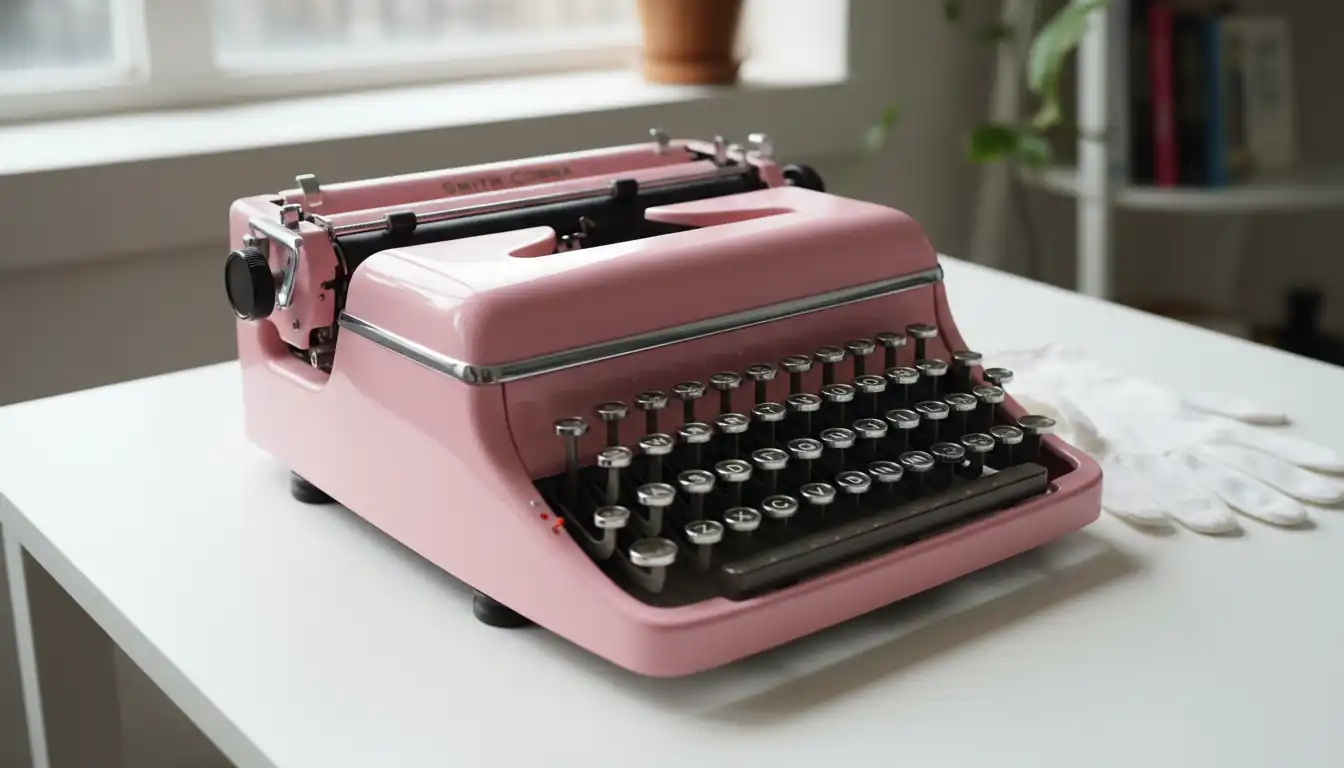
The real money is in "Ultra-Portables." These are the slim, lightweight machines designed for journalists and travelers. The Hermes 3000 is the current darling of the typewriter world. Its seafoam green color and buttery-smooth action have made it a status symbol. A late 1950s Hermes 3000 in excellent condition can easily fetch $600 to $1,000. Similarly, the Olivetti Valentine, a bright red plastic machine designed by Ettore Sottsass, is considered a masterpiece of industrial design and commands similar prices regardless of how well it actually types.
The Premium for Rare Colors and Specialty Fonts
If you have a standard-looking portable, check the typeface. Most typewriters use "Pica" or "Elite" fonts—standard block letters. However, some machines were manufactured with "Script" or "Cursive" fonts.
A typewriter that types in a beautiful, flowing cursive is a rarity. Because these were often special-order machines for personal correspondence, they are much harder to find today. A cursive font can double or even triple the value of an otherwise ordinary Smith-Corona Skyriter or Royal Quiet De Luxe.
Color also plays a huge role. In the mid-1950s, manufacturers realized that typewriters could be fashion statements. They began producing machines in "Holiday Color" palettes. If you find a machine in a vibrant yellow, a deep maroon, or a pastel pink, you are looking at a much higher price point than the standard "wrinkle-finish" grey or black.
The "Script Font" premium is one of the most consistent trends in the 2023-2024 market. Buyers are looking for a unique analog experience that they can't replicate with a standard computer printer.
The Typewriter Renaissance and Modern Demand
Why is a 70-year-old machine worth more now than it was twenty years ago? We are currently living through a "Typewriter Renaissance." This isn't just nostalgia for the sake of nostalgia; it's a reaction to the digital fatigue that many people feel.
How Social Media Aesthetics Drive Value
Social media has completely rebranded the typewriter. On platforms like TikTok and Instagram, the "Dark Academia" aesthetic has taken over. This subculture celebrates classic literature, libraries, tweed blazers, and, most importantly, analog tools. A black gloss Royal Model P or a Remington Portable No. 2 is the perfect centerpiece for this aesthetic.
When a popular "BookTok" influencer posts a video of themselves typing a poem on a vintage machine, it creates a localized spike in demand for that specific model. This has shifted the buyer demographic. Ten years ago, the primary buyer was a 70-year-old collector looking to complete a set. Today, the buyer is often a 20-year-old novelist or student who wants a distraction-free way to create.
The Dark Academia and Analog Movement
The "distraction-free writing" trend is a significant driver of value. In an era of constant notifications, the typewriter offers a closed system. There is no internet, no email, and no "delete" key that allows you to obsess over a single sentence for an hour. You have to move forward.
This functional demand means that buyers are looking for "workhorse" machines. They want something reliable, which is why brands like Olympia (specifically the SM3 and SM9 models) have seen a price surge. These West German machines are built like tanks and offer a tactile experience that many writers find superior to a modern mechanical keyboard. When you sell your typewriter, you aren't just selling an antique; you are selling a "productivity tool" for the modern creative.
Strategies for a Successful and Safe Sale
You’ve identified the machine, checked the serial number, tested the keys, and researched the market. Now comes the most difficult part: actually getting the money. Selling a typewriter is different from selling a pair of shoes or a piece of furniture. These are delicate, heavy instruments that require specific handling.
Choosing the Right Marketplace
Where you sell will determine how much you make and how much work you have to do.
- Local Sales (Facebook Marketplace/Craigslist): The benefit here is no shipping. The downside is a smaller pool of buyers. You are unlikely to get the "top tier" price locally unless you live in a major metropolitan area with a high concentration of writers and collectors.
- Global Reach (eBay/Etsy): This is where the $1,000 sales happen. You are opening your item up to the entire world. Etsy, in particular, is a great place for "aesthetic" or "gift-ready" machines, while eBay is the standard for collectors.
- Specialized Forums: Groups like the "Typewriter Revolution" on Facebook or various Reddit communities are full of experts. While they won't overpay, they are very safe buyers who know exactly what they are looking for.
To make your listing stand out, you need a professional-grade description. This is another area where the Relic app becomes an essential tool. Once the app identifies your machine, it can help you generate a detailed appraisal and historical summary. Including this information in your listing—mentioning the specific year of production, the rarity of the model, and its historical significance—shows potential buyers that you are a knowledgeable seller. This builds trust and justifies a higher asking price.
The Art of Shipping Heavy Antiques
If you sell your typewriter online, the shipping process is where most sales go wrong. A typewriter is a 20-to-30-pound block of precision-aligned steel. If a postal worker drops it, the frame can bend, or the carriage can snap off.
- The Carriage Lock: Most typewriters have a lever that locks the carriage in place. Use it. If the carriage is free to slide back and forth during transit, it will act like a hammer, damaging the internal mechanisms.
- The "Double-Box" Method: Never put a typewriter in a single box. Wrap the machine in several layers of large-bubble wrap (not the small stuff). Place it in a box and fill all gaps with packing peanuts. Then, place that box inside a second, larger box with at least two inches of padding on all sides.
- Avoid "Original" Cases as Shipping Containers: Just because it has a carrying case doesn't mean it's protected. Old plastic or wood cases can shatter upon impact. Always box the case as well.
Conclusion
That dusty typewriter in your attic is a bridge to a different way of thinking and creating. Whether it’s a rare Malling-Hansen or a sturdy Smith-Corona, these machines have outlasted the companies that made them and the people who first bought them. In the modern market, their value is only increasing as more people look for ways to disconnect from the digital world and reconnect with the physical act of writing.
By taking the time to identify your machine’s history, verify its mechanical condition, and understand the current aesthetic trends, you can move from being an accidental owner to a savvy seller. Use tools like the Relic app to take the guesswork out of the appraisal process, ensuring you don't leave money on the table.
Your next step is simple: pull that machine out of the corner, wipe off the dust, and take a good look at it. You might be holding a piece of history that someone else is desperately searching for—and they’re willing to pay a premium to bring it home.
Identify antiques instantly
Point your camera at any antique, collectible, or vintage item. Get valuations, history, and market insights in seconds.
Download for iPhone