That Pink Plate in Your Cupboard Could Be Worth Hundreds—Here’s How to Tell

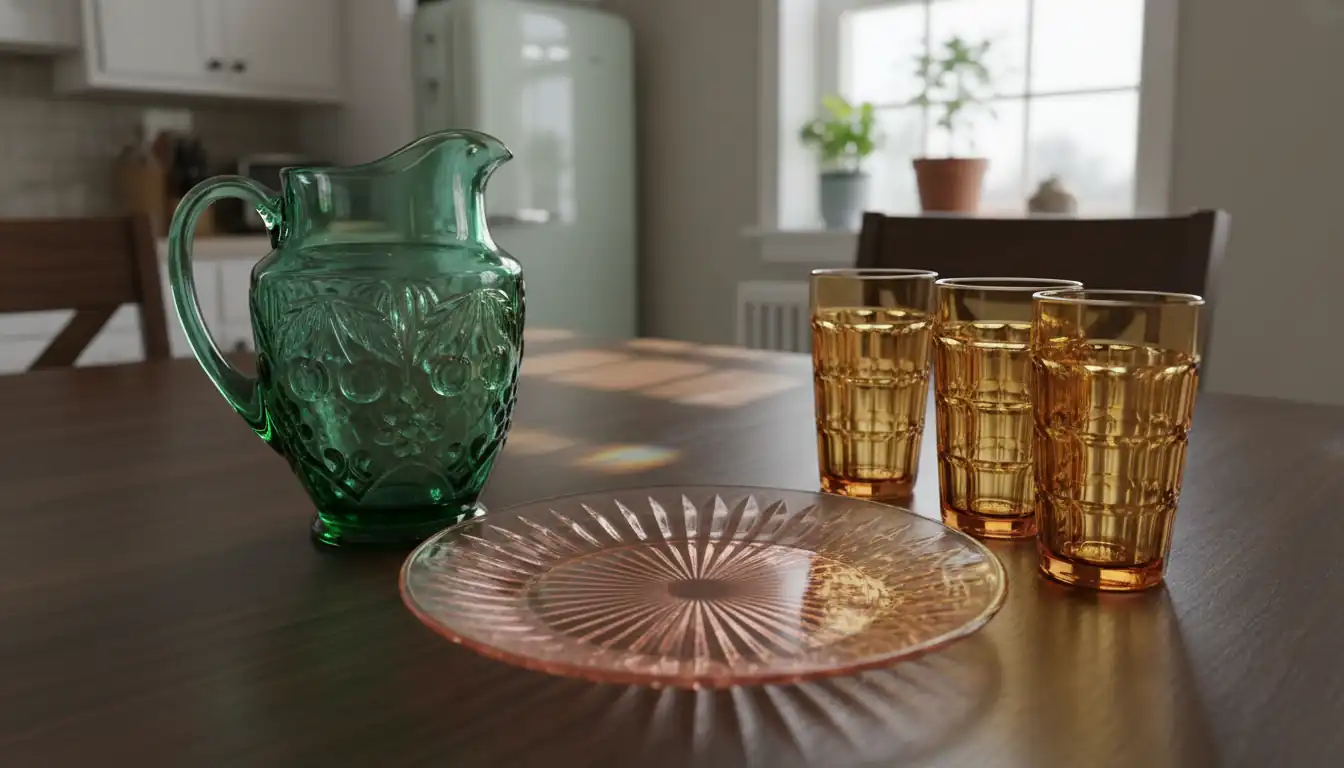
You might be sitting on a small fortune without even realizing it. That translucent pink plate tucked away in the back of your grandmother’s china cabinet or the dusty amber pitcher you found at a garage sale isn't just old kitchenware. It is a piece of American history known as Depression glass. Produced roughly between 1929 and 1939, these colorful items were once given away for free in cereal boxes or at movie theaters to entice customers during the Great Depression.
Today, those "freebies" have become a high-stakes market for collectors. While some pieces are only worth a few dollars, others can fetch hundreds or even thousands at auction. The challenge lies in knowing exactly what you have. Is that green bowl a common mass-produced item, or is it a rare uranium glass treasure? Does that floral pattern indicate a sought-after manufacturer, or is it a modern reproduction?
In this guide, you will learn how to decode the visual language of Depression glass. We will explore the chemistry behind the colors, the tactile details of iconic patterns, and the modern technology that can identify a piece in seconds. By the time you finish reading, you will have the tools to look at your glassware with the eyes of a professional appraiser.
The Spectrum of Depression Glass Colors
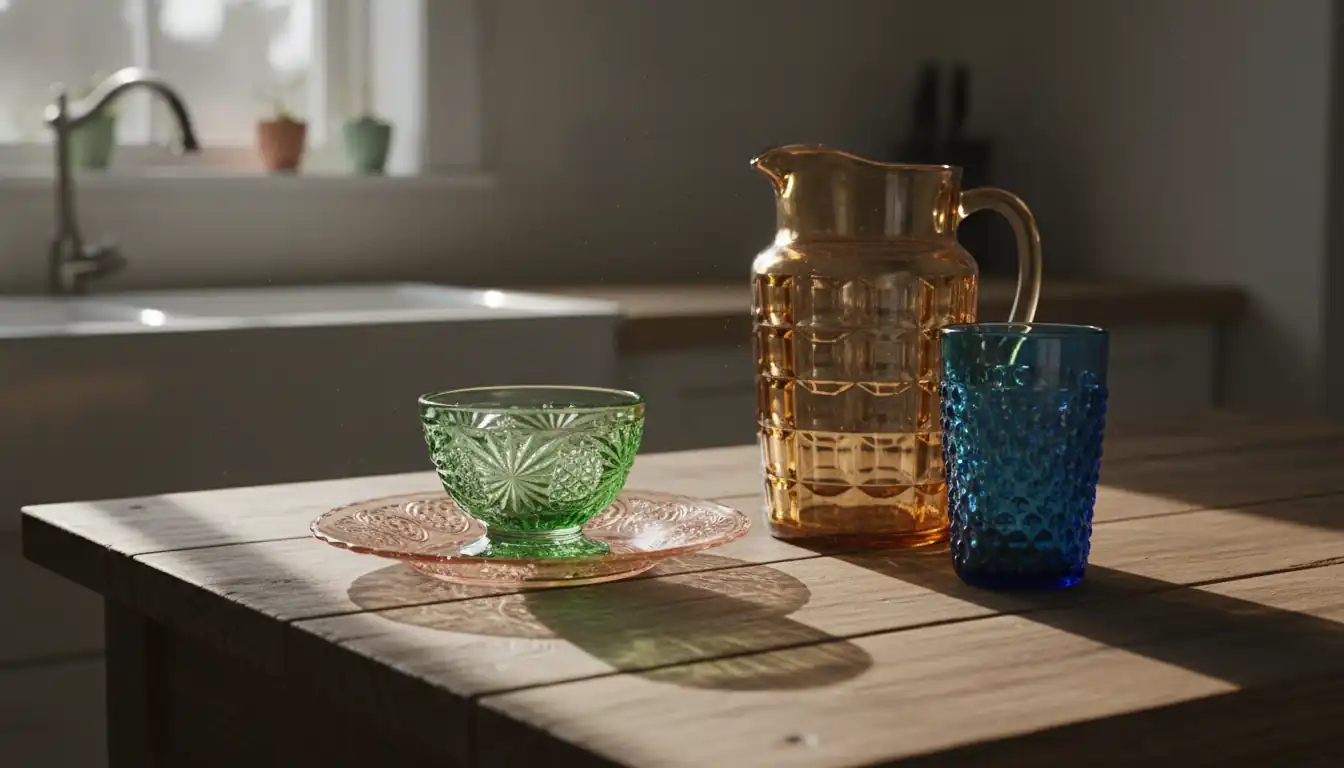
When you first encounter a piece of Depression glass, the color is the most striking feature. During the 1920s and 30s, glass manufacturers experimented with various chemical additives to create a rainbow of options that could brighten up a somber household. Understanding these colors is your first step toward identification.
The Rarity Scale of Common Hues
The most common colors you will find are pink, pale green, and amber. These were produced in massive quantities because the chemicals required to make them were relatively inexpensive. Pink glass, often called "Rose," was created using selenium or occasionally gold. Pale green was achieved through iron or copper oxides. Amber, ranging from a light honey to a dark beer-bottle brown, was the result of adding sulfur and carbon.
However, if you find a piece in cobalt blue, ruby red, or amethyst, you are looking at something much more elusive. These colors were more expensive to produce and were often made in smaller runs. Cobalt blue, for instance, required expensive cobalt oxide imported from overseas. Ruby red glass was even more difficult to master; it often required the addition of real gold chloride to achieve that deep, blood-red hue. Amethyst glass, which can look almost black until held up to the light, was created using manganese.
| Color | Chemical Additive | Rarity Level |
|---|---|---|
| Amber | Sulfur & Carbon | Common |
| Pale Green | Iron Oxide | Common |
| Pink | Selenium | Common |
| Cobalt Blue | Cobalt Oxide | Rare |
| Ruby Red | Gold Chloride/Copper | Very Rare |
| Amethyst | Manganese | Rare |
Why Lighting Changes Everything
The way a piece of glass looks on a shelf can be deceiving. To truly identify the color, you must observe it under different lighting conditions. Natural sunlight is the best way to see the true "body" of the glass. Some pieces might look like a muddy brown in a dim room but reveal a vibrant "canary" yellow when placed in a window.
One of the most fascinating aspects of Depression glass is the use of uranium in green glass. Manufacturers added uranium oxide to create a distinct, glowing lime-green color. While it looks like standard green glass in daylight, it possesses a unique physical property: it fluoresces. This chemical quirk is a primary reason why green glass remains a staple for collectors, though the specific shade of green can vary wildly depending on the concentration of the minerals used.
Once you have identified the color, you have half of the puzzle solved. However, color alone doesn't determine value or origin. Two different companies might have used the same shade of pink, but their patterns will be entirely different. Transitioning from color to pattern is where the real detective work begins.
Decoding the Most Iconic Patterns
If color is the soul of Depression glass, the pattern is its fingerprint. During the 1930s, dozens of glass companies competed to create the most appealing designs. These patterns were pressed into the glass using heavy machinery, resulting in intricate textures that you can feel with your fingertips.
Masterpieces of the 1930s
To become a proficient collector, you need to recognize the "Big Three" patterns that dominate the market. These were produced by the largest glass houses of the era and remain the most recognizable today.
- Anchor Hocking’s ‘Cameo’: Also known as "The Dancing Girl," this pattern features a small, embossed figure of a woman dancing within a floral frame. It is a "lacy" pattern, meaning the design covers most of the surface with fine, delicate lines. When you run your finger over a Cameo piece, the texture should feel crisp and well-defined.
- Macbeth-Evans’ ‘American Sweetheart’: This is one of the most delicate patterns ever produced. It features thin, ethereal scrolls and a scalloped edge. The glass itself is often very thin, almost translucent like porcelain. This is particularly true for the "Monax" variety, which is a white, opalescent glass that looks like a cloud.
- Federal Glass’ ‘Mayfair’: Often called "Open Rose," this pattern is bold and floral. Unlike the delicate lines of American Sweetheart, Mayfair features deep, heavy molds. The roses are thick and three-dimensional. If you hold a Mayfair plate, you will notice the weight is more substantial than other patterns of the era.
Spotting the Subtle Differences
Distinguishing between these patterns requires a keen eye for tactile elements. You aren't just looking at the design; you are feeling the "mold work." High-quality Depression glass was made using etched molds. This means the design was acid-etched into the metal mold before the glass was pressed. This resulted in a design that feels integrated into the glass rather than just sitting on top of it.
Pro Tip: Always feel the edges and the underside of the pattern. Authentic 1930s glass often has a "sharpness" to the design that later reproductions lack. If the pattern feels "mushy" or rounded off, it might not be an original.
Understanding these visual and tactile cues builds a mental library. You begin to recognize the difference between a "pressed" design, which is forced into the glass by a machine, and an "etched" design, which involves a more complex chemical process. While this knowledge is invaluable, the sheer volume of patterns—over 100 distinct designs exist—can be overwhelming for anyone. This is where modern technology steps in to bridge the gap between a hobbyist and an expert.
Modern Tools for Instant Authentication
In the past, identifying a mystery plate meant lugging a heavy, 500-page guidebook to every flea market and estate sale. You would spend twenty minutes flipping through grainy black-and-white photos, hoping to find a match for the scalloped edge in your hand. Fortunately, the digital age has provided tools that make this process nearly instantaneous.
AI Identification with Relic
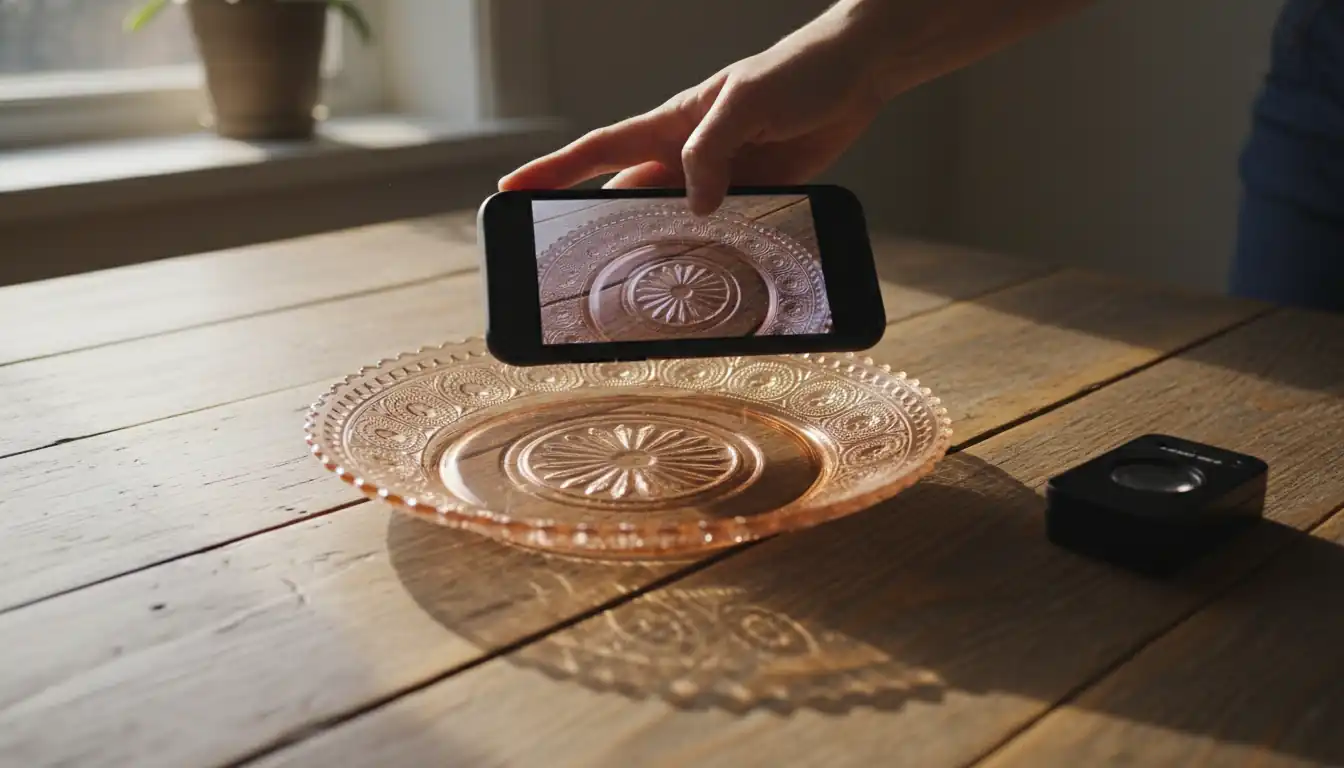
The most significant advancement for collectors is the rise of AI-powered identification. Instead of guessing, you can now use your smartphone to get a professional-grade analysis. The Relic app is a prime example of this technology in action. If you find a piece of glassware and aren't sure of its origin, you simply take a photo or upload an existing image to the app.
Relic uses advanced AI to cross-reference your photo against a massive database of thousands of patterns, manufacturers, and historical catalogs. Within seconds, it provides a real appraisal, the history of the piece, and its origin. For a collector standing in a crowded antique mall, this is the difference between passing up a treasure and making a smart investment. The app’s accuracy—backed by a 4.9-star rating from over 20,000 reviews—allows even a beginner to scan items with the confidence of a seasoned dealer.
The UV Light Test
While AI handles the visual identification, you can use physical tools to verify the chemical makeup of the glass. A small, handheld UV (ultraviolet) flashlight is a mandatory tool for any serious hunter. As mentioned earlier, many green Depression glass pieces contain uranium.
- The Glow Factor: When you shine a UV light on authentic uranium glass, it will glow a vibrant, neon green.
- The Manganese Glow: Some clear or amethyst glass will glow a faint yellow or peach under UV light, indicating the presence of manganese.
- Modern Fakes: Many modern reproductions do not contain these specific minerals, so a lack of glow can sometimes (though not always) be a red flag for a reproduction.
Using a combination of physical tests like the UV light and digital tools like Relic ensures you have a 360-degree view of the item. You no longer need to spend decades studying to get an accurate identification. You can identify the pattern with an app and verify the material with a light, moving you quickly from the "how" of identification to the "how much" of valuation.
Determining Market Value and Desirability
Once you know you have an authentic piece of Mayfair or Cameo, the next question is inevitably: "What is it worth?" The market for Depression glass is nuanced. Age does not always equate to value. Instead, value is driven by a combination of color rarity, pattern popularity, and physical condition.
Most Sought After Collector Favorites
If you are looking for the "holy grail" of Depression glass, you are likely looking for cobalt blue or ruby red pieces in complex patterns. While a pink "Cherry Blossom" plate might sell for $15, a cobalt blue "Royal Lace" cookie jar can easily fetch $500 or more.
The PAA question often arises: What color Depression glass is most sought after? Currently, the market favors cobalt blue and "Delphite" (an opaque blue glass). These colors were produced in much smaller quantities than the ubiquitous pink and amber. Additionally, specific forms—like butter dishes, tiered servers, and large pitchers—are worth significantly more than standard dinner plates because they were easily broken and fewer have survived the decades.
| Pattern | Most Valuable Color | Estimated Value (Rare Forms) |
|---|---|---|
| Royal Lace | Cobalt Blue | $100 - $600 |
| Cherry Blossom | Pink / Delphite | $50 - $300 |
| Mayfair | Blue / Pink | $40 - $250 |
| Princess | Apricot / Pink | $30 - $150 |
The Impact of Condition
In the world of glass, condition is everything. Because these pieces were used daily during the 1930s, they often show signs of wear. You must learn to distinguish between acceptable wear and value-killing damage.
- Flea Bites: These are tiny nicks, often found along the rim or the base. While they do lower the value, they are often expected in glass that is nearly a century old. A piece with a few flea bites might retain 70-80% of its value.
- Cracks and Heat Checks: A crack is a deal-breaker. Even a hairline fracture significantly reduces the value, often making the piece worth only a fraction of its "mint" price.
- Maker's Marks: Most Depression glass was never marked. However, some companies like Anchor Hocking occasionally used an "H" over an anchor symbol. Finding a mark can provide a slight bump in desirability, but the absence of one doesn't mean the piece is fake.
"A $500 pitcher with a 1-inch crack is often worth less than a $50 plate in pristine condition. Collectors pay for perfection."
Avoiding Common Identification Pitfalls
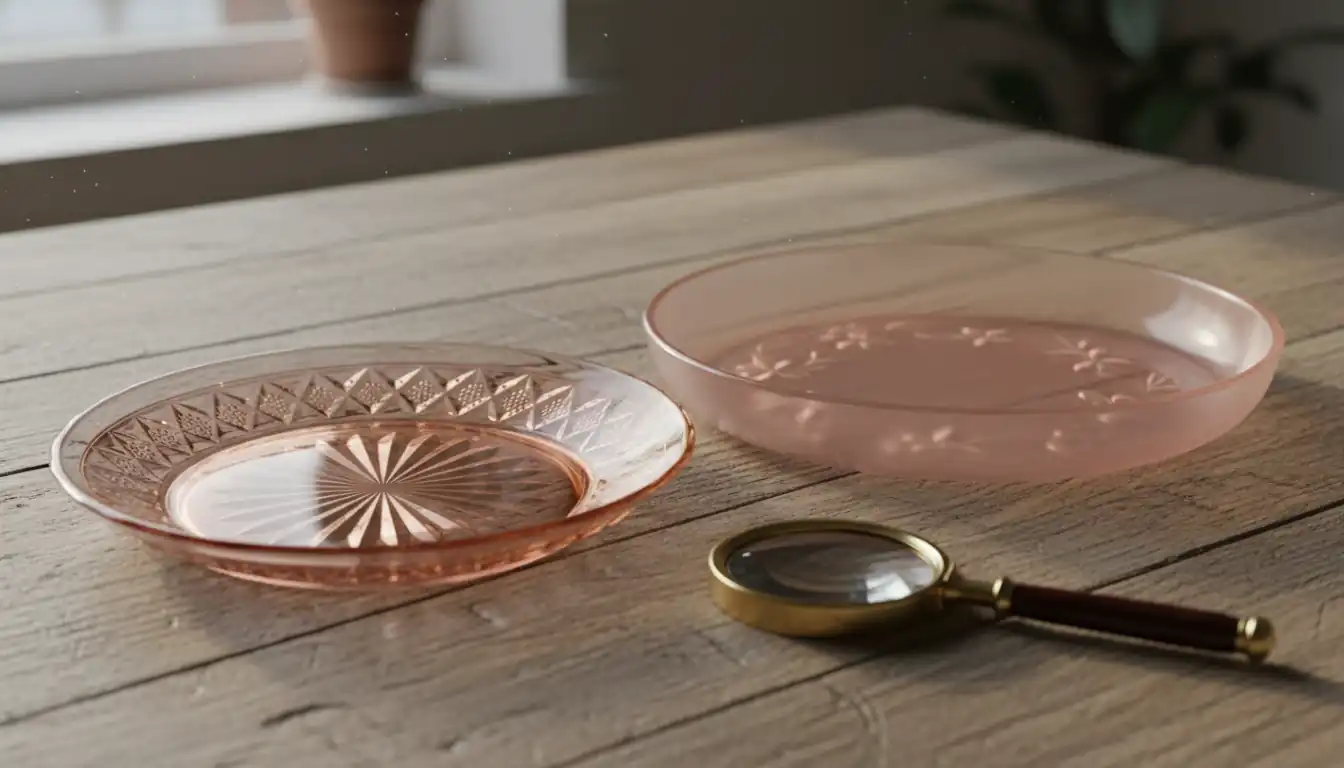
As you gain confidence, you must stay vigilant against "repros" (reproductions) and lookalikes. The popularity of Depression glass in the 1970s led many companies to recreate famous patterns. These are not "fakes" in the sense of a forged painting, but they are modern items that lack the historical value of the originals.
Distinguishing Originals from Reproductions
The 1970s reproductions of patterns like "Cherry Blossom" or "Madrid" are the most common pitfalls. To the untrained eye, they look identical. However, there are physical tells that give them away.
- Glass Thickness: Original Depression glass is surprisingly thin and delicate. Reproductions are often much thicker and heavier, designed to survive modern shipping and handling.
- The "Greasy" Feel: Many 1970s reproductions have a slightly "greasy" or "soapy" texture to the touch. This is due to the different cooling processes and glass formulas used in modern factories.
- Color Saturation: Modern pink glass often has a "peachy" or orange tint, whereas original 1930s pink is a pure, soft rose.
Misconceptions About 1930s Glassware
A common question is: Is all colored glassware from the 1930s Depression glass? The answer is no. During the same era, high-end companies like Fostoria, Cambridge, and Heisey were producing what is known as "Elegant Glass."
While Depression glass was machine-made and often had minor flaws like air bubbles or straw marks (faint lines from the cooling process), Elegant glass was hand-finished. The bases were ground flat, the seams were polished away, and the designs were often hand-etched rather than pressed. Elegant glass is generally more valuable, but it is a different category of collecting altogether.
Another misconception is that a lack of a maker's mark means the glass is a reproduction. In reality, the vast majority of authentic Depression glass was sold without any branding. The manufacturers were focused on high-volume production, and marking every single piece was an unnecessary expense. You must rely on the pattern, the color, and the "feel" of the glass rather than looking for a logo.
Conclusion
Identifying Depression glass is a blend of history, chemistry, and modern detective work. By understanding the rarity of colors like cobalt blue and ruby red, and learning the tactile details of patterns like Cameo and Mayfair, you can transform a casual hobby into a sophisticated pursuit. Remember that condition is the ultimate arbiter of value; a "flea bite" is a minor flaw, but a crack is a major loss.
You don't have to be an expert with decades of experience to find treasure. Tools like the Relic app allow you to bridge the gap between curiosity and knowledge instantly, giving you the power to appraise items on the fly. Whether you are looking to sell a family heirloom or start a new collection, the key is to keep looking, keep feeling the glass, and keep your UV light handy.
The next time you see a colorful plate at a thrift store, don't just walk by. Take a closer look, run your fingers over the pattern, and perhaps pull out your phone to scan it. That "cheap" pink plate might just be the centerpiece of your collection—or a significant boost to your bank account.
Identify antiques instantly
Point your camera at any antique, collectible, or vintage item. Get valuations, history, and market insights in seconds.
Download for iPhone