That Thrift Store Find Could Be a Masterpiece: The Modern Guide to Pottery Marks

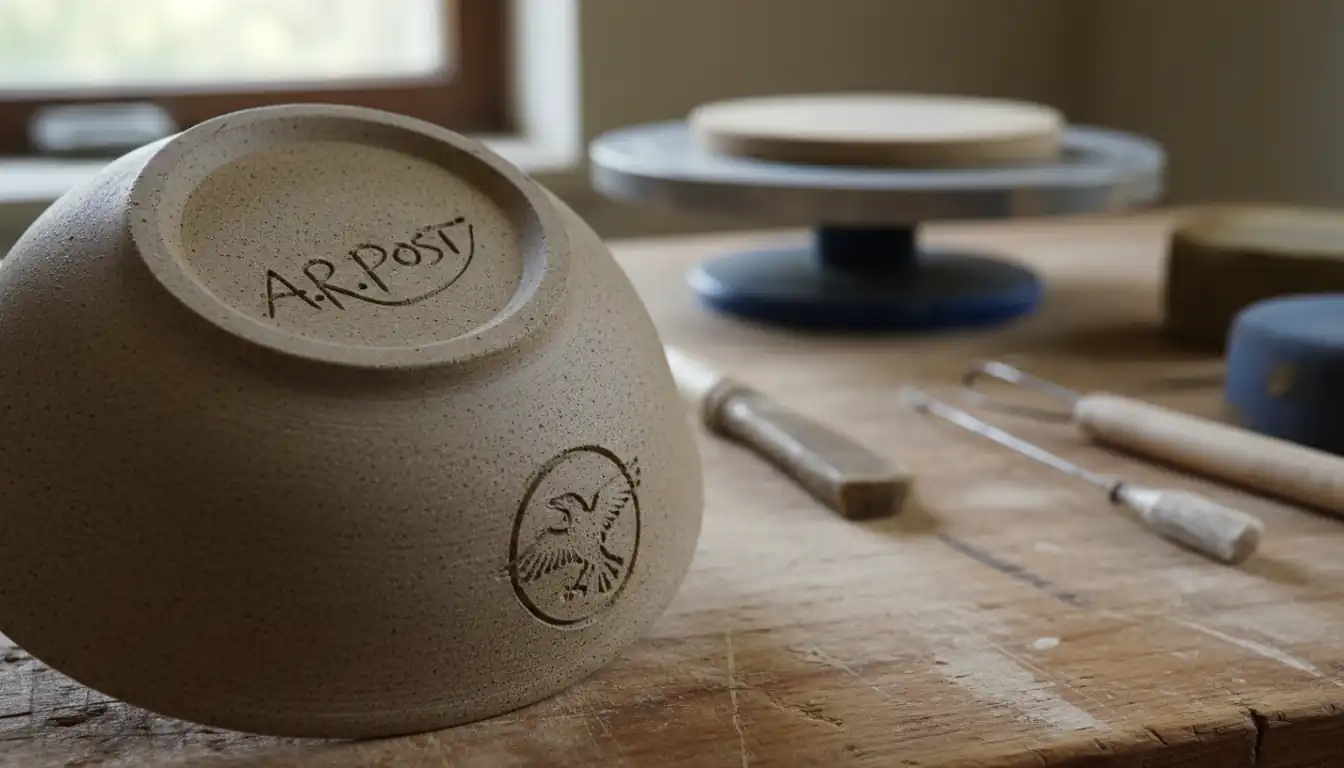
You are standing in a crowded thrift store, the air thick with the scent of old wood and dust. Your eyes scan a shelf of mismatched mugs and chipped plates until they land on a heavy, matte-green vase tucked behind a stack of plastic containers. You pick it up, feeling the surprising weight and the cool, velvety texture of the glaze. You turn it over, and there it is: a small, faint impression in the clay. It looks like a series of lines or perhaps a stylized leaf. Is it a masterpiece worth thousands, or just a mass-produced hobbyist project from the 1970s?
The difference between a "find of a lifetime" and a "dust collector" often rests entirely on that tiny mark on the bottom. For decades, collectors had to carry heavy, encyclopedia-sized reference books to estate sales, squinting at blurry black-and-white photos to match a signature. Today, the game has changed. Understanding pottery marks is no longer a dark art reserved for museum curators; it is a skill you can master with a bit of technical knowledge and the right digital tools.
In this guide, you will learn how to read the physical language of ceramics. We will break down the technical differences between various marking methods, identify the high-value "blue chip" marks that every picker dreams of finding, and show you how to spot the clever fakes that flood the market. By the time you finish reading, you will know exactly how to transform a mysterious scribble into a documented piece of history.
Decoding the Language of Ceramic Marks
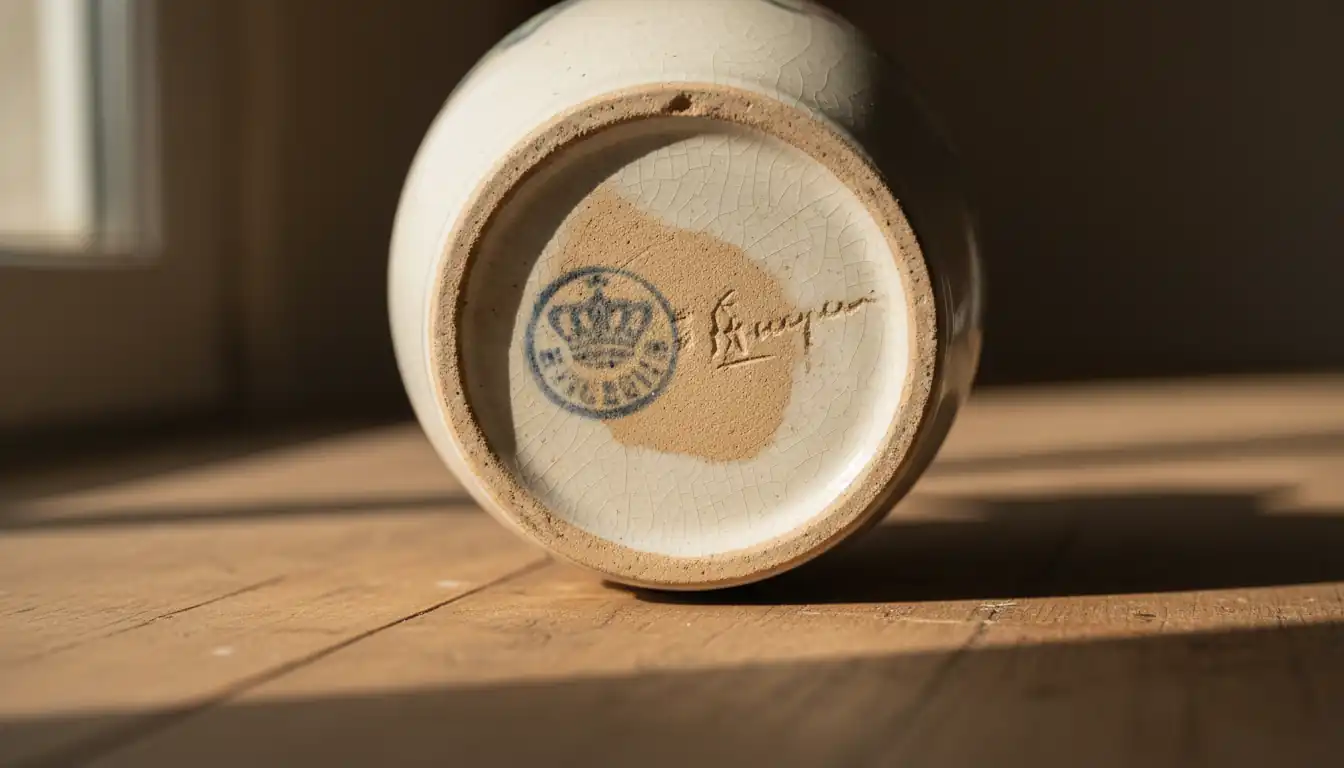
When you flip a piece of pottery over, you aren't just looking at a logo; you are looking at a physical record of the manufacturing process. The way a mark is applied tells you as much about the piece as the mark itself. Before you try to identify the maker, you need to understand the "how" behind the mark.
Incised Signatures vs. Stamped Logos
The most personal mark you will encounter is the hand-incised signature. This is common in studio pottery, where the artist uses a stylus or a needle tool to carve their name or initials directly into the damp clay before the first firing. These marks feel "burred" or slightly raised at the edges of the lines. Because they are done by hand, they are as unique as a fingerprint. If you see a signature that looks fluid and spontaneous, you are likely looking at a piece where the artist had total control from start to finish.
In contrast, factory-produced pieces usually feature stamped or impressed marks. An impressed mark is made by pressing a metal or wooden die into the wet clay. This creates a deep, three-dimensional relief. You will often see this in early English stoneware or American art pottery like Grueby. An underglaze stamp, however, is applied with ink or pigment onto the "bisque" (fired but unglazed) clay. The glaze is then applied over the top. This protects the mark forever, but it can sometimes cause the ink to "bleed" or blur, making it difficult to read without a magnifying glass.
Understanding Year Codes and Symbols
Many prestigious potteries didn't just want you to know who made the piece; they wanted you to know exactly when it was made. They developed complex internal "languages" using symbols and letters.
Take Wedgwood, for example. From 1860 to 1945, they used a three-letter code. The first letter represented the month, the second was the potter’s mark, and the third was the year. If you see an "O," you are looking at 1860. If you see a "P," it’s 1861. It’s a logical, rhythmic cycle that allows a collector to pinpoint a production date with surgical precision.
Rookwood Pottery, the darling of American Art Nouveau, used an even more elegant system. Starting in 1886, they used a "RP" logo topped with a sun-like frame. For every year after 1886, they added a small flame point to the top of the logo. Once they reached 14 flames in 1900, they switched to Roman numerals placed below the logo. Seeing "RP" with 14 flames and the numerals "XXII" tells you instantly the piece was born in 1922.
A mark is more than a brand; it is a timestamp of a specific moment in ceramic history, recorded in the very skin of the object.
Identifying Pottery with Your Smartphone
If the thought of memorizing thousands of year codes and artist monograms feels overwhelming, you aren't alone. For a long time, the barrier to entry for serious collecting was the sheer volume of data required. You had to know the difference between a 19th-century Meissen mark and a 20th-century "style" mark by memory. But just as GPS replaced the paper map, artificial intelligence has replaced the bulky reference catalog.
How AI Outperforms Traditional Catalogs
The primary challenge with traditional identification is that marks are often degraded. They might be partially obscured by a thick glaze, worn down by a century of sitting on a sideboard, or simply poorly applied. A human eye might see a "blurry blue line," but advanced AI algorithms can analyze the "negative space" of that blur.
When you use a modern identification tool, the software isn't just looking at the mark in isolation. It is looking at the "DNA" of the entire piece. It analyzes the specific hue of the glaze, the way the light hits the form, and the texture of the clay body itself. This holistic approach is how technology can distinguish between a genuine antique and a high-quality modern reproduction that has been artificially aged.
Getting a Real Appraisal with Relic
This is where a tool like Relic becomes an essential part of your kit. If you’ve ever wondered, "What is the app that identifies pottery marks?"—Relic is the answer collectors are turning to. Instead of scrolling through endless forums or guessing based on Google Images, you simply take a clear photo of the piece and its mark.
The app uses its AI to cross-reference your photo against a massive database of verified antiques. Within seconds, Relic provides a real appraisal, the history of the manufacturer, and the origin of the item. It’s like having a professional appraiser in your pocket while you’re digging through a bin at an estate sale. For professionals like pickers or online sellers, this instant access to market insights and historical context is the difference between passing over a treasure and making a high-margin flip.
| Feature | Traditional Research | Relic App |
|---|---|---|
| Speed | Hours of book/web searching | Seconds |
| Accuracy | Subjective (Human error) | AI-driven visual matching |
| Context | Limited to the specific book | Full history and market value |
| Portability | Heavy catalogs | Your smartphone |
Most Valuable Vintage Pottery Marks to Watch For
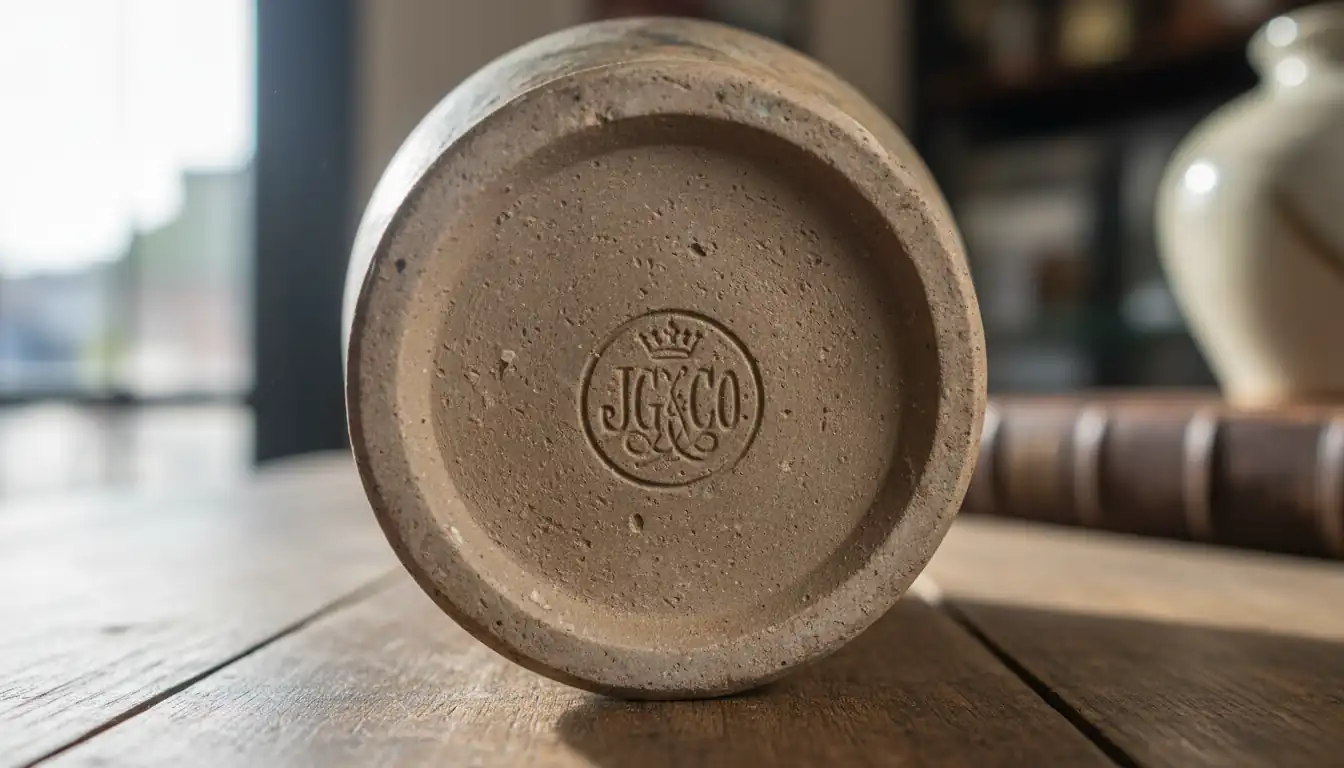
If you are hunting for "blue chips"—the pieces that hold or increase in value regardless of market trends—you need to know the specific marks that signal prestige. These are the marks that make auctioneers lean in closer.
European Prestige Marks
The "Big Three" of European ceramics are Meissen, Sèvres, and Royal Copenhagen. Each has a mark that has been protected and coveted for centuries.
- Meissen (Crossed Swords): This is perhaps the most famous mark in the world. Introduced in 1722 to protect against forgeries, the cobalt blue crossed swords are applied under the glaze. However, the nuances matter. If you see a dot between the hilts, it’s from the "Academic Period" (1763–1774). If there are two slashes through the swords, it indicates the piece was sold as a "second" or was unpainted.
- Moorcroft (The Signature): William Moorcroft was a titan of English art pottery. While early pieces feature the "Macintyre" stamp, the most valuable pieces are those he personally signed. A full green-ink signature "W. Moorcroft" usually indicates a piece of higher quality and value than one with just initials.
American Art Pottery Icons
In the United States, the Arts and Crafts movement produced some of the most sought-after ceramics in history.
- Grueby Faience: Look for a circular stamp that says "Grueby Pottery, Boston, U.S.A." surrounding a stylized lotus leaf. Grueby is famous for its "cucumber green" matte glaze. If you find a piece where the mark is accompanied by the initials of a decorator like Wilhelmina Post, the value can skyrocket into the five-figure range.
- Newcomb College: These pieces are a collector's dream because they are so well-documented. The mark features an "N" inside a "C." But the real value is in the additional marks: a letter indicating the clay body, a number for the order of production, and the monogram of the woman who decorated it.
The presence of a decorator's monogram alongside a factory mark is often the "multiplier" that turns a standard vintage piece into a high-value investment.
Red Flags and Reproduction Marks
As the value of vintage pottery has risen, so has the sophistication of fakes. To protect yourself, you must develop a sense of professional skepticism. A mark is only as good as the piece it is attached to.
Modern Fakes of Antique Classics
One of the most common pitfalls for new collectors is "Nippon" pottery. While genuine pre-1921 Japanese porcelain is highly collectible, the market is flooded with "fantasy" Nippon marks. These are marks that look old but never actually existed during the period. For example, a bright green "M-in-wreath" mark that looks too perfect or is applied over the glaze is a classic red flag.
Similarly, Roseville pottery is frequently faked. Authentic Roseville usually has an impressed or raised "Roseville U.S.A." mark. On fakes, the lettering often looks "mushy" or blurred, and the clay itself feels chalky or light compared to the dense, heavy feel of the originals.
Wear Patterns and Glaze Consistency
A mark can be faked, but 100 years of history cannot. When you examine a piece, look at the "shelf wear." This is the natural smoothing of the unglazed bottom ring (the foot ring) where the piece has sat on tables and shelves for decades. On a genuine antique, this wear should be smooth and consistent. If the foot ring is rough or looks like it was sanded down, walk away.
Another indicator is "cold stamps." This is when a mark is stamped onto a piece after it has already been fired and glazed. You can often feel these with your fingernail; they sit on top of the surface rather than being integrated into it. Authentic period marks are almost always part of the firing process.
- Crazing: Look for fine cracks in the glaze. While some modern pieces mimic this, genuine age-related crazing is usually random and varies in depth.
- Weight: If a piece looks like heavy stoneware but feels as light as a coffee cup, it’s likely a modern slip-cast reproduction.
Beyond the Mark to Provenance and History
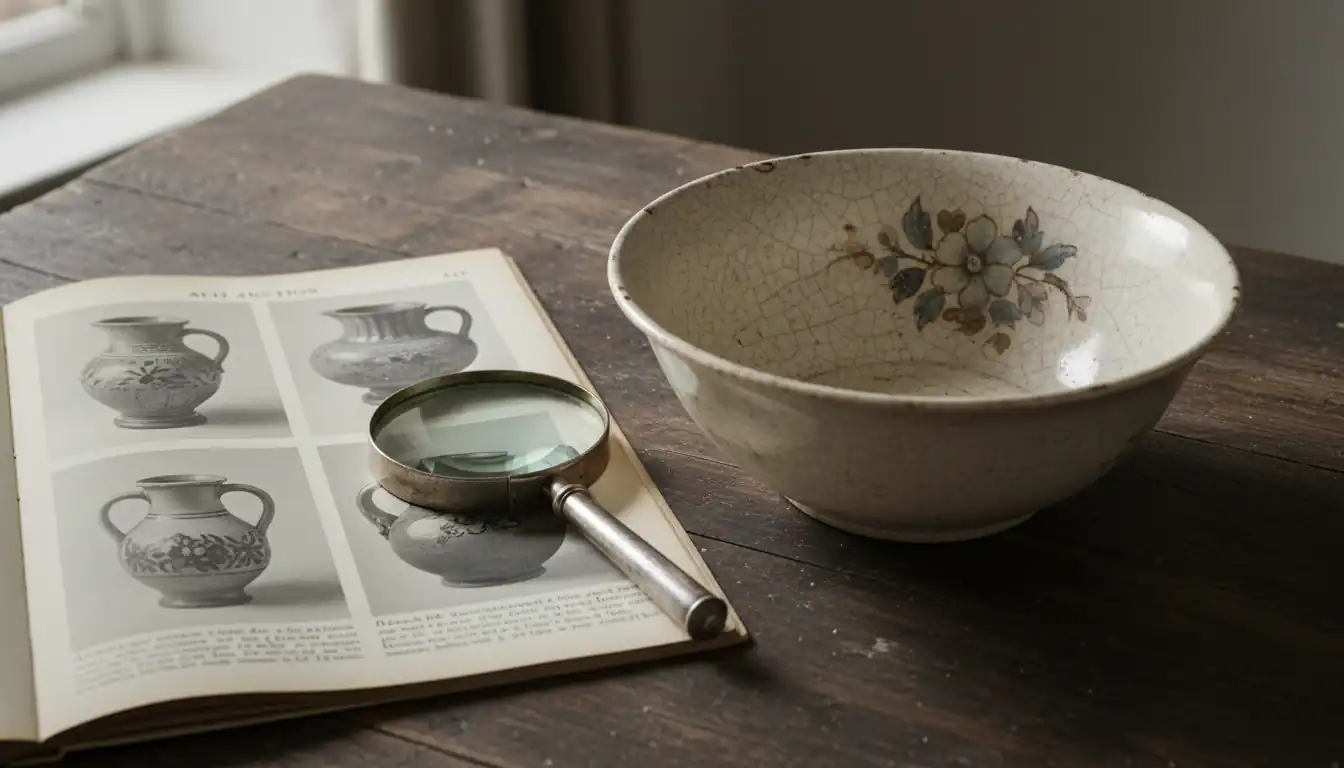
Identifying the mark is just the beginning. To truly maximize the value of a find—or to simply appreciate its place in history—you need to build a "provenance file." This is the documented "life story" of the object.
Using Digital Archives and Museum Databases
Once you have identified a mark, perhaps using the initial data from a Relic appraisal, you can cross-reference it with major institutions. The Victoria and Albert Museum (V&A) in London and the Smithsonian in Washington D.C. have extensive online databases. You can search for the specific maker and year to see if your piece matches the "form" or "pattern" of known museum-grade examples.
If your piece has a decorator's monogram, search for that artist's name. Finding out that your vase was decorated by a woman who later became a famous painter adds a layer of "human history" that significantly increases resale value.
Building a Documentation File
If you plan to sell your pottery or keep it as an investment, you need a digital and physical paper trail. This should include:
- High-resolution photos: Capture the piece from all angles, including a macro shot of the mark.
- The Relic Appraisal: Keep a digital copy of the AI-generated report, which provides a baseline for its origin and market context.
- Historical Context: Notes on the manufacturer’s history and any similar pieces found in museum collections.
By treating your pottery find like a historical artifact rather than a decorative object, you elevate its status. You are no longer just a person with a vase; you are a steward of a piece of ceramic history.
Conclusion
The world of pottery marks is a fascinating blend of art, history, and detective work. From the hand-carved signatures of studio artists to the complex year codes of industrial giants like Wedgwood, these marks offer a window into the past. While the sheer volume of information once made this hobby intimidating, modern technology has leveled the playing field.
By understanding the technical application of marks, keeping a "hit list" of high-value icons, and staying vigilant against reproductions, you can navigate any estate sale with confidence. Tools like Relic have turned the smartphone into a powerful magnifying glass, allowing you to identify and appraise treasures in the palm of your hand.
Your next masterpiece is out there, perhaps hidden under a layer of dust on a bottom shelf. The next time you see a mysterious mark, don't just wonder what it is. Flip it over, take a photo, and let the history of the piece reveal itself to you. Happy hunting.
Identify antiques instantly
Point your camera at any antique, collectible, or vintage item. Get valuations, history, and market insights in seconds.
Download for iPhone