The Secret Value of Antique Billiards: Why Your Old Pool Table Might Be a Goldmine

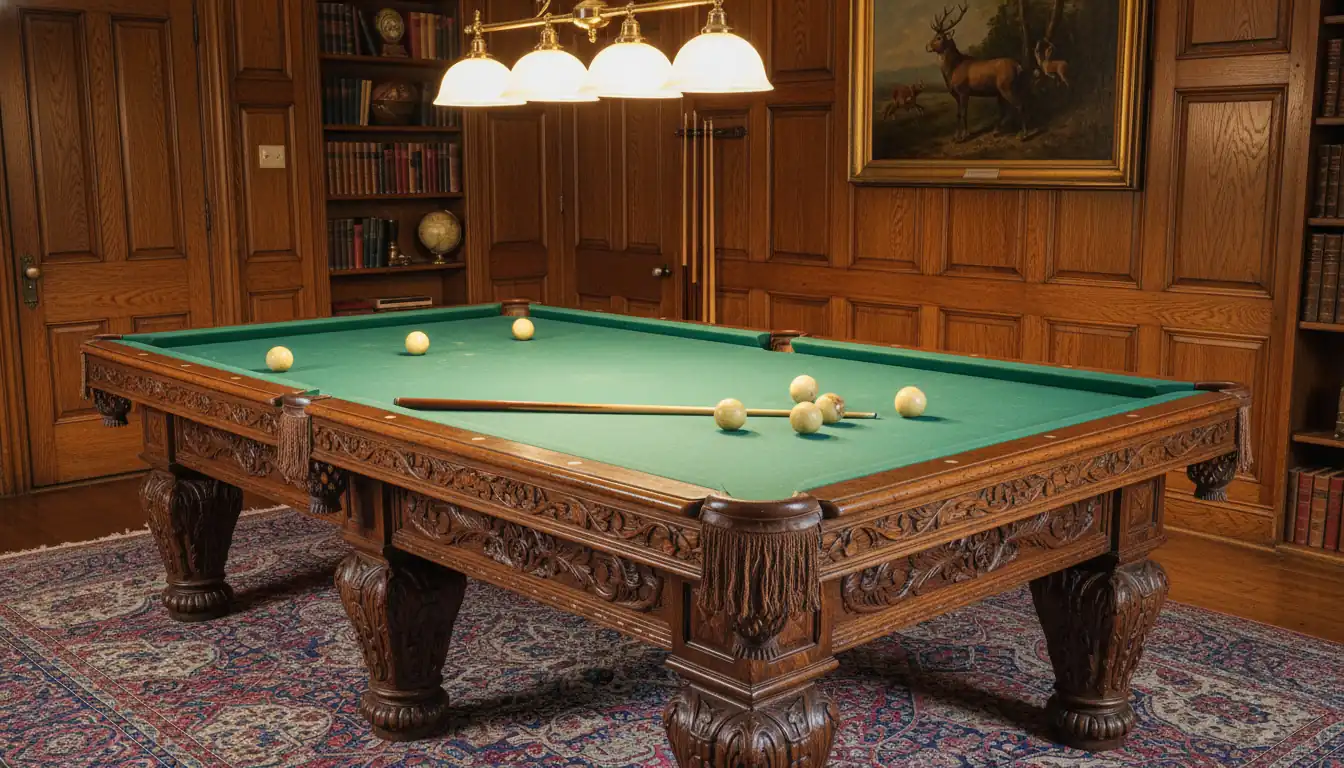
That dusty, oversized piece of furniture taking up space in your basement or garage might look like a burden, but it could actually be a high-value asset waiting to be discovered. For decades, antique pool tables have been treated as bulky relics of a bygone era, often sold for a pittance just to get them out of the house. However, the market for authentic, 19th-century billiards has seen a significant resurgence as collectors and interior designers look for pieces that combine historical craftsmanship with functional art.
Understanding the true value of an antique table requires looking past the worn felt and the faded finish. You aren't just looking at a game table; you are looking at a masterpiece of Victorian engineering and exotic woodworking. From the weight of the Italian slate to the intricate patterns of the marquetry, every detail tells a story of a time when billiards was the "Sport of Kings."
In this guide, we will break down the specific markers that separate a common used table from a five-figure investment piece. You will learn how to identify legendary makers, understand the materials that drive market demand, and discover how modern technology can help you appraise your find in seconds. By the time you finish reading, you’ll know exactly how to determine if your old pool table is a goldmine.
The Hallmarks of Legendary Billiard Makers
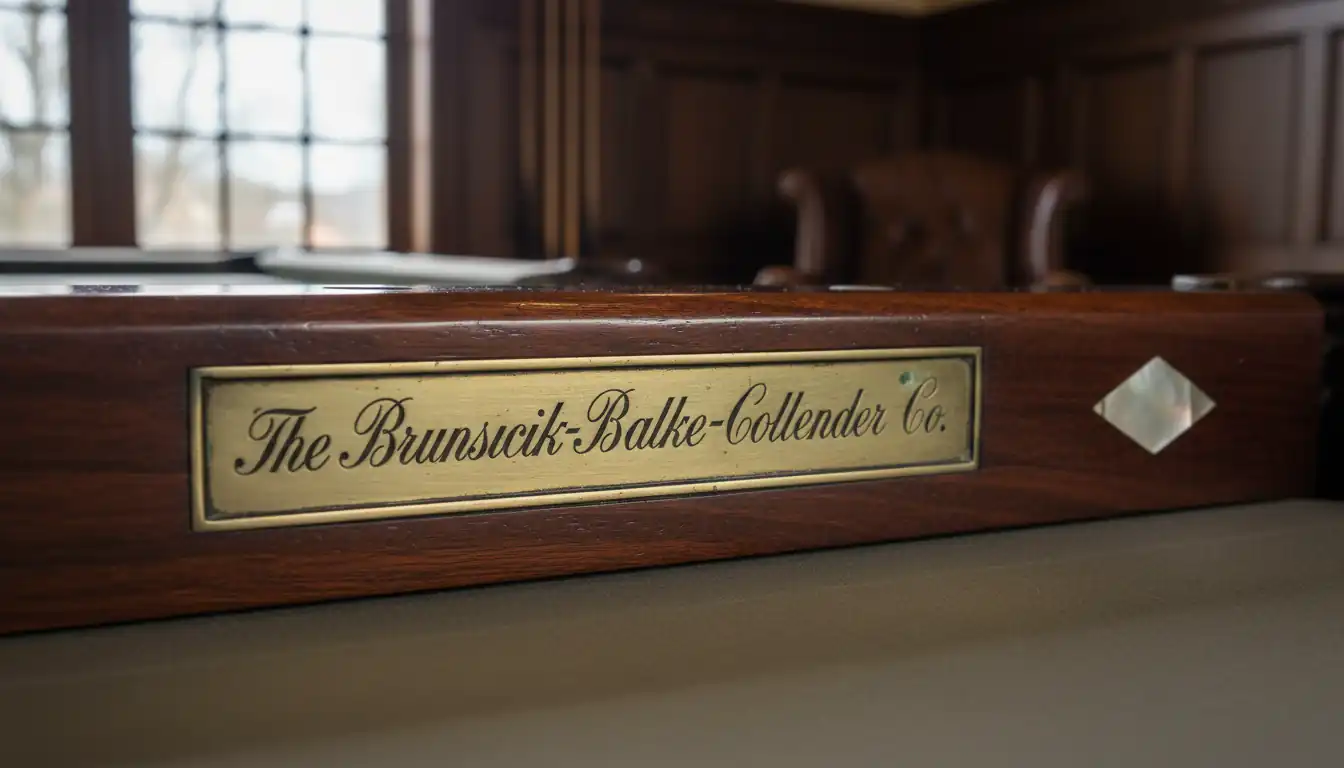
The most significant factor in determining the value of an antique pool table is the nameplate. In the late 1800s and early 1900s, a few elite manufacturers dominated the industry, producing tables that were built to last for centuries. If you find a nameplate from one of these legendary makers, you have likely found something of substantial value.
Identifying the Brunswick Balke Collender Legacy
The Brunswick-Balke-Collender Company is the undisputed titan of the billiards world. Formed in 1884 through a series of mergers between John Brunswick, Julius Balke, and H.W. Collender, this company set the standard for quality. When you are inspecting an old table, the first thing you should do is look for the brass or ivory nameplate usually located on the top rail.
Two specific models often serve as benchmarks for high-end collectors: the 'Allenton' and the 'St. Bernard Mission.' The Allenton is famous for its clean, architectural lines and massive, square legs, representing the peak of the Arts and Crafts movement. On the other hand, the St. Bernard is a masterpiece of ornate carving, often featuring lion-head motifs and heavy, scrolled legs that weigh hundreds of pounds each. These tables were not mass-produced in the way modern tables are; they were commissioned pieces that signaled the wealth of the original owner.
To verify these models, you need to look beyond the nameplate. Check the underside of the frame for serial numbers stamped into the wood. These numbers often correspond to factory ledgers that can confirm the exact date of manufacture. If the nameplate is missing or painted over, identifying the brand becomes a puzzle. This is where the Relic app becomes an essential tool. By simply taking a photo of the table’s silhouette or the area where a nameplate should be, Relic uses its advanced AI to cross-reference the design against historical databases. It can identify the specific model and manufacturer in seconds, giving you instant brand verification without needing to be a historian yourself.
Rare Finds from O.L. Briggs and Chas Weston
While Brunswick is the most famous name, other makers like O.L. Briggs Co. and Chas Weston represent the "boutique" side of the antique market. O.L. Briggs, based in Boston, was renowned for its "Briggs' Patent" tables, which featured innovative cushion designs and some of the most intricate marquetry ever seen in the industry. Their 9-foot pocket tables are particularly prized because they often utilized contrasting wood veneers to create geometric patterns that are nearly impossible to replicate today.
Chas Weston, a Chicago-based maker, specialized in high-performance tables and professional-grade cues. A Weston table is a rare find, often characterized by a more understated elegance compared to the flamboyant Brunswicks. If you find a table with a Weston nameplate, you are looking at a piece of professional billiards history. These makers focused on the "playability" of the table, ensuring the frame was perfectly level and the rails provided a consistent bounce.
Pro Tip: Always check the "blind" or the vertical wooden apron under the rails. Many high-end makers hid their most intricate carvings or serial stamps in these areas to prevent them from being damaged during play.
Material Mastery and the Art of Marquetry
The difference between a "vintage" table from the 1970s and a true "antique" from the 1880s lies in the materials. Modern tables often use particle board, thin slate, and synthetic veneers. In contrast, an antique table is a heavy, solid-wood beast constructed from materials that are now either extinct or heavily regulated.
The Significance of Italian Slate and Exotic Woods
The heart of any high-quality pool table is the slate. While modern budget tables might use 3/4-inch slate or even wood beds, a true antique goldmine will almost always feature 1-inch to 1.5-inch thick Italian slate. This slate was quarried in the Liguria region of Italy and was prized for its lack of veins and its ability to stay perfectly flat over decades. The sheer weight of 1.5-inch slate—often exceeding 500 pounds per slab—is a primary indicator of a table's original cost.
The wood used in the frame and rails is equally important. During the golden age of billiards, makers had access to:
- Brazilian Rosewood: Now highly protected and nearly impossible to source, this wood features a deep, dark grain with purple hues.
- Honduran Mahogany: Known for its stability and rich red color, it was the standard for high-end frames.
- Birdseye Maple: A rare genetic mutation in maple trees that creates tiny, eye-like swirls in the grain, often used as a decorative inlay.
If you see a table that looks like it is made of solid, dark wood with a complex grain, it is likely one of these exotic species. These materials don't just add beauty; they add massive value to the secondary market because they can no longer be used in new construction.
Decoding Inlays and Original Finishes
Marquetry is the art of applying pieces of veneer to a structure to form decorative patterns. In the world of O.L. Briggs and high-end Brunswick tables, marquetry was used to create "ribbon" patterns or floral motifs along the sides of the table. This wasn't just paint; it was a jigsaw puzzle of different woods like ebony, holly, and walnut.
When you are using the Relic app to identify a table, pay close attention to the quality of the photos you upload. The AI is sophisticated enough to analyze wood grains and identify specific inlay patterns. It can distinguish between a cheap printed wood grain and authentic marquetry. This is vital because a table with intact, original marquetry can be worth three to four times more than a table that has been painted over or poorly refinished.
| Material | Antique Standard | Modern Equivalent | Value Impact |
|---|---|---|---|
| Slate | 1.5" Italian Slate | 3/4" Honeycomb or MDF | High (Stability) |
| Wood | Solid Rosewood/Mahogany | Veneered Plywood/Poplar | Extreme (Rarity) |
| Cushions | Natural Gum Rubber | Synthetic Compounds | Moderate (Playability) |
| Inlays | Hand-cut Marquetry | Decals or Screen Prints | High (Artistry) |
Beyond the Table: High-Value Accessories
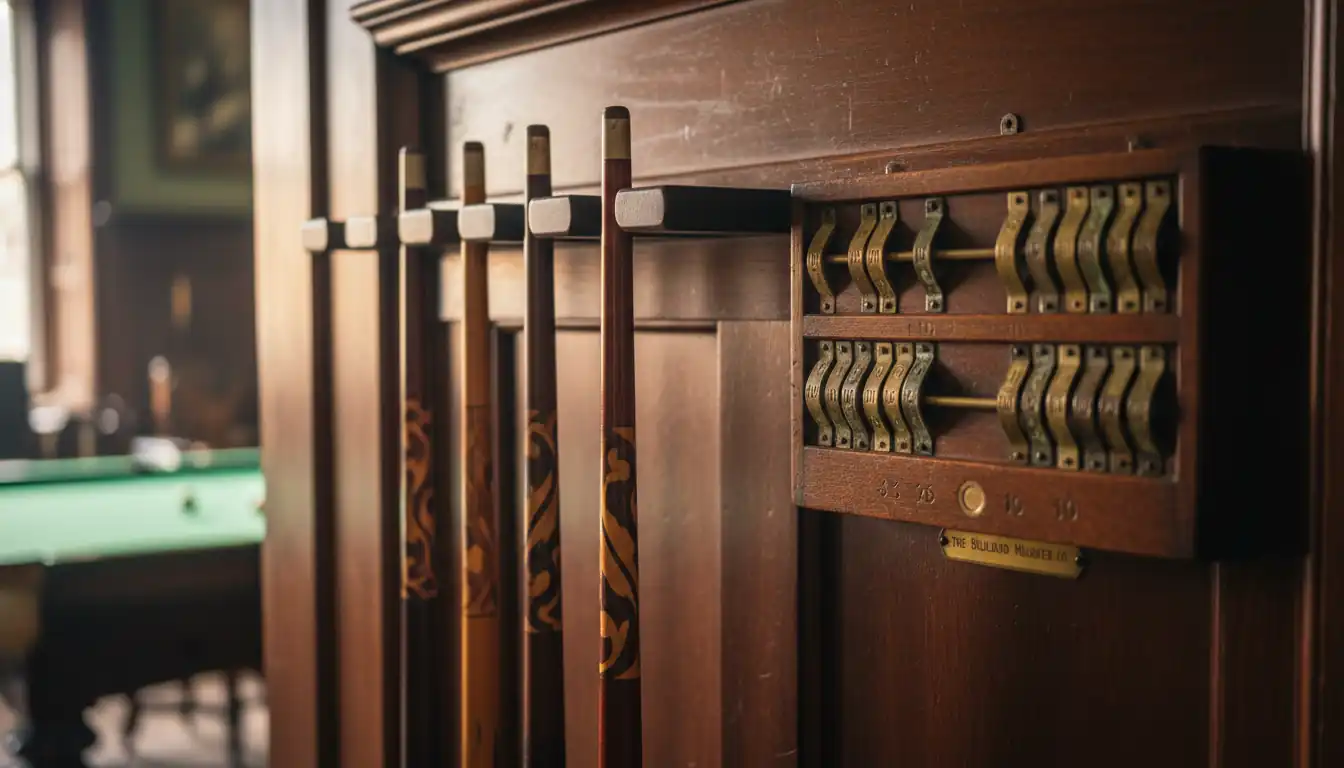
Often, the real "gold" isn't the table itself, but the accessories that come with it. Because pool tables are so difficult to move, many owners focus on the table and ignore the smaller items. However, for a collector, a complete "heritage" set is the ultimate prize.
The Market for Vintage Cue Sticks and Ball Sets
Vintage cue sticks, especially those made by Chas Weston or the early Brunswick "Titleist" lines, are highly collectible. Look for cues with "points"—the triangular wood inlays near the base. The more points a cue has, and the more intricate the veneers, the higher the value. Some Chas Weston "World's Pool Champion" models can sell for thousands of dollars as standalone items because they are much easier to ship and trade than a 3,000-pound table.
Billiard balls also hold significant value. Before the invention of modern plastics, balls were made of ivory. You can identify ivory balls by looking for "Schreger lines"—fine, cross-hatching patterns visible under a magnifying glass. However, even early synthetic balls made of celluloid (often called Hyatt balls) are valuable if they are part of a complete, original set with the original box. These "Heritage" sets represent the transition of industrial chemistry and are highly sought after by sports historians.
Racks and Scorekeepers as Standalone Collectibles
Don't overlook the wall furniture. Antique cue racks, especially revolving "carousel" racks or ornate wall-mounted units with mirrors, are often sold separately from the table. Similarly, wooden scorekeepers with ivory or brass tabs can be worth several hundred dollars.
Because these items are smaller, they are frequently misidentified at estate sales or auctions. People see an old wooden rack and think it's just a piece of scrap wood. This is a perfect opportunity to use Relic. You can scan a scorekeeper or a set of vintage balls, and the app will provide the history and origin of the item. Knowing that a specific rack was designed to match a 19th-century Brunswick 'Arcadian' table can give you the leverage you need to negotiate a better price or realize the true value of what you own.
"Accessories are the low-hanging fruit of the billiards market. They carry a higher ROI because they don't require a professional moving crew to flip."
Determining Market Value in the Modern Era
Pricing an antique pool table is not as simple as looking at a blue book. The market is volatile and heavily influenced by geography and the "story" behind the piece. A table that sells for $2,000 in a rural area might fetch $10,000 in a major metropolitan market where high-end interior designers are looking for statement pieces.
Why Location and Provenance Dictate Price
If you are in an area like Rockford, IL (the 815 area code), you might find that prices fluctuate based on the availability of specialized movers. Moving an antique table requires a professional who understands how to disassemble the slate without cracking it. If there are no movers nearby, the "local" value of the table drops because the buyer has to factor in massive shipping costs.
However, "provenance"—the history of who owned the table—can override almost any geographical disadvantage. Was the table originally installed in a famous hotel? Did it belong to a local industrialist? Even a documented history of being in a specific pool hall during the early 20th century can double the value. Collectors aren't just buying wood and slate; they are buying a piece of history.
Using AI Appraisal for Instant Valuation
The biggest challenge for a novice is distinguishing between a "free" table on Craigslist that is actually a $5,000 Brunswick in disguise and a piece of junk that isn't worth the cost of moving it. This is where the real power of the Relic app comes into play.
Relic provides a real appraisal by analyzing the item's condition, the rarity of the model, and current historical records. Instead of spending weeks researching in libraries or paying a professional appraiser hundreds of dollars for a consultation, you can get an origin story and a valuation in seconds. The app's AI looks at the specific wear patterns, the type of bolts used in the frame, and the style of the pockets to give you a comprehensive report. This allows you to walk into an estate sale with the confidence of a seasoned dealer.
- Check the Bolts: Antique tables often use large, hand-forged iron bolts rather than modern steel screws.
- Inspect the Pockets: Look for leather irons with fringe or "shield" style pockets, which were common on high-end Victorian models.
- Verify the Slate: If the slate is in three pieces and over an inch thick, you are likely looking at a professional-grade antique.
The Restoration Dilemma
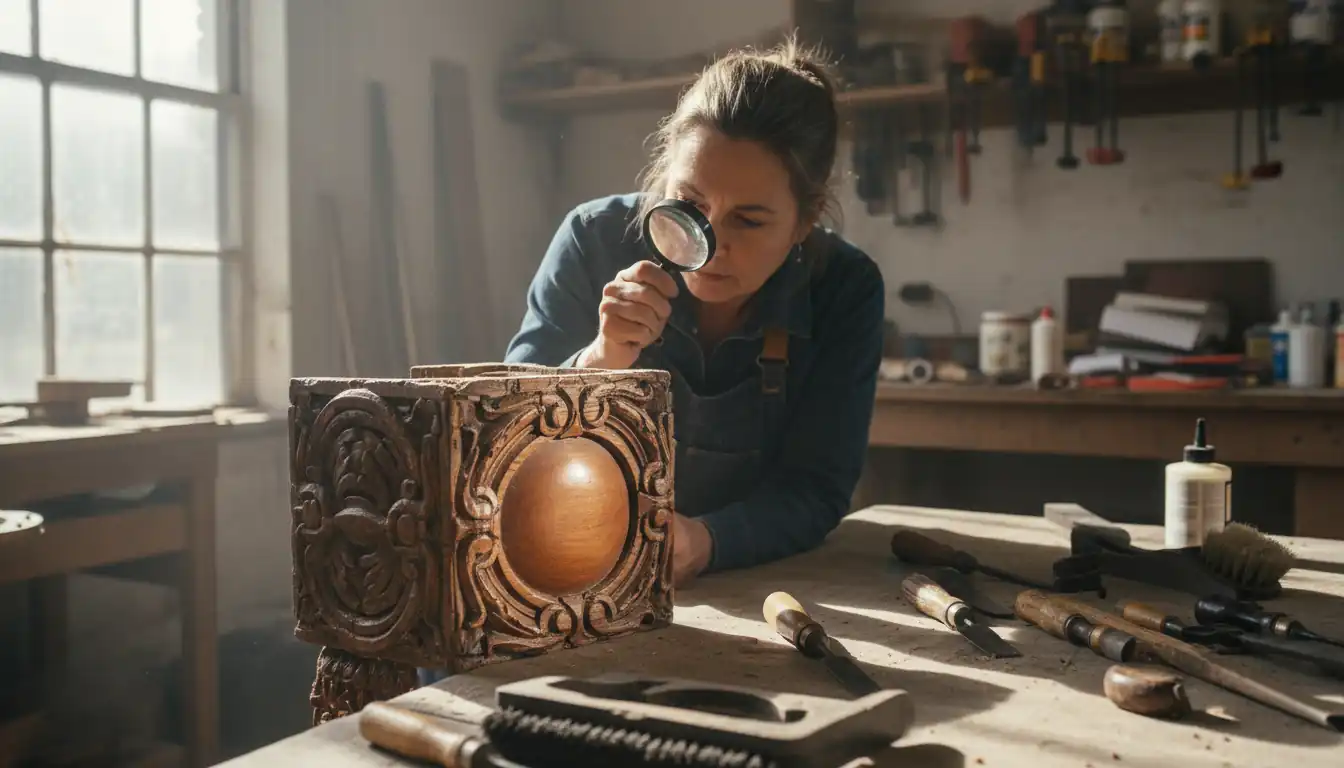
Once you’ve identified that your table is a valuable antique, you face a difficult choice: do you restore it to its former glory, or do you leave it in its current state? This is the "restoration dilemma," and your decision can significantly impact the table's market value.
When Refinishing Destroys Historical Value
In the world of high-end antiques, "patina" is everything. Patina is the natural aging process that wood and metal undergo over a century. It creates a depth of color and texture that is impossible to replicate with modern stains. If you have a 19th-century O.L. Briggs table with its original finish, sanding it down to "make it look new" can actually strip away thousands of dollars in value.
Serious collectors often prefer a "museum piece" over a "playable table." A museum piece is kept as close to its original state as possible, even if the felt is torn or the cushions are hard. Before you touch the finish, use the Relic app to check the 'history and origin' report. The app might reveal that your table is a rare "original finish" specimen, in which case your only job is to clean it gently with specialized wood soap.
Sourcing Authentic Parts for Functional Antiques
If you do decide to restore the table for play, you must use period-correct materials. This means sourcing:
- Natural Gum Rubber Cushions: Modern synthetic cushions have a different "speed" than the original Monarch cushions used by Brunswick.
- Wool-Blend Felt: Avoid the high-speed "teflon" felts used in modern pool halls; look for heavy wool cloths that match the original color palettes of the era (often deep greens or burgundies).
- Leather Pockets: Use hand-stitched leather that matches the original design of the table's "irons."
By maintaining the antique integrity of the table while making it playable, you appeal to a broader market: the wealthy homeowner who wants a functional centerpiece.
Conclusion
Your old pool table is more than just a place to knock around some balls; it is a complex assembly of rare woods, precision-engineered slate, and historical artistry. Whether it’s a Brunswick 'Allenton' with its mission-style gravity or an O.L. Briggs with its delicate marquetry, these tables are true goldmines for those who know what to look for.
The key to unlocking this value is identification and appraisal. By focusing on the nameplates, the thickness of the slate, and the provenance of the piece, you can separate the treasures from the trash. Tools like the Relic app have made this process easier than ever, allowing you to turn your smartphone into a professional appraisal tool.
If you suspect you have a legendary table in your possession, your next step is simple: clear off the clutter, take a few high-quality photos, and start your research. You might find that the most valuable thing in your home has been sitting right under your nose all along. Don't let a piece of history go to waste—identify it, value it, and claim your goldmine.
Identify antiques instantly
Point your camera at any antique, collectible, or vintage item. Get valuations, history, and market insights in seconds.
Download for iPhone