The Thrift Store Goldmine: How to Spot $500 Flips in a Sea of $5 Junk

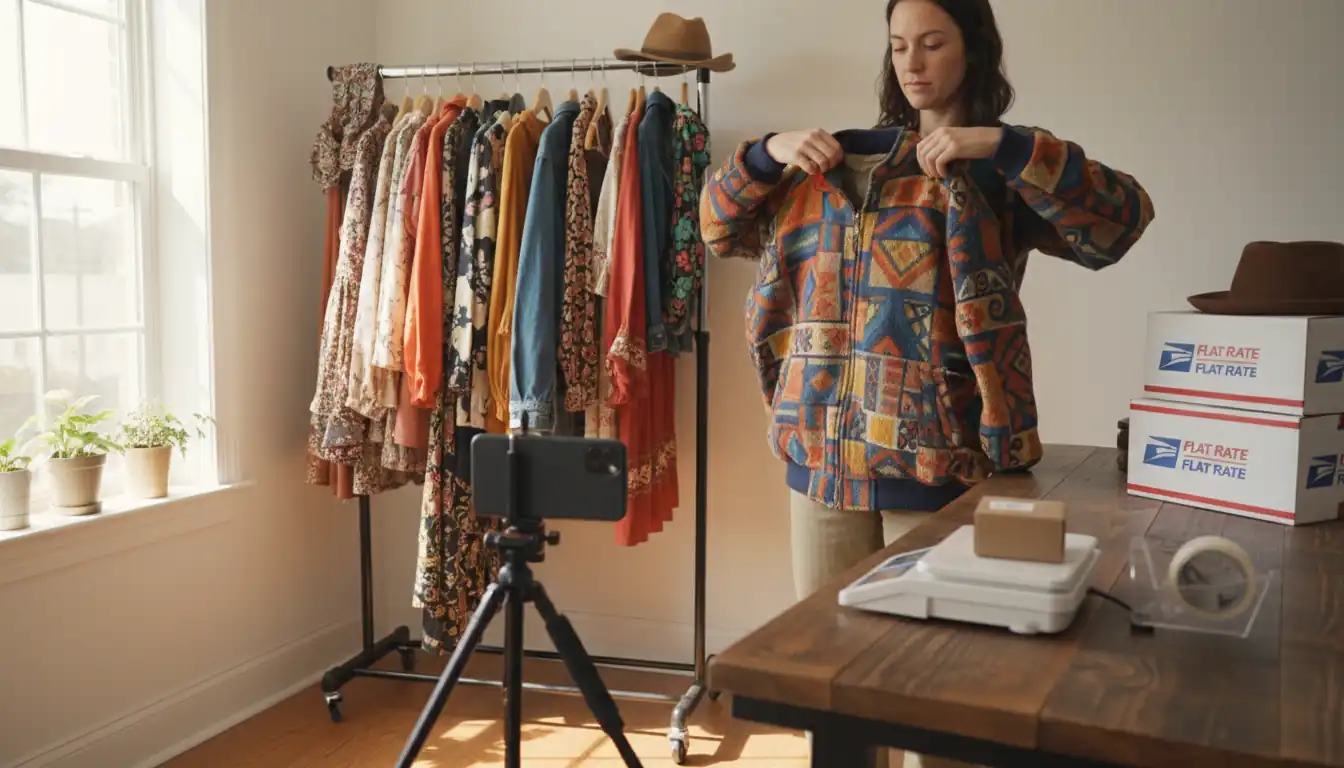
You walk into a local thrift store and see the usual suspects: stacks of cracked DVD cases, faded fast-fashion t-shirts, and a wall of generic ceramic mugs. To the untrained eye, it looks like a graveyard of consumerism. But to a professional reseller, this room is a puzzle waiting to be solved. Somewhere between the stained upholstery and the plastic toys sits a piece of history—a mid-century vase, a vintage circuit board, or a hand-signed lithograph—that could pay your rent for the month.
The difference between the person who leaves with a $5 profit and the person who leaves with a $500 score isn't luck. It is information. In the high-stakes world of professional flipping, knowledge is the only currency that actually matters. You are not just buying objects; you are buying the gap between what a thrift store thinks an item is worth and what a collector is willing to pay for it.
This guide will strip away the myths of the "side hustle" and show you the mechanics of a legitimate reselling business. We will break down the math of hitting consistent monthly goals, identify the hidden categories that hold the most value, and explore the tools that give professionals an unfair advantage. If you are tired of scanning barcodes on used books and want to start finding real treasure, you need to change how you see the shelves.
The Financial Reality of Modern Reselling

Many people enter the reselling space because they heard a story about someone finding a rare painting for $10 and selling it for $10,000. While those "home runs" do happen, they are not a business model. A sustainable business is built on "base hits"—consistent, predictable sales that cover your overhead and provide a steady income. To treat this like a professional, you have to stop looking at the price tag on the shelf and start looking at the net profit in your bank account.
Breaking Down the $1,000 Monthly Milestone
One of the most common questions newcomers ask is: Can I make $1,000 a month on eBay? The answer is a definitive yes, but the math behind it is often more intense than people realize. To net $1,000 in profit, you aren't just selling $1,000 worth of goods. You are likely looking at a gross revenue of $2,000 to $2,500.
When you sell an item, several hands reach into your pocket before you see a dime. First, the platform takes its cut (usually around 13-15% depending on the category). Then, you have shipping costs, which include the postage itself and the materials like boxes, tape, and bubble wrap. Finally, you have your "Cost of Goods Sold" (COGS)—the money you spent to buy the item in the first place.
| Expense Category | Estimated Percentage of Sale | Impact on $100 Sale |
|---|---|---|
| Platform Fees | 13.5% | $13.50 |
| Shipping & Supplies | 15% | $15.00 |
| Initial Cost (COGS) | 20% | $20.00 |
| Self-Employment Tax | 15% (of profit) | $7.72 |
| Net Profit | ~44% | $43.78 |
To clear $1,000 in net profit, you need to move a significant volume of inventory if your margins are thin. If you make $10 profit per item, you need to sell 100 items a month. That is more than three sales every single day. If you can find items that net you $100 in profit, you only need to sell 10 items a month. This is why the "high-margin" strategy is the preferred path for solo operators who don't want to turn their garage into a 24/7 shipping warehouse.
Profit Margins vs Gross Revenue
Gross revenue is a vanity metric. You will see "gurus" online posting screenshots of $50,000 months, but if they spent $45,000 on inventory and shipping, they are barely making a living wage. A professional focuses on the "spread." The spread is the difference between your total investment and your final payout.
High-volume, low-margin reselling is a race to the bottom. It relies on "bread and butter" items like modern clothing or common household goods. These items are easy to find but have massive competition, which drives prices down. Low-volume, high-margin reselling focuses on "sleepers"—items that require specialized knowledge to identify.
The goal of a professional reseller is to maximize the value of every hour spent sourcing, not just the number of items in the cart.
When you shift your focus to high-margin items, your business becomes more resilient. You spend less time packing boxes and more time researching. You reduce your storage needs and lower your risk. The key to this transition is learning to identify categories that the average shopper—and the average thrift store employee—completely overlooks.
Identifying High-Value Categories That Move the Needle
If you want to find the $500 flips, you have to stop looking where everyone else is looking. Most people head straight for the clothing racks or the media section. While you can certainly find value there, those areas are heavily picked over by "scanners" using basic apps to check barcodes. To find the real goldmine, you need to look at items that don't have a barcode.
Beyond Fast Fashion and Modern Books
The question of "What is the most profitable item to resell?" doesn't have a single answer, but it does have a theme: rarity and desirability. Fast fashion is the opposite of this. A shirt from a big-box retailer might have cost $30 new, but its resale value drops to almost zero because there are millions of them in existence.
Instead, look for items with "built-in" value. This includes vintage electronics, particularly those from the 1970s and 80s. Silver-faced stereo receivers, high-end cassette decks, and even certain types of vintage calculators can command hundreds of dollars. These items are often heavy and intimidating to ship, which keeps the casual resellers away.
Mid-century modern (MCM) decor is another powerhouse category. A simple wooden tray or a strangely shaped glass vase from the 1960s can be worth ten times its weight in modern equivalents. Collectors are looking for specific designers and manufacturers like Dansk, Bitossi, or Herman Miller. These items often look like "junk" to the uninitiated, but they are highly liquid assets in the right markets.
Identifying Authentic Antiques and Vintage Collectibles
The most difficult—and most rewarding—category is antiques. This is where the highest margins live. A piece of 19th-century porcelain or a hand-forged iron tool can be priced at $2 because the thrift store manager thinks it’s just "old stuff." Identifying these items requires an eye for detail: the way a glaze pools at the bottom of a vase, the type of screw used in a piece of furniture, or the specific mark on the bottom of a silver dish.
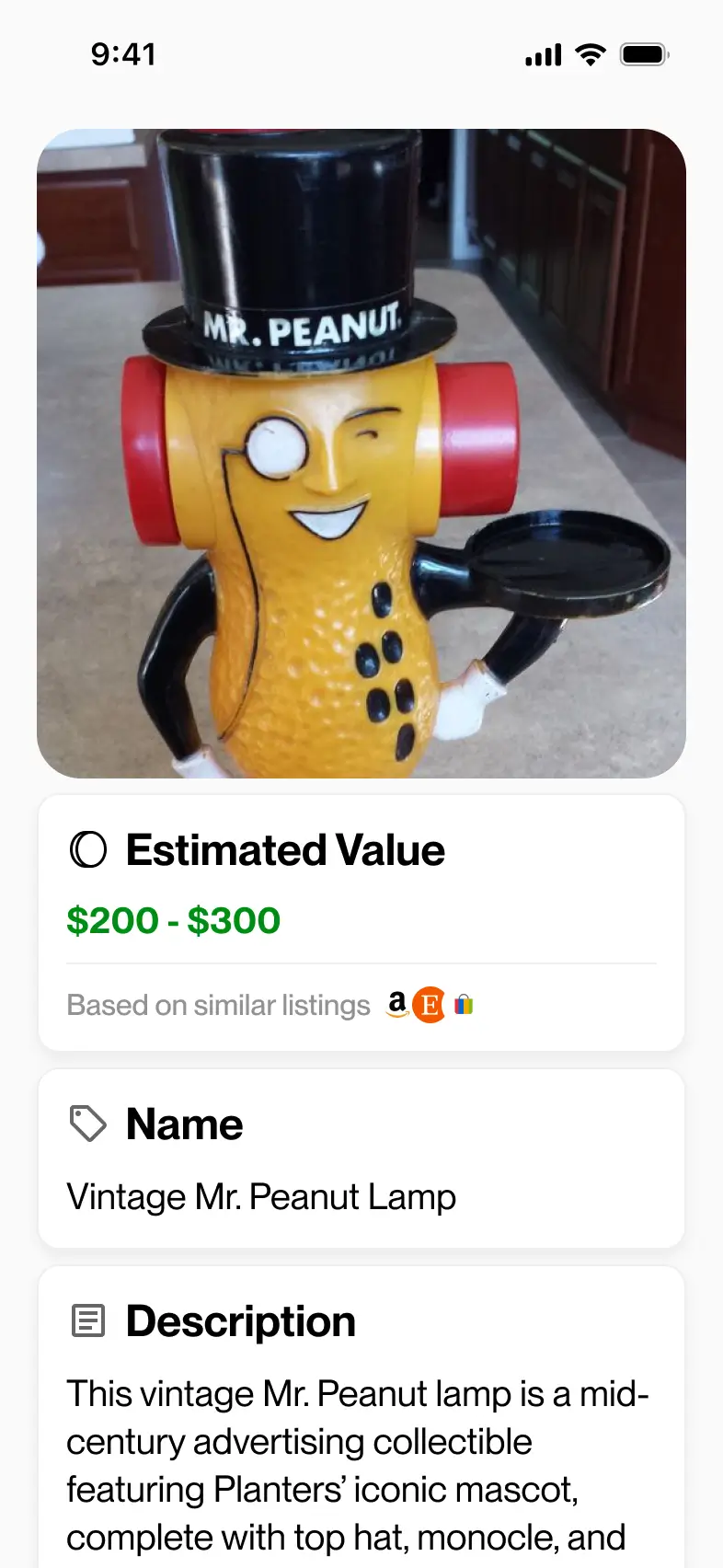
This is where technology bridges the gap between a novice and a master. Using an app like Relic can fundamentally change your sourcing trip. Instead of guessing or spending twenty minutes on Google trying to describe a "blue flower vase with a gold rim," you can simply take a photo. Relic uses advanced AI to analyze the item, providing an instant appraisal, historical context, and the origin of the piece.
- Hallmarks and Maker's Marks: Many high-value items have tiny stamps that are nearly impossible to read with the naked eye. Relic can identify these marks and tell you exactly which silversmith or pottery studio produced the item.
- Historical Context: Knowing that a chair isn't just "old" but was actually produced during a specific period in a specific region can add hundreds of dollars to your asking price.
- Market Insights: Getting a real appraisal on the fly prevents you from leaving a $300 item on the shelf because you thought it was a reproduction.
By using these tools, you are essentially carrying an expert appraiser in your pocket. It allows you to move through a store with confidence, identifying the one "sleeper" in a sea of five-dollar junk.
The Legal and Ethical Landscape of Professional Reselling

As you move from a hobbyist to a professional, you will inevitably encounter questions about the legality and ethics of your business. Some people feel a sense of "buyer's guilt" when they purchase an item for a few dollars and sell it for a massive profit. Others worry that they are "taking away" from people who need the thrift store items more. Understanding the legal and ethical framework of reselling will help you operate with a clear conscience.
Navigating Tax Obligations and Business Licensing
The first question many ask is: Is reselling from thrift stores legal? Yes, it is absolutely legal in the United States and most other countries, thanks to a legal concept known as the First-Sale Doctrine. This doctrine states that once a person or entity buys a trademarked or copyrighted item, they have the right to sell, lend, or share that specific copy without the permission of the original creator. You bought it; you own it; you can sell it.
However, being legal doesn't mean you are exempt from the government's watchful eye. If you are reselling for profit, you are running a business. This means you are responsible for:
- Income Tax: The IRS requires you to report all income from reselling. If you sell more than $600 in a calendar year on platforms like eBay or Etsy, you will receive a 1099-K form.
- Sales Tax: Depending on your state, you may need a sales tax permit. This actually benefits you, as it allows you to buy inventory tax-free (using a resale certificate).
- Record Keeping: You must track your expenses. Every roll of tape, every mile driven to a thrift store, and every dollar spent on inventory is a deduction that lowers your tax bill.
The Ethics of Sourcing from Charity Shops
The "thrift store gentrification" debate is a common topic in the media. The argument is that resellers drive up prices and leave nothing for low-income families. However, this perspective ignores the operational reality of the thrift industry. Most large charity shops, like Goodwill or the Salvation Army, receive a staggering amount of donations—far more than they can ever sell to local foot traffic.
In fact, a massive percentage of donated items end up in landfills or are shipped overseas to textile recyclers because they don't sell in-store. By purchasing high-value items and finding them a home with a collector, you are actually performing a vital service in the circular economy. You are keeping items out of the waste stream and providing the charity with the liquid cash they need to fund their programs.
Professional reselling is a form of specialized recycling; you are the bridge between a discarded object and someone who will value it for another fifty years.
Furthermore, most resellers are not buying the essential items that low-income families rely on, such as children's school clothes or basic kitchenware. Professionals are looking for the "oddities"—the obscure antiques, the vintage electronics, and the designer labels that the general public often ignores. Your profit is a "finder's fee" for the time and expertise you invested in rescuing that item from obscurity.
Advanced Sourcing Strategies for Maximum ROI
Once you understand the math and the legalities, the real work begins. To find $500 flips consistently, you cannot rely on the same thrift stores that everyone else visits at 10:00 AM on a Saturday. You need a sourcing strategy that prioritizes efficiency and access to higher-quality inventory.
Leveraging AI for Instant Field Appraisals
The "Relic workflow" is a perfect example of how professionals outwork the competition. Most resellers spend their time in stores manually typing keywords into a search bar. They look at an item, guess what it is, and try to find a match. This is slow, prone to error, and often results in missing the best items because the "keywords" aren't obvious.
A professional uses a more streamlined approach:
- Visual Scan: Walk the aisles looking for "quality" indicators—weight, material (solid wood vs. particle board), and unique silhouettes.
- Instant Identification: When an obscure item catches your eye, use the Relic app to take a photo. The AI identifies the item's origin and provides a real appraisal in seconds.
- Data-Driven Decision: Instead of "feeling" like an item is valuable, you have a historical context and a market value on your screen. You know exactly what the "spread" is before you walk to the register.
This speed allows you to cover three stores in the time it takes a manual researcher to cover one. In the reselling world, the person who sees the most items usually wins.
Building Relationships with Estate Managers and Liquidators
Thrift stores are just the tip of the iceberg. To find truly high-value inventory, you need to go closer to the source. Estate sales are a prime location for $500 flips. These are sales where the entire contents of a home are sold, often after a death or a major move. Unlike thrift stores, where items are processed by employees who may not know their value, estate sales are often run by professional companies—but they are also under pressure to empty the house in three days.
- The "Last Day" Strategy: Most estate sales offer 50% off everything on the final day. This is when you can find high-end furniture or obscure art for pennies on the dollar.
- The "First Hour" Strategy: If you know there is a specific high-value item (like a vintage Leica camera or a specific piece of MCM furniture), show up early. Being first in line is often worth the wait.
- Local Liquidators: Some companies specialize in clearing out foreclosures or abandoned storage units. Building a relationship with these liquidators can give you "first dibs" on inventory before it ever hits a public sale.
By diversifying your sourcing, you reduce your reliance on the "luck of the draw" at the thrift store. You start to see the flow of inventory in your city, and you position yourself at the points where the most value is being overlooked.
Scaling Your Operation into a Sustainable Business
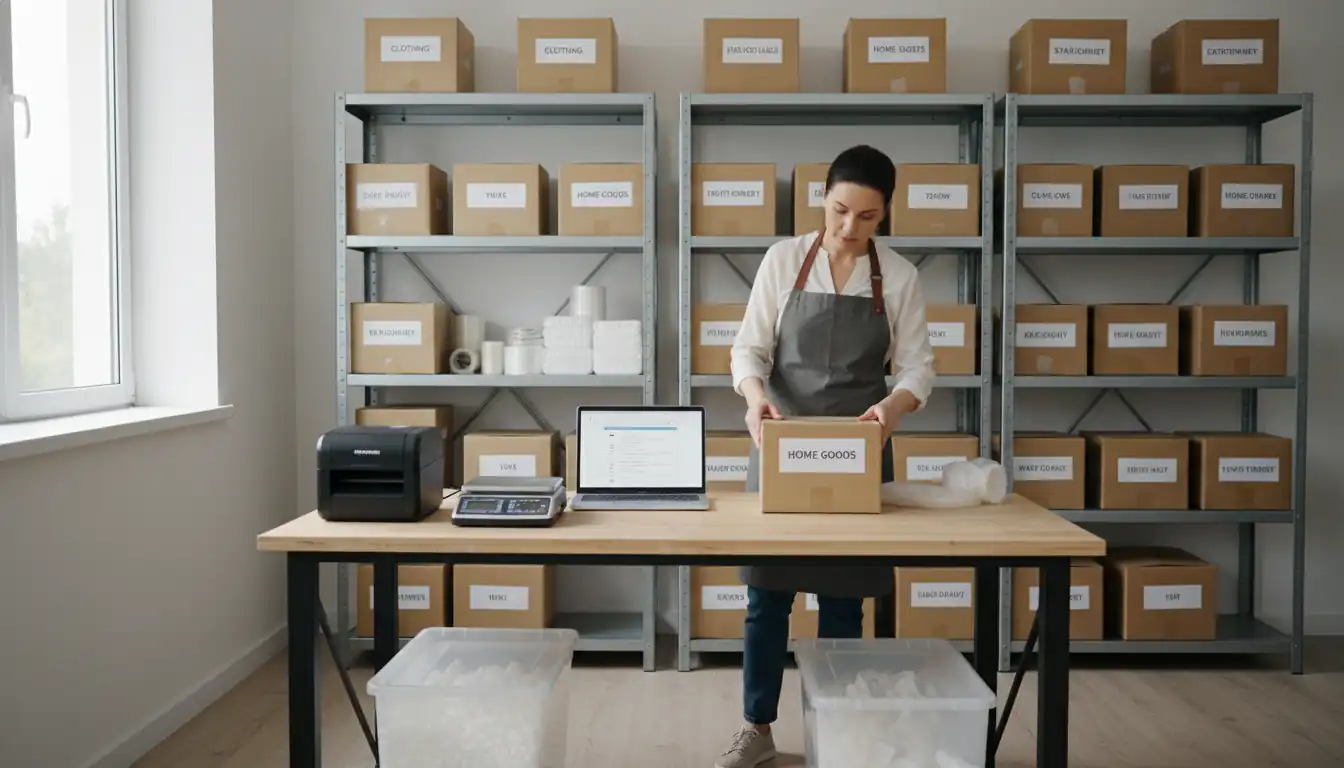
Finding a $500 item is a thrill, but doing it once doesn't make you a business owner. To turn this into a sustainable income, you have to move away from the "treasure hunter" mindset and toward a "systems" mindset. You need to be able to handle more inventory, reach more buyers, and manage your time effectively.
Optimizing Logistics and Multi-Channel Cross-Listing
If you only list your items on one platform, you are limiting your audience. A vintage Italian vase might sit on eBay for six months, but it could sell on Chairish or Etsy in six days. Each platform has its own "vibe" and its own demographic of buyers.
- eBay: The "everything" store. Best for electronics, common collectibles, and items with a very clear market value.
- Etsy: The home for vintage and handmade. Buyers here are willing to pay a premium for "curated" items and aesthetic photography.
- Chairish/1stDibs: High-end platforms for serious furniture and art collectors. The barrier to entry is higher, but the prices are significantly higher as well.
To scale, you should use cross-listing software that allows you to post one item to multiple platforms simultaneously. This increases your "sell-through rate," which is the speed at which your inventory turns back into cash. The faster you flip your money, the faster your business grows.
Reinvesting Profits for Inventory Growth
The biggest mistake new resellers make is spending their profits as soon as they get them. If you buy an item for $5 and sell it for $100, that $95 isn't "fun money." It is fuel. If you take that $95 and buy one $50 item and nine $5 items, you have just increased the potential value of your next "round" of sales.
This is the "snowball effect." Initially, you are limited by your budget, which forces you to look for the cheapest items. As your capital grows, you can afford to buy "higher-tier" inventory. Instead of buying 20 shirts for $5 each, you can buy one designer handbag for $100 and sell it for $400. The work required to photograph, list, and ship the handbag is the same as one shirt, but the profit is vastly higher.
| Phase | Average Buy Price | Average Sell Price | Items Needed for $1k Profit |
|---|---|---|---|
| Beginner | $2.00 | $15.00 | ~100 |
| Intermediate | $15.00 | $60.00 | ~30 |
| Professional | $50.00 | $250.00 | ~7 |
As you move up this ladder, your business becomes more efficient. You spend less time on low-value tasks and more time on high-value acquisitions. This is how you transition from a "side hustle" that takes up all your weekends to a professional operation that provides a full-time salary with part-time hours.
Conclusion
The path from a $5 junk-seeker to a $500 gold-miner is paved with data, discipline, and the right tools. You have seen that making $1,000 a month is a matter of simple math, and that the most profitable items are often the ones hiding in plain sight. By understanding the legal protections of the first-sale doctrine and the ethical benefits of the circular economy, you can build a business that is as sustainable as it is lucrative.
Success in reselling doesn't come from working harder; it comes from seeing clearer. Whether you are scanning the shelves of a local charity shop or walking through a dusty estate sale, your goal is to identify the history and value that others miss. Tools like the Relic app are the modern reseller's secret weapon, turning a smartphone into a professional appraisal suite that can spot a masterpiece in a pile of clutter.
Your next step is simple: go to a thrift store, but don't look at the clothes. Go to the "odds and ends" section. Look for the marks, the weight, and the craftsmanship. Take a photo, get an appraisal, and start your journey toward that first $500 flip. The goldmine is there; you just have to know how to look for it.
Identify antiques instantly
Point your camera at any antique, collectible, or vintage item. Get valuations, history, and market insights in seconds.
Download for iPhone