Turn Dusty Attic Finds Into Cash: The Secret to Identifying Rare Pewter Marks

That dull, grey plate sitting at the bottom of a cardboard box in your attic might look like a piece of discarded kitchenware, but it could actually be a window into the 18th century. For decades, pewter was the "poor man’s silver," a staple in households across Europe and the American colonies. Because it was used daily for eating, drinking, and storage, much of it was melted down when it became damaged or when styles changed, making surviving pieces from earlier centuries remarkably rare.
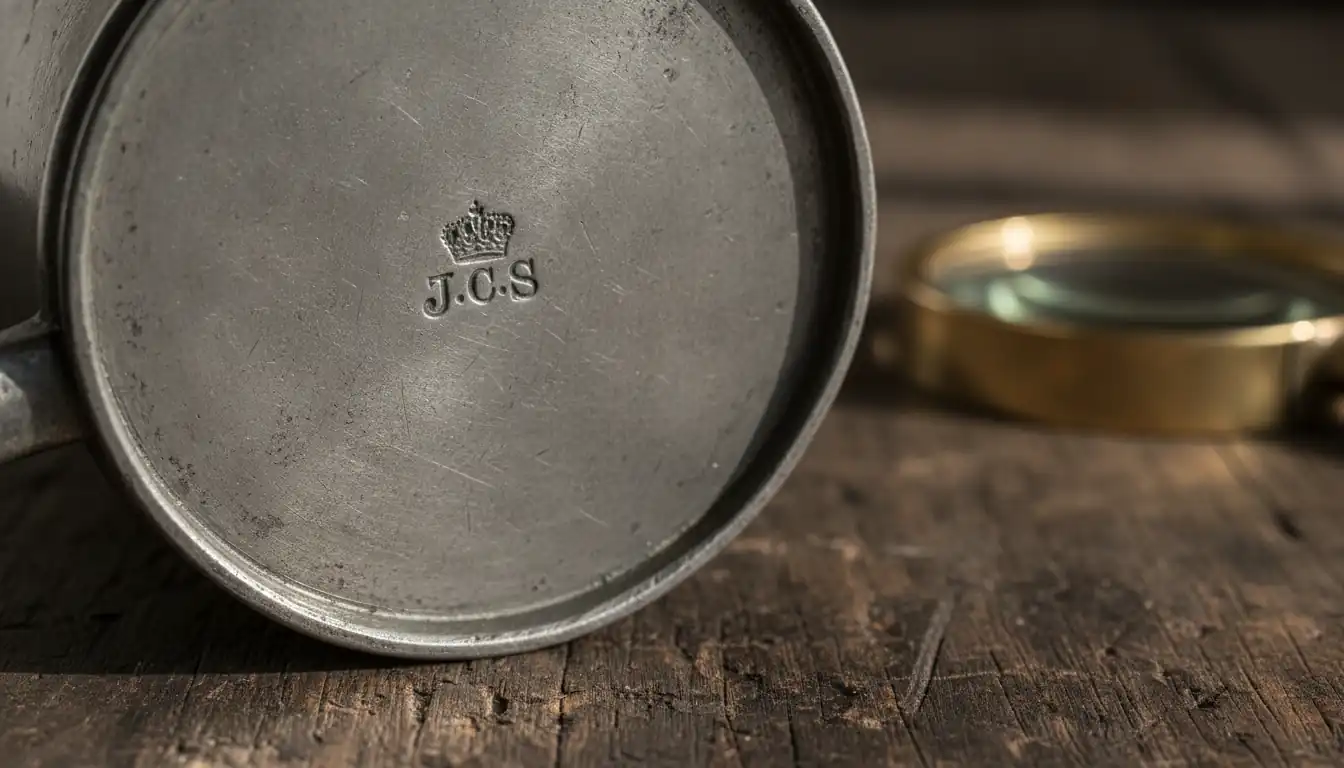
The difference between a $10 garage sale find and a $2,000 collector’s item often comes down to a tiny, faded stamp on the bottom of the piece. These stamps, known as touchmarks, are the signatures of the craftsmen who poured and hammered the metal into shape. Identifying these marks is a skill that combines history, detective work, and a keen eye for detail.
You are about to learn how to read these metal signatures, distinguish between various national styles, and spot the subtle signs of authenticity that separate a true masterpiece from a modern reproduction. By understanding the language of pewter marks, you can transform a casual hobby into a sophisticated pursuit of historical preservation and profit.
Deciphering the Mystery of Pewter Touchmarks
-b7d1ab4f-a816-461f-8c1d-6be69167f971.webp)
One of the first questions new collectors ask is: Does pewter have makers marks? The answer is a resounding yes, though with a few historical caveats. In the world of antique metalware, these identifiers are called "touchmarks." The term comes from the physical act of the pewterer "touching" the piece with a steel die and a hammer to leave their unique mark.
While not every piece of pewter was marked—especially those made for the lowest end of the market or by rural smiths—the presence of a touchmark completely changes the item's status. A mark provides a name, a location, and a date. It turns an anonymous object into a documented piece of history. Without a mark, a tankard is just a tankard; with a mark, it is a 1740 vessel crafted by a specific master in a specific city.
The Evolution of Maker Marks
The practice of marking pewter began as a form of consumer protection and quality control. In the 16th century, marks were incredibly simple. Most pewterers used only their initials, sometimes accompanied by a very basic symbol like a flower or a bird. These early marks were small and often struck with less force than later examples, meaning they are frequently found in a state of heavy wear.
As the 17th century progressed and trade guilds became more powerful, the marks grew in complexity. The guilds required members to register their "touch" on a lead plate kept at the Guild Hall. By the 18th century, these marks had evolved into elaborate designs. You might find a maker’s full name, the city where they worked, and intricate heraldic symbols. This transition from simple initials to complex iconography reflects the growing pride of the craftsmen and the increasing regulation of the industry.
| Era | Typical Mark Style | Purpose |
|---|---|---|
| 16th Century | Simple initials, small symbols | Basic identification |
| 17th Century | Initials with dates or small icons | Guild registration |
| 18th Century | Full names, city names, heraldry | Brand recognition and quality assurance |
| 19th Century | Large, clear strikes, often "Britannia" | Mass production branding |
Common Locations for Stamps
If you are holding a piece of pewter and looking for a mark, you need to know where the craftsmen typically hid their signatures. Pewterers weren't always consistent, but they generally followed established patterns based on the type of object.
- Plates and Platters: Look on the underside of the rim or directly in the center of the bottom. Occasionally, marks were struck on the top of the rim (known as "rim touches"), but this is more common in very early pieces.
- Tankards and Mugs: The most common location is the inside of the bottom. You might also find marks on the top of the lid or near the handle attachment point.
- Spoons: Check the back of the handle or the "bowl" of the spoon where it meets the stem.
- Basins and Bowls: These are almost always marked on the exterior bottom.
Pro Tip: If a piece looks old but you can't see a mark, try holding it under a strong, raking light. Sometimes the indentation is so worn that it only becomes visible when a shadow is cast across the surface.
Regional Styles and National Standards
Once you find a mark, the next step is determining where it came from. Different countries had vastly different ways of regulating their pewterers, and these regulations are reflected in the symbols used. By learning a few key national symbols, you can quickly narrow down the origin of a piece.
British Hallmarks vs American Touches
The British pewter industry was one of the most strictly regulated in the world, governed largely by the Worshipful Company of Pewterers in London. Because of this, British marks often mimic silver hallmarks. You will frequently see a series of four small shields containing symbols like a lion, a leopard’s head, or the maker’s initials.
One of the most important British symbols to recognize is the Rose and Crown. This was originally a mark of quality, but it eventually became so common that it was used by many different makers. Another vital mark is the Crowned X. This was specifically reserved for "extra-hard" pewter, which had a higher tin content and was considered the premium alloy of the day. If you see a Crowned X, you are likely looking at a piece of superior craftsmanship.
In contrast, early American pewterers were far more individualistic. While they initially followed British traditions, the post-Revolutionary period saw a surge in patriotic imagery. American makers frequently used eagles, stars, and the word "London" (even if they were working in Connecticut or Pennsylvania) to imply high quality. American marks tend to be larger and more "folk-art" in style compared to the rigid, heraldic look of London pieces.
Continental European Symbols
Continental pewter, particularly from Germany, France, and Switzerland, often carries a different set of symbols. German pewterers were famous for using an "Angel" mark (often Michael the Archangel) to denote quality. This mark usually features an angel holding a sword and scales.
In France, you might find a "Crowned F" for fin (fine) pewter. Continental marks also frequently include the date the maker became a master, which can be misleading. A mark might say "1720," but that could simply be the year the maker started his career; the piece itself could have been made in 1740.
- British: Look for the Rose and Crown, Crowned X, and pseudo-hallmarks in shields.
- American: Look for eagles, shields with stripes, and makers' names in rectangular or oval frames.
- German/Swiss: Look for the Angel (St. Michael) and town arms (like the bear of Berne).
- French: Look for the Crowned F or the "Hammer and Crown" symbol.
Distinguishing Masterpieces from Mass Production
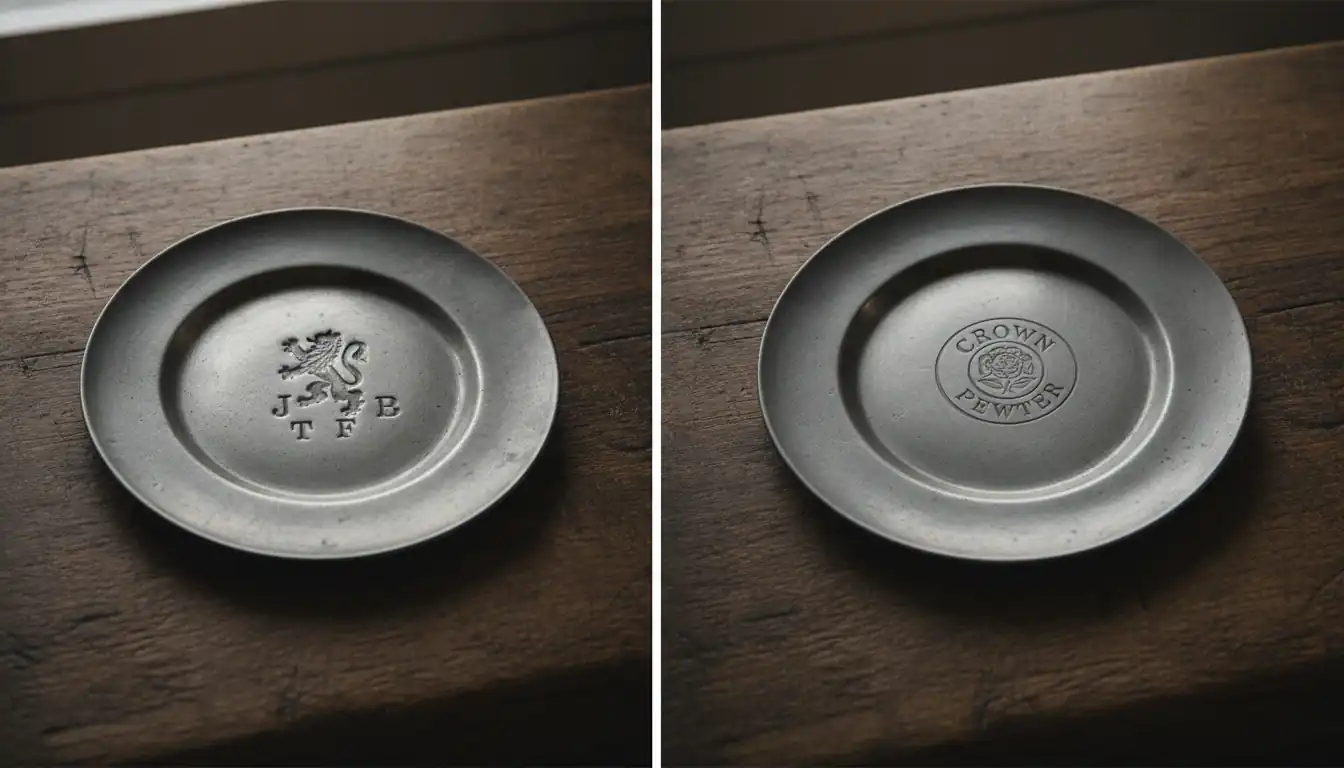
As you gain experience, you will notice that not all marks are created equal. The market is flooded with 19th-century "revival" pieces and 20th-century reproductions that can easily fool an untrained eye. Distinguishing a genuine 18th-century strike from a modern imitation is the hallmark of a true connoisseur.
Evaluating Mark Clarity and Wear
A genuine antique mark should show signs of age that match the wear on the rest of the piece. When a pewterer struck a mark 250 years ago, they used a steel die and a heavy hammer. This displaced the metal, often creating a slight "ghosting" or a raised area on the opposite side of the metal if the piece was thin.
Over centuries of cleaning and use, the high points of these marks naturally wear down. A genuine mark will often be faint in some areas and clearer in others. If you see a mark that is perfectly crisp and uniform in depth across the entire design, be suspicious. This is often a sign of a "cast-in" mark, where the mark was part of the mold used to make the reproduction, rather than being struck into the cold metal afterward.
Identifying 19th Century Reproductions
In the mid-to-late 1800s, there was a massive "Antique Revival" movement. Manufacturers began producing pewter that looked old, often using the marks of famous 18th-century makers. These are not necessarily "fakes" in the sense of modern forgeries, but they are often sold as older than they really are.
- The Metal Color: 19th-century "Britannia metal" (a type of pewter) often has a more bluish or silvery tint compared to the warmer, leaded grey of 18th-century pewter.
- The Casting: Look for "seam lines" that have been poorly hidden. Authentic early pewter was often finished on a lathe, leaving fine concentric circles on the surface.
- The Mark Style: Revival marks are often too large or placed in unusual locations that a traditional guild-trained pewterer would never have used.
Genuine wear is chaotic. It follows the path of the cleaning rag and the friction of the table. If the "wear" on a piece looks too intentional or uniform, it likely didn't happen naturally over time.
Instant Identification with Modern Technology
Identifying a faint, partial mark used to require a library of massive, expensive reference books and hours of squinting through a magnifying glass. Even then, if the mark was half-rubbed away, you were often left guessing. Fortunately, technology has changed the game for collectors and estate sale hunters.
Using AI for Rapid Appraisal
This is where modern tools like the Relic app become indispensable. Relic uses advanced AI to analyze photos of antiques, including those tricky, worn-down pewter marks. Instead of flipping through a 500-page "Book of Marks," you can simply take a photo of the touchmark with your iPhone.
The AI is trained to recognize the geometry and iconography of thousands of known makers. It can often piece together a partial mark—identifying a specific eagle’s wing or a particular font style—to provide a real appraisal and historical context in seconds. For someone standing in a dusty barn or a crowded auction house, this speed is the difference between securing a bargain and letting a treasure slip away.
Digital Databases vs Physical Books
While physical books like Old Pewter, Its Makers and Marks by Howard Cotterell are legendary, they aren't exactly portable. Carrying a five-pound reference book to a flea market isn't practical. A digital solution like Relic gives you a "digital expert" in your pocket.
- Instant Access: You get valuations and market insights immediately, allowing you to make informed bidding decisions.
- Accuracy: The app has a 4.9-star rating from over 20,000 reviews, which speaks to its reliability in the field.
- Searchable History: You can keep a digital catalog of everything you’ve scanned, creating a permanent record of your collection and its value.
Using technology doesn't replace the need for historical knowledge; it enhances it. It allows you to skip the tedious manual search and go straight to the interesting part: learning about the person who made the item and what it’s worth today.
Professional Research Strategies for Unidentified Pieces
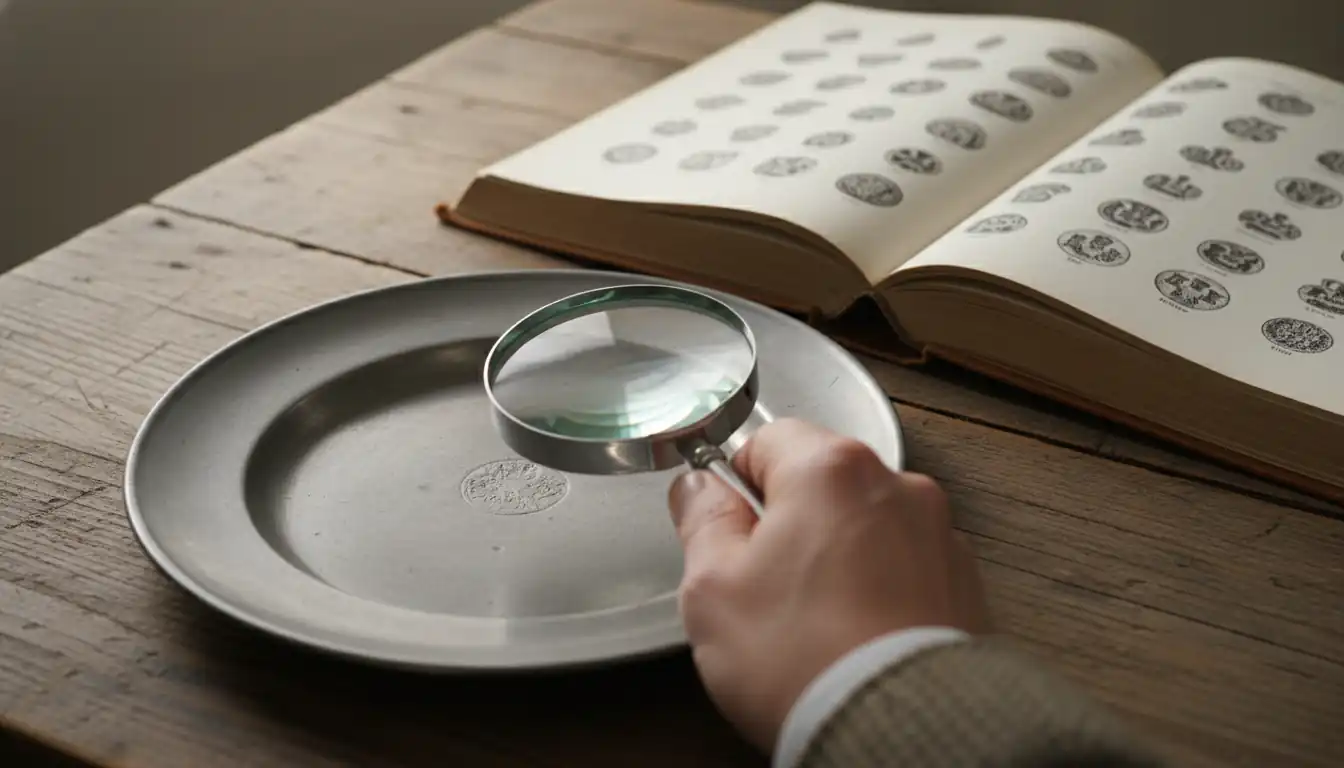
Sometimes, you will encounter a piece where the mark is so far gone that even the best AI needs a little help from secondary evidence. In these cases, you have to look at the "bones" of the piece—the construction methods and styles that were popular at different times.
Consulting Museum Archives
If the mark is illegible, look at the secondary characteristics. The shape of a handle, the type of hinge on a tankard, or the profile of a plate’s rim can all act as "fingerprints." Museums like the Victoria and Albert (V&A) in London or the Winterthur Museum in the U.S. have massive online databases of authenticated pewter.
You can cross-reference your piece with these archives. For example, if your tankard has a "bud" thumbpiece (the little lever used to open the lid), you can search museum records to see which makers in which regions used that specific design. This "contextual identification" can often lead you back to a maker even when the touchmark is a mere smudge.
Preserving Marks During Cleaning
The fastest way to destroy the value of an antique pewter piece is to "over-clean" it. Many beginners make the mistake of trying to make their pewter shine like modern silver. This is a catastrophic error.
- Never use abrasive cleaners: Steel wool, sandpaper, or harsh chemical polishes will literally grind the touchmark off the surface of the metal.
- The "Patina" is Value: Collectors want to see the "oxide" or the dark grey skin that forms on pewter over centuries. This patina proves the item's age.
- Safe Cleaning: Use only mild soap and warm water with a soft cloth to remove surface dirt. If you must polish it, use a specialized, non-abrasive pewter polish, and apply it very gently around the mark area.
| Do | Don't |
|---|---|
| Use warm, soapy water | Use a dishwasher |
| Use a soft microfiber cloth | Use steel wool or scouring pads |
| Leave the dark patina intact | Try to make it look like "new" silver |
| Research the mark before cleaning | Scrub the area where the mark is located |
By preserving the mark, you are preserving the item's provenance. A clean, shiny piece of pewter with a scrubbed-away mark is worth a fraction of a dull, oxidized piece with a clear, identifiable signature.
Conclusion
Identifying rare pewter marks is a journey into the past. It’s about more than just finding a name; it’s about understanding the craftsmanship, the regulations, and the history of the era in which the piece was created. From the strict guild-controlled marks of London to the patriotic eagles of early America, these touchmarks are the key to unlocking the value hidden in your attic finds.
Remember to look for the "Crowned X" and the "Rose and Crown," and always be on the lookout for the subtle signs of a genuine, hand-struck mark versus a modern cast imitation. When you find yourself in the field, use tools like the Relic app to bridge the gap between curiosity and professional appraisal.
The next time you see a piece of dull, grey metal at a yard sale, don't walk past it. Turn it over, look for the touch, and you might just be holding a piece of history that’s worth a fortune. Your next step? Grab a magnifying glass, download a reliable identifier, and start checking those dusty boxes. The treasures are waiting to be found.
Identify antiques instantly
Point your camera at any antique, collectible, or vintage item. Get valuations, history, and market insights in seconds.
Download for iPhone