Turn Dusty Silver into Discovered Wealth: Decoding the Secret Language of British Hallmarks

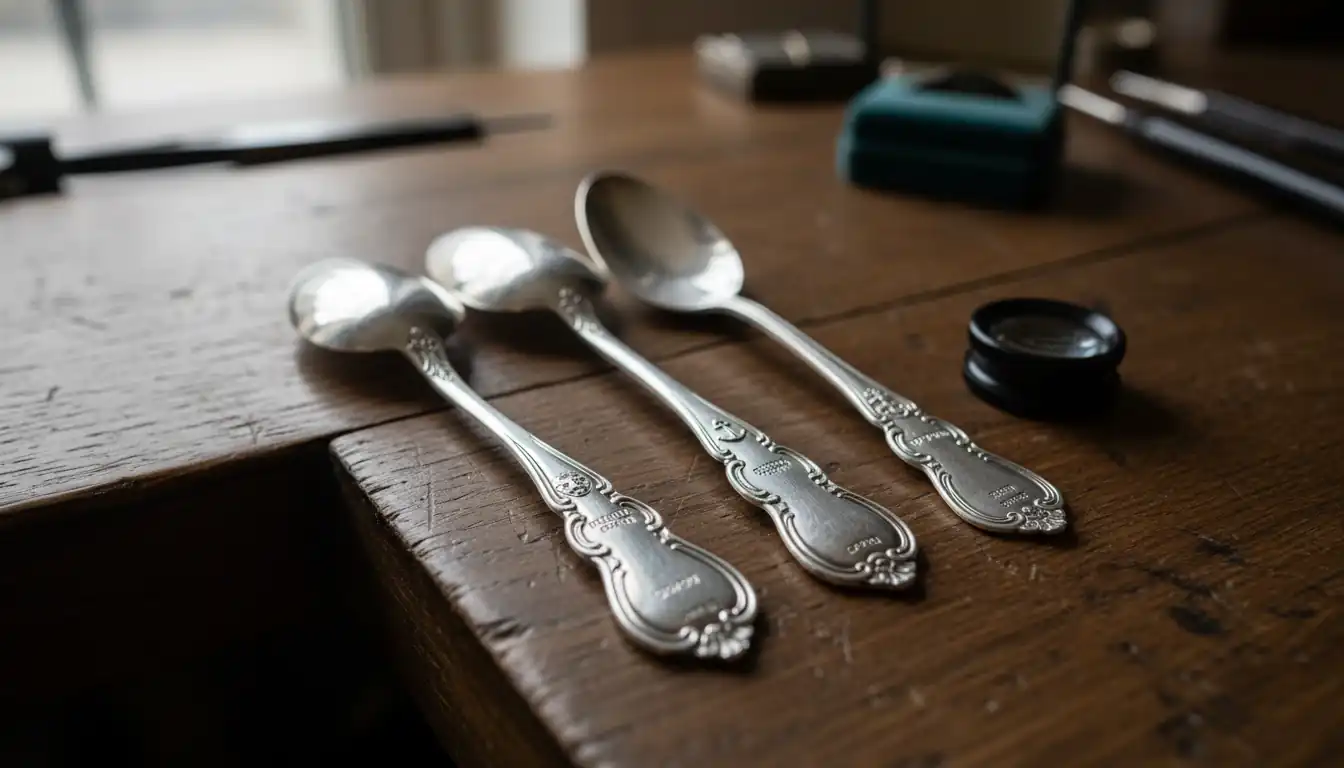
That heavy, tarnished spoon at the bottom of a cardboard box isn't just a piece of old cutlery. It is a historical document, a legal guarantee, and potentially a significant financial asset. For centuries, the British hallmark system has acted as one of the most sophisticated consumer protection layers in history, ensuring that when you bought "sterling," you were getting exactly what you paid for.
The tiny, cryptic symbols stamped into the metal are a secret language. Once you learn to decode them, you can pinpoint the exact city, the specific year, and the very craftsman who hammered that silver into shape over two centuries ago. You are no longer looking at "dusty silver"; you are looking at a timestamp of British heritage.
This guide will walk you through the intricate world of British silver identification. We will move from the basic anatomy of a hallmark to the rare commemorative stamps that drive collectors wild, and finally, we will look at how modern technology is making this centuries-old puzzle solvable in seconds.
The Anatomy of a British Hallmark
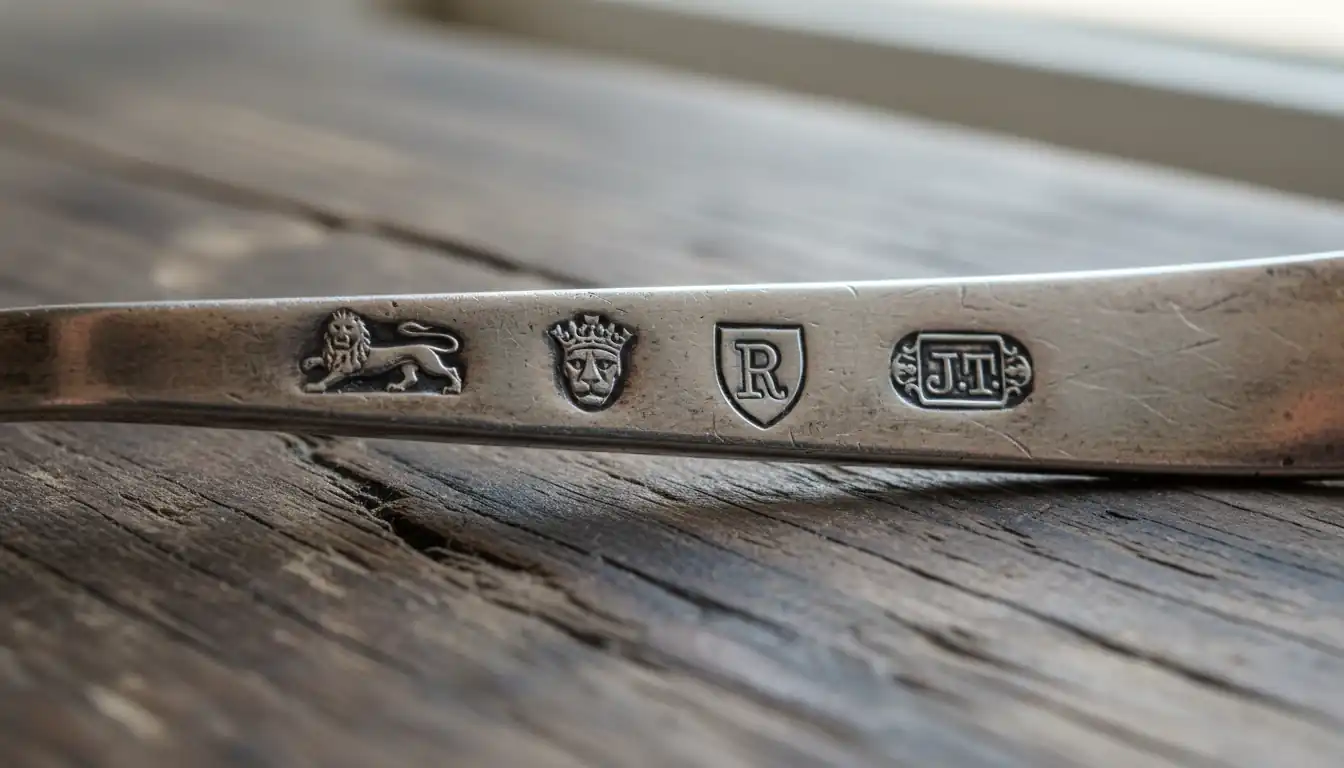
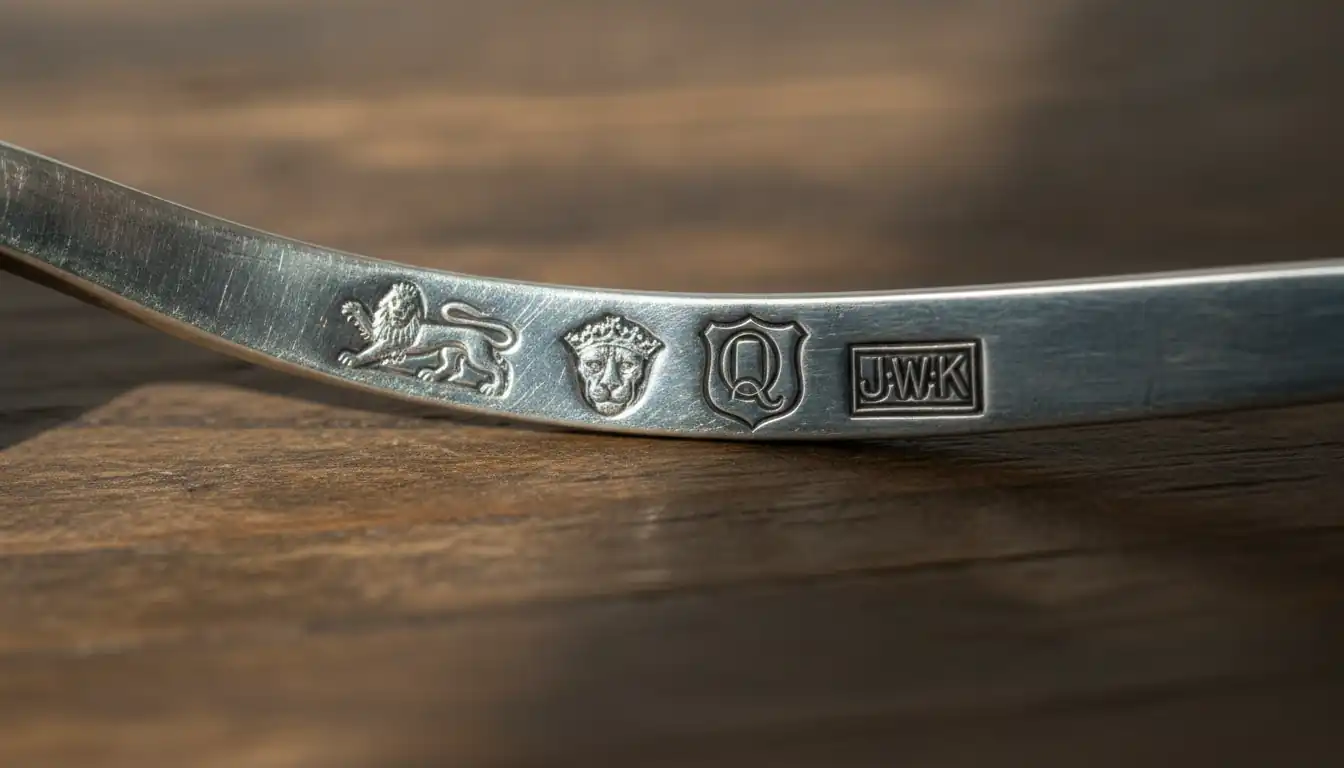
To the untrained eye, a row of hallmarks looks like a series of random dents. However, the system is remarkably logical. Since the 1300s, British law has required silver to be "assayed"—tested for purity—at an official office. If the metal passed the test, it received a series of stamps.
Decoding the Standard and Town Marks
The most important mark you will ever look for is the Standard Mark. This tells you the purity of the metal. In the British system, the "Lion Passant"—a lion walking with one paw raised—is the universal symbol for Sterling Silver (92.5% purity). If you see this lion, you know you are holding solid silver, not a silver-plated imitation.
Occasionally, you might encounter a figure of a seated woman holding a trident. This is the Britannia Mark. Introduced in 1697 to prevent silversmiths from melting down silver coins, it indicates a higher purity of 95.8%. While rarer, it is a hallmark of exceptional quality often found on high-end pieces from the late 17th and early 18th centuries.
Next in the visual hierarchy is the Town Mark, which identifies the Assay Office where the piece was tested. Think of this as the item's birthplace.
- The Leopard’s Head: This is the mark of the London Assay Office. It is the most common mark and carries a long history of prestige.
- The Anchor: This represents Birmingham. Known as the "city of a thousand trades," Birmingham produced a massive volume of silver during the Victorian era.
- The York Rose or Crown: These represent Sheffield, a city world-renowned for its cutlery and heavy silver plate.
Identifying Date Letters and Maker Initials
If you are wondering how to read British hallmarks, the secret lies in the reading order. While the stamps can sometimes be clustered, they are generally intended to be read from left to right.
- The Maker’s Mark: Usually the initials of the silversmith or the firm (e.g., "WB" for William Bateman). This is often the first stamp.
- The Standard Mark: The Lion Passant, confirming it is sterling.
- The Town Mark: The symbol for London, Birmingham, or another city.
- The Date Letter: A single letter of the alphabet.
- The Duty Mark: (If applicable) The profile of the reigning monarch.
The Date Letter is the most complex part of the system. The Assay Offices used a cycle of 20 letters (A through U, excluding J). To distinguish between different centuries, they changed the font style and the shape of the shield (the "cartouche") surrounding the letter. A capital "A" in a square shield means something entirely different than a lowercase "a" in an oval shield.
Pro Tip: Always look at the shape of the border surrounding the letter. The shield shape is just as important as the letter itself when determining the exact year of manufacture.
The Hidden History of Duty and Commemorative Marks
Beyond the standard four or five marks, you will often find "extra" stamps that provide a deeper layer of historical context. These marks weren't about the quality of the silver, but rather the political and economic climate of the time.
Tracking the Sovereign Profile from 1784 to 1890
For just over a century, the British government imposed a tax on all silver and gold produced in the country. To prove the tax had been paid, the Assay Office added a Duty Mark—the profile of the reigning monarch’s head.
These profiles are incredibly useful for narrowing down the age of a piece at a glance.
- George III (1784–1821): His profile faces to the right. Interestingly, for a brief period in 1784, the mark was "incuse," meaning it was pressed into the metal rather than standing out in relief.
- George IV (1821–1830): Also faces right, but the features are distinct from his predecessor.
- William IV (1830–1837): Continues the right-facing tradition.
- Queen Victoria (1837–1890): Her profile faces to the left.
The duty mark was abolished in 1890. If you find a piece with a monarch's head, you immediately know it was produced during this specific 106-year window. It acts as a chronological shortcut, allowing you to skip ahead in your date charts.
Rare Jubilee and Coronation Stamps
Commemorative marks are the "Easter eggs" of the silver world. These were optional marks added to celebrate significant royal milestones. Because they were only used for a year or two, they add a layer of rarity that collectors prize.
- The 1935 Silver Jubilee Mark: Features the profiles of King George V and Queen Mary side-by-side.
- The 1953 Coronation Mark: Shows the profile of a young Queen Elizabeth II facing right.
- The 1977 Silver Jubilee Mark: A profile of Elizabeth II facing left, set in a circular border.
These marks are often struck with great detail. Finding one on a piece of silver is like finding a first-edition book; it marks a specific moment in time and often increases the market value of the item significantly.
Regional Variations and the Great Assay Offices
Not all silver is created equal. While the metal purity might be the same, the location where a piece was assayed can drastically change its desirability. The geography of British silver is a map of industrial power and vanished traditions.
The Big Four and Their Distinctive Styles
For most of the 19th and 20th centuries, four major offices dominated the landscape. Each developed its own "personality" based on the local industry.
| Assay Office | Symbol | Known For |
|---|---|---|
| London | Leopard's Head | High-end tea services, trophy silver, and aristocratic commissions. |
| Birmingham | Anchor | Small "toys" (snuff boxes, vesta cases), jewelry, and mass-produced tableware. |
| Sheffield | Crown (or York Rose) | Exceptional cutlery, salvers, and heavy domestic hollowware. |
| Chester | Three Wheat Sheaves | Highly collectible small items; the office closed in 1962, making its marks rarer. |
London is often seen as the "gold standard" for collectors, but Birmingham's output was the backbone of the British middle-class home. Sheffield silver is prized for its durability and the sheer quality of its steel-bladed cutlery.
Vanished Provincial Marks from Exeter to York
The real treasure hunt begins when you move away from the Big Four. In the past, several smaller cities had their own Assay Offices. These "provincial" offices were eventually closed as the industry centralized in the larger cities.
- Exeter (Closed 1883): Their mark was a castle with three towers. Exeter silver is known for its distinct, somewhat folk-art style compared to the polished London look.
- Newcastle (Closed 1884): Used a mark of three separate castles. Newcastle silver is highly sought after by collectors in the North of England.
- York (Closed 1858): Used a cross with five lions. York silver is incredibly rare and often commands a premium at auction.
Why does this matter? Scarcity. A standard tablespoon from London in 1850 might be worth its weight in silver plus a small premium. That same spoon, stamped with the Exeter castle, could be worth three to four times as much to a specialized collector.
Spotting Forgeries and Duty Dodgers
As with any high-value market, the world of antique silver has its share of shadows. Forgers have been trying to trick the system for as long as the system has existed. Understanding how they operate is the best way to protect your investment.
Transposed Marks and Solder Lines
One of the most common tricks is "transposition." A forger takes a genuine set of hallmarks from a small, inexpensive item—like a battered spoon—and cuts them out. They then solder that piece of metal into a larger, more valuable item, like a coffee pot, that was actually made of lower-grade silver or was newly manufactured.
How do you spot this? Look for "ghosting" or faint lines around the hallmarks. If you breathe on the silver, the condensation will often reveal a faint circular or rectangular line where the solder meets the original metal. This is a massive red flag. Genuine hallmarks are struck directly into the body of the piece, not "patched" on.
The Difference Between Plated and Solid Silver
The most frequent mistake beginners make is confusing EPNS (Electroplated Nickel Silver) with genuine sterling. EPNS is a base metal (usually nickel) coated in a thin layer of silver.
Plated silver often has marks that look like hallmarks to the untrained eye. You might see four or five little shields with letters or symbols. However, look closely:
- No Lion Passant: Plated silver will never have the walking lion.
- No Town Mark: You won't see the Anchor or the Leopard.
- Explicit Labels: Often, you will see "EPNS," "EP," or "A1" (a quality grade for plating).
If the marks look "soft" or if you can see a yellowish metal peeking through the high-friction areas (like the tines of a fork), you are likely looking at plate. While beautiful, plated silver has almost no resale value compared to the "discovered wealth" of solid sterling.
The presence of a hallmark is a legal guarantee; the absence of one on a piece that "looks" like silver is almost always a sign that it is plated.
Modern Tools for Instant Identification
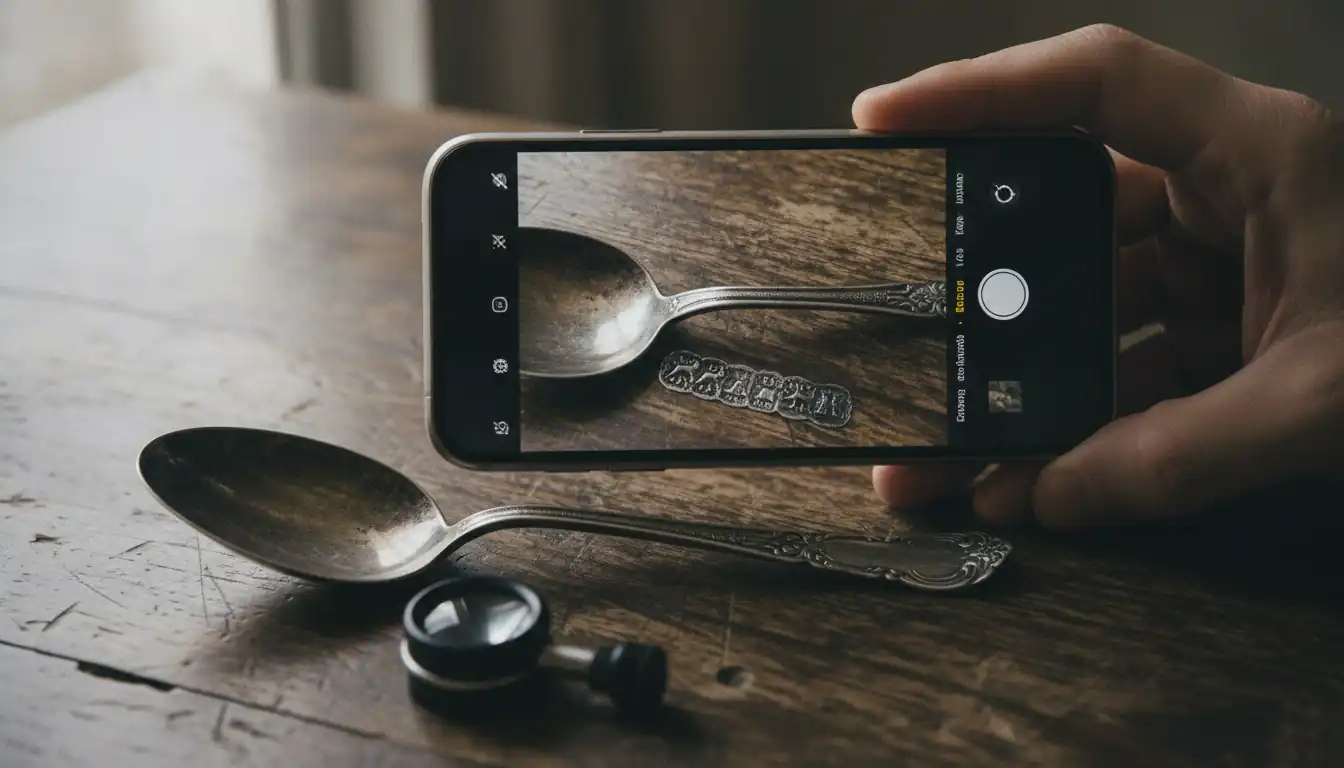
Identifying silver used to require a library of thick reference books and a jeweler's loupe. Even then, it was easy to make a mistake. Is that a 1780 "g" or an 1820 "g"? The fonts are frustratingly similar, and after looking at a hundred tiny stamps, your eyes begin to play tricks on you.
Why Traditional Charts Often Fail Beginners
The primary issue with traditional charts is that they are two-dimensional and perfect. Real-world hallmarks are often worn down by centuries of polishing. They might be struck on a curved surface, distorting the shape of the letter. For a beginner, trying to match a faded, distorted stamp to a crisp drawing in a book is a recipe for frustration.
Furthermore, the sheer volume of data is overwhelming. Between the different offices, the changing duty marks, and the thousands of recorded maker's marks, it takes years to become a true expert. Most people just want to know if the tray they found at an estate sale is worth $50 or $5,000.
Leveraging AI for Real Time Appraisals
This is where 21st-century technology steps in to solve 18th-century mysteries. The Relic app has changed the way collectors and enthusiasts approach silver. Instead of squinting at a tiny date letter, you can simply take a photo of the hallmark with your iPhone.
Relic uses advanced AI to analyze the specific contours, fonts, and symbols of the hallmark. It doesn't just tell you the year; it provides a comprehensive history and origin of the item. Because the AI has been trained on thousands of real-world examples—including worn and distorted marks—it is often more accurate than a human using a magnifying glass.
For professionals like dealers or online sellers, this is an essential tool. You can get a real appraisal and market insights in seconds while standing in a crowded auction house or a dusty thrift store. With a 4.9-star rating from over 20,000 reviews, Relic has become the digital expert that fits in your pocket, ensuring you never miss a hidden gem or fall for a clever forgery.
Conclusion
Decoding British hallmarks is more than just a hobby; it is a way to connect with the past and uncover hidden value in the objects around us. By understanding the five-component system—the maker, the standard, the town, the date, and the duty—you can read the life story of any silver piece.
You now know how to distinguish between the common and the rare, how to spot the "Big Four" assay offices, and how to protect yourself from the tricks of the trade. Whether you are a seasoned collector or someone who just inherited a box of family heirlooms, the ability to identify these marks is a powerful skill.
The next time you see a glimmer of silver at a yard sale or in an antique shop, don't guess. Look for the lion, check the town mark, and if the symbols seem too small to decode, use a tool like the Relic app to get an instant appraisal. You might just find that the "dusty silver" in your hand is actually a piece of discovered wealth.
Identify antiques instantly
Point your camera at any antique, collectible, or vintage item. Get valuations, history, and market insights in seconds.
Download for iPhone