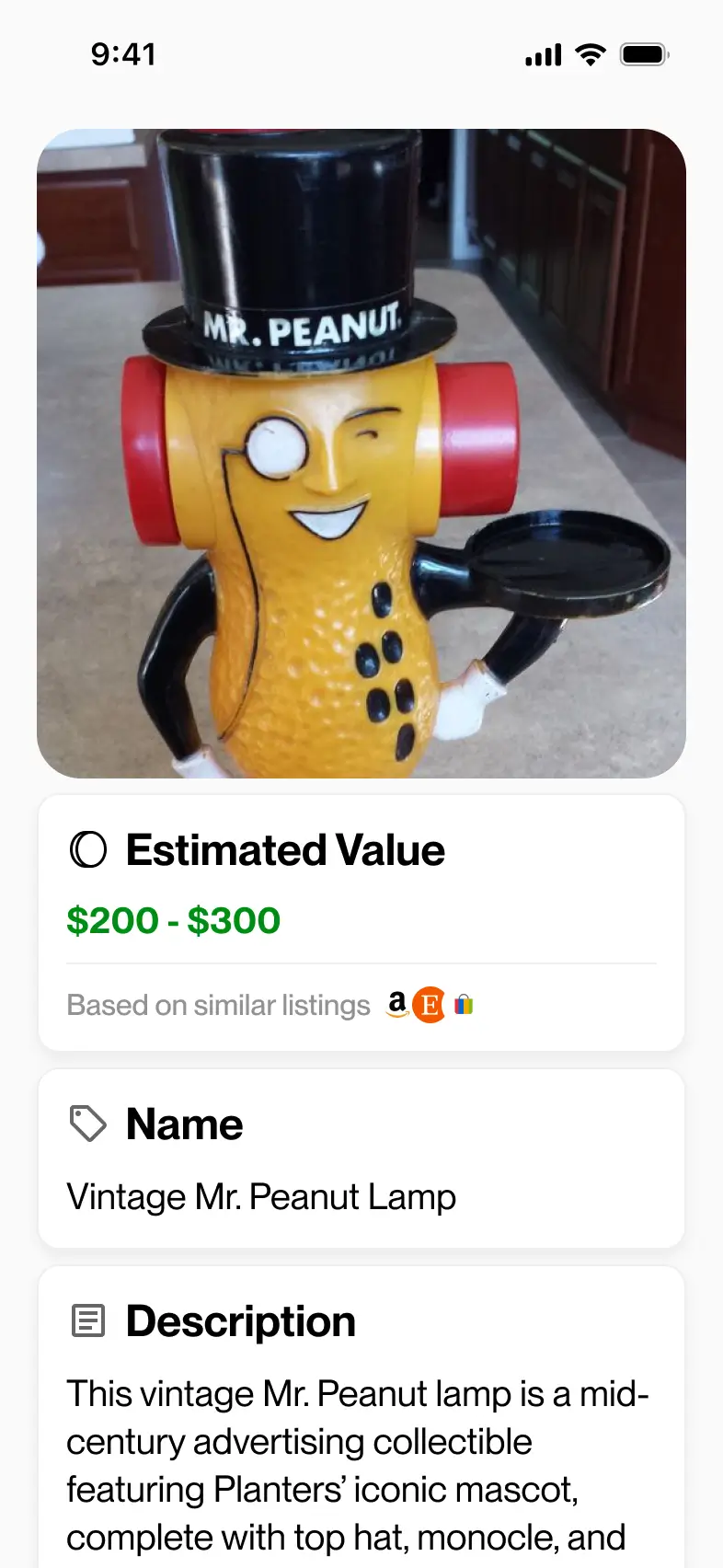
Turn Your Phone into a Time Machine: Identify Old Glass Bottles in Seconds

Imagine pulling a dusty, translucent green bottle from the earth or finding a sun-purpled jar at a remote garage sale. You hold it up to the light, watching the way the glass bends the sunbeams, and you can’t help but wonder whose hands held this a century ago. Was it a medicine bottle for a pioneer family, or perhaps a soda bottle from a long-defunct local bottling plant?
Every antique bottle is a physical fragment of history, a time capsule that survived decades of burial or neglect. However, for most of us, these objects remain silent. We see a shape and a color, but the specific story—the year it was made, the factory it came from, and its actual value—remains locked away. You might find yourself asking how to identify vintage glass without spending years studying specialized catalogs.
The good news is that the barrier between you and that history has vanished. By learning a few physical "telltale" signs and using modern tools, you can transform your smartphone into a professional-grade appraisal kit. You don't need to be a museum curator to uncover the secrets of the glass in your hand; you just need to know where to look.
The Visual Language of Antique Glass
Before you even look for a name or a date, the glass itself tells a story through its physical construction. Think of these features as the "fingerprints" of the manufacturing process. Because glass-making technology evolved rapidly between 1850 and 1920, the physical structure of a bottle acts as a chronological map. When you point your camera at a find, these are the details that provide the most significant clues about its origin.
Mold Seams and Pontil Scars
The most reliable way to answer the question of how to find the age of a glass bottle is to look at the side seams. These thin, raised lines of glass were created where the two halves of a mold met. On modern bottles, these seams run all the way from the base to the very top of the rim. This indicates a fully automated machine process, likely from after 1915.
If you find a bottle where the seam disappears before it reaches the mouth—usually stopping at the shoulder or the neck—you are holding a "blown-in-mold" bottle. This means a human glassblower blew the molten glass into a mold, but the finish (the lip) was applied by hand afterward. These bottles generally date between 1850 and 1900. If there are no seams at all and the bottle looks slightly asymmetrical, it might be "free-blown," a technique that dates back even further.
The base of the bottle holds another vital clue: the pontil scar. Before the mid-19th century, a glassblower used a solid iron rod (a pontil) to hold the bottle while they finished the neck. When the rod was snapped off, it left a rough, jagged scar or a circular indentation on the bottom.
- Open Pontil: A sharp, ring-shaped scar indicating a very old bottle (pre-1860).
- Iron Pontil: A reddish or black metallic stain left by the iron rod, common in the mid-1800s.
- Smooth Base: Most bottles made after 1865 have a smooth, indented base, as manufacturers moved toward using "snap cases" that didn't leave a mark.
Bubbles and Imperfections
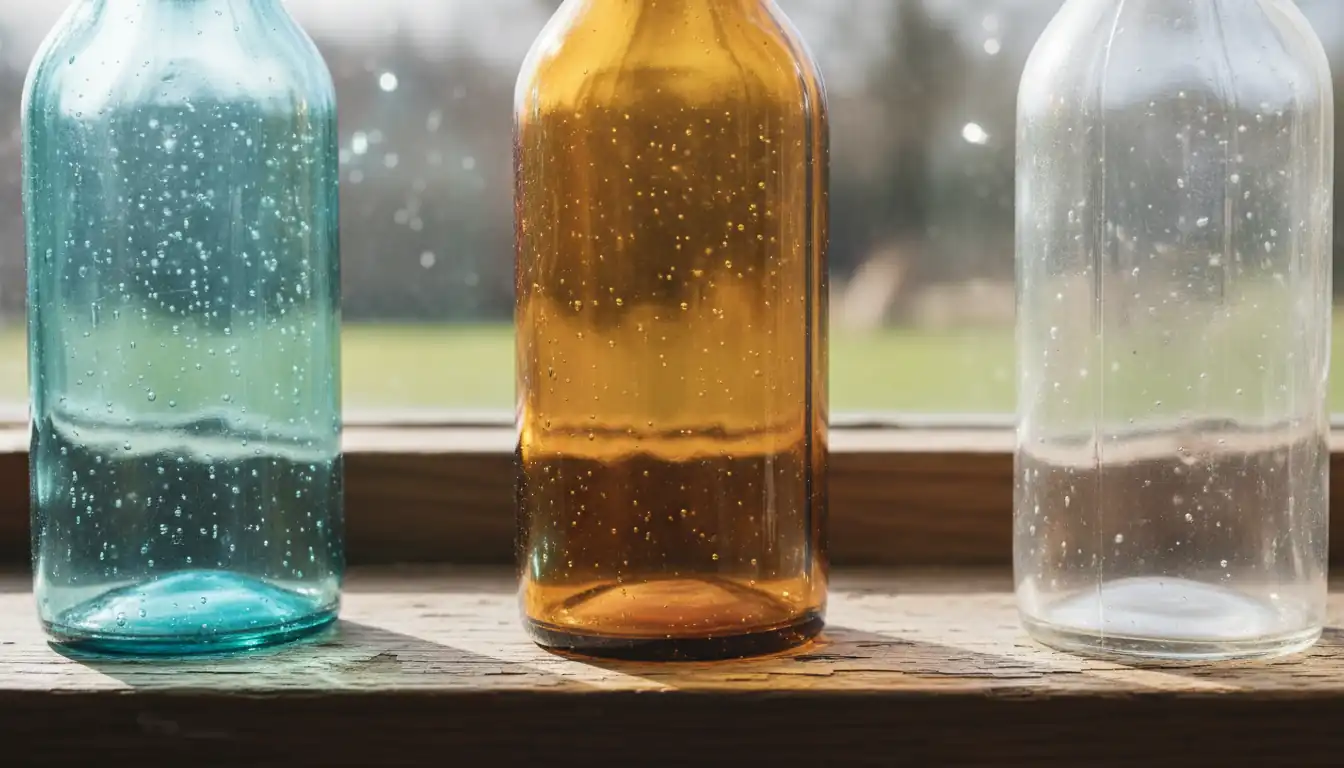
In the world of modern manufacturing, a bubble in glass is a defect. In the world of antiques, a bubble is a badge of honor. These tiny pockets of air, often called "seeds," occurred because the wood-fired or coal-fired furnaces of the 19th century couldn't reach the consistent, ultra-high temperatures of modern industrial plants.
If you see elongated bubbles stretching upward through the neck, it’s a sign the bottle was hand-pulled or blown. You might also notice "whittle marks," which look like ripples or waves on the surface of the glass. This happened when molten glass was blown into a cold metal mold, causing the glass to "shiver" and create a textured, hammered appearance. These imperfections are exactly what you should zoom in on with your camera lens, as they provide the tactile evidence of age that smooth, machine-made glass lacks.
"The presence of 'seeds' and whittle marks isn't a flaw; it's the signature of a craftsman working with fire and breath before the age of automation."
Instant Identification with AI Technology
Identifying a bottle used to require a library of heavy reference books and hours of squinting at grainy black-and-white photos. Today, that process happens in the blink of an eye. The Relic app has changed the way collectors interact with their finds by using advanced AI to analyze the specific physical traits we just discussed. Instead of guessing if a seam is "high" or "low," you can let the technology do the heavy lifting.
Capturing the Perfect Shot for Appraisal
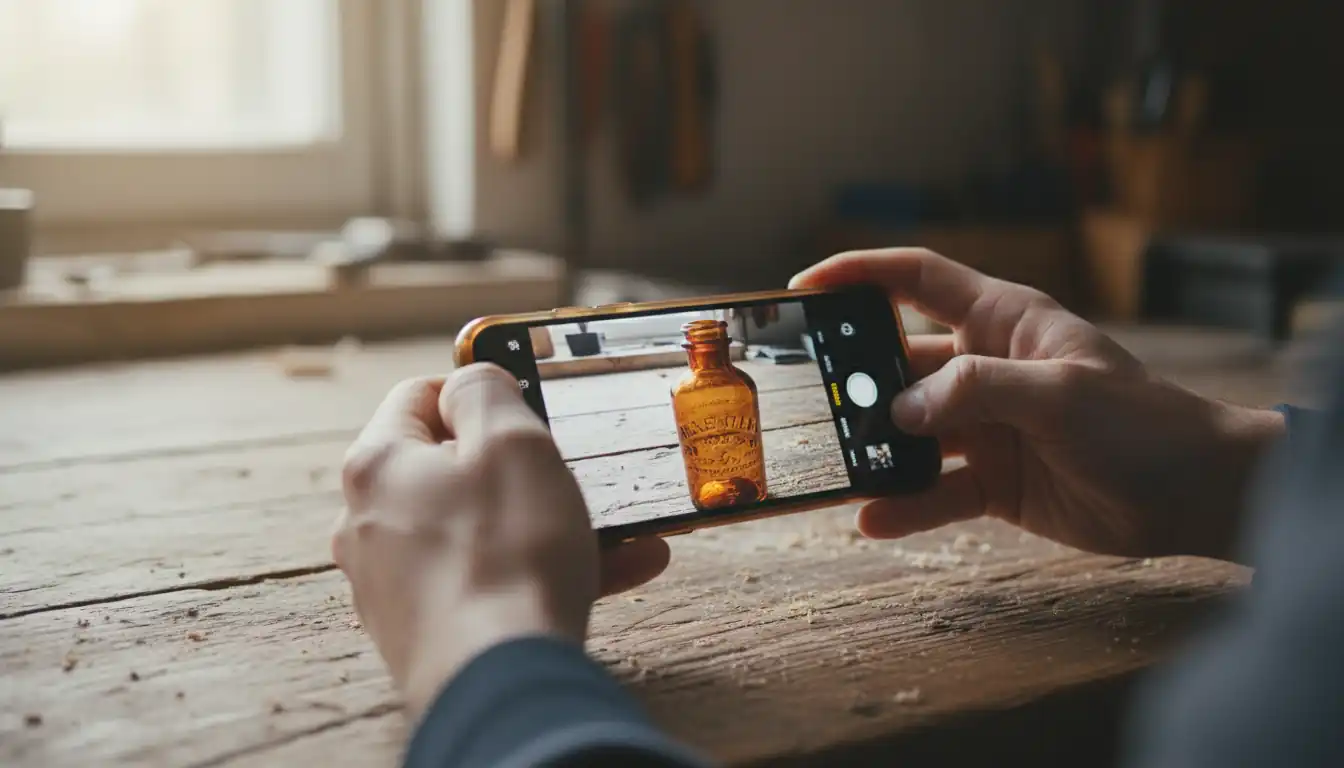
To get the most accurate results from an AI identifier like Relic, your photography needs to be intentional. Glass is notoriously difficult to photograph because of its transparency and reflectivity. If you take a photo in a dark room with a flash, the glare will obscure the very details the AI needs to see.
- Use Natural Light: Position your bottle near a window but out of direct, harsh sunlight. Overcast days provide the perfect "softbox" effect for glass.
- Neutral Backgrounds: Place the bottle against a solid, non-distracting background. A white sheet or a plain wooden table works best. This helps the AI isolate the bottle's silhouette and color.
- Focus on the Profile: Take your primary photo from the side to show the overall shape and the height of the mold seams.
- The Macro View: Don't be afraid to get close. Capturing the texture of the glass and the "orange peel" surface can help the AI distinguish between a genuine antique and a modern reproduction.
Beyond the Image: History and Origin
Once the AI analyzes your photo, it doesn't just give you a name; it provides a narrative. Relic cross-references your image with a massive database of historical glass to provide an appraisal and a deep dive into the item's origin. You might discover that your "old green bottle" is actually a 19th-century ale bottle from a specific brewery in Milwaukee that burned down in the 1890s.
This digital method removes the intimidation factor for new hobbyists. You don't need to memorize the difference between a "Bimal" (Blown in Mold, Applied Lip) and an "Abm" (Automatic Bottle Machine) bottle. The app recognizes these manufacturing markers instantly, giving you the confidence to know exactly what you’ve found while you’re still standing in the middle of a flea market or a creek bed.
| Feature | Hand-Blown (Pre-1900) | Machine-Made (Post-1905) |
|---|---|---|
| Side Seams | Stop below the lip | Run through the lip |
| Glass Texture | Bubbles, ripples, "whittle marks" | Perfectly smooth, uniform |
| Base | Pontil scar or rough texture | Smooth with a circular suction mark |
| Symmetry | Often slightly tilted or uneven | Perfectly symmetrical |
Decoding Maker's Marks and Embossments
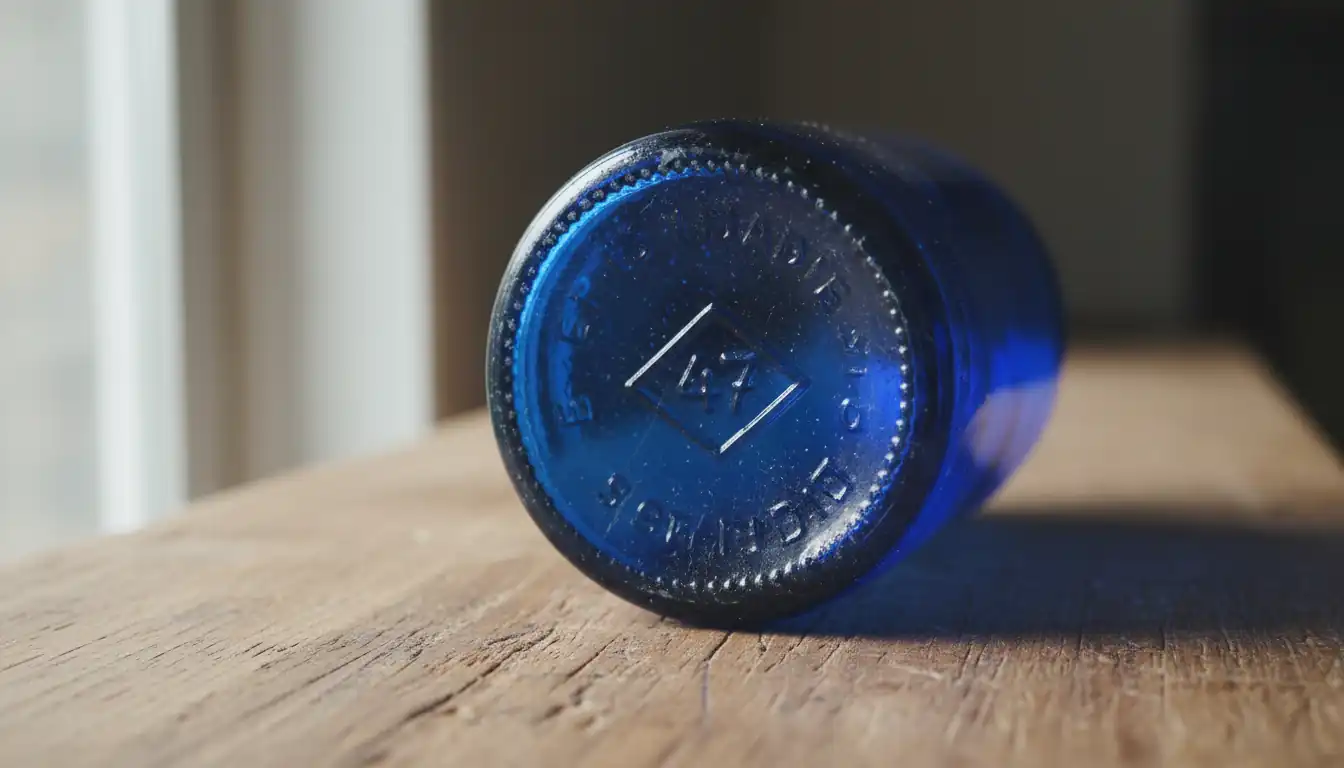
While the texture of the glass tells you how a bottle was made, the text and symbols embossed on the surface tell you who made it and when. These marks are the "ID cards" of the glass world. Using your phone as a macro lens allows you to capture these tiny details, which Relic then uses to pinpoint a specific production window.
Common Symbols and Their Meanings
Many bottles feature a "maker's mark" on the base. These are logos or initials belonging to the glass company, not necessarily the company that sold the liquid inside. Understanding these marks is the fastest way to solve the mystery of how to identify vintage glass.
- Owens-Illinois: One of the most common marks is a diamond with an "O" inside and an "I" inside the "O." If you see this, the bottle was made after 1929. If there is a number to the left of the symbol, it usually indicates the plant code; the number to the right is often the year.
- Ball Brothers: For fruit jars, the "Ball" script is legendary. The way the "L" loops or the presence of an underscore can tell you if a jar is from 1895 or 1920. For example, the "3-L" script (where the loop of the 'l' looks like a 3) is a highly sought-after variation from the late 1890s.
- Hazel-Atlas: Look for a large "A" with a smaller "H" nested underneath it. This mark was used extensively on Depression glass and food containers from the 1920s through the 1960s.
Dating Your Find by Logo Evolution
Companies frequently updated their logos to keep up with design trends. A subtle change in font or the addition of a frame around a logo can narrow down a bottle's age to a five-year window.
Consider the evolution of the Coca-Cola bottle. While the "Hutchinson" style bottles of the late 1800s were straight-sided, the iconic "contour" bottle (the Mae West shape) was patented in 1915. However, even within that contour shape, the embossing changed. Early versions had the city and state of the bottling plant embossed on the bottom, while later versions moved to applied color labels (ACL) or "painted" logos in the 1950s.
When you use your camera to zoom in on these marks, you are providing the AI with the data it needs to cross-reference historical patent records. This is how you bridge the gap between "this looks old" and "this was manufactured in the Pittsburgh plant in July of 1924."
Assessing Rarity and Market Value
Once you know what a bottle is, the next logical question is: what is it worth? Value in the glass world is a delicate balance of age, condition, and—perhaps most importantly—color. While a clear glass bottle from 1880 might be worth five dollars, the exact same bottle in a rare cobalt blue could be worth hundreds.
Color Rarity and Glass Composition
In the 19th century, creating specific colors required expensive chemical additives. Most utilitarian bottles were "aqua" (a natural light blue-green) because that was the cheapest way to produce glass using sand with iron impurities.
- Cobalt Blue: Created by adding cobalt oxide. Highly prized by collectors, especially in medicine and poison bottles.
- Amethyst (Purple): Between 1880 and 1914, manufacturers added manganese to clear glass to act as a decolorizer. When exposed to UV rays from the sun over decades, this glass turns a beautiful shade of violet. This is a definitive marker of pre-WWI glass.
- Black Glass: This isn't actually black, but a very dark olive green or amber that appears opaque. This is typical of 18th and early 19th-century ale and wine bottles.
- Yellow-Green (Vaseline Glass): This glass contains small amounts of uranium and will actually glow under a blacklight. It is a niche but highly valuable category for collectors.
Current Market Trends for Collectors
The market for antique bottles fluctuates based on what collectors are currently hunting. Currently, there is high demand for specific categories:
- Bitters Bottles: These were the "cure-all" medicines of the 1800s, often containing high levels of alcohol. They frequently come in elaborate shapes (like log cabins or fish) and deep amber or green colors.
- Poison Bottles: To prevent people from accidentally drinking poison in the dark, these bottles were made with deep cobalt blue or emerald green glass and featured heavy ribbing or "diamond point" textures as a tactile warning.
- Historical Flasks: Bottles featuring the faces of presidents, eagles, or commemorative slogans from the mid-19th century are among the most expensive items in the hobby.
Relic provides a real appraisal by analyzing these market factors. It looks at the color, the rarity of the mold, and the current auction trends to give you a valuation that reflects the real-world market. This prevents you from overpaying at an antique mall or, conversely, selling a "diamond in the rough" for a fraction of its value.
Building a Digital Collection Catalog
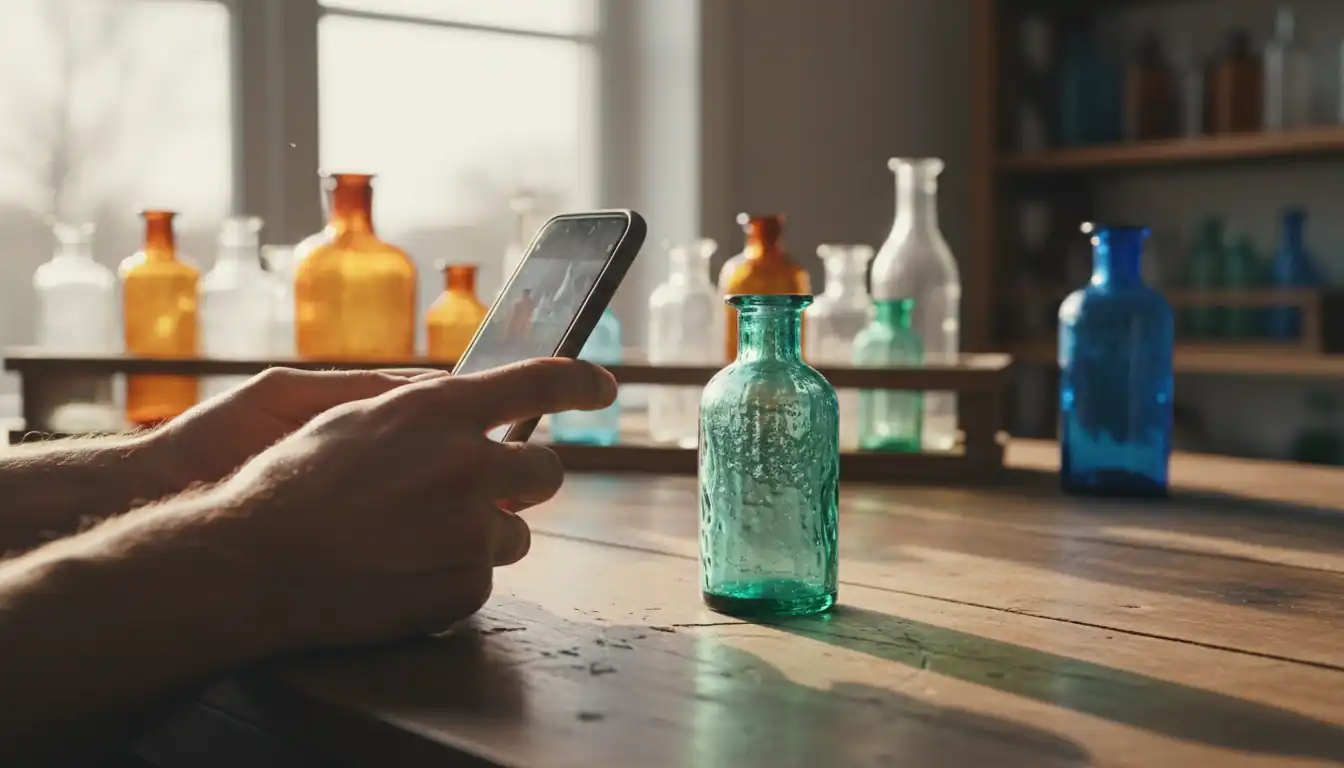
Finding and identifying a bottle is only the beginning. As your collection grows, keeping track of the history and value of each piece becomes a challenge. This is where the transition from "hobbyist" to "curator" happens. Instead of relying on memory or messy paper logs, you can use digital tools to manage your inventory.
Organizing Your Finds with Relic
One of the most useful features of the Relic app is the ability to maintain a searchable catalog of every item you’ve scanned. Each entry can include:
- High-resolution photos from multiple angles.
- The historical context and origin story provided by the AI.
- The appraised value at the time of discovery.
- Personal notes on where and when you found the item.
This digital library allows you to carry your entire collection in your pocket. If you’re at an antique show and see a bottle that looks familiar, you can quickly check your catalog to see if you already own that specific variant or if the one in front of you is an upgrade in condition.
Protecting Your Investment with Digital Records
For serious collectors, these records are more than just a hobbyist's convenience; they are essential for insurance and estate planning. If your collection were ever damaged or stolen, having a digital record with professional-grade appraisals and photographic proof is vital for insurance claims.
Furthermore, the ability to share your digital catalog with other collectors online makes trading and selling much easier. Instead of trying to describe the "swirls in the glass" or the "slight chip on the base," you can provide a comprehensive digital file that shows the item's true condition and pedigree. You aren't just hoarding old glass; you are building a curated, documented museum of history.
Conclusion
The world of antique glass is no longer a closed book reserved for experts with decades of experience. By understanding the visual language of mold seams, pontil scars, and maker's marks, you can begin to read the history written in the glass. You now know that a bubble isn't a flaw, a purple tint is a sign of the pre-war era, and a seam that stops at the neck is a hallmark of hand-crafted history.
Technology has bridged the gap between curiosity and expertise. With the Relic app on your iOS device, you have the power to identify, appraise, and catalog your finds in seconds. You can walk into any antique shop or dig into any old farm dump with the confidence of a professional appraiser.
The next time you spot a glimmer of glass in the dirt or on a dusty shelf, don't leave its story to chance. Download Relic today and see what history is waiting to be uncovered right in the palm of your hand. Your phone isn't just a communication device anymore—it's your key to the past.
Identify antiques instantly
Point your camera at any antique, collectible, or vintage item. Get valuations, history, and market insights in seconds.
Download for iPhone