Turn Your Weekend Thrifting Into a Gold Mine with These Pro Identification Secrets

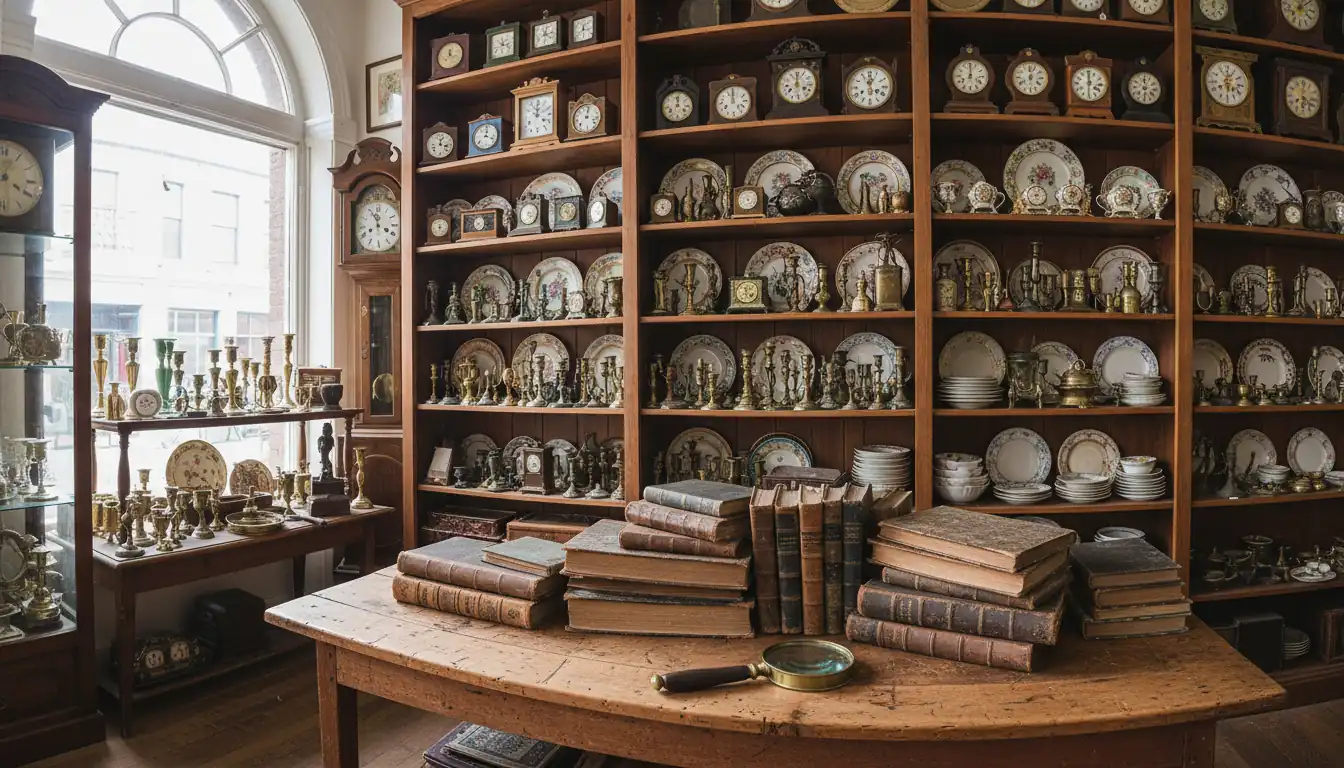
You are standing in a crowded thrift store, surrounded by the scent of old paper and dust. Your eyes land on a heavy, green glass vase tucked behind a stack of chipped dinner plates. It looks different—thicker, with a strange, iridescent glow that catches the fluorescent light. Is it a mass-produced piece from a 1990s home decor chain, or is it a rare piece of Loetz glass worth thousands of dollars?
This moment is the heartbeat of the antique world. It is the thrill of the hunt, the possibility that a fortune is hiding in plain sight. Most people walk past these treasures every day because they lack the specific knowledge required to separate the mundane from the magnificent. You do not have to be one of them.
By the time you finish reading this guide, you will understand the technical nuances that define high-value items. You will know where to look, how to use modern technology to verify your instincts, and how to turn a casual weekend hobby into a sophisticated investment strategy. The barrier between you and a significant find is no longer a lack of information; it is simply knowing how to apply the right tools to the right objects.
The Fine Line Between Junk and Treasure
To succeed in the world of high-stakes thrifting, you must first master the vocabulary of the trade. Many amateur collectors use the terms "antique" and "vintage" interchangeably, but in the professional market, these words have rigid definitions that dictate price points and buyer expectations. Understanding these distinctions is your first step toward professional-grade identification.
Decoding the 100 Year Rule for Antiques
The most common question new collectors ask is: Is 60 years old vintage or antique? The answer is definitive: it is vintage. In the United States and most international markets, an item must be at least 100 years old to be classified as a true antique. This isn't just a stylistic preference; it is a standard rooted in historical customs laws.
The 100-year rule serves as a gatekeeper for value. When an item crosses that century mark, it moves into a different category of scarcity. A chair from 1964 is a mid-century piece; a chair from 1924 is an antique. This distinction matters because the manufacturing processes changed drastically after the Industrial Revolution and again after the World Wars.
| Category | Age Requirement | Typical Characteristics |
|---|---|---|
| Antique | 100+ Years | Hand-crafted, solid woods, natural pigments, pre-mass production. |
| Vintage | 20 to 99 Years | Representative of a specific era, often mass-produced but high quality. |
| Retro | 15 to 20 Years | Recent styles making a comeback, usually lower resale value. |
| Contemporary | Less than 15 Years | Modern production, value is usually lower than original retail. |
Items that are 60 years old fall squarely into the "vintage" category. While they are not antiques, they often command higher prices than older items because of current design trends. The key is to look for quality of construction. Even if an item is only 50 or 60 years old, if it was made with superior materials and iconic design, it can be a "gold mine" find.
Identifying Popular Categories for Modern Collectors
If you are wondering what antiques are popular right now, you need to look at the intersection of nostalgia and utility. Collectors are currently gravitating toward items that can be integrated into a modern home while retaining their historical soul.
Mid-Century Modern (MCM) Furniture remains the titan of the resale market. Pieces from the 1950s and 60s, characterized by clean lines, tapered legs, and teak or walnut woods, are in high demand. Look for names like Eames, Herman Miller, or Knoll. Even "unmarked" MCM pieces can be worth hundreds if the silhouette is correct and the construction is solid wood rather than particle board.
Victorian-Era Glass is seeing a resurgence among specialized collectors. Look for "Vaseline glass," which contains small amounts of uranium and glows bright green under a UV light. Cranberry glass, which gets its rich red hue from gold chloride, is another high-value target. These pieces are often found in the back of "grandma's china cabinet" at estate sales and can be easily overlooked by those who don't know what to look for.
Early 20th-Century Toys are another lucrative niche. Cast iron banks, tin wind-up toys, and early pressed-steel trucks from the 1920s through the 1940s are highly sought after. Condition is everything here. A toy with its original paint intact and its mechanical parts functioning can be worth ten times more than a rusted or repainted version of the same item.
Pro Tip: When examining furniture, always look at the joinery. Dovetail joints—where pieces of wood interlock like fingers—are a hallmark of quality. Hand-cut, slightly irregular dovetails usually indicate a pre-1860s antique, while perfectly uniform, machine-cut dovetails suggest a late 19th or early 20th-century piece.
Navigating the Local Antique Landscape
Finding a gold mine requires knowing where to dig. Not all resale venues are created equal, and your strategy should change based on the type of store you enter. The "antiques near me" search on your phone will likely yield a mix of massive malls, curated boutiques, and humble thrift stores. Each offers a different path to profit.
Choosing Between Multi-Dealer Malls and Boutique Curators
Large-scale operations, such as the Virginia Beach Antique Mall or the Barrett Street Auction Center, are excellent places to sharpen your eye. These venues house dozens, sometimes hundreds, of different dealers under one roof. The advantage here is volume. You can see thousands of items in a single afternoon, which helps you learn the "feel" of different eras.
In a multi-dealer mall, prices are often set by people who know exactly what they have. However, because these malls are so large, dealers often miss things. A dealer who specializes in civil war memorabilia might underprice a piece of 1970s Italian lighting because it’s outside their wheelhouse. These "crossover" opportunities are where the profit lies in larger malls.
Contrast this with boutique curators like Mid Century Garage Co. These shops are highly specialized. The owners have already done the hard work of identifying, cleaning, and sometimes restoring the items. While you are less likely to find a "steal" here, these shops are invaluable for learning what top-tier, retail-ready inventory looks like. Study their displays to see which brands and styles they are betting on.
Finding Unlisted Gems in Community Thrift Stores
If you want the highest possible return on investment, you must go where the items haven't been professionally vetted. Community thrift stores like JCOC (Judeo-Christian Outreach Center) or The Funky Monkey are the front lines of the picking world.
In these environments, items are often priced based on size or category rather than historical value. A silver-plated tray and a solid sterling silver tray might both be priced at $5 because they both look like "old metal plates" to a busy volunteer. This is where your identification skills become a literal currency.
- The "High-Shelf" Strategy: Often, thrift store employees will put items they think are "fancy" on a higher shelf or behind a glass counter. Don't assume they've priced them correctly. They might recognize a brand name but miss the specific model that makes it rare.
- The "Bottom-Bin" Strategy: Conversely, heavy or dirty items are often relegated to bottom shelves or floor bins. This is where heavy cast iron, industrial lighting, and architectural salvage often hide.
- Timing the Drop: Most community stores have specific days when they "roll out" new inventory from the back. Ask the staff when they typically restock the floor. Being there within the first hour of a restock can be the difference between finding a masterpiece and finding the leftovers.
Using AI to Reveal an Objects Hidden History
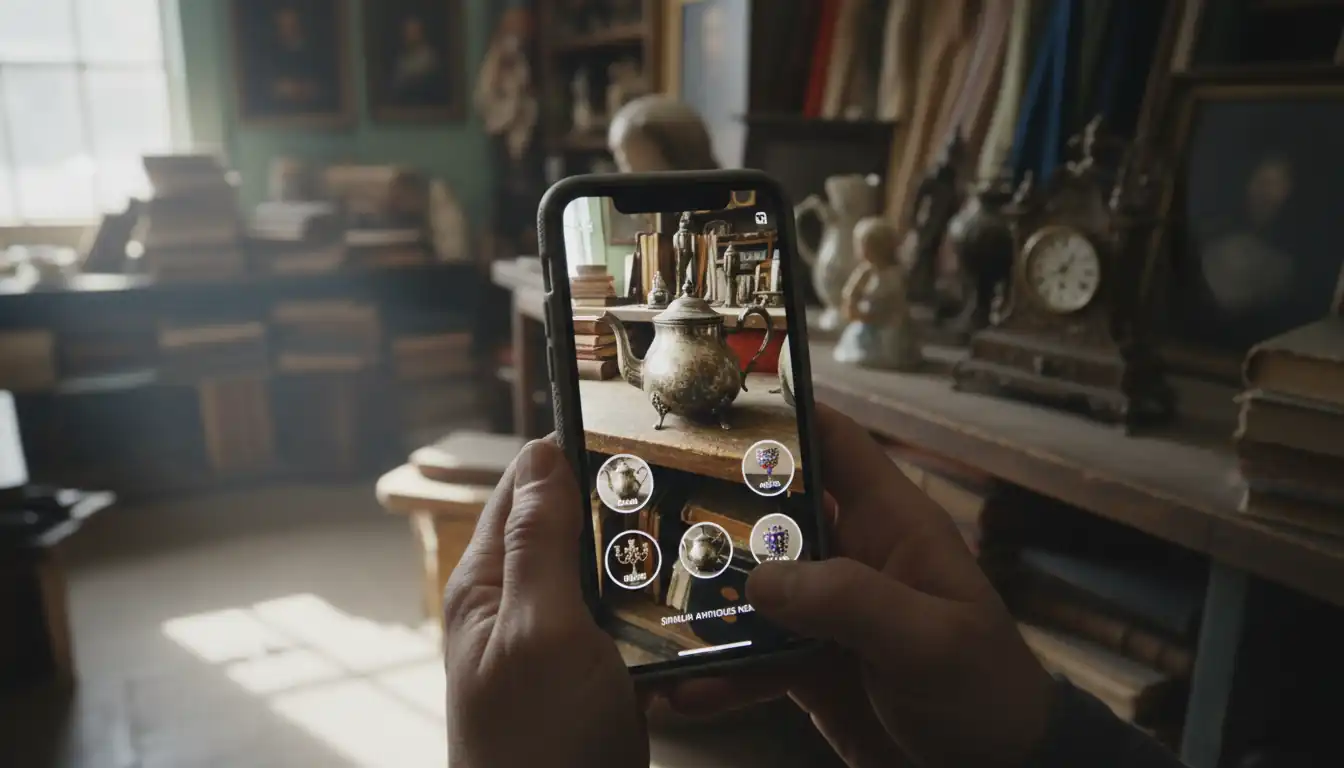
The traditional image of an antique hunter involves carrying a stack of heavy price guides and a magnifying glass. While the magnifying glass is still useful, the price guides have been replaced by something far more powerful. The "information asymmetry"—the gap between what the seller knows and what you know—is the space where profit is made. Modern technology has narrowed that gap in favor of the buyer.
Getting Real Time Appraisals with Relic
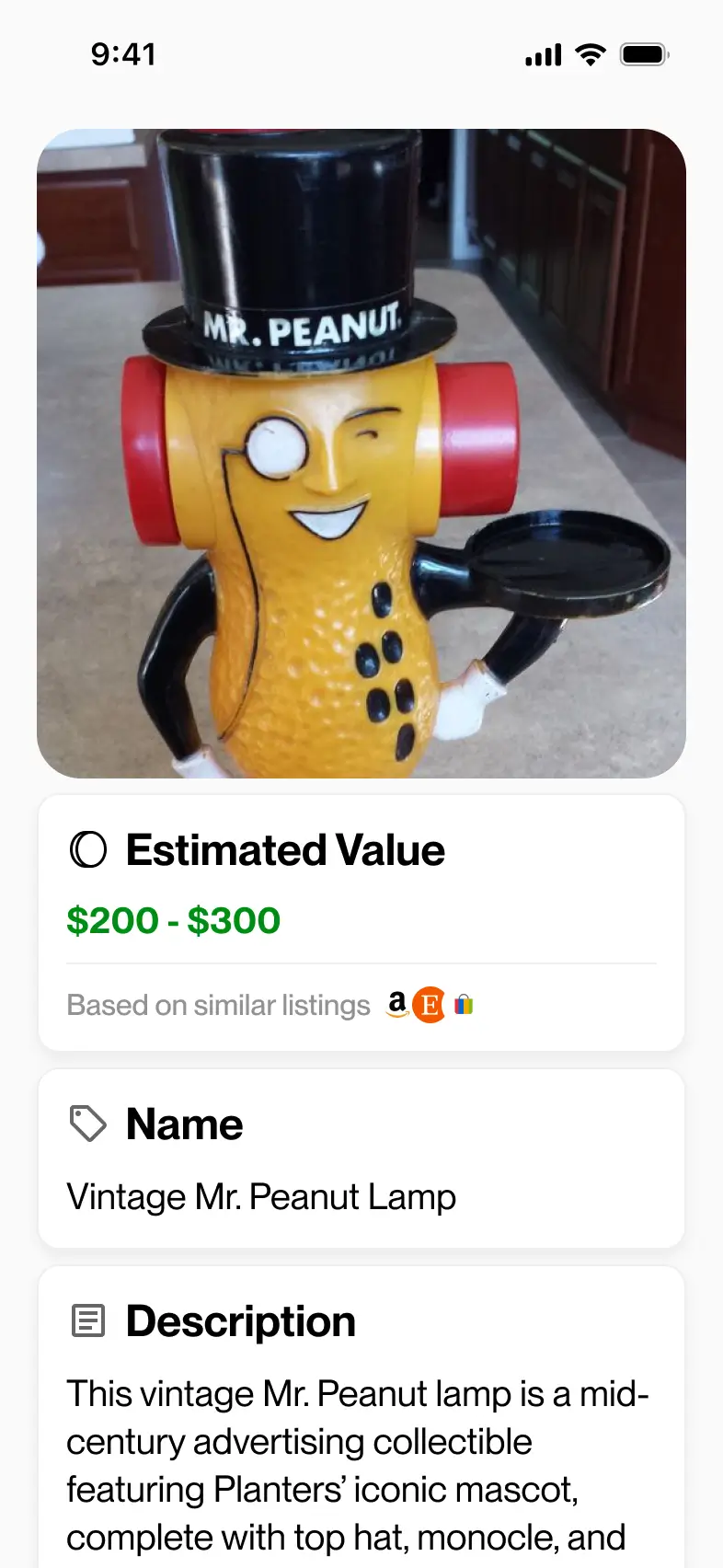
When you are standing in a dusty aisle at a thrift store, you don't have time to go home and research an item on a desktop computer. You need answers immediately. This is where the Relic app becomes your most valuable tool. Relic is designed to function as a professional appraiser that fits in your pocket.
The workflow is straightforward: you take a photo of the item or upload one from your gallery. Relic uses advanced AI to analyze the object's silhouette, markings, material texture, and stylistic cues. Within seconds, the app provides a real appraisal, a detailed history, and the origin of the item.
Imagine finding a piece of pottery with a faint, illegible stamp on the bottom. Instead of guessing, you scan it with Relic. The AI identifies the mark as a rare experimental kiln run from a famous Ohio pottery house in the 1920s. Suddenly, that $4 "old pot" is revealed to be a $600 collector's piece. This isn't just about looking up prices; it's about uncovering the story that gives an object its value.
Verifying Origin and Authenticity on the Fly
One of the biggest risks in antique hunting is buying a "marriage" (an item made of parts from different eras) or a modern reproduction. Relic helps mitigate this risk by providing historical context. If you scan a "Victorian" chair and the app identifies the hardware as a style not manufactured until the 1940s, you’ve just saved yourself from a bad investment.
The app is particularly useful for professionals like dealers, importers, and online sellers who need to make high-volume decisions quickly. With a 4.9-star rating from over 20,000 reviews, the accuracy of the AI has been vetted by the very community you are looking to join. It removes the "gut feeling" and replaces it with data-driven insights, allowing you to buy with the confidence of a seasoned pro.
| Feature | Benefit for the Collector |
|---|---|
| Instant Photo ID | No more manual searching through endless Google images. |
| Historical Context | Understand the "why" behind an item's design and era. |
| Real Appraisals | Get an immediate sense of market value before you pay. |
| Searchable Catalog | Keep a digital record of everything you've scanned for future reference. |
Calculating the Actual Resale Value of Your Finds
Once you’ve identified an item, the next question is: What antique stuff is worth money? Value is not a static number. It is a fluid calculation based on several economic factors. Understanding these factors will prevent you from overpaying and help you set the right price when it’s time to sell.
Factors That Drive Antique Prices Up
The value of an antique is driven by the "Three Rs": Rarity, Region, and Restoration.
Rarity is the most obvious driver. However, rarity isn't just about how many were made; it's about how many survived. For example, vintage toys from brands like Yestertoys are valuable because children naturally destroy toys. A 1950s tin robot that survived in its original box is rare because it survived the intended use of the product.
Region plays a massive role in valuation. A piece of "Southern Primitive" furniture will likely sell for more in Virginia or North Carolina than it would in Oregon. Collectors often want to own a piece of their local history. When you are sourcing, consider where the ultimate buyer might live. If you find a piece of signed pottery from a local artisan, its value is localized. If you find a piece of internationally recognized Wedgewood, the market is global.
Restoration is a double-edged sword. In the world of fine antiques, "original condition" is the gold standard.
Warning: Never "clean" a rare coin or refinish a 18th-century chest without professional advice. Removing the "patina"—the natural oxidation and wear that comes with age—can strip 50% to 80% of an item's value instantly. Collectors want the age to be visible.
Avoiding Common Overpayment Pitfalls
The biggest mistake new hunters make is confusing "asking price" with "market value." Just because a seller on an auction site is asking $500 for a vintage lamp doesn't mean it's worth that. Market value is determined by what people have actually paid recently.
- Check "Sold" Listings: Always look for completed sales, not active listings. This gives you the reality of the market.
- Factor in "The Cost of Sale": If you buy an item for $50 and it's worth $100, you haven't made $50. Once you factor in platform fees, shipping materials, and your time, your profit might only be $20.
- The "Condition Ceiling": Every item has a maximum value it can reach in perfect condition. If the item you found has a crack, a chip, or a missing part, it will likely never reach more than 30-40% of that "ceiling" price.
Building a Profitable Collection in the Digital Age
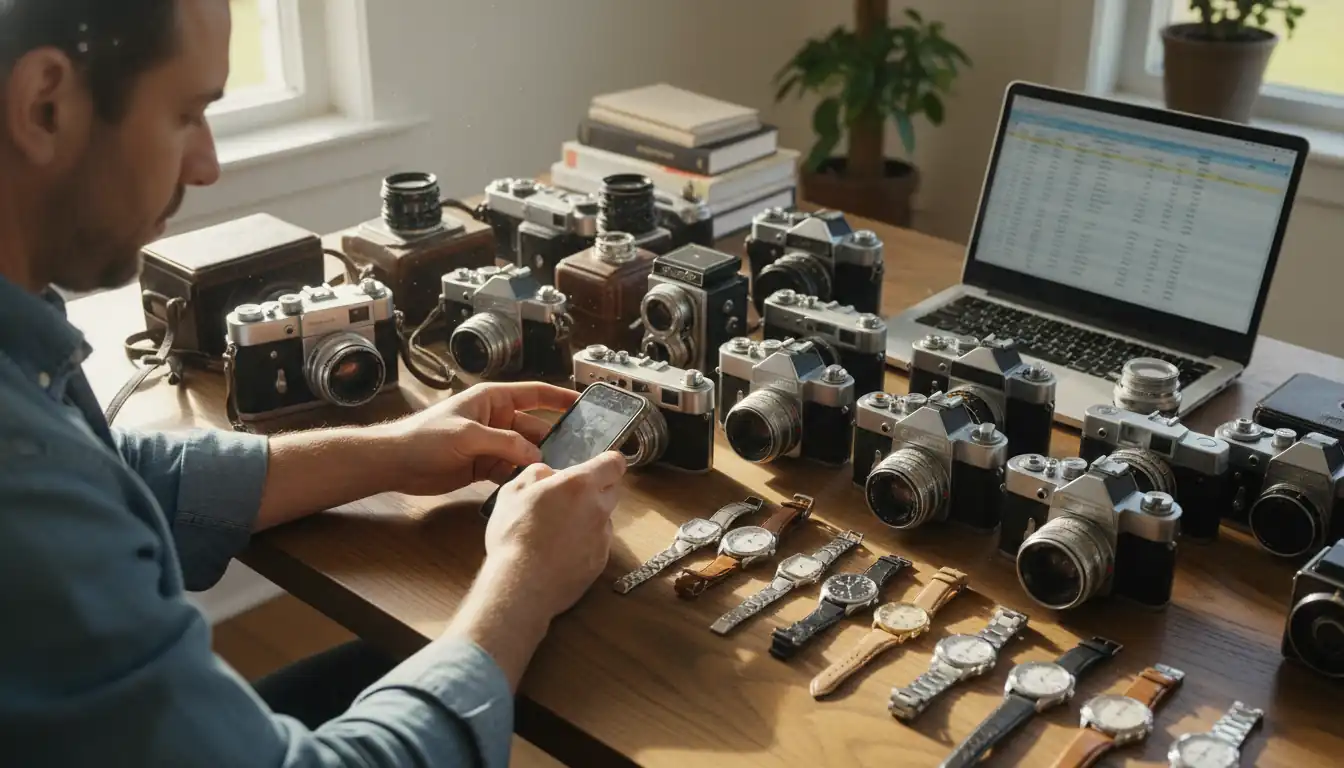
The final stage of moving from a hobbyist to a pro is shifting your mindset. You are no longer just "buying things you like." You are building a portfolio. In the digital age, the "antiques near me" search is just the beginning of a global supply chain.
Flipping Local Finds for Global Profits
The internet has leveled the playing field, allowing a picker in a small town to sell to a billionaire in Dubai. The key is knowing which platform matches your find.
If you find a high-end, designer piece of furniture, platforms like 1stDibs or Chairish are your targets. These sites cater to interior designers and wealthy collectors who are willing to pay a premium for curated, high-quality items. If you find specialized collectibles like vintage toys or rare books, specialized auction houses or niche collector forums might yield a higher price than a general marketplace.
The "Gold Mine" strategy involves finding items in "low-knowledge" environments (like a local yard sale or a small-town thrift shop) and moving them to "high-knowledge" environments (like a specialized online auction). You are essentially getting paid for the work of identification and transportation.
Curating a Personal Gallery with Investment Potential
Not everything you find should be flipped immediately. Some of the most successful collectors use a "one for me, two for the market" rule. They sell enough to cover their costs and then keep the "best of the best" for their personal collection.
When buying for investment, look for "blue chip" antiques. These are items that have shown steady appreciation over decades.
- Signed Studio Pottery: Pieces by recognized artists often appreciate as the artist's body of work becomes more established in museum collections.
- Mechanical Marvels: Items like high-end vintage watches or complex music boxes have a "mechanical" value that transcends simple aesthetics.
- Documented Provenance: If an item comes with a history—a bill of sale from 1910, a photograph of it in a specific house, or a maker's mark that places it in a specific workshop—its investment potential skyrockets.
By using tools like Relic to document your finds, you are building a digital archive of your collection. This documentation is vital for insurance purposes and for proving the value of your items if you ever decide to sell your entire "gallery" as a single lot.
Conclusion
Turning your weekend thrifting into a gold mine is a journey of constant learning. It requires the patience to sift through the mundane, the eye to spot the extraordinary, and the wisdom to use modern tools to verify your discoveries. You now know that the 100-year rule is the standard for antiques, that 60-year-old items are vintage but still highly valuable, and that the "Three Rs" dictate the final price tag.
The most important step you can take is to start looking. Visit your local shops, keep your phone ready, and don't be afraid to investigate the items that others overlook. Every masterpiece was once just an "old thing" sitting in a shop until someone like you recognized its true worth.
If you're ready to stop guessing and start finding, download the Relic app today. Let the AI do the heavy lifting of identification and appraisal so you can focus on the thrill of the hunt. Your next great find is out there, waiting to be revealed. Happy hunting.
Identify antiques instantly
Point your camera at any antique, collectible, or vintage item. Get valuations, history, and market insights in seconds.
Download for iPhone