Unmasking the Past: How AI Scans Reveal the Hidden History of Your Antique Dolls

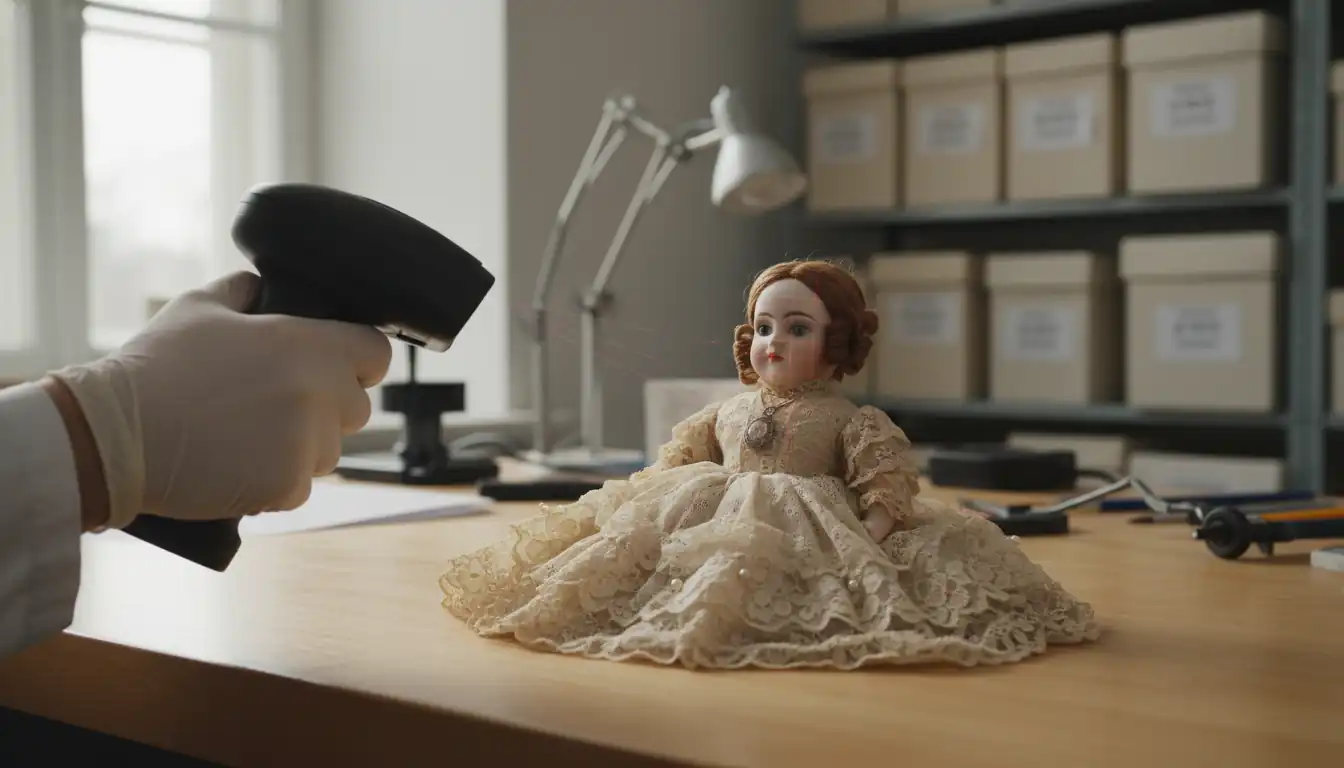
Imagine standing in a sun-drenched attic, surrounded by the echoes of the past. You lift the lid of a weathered trunk to find a pair of glass eyes staring back at you, framed by delicate lace and faded silk. This doll has lived through decades, perhaps even a century, but she cannot speak to tell you her name, her maker, or her story. For generations, this was the wall every collector hit—a beautiful mystery that required weeks of library research and expensive consultations to solve.
The weight of history is often hidden in the smallest details: the curve of a porcelain cheek, the specific tint of a lip, or a faint, incised number nearly lost under a wig. Identifying these treasures used to be a daunting task reserved for those with massive reference libraries and decades of hands-on experience. You might have spent hours squinting at blurry photos in out-of-print books, hoping to find a match for a mold number that seemed to exist nowhere else.
That era of uncertainty is fading. Technology has finally caught up with the intricate artistry of the past, turning your smartphone into a bridge between the 19th century and the present. By combining the tactile knowledge of traditional collecting with the precision of modern visual recognition, you can now uncover the lineage of your dolls in seconds. This guide will show you how to look at your collection through a new lens, blending historical expertise with the power of digital discovery.
The Digital Shift in Doll Collecting
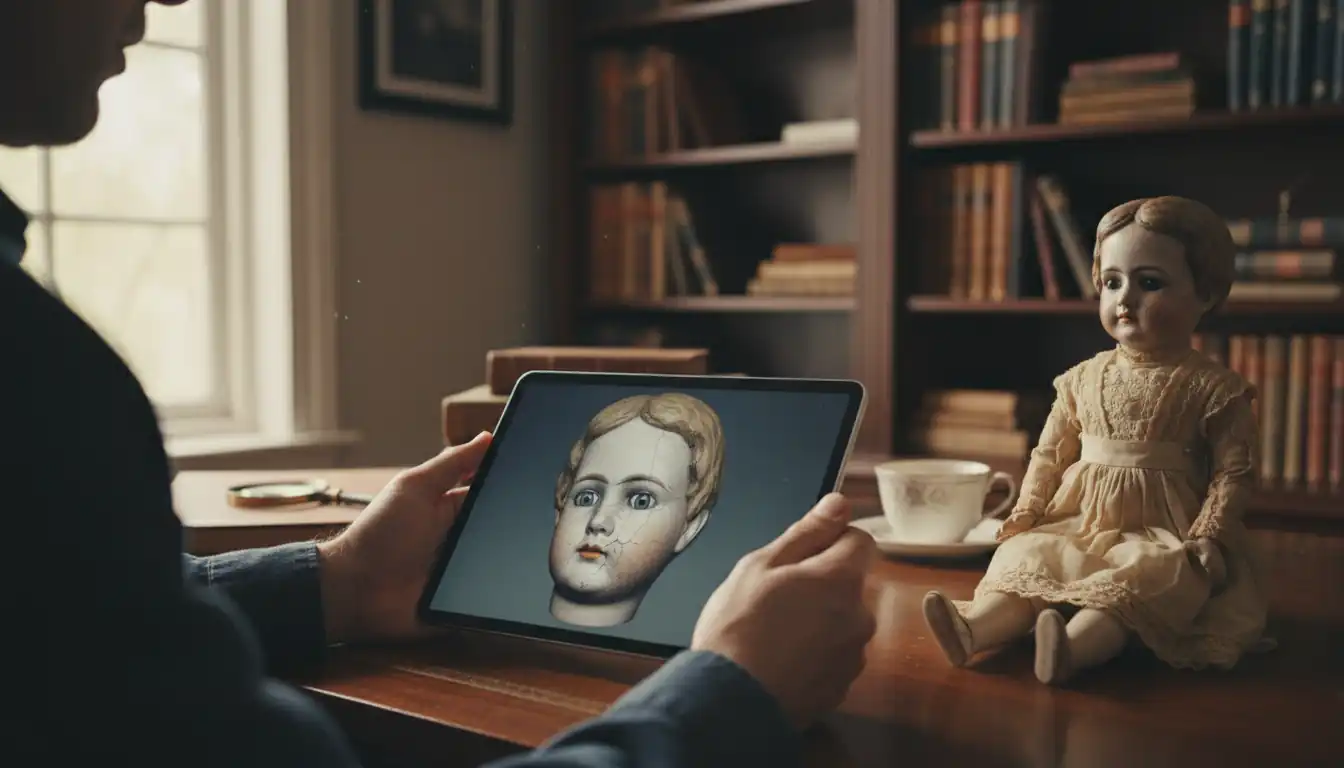
For a long time, the "gold standard" of doll identification was the physical reference book. Collectors would carry heavy, thumbed-through volumes to estate sales and auctions, cross-referencing marks against grainy black-and-white plates. If a doll lacked a clear manufacturer’s stamp—which many do—you were often left guessing based on "gut feeling" or the vague recollections of the seller. This manual process was not only slow but prone to human error, as many doll molds from different factories looked remarkably similar to the untrained eye.
The transition to digital tools has fundamentally changed how you interact with your collection. We have moved from searching for words to searching with images. This is a massive relief for anyone who has ever stared at a blank search bar, unsure of how to describe a specific "pouty" expression or a unique "kid leather" body construction. Instead of trying to find the right vocabulary, you can now let the visual evidence speak for itself.
From Reference Books to Digital Scans
The shift began with online forums and message boards, where enthusiasts would post photos and wait days for a response from a more experienced collector. While helpful, this method was still limited by the availability of experts and the subjectivity of their opinions. Today, the process is instantaneous. When you use a tool like the Relic app, you are essentially holding a digital version of every doll reference book ever written.
The app bridges the gap between physical objects and historical data by analyzing the geometry of the doll's face and the specific characteristics of its materials. This removes the "detective work" that used to gatekeep the hobby. You no longer need to be a scholar of 18th-century German porcelain to know if you’re holding a Kämmer & Reinhardt or a Simon & Halbig. The technology does the heavy lifting, allowing you to focus on the joy of the find.
Why Visual Search Changes Everything
You might wonder, can AI identify antiques? The answer lies in the way neural networks process information. Unlike a human, who might get distracted by a doll’s beautiful new dress or a replaced wig, AI looks at the underlying patterns. It analyzes the "topography" of the doll’s face—the distance between the eyes, the depth of the philtrum, and the specific way the ears are modeled.
- Pattern Recognition: AI systems are trained on millions of images, learning to recognize the "hand" of specific artists and factories.
- Consistency: A digital scan doesn't have "off days." it applies the same rigorous criteria to every item, ensuring a level of accuracy that is hard to maintain manually.
- Speed: What used to take a trip to the local museum or a week-long wait for a letter from an appraiser now happens in the time it takes to snap a photo.
"The true power of modern identification isn't just finding a name; it's about recovering a lost history that was previously invisible to the naked eye."
Identifying Your Doll Through Visual Evidence
Before you even reach for your phone to perform a scan, it helps to understand what the technology is looking for. Identifying an antique doll is a multi-sensory experience. You are looking for clues left behind by craftsmen who worked by candlelight. To get the most out of an identifier, you need to provide it with the best possible visual data. This means knowing where the "secrets" of the doll are hidden.
Locating the Elusive Bisque Stamps
The most common question for any new owner is, "How do I identify my antique doll?" Your first stop should always be the back of the head and the nape of the neck. This is where most European manufacturers placed their marks. However, these marks are often obscured by pate (the head cover) or the wig.
- The Nape of the Neck: Look for incised numbers (molds) or symbols (depose marks).
- The Shoulder Plate: On dolls with kid or cloth bodies, the mark is often found on the lower edge of the porcelain chest piece.
- Hidden Marks: Sometimes, marks are found inside the head rim, visible only if the pate is removed.
Relic's AI is specifically tuned to recognize these markings, even if they are faint or partially worn away. When you take a photo, the app doesn't just look at the mark; it compares the style of the incision to known factory standards. This is vital because many "reproduction" dolls from the 1970s used original molds but have different porcelain densities that the AI can help distinguish.
Identifying Composition and Material Origins
The material of the doll tells you as much about its age as the mark does. A doll that feels cold to the touch and has a translucent quality is likely "bisque" (unglazed porcelain). If it feels warmer and has a matte, painted finish, it might be "composition"—a mixture of sawdust, glue, and resin that was popular in the early 20th century.
| Material | Common Era | Key Characteristics |
|---|---|---|
| China Head | 1840s–1890s | Glazed, shiny porcelain; usually molded hair. |
| Bisque | 1860s–1920s | Matte finish; realistic skin tones; glass eyes. |
| Composition | 1900s–1950s | Heavier than plastic; prone to "crazing" (fine cracks). |
| Hard Plastic | 1940s–1960s | Lightweight; seam lines visible; "walking" mechanisms. |
When you prepare your doll for a scan, ensure the lighting is neutral. Avoid harsh flashes that create "hot spots" on porcelain, as this can hide the subtle contouring of the cheeks. The AI uses these contours to determine the mold shape. For example, a "Jumeau" doll has a very specific chin dimple and eye socket shape that distinguishes it from a "Gaultier," even if both have similar markings.
The Intelligence Powering Modern Identification
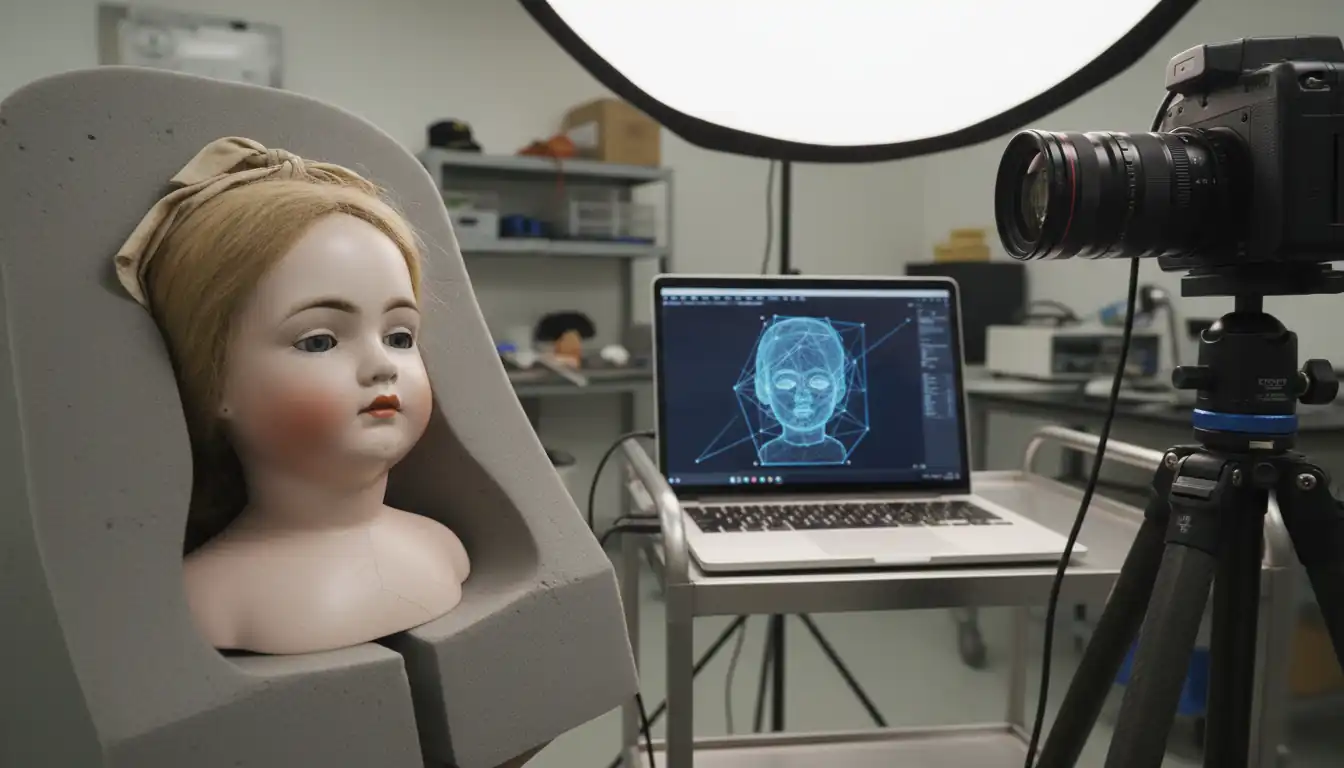
Behind the simple interface of an identification app lies a complex web of data processing. When you upload a photo to Relic, you aren't just sending a picture to a server; you are triggering a sophisticated comparison engine. This engine sifts through a massive digital library of historical catalogs, auction records, and museum archives to find a match.
How Relic Processes Visual Data
The process begins with "feature extraction." The AI identifies key landmarks on the doll—the shape of the eyebrows, the painting style of the eyelashes (known as "strokes"), and the way the mouth is vented. It then converts these visual features into a mathematical signature. This signature is compared against thousands of others in the database.
This technology is designed to be accessible to everyone. You don't need to be a "techie" to use it. The app support features guide you through the process, ensuring you hold the camera at the right angle and distance. This accessibility is a core part of the design, making it just as easy for a grandmother passing down an heirloom as it is for a professional dealer at a trade show.
Privacy and Data Safety in Antique Apps
In an era where digital privacy is a major concern, it is natural to wonder about the safety of your data. When you use an app to scan a potentially valuable antique, you are sharing information about your private property. Leading apps in this space prioritize "Data Safety" and "App Privacy" to ensure your collection remains your business.
- Data Linked to You: Most reputable identifier apps minimize the amount of personal data linked to your account. Your scans are typically used to improve the AI's accuracy rather than to track your personal habits.
- Encryption: High-level encryption protects the images you upload, ensuring that your "digital gallery" isn't accessible to unauthorized parties.
- Transparency: Clear privacy policies outline exactly what is stored and what is deleted, giving you peace of mind while you research.
The goal of this technology is to empower the collector, not to exploit them. By focusing on "Data Safety," these tools allow you to build a digital record of your collection without the fear of your information being misused. This security is what allows the community to grow, as more people feel comfortable digitizing their rare finds.
From Identification to Accurate Valuation
Once you know who made your doll and when it was born, the next logical question is: "What is it worth?" This is where the distinction between a simple search and a professional appraisal becomes clear. Identification tells you the "what," but valuation tells you the "why" and the "how much."
Real Appraisals vs Automated Estimates
You might ask, "Is there an app that tells you if something is an antique?" Yes, but the best ones go beyond a simple "yes" or "no." While many free tools might give you a generic name, a professional-grade tool like Relic provides a real appraisal that includes history and origin. This is a critical distinction for serious collectors.
An automated estimate might tell you that a "Simon & Halbig 1079" generally sells for $300. However, a real appraisal considers the nuances. Is the stringing original? Are the glass eyes "paperweight" style or "blown"? Does the doll have its original "mohair" wig? These factors can swing the price by hundreds, or even thousands, of dollars.
Factors That Influence Doll Valuation
Valuing a doll is like putting together a puzzle. Each piece of information adds a layer of value. When you use an identifier, you are gathering the raw data needed for this calculation.
- Condition: This is the most significant factor. A hairline crack in the bisque can reduce a doll's value by 50% or more.
- Rarity: Some molds were produced for only a few months, while others were made for decades. The AI helps identify these rare "character" faces that might otherwise be mistaken for common "dolly" faces.
- Provenance: The "story" of the doll. If you have the original box, the original receipt, or a photograph of the first owner holding the doll, the value increases significantly.
- Market Trends: The doll market fluctuates. What was popular in the 1990s (like large German bisque dolls) might be less in demand today than rare French "Bebes."
Regarding the cost of this technology, many people ask, "How much is the antique identifier app?" While some basic visual search tools are free, professional-grade apps like Relic often operate on a subscription or per-scan model. This fee covers the cost of maintaining the massive databases and the high-level AI processing required to give you an accurate, market-reflective valuation rather than a random guess.
Building a Global Digital Archive
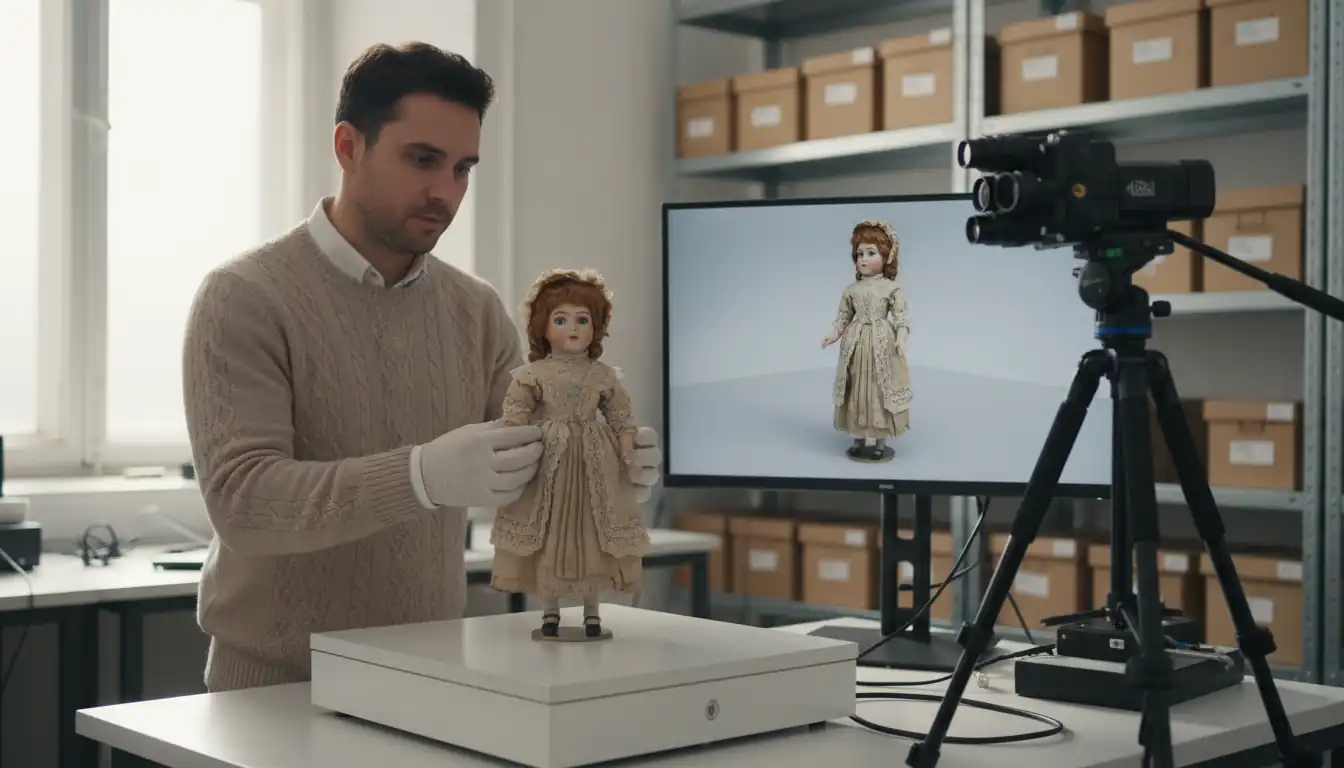
Beyond the immediate thrill of finding out a doll's value, there is a deeper, more significant benefit to using AI scans: preservation. We are currently in a race against time. Materials like composition and rubber are degrading, and the oral histories of many collections are being lost as older generations pass away.
Digital Archiving of Private Collections
Scanning your dolls creates a permanent, "un-aging" record of your collection. This is invaluable for insurance purposes. If a disaster were to happen, having a high-resolution digital archive with professional appraisals attached makes the claims process much smoother. It also serves as a vital tool for estate planning. By digitizing your collection now, you ensure that your heirs understand the value and history of what they are inheriting, preventing rare pieces from being sold for pennies at a yard sale.
"A digital archive is a gift to the future. It ensures that the craftsmanship of the past is never truly forgotten, even if the physical object is lost."
Connecting with Global Doll Communities
The world of doll making was a global enterprise long before the internet. German manufacturers exported to the Asia Pacific region, and French fashion dolls were the height of luxury in the Middle East and India. However, much of the existing literature on dolls is heavily focused on Western markets.
AI is changing this by identifying dolls from international manufacturers that aren't well-documented in English-language books.
- Global Recognition: AI can identify Japanese "Ichimatsu" dolls or early porcelain experiments from the Africa region that might baffle a Western-centric expert.
- Cross-Border Research: By scanning an item, you are tapping into a global database that includes auction results from Paris, London, Tokyo, and New York.
- Historical Context: Understanding that your doll was made for a specific export market adds a layer of "origin" history that makes the item even more unique.
This global perspective turns a hobby into an act of historical preservation. You aren't just a "doll owner"; you are a curator of a tiny piece of human history. Whether your doll was a mass-produced toy from a factory in Thuringia or a hand-painted masterpiece from a Parisian atelier, its story deserves to be told accurately.
Conclusion
The journey from a mysterious attic find to a documented piece of history has never been more accessible. By combining your own keen eye for detail with the advanced pattern recognition of the Relic app, you can strip away the layers of time and uncertainty. You've learned how to spot the hidden marks on a bisque neck, how to distinguish materials, and why a digital scan is a vital tool for both valuation and preservation.
The "detective work" of collecting is no longer a barrier to entry; it is now an invitation to explore. Whether you are looking to sell a single heirloom or manage a vast international collection, the power to unmask the past is literally in the palm of your hand. Your dolls have waited a long time to tell their stories. Are you ready to listen?
Download an antique identifier today and start your first scan. You might find that the doll on your shelf is worth far more than you ever imagined—not just in dollars, but in the rich, hidden history she has been carrying for a century.
Identify antiques instantly
Point your camera at any antique, collectible, or vintage item. Get valuations, history, and market insights in seconds.
Download for iPhone