Your Attic Might Be a Gold Mine: The Modern Guide to Pricing Antiques Instantly

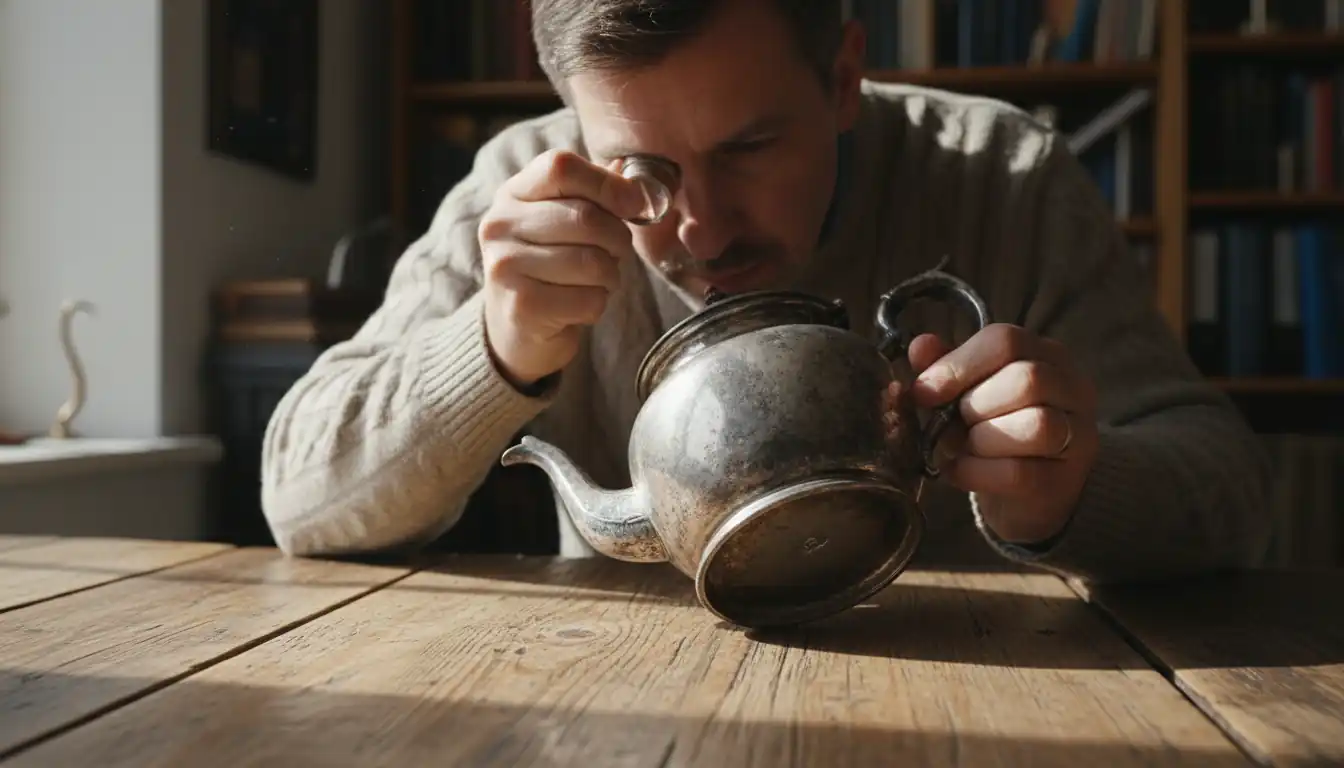
That dusty box in the corner of your attic is more than a storage problem. It is a potential time capsule. Every year, thousands of people donate or discard items that hold significant historical and monetary value, simply because they don’t know how to read the clues hidden in plain sight. You might be sitting on a piece of history that a collector has been hunting for years.
Finding out if your antique is valuable doesn't require a degree in art history. It requires a methodical approach and a sharp eye for detail. By learning to spot the subtle indicators of quality and origin, you can transform a weekend cleaning project into a profitable discovery. This guide will show you how to move from curiosity to a professional-grade valuation.
We will start with the physical evidence—the marks, materials, and "scars" that tell an item's true story. From there, you will learn how modern technology has replaced the need for dusty library stacks, allowing you to get answers in seconds. By the time you finish reading, you will have a clear roadmap for identifying, valuing, and eventually selling your finds for their maximum worth.
Deciphering the Physical Clues on Your Antique
Before you reach for a computer or a phone, you must use your hands and eyes. Professional appraisers spend years training their senses to detect the difference between a mass-produced reproduction and a genuine period piece. The physical object holds a "code" that reveals its age, maker, and quality. Your first task is to find and translate that code.
Identifying Makers Marks and Signatures
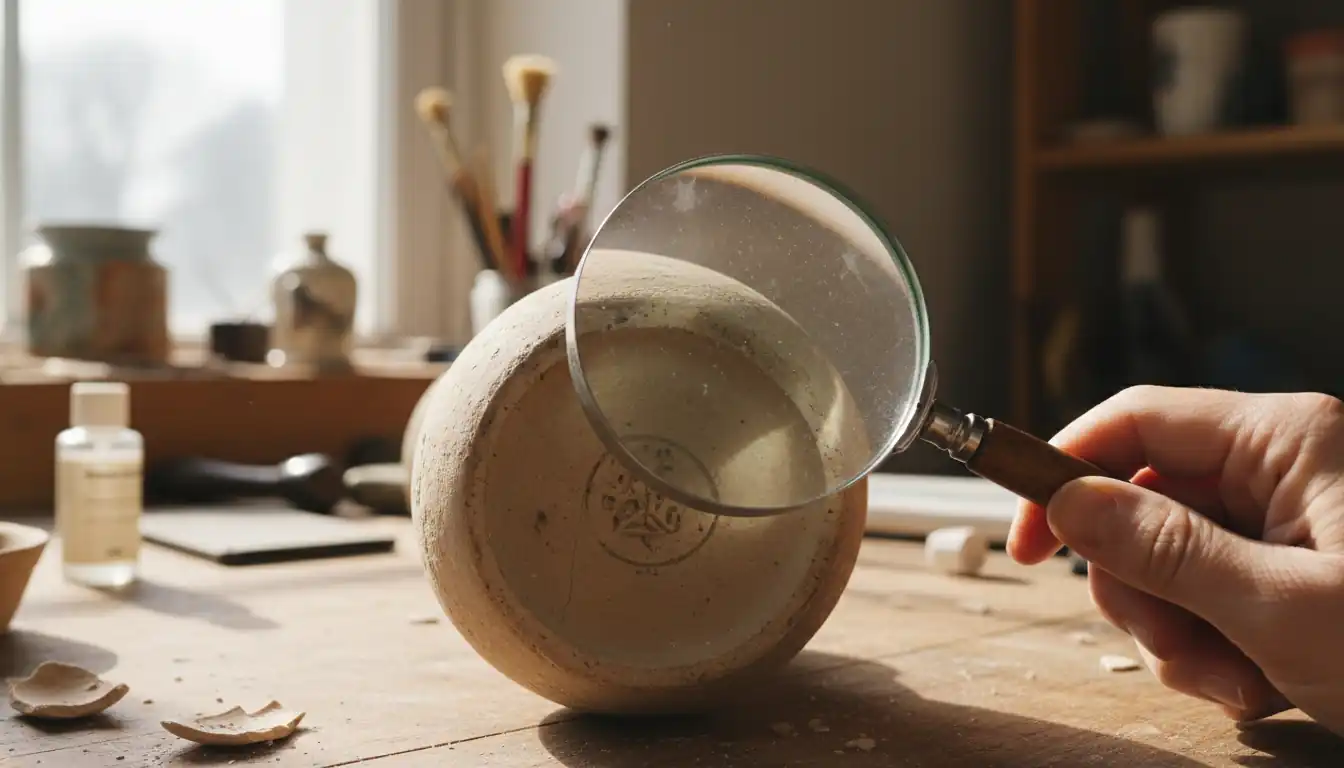
The most direct way to find the value of antique items is to locate the manufacturer's mark. These are often hidden in places you wouldn't normally look. For porcelain and ceramics, flip the piece over. You are looking for underglaze marks, which are painted on before the final firing, or impressed marks, which are stamped into the clay itself.
Silver is even more specific. Look for hallmarks—tiny stamped symbols that indicate the purity of the metal, the city of origin, and the date it was made. On furniture, check the back of drawers, the underside of marble tops, or the interior of cabinets. A paper label or a branded stamp can instantly elevate a generic chair into a documented piece of design history.
- Porcelain Bottoms: Look for crossed swords, crowns, or specific initials. A "Made in Japan" mark usually indicates a 20th-century origin, while a hand-painted "N" with a crown often points to Capodimonte.
- Silver Hallmarks: Use a magnifying glass to find a lion passant (indicating sterling silver) or a leopard’s head (indicating London origin).
- Furniture Joinery: Look at how the drawers are put together. Hand-cut dovetails—the interlocking joints at the corners—are uneven and indicate a pre-industrial age. Perfectly uniform dovetails suggest machine production from the late 19th century onward.
- Clock Faces: The maker’s name is often printed on the dial, but the real secrets are etched into the brass plates of the movement inside the casing.
Assessing Condition and Originality
Once you know who made the item, you must determine how much of the original piece is actually left. In the world of antiques, "originality" is the primary driver of value. A 200-year-old table with its original finish is worth significantly more than the same table that was sanded and varnished in the 1970s.
Professional scouts use a strict condition grading scale. Even a minor flaw can have a massive impact on the final price. You need to be brutally honest during this inspection. A "hairline crack" in a glass vase might be invisible from a distance, but it can slash the value by 50% or more.
| Grade | Description | Impact on Value |
|---|---|---|
| Mint | No visible flaws, original packaging, or unused state. | Commands 100% of market peak. |
| Excellent | Minor wear consistent with age, no repairs. | High demand, very stable value. |
| Good | Visible wear, small chips, or minor fading. | Value drops by 30-40%. |
| Fair | Significant damage, structural issues, or poor repairs. | Value drops by 60-80%. |
| Poor | Missing parts, heavy breakage, or "parts only" status. | Worth a fraction of the original price. |
A single "flea bite"—a tiny chip no larger than a grain of sand—on the rim of a rare glass bowl can be the difference between a four-figure sale and a fifty-dollar disappointment.
Leveraging AI for Instant Appraisal and History
The traditional way to value antiques involved lugging heavy items to an appraisal house or spending hours flipping through price guides that were often out of date before they were even printed. Today, that process has been condensed into a few seconds. Technology has bridged the gap between the amateur enthusiast and the professional dealer.
How Visual Recognition Technology Works
Modern identification tools use a process called computer vision. When you take a photo of an object, the software analyzes thousands of data points—the curve of a chair leg, the specific shade of blue in a ceramic pattern, or the unique font used in a manufacturer's stamp. It then compares these points against a massive database of known antiques and auction records.
This isn't just a simple image search. Advanced AI can recognize the "DNA" of an object. It understands the difference between a genuine Eames chair and a knockoff produced last year by looking at the proportions and the hardware. This allows you to find out if your antique is valuable without needing to be an expert yourself.
Getting a Professional Appraisal from Your Phone
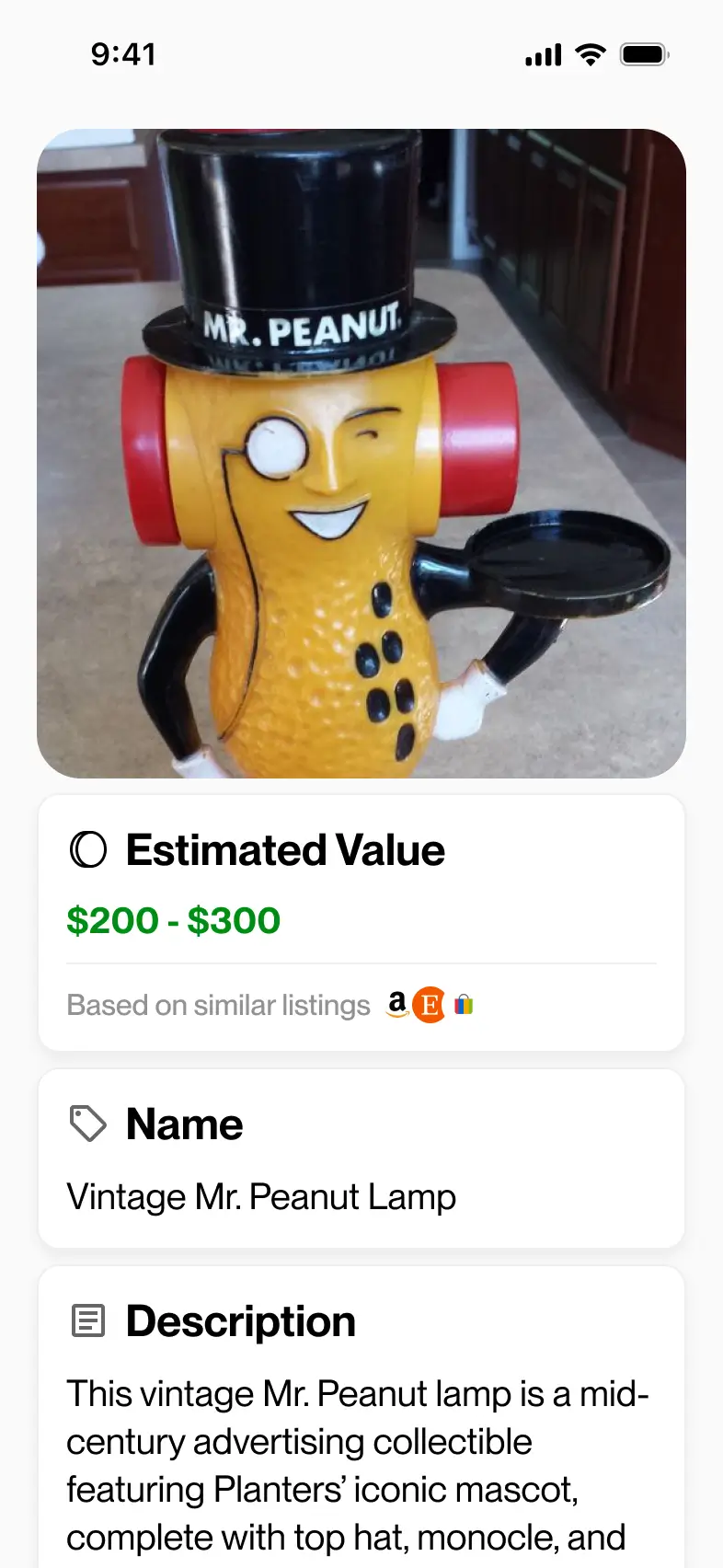
This is where tools like Relic change the game for collectors. Instead of guessing or searching through endless forums, you can use the Relic app to get an immediate, comprehensive look at what you’re holding. You simply take or upload a clear photo of the item.
The app uses its AI to provide a real appraisal, including the history and origin of the piece. Within seconds, you receive a report that would have previously taken a human appraiser hours of research to compile. For people wondering how to value antiques online for free or at a low cost, this type of one-touch scanning is the most efficient solution available.
- Instant Identification: The AI identifies the maker and the era of the item immediately.
- Historical Context: You get the story behind the piece, which is essential for building value.
- Market Insights: Access to a searchable catalog of similar items helps you see what others are paying.
- Professional Accuracy: With a 4.9-star rating from over 20,000 reviews, the data provided is trusted by dealers and pickers alike.
Using an app like Relic allows you to act quickly at estate sales or flea markets. When you see an interesting vase, you don't have to wonder if it's worth the $20 asking price. You can verify its origin on the spot, ensuring you never miss a "sleeper" or overpay for a reproduction.
Navigating the Complex World of Antique Valuations
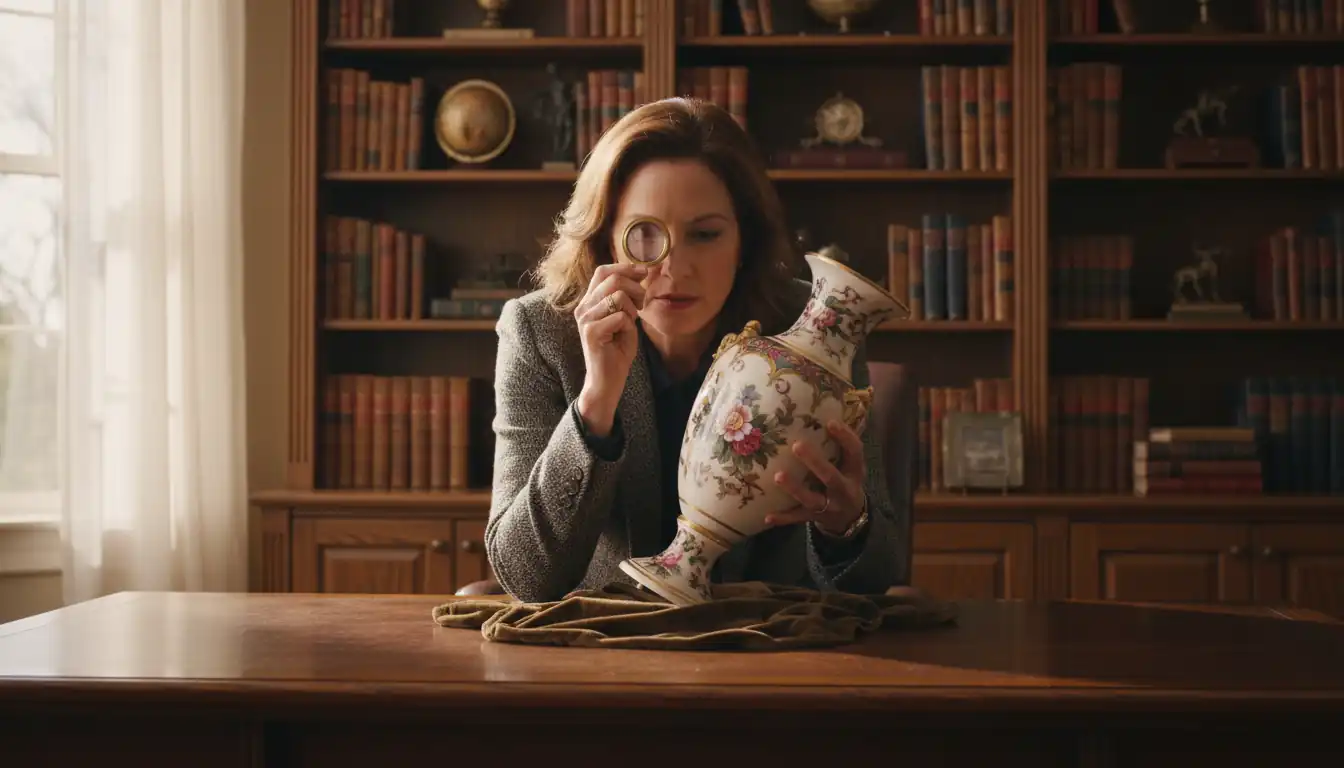
One of the most frustrating parts of the antique market is the lack of a single "price tag." If you ask three different people what an item is worth, you might get three wildly different answers. This isn't because they are lying; it's because "value" depends entirely on the context of the valuation.
Insurance Replacement Value vs Fair Market Value
If you are looking to protect your collection, you want the Insurance Replacement Value. This is the highest number you will see. It represents what it would cost you to go out and buy an identical item in a retail setting immediately. It includes the dealer's markup, the cost of sourcing the item, and often a premium for the convenience of finding it at a high-end gallery.
Fair Market Value (FMV) is a more realistic number for most people. This is the price that a willing buyer and a willing seller agree upon in an open market, where neither is under pressure to act. If you are selling an item on a platform like eBay or at a local antique mall, FMV is the price you are likely to receive.
- Insurance Value: Think of this as the "Retail Price." It is used for coverage, not for selling.
- Fair Market Value: Think of this as the "Real World Price." This is what ends up in your pocket.
- Liquidation Value: This is the "I need cash today" price. It is usually 20-50% below Fair Market Value.
Auction Estimates and Realized Prices
When you look at auction catalogs, you will see an "estimate" (e.g., $500 - $800). It is a common mistake to assume this is what the item will sell for. Auction houses often set these estimates intentionally low to drum up interest and start a bidding war.
The only number that truly matters is the "realized price." This is the final hammer price plus the buyer's premium (a fee paid to the auction house). When researching your items, always look for "Sold" listings rather than "Active" listings. Anyone can ask for $1,000 for a common Mason jar, but that doesn't mean anyone is paying it.
The market doesn't care what you paid for an item or how much you love it. The market only cares what the last person paid for something similar.
Protecting Your Items Integrity and Market Worth
The fastest way to turn a $1,000 antique into a $10 junk store item is to "clean" it. It sounds counterintuitive, but for many antiques, the dirt, tarnish, and wear are actually part of the value. This is known as "patina," and it serves as a certificate of authenticity that cannot be faked.
The Dangers of DIY Restoration and Cleaning
If you find an old bronze statue that looks dark and dull, your first instinct might be to grab some metal polish and make it shine. Stop. That dark surface is an oxidation layer that took decades or centuries to form. Collectors want that original surface. Removing it can destroy the historical integrity of the piece and instantly tank its market value.
The same applies to furniture. Stripping the old, dark "alligator" finish off an 18th-century chest to reveal the light wood underneath is a cardinal sin in the antique world. You aren't "restoring" it; you are erasing its history.
- Coins: Never, ever clean a rare coin. Even a light rubbing with a soft cloth can leave microscopic scratches that professional graders will spot instantly.
- Paintings: Don't try to use "home remedies" like bread or potatoes to clean an oil painting. You risk trapping moisture under the varnish, leading to mold or flaking.
- Textiles: Old quilts and rugs are fragile. Harsh detergents can cause dyes to bleed and fibers to shatter.
- Bronze and Copper: The green or dark brown "skin" on these metals is highly prized. Leave it alone.
Proper Storage and Handling for High Value Finds
Once you have identified a valuable item, you must become its guardian. The environment is the silent enemy of antiques. Fluctuations in temperature and humidity cause wood to expand and contract, which leads to cracking and warping.
UV light is another major threat. It can fade the vibrant colors of a 19th-century lithograph or cause the silk in a vintage dress to become "shattered" and brittle. If you have something truly valuable, keep it out of direct sunlight and away from heating vents or damp basements.
- Humidity Control: Aim for a stable 45-55% humidity level to prevent wood from cracking or mold from growing.
- Light Exposure: Use UV-filtering glass for framed items and keep sensitive textiles in acid-free boxes.
- Handling: Always wash and dry your hands before touching unglazed ceramics or paper. For silver and metals, wear cotton gloves to prevent skin oils from causing permanent spotting.
Strategic Pathways for Selling Your Valued Antiques
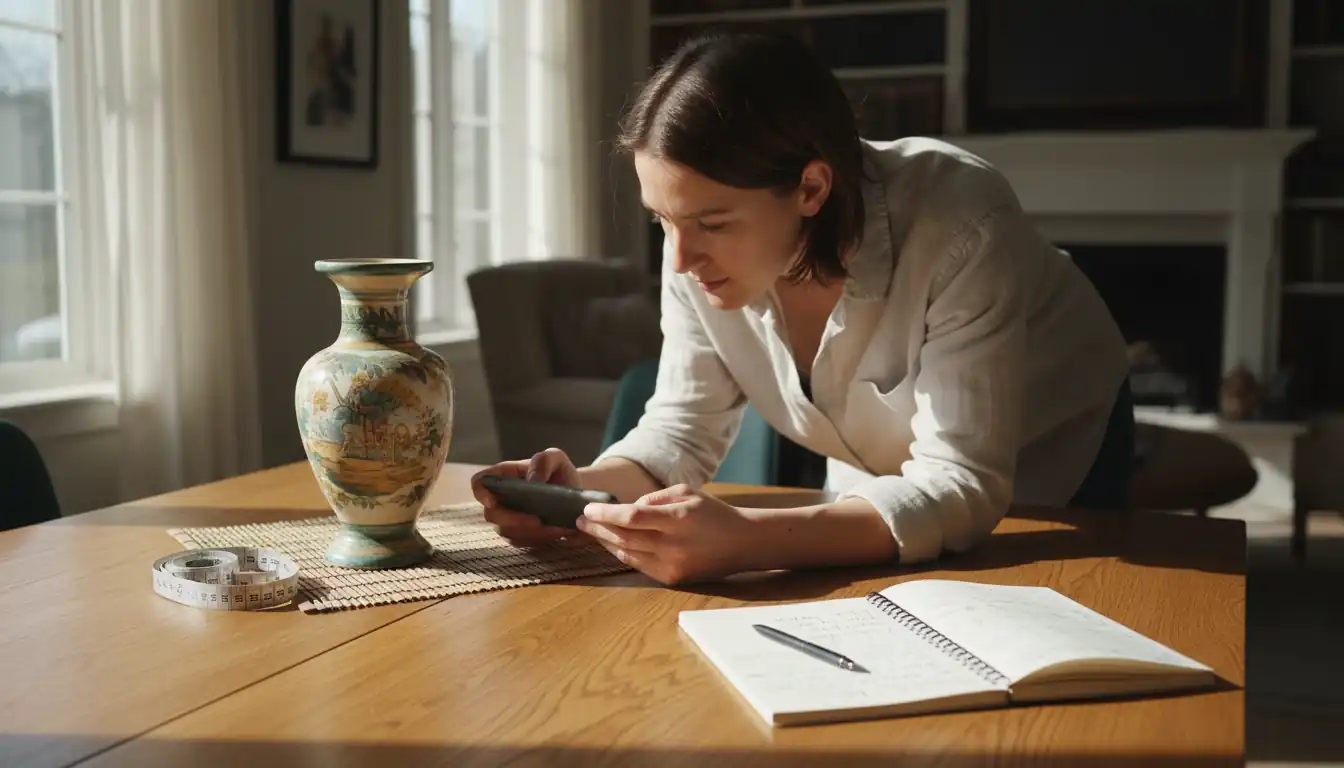
Once you have identified your item, confirmed its value with a tool like Relic, and ensured it is in stable condition, it is time to turn that physical object into liquid assets. The "where" and "how" of your sale will determine how much of that value you actually keep.
Choosing Between Specialized Auctions and Private Sales
If you have a highly specialized or very high-value item—such as a rare piece of Tiffany glass or a signed first edition book—a specialized auction house is often the best route. They have a built-in audience of hungry collectors who are willing to compete. However, be prepared to pay a commission (usually 15-25%) and wait several months for the auction date.
For more common antiques or mid-range items, peer-to-peer marketplaces like eBay, Etsy, or specialized Facebook groups can be more effective. You keep more of the profit, but you have to handle the photography, listing, and shipping yourself. Local dealers are the fastest option, but they will typically offer you 30-50% of the retail value because they need to make a profit when they resell it.
| Selling Method | Best For | Pros | Cons |
|---|---|---|---|
| Specialized Auction | Rare, high-value items | Reaches global experts, drives up price | High fees, long wait times |
| Online Marketplaces | Mid-range, shippable items | You control the price, lower fees | High effort, shipping risks |
| Local Dealers | Quick cash, bulky items | Instant payment, no shipping | Lower payout (wholesale price) |
| Consignment Shops | Decorative items, furniture | Hands-off process | Item may sit for months |
Documenting Provenance to Command Higher Prices
Provenance is the documented history of an item’s ownership. An antique with a story is always worth more than an anonymous one. If you can prove that a desk was owned by a specific historical figure, or even just show that it has been in the same family for four generations, the value increases.
This is where the data you gathered earlier becomes your best sales tool. When you create a listing, don't just say "Old Vase." Use the historical context and origin data provided by your Relic appraisal to tell a story. Mention the specific factory, the artist, and the era. Providing a copy of a professional-grade appraisal report gives buyers confidence, which directly translates to higher bids.
Checklist for a Successful Sale:
- High-Quality Photos: Take pictures in natural light. Include shots of the front, back, bottom, and any marks or damage.
- Detailed Description: Use the technical terms you learned (e.g., "hand-dovetailed," "sterling hallmark," "underglaze mark").
- Transparency: Always disclose flaws. It builds trust and prevents returns or disputes.
- Proof of Value: Include the appraisal data or screenshots of similar realized auction prices to justify your asking price.
Conclusion
Your attic, basement, or local thrift store could very well be a gold mine, but only if you know how to extract the value. By moving from a physical inspection of marks and condition to a digital appraisal using AI tools like Relic, you remove the guesswork from the process. You no longer have to wonder if you're holding a masterpiece or a memento.
Remember that the value of an antique is a living thing—it changes with market trends, the condition of the piece, and the story you can tell about it. Protect your finds by avoiding the urge to "clean" them, and choose your selling platform based on the rarity of the item.
The next step is simple: go find one item in your house that you’ve always been curious about. Look for the marks, check the condition, and use your phone to get an instant appraisal. You might find that your "clutter" is actually the start of a very lucrative new hobby.
Identify antiques instantly
Point your camera at any antique, collectible, or vintage item. Get valuations, history, and market insights in seconds.
Download for iPhone