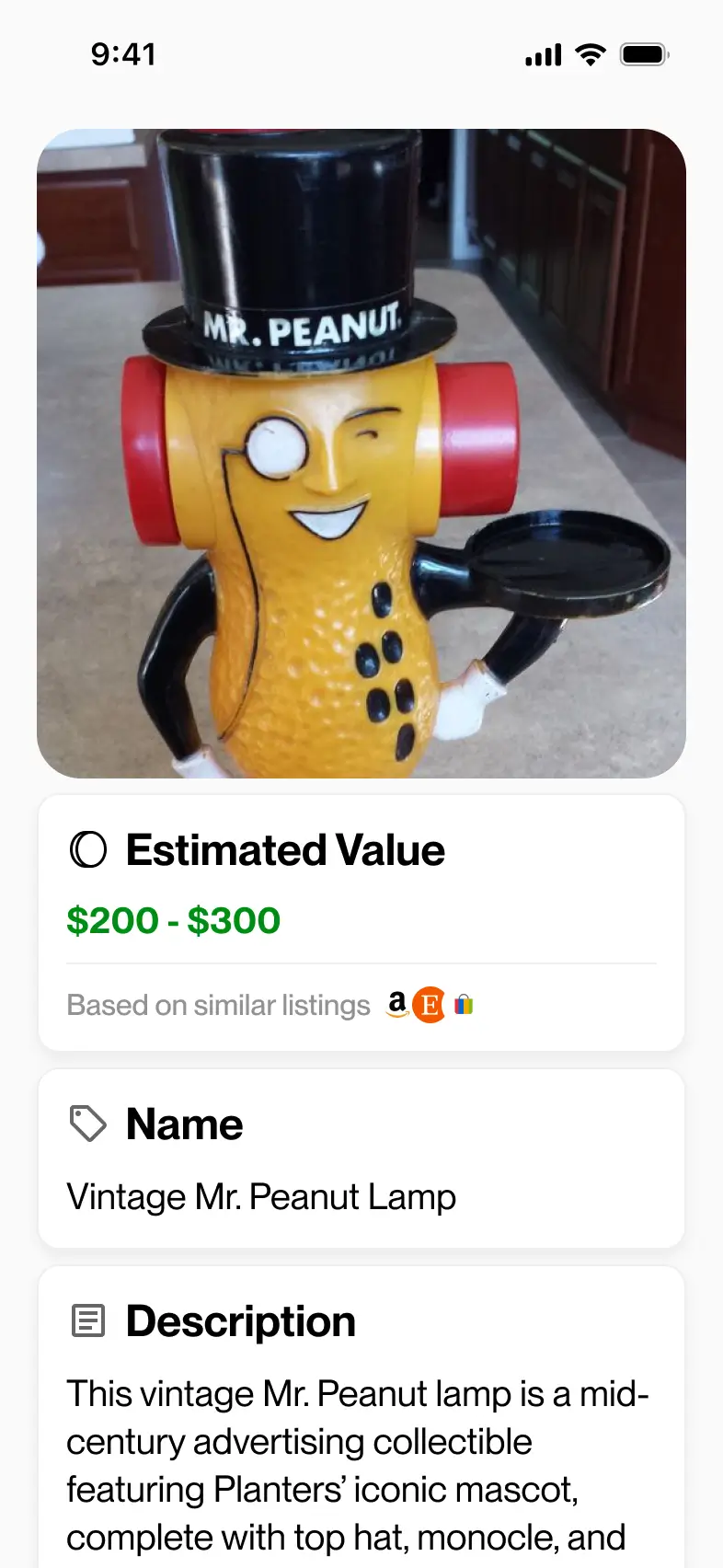
Your Attic Might Hold a Fortune: 5 Free Ways to Identify Antiques Using Just a Photo

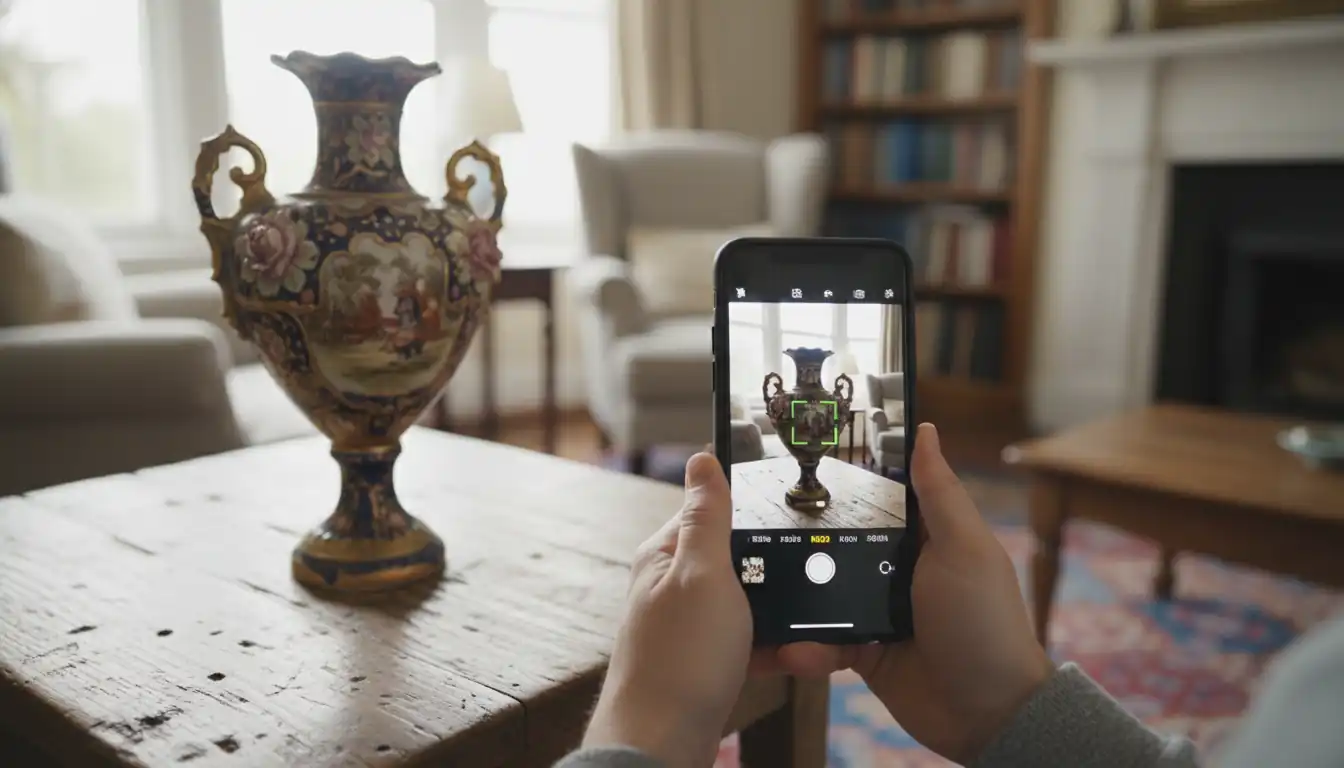
That dusty box in the corner of your attic isn't just a collection of old memories. For many, it’s a hidden vault. You might walk past a tarnished silver bowl or a strangely shaped ceramic vase every day, never realizing that these items carry stories—and price tags—that could change your financial outlook. The barrier between you and that knowledge used to be a thick wall of specialized education and expensive consultations.
The days of hauling heavy trunks to an appraiser just to be told a piece is "decorative" are fading. You no longer need to spend years studying maker’s marks or the subtle differences in Victorian furniture joinery to understand what you own. Your smartphone has become the most powerful tool in the history of antiquing, turning a simple snapshot into a gateway for historical discovery.
In this guide, we will explore how you can use modern technology to identify your finds without spending a dime upfront. You’ll learn how AI interprets the physical world, why your privacy is safer than you think, and how to take photos that reveal the hidden secrets of your heirlooms. Whether you found a relic at a garage sale or inherited a family mystery, the answers are literally in the palm of your hand.
The New Era of Instant Antique Identification
The world of antique collecting used to be a closed circle. If you wanted to know if a chair was a genuine mid-century modern masterpiece or a clever reproduction, you had two choices. You could spend hours in the reference section of a local library, squinting at grainy black-and-white photos in price guides, or you could pay a professional appraiser a significant fee to give you their opinion. Both methods were slow, and for the casual hobbyist, they were often too intimidating to pursue.
This friction meant that countless valuable items ended up in landfills or sold for pennies at yard sales. The "expert" was someone who had spent decades memorizing catalogs. Today, that expertise has been digitized. We have moved from the era of manual research into the era of instant visual recognition. This shift has democratized the hunt for history, allowing anyone with a camera to participate in the market with confidence.
From Library Books to AI Algorithms
Think of the old way of identifying an antique like trying to find a specific person in a city using only a written description. You would look for "tall, brown hair, glasses." It was vague and prone to error. Modern identification tools work more like facial recognition for objects. Instead of looking for broad categories, these systems analyze thousands of data points simultaneously.
When you use an app like Relic, the software doesn't just see a "brown table." It sees the specific dovetail joints, the patina of the wood, and the unique silhouette of the legs. It compares these features against a massive database of known historical pieces. This transition from text-based searching to visual analysis means you don't even need to know the name of what you’re looking at to find out what it’s worth.
Why Image Recognition Beats Manual Searching
Manual searching relies on your ability to describe an object accurately. But how do you describe the specific shade of "celadon" on a Chinese vase if you’ve never seen it before? How do you search for a furniture style if you don't know the difference between Queen Anne and Chippendale?
- Speed: A manual search can take hours of scrolling through Google Images or eBay sold listings. An AI scan takes seconds.
- Accuracy: Humans are biased and can easily misinterpret a maker's mark. AI identifies patterns with mathematical precision.
- Context: A book tells you what an item was. Modern tools tell you what an item is in the current market, often providing history and origin data that would take a historian days to compile.
The "PhD in art history" that used to be required to spot a treasure has been condensed into a few lines of code. This doesn't replace the value of a human expert for high-stakes insurance appraisals, but it provides a massive head start for the rest of us.
How Modern Visual Search Engines Actually Work
It can feel like magic when you point your phone at a piece of pottery and the screen tells you it was made in a specific factory in Ohio in 1924. However, the process is grounded in complex mathematics and pattern recognition. Understanding how this works can help you get better results and feel more secure about the data you’re sharing.
At the heart of this technology are neural networks. These are computer systems modeled after the human brain. They are "trained" by looking at millions of images of antiques. Over time, the system learns that a certain type of "crazing" (the tiny cracks in a ceramic glaze) is characteristic of a specific time period, or that a particular screw head design indicates a 19th-century origin.
Understanding App Functionality and Data Safety
When you upload a photo, the app breaks that image down into a digital map. It looks for edges, colors, textures, and shapes. It’s not just looking at the object as a whole; it’s looking at the "fingerprints" left by the craftsman.
| Feature Analyzed | What the AI Learns |
|---|---|
| Wood Grain | Species of wood and age of the cut |
| Ceramic Glaze | Chemical composition and regional style |
| Silver Hallmarks | Specific maker, city, and year of production |
| Joinery | Whether a piece was handmade or factory-produced |
Many users worry about what happens to their photos once they are uploaded. Reputable apps prioritize "Data Not Linked to You." This means the image of your grandmother’s silver tea set is used to identify the item, but it isn't tied to your name, home address, or personal contact list. The goal of the software is to identify the object, not the owner.
Why Privacy Matters When Scanning Personal Belongings
Your home is a private space. When you scan an item, the background of your photo might contain personal details—family photos on the wall, the layout of your living room, or even mail on a table. This is why choosing a professional tool is vital.
A secure antique identification app should function like a specialized tool, not a social media platform. It should harvest pixels, not personal metadata.
Always check the privacy settings of any tool you use. You want an app that processes the image to give you the origin and history but doesn't store your location data or sell your "search history" to third-party advertisers. When the tech is handled correctly, you get the benefits of a world-class museum curator without compromising your digital footprint.
The Real Cost of Free Antique Identification
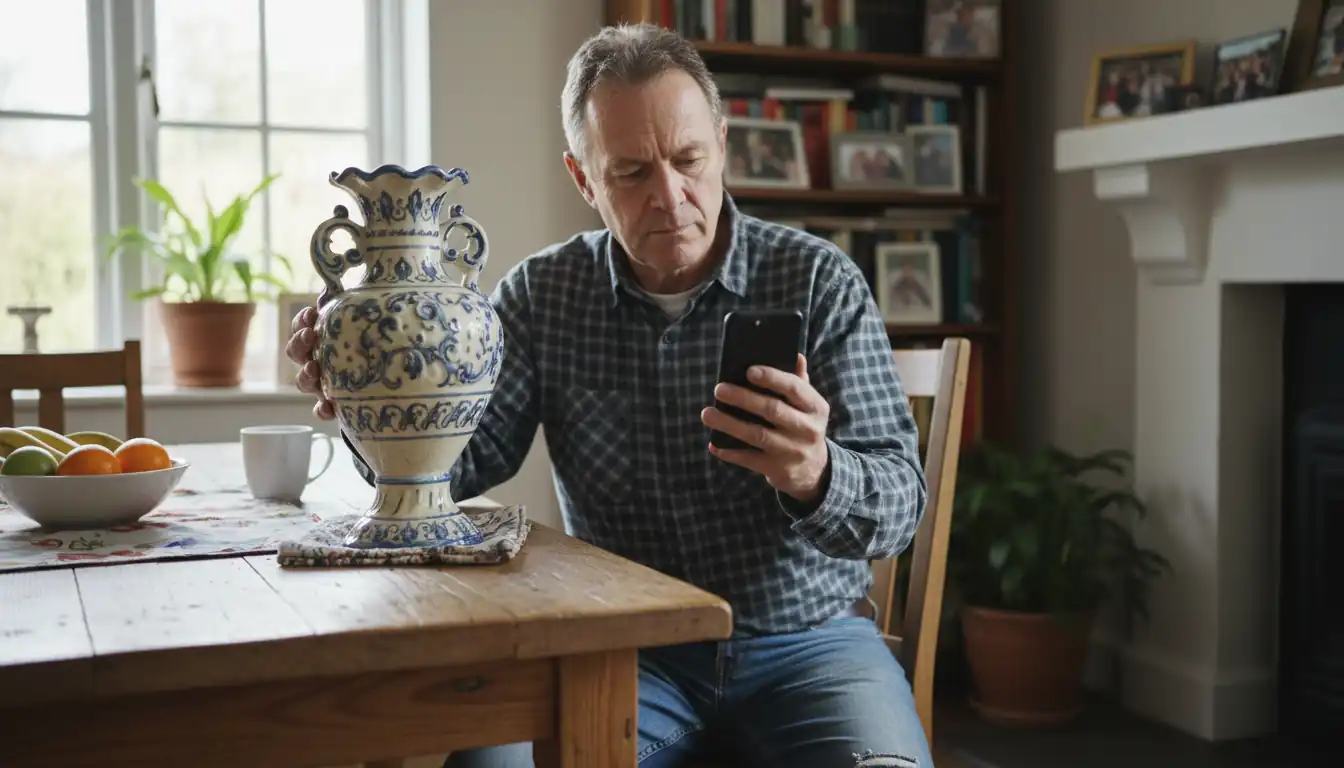
In the world of apps, "free" is a complicated word. You will often see people asking, "Is antiquesnap free?" or looking for other no-cost alternatives. The answer is usually yes, but with a "freemium" twist. Most basic visual search tools, like Google Lens or Pinterest Lens, are entirely free to use. They are excellent for finding "similar items" or identifying the general category of an object.
However, there is a significant difference between identifying an object and appraising it. A free search might tell you that you have a "blue and white pitcher." A professional-grade tool like Relic goes much further, providing a real appraisal, the specific history of the manufacturer, and the geographic origin of the piece.
Is Antiquesnap Free and Other Pricing Realities
To answer the common question: Antiquesnap and similar apps often offer a free version or a trial period. This allows you to test the image recognition capabilities. However, the deep-dive data—the kind that tells you if your item is worth $50 or $5,000—often sits behind a small fee or subscription.
- Basic Free Searches: Good for identifying the "what." (e.g., "This is a typewriter.")
- Advanced AI Tools: Essential for identifying the "who, when, and how much." (e.g., "This is a 1945 Hermes 3000 typewriter in Seafoam Green, valued at $450.")
For a casual hobbyist, the free versions of these tools are a great starting point. They can help you filter out the literal junk from the potential treasures. But if you find something that looks promising, investing in a professional scan is often the difference between a missed opportunity and a major payday.
When to Trust Free Results vs Professional Appraisals
You should use free tools as a "first filter." If a free scan tells you your vase is a common IKEA product from 2012, you can probably stop there. But if the free scan suggests your item is "Antique Chinese Porcelain," that is your cue to move to a more sophisticated tool.
Free search engines are designed to sell you things or show you ads. They want to find a link where you can buy a similar item. Professional antique apps are designed to inform you. They provide market insights and historical context that general search engines simply aren't programmed to handle.
Identifying Regional Treasures Across the Globe
One of the most difficult tasks for any collector is identifying items from outside their own culture. If you live in the United States, you might be able to spot a piece of American Depression glass, but could you distinguish between a 19th-century bronze from India and a 20th-century reproduction from Thailand?
This is where AI truly shines. Regional markers are often so subtle that they require a lifetime of study to recognize. However, an AI that has been fed images from museums and auction houses across Africa, the Middle East, and the Asia Pacific can spot these differences in an instant.
Distinguishing Styles from Asia Pacific to the Middle East
The "origin" of an item is often the single biggest factor in its value. For example, Chinese ceramics are currently some of the most sought-after items in the global market. However, there is a massive difference in value between "Chinese Export" porcelain (made for the Western market) and pieces made for the Chinese Imperial court.
- Asia Pacific: AI can analyze the brushwork on a hand-painted plate. Imperial pieces often have more refined, precise lines and specific "reign marks" on the bottom that indicate which Emperor was in power.
- Middle East: Metalwork from this region often features intricate "damascening" (inlaying gold or silver into iron or steel). An app can identify the specific geometric patterns associated with different regions, such as Isfahan or Damascus.
- Africa: Tribal art is notoriously difficult to authenticate. AI helps by looking at the "patina of use"—the wear and tear that occurs naturally over decades of ritual use versus the artificial distressing used on modern tourist souvenirs.
How Origin Impacts Market Value and Rarity
Why does origin matter so much? Because it dictates the "collector pool." An item with a confirmed origin in a high-demand region like the Middle East or India may have a global audience of buyers, whereas a local craft item might only appeal to people in your immediate area.
Using an app like Relic to identify the origin of an item gives you leverage. If you know a mask is specifically from the Edo people of Nigeria, you aren't just selling a "wooden mask"—you are selling a piece of cultural history. This knowledge allows you to find the right auction house or the right online marketplace to maximize your return.
Professional Photography Secrets for Better AI Results
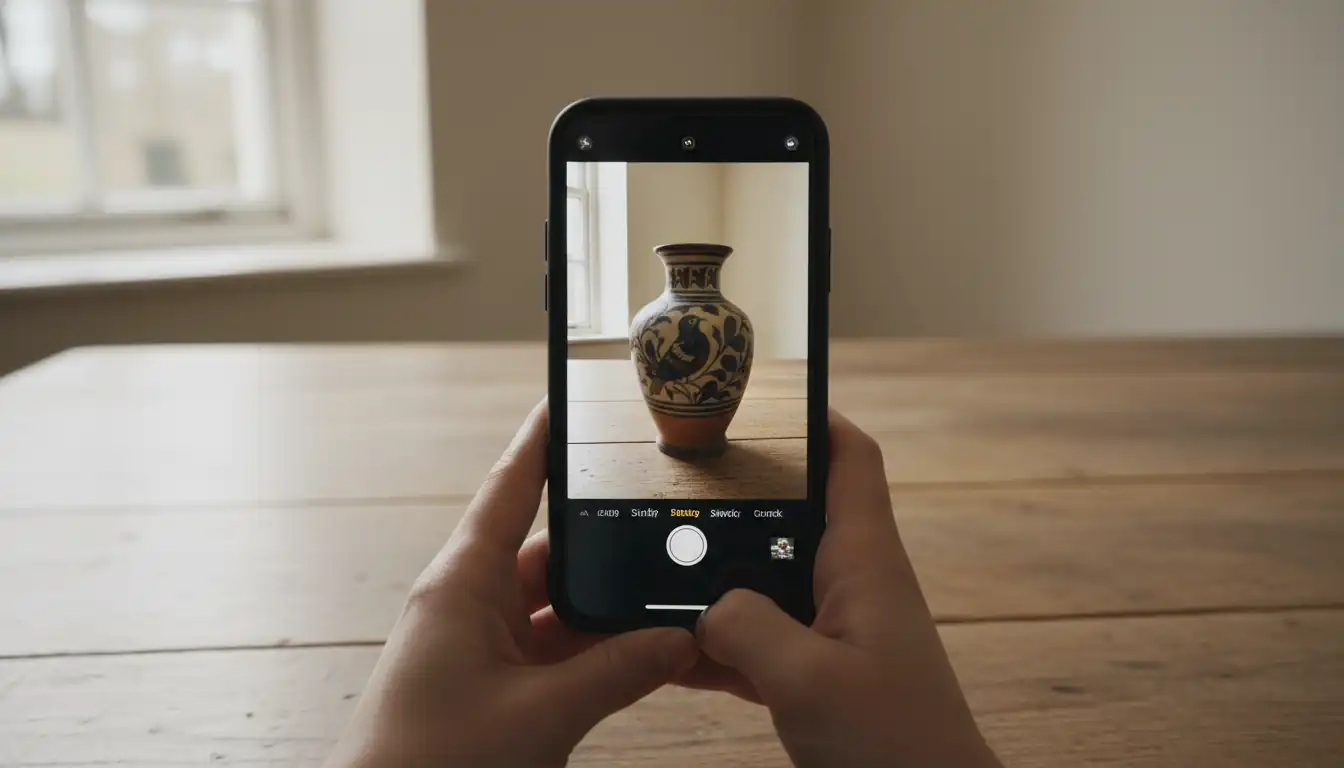
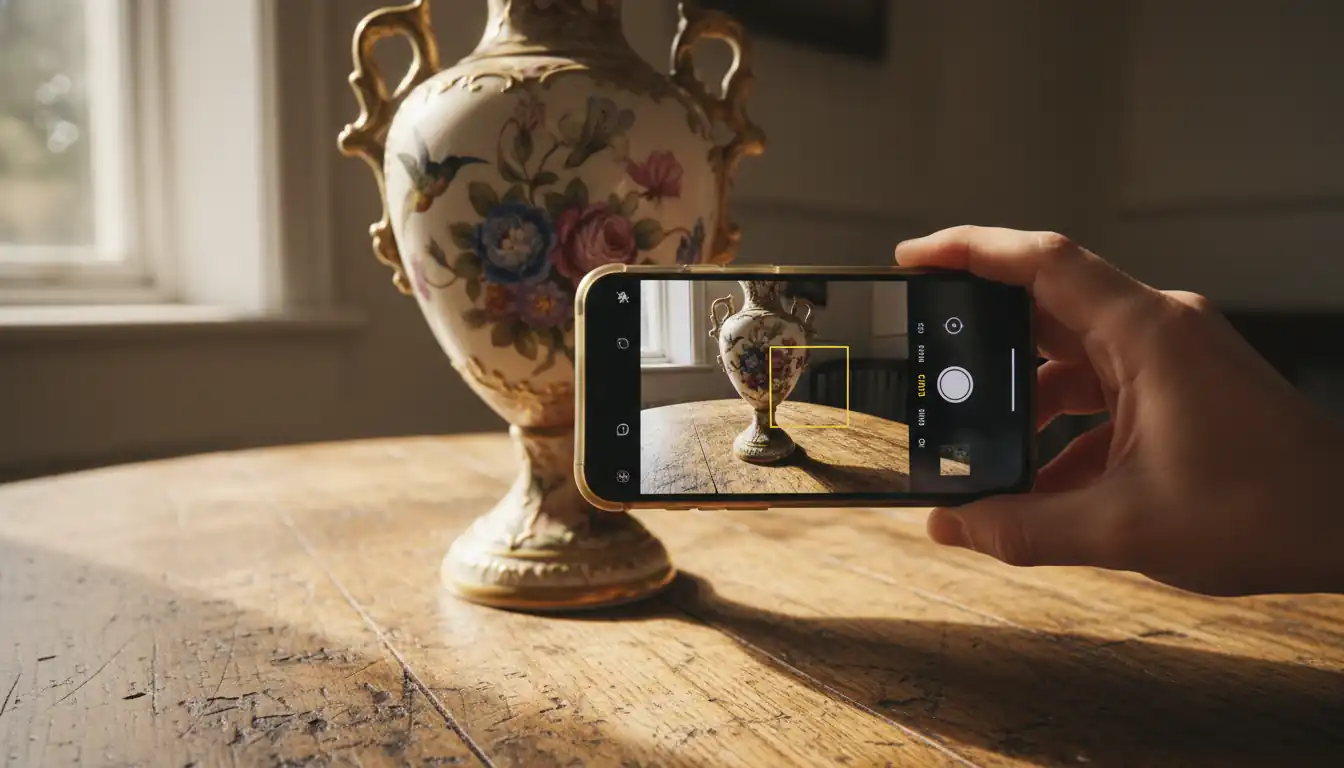
The quality of your identification is only as good as the quality of your photo. If you provide the AI with a blurry, dark, or cluttered image, it’s like asking a detective to solve a crime while wearing a blindfold. You don't need a professional DSLR camera to get great results; your iPhone or Android is more than capable if you follow a few simple rules.
To get the most out of an app like Relic, you need to think like a catalog photographer. Your goal is to provide the clearest possible "data" for the algorithm to process.
Lighting and Background Techniques for Clearer Scans
Lighting is the most important factor in photography. Avoid using your phone's flash, as it creates "hot spots" or glare on shiny surfaces like glass, silver, or glazed ceramics. This glare hides the very details the AI needs to see.
- The Golden Hour: If possible, take your photos near a window during the day. Natural, diffused light shows the true colors and textures of an item.
- Neutral Backgrounds: Place your item on a solid-colored, non-reflective surface. A plain white or grey bedsheet works wonders. This "isolates" the object, so the AI doesn't get confused by the pattern on your wallpaper or the clutter on your kitchen counter.
- Steady Hands: If you struggle with shaky hands, lean your phone against a heavy book or use a cheap tripod. A sharp image allows the AI to see the fine details of the "crazing" or the grain of the wood.
Capturing Hallmarks and Maker Marks for Precise Dating
Most antiques have "signatures" hidden in plain sight. These are the keys to unlocking the item's history. For silver, look for tiny stamps (hallmarks). For furniture, look for labels inside drawers or on the underside of the piece. For ceramics, look at the "foot" or the bottom of the item.
How to capture marks effectively:
- Use Macro Mode: Most modern smartphones have a macro setting that allows you to get very close to an object without losing focus.
- Side Lighting: If a mark is faint or impressed into the material, shine a flashlight from the side. This creates tiny shadows that make the mark "pop" in the photo.
- Multiple Angles: Don't just take one photo. Take a "hero shot" of the whole item, then close-ups of the top, the bottom, and any unique features like handles or hinges.
By following these steps, you ensure that the appraisal you receive is based on the best possible evidence. A clear photo of a maker's mark can be the difference between a "general identification" and a "confirmed masterpiece."
Conclusion
The "junk" in your attic is a puzzle waiting to be solved. In the past, the pieces of that puzzle were scattered across libraries and expert offices, making it nearly impossible for the average person to see the full picture. Today, the combination of advanced AI and the camera in your pocket has changed the game entirely.
By using tools like Relic, you can bypass the years of study and get straight to the heart of your item’s story. You’ve learned how these apps use neural networks to identify patterns, why your privacy is protected through smart data handling, and how to distinguish between a basic free search and a professional-grade appraisal. You also now have the "insider" photography skills to ensure your scans are as accurate as possible.
Your next step is simple: pick one item. It doesn't have to be the one you think is the most valuable. It could be that odd-looking vase on the mantel or the old clock in the hallway. Take a clear photo in natural light, upload it, and see what history is hiding in plain sight. You might just find that your attic holds a fortune, one photo at a time.
Identify antiques instantly
Point your camera at any antique, collectible, or vintage item. Get valuations, history, and market insights in seconds.
Download for iPhone