Your Attic Might Hold a Fortune: Identifying 19th-Century Art in the Digital Age

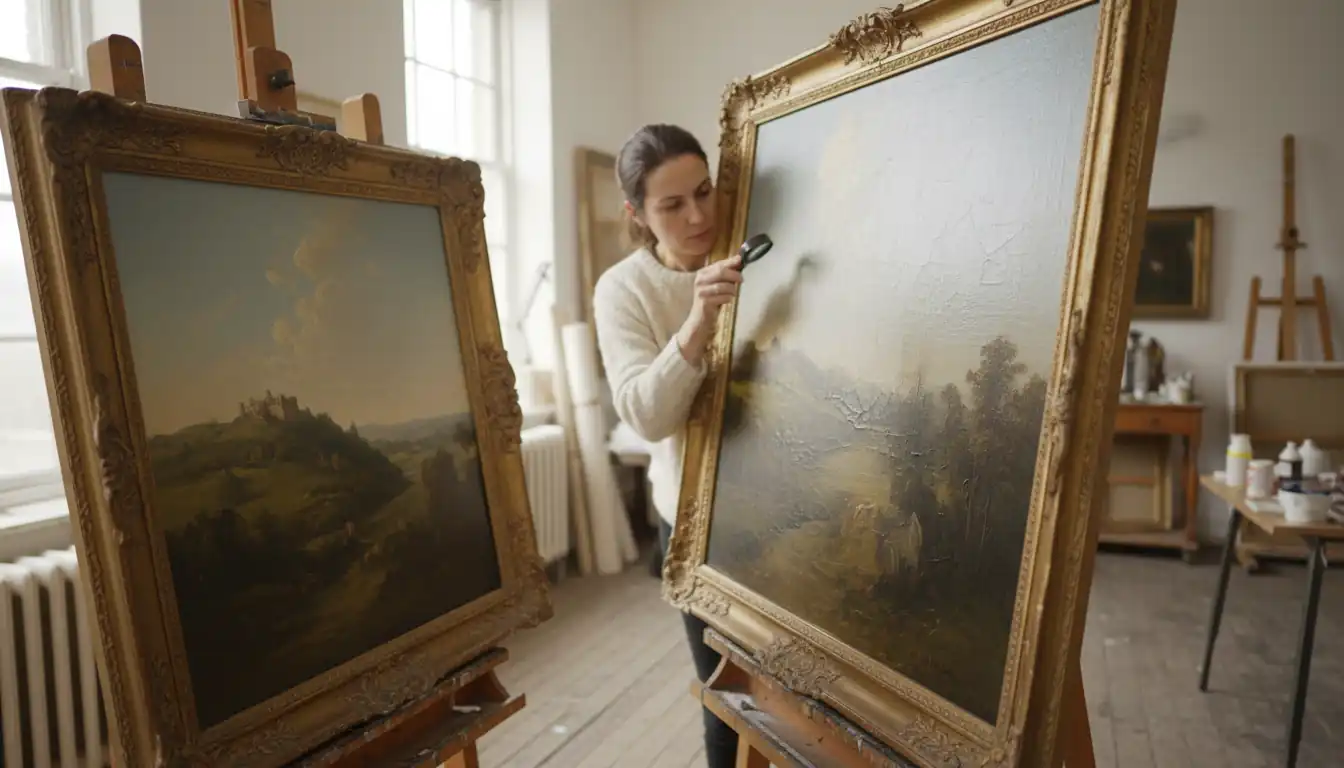
That dusty landscape leaning against the chimney in your attic might look like a simple family heirloom, but it could be a sleeping giant of the art market. Every year, significant 19th-century works are discovered in estate sales, thrift stores, and forgotten storage units by people who simply didn't know what they were looking at. The 1800s were a period of explosive creativity and technical change, leaving behind a massive volume of work that ranges from amateur sketches to masterpieces worth millions.
Identifying these pieces used to require a lifetime of study or a direct line to an expensive London auction house. You had to understand the subtle shift from the dramatic shadows of Romanticism to the flickering light of the Impressionists, all while knowing the chemical history of paint. It was a gatekept world where the average person stood little chance of uncovering the true history of a find.
The good news is that the tools for discovery have changed. By combining a "detective’s eye" for physical materials with modern technology, you can bridge the gap between a curious amateur and a savvy collector. You are about to learn how to read the visual language of the 19th century, inspect the "DNA" of a canvas, and use digital tools to confirm if you are holding a piece of history.
The 19th Century Aesthetic Revolution
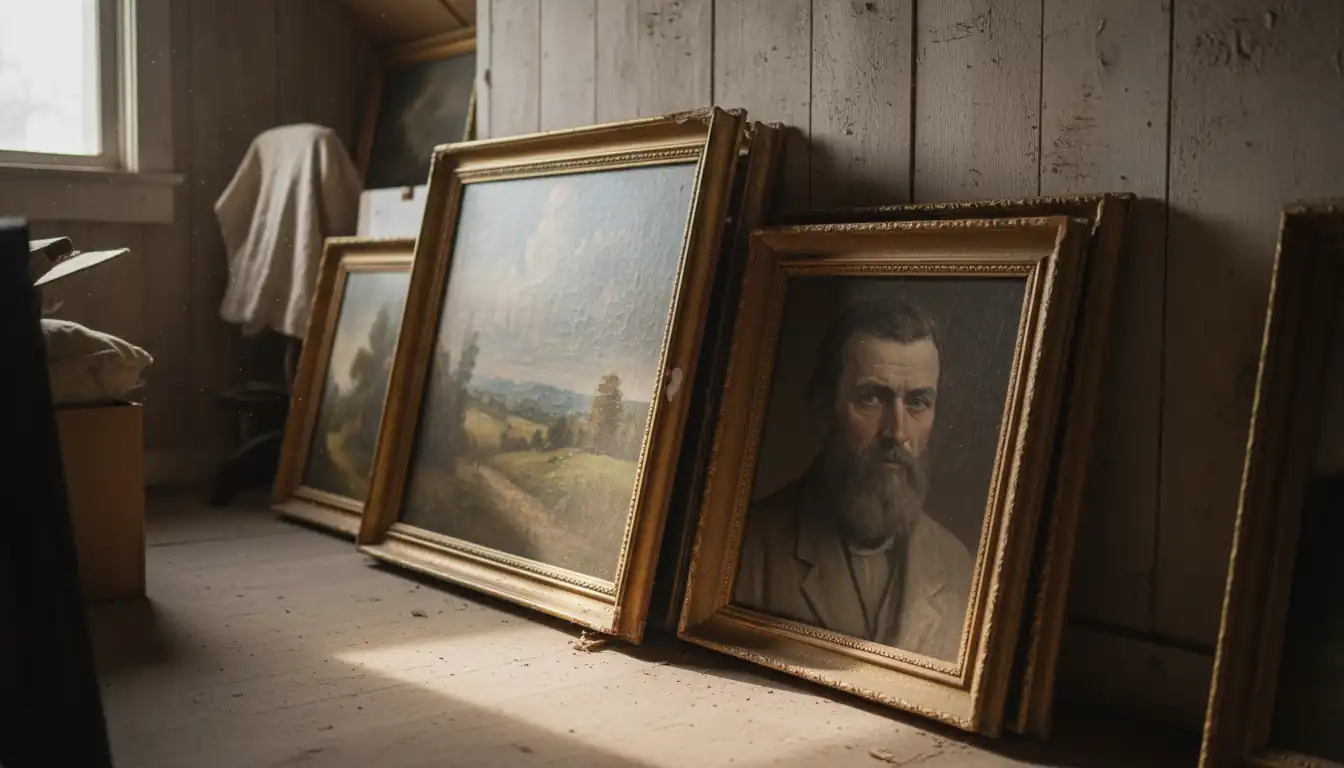
To identify a 19th-century painting, you first have to understand that the 1800s were not a single "style." It was a century of rapid-fire revolutions. At the start of the century, art was largely controlled by powerful academies that demanded perfection and historical themes. By the end of the century, artists were painting blurry haystacks in the rain. This evolution provides your first set of clues.
From Romanticism to Impressionism
The early 1800s were dominated by Romanticism. If your painting feels like a scene from a high-stakes drama—think crashing waves, jagged mountains, or lonely figures looking out over a misty valley—you are likely looking at the Romantic influence. The brushwork here is often controlled but expressive, used to create a sense of awe or "the sublime." The colors are deep, moody, and full of contrast.
As the mid-century approached, the "vibe" shifted toward Realism. Artists grew tired of idealized heroes and turned their attention to the everyday. If your painting depicts a peasant working in a field, a gritty city street, or a simple bowl of fruit without any "polishing," it might be a product of this era. The brushwork became more tactile and heavy. You can often see the physical weight of the paint, reflecting the "honest" nature of the subject matter.
By the 1870s and 1880s, Impressionism broke all the rules. Instead of smooth finishes, you see "broken" color—short, thick strokes of paint placed side-by-side without blending. If you look at the painting up close and it looks like a mess of dots and dashes, but it resolves into a glowing landscape when you step back, you are in the territory of the late 19th century. This was art focused on how light hits an object at a specific moment in time.
Subject Matter and Social Context
The 19th century was also the era of the Industrial Revolution, and the art reflects this. You can often date a piece by looking for "modern" intrusions in the landscape. A steamship in the distance of a harbor scene or a train puffing smoke across a valley are dead giveaways for a post-1840s origin.
Portraiture also changed significantly. Early 19th-century portraits are formal, with the subject often surrounded by symbols of their status, like books or globes. As the century progressed and photography was invented (around 1839), painted portraits became more experimental. Artists no longer had to be "human cameras," so they started playing with mood and atmosphere rather than just capturing a perfect likeness.
| Movement | Key Visual Cues | Emotional Tone |
|---|---|---|
| Romanticism | Dramatic lighting, vast nature, ruins | Awe, melancholy, power |
| Realism | Ordinary people, unvarnished truth, thick paint | Honesty, social grit, labor |
| Impressionism | Visible brushstrokes, bright colors, focus on light | Fleeting, airy, energetic |
Material Forensics of the Industrial Era
Once you have identified the "look" of the era, it is time to turn the painting over. The back of a painting often tells a more honest story than the front. In the 19th century, the way paintings were physically made underwent a massive industrial shift.
Canvas Weaves and Stretcher Bars
Before the mid-1800s, most canvases were hand-prepared. If you look at the weave of the fabric on the back, an older canvas will have slight irregularities—thick and thin threads that show it was woven on a hand loom. As the 19th century progressed, machine-woven canvas became the standard. This fabric is incredibly uniform, with a "perfect" grid pattern.
The wood holding the canvas—the stretcher bars—is another major clue. Look at the corners. Early 19th-century stretchers were often "fixed," meaning the corners were joined permanently. However, as the century moved on, "keyed" stretchers became common. These have small triangular wooden wedges (keys) tapped into the corners to allow the artist to tighten the canvas.
Check the nails as well. Hand-forged nails from the early 1800s are square and irregular. By the mid-to-late 1800s, you start seeing "cut nails" which are more uniform, followed eventually by the round wire nails we use today. If you see shiny, perfectly round staples, the piece has likely been re-stretched in modern times, or it’s a modern reproduction.
Pigment Evolution and Synthetic Colors
Perhaps the biggest technical leap occurred in 1841 when John Goffe Rand invented the collapsible metal paint tube. Before this, artists had to grind their own pigments and store them in pig bladders. This was messy and meant artists mostly stayed in their studios.
The invention of the tube allowed artists to go outside (en plein air). If your painting has a very thick, "impasto" texture where the paint stands up off the canvas, it was likely painted after 1841. It is much easier to pile on paint when it comes pre-mixed in a tube.
The chemistry of the paint also changed. The 19th century saw the birth of synthetic pigments. Brilliant colors like French Ultramarine, Cobalt Blue, and Viridian Green became available and affordable. If you see a vibrant, almost neon-like quality in the greens or blues, you are likely looking at a work from the latter half of the century.
The Detective's Rule: A painting is a physical object before it is a piece of art. If the wood, nails, and fabric don't match the style on the front, you need to investigate further.
Signatures and Secret Marks
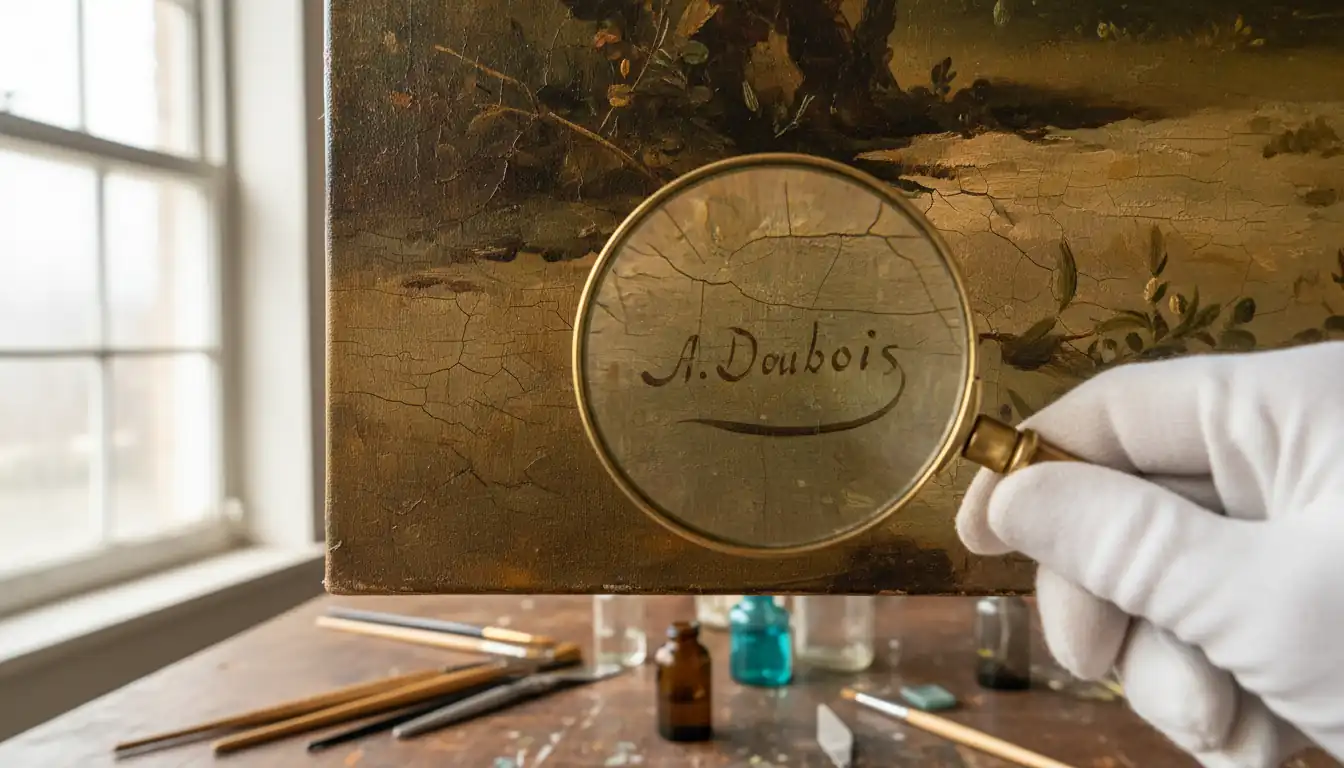
It is a common mistake to head straight for the signature. While a signature is helpful, it is also the easiest thing to fake. Professional appraisers look for the "paper trail" that the painting carries on its own body. This is known as provenance, and in the 19th century, this trail was often quite literal.
Deciphering Monograms and Artist Cyphers
Not every artist signed their full name. Many used monograms—intertwined initials that look like a small logo. These were especially popular in the late 19th century among Aesthetic Movement and Arts and Crafts artists.
If you find a strange symbol in the corner, don't dismiss it as a doodle. It could be the "cypher" of a well-known artist. Researching these requires looking at artist registries, but they are often more reliable than a full signature because they were harder for forgers to get "just right" in terms of fluid motion.
Gallery Labels and Exhibition Stamps
The back of the frame or the wooden stretcher bars often hold the most valuable information in the form of labels. In the 19th century, art was moved through a sophisticated network of galleries in cities like Paris, London, and New York.
- Gallery Stickers: Look for small, yellowed paper labels with elegant typography. A label from "Goupil & Cie" or "Knoedler" can instantly add thousands to a painting's value because it proves the piece was once handled by a prestigious dealer.
- Exhibition Stamps: Sometimes you will find a stenciled number or a wax seal on the wood. These often correspond to exhibition catalogs. A painting that was shown at the Paris Salon or the Royal Academy has a documented history that makes it much easier to authenticate.
- Customs Stamps: If the painting traveled between countries, you might see lead seals or ink stamps from customs offices. These help track the "journey" of the piece across the Atlantic.
Leveraging AI for Instant Identification
Even with all this knowledge, the sheer volume of 19th-century artists can be overwhelming. There were thousands of talented painters who didn't make it into the history books but whose work still holds significant value. This is where the manual "detective work" meets the efficiency of the digital age.
How Relic Decodes Artistic DNA
Identifying an obscure 19th-century landscape used to take weeks of library research. Now, you can use the Relic app to get an answer in seconds. Relic is an antique identifier that uses advanced AI to analyze the specific "DNA" of an object. When you upload a photo of a painting, the AI doesn't just look at the subject; it analyzes brushstroke patterns, color palettes, and even the texture of the canvas.
The app compares your photo against a massive database of historical art and auction records. It can identify the likely origin, the specific school of art (like the Hudson River School or the Barbizon School), and provide a real appraisal based on current market trends. For a collector or someone who just found a "treasure" in their basement, this bridges the gap between a guess and a professional valuation.
Moving Beyond the Human Eye
The human eye is great at catching "vibes," but AI is better at catching patterns. Relic can spot the specific way a 19th-century artist layered their glazes or the way a certain region's wood was cut for stretchers.
- Instant Context: Instead of wondering if a monogram belongs to a famous artist or a hobbyist, the app can cross-reference it instantly.
- Market Insights: Relic provides more than just a name; it gives you the history and origin of the item, helping you understand why it’s valuable.
- Professional Accuracy: With a 4.9-star rating from over 20,000 reviews, the app has become a go-to tool for pickers, dealers, and casual enthusiasts who need professional-grade insights without the professional-grade price tag.
Using a tool like Relic doesn't replace the joy of discovery; it amplifies it. It allows you to confirm your "hunch" with data, giving you the confidence to take the next step, whether that's insuring the piece or heading to an auction house.
Protecting Your Discovery
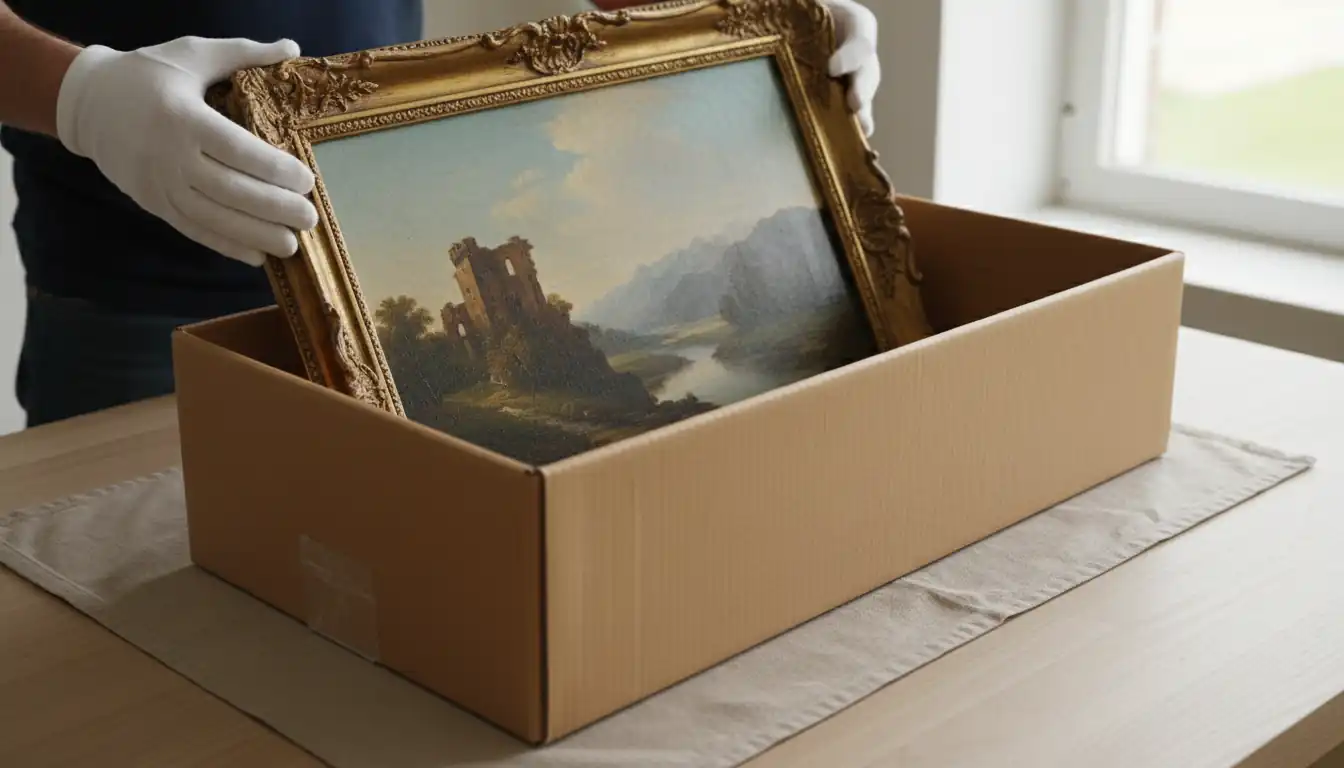
Once you have identified your painting as a genuine 19th-century work, your priority shifts from "what is it?" to "how do I keep it safe?" A 150-year-old painting is a fragile ecosystem of organic materials that can be destroyed by a single bad decision.
Cleaning and Conservation Ethics
The most dangerous thing you can do to an antique painting is try to clean it yourself. You might have seen "life hacks" involving potatoes or dish soap—ignore them. 19th-century varnishes are often made of natural resins like dammar or mastic, which yellow over time. This yellowing is actually a protective layer.
A professional conservator doesn't just "clean" a painting; they perform a chemical analysis to see what kind of solvents will remove the dirt without dissolving the paint. They can also "re-line" a brittle canvas, giving it a new support so it doesn't tear.
- The "Patina" Factor: In the world of antiques, some aging is desirable. Removing the "grime" of a century can sometimes make a painting look "too new," which can actually hurt its value at auction.
- Minimal Intervention: The gold standard of conservation is to do as little as possible to stabilize the piece. If the paint isn't flaking, you might not need to do anything at all.
Navigating the Modern Art Market
If you decide to sell your discovery, you need to be armed with the data you gathered. This is where your research and your Relic appraisal come into play. When you approach an auction house or a private dealer, having a "dossier" on the piece makes you a serious player.
- Start with Insurance: Before you move the piece, get it insured. Use your appraisal data to set a "replacement value."
- Choose the Right Venue: A local auction house is great for decorative pieces, but if you have a confirmed 19th-century masterpiece, you want a specialized "Fine Art" sale in a major hub like New York or London.
- Document Everything: Keep photos of the labels, the signature, and the canvas weave. This documentation is what collectors call "provenance," and it is often what justifies a high price tag.
The market for 19th-century art is currently seeing a resurgence. Collectors are moving away from the "minimalist" look and back toward the "maximalist" beauty of gold frames and oil landscapes. Your attic find isn't just a piece of old fabric; it’s a tangible link to the Industrial Revolution, the birth of modern light, and the hands of an artist who lived in a completely different world.
Conclusion
Identifying 19th-century art is a journey that starts with a feeling and ends with a fact. By learning to recognize the dramatic shifts in style—from the moody Romantics to the light-obsessed Impressionists—you can begin to categorize your find. By looking at the physical "forensics" of the canvas and the hidden clues on the back, you can date the piece with surprising accuracy.
Technology has finally leveled the playing field. Tools like the Relic app allow you to tap into professional-grade databases and AI analysis, turning your smartphone into a powerful appraisal tool. You no longer need to be an academic to uncover a fortune; you just need to be curious and equipped with the right tools.
If you have a painting that has been sitting in the dark for decades, bring it into the light. Inspect the weave, check for gallery labels, and use AI to decode its history. Your attic might not just be holding old memories—it might be holding a masterpiece.
Identify antiques instantly
Point your camera at any antique, collectible, or vintage item. Get valuations, history, and market insights in seconds.
Download for iPhone