Your Glass Vase Could Be Worth Thousands—Here’s How to Tell if it’s Genuine Murano

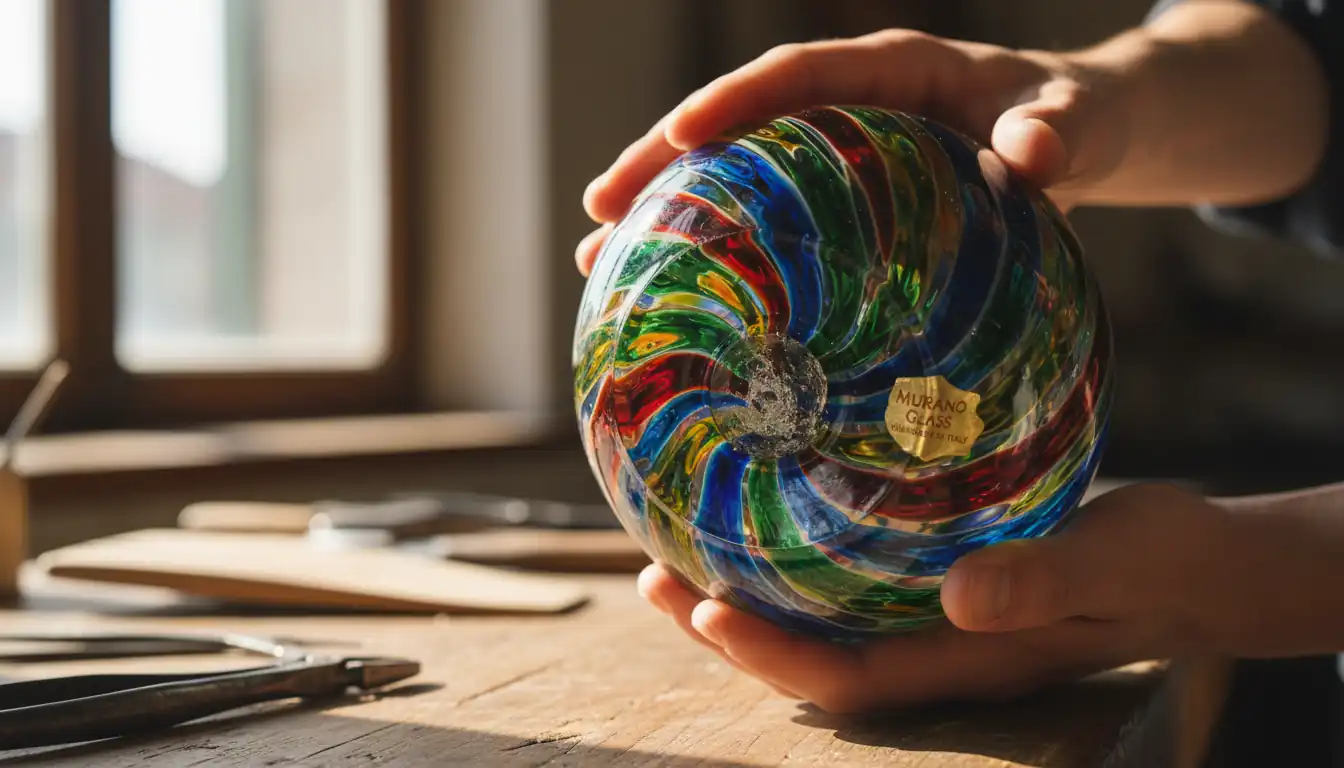
Imagine you are walking through a local estate sale or browsing the cluttered shelves of a neighborhood thrift store. Your eyes land on a vibrant, heavy glass vase tucked behind a stack of ceramic plates. The colors are mesmerizing—deep blues melting into amber, flecked with what looks like real gold. You pick it up, and the weight surprises you. It feels substantial, like a piece of history rather than a mass-produced trinket.
You might be holding a genuine piece of Murano glass, a treasure crafted on a small island in the Venetian lagoon. For over seven centuries, these artisans have guarded their secrets, producing some of the most sought-after art glass on the planet. A true Murano piece can fetch thousands of dollars at auction, but the market is flooded with convincing "Murano-style" imitations that are worth very little.
Distinguishing a masterpiece from a cheap knockoff requires a keen eye and an understanding of how these objects are actually made. By the time you finish reading, you will know how to inspect the physical "scars" of the glassmaking process, identify complex Venetian techniques, and use modern tools to verify your finds. You don't need to be a seasoned gallery owner to spot a diamond in the rough; you just need to know where to look.
Physical Evidence of the Master's Hand
When you hold a piece of Murano glass, you are holding the result of intense heat and human breath. Unlike factory-made glass that comes out of a uniform mold, Murano glass is shaped by hand. This process leaves behind specific physical markers that act as a fingerprint of the artist. If a piece looks too perfect, too symmetrical, or too "clean," it might actually be a sign that it was made by a machine rather than a master.
The Tell-Tale Pontil Mark
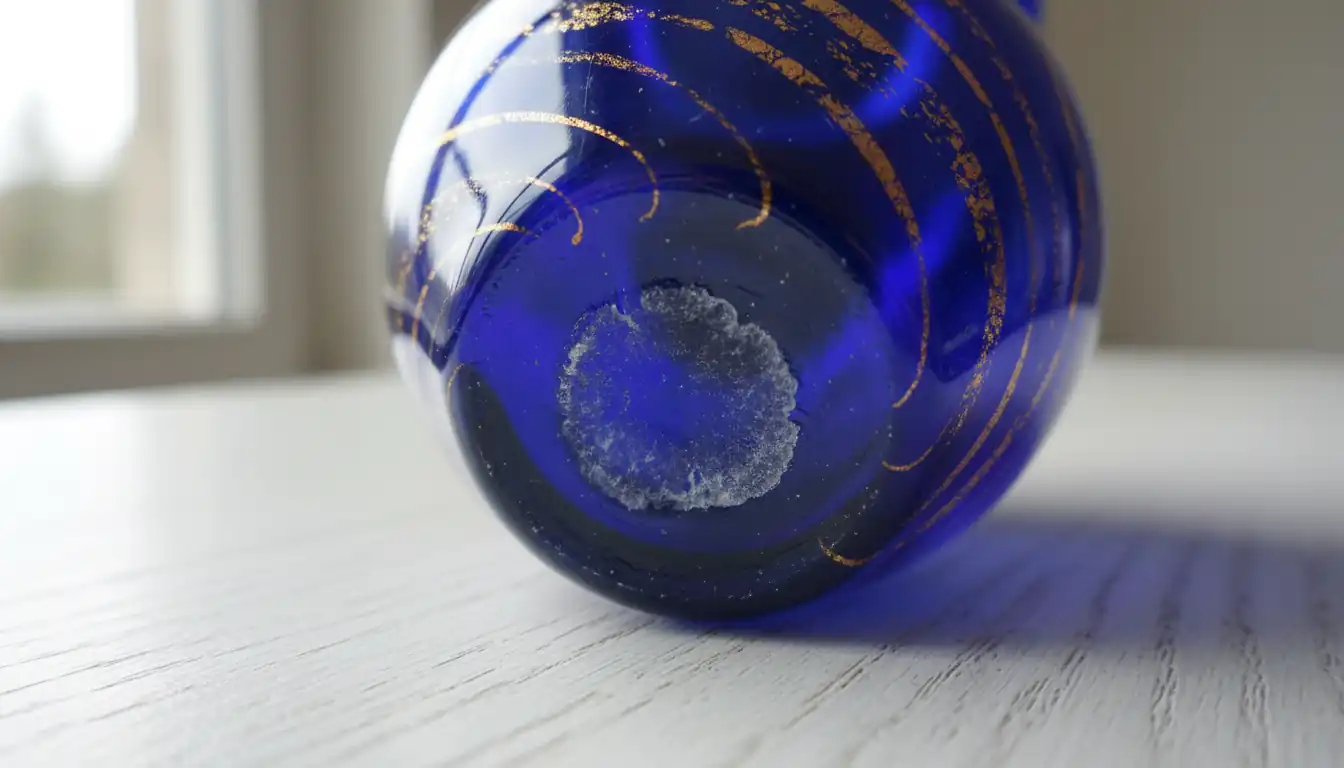
The most famous indicator of hand-blown glass is the pontil mark. During the creation of a vase, the glassblower uses a metal rod called a "punty" or "pontil" to hold the piece while they work on the rim or add decorative elements. When the vase is finished, the artist must break it off from this rod. This leaves a jagged, circular scar on the bottom of the piece.
Does all Murano glass have a pontil? This is a common question for new collectors, and the answer is nuanced. While almost all traditional Murano pieces will show evidence of this break, not all will have a rough scar. In many high-end or modern pieces, the artist will carefully grind and polish the pontil mark until it is a smooth, concave "lens" or dimple.
If you see a perfectly flat, smooth bottom with no indentation or texture at all, be cautious. This often suggests the piece was made in a mold. A genuine Murano piece will almost always show that "belly button" where it was once attached to the rod, whether it remains rough to the touch or has been polished to a mirror shine.
Intentional Imperfections and Air Bubbles
In the world of fine antiques, we often associate "perfection" with value. With Murano glass, the opposite is often true. Because the glass is melted in a furnace and blown by mouth, tiny pockets of air often get trapped in the molten material. Collectors call these "seeds."
- Seed Bubbles: These are tiny, pinhead-sized bubbles scattered throughout the glass. They are not defects; they are proof that the glass was created in a traditional furnace.
- Asymmetrical Variations: If you look closely at the handles or the rim of a Murano vase, you might notice one side is a fraction of a millimeter higher than the other. These slight variations show that a human hand guided the shape.
- Texture and Weight: Murano glass is generally heavier than its imitation counterparts. Lead-free but rich in minerals, the glass has a specific density that feels "expensive" in your hand.
A machine can replicate a shape, but it cannot replicate the organic "breath" of a hand-blown object. Look for the tiny bubbles and the slight tilt of a rim—these are the signatures of a living artist.
Mastering the Venetian Color Palette and Technique
The artisans of Murano are essentially chemists. They use secret recipes involving various minerals and oxides to create colors that stay vibrant for centuries. Cobalt creates deep blues, copper results in greens and reds, and manganese produces rich purples. When you look at a genuine piece, the colors should appear deeply integrated into the glass, not painted on the surface.
Signature Styles from Millefiori to Sommerso
Two of the most famous techniques are Millefiori and Sommerso. Understanding these will help you identify the level of skill required to create the piece in your hands.
Millefiori, which means "thousand flowers," involves creating long glass canes with a floral pattern in the cross-section. These canes are sliced into small beads (murrine) and then melted together to form a mosaic. In a genuine Murano piece, these "flowers" will be crisp and intricately detailed. Cheap imitations often have blurred edges where the colors have bled together because the glass wasn't fired at the correct temperature.
Sommerso, or "submerged" glass, is a technique where a finished glass object is dipped into a pot of molten glass of a different color. This creates layers of solid color that appear to float inside one another without mixing.
| Feature | Genuine Sommerso | Cheap Imitation |
|---|---|---|
| Color Separation | Sharp, distinct borders between layers | Blurry or bleeding colors |
| Clarity | Crystal clear glass with no cloudiness | Often has a "foggy" or yellowish tint |
| Depth | Looks like a solid block of color inside | Colors appear thin or like a surface coating |
The Presence of Real Gold and Silver Leaf
One of the most striking features of high-end Murano glass is the use of precious metals. Masters often incorporate 24k gold leaf or 925 silver leaf into the glass while it is still molten. As the glass is blown and stretched, the thin leaf breaks into tiny, shimmering specks.
This creates a specific luster that is very difficult to fake. If you see a vase that looks like it has been dusted with gold, look closely. In a genuine piece, the gold will be inside the glass, protected by a clear outer layer. If the gold looks like it was painted on the outside or if it looks like chunky glitter, it is almost certainly a reproduction. The real gold leaf has a delicate, "shattered" appearance that catches the light in a way that metallic paint never can.
Deciphering the Paper Trail of Authenticity
Once you have inspected the physical object, it is time to look for documentation. However, this is where many collectors get tripped up. Labels can be moved, and signatures can be forged. You have to know which marks to trust and which ones to view with skepticism.
The Vetro Artistico® Murano Trademark
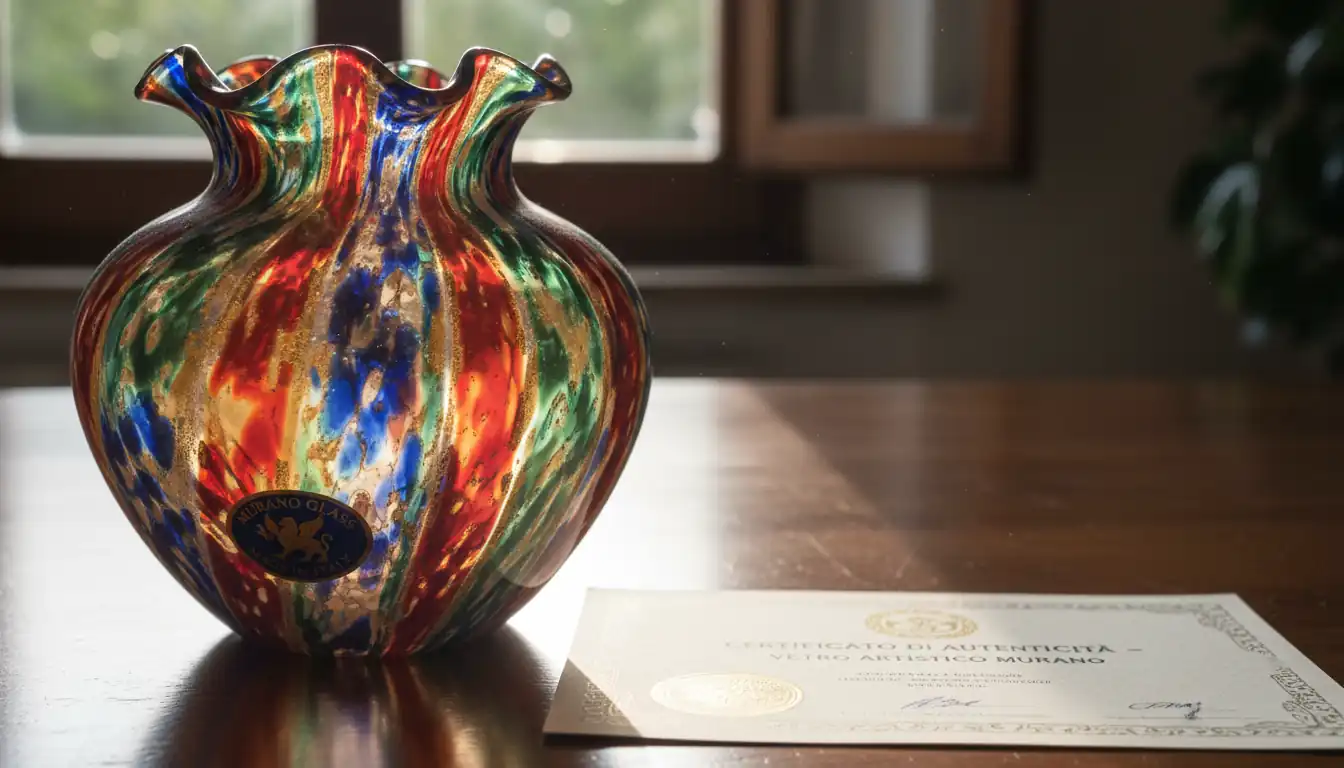
In 1994, the Italian government established a legal trademark to protect the Murano name. This is the "Vetro Artistico® Murano" sticker. It is a gold or blue decal that features a "bollo" (a glassblowing tool) and the words "Vetro Artistico® Murano."
- The Producer Code: Every sticker has a unique identification code on the bottom. For example, "027" belongs to the famous Venini furnace. You can look up these codes online to see exactly which workshop made your piece.
- Security Features: Modern stickers have holographic elements and a tamper-proof design. If you try to peel it off, it will shatter or leave a pattern behind.
- Age Matters: Remember that this trademark only started in the mid-90s. If you find a stunning vintage piece from the 1960s, it obviously won't have this specific sticker.
When Signatures and Labels are Misleading
Are all Murano vases signed? No, and this is a major point of confusion. Historically, many of the greatest Murano masters didn't sign their work. They felt the quality of the piece spoke for itself. Signatures became more common in the mid-20th century, but even then, it wasn't a universal rule.
Furthermore, a signature is the easiest thing for a counterfeiter to add. A fake "Picasso" signature on a piece of junk doesn't make it a Picasso. Similarly, a scratched "Murano" or "Venini" on the bottom of a vase should be your last piece of evidence, not your first.
Vintage labels are also a double-edged sword. Over decades, paper labels often fall off or get washed away. If you find a piece with a pristine, brand-new-looking paper label that claims to be from the 1950s, be suspicious. Conversely, don't dismiss a piece just because it lacks a label; the "pontil" and the "seeds" we discussed earlier are much more reliable witnesses to the item's origin.
Modern Identification Tools for the Digital Collector
The traditional way to identify Murano glass involved carrying around heavy reference books and spending years studying in galleries. While that expertise is still valuable, technology has changed the game for the casual collector. You no longer have to guess whether a piece is a $5,000 Venini or a $20 mass-market import.
Using AI to Identify Origin and Era
Mobile technology has bridged the gap between the novice and the expert. If you find a piece at an estate sale and your gut tells you it's special, you can now get an answer in seconds. This is where the Relic app becomes an essential part of your toolkit.
When you encounter a mystery vase, you can simply take a photo with the Relic app. The AI analyzes the color patterns, the shape of the rim, and the specific techniques used—like the Sommerso or Millefiori we discussed. It then cross-references your photo against a massive database of known Murano patterns and historical records. Instead of wondering if that "027" code is real, or if the "seeds" in the glass are consistent with a certain era, the app provides you with the historical context and origin of the item instantly.
The Difference Between Identification and Appraisal
Knowing what an item is is only half the battle. The other half is knowing what it is worth. This is the distinction between identification and appraisal. A piece might be genuine Murano, but if it's a common design from a lesser-known furnace, its value might be modest. However, if it's a rare mid-century piece by a master like Ercole Barovier, the value could be astronomical.
Relic doesn't just tell you that your vase is Murano; it provides a real appraisal based on current market insights. This is particularly helpful for "pickers" or online sellers who need to make split-second decisions. If you're at a garage sale and someone is asking $100 for a vase, you can use Relic to see if that specific style has recently sold for $500 or $5,000. It turns a gamble into a calculated investment.
Market Value and the Murano Style Trap
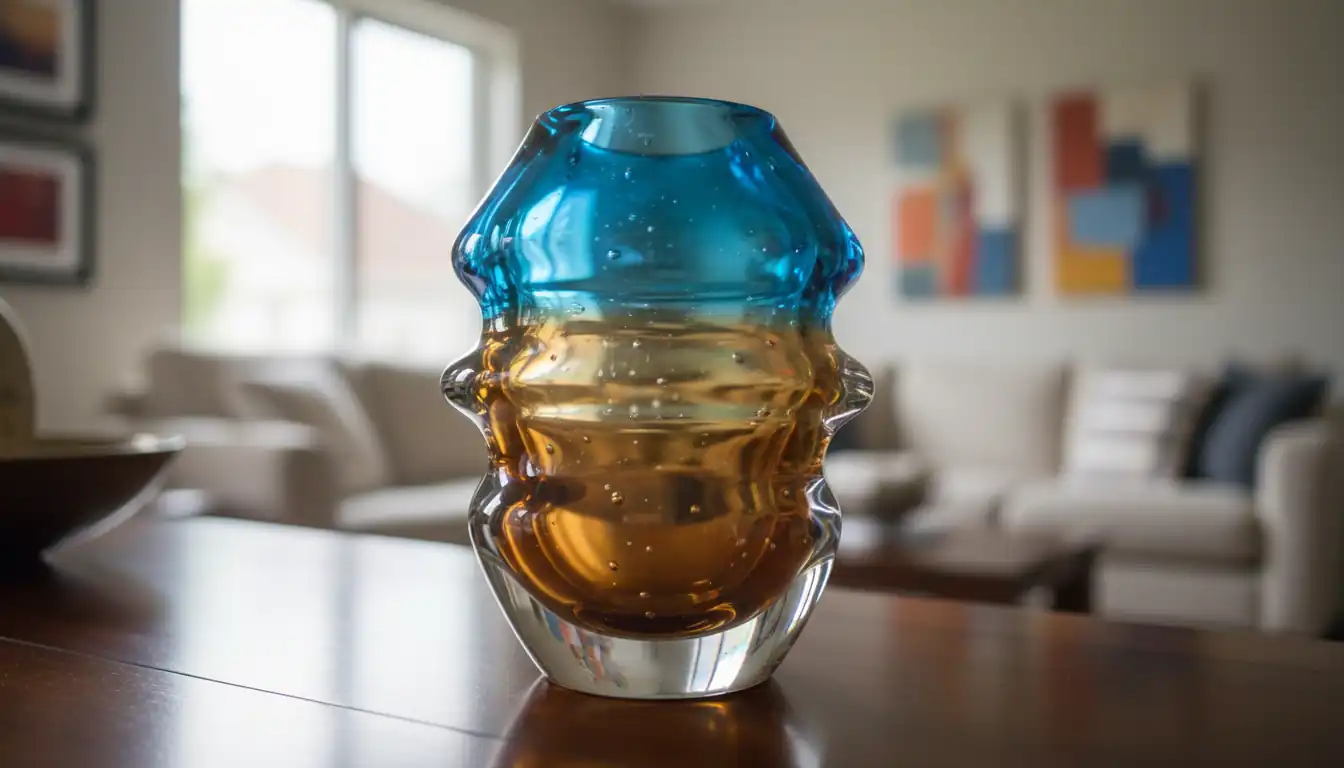
The final hurdle in your journey is understanding the "Murano Style" trap. This is a legal marketing term used by manufacturers in China, Brazil, and even other parts of Italy. They are technically telling the truth—the vase is made in the style of Murano—but it was not made on the island by a certified master.
Why Murano Style is a Major Red Flag
When you see a label that says "Murano Style" or "Made in the Murano Tradition," it is almost a guarantee that the piece is a modern reproduction. These pieces often use cheaper soda-lime glass, which lacks the clarity and weight of the real thing. They are usually made in molds, so they will lack the pontil mark and the subtle asymmetries of hand-blown art.
The value difference is staggering. A "Murano Style" vase might retail for $40 at a home decor store. A genuine Murano vase of the same size, made by a reputable furnace, starts at several hundred dollars and can easily climb into the thousands.
Factors That Drive Auction Prices
How do you determine the value of Murano glass? Once you've confirmed it's genuine, several factors will dictate the final price tag:
- The Furnace/Artist: Names like Venini, Barovier & Toso, Seguso, and Pauly & C. are the "Gucci" and "Prada" of the glass world. Pieces from these workshops always command a premium.
- Complexity of Technique: A simple clear glass vase is worth less than a piece featuring complex Zanfirico (filigree) or intricate Millefiori. The more "man-hours" and skill evident in the piece, the higher the price.
- Era and Provenance: Mid-century modern pieces (1940s–1960s) are currently at the peak of their popularity. If you can prove a piece was owned by a famous collector or shown in a specific exhibition, the value skyrockets.
- Condition: Because glass is fragile, even a tiny "flea bite" chip on the rim can drop the value by 50% or more. Always run your fingernail along the edges to feel for snags that the eye might miss.
Using a tool like Relic helps you verify these value-driving factors by comparing your item to auction results and historical catalogs. It allows you to see past the "Murano Style" labels and find the pieces that have true investment potential.
Conclusion
Identifying genuine Murano glass is a blend of sensory observation and digital detective work. It starts with the physical "belly button" of the pontil mark and the tiny air bubbles that prove a human breath gave the object life. It continues through the recognition of complex techniques like Sommerso and the unmistakable shimmer of real gold leaf.
While the "Murano Style" imitations are everywhere, they can't replicate the weight, clarity, and soul of a Venetian masterpiece. By looking for the Vetro Artistico trademark and using modern appraisal tools like the Relic app, you can navigate the market with confidence.
The next time you see a colorful glass vase at a sale, don't just walk by. Pick it up. Feel the weight. Look for the scar on the bottom. You might just be holding a piece of Italian history that is worth a small fortune. Your journey as a collector starts with that first close look—so keep your eyes open and your phone ready.
Identify antiques instantly
Point your camera at any antique, collectible, or vintage item. Get valuations, history, and market insights in seconds.
Download for iPhone