Your Grandfather Clock Has a Secret: How to Identify Maker Marks Using Just Your Phone

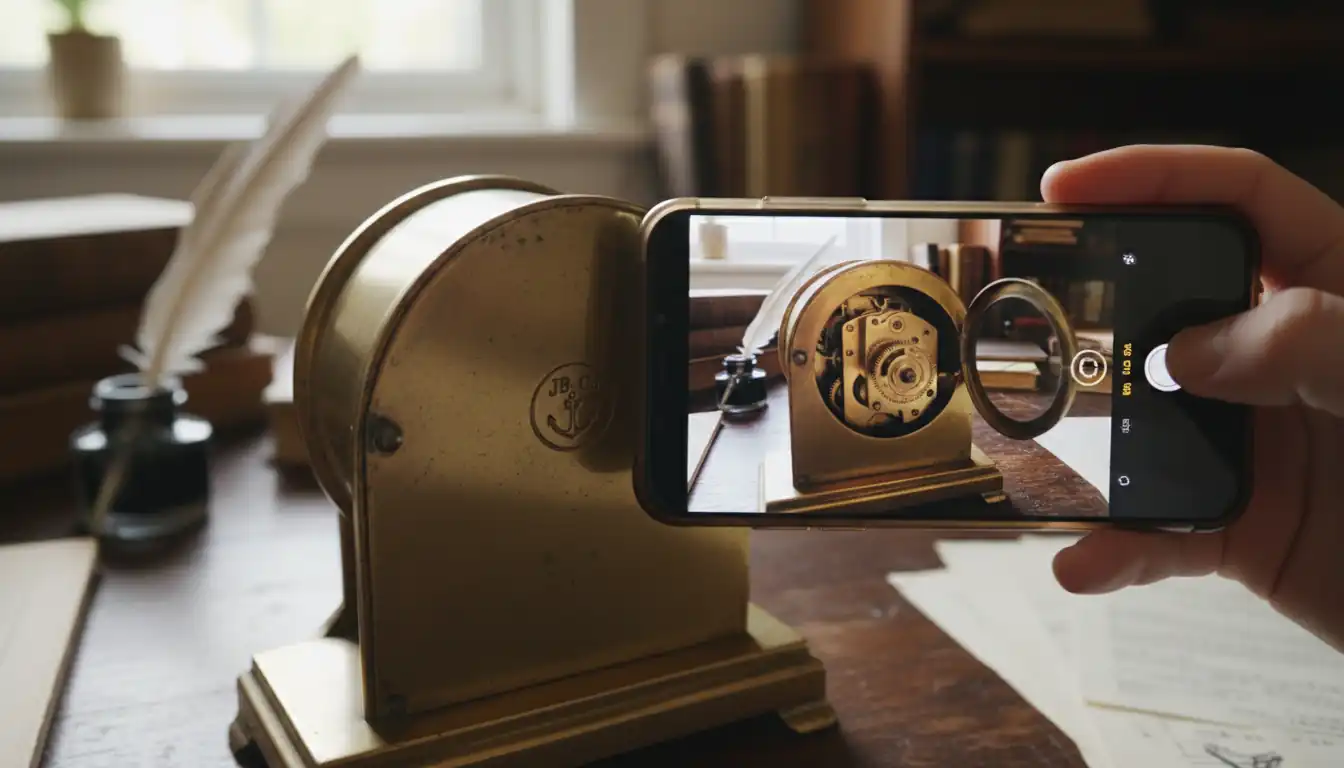
The rhythmic tick-tock of a grandfather clock is more than just a measurement of passing seconds. For many, it is the heartbeat of a home, a towering sentinel that has witnessed generations of family dinners, holiday gatherings, and quiet midnight reflections. These massive timepieces, technically known as longcase clocks, are often the most valuable and mysterious heirlooms a person can own. Yet, for all their presence, many owners know surprisingly little about the hands that actually built them.
Hidden behind the heavy brass pendulum or etched into the steel of the internal movement lies a secret history. A small engraved symbol, a flourish of script, or a stamped set of initials can tell you if your clock was born in a small village in the Black Forest or a prestigious workshop in London. Identifying these maker marks used to require a library of heavy reference books and a lifetime of specialized study. Now, that entire world of expertise is accessible through the lens of your smartphone.
In the following guide, you will learn how to locate these elusive marks and interpret their meaning. We will explore how the landscape of antique identification has shifted from dusty archives to instant digital analysis. By the time you reach the end of this article, you will have the tools and knowledge to uncover the true origin, history, and value of your grandfather clock.
The Evolution of Clock Identification
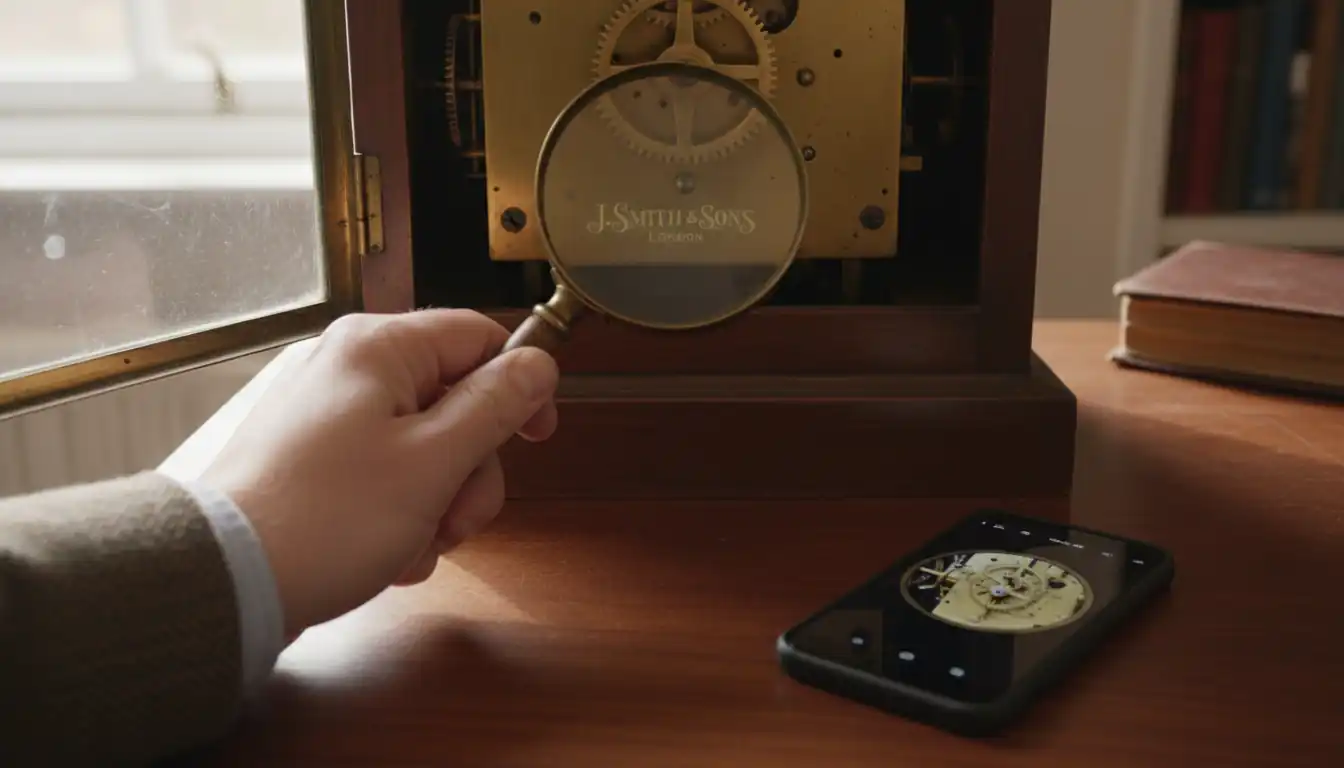
For decades, identifying an obscure clockmaker was a test of patience and endurance. If you inherited a clock with a faded signature, your first step was usually a trip to a local library or a specialized horological society. You would spend hours leafing through massive volumes like Baillie’s Watchmakers and Clockmakers of the World, cross-referencing names against dates and known locations. If the mark was a symbol rather than a name, the task became exponentially harder. You were essentially a detective looking for a needle in a haystack of paper records.
This manual process was prone to human error. A smudge on a page or a misread letter could lead you down a path of false identification, causing you to overvalue a reproduction or, worse, undervalue a masterpiece. The barrier to entry was high, leaving many beautiful timepieces to sit in hallways as "anonymous" furniture. The transition to digital solutions has effectively democratized this knowledge, turning a process that took weeks into one that takes seconds.
Traditional Research Methods vs Modern Technology
The "old way" of research relied heavily on physical proximity to information. You needed to be near a museum, a high-end auction house, or a collector with a vast private library. Even then, the information was static. A book printed in 1970 couldn't tell you about the most recent auction results or the discovery of a new batch of records in a European basement. Modern technology has replaced these static records with dynamic databases that are updated in real-time.
Digital archives allow for a level of granular searching that was previously impossible. Instead of flipping through 30,000 entries alphabetically, you can now filter by region, era, or specific visual elements. However, even digital databases require you to know what you are looking at. You still have to describe the mark accurately in a search bar, which is difficult when dealing with stylized 18th-century engravings or worn-down hallmarks. This is where the leap from "digital search" to "visual recognition" becomes the true turning point for collectors.
Can AI Really Identify Complex Maker Marks?
A common question among skeptics is whether artificial intelligence can truly grasp the nuances of an antique. Can a machine really tell the difference between a genuine hand-stamped mark from 1750 and a clever machine-pressed imitation from 1950? The answer lies in how these models are built. Machine learning models are trained on tens of thousands of high-resolution images of verified hallmarks, signatures, and casting patterns.
When an AI analyzes a maker's mark, it isn't just "looking" at the letters. It is analyzing the depth of the engraving, the spacing of the characters, and the specific wear patterns that occur over centuries. It recognizes the "handwriting" of a specific maker's punch tool. Because the AI has seen more examples of a specific mark than most human experts will see in a lifetime, it can identify subtle variations that the human eye might overlook. This technology has turned the smartphone into a bridge between the physical object and a global repository of horological history.
Decoding the Language of Horology Marks
Before you can use technology to identify your clock, you need to know where the "fingerprints" are hidden. Grandfather clocks are complex machines, and makers placed their marks in various locations depending on the era and the tradition of the workshop. Identifying these marks is the first step in answering the fundamental question: "How do you identify antique clock makers marks?"
The most common place to find a mark is on the "movement"—the internal brass or steel mechanism that keeps time. To see this, you usually need to remove the "hood" (the top part of the clock case). Once the movement is exposed, look at the backplate. This is the large flat piece of metal at the rear of the mechanism. Makers often stamped their logo, name, or serial number directly into this plate.
Common Symbols and Hallmarks to Look For
Maker marks aren't always names. Many famous manufacturers used symbols that acted as a brand logo. These symbols can be incredibly small and are often found in the corners of the movement plates or even on the weights and pendulum.
- The Crossed Arrows: This is the iconic mark of Junghans, a prolific German maker.
- The Crown and Lion: Often associated with high-end English makers or specific regional guilds.
- The Anchor: Frequently used by German companies like Gustav Becker, often accompanied by the initials "GB."
- Geometric Shapes: Some early makers used simple stars, suns, or crescent moons to identify their work before standardized branding existed.
It is also vital to distinguish between a manufacturer's mark and a retailer's mark. In the 19th century, it was common for a large factory to produce the "works" (the movement) and then sell them to a local jeweler or clock shop. The shop would then put their own name on the dial. If you see a name like "Smith & Sons, London" on the face of the clock, but a different symbol on the backplate, the backplate mark is the one that tells you who actually built the engine of the clock.
Why Maker Marks Are the Key to Valuation
Why does a tiny stamp matter so much? In the world of horology, the maker is the primary driver of value. A clock by a renowned maker like Thomas Tompion or George Graham can fetch hundreds of thousands of dollars at auction, while a visually similar clock by an unknown maker might only be worth a few thousand.
"A maker's mark is more than a signature; it is a guarantee of the engineering standards and artistic vision of a specific era."
The mark also helps verify the "marriage" of a clock. A "married" clock is one where a movement from one clock has been placed into a case from another. By identifying the maker mark on the movement and comparing it to the style and labels found on the case, you can determine if the piece is original or a composite. Collectors prize originality above almost all else, and a verified, matching maker mark is the best evidence of a clock's integrity.
| Feature | Manufacturer Mark | Retailer Mark |
|---|---|---|
| Location | Backplate of movement, gears | Dial (face), interior of the case |
| Format | Stamped symbols, serial numbers | Painted or engraved name and city |
| Purpose | Identifies the engineer/factory | Identifies the seller/distributor |
| Value Impact | High - determines technical quality | Moderate - provides provenance |
Relic: The AI Expert in Your Pocket
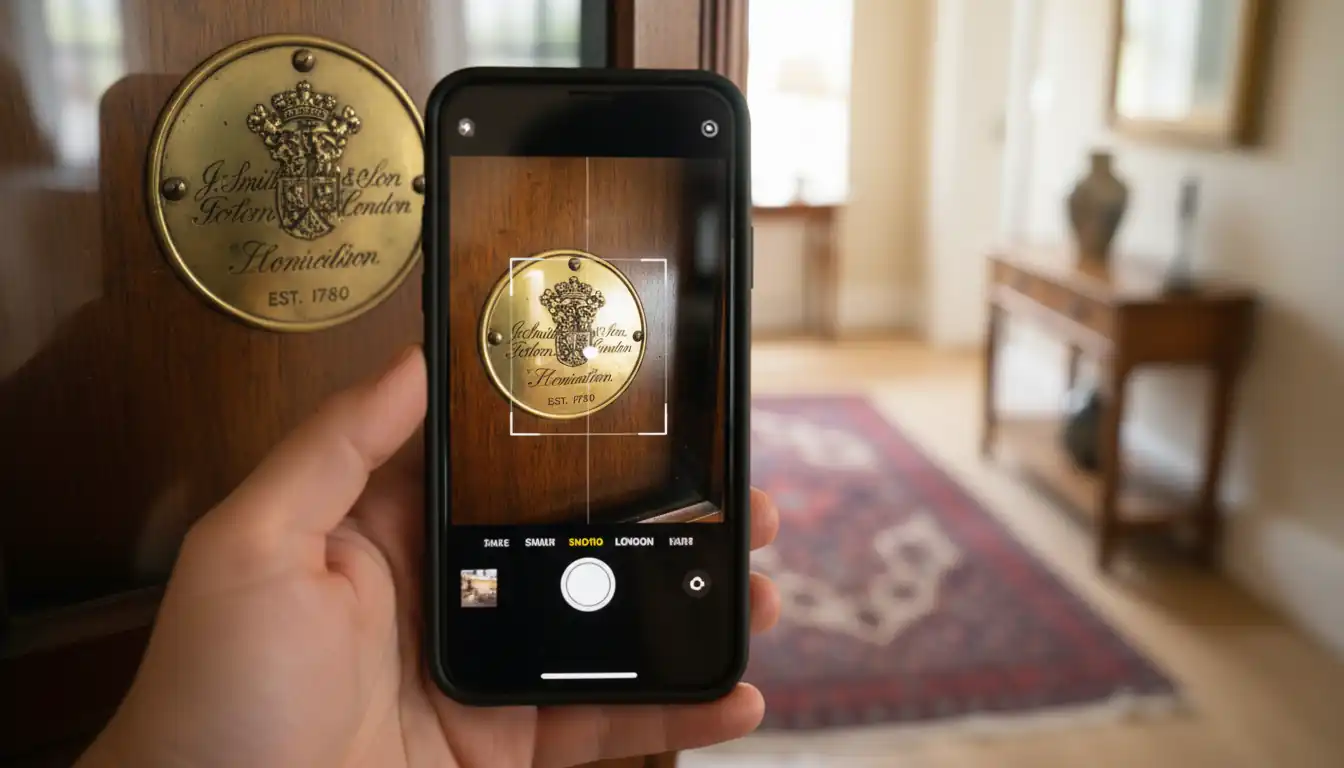
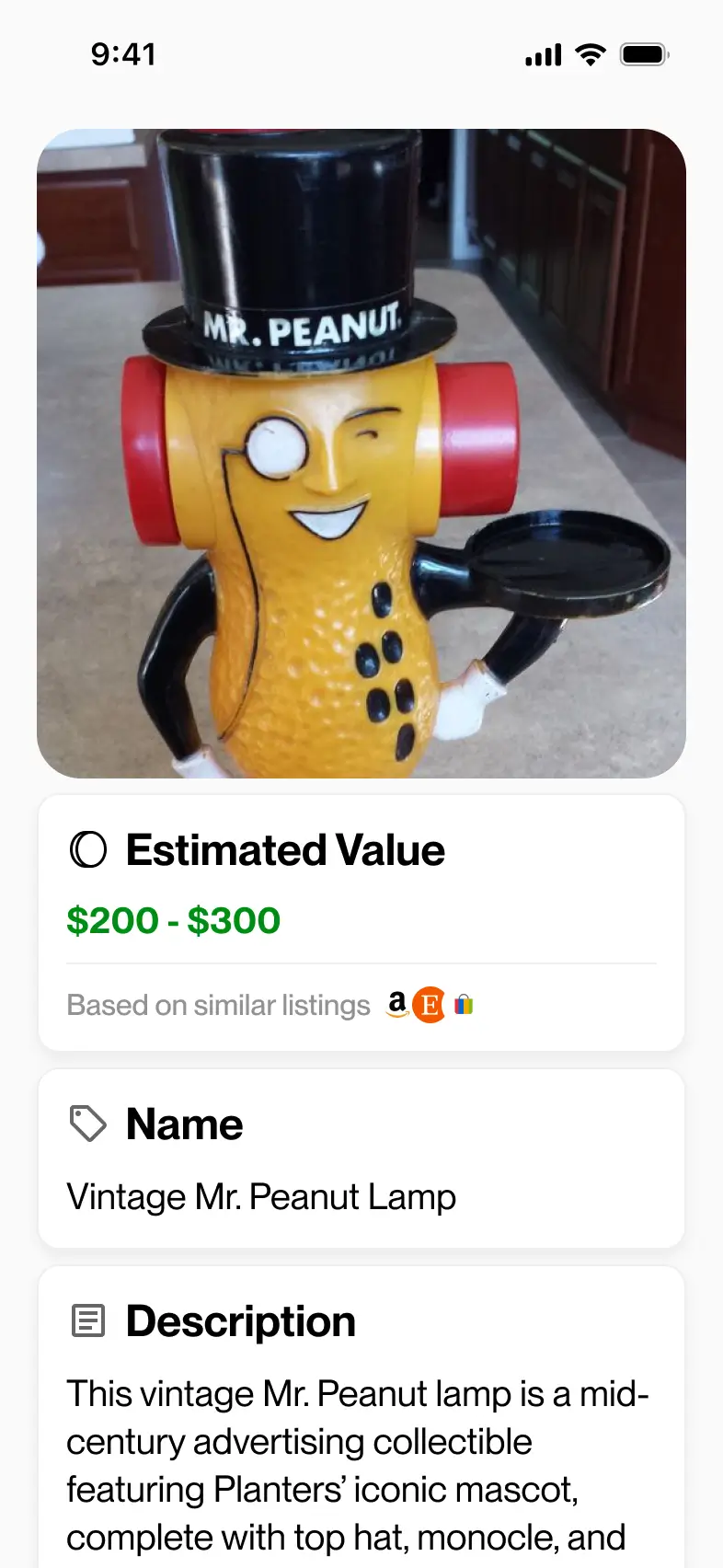
Once you have located a mark, the next step is interpretation. This is where the Relic app becomes an essential tool for the modern collector. Instead of scrolling through endless forums or waiting days for an email response from an appraiser, you can get answers in the time it takes to snap a photo. Relic is an iOS app designed to bridge the gap between a physical antique and its historical context.
The process is straightforward. You open the app and use your phone's camera to take a high-resolution image of the maker's mark you've found. Relic’s AI then scans the image, comparing the visual data against a massive database of horological signatures and symbols. Within seconds, the app doesn't just give you a name; it provides a comprehensive profile of the item.
Instant Appraisals Through Advanced Image Recognition
One of the most daunting aspects of owning a grandfather clock is knowing what it’s actually worth in today’s market. Relic addresses this by providing a real appraisal based on current market data. It looks at recent auction results, dealer listings, and historical sales of similar items by the same maker. This isn't a generic estimate; it’s a valuation rooted in the specific identity of your clock.
The app's accuracy is a result of its specialized focus. While general search engines might get confused by a blurry photo of a brass plate, Relic is trained specifically for the textures, patinas, and engraving styles of antiques. It understands how light reflects off aged metal and can "read" through years of oxidation or dust. This makes it a professional-grade tool for dealers, pickers, and anyone who finds themselves at an estate sale needing to make a quick, informed decision.
Uncovering the Hidden History of Your Timepiece
Beyond the dollar value, Relic provides something perhaps even more valuable: a narrative. When you identify a clock through the app, you receive a history of the maker, the origin of the piece, and the stylistic movements that influenced its design. You might discover that your clock was made during a period of transition in German clockmaking or that the maker was a pioneer in pendulum technology.
This historical context transforms the clock from a piece of furniture into a storyteller. Knowing that your clock was crafted in a specific workshop in the 1840s allows you to research the world that the clockmaker lived in. It adds a layer of appreciation that goes beyond aesthetics. With over 20,000 reviews and a 4.9-star rating, the app has proven itself as a reliable companion for those who want to understand the "why" and "how" behind their treasures.
Navigating the App Landscape for Antique Collectors
As the interest in antiques grows, so does the number of tools available to collectors. If you are asking, "What is the app that tells you how much an antique is worth?" you will find several options on the App Store. While Relic is a leader in the space, it is helpful to understand the broader landscape to make the best choice for your needs.
Apps like Antik and Vintiq also offer identification services. Antik tends to focus on a wide range of collectibles, from mid-century modern furniture to vintage toys. Vintiq often leans toward the fashion and jewelry side of the market. While these are useful tools, the key for a clock owner is finding an app that handles the specific complexities of mechanical antiques and metal hallmarks.
Comparing Top Rated Antique Identifier Apps
When choosing an app, you should look for three main factors: accuracy, depth of information, and ease of use. Some apps simply provide a link to similar items on eBay, which can be misleading. A "similar" item might be a modern reproduction, leading you to believe your antique is worth much less (or more) than it actually is.
- Accuracy: Does the app recognize the difference between a stamped mark and a cast mark?
- Depth: Does it provide a full history or just a price tag?
- Database: How many specialized categories (like horology) does it cover?
Relic stands out because it provides a "real appraisal" rather than just a list of search results. For a professional dealer or a serious hobbyist, the ability to access a searchable catalog of previously scanned items is a significant advantage for tracking a collection over time.
Understanding Data Safety and Privacy in Identification Tools
In an era where digital privacy is a major concern, it’s important to consider what happens to the photos and data you upload. When you use an app to identify a high-value item like a grandfather clock, you are essentially sharing information about a valuable asset in your home.
What to look for in an app's privacy policy:
- Data Encryption: Ensure the app uses secure protocols to protect your images.
- Developer Transparency: Look for apps with a clear history and positive developer reputation.
- Usage Rights: Check if you retain ownership of the photos you upload.
- Location Privacy: Some apps ask for your location to provide "local market" data; ensure you can opt-out if you prefer.
Most reputable apps in this space are designed with user safety in mind, but it is always wise to review the "Data Safety" section on the App Store before downloading. A professional tool should treat your collection with the same respect that a physical appraiser would.
Beyond the Mark: Verifying Authenticity and Value
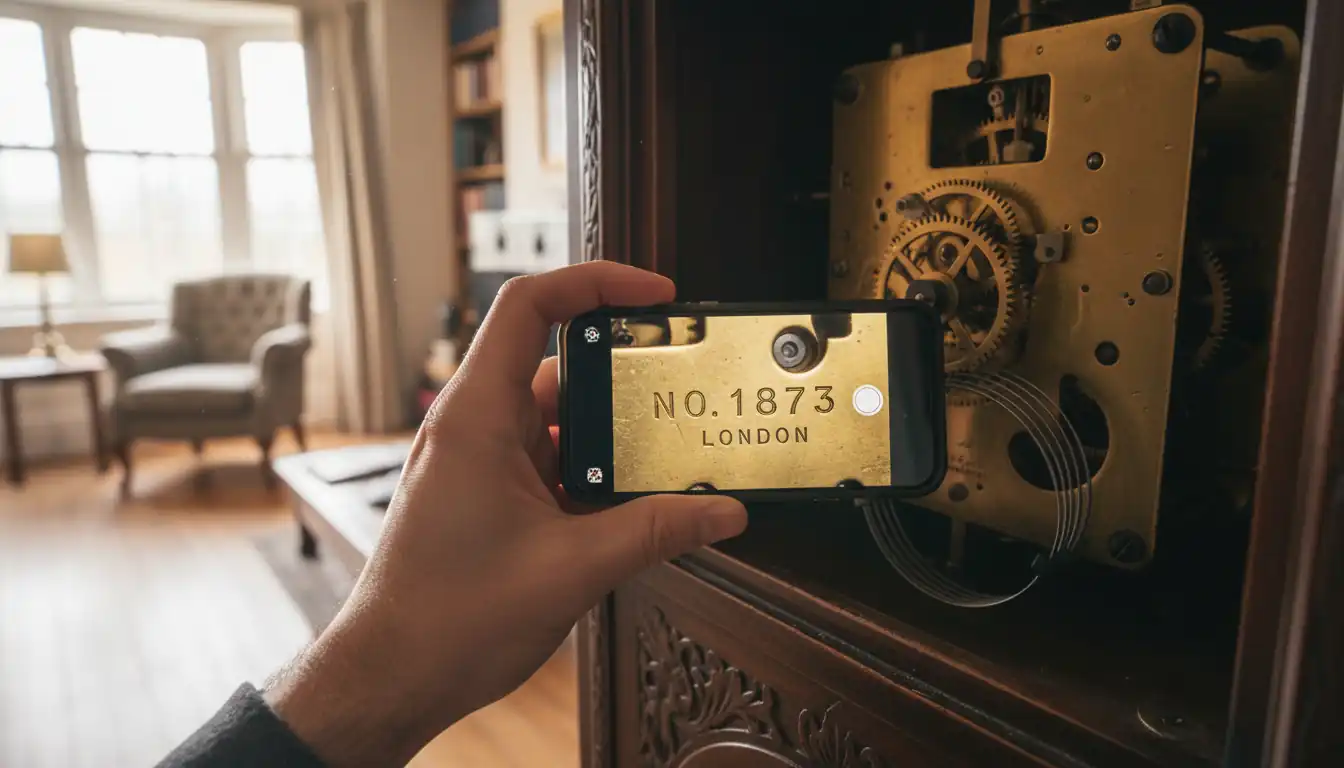
Identifying the maker's mark is a massive leap forward, but it is only the beginning of the journey. To truly understand your grandfather clock, you must look beyond the signature. This is where the "detective work" of horology becomes truly fascinating. Authenticity is found in the details that a forger or a mass-producer would likely ignore.
One of the most effective ways to verify age is to examine the "hardware" of the movement. For example, screws were not standardized until the mid-19th century. If you see perfectly uniform, machine-cut screws in a clock that claims to be from 1720, you are likely looking at a later reproduction or a heavily repaired piece. AI tools are increasingly capable of analyzing these macro-details, helping users distinguish between a genuine 18th-century movement and a 20th-century "revival" piece.
Spotting Modern Reproductions and Forgeries
The "Grandfather Clock Craze" of the 1970s and 80s produced thousands of clocks that look ancient but are actually modern. Many of these used famous names from the past under license. To spot these, look at the casting marks on the brass.
- Hand-Finished vs. Machine-Finished: Older brass plates will show slight irregularities and marks from hand-filing. Modern plates are perfectly smooth and often have a "bright" yellow hue that looks different from the deep, mellow gold of aged brass.
- The "Feel" of the Engraving: Authentic 18th-century marks were often engraved with a burin, leaving a slight "burr" or a V-shaped groove. Modern marks are often etched with acid or lasers, resulting in a flat, uniform depth.
- Material Consistency: Check if the wood of the case matches the era of the movement. A 1750s movement should not be in a case made of plywood or finished with modern polyurethane.
Regional Variations in Clockmaking from Europe to Asia
The style of the maker's mark and the clock itself varies wildly depending on where it was made. Understanding these regional differences can help you narrow down a search if the mark is partially obscured.
Europe: English clocks are known for their "Longcase" style, often featuring mahogany or walnut cases and silvered dials. Their marks are usually dignified and found prominently on the dial or the center of the backplate. French clocks, particularly those from the 18th century, often have highly decorative movements with marks hidden in ornate floral engravings.
Asia Pacific: The Asia Pacific region has a unique horological history. While many grandfather clocks found in the region were originally European imports (often brought by colonial officials or traders), Japan developed its own fascinating tradition of "Wadokei" (Japanese clocks). These clocks were designed to tell "unequal time" based on the sunrise and sunset. Identifying a mark on a Wadokei requires specialized knowledge, as the symbols and numbering systems are entirely different from Western traditions.
In the modern market, there is a growing interest in these regional variations. Collectors in the Asia Pacific region are increasingly looking to repatriate clocks that were exported centuries ago, while Western collectors are discovering the intricate beauty of Eastern timekeeping. Using an AI tool that has a global database allows you to identify these cross-cultural treasures regardless of where you—or the clock—are located.
Conclusion
Your grandfather clock is more than a decorative piece; it is a mechanical survivor of a bygone era. For too long, the secrets of these timepieces were locked away in specialized books and the minds of a few experts. Today, the combination of physical observation and digital intelligence has changed the game for everyone from the casual heir to the professional dealer.
By learning where to look for maker marks and how to interpret the language of horology, you have taken the first step in preserving the history of your clock. Tools like the Relic app provide a bridge to that history, offering instant appraisals and deep historical context with just a photo. Whether you are looking to sell, insure, or simply appreciate your heirloom, knowing its true origin adds a layer of value that time cannot erase.
The next time you hear your clock chime the hour, take a moment to look behind the dial. There is a story etched in the metal, waiting for you to discover it. Download a tool like Relic, grab a flashlight, and see what secrets your clock has been keeping all these years. You might find that your family heirloom is even more extraordinary than you ever imagined.
Identify antiques instantly
Point your camera at any antique, collectible, or vintage item. Get valuations, history, and market insights in seconds.
Download for iPhone