Your Grandfather's Old Watch Might Be Worth a Fortune—Here’s How to Know for Sure

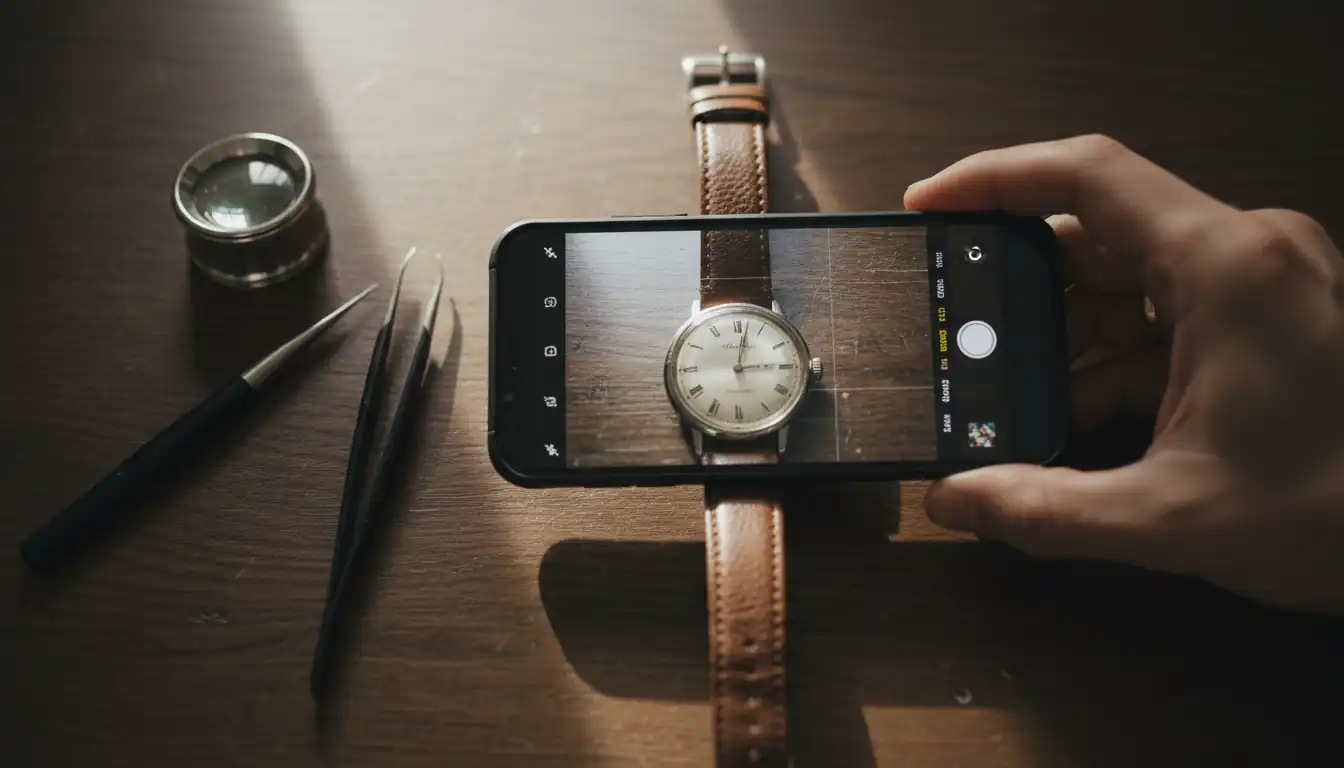
That dusty box in the back of your grandfather’s closet holds more than just memories. For decades, mechanical watches were the standard gift for retirements, graduations, and milestones. While many of these timepieces were simple tools for keeping appointments, a surprising number of them have transformed into high-value collectibles. What looked like a standard stainless steel watch in 1970 might now be a sought-after rarity worth more than a new car.
The challenge for most people is knowing exactly what they are holding. You might see a faded dial and a scratched crystal and assume the watch is junk. In reality, those very "defects" are often the markers of authenticity that collectors crave. Understanding the value of a vintage timepiece requires a shift in perspective, moving away from seeing a used object and toward seeing a historical artifact.
In the following guide, you will learn how to decode the visual language of your watch. We will explore how modern technology has replaced the need for dusty reference books, and why the "flaws" on your watch face might actually be its most valuable features. By the time you finish reading, you will have the tools to turn a curious discovery into a documented financial asset.
The Visual Language of Vintage Horology
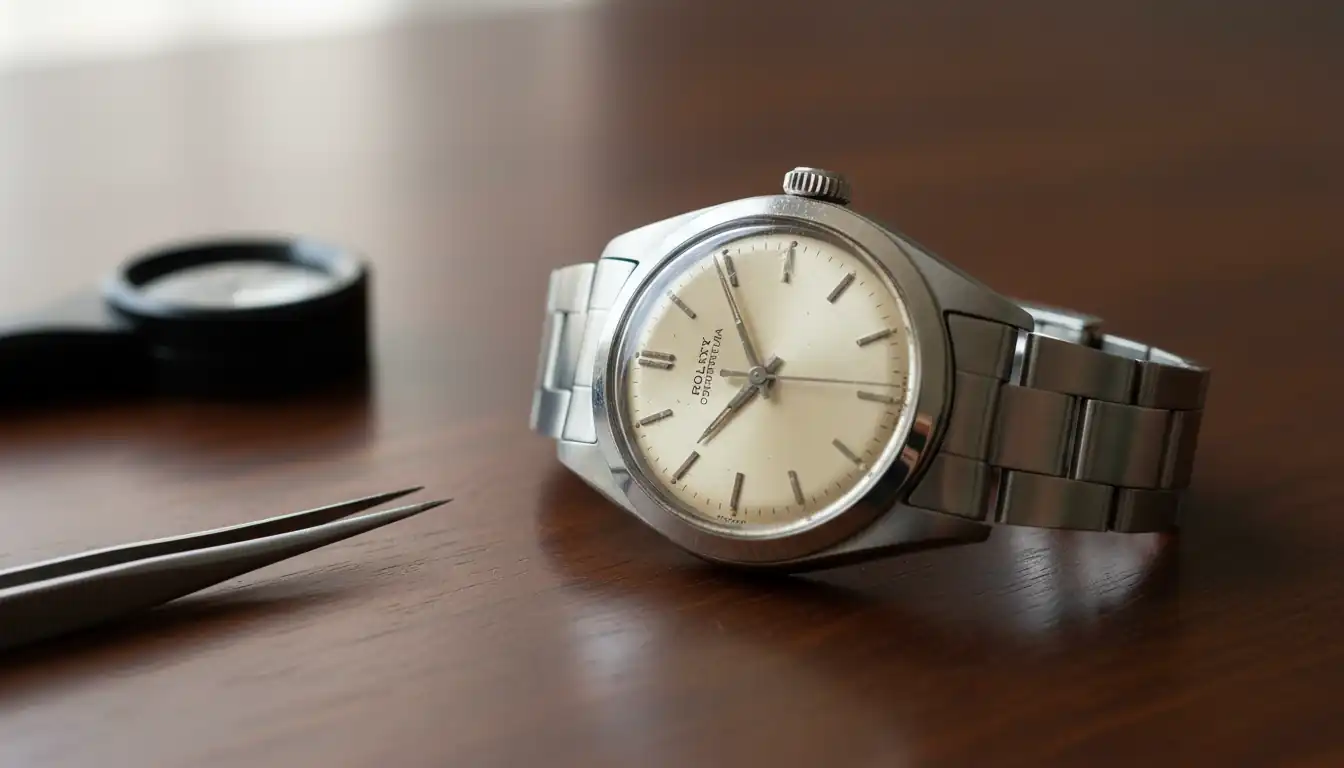
When you look at a vintage watch, you are looking at a fingerprint of industrial design. Every era had its own specific aesthetic choices, from the bold, chunky lugs of the 1970s to the delicate, thin profiles of the 1940s. To identify a watch accurately, you must learn to see these details as a detective sees clues at a crime scene. The question often arises: Can you identify a watch from a photo? The answer is a definitive yes, provided the photo captures the specific "DNA" of the timepiece.
The first thing to examine is the typography on the dial. Before digital printing, watch dials were often "pad printed" or even hand-painted. The specific font used for the brand name, the spacing between the letters, and the way the ink sits on the surface are all unique identifiers. Even a tiny serif on a number can distinguish a common model from a rare transitional piece. When you take a photo, you need to ensure the light is flat and even so these tiny ink deposits are visible.
Macro Photography for Movement Details
You don't always need to open the back of a watch to identify it, but the exterior "furniture" tells a significant story. The hands of the watch—whether they are "Dauphine," "Baton," or "Cathedral" style—must match the era of the dial. If a watch from the 1950s has modern, glowing hands, it suggests a later repair that might lower the value.
To capture these details, use a macro lens or the "portrait" mode on your smartphone. Position the watch near a window for natural, indirect light. Avoid using a flash, as the reflection off the crystal will obscure the very details you are trying to document. Focus on the "6 o'clock" position on the dial, where many manufacturers hide tiny codes or "Swiss Made" signatures that indicate the type of luminous material used.
Decoding Case Back Engravings and Hallmarks
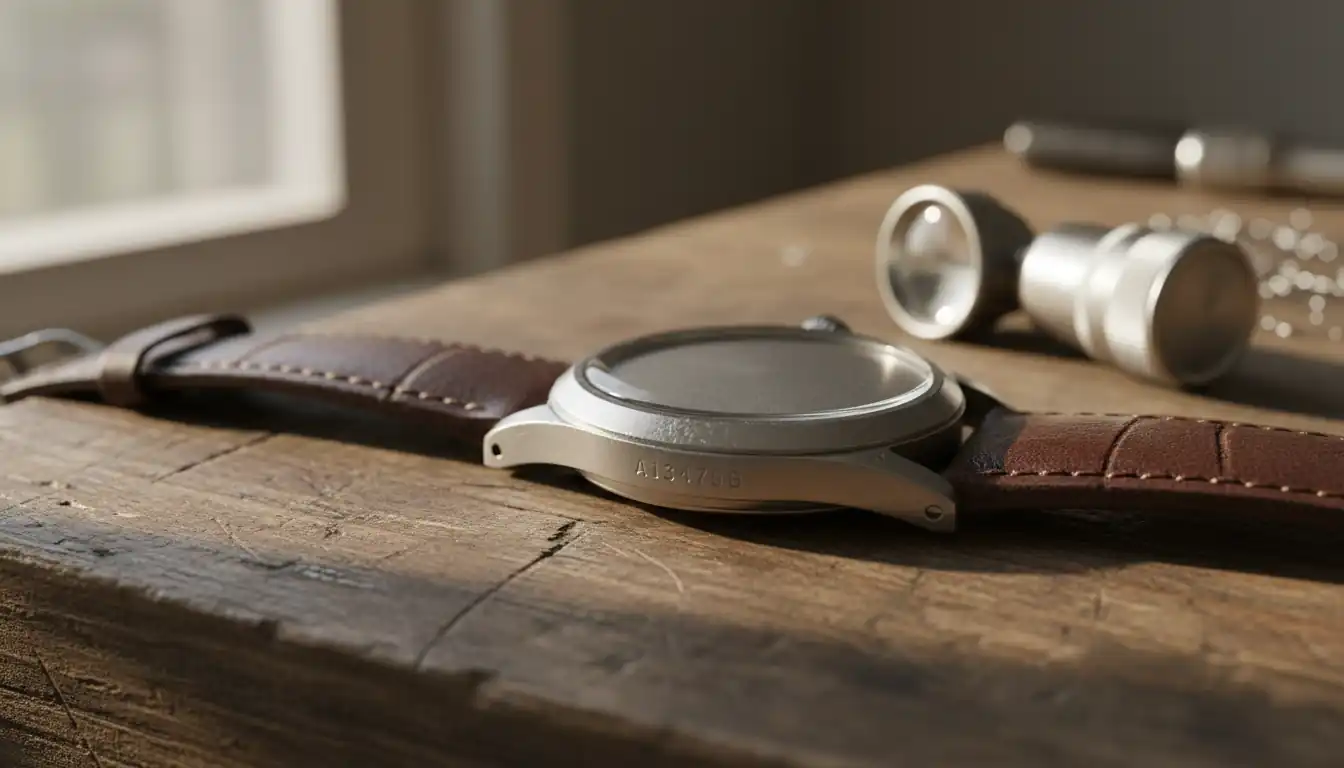
The back of the watch is often where the most concrete data lives. While some brands kept their case backs plain, many included reference numbers and serial numbers. If you see a tiny symbol that looks like a bird, a crown, or a set of scales, you have found a hallmark. These are often stamped into the metal to indicate the purity of the gold or silver used in the case.
- Reference Numbers: These identify the specific model and design of the watch.
- Serial Numbers: These function like a VIN on a car, often allowing you to pinpoint the exact year of manufacture.
- Maker’s Marks: Small logos that identify which third-party company manufactured the case for the watch brand.
| Feature | What to Look For | Why it Matters |
|---|---|---|
| Lugs | Sharpness of the edges | Indicates if the watch has been over-polished |
| Crown | Logo or texture | Original crowns are essential for high valuation |
| Crystal | Scratches vs. Cracks | Acrylic crystals can be polished; cracked dials cannot |
A single clear photo of the case back can often reveal more about a watch's history than an hour of searching through general catalogs.
AI-Powered Appraisal Technology
In the past, identifying a mystery watch was a grueling process. You would have to spend hours on enthusiast forums, hoping a stranger would recognize your photo, or flip through massive, expensive price guides that were outdated the moment they were printed. The sheer volume of watch models produced in the 20th century—estimated in the hundreds of thousands—made manual searching feel like finding a needle in a haystack.
Today, the process has been condensed into seconds. Computer vision and machine learning have changed the way we interact with physical objects. Instead of matching your watch against a mental checklist, modern algorithms can compare your photo against a global database of known examples. This technology doesn't just look at the brand name; it analyzes the geometric proportions of the case, the specific patina of the dial, and the alignment of the markers.
Neural Networks vs. Manual Database Searching
Manual searching is prone to human error. You might mistake a "Ref. 1601" for a "Ref. 1603" because the bezels look similar to the untrained eye. AI doesn't make these mistakes. It uses neural networks to identify patterns in the "grain" of the metal and the specific "kerning" (spacing) of the text on the dial. It can recognize the difference between a genuine vintage font and a modern "service dial" that was replaced decades later.
This efficiency is particularly useful when you are at an estate sale or an auction. You don't have time to go home and research; you need an answer immediately. The ability to process visual data in real-time allows you to make informed decisions on the spot, ensuring you don't pass up a treasure or overpay for a common piece.
Relic and the Future of Instant Authentication
This is where specialized tools become indispensable. The Relic app is a prime example of how this technology is put into the hands of the average person. By simply uploading a photo, Relic uses advanced AI to provide a real appraisal, history, and origin of the item. It bridges the gap between a curious owner and a professional appraiser.
Instead of wondering if your grandfather's watch is a rare prototype or a mass-produced commuter watch, you get a comprehensive breakdown of what the item is and where it came from. For collectors and heirs alike, Relic provides a level of certainty that used to require a trip to a high-end auction house. With over 20,000 reviews and a 4.9-star rating, it has become a standard tool for those who need professional-grade insights without the professional-grade price tag.
Hidden Markers of Authenticity and Value
In the world of vintage watches, "perfect" is often the enemy of "valuable." A common mistake beginners make is wanting their old watch to look brand new. They might consider sending it to a jeweler to have the dial repainted or the case polished to a mirror finish. In the collector market, this is often a catastrophic financial mistake. The value of a vintage watch lies in its "originality"—the state in which it left the factory decades ago.
Collectors look for specific types of aging that tell a story. These phenomena are often the result of chemical reactions between the dial materials, the luminous paint, and decades of exposure to sunlight. What looks like a defect to a layman is a "complication of time" to a collector.
Patina and Dial Aging Characteristics
One of the most famous examples of valuable aging is the "Tropical" dial. Originally, some black dials were manufactured with a chemical instability that caused them to turn a rich, chocolate brown when exposed to UV light over many years. Because this happens organically and inconsistently, no two tropical dials are exactly the same. A watch with a "tropical" dial can often sell for double or triple the price of the same model with a standard black dial.
Another sought-after "flaw" is the "Spider" dial. This occurs when the lacquer on a dial cracks in a pattern that resembles a spider web. While this is technically a failure of the paint, the aesthetic result is highly prized by certain segments of the collecting community.
- Tritium Lume: Older watches used tritium for luminosity. Over time, this turns from white to a creamy yellow or "pumpkin" orange.
- Ghost Bezels: Aluminum bezel inserts on dive watches that have faded from black to a soft grey due to saltwater and sun exposure.
- Gilt Dials: Dials where the text is not printed on top, but rather the gold-colored metal of the dial plate shows through the paint.
Identifying Period-Correct Hands and Crowns
A watch is a sum of its parts. If a watch from 1962 has a crown (the winding knob) from 1985, the "purity" of the piece is compromised. Collectors use the term "period-correct" to describe a watch that has all the components it would have had when it was first sold.
Relic’s AI can be particularly helpful here. It can distinguish between genuine age-related wear and artificial distressing. It knows what a 50-year-old "hand-set" should look like under magnification. If the patina on the hands doesn't match the patina on the hour markers, the app can flag that as a potential sign of a "frankenwatch"—a timepiece cobbled together from parts of different watches.
The most valuable vintage watches are often the ones that look the most "tired." Never clean or polish a watch before having it professionally identified.
Market Volatility and Real-World Valuation
Once you know what the watch is, the next question is always: "What is it worth?" This is where things get complicated. Value is not a static number; it is a spectrum based on who is buying and why. A watch doesn't have a single price; it has a "market value" that shifts based on global trends, auction results, and even pop culture.
It is vital to understand the three main types of valuation:
- Insurance Appraisal: The cost to replace the item with an identical one in the current market. This is usually the highest number.
- Retail Price: What a specialized vintage dealer would sell the watch for after servicing it and offering a warranty.
- Fair Market Value (Liquidation): What you could realistically expect to get if you sold the watch to a dealer or at auction tomorrow.
Auction House Trends vs. Private Sales
The "hammer price" you see at a major auction house like Phillips or Sotheby’s can be misleading. Those prices often include a "buyer’s premium" (a fee of 20-25% on top of the bid) and usually represent the absolute ceiling of the market. For most people, a private sale to a collector or a reputable dealer is a more realistic path.
Market trends can be volatile. A certain brand might be "hot" for three years because a celebrity was seen wearing it, only for prices to cool off the next year. However, "blue-chip" vintage watches—those with documented histories and original parts—tend to hold their value much better than modern mass-produced luxury items.
Impact of Condition on Final Appraisal
The condition of the metal case is perhaps the most overlooked factor in valuation. Every time a watch is polished, a microscopic layer of metal is removed. Over decades, repeated polishing rounds off the sharp "chamfers" or edges of the lugs, making the watch look "melted."
| Condition Factor | Potential Value Impact |
|---|---|
| Unpolished Case | +30% to +50% premium |
| Original Box and Papers | +20% to +40% premium |
| Service Dial (Replacement) | -30% to -50% reduction |
| Non-functional Movement | -15% to -25% (cost of repair) |
Using an app like Relic to get an initial appraisal gives you a baseline of history and origin. This digital record acts as your leverage. When you go to a dealer, you aren't just a person with an old watch; you are an informed owner with a documented understanding of your asset's provenance.
Protecting Your Horological Assets
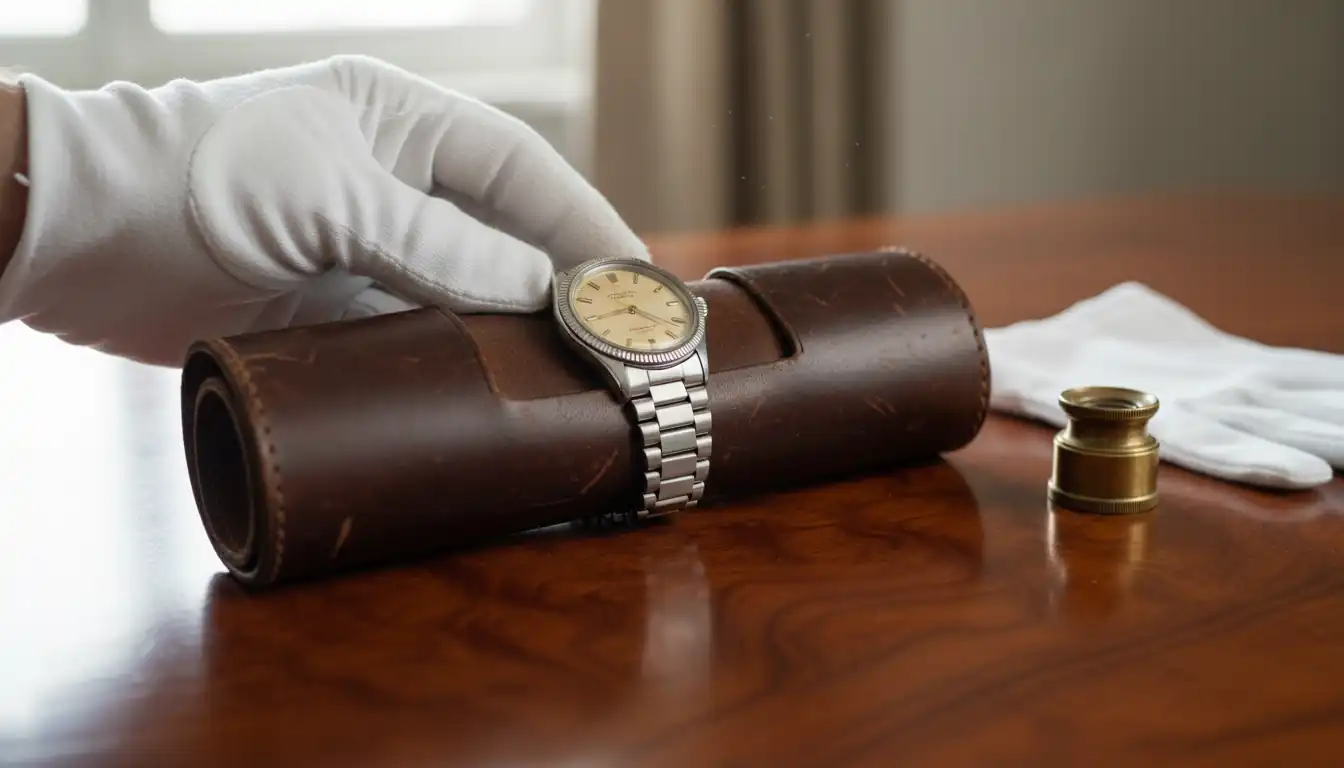
If you discover that your grandfather's watch is worth thousands of dollars, your priority should shift from curiosity to protection. A vintage watch is a portable, high-value asset, which makes it a target for theft and a complication for estate planning. You need to treat it with the same administrative care you would give a piece of real estate or a stock portfolio.
The first step is creating a "digital birth certificate" for the item. This involves more than just a few photos on your camera roll. You need a timestamped, high-resolution record of the watch's condition, serial numbers, and any identifying marks. This documentation is essential for adding the item to a homeowners' insurance rider or for ensuring it is fairly distributed in a will.
Digital Archiving for Insurance Purposes
Most standard insurance policies have a limit on "jewelry and watches," often as low as $1,000 or $2,500. If your watch is worth $10,000, you are significantly underinsured. To get a "scheduled" rider for the watch, your insurance company will require proof of value.
A photo-based identification serves as a timestamped proof of possession. By using a tool that provides a formal history and origin, you create a paper trail that is much harder for an insurance adjuster to dispute. It proves that the item existed in a specific condition at a specific time.
Privacy and Data Security in Identification Apps
When you are dealing with high-value assets, privacy is paramount. You want a tool that is professional and secure. When choosing an app for identification, look for those that respect your data and provide professional-grade results without selling your information to third-party marketers.
- Data Encryption: Ensure your photos and appraisals are stored securely.
- Anonymity: You should be able to identify your items without broadcasting your home location or personal identity to the public.
- Professional Standards: Use apps like Relic that are designed for collectors and dealers, as they adhere to higher standards of accuracy and data integrity than "general" AI tools.
Managing a vintage watch as a financial asset means keeping it in a "bank-ready" state. This includes keeping it in a climate-controlled environment (away from extreme humidity) and ensuring it is not stored near strong magnetic fields (like large speakers), which can disrupt the mechanical movement.
Conclusion
Your grandfather’s watch is a bridge to the past, but it could also be a significant boost to your financial future. The difference between a "cool old trinket" and a "valuable investment" lies entirely in the details. By learning to look for the visual cues of horology—the typography, the patina, and the hallmarks—you transform yourself from a passive observer into an active steward of history.
Technology has removed the barriers to entry for watch collecting. You no longer need a lifetime of study to identify a rare reference or a "tropical" dial. With the Relic app, you can turn your smartphone into a professional appraisal tool, giving you the history, origin, and value of your timepiece in seconds.
If you have an old watch sitting in a drawer, don't let it remain a mystery. Take a clear photo, look for those hidden markers of authenticity, and document your find. Whether you choose to wear it, sell it, or pass it down to the next generation, knowing exactly what you have is the first step in protecting its legacy. Download a reputable identifier today and see what your history is truly worth.
Identify antiques instantly
Point your camera at any antique, collectible, or vintage item. Get valuations, history, and market insights in seconds.
Download for iPhone