Your Grandmother’s Lace Might Be a Century Old—Here’s the Secret to Proving It

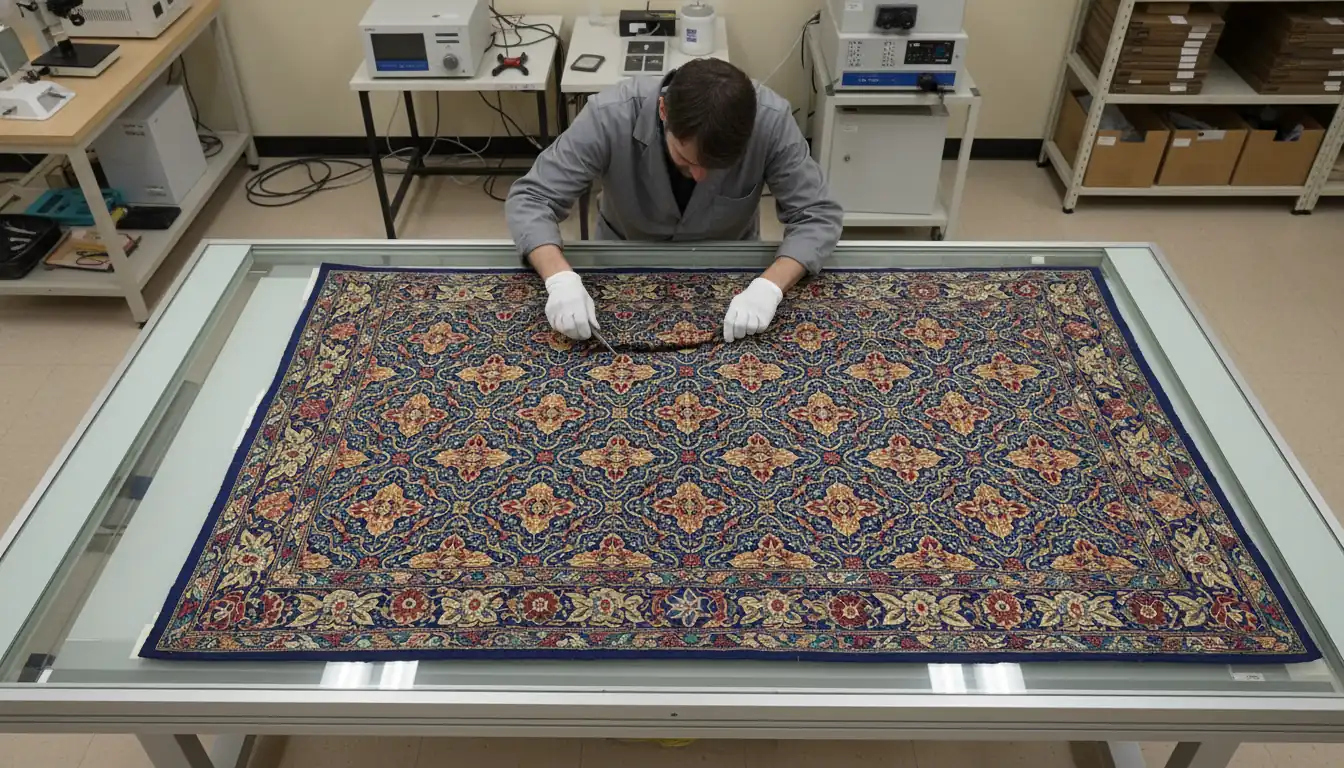
That delicate lace tablecloth tucked away in your cedar chest might look like a simple family heirloom, but it could be a silent witness to a century of history. Many of us possess textiles passed down through generations, often accompanied by vague stories of a great-grandmother’s wedding or a long-lost European estate. These pieces are more than just fabric; they are intricate puzzles waiting to be solved by those who know how to read the threads.
Identifying the true age of a textile requires a blend of historical knowledge and a keen eye for detail. You are looking for the subtle differences between a hand-stitched masterpiece and a mass-produced imitation. Understanding these nuances doesn't just satisfy your curiosity—it establishes the provenance and financial value of your collection.
In the following sections, you will learn how to distinguish between "vintage" and "antique," how to use your smartphone to see what the naked eye misses, and how to preserve these fragile treasures for the next hundred years. By the time you finish reading, you will have the tools to transform a dusty box of fabric into a documented historical archive.
The 100 Year Rule and Textile Evolution
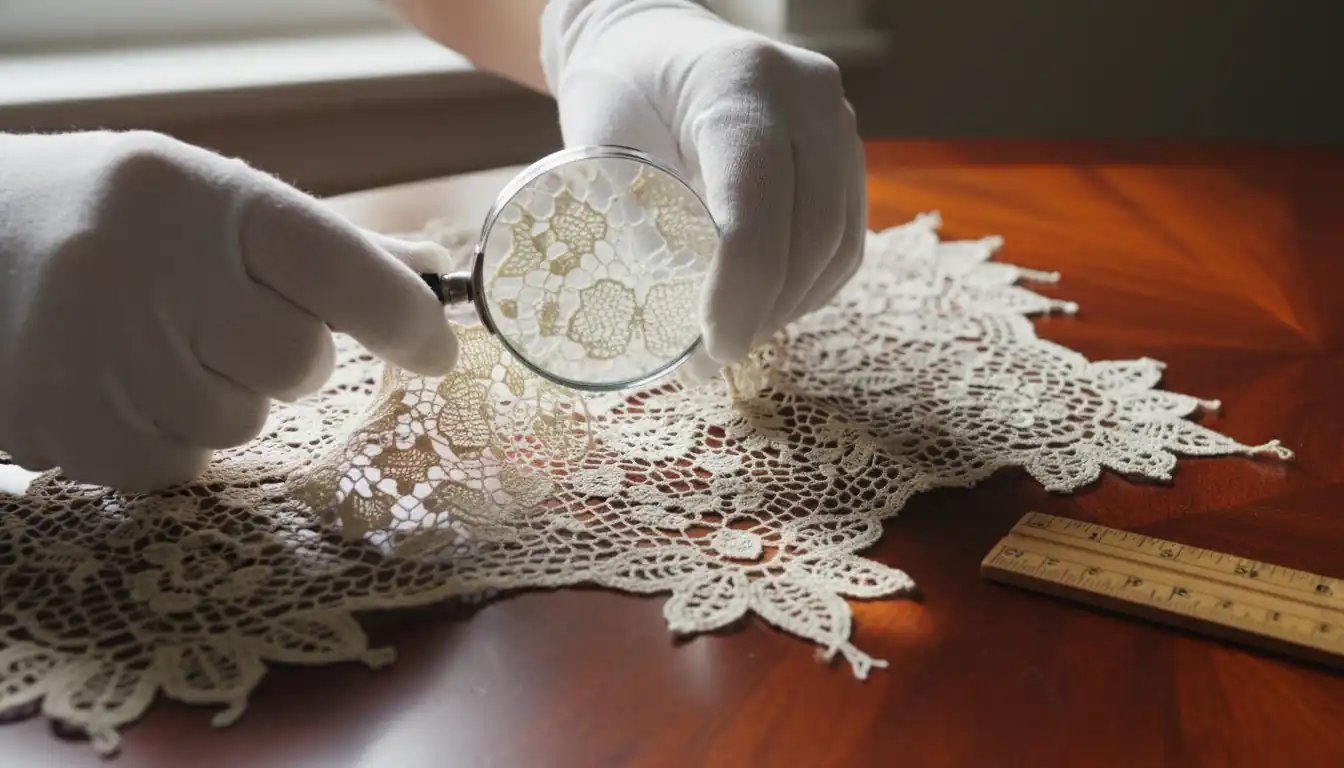
When you hear someone call an item an "antique," they aren't just using a fancy word for "old." In the world of collecting and trade, there is a very specific legal threshold known as the 100-year rule. This distinction is vital because it changes how an item is taxed, how it is insured, and how it is perceived by serious collectors.
Defining the Century Mark for Fabric
What is the 100 year rule for antiques? Simply put, for an object to be legally classified as an antique, it must be at least 100 years old. This definition was solidified by the United States Customs Service under the Tariff Act of 1930, primarily to determine which items could be imported duty-free. If your grandmother’s lace was made in 1924 or earlier, it is officially an antique. If it was made in 1940, it is technically "vintage."
The jump in value between a 90-year-old piece and a 100-year-old piece can be significant. Antiques carry a weight of historical "provenance" that vintage items often lack. For textiles, reaching the century mark means the piece survived an era before the dominance of synthetic fibers and high-speed industrial looms. It represents a different philosophy of craft, where durability and detail were prioritized over volume and speed.
Material Markers of Pre-Industrial Weaving
To prove a textile is a century old, you have to look at how the fibers were prepared and woven. Before the late 19th century, most fabrics were made from natural fibers: wool, silk, cotton, and linen. While the Industrial Revolution began much earlier, the transition from hand-loomed textiles to fully automated factory production was a gradual process that left distinct markers in the fabric.
- Irregular Thread Thickness: Hand-spun yarn is rarely perfectly uniform. If you look closely at a piece of 19th-century linen, you will see "slubs"—small, thickened areas where the spinner’s hand varied the tension.
- Natural Fiber Purity: Early antiques rarely contain "blends." A silk dress from 1890 is almost certainly 100% silk. The introduction of semi-synthetic fibers like Rayon (originally called "artificial silk") in the early 20th century provides a clear chronological marker.
- Loom Widths: Early hand-looms were limited by the reach of the weaver’s arms. If you find a very wide piece of fabric without a seam, it was likely produced on a large industrial power loom, suggesting a later date.
The presence of "slubs" in linen or cotton isn't a defect; it's a fingerprint of the human hand that proves the item predates the era of machine perfection.
The late 1800s changed everything. The invention of synthetic dyes replaced the muted, earth-toned palettes of vegetable dyes with vibrant "aniline" purples, greens, and pinks. If your lace or quilt features these electric colors, you are likely looking at a piece from the Victorian era or later. This period marked the final stand of high-quality handwork before the 20th century’s push toward mass-market synthetics.
Decoding the Weave with Modern Scanning Technology
In the past, identifying a textile’s origin required a jeweler’s loupe, a textile encyclopedia, and decades of experience. Today, the technology in your pocket has changed the game. High-resolution smartphone cameras can capture details that are invisible to the naked eye, allowing software to analyze the very DNA of a fabric.
Microscopic Details Visible via Smartphone
When you take a close-up photo of a textile, you aren't just seeing a pattern; you are seeing the structural integrity of the weave. Modern AI-driven tools can analyze these images to determine the "twist" of the thread. In textile production, fibers are twisted in one of two directions: the S-twist or the Z-twist.
| Feature | S-Twist | Z-Twist |
|---|---|---|
| Visual Angle | Slants down from left to right | Slants down from right to left |
| Common Use | Often found in hand-spun linen | Standard for most modern machine-sewn thread |
| Historical Context | Prevalent in ancient and hand-crafted textiles | Became the industrial standard for strength |
By identifying these twists, an app like Relic can help determine if a piece was made using traditional hand-spinning methods or modern industrial techniques. Relic uses advanced AI to analyze the thread count and the direction of the weave, cross-referencing these patterns with a vast database of historical textile production. This allows you to get a real appraisal and history of the item just by uploading a photo.
Identifying Synthetic vs Natural Fibers Through AI
One of the biggest challenges for a collector is telling the difference between a high-quality silk and a mid-century polyester or rayon imitation. To the touch, they can feel remarkably similar. However, under high magnification, the differences are stark. Natural fibers have scales (wool), nodes (linen), or smooth, slightly irregular tubular structures (silk). Synthetic fibers, on the other hand, look like perfectly smooth, extruded plastic rods.
AI tools can detect these microscopic textures from a high-quality photograph. They can also analyze how light reflects off the surface. Silk has a triangular prism-like structure that scatters light at different angles, creating a soft, multi-dimensional shimmer. Synthetics often have a more uniform, "plastic" sheen. When you use a professional-grade identifier, the software looks for these specific light-refraction patterns to verify the material's authenticity.
- Color Bleed and Saturation: AI can detect the difference between a natural dye that has aged over 100 years and a modern chemical pigment. Natural dyes tend to fade into softer, more harmonious tones, whereas cheap modern dyes may "crock" or rub off in a specific way.
- Stitch Consistency: A computer can calculate the variance in stitch length. If every single stitch is exactly 2.1 millimeters long, you are looking at a machine-made item. If there is a 10-15% variance, it was likely hand-stitched.
Hidden Clues in Labels and Heritage Branding
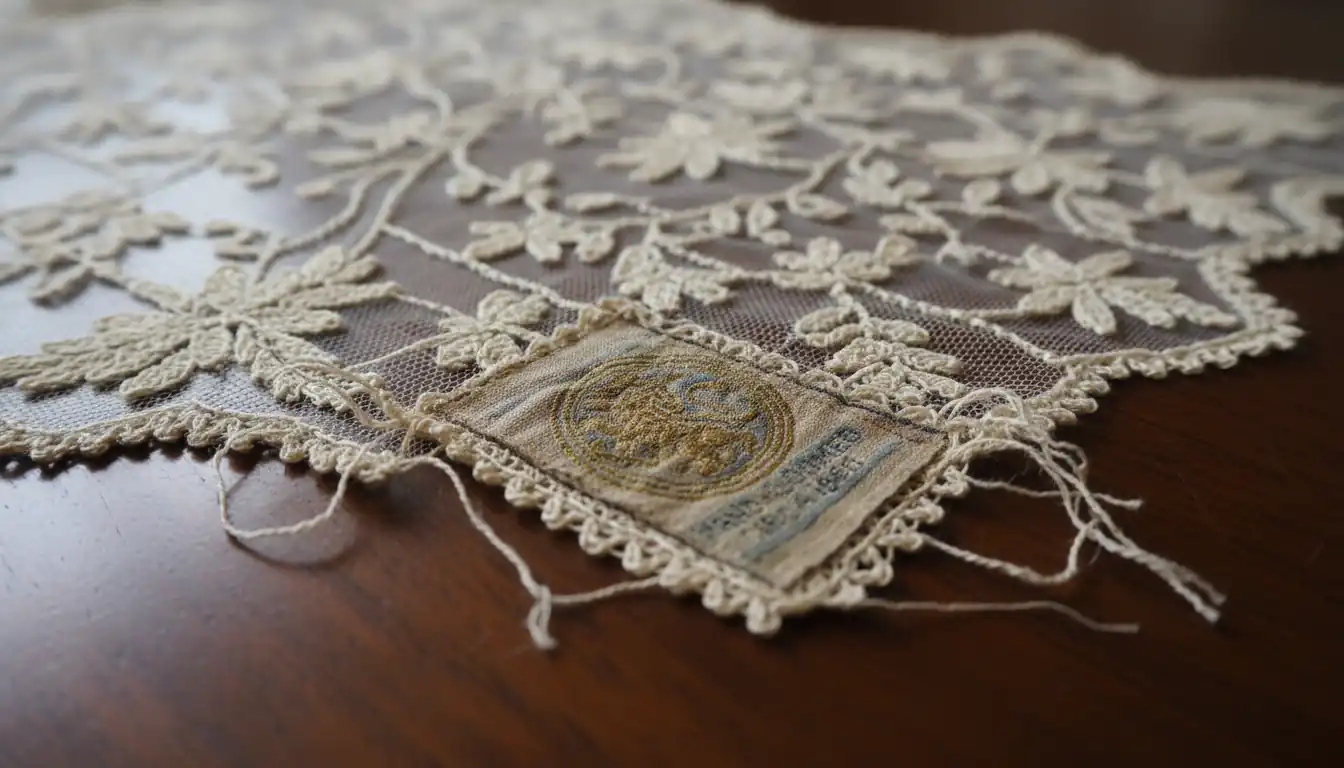
While the fabric itself tells the story of its creation, the labels and tags attached to a garment or textile provide a paper trail of its commercial life. Even a faded, frayed ribbon can be the key to unlocking a piece's history if you know what to look for.
Tracking Legacy Brands from Abercrombie to Straus
Many brands that we associate with modern malls have histories stretching back over a century. However, their logos have evolved significantly. For example, an early 20th-century Abercrombie & Fitch label looks nothing like the one you see today. Early labels were often woven silk or stamped cotton, featuring serif fonts and detailed illustrations of camping gear or wildlife.
Similarly, department stores like Abraham & Straus or Marshall Field’s changed their typography every few decades. By analyzing the font style—moving from ornate Victorian scripts to the clean, geometric lines of Art Deco—you can narrow down the manufacturing date to within a five-year window. Relic can be particularly helpful here; by scanning a photo of a label, the app can cross-reference the logo against historical brand databases to provide an instant origin story.
The 1971 Care Label Milestone
If you are trying to determine if a piece is truly an antique (100+ years old) or just "old," the care label is your best friend. In 1971, the Federal Trade Commission (FTC) issued the Care Labeling Rule, which required manufacturers to provide permanent labels with instructions for laundering and care.
- No Care Label: If the garment has a brand label but no care instructions (and no evidence that one was cut out), it was almost certainly made before 1971.
- Printed vs. Woven: Very old labels (pre-1940s) are almost always woven into a ribbon. Printed labels on acetate or nylon became common in the mid-20th century.
- "Made In" Requirements: The McKinley Tariff Act of 1890 required all imported goods to be marked with their country of origin. If a piece is marked "Made in Japan" or "Made in France," it dates to after 1890. If it simply says "France," it likely dates between 1891 and 1914.
A missing care label is often the first sign that you’ve found something truly vintage or antique, but the presence of a "Union Made" stamp can tell you exactly which decade the workers assembled it.
Digital Appraisal Tools for the Modern Collector
The rise of the "citizen collector" has led to a surge in interest for tools that can identify treasures on the fly. Whether you are at a dusty estate sale or cleaning out an attic, you want answers quickly. This has led many to ask: what is a good free antique identifier app?
Finding a Reliable Free Antique Identifier App
There are several free tools available that can provide a basic starting point. Google Lens is a popular choice for general visual searches. It can help you find similar items online and give you a ballpark idea of what you are looking at. However, general-purpose search tools often struggle with the nuances of textiles. They might identify a pattern but fail to distinguish between a 1920s original and a 1990s reproduction.
For those who need more than just a "best guess," specialized apps are the preferred choice. While free tools are great for a quick search, they often lack the deep database of textile-specific markers like weave density and fiber analysis. This is where a premium tool becomes a necessity for anyone looking to sell or insure their items.
Why AI Accuracy Outperforms Manual Searching
Manual searching involves hours of scrolling through eBay sold listings or forum posts where "experts" often disagree. It is a process prone to human error and confirmation bias. You might want your lace to be a 19th-century Belgian masterpiece, so you ignore the clues that suggest it’s a 1950s machine-made copy.
Relic removes this bias by using objective data. When you upload a photo to Relic, the AI doesn't just look at the "vibe" of the item. It analyzes:
- Historical Context: Comparing the item to known museum-grade examples.
- Market Insights: Providing current valuation based on actual auction results, not just asking prices.
- Professional Appraisal: Giving you a report that carries weight with dealers and collectors.
With a 4.9-star rating from over 20,000 reviews, Relic has established itself as the standard for accuracy in the palm of your hand. It’s the difference between saying "I think this is old" and saying "I know this is a 1912 Irish Crochet lace collar."
Preserving Value After the Scan
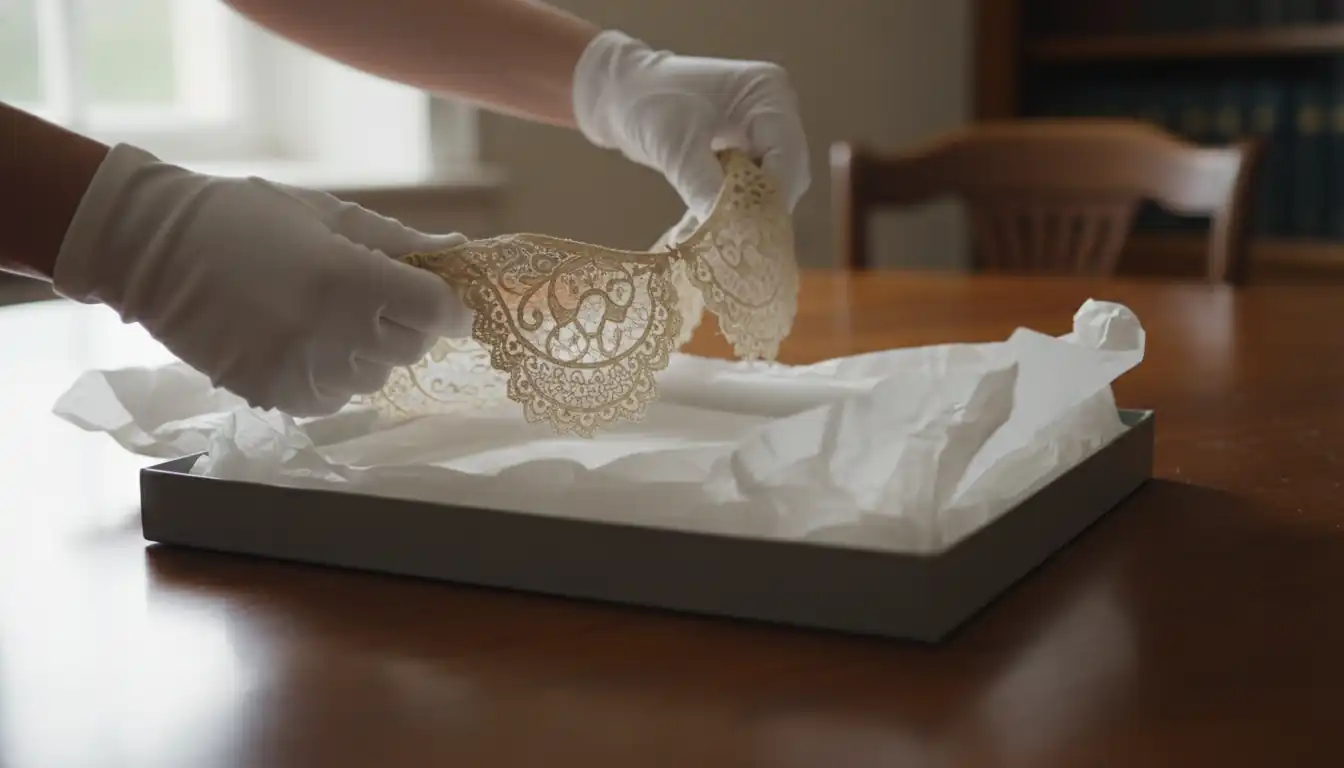
Once you have identified your textile as a genuine antique, your priority shifts from identification to preservation. Fabric is one of the most fragile mediums in the world of collecting. Light, moisture, and even the oils on your skin can cause irreversible damage over time.
Handling Fragile Fabrics During Identification
The moment you suspect a piece of fabric is an antique, you should change how you handle it. The natural oils and salts on your hands can accelerate the breakdown of old fibers, especially silk, which can undergo a process called "shattering" where the fibers literally disintegrate.
- Wash Your Hands: If you don't have white cotton gloves, ensure your hands are freshly washed and dried—no lotions or sanitizers.
- Support the Weight: Never pick up an antique textile by a single corner. The weight of the fabric can cause the old threads to snap. Use a piece of acid-free board or a clean white sheet to move the item.
- Avoid the "Burn Test": You may see advice online to burn a small thread to see if it smells like hair (wool/silk) or plastic (synthetic). While effective, this is destructive. Modern AI scanning makes this risky old-school method unnecessary.
Documenting Your Textile’s Digital Provenance
In the modern market, the "story" of an item is almost as valuable as the item itself. This is known as provenance. Historically, provenance was a paper trail of receipts and letters. Today, it is increasingly digital.
When you use an app like Relic to identify your lace or quilt, you aren't just getting a name and a date; you are generating a digital record. This report includes the historical context, the material analysis, and the appraised value. Keep this digital file in a secure place and back it up. If you ever decide to sell the item or need to file an insurance claim after a house fire or flood, this digital provenance is your proof of value.
- Storage Tip: Store your textiles in acid-free boxes with acid-free tissue paper. Avoid plastic bins, which can trap moisture and lead to mildew.
- Light Control: Keep your treasures out of direct sunlight. UV rays act like a slow-motion bleach, eating away at both the color and the strength of the fibers.
Conclusion
Uncovering the history of a family textile is a journey that connects you to the past in a deeply personal way. Whether it’s a piece of 19th-century lace or a mid-century designer scarf, knowing exactly what you hold in your hands changes how you value it. By understanding the 100-year rule, recognizing the markers of hand-crafted weaving, and utilizing modern AI tools, you move from guesswork to certainty.
The secret to proving the age of your grandmother’s lace isn't hidden in a dusty library; it's visible in the twist of the thread and the history of the label. With the right approach and the help of tools like Relic, you can protect these fragile pieces of history and ensure their stories are told for another hundred years.
Your next step is simple: take that heirloom out of the box, find a well-lit room, and let your phone reveal the secrets hidden in the weave. You might just find that you’re holding a masterpiece.
Identify antiques instantly
Point your camera at any antique, collectible, or vintage item. Get valuations, history, and market insights in seconds.
Download for iPhone