Your Jar of Pennies Could Be a Goldmine and the Truth About Coin Scanning Apps

That heavy glass jar sitting on your dresser or tucked away in the back of a closet is more than just a collection of loose change. For most people, it represents a rainy-day fund or a trip to the grocery store’s coin machine. But for those who know what to look for, that jar is a potential treasure chest. Hidden among the common pennies and nickels could be a rare mint error, a silver alloy from a bygone era, or a historical token worth hundreds of times its face value.
The challenge has always been the identification process. In the past, you needed a stack of reference books, a high-powered magnifying glass, and decades of specialized knowledge to tell a common coin from a valuable rarity. You had to spend hours squinting at tiny mint marks and comparing luster levels to grainy black-and-white photos. Most people simply didn't have the time or the patience, so the treasures stayed buried in the copper and zinc.
Technology has completely flipped the script on how we interact with our pocket change. With the rise of sophisticated mobile applications, the barrier to entry for coin collecting has vanished. You can now use your smartphone to scan a coin and receive an instant identification. But how do these tools actually work, and can you really trust a piece of software to tell you if you’ve struck gold? Understanding the mechanics behind these apps is the first step toward turning your "junk" into a documented collection.
The Science Behind Modern Coin Identification Technology
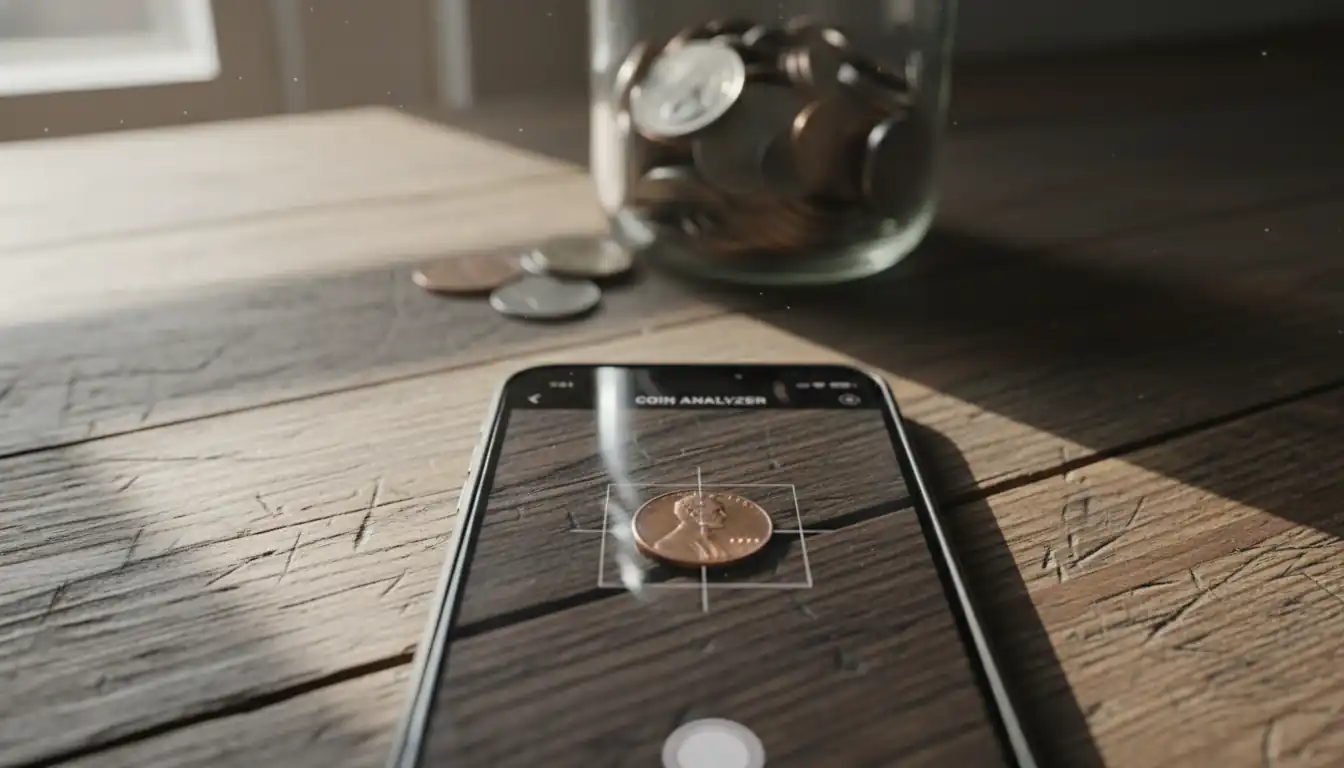
The transition from manual identification to digital scanning represents one of the biggest leaps in the history of numismatics. For over a century, the "Red Book" was the bible for American collectors. If you wanted to know the value of a 1916-D Mercury Dime, you looked it up in the index and hoped your eyes weren't deceiving you. Today, that process happens in milliseconds through a combination of high-resolution optics and massive datasets.
Computer Vision and Numismatic Databases
At the heart of modern identification apps is a technology called computer vision. Think of this as a highly specialized form of facial recognition, but instead of looking for eyes and noses, the AI is looking for the "landmarks" of a coin. When you snap a photo, the software breaks the image down into thousands of data points. It analyzes the placement of the date, the specific curve of the letters in "Liberty," and the exact orientation of the mint mark.
These apps aren't just guessing based on a general shape. They are comparing your photo against a vast digital library of known coin varieties. These databases pull from decades of auction records, historical archives, and museum collections. When the app identifies a coin, it is essentially finding a "match" in a digital lineup. This is why these apps are considered legitimate tools by many in the community. They aren't pulling numbers out of thin air; they are referencing real-world data from established numismatic authorities.
Is the scan coin app legit? The answer lies in the source material. A reputable app links its identification to verified historical records. If the app tells you that your penny is a 1955 doubled-die wheat cent, it’s because the computer vision software detected the specific "doubling" effect on the lettering that matches the known characteristics of that specific error. The legitimacy comes from the data, not just the software itself.
Machine Learning for Grading and Condition
Beyond just identifying the type of coin, modern apps are beginning to tackle the much harder task of grading. In the coin world, condition is everything. A coin in "Mint State" might be worth $1,000, while the exact same coin in "Good" condition might only be worth its weight in metal. This is where machine learning comes into play.
Machine learning models are trained on millions of images of coins that have already been graded by human experts. By looking at how light reflects off the surface (the "luster") and identifying the location of scratches or "bag marks," the AI can provide a preliminary grade. It looks for wear on the highest points of the design, such as the hair on a portrait or the feathers on an eagle’s wing.
- Feature Detection: The AI identifies specific die varieties, such as the "Small Date" vs. "Large Date" 1982 Lincoln cents.
- Surface Analysis: Algorithms detect cleaning marks or artificial toning that might lower a coin's value.
- Pattern Recognition: The software can distinguish between a genuine mint error and post-mint damage caused by a coin being stuck in a washing machine.
Key Insight: Digital identification is only as good as the database it relies on. The most reliable apps are those that update their records frequently to reflect new auction results and newly discovered varieties.
Accuracy Standards for Digital Appraisals
One of the most frequent questions from newcomers is: "How accurate is CoinSnap?" or other similar scanning tools. It is a fair question, especially when there is potential money on the line. To understand the accuracy of a digital appraisal, you have to understand that the app is a tool, not a final judge. It provides a high-probability estimate based on the visual evidence you provide.
Factors That Influence Scanning Precision
The accuracy of a scan is heavily dependent on the quality of the input. If you take a blurry photo in a dark room on a cluttered kitchen counter, the AI is going to struggle. It’s like trying to read a book through a fogged-up window. To get the most accurate results, you need to provide the software with the best possible data.
- Lighting Conditions: Use diffused, natural light. Harsh camera flashes can create "hot spots" that hide the coin's true details, while low light can make a high-grade coin look dull.
- Background Contrast: Place the coin on a solid, neutral background. A black or dark grey surface usually works best for silver and copper coins because it allows the edges of the coin to stand out clearly.
- Camera Resolution: Modern smartphones have incredible macro capabilities, but you have to let the camera focus. If the image isn't sharp enough to see the individual lines in the wheat stalks or the date, the app's accuracy will plummet.
Even with a perfect photo, an app might misidentify a coin if it is a very rare "mule" or a highly sophisticated counterfeit. This is why professional collectors view apps as a "first-pass" tool. They are excellent for sorting through a large volume of coins quickly to find the ones that warrant a closer look.
Comparing App Results with Professional Grading
It is vital to distinguish between an app's appraisal and a certified grade from a third-party service like PCGS (Professional Coin Grading Service) or NGC (Numismatic Guaranty Company). These organizations employ human experts who examine coins under high-powered microscopes and use physical testing to verify metal content.
| Feature | Mobile Scanning App | Professional Grading (PCGS/NGC) |
|---|---|---|
| Speed | Instant (Seconds) | Weeks or Months |
| Cost | Free or Low Subscription | $20 - $100+ per coin |
| Accuracy | High (for ID), Moderate (for Grade) | Definitive / Industry Standard |
| Market Acceptance | For personal inventory | Required for high-value sales |
| Process | Digital Image Analysis | Physical Inspection & Authentication |
If an app tells you that your coin is worth $5,000, do not head to the dealership to buy a new car just yet. That $5,000 figure is likely based on the highest possible grade for that coin. To actually realize that value, you would need to have the coin physically slabbed and graded by a professional service. The app gives you the "potential" value; the professional service gives you the "marketable" value.
Expanding Your Search to Historical Relics
While coins are the most common items found in these collections, they are rarely the only things of value. If you’ve inherited a collection or spent time metal detecting, you likely have items that don't fit the standard definition of "currency." These are often referred to as "exonumia"—items like commemorative medals, trade tokens, wooden nickels, and even ancient artifacts.
Standard coin apps often hit a wall when they encounter these items. Because they aren't official government-issued currency, they aren't always in the standard numismatic databases. This is where you need a more versatile tool that understands the broader world of antiques and historical objects.
Identifying Medals and Tokens with Relic
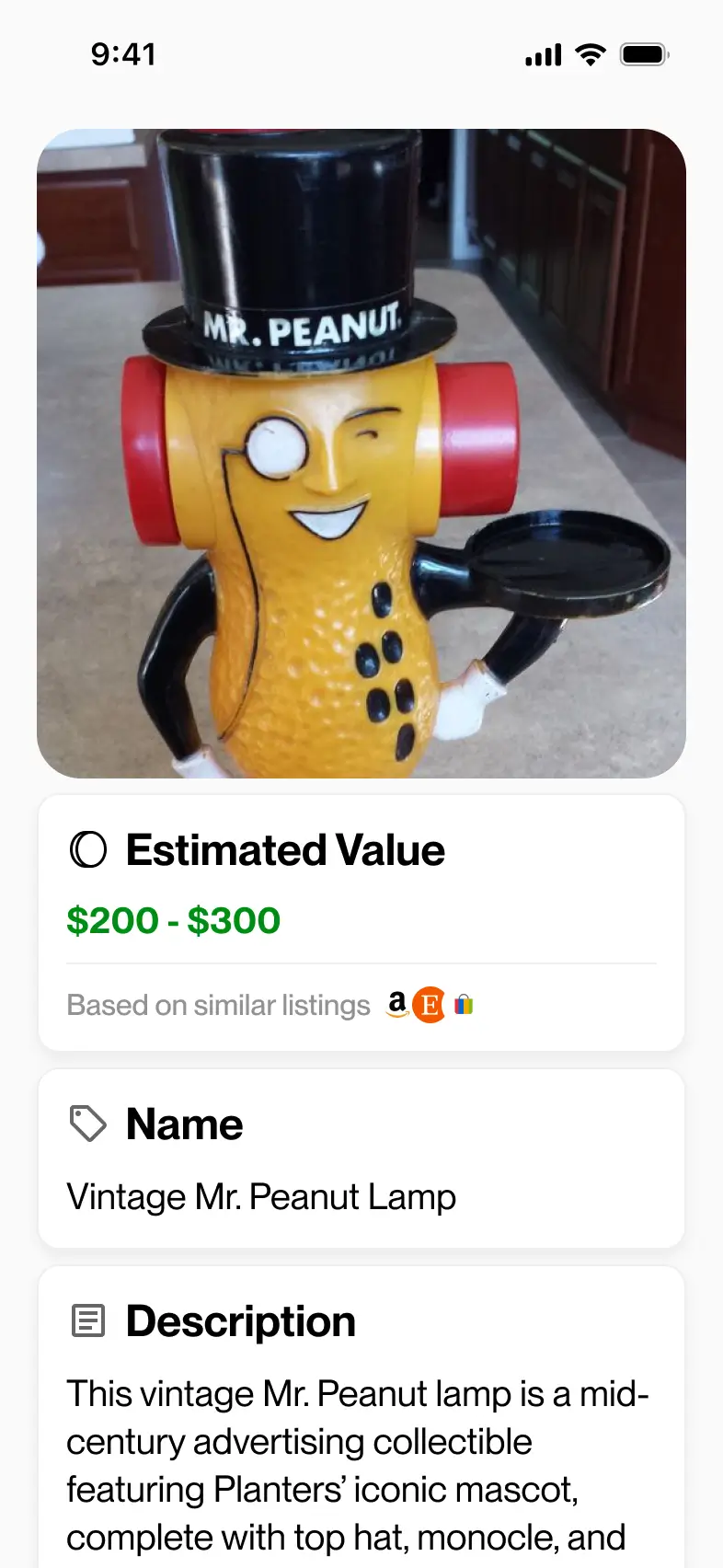
This is where the Relic iOS app becomes an essential part of your toolkit. While a coin app might get confused by a 19th-century political token or a bronze medal from a local fair, Relic is designed to handle the "everything else." Relic uses advanced AI to provide a real appraisal, history, and origin of items that fall outside the narrow scope of traditional coinage.
If you find a strange metallic disc in your jar that doesn't have a denomination, you can simply take or upload a photo to Relic. The app's AI analyzes the iconography, the metal composition, and the historical markings to tell you exactly what you’re holding. It might be a Civil War "sutler" token used by soldiers to buy supplies, or a rare commemorative medal from a forgotten world's fair.
The beauty of using an app like Relic is that it bridges the gap between a coin collector and a general antique enthusiast. It allows you to scan the "junk" in your drawer and discover that a seemingly worthless piece of brass is actually a piece of history with a dedicated market of collectors. With a 4.9-star rating from over 20,000 reviews, it has proven to be a reliable companion for those who want to know the "why" behind their finds, not just the "what."
Connecting Coin Finds to Broader Antique Collections
Often, a coin is just one piece of a larger historical puzzle. Perhaps you found a handful of silver quarters inside an old tin box, or tucked into the pocket of a vintage military jacket. The coins give you a date, but the objects they are found with provide the context.
- The "Picker" Mentality: Successful treasure hunters don't just look for coins; they look for anything with age and rarity.
- Historical Context: Using Relic to identify an old buckle or a decorative button found alongside your coins can help you date the entire find.
- Market Insights: Sometimes the "container" or the "accessory" is worth more than the coins themselves. A rare antique coin purse or a sterling silver mint box can be a significant find in its own right.
By expanding your focus to include relics and antiques, you increase your chances of finding value. Don't let a lack of knowledge stop you from investigating an item. If it looks old, if it feels heavy, or if it has an intricate design, it’s worth a scan. The history of an item is often what drives its value, and having a tool that can instantly provide that context is like having an appraiser in your pocket.
Navigating the Complexities of Market Value
Once you have identified your coins and relics, the next step is understanding what they are actually worth in the real world. This is often the most confusing part of the hobby. You might see a coin listed on an app for $100, but when you take it to a local dealer, they offer you $40. This discrepancy isn't necessarily a sign of a scam; it’s a reflection of how the market functions.
Auction Trends and Collector Demand
Market value is not a static number. It is a living, breathing thing that changes based on supply, demand, and even pop culture. For example, in 2025, we have seen a surge in interest for "modern rarities"—coins from the 1980s and 90s that were once considered common but are now being sought after in perfect, uncirculated condition.
- Melt Value: This is the raw value of the metal contained in the coin. If you have a pre-1964 silver quarter, its "melt value" is tied to the current spot price of silver. This is the absolute floor of the coin's value.
- Numismatic Premium: This is the "collector value" added on top of the metal value. It is driven by rarity, historical significance, and condition.
- The "Spread": This is the difference between what a dealer buys a coin for and what they sell it for. Dealers have overhead, insurance, and the risk of holding inventory, so they will always offer less than the "retail" price you see online.
Rarity is also relative. A coin might be "rare" because only a few were made, or it might be "condition rare," meaning millions were made but only a handful have survived in perfect condition. Apps are great at identifying the former, but they require a very high-quality scan to help you identify the latter.
Avoiding Common Scams and Overvaluation
The digital age has made it easier to find treasures, but it has also made it easier for scammers to operate. One of the most common issues is "overvaluation" on auction sites like eBay. You might see a common 1970s penny listed for $10,000 with the word "L@@K! RARE!" in the title. These are almost always scams or "money laundering" listings.
The "Sold" price is the only price that matters. When researching value, never look at what people are asking for an item; only look at what people have actually paid for it in completed auctions.
To protect yourself, use your apps to get a baseline, but then cross-reference that information. If an app tells you a coin is valuable, look for that same coin on reputable auction house websites like Heritage Auctions or Stacks Bowers. If the prices align with what the app is telling you, you likely have something special.
- Beware of "Cleaned" Coins: Never clean your coins. To a collector, a dirty coin is worth much more than a coin that has been scrubbed. Cleaning leaves microscopic scratches that ruin the "numismatic premium."
- Verify the Source: If you are using an app for an appraisal, ensure it is using recent market data. The market for antiques and coins can shift significantly in just a few months.
- Trust Your Gut: If a deal seems too good to be true, or if an appraisal seems impossibly high for a common-looking item, seek a second opinion.
Organizing and Protecting Your Digital Collection
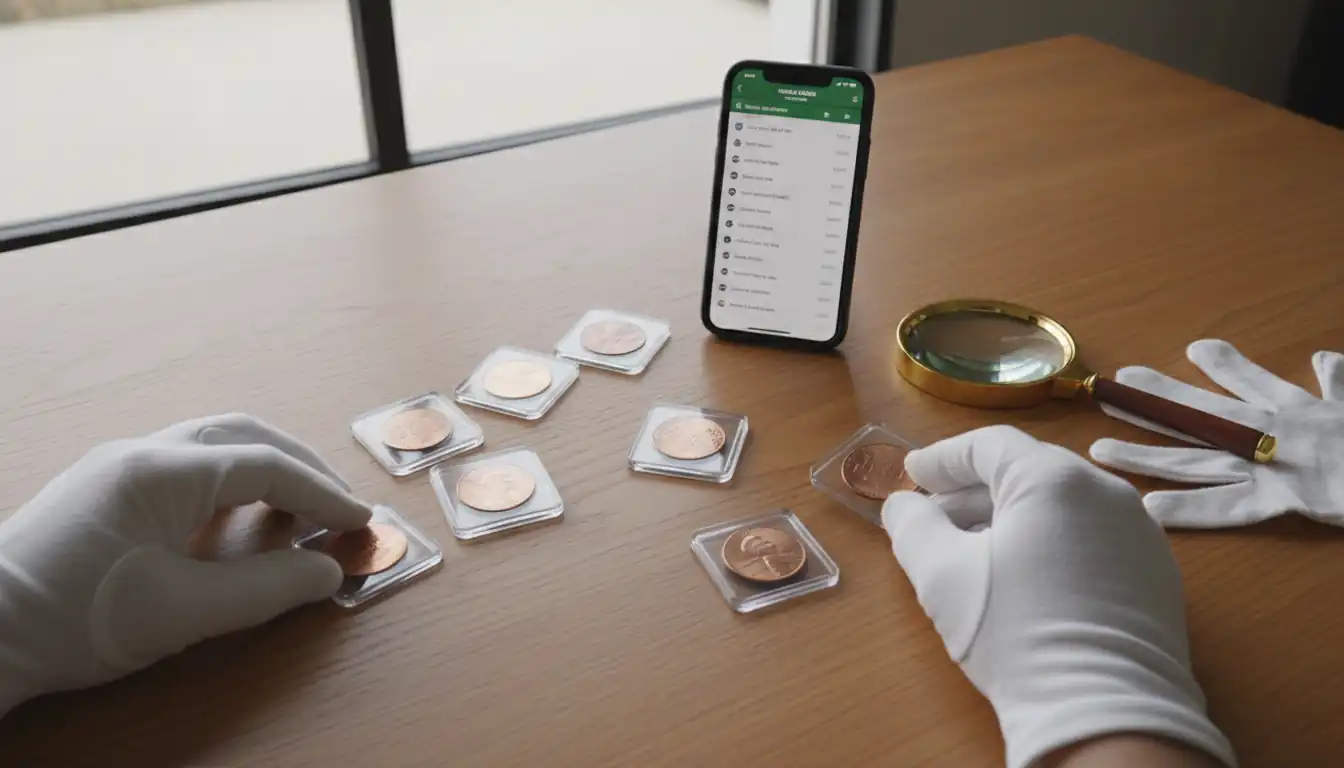
After you’ve spent the time scanning your jar of pennies and identifying your historical relics with Relic, you’ll likely have a much better understanding of what you own. But a collection isn't just a pile of items; it’s a documented history. The final step in the process is moving from "discovery" to "curation."
Cloud Storage for Provenance and Insurance
One of the most significant advantages of using modern apps is the ability to create a digital inventory. Instead of a physical ledger that can be lost or destroyed, you can maintain a cloud-based record of every item in your collection. This serves several critical purposes.
- Insurance Documentation: If your collection is ever stolen or damaged in a fire, having high-resolution photos and digital appraisals is essential for filing a claim. Most standard homeowners' insurance policies require specific documentation for "collectibles."
- Estate Planning: By cataloging your finds now, you are making life much easier for your heirs. They won't have to wonder if that jar of coins is worth anything; they will have a digital map of the collection's value.
- Provenance Building: In the world of high-end collecting, "provenance" (the history of ownership) is everything. By keeping a digital record of when and where you found or bought an item, you are adding to its historical record, which can actually increase its value over time.
Apps like Relic allow you to keep a searchable catalog of your scanned items. This means you can see your entire collection at a glance, track how the value changes over time, and even share specific items with potential buyers or fellow enthusiasts with a single tap.
Sharing Finds with the Numismatic Community
Collecting is often a solitary hobby, but it doesn't have to be. The digital records you create allow you to participate in a global community of experts and enthusiasts. Whether you’re posting a high-res scan to a forum to ask about a specific die variety or sharing a rare find on social media, your digital inventory is your ticket into the conversation.
- Expert Verification: If you find something truly unique, the community can help you verify it. Many experts frequent online forums and are happy to weigh in on a high-quality photo.
- Trading and Selling: Having a digital portfolio makes it much easier to trade with other collectors. You can send a link to your inventory rather than carrying a heavy book of coins to a show.
- Education: The more you scan and catalog, the more you learn. You’ll start to recognize patterns, identify specific engravers' styles, and develop a "feel" for what makes an item valuable.
The journey from a dusty jar of pennies to a curated digital collection is one of the most rewarding paths a hobbyist can take. It turns a mundane task—sorting change—into a high-tech treasure hunt. By using the right tools, like specialized coin apps and the Relic app for your antique finds, you are no longer just a person with a jar of coins. You are a curator of history.
Conclusion
Your jar of pennies really could be a goldmine, but only if you have the tools to see the value hidden in plain sight. The shift from manual research to AI-driven identification has democratized the world of collecting, making it possible for anyone with a smartphone to uncover hidden treasures. By understanding the science behind the scans, managing your expectations regarding accuracy, and expanding your search to include historical relics, you can turn a casual interest into a professional-grade hobby.
The most important thing to remember is that technology is your starting point, not your finish line. Use apps to sort, identify, and catalog your finds. Use them to learn the history of a 19th-century token or the rarity of a 2025 mint error. But always remember to cross-reference your findings and consult with professionals for high-value items.
Your next step is simple: grab that jar, find a well-lit spot, and start scanning. Whether you use a dedicated coin app or dive into the broader world of antiques with Relic, you are bound to find something that tells a story. And in the world of collecting, those stories are often worth far more than the face value of the metal they are written on.
Identify antiques instantly
Point your camera at any antique, collectible, or vintage item. Get valuations, history, and market insights in seconds.
Download for iPhone