Your Jewelry Box Could Be a Gold Mine: Spotting High-Value Silver Marks in Seconds

You might be sitting on a fortune without even realizing it. That heavy, tarnished spoon at the bottom of your kitchen drawer or the ornate bracelet left to you by a great-aunt isn't just a sentimental keepsake. It is a piece of history, and more importantly, it is a documented asset. Most people see a dull grey metal and think of "old silver," but to a collector or a savvy investor, that metal is a canvas covered in tiny, coded messages.
These messages are called hallmarks. They are microscopic stamps struck into the metal that tell a story of where the piece was made, who made it, and exactly how much pure silver is contained within the alloy. Learning to read these marks is like learning a secret language that has been used by silversmiths for over seven hundred years. Once you understand the grammar of these stamps, you can distinguish a $20 plated tray from a $2,000 solid sterling masterpiece in a matter of seconds.
This guide will walk you through the visual hierarchy of silver marks, the complexities of the British system, and how modern technology has finally made this hobby accessible to everyone. By the time you finish reading, you will know exactly what to look for the next time you find yourself at an estate sale or cleaning out a jewelry box.
The Anatomy of a Silver Hallmark
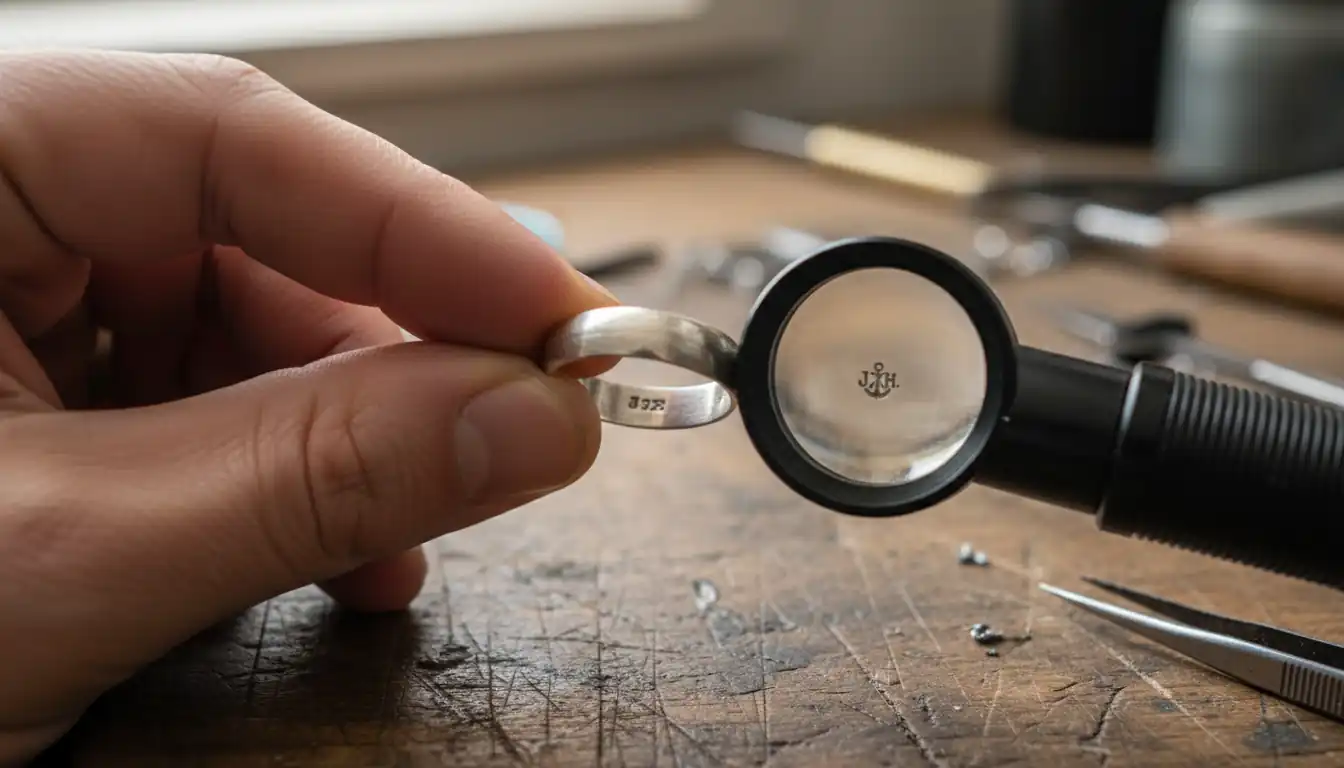
When you pick up a piece of silver and look through a jeweler’s loupe, the first thing you’ll notice is a series of small, recessed stamps. These aren't just random decorations or branding; they are a legal guarantee. In many countries, it has been a criminal offense for centuries to sell silver without these marks. Think of a hallmark as a passport for the object. It proves the item’s identity and grants it passage into the legitimate marketplace.
The visual hierarchy of these marks usually follows a specific order, though the placement can vary depending on the size of the item. On a spoon, you’ll usually find them on the back of the handle. On a bowl, they are often on the underside of the base. On jewelry, they might be hidden on the inside of a ring band or on the clasp of a necklace.
Decoding the Standard Mark
The most important mark you will ever look for is the "standard mark." This is the stamp that tells you the purity of the metal. Silver is a very soft material in its pure form, so it is almost always mixed with a small amount of copper to give it strength. The standard mark tells you the ratio of silver to other metals.
- 925 or Sterling: This is the most common mark you will see. It means the piece is 925 parts silver out of 1000, or 92.5% pure. This is the international standard for high-quality jewelry and flatware.
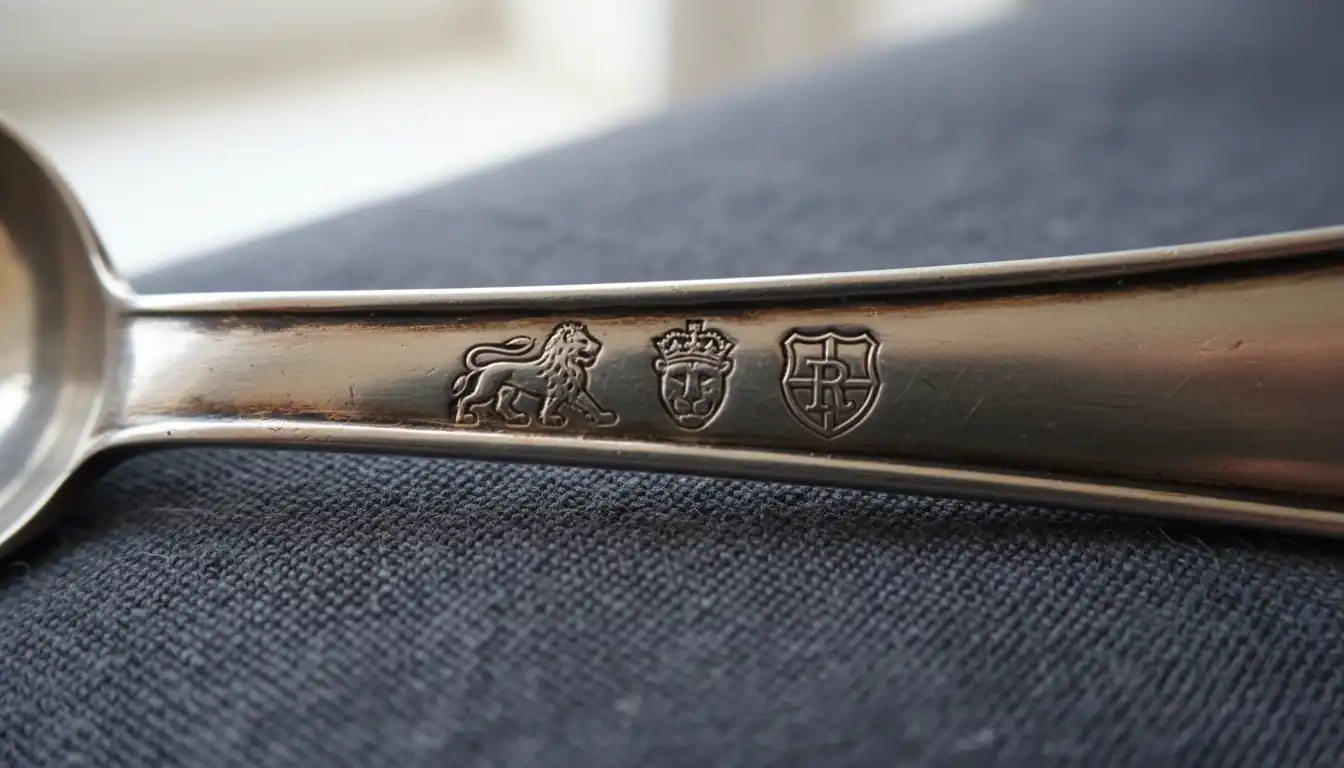
- The Lion Passant: In British silver, you won't always see the number 925. Instead, you will see a small lion walking to the left with one paw raised. This "Lion Passant" has been the symbol for sterling silver in England since the mid-1500s.
- Britannia: Occasionally, you might see a figure of a seated woman holding a trident. This indicates "Britannia silver," which is 95.8% pure—even higher than sterling.
- 800 or 900: These marks are common in European silver, particularly from Germany or Italy. They indicate a lower purity than sterling, but the pieces are still considered solid silver.
If you don't see a standard mark, the piece is likely silver-plated, meaning it is a base metal like copper or brass with a very thin layer of silver electroplated over the top. These pieces have very little resale value compared to solid silver.
Identifying Assay Office and Town Marks
Once you’ve confirmed the silver is real, the next mark tells you where the piece was tested. This is known as the "town mark" or "assay office mark." Historically, silversmiths had to send their finished work to a central office to be tested for purity. If the metal passed the test, the office struck their specific symbol onto the piece.
| Symbol | City | Country |
|---|---|---|
| Leopard's Head | London | England |
| Anchor | Birmingham | England |
| Crown | Sheffield | England |
| Three Wheat Sheaves | Chester | England |
| Crowned Harp | Dublin | Ireland |
| Thistle | Edinburgh | Scotland |
Seeing a leopard’s head doesn't just tell you the piece is from London; it connects the item to a specific guild and a specific tradition of craftsmanship. These marks are often incredibly crisp, even on old pieces, because they were struck with heavy steel dies. If a mark looks blurry or "mushy," it might be a sign that the piece is a cast copy rather than an original hand-stamped item.
The British System and Global Variations
The British hallmarking system is widely considered the gold standard for documentation. It is so precise that you can often identify the exact year a piece was made, down to the very month in some cases. This system typically consists of four or five marks in a row. While other countries like the United States used a much looser system, the British marks provide a level of certainty that collectors crave.
The reason the British system is so complex is that it was designed to prevent fraud and ensure that the Crown received its proper taxes. Every element of the mark serves a bureaucratic purpose, but for the modern collector, it serves as a historical GPS.
The Significance of Date Letters and Duty Marks
One of the most fascinating parts of a British hallmark is the date letter. This is a single letter of the alphabet that represents a specific year. To make things more complicated (and more precise), the assay offices changed the font and the shape of the shield surrounding the letter every time they went through the alphabet.
For example, a capital "A" in a square shield might represent 1896, while a lowercase "a" in an oval shield might represent 1916. You have to look closely at the "frame" around the letter. Is the top of the shield flat or pointed? Are the corners clipped? These tiny details are the difference between a Victorian antique and a modern reproduction.
You might also see a "Duty Mark," which is the profile of the reigning monarch’s head. This mark was used between 1784 and 1890 to show that the tax on the silver had been paid to the government. If you see the head of King George III or Queen Victoria, you can immediately narrow down the age of the piece to a specific era before you even look at the date letter.
Sponsor and Maker Marks
The "Sponsor’s Mark" (often called the Maker’s Mark) consists of the initials of the person or company responsible for the piece. This mark was usually the first one struck onto the silver before it was sent to the assay office.
In the United States, makers like Tiffany & Co., Gorham, or Reed & Barton didn't have to deal with a government assay office. Instead, they simply stamped their company name and the word "Sterling" on their products. While this makes American silver easier to read at a glance, it lacks the rigorous third-party verification found in British or French silver.
A maker's mark is the signature of the artist. Just as a painting by Picasso is worth more than an anonymous canvas, a silver tray by Paul Storr or Hester Bateman carries a massive premium because of the name stamped into the metal.
International Purity Standards
While the British and Americans were obsessed with sterling (925), other parts of the world had different ideas of what "good" silver looked like. If you are looking at silver from outside the English-speaking world, you need to be aware of these common standards:
- France: Look for a tiny "Minerva Head" mark. A number 1 next to the head means 95% purity, while a number 2 means 80%.
- Germany: After 1888, German silver was marked with a crescent moon and a crown (the Reichsmark), along with a decimal number like 800 or 835.
- Russia: Russian silver uses a measurement called "Zolotniks." You will often see the number 84, which is roughly equivalent to 87.5% purity.
- Scandinavia: Often uses "830" silver, which is slightly lower than sterling but very common in mid-century modern designs.
Instant Identification with AI Technology
For decades, identifying silver marks required a massive library of reference books. You would have to sit with a magnifying glass in one hand and a 500-page volume of Bradbury’s Book of Hallmarks in the other, flipping through thousands of tiny drawings of lions and anchors. It was a slow, tedious process that often led to mistakes, especially when a mark was worn down or partially obscured by years of polishing.
The barrier to entry for new collectors was high. If you were at a fast-paced auction or a crowded flea market, you didn't have thirty minutes to research a single spoon. You had to guess, and guessing often leads to leaving money on the table—or worse, overpaying for a fake.
How AI Outperforms Traditional Reference Books
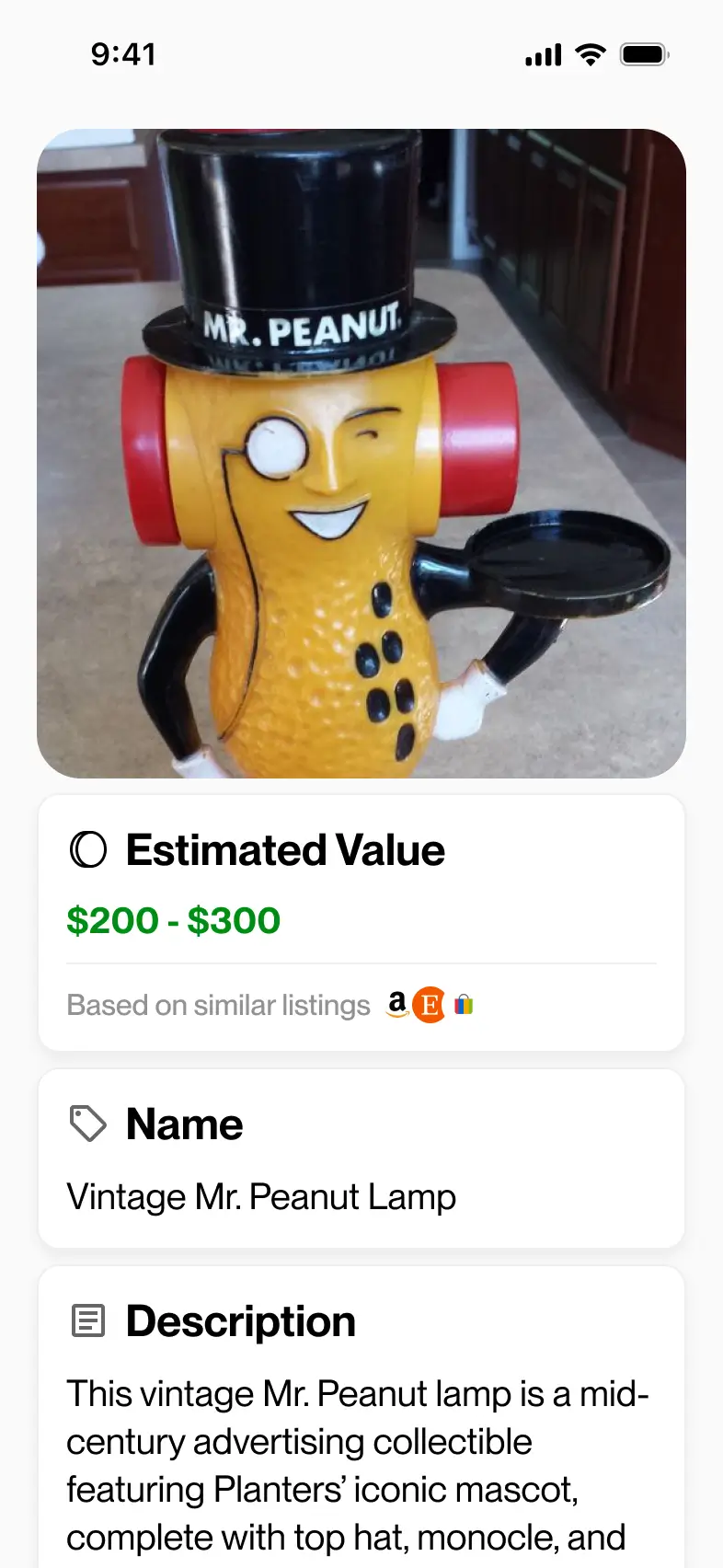
This is where technology has completely changed the game for collectors. Instead of memorizing thousands of shield shapes and font styles, you can now use your smartphone to do the heavy lifting. The Relic app is a perfect example of how artificial intelligence has democratized the world of antiques.
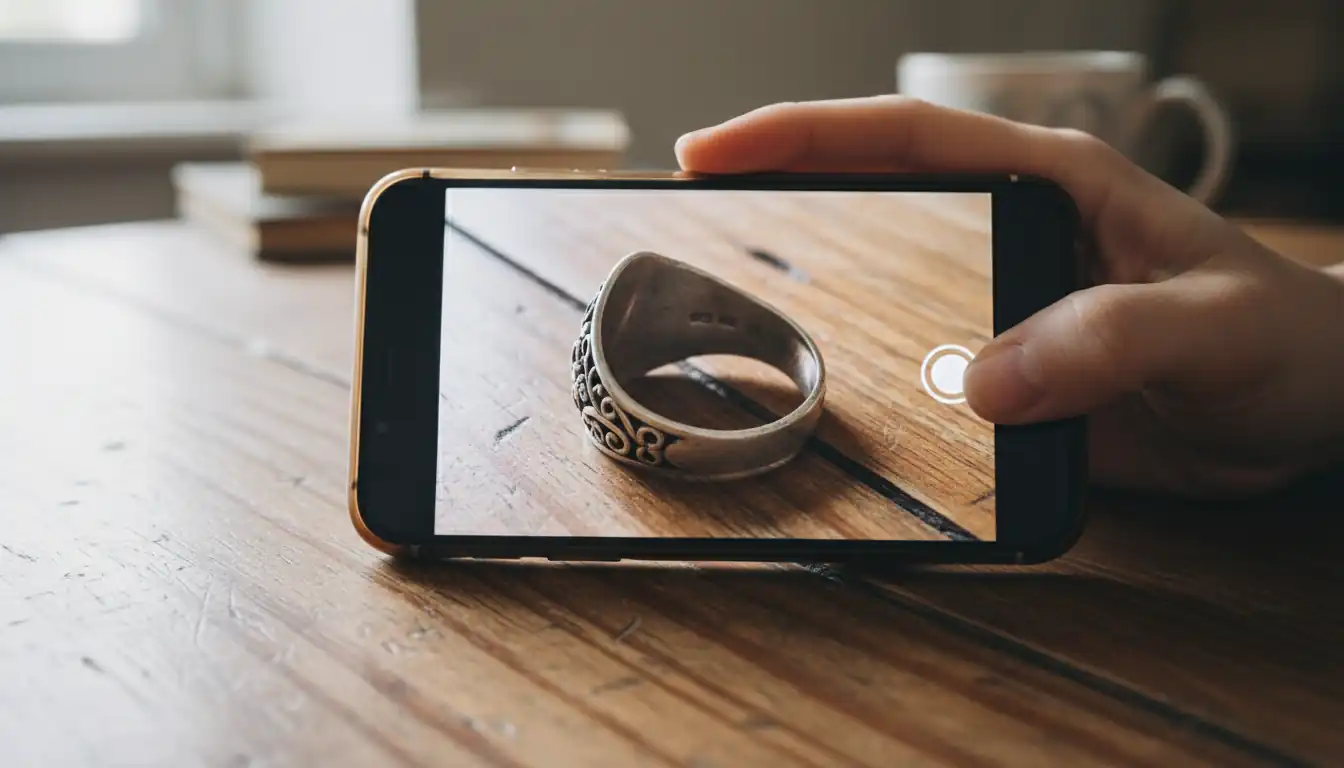
Relic uses advanced image recognition to analyze the marks on your jewelry or silverware. When you take a macro photo of a hallmark, the AI doesn't just look for a "match" in a static database; it analyzes the proportions, the wear patterns, and the specific stylistic markers of the stamp. It can distinguish between a genuine 18th-century London mark and a 20th-century "pseudo-hallmark" designed to look old.
The speed of this process is its greatest advantage. In the time it takes to pull a book out of your bag, Relic has already cross-referenced the mark against its massive catalog and provided you with the history, origin, and purity of the item. This allows you to make informed decisions in real-time, which is essential when you're "picking" in the field.
Getting Instant Appraisals with Relic
Beyond just identifying the mark, the Relic app provides a real appraisal of the item. It looks at current market trends and historical sales data to give you an idea of what the piece is actually worth. This is a vital feature because the value of silver isn't just based on its weight.
If you have a 50-gram silver snuff box, the "melt value" (the price of the raw silver) might only be $40. However, if Relic identifies the mark as belonging to a famous 18th-century silversmith, the actual market value could be $1,200. Having that information in your pocket gives you a massive edge, whether you are buying for your collection or looking to flip items for a profit. The app’s 4.9-star rating from over 20,000 reviews suggests that both professionals and casual hobbyists are finding this kind of instant data indispensable.
Common Pitfalls and Counterfeit Marks
As with any valuable commodity, the world of silver is full of deceptions. Some are honest mistakes—manufacturers using marks that look like hallmarks but aren't—while others are deliberate attempts to defraud buyers. Knowing the red flags is just as important as knowing the genuine marks.
The most common "trap" for beginners is confusing silver-plated items for solid silver. Manufacturers in the 19th and 20th centuries were very clever at making their plated wares look expensive. They would often use a series of stamps that mimicked the look of a British hallmark sequence to give the consumer a sense of prestige.
Spotting Nickel Silver and Faux Hallmarks
If you see the letters EPNS, put the item back down (unless you just really like the design). EPNS stands for "Electroplated Nickel Silver." Despite the name, there is actually no silver in "Nickel Silver"—it is an alloy of copper, nickel, and zinc. The "Electroplated" part means there is a microscopic layer of silver on the outside that will eventually wear off, revealing a yellowish or dull grey metal underneath.
Other marks to watch out for include:
- EPBM: Electroplated Britannia Metal (a type of pewter).
- A1 or Triple Plate: These are indicators of the thickness of the silver plating, not the purity of the metal itself.
- German Silver / Alpaca / Sheffield Plate: All of these terms refer to plated or base metal items.
Another common deception is the "pseudo-hallmark." In the late 19th century, some American and Hanau (German) silversmiths created marks that looked remarkably like 17th-century British marks. They did this to appeal to the Victorian obsession with "antique" styles. These pieces are often high-quality silver, but they aren't as old as the marks suggest. A trained eye—or a well-trained AI—can spot the subtle differences in the "crispness" of these fake marks compared to the originals.
Wear and Tear vs. Intentional Distortion
Sometimes, a mark is hard to read simply because the piece has been used and polished for a hundred years. This is called "rubbing." A rubbed mark isn't necessarily a bad sign; in fact, it can be a sign of age and authenticity. However, you have to be careful of "transposed" hallmarks.
A transposition is a sophisticated forgery where a criminal cuts a genuine hallmark out of a small, inexpensive item (like a broken spoon) and solders it into a larger, more valuable piece (like a fake George III coffee pot).
How to spot a transposition:
- The "Halo" Effect: Look for a faint line or a change in the color of the metal around the hallmark. This suggests the mark was "inset" into the piece.
- Inconsistent Wear: If the hallmark is perfectly crisp but the rest of the silver is heavily scratched and worn, something is wrong.
- Breath Test: If you breathe on the silver to fog it up, the moisture will sometimes reveal the seam where a mark was soldered in.
| Mark Type | Value Level | What it Means |
|---|---|---|
| Sterling / 925 | High | 92.5% Pure Silver |
| Coin | Medium | 90% Pure Silver (Common in US pre-1860) |
| 800 | Medium | 80% Pure Silver (Common in Europe) |
| EPNS | Low | Silver-plated base metal |
| Alpaca | Low | No silver content at all |
Maximizing Resale Value Through Identification
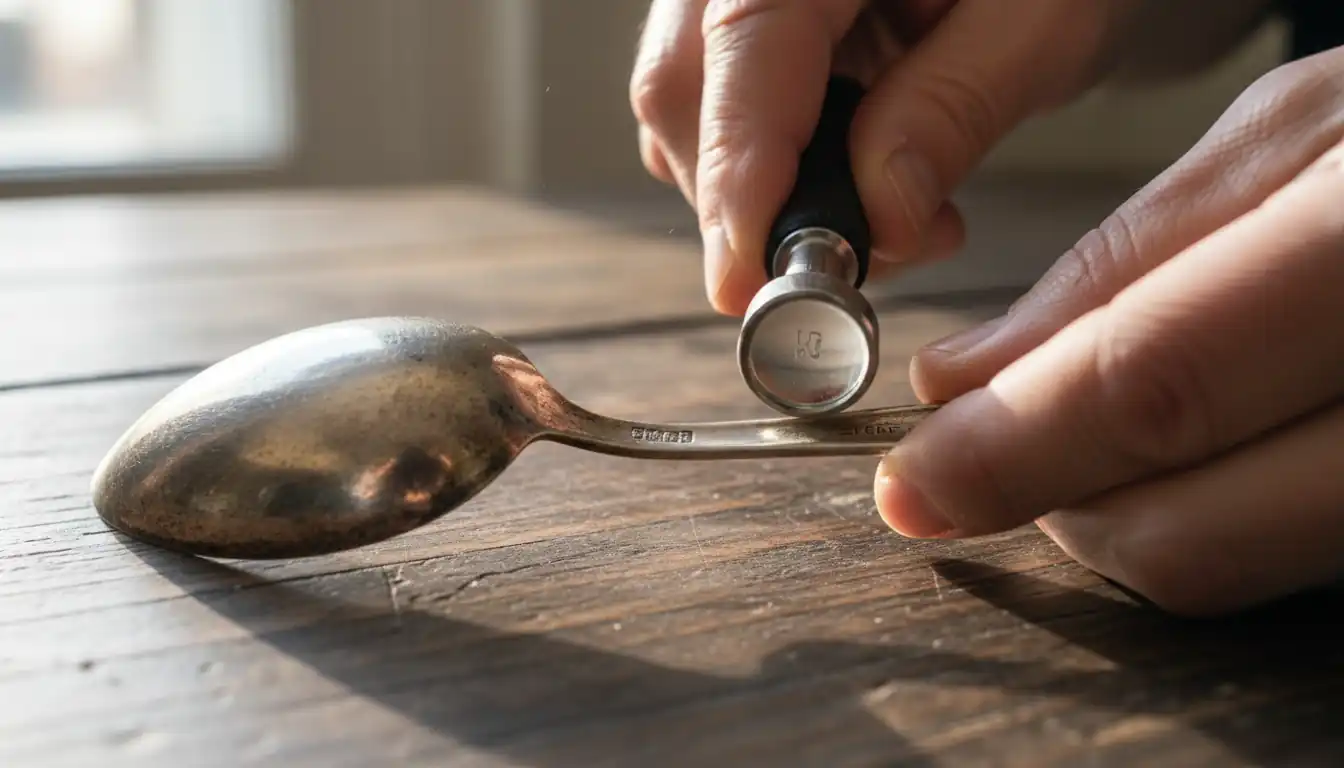
Once you have identified a piece and confirmed its authenticity, the next step is turning that knowledge into value. The difference between "scrap" silver and "collectible" silver is entirely in the documentation. If you walk into a pawn shop with an unmarked silver tray, they will weigh it, offer you a percentage of the silver market price, and likely toss it into a melting pot.
However, if you can prove that the tray was made by a specific maker or comes from a specific historical period, you are no longer selling a commodity; you are selling an antique. This can increase the value by 500% or more.
Documenting Marks for Insurance and Sales
If you plan to sell your silver on platforms like eBay, Chrono24, or at a specialized auction house, your photography is your most important tool. Buyers are skeptical, and for good reason. They need to see the marks clearly to feel confident in their purchase.
- Use a Macro Lens: Most modern smartphones have a macro mode that allows you to get very close to small objects. If yours doesn't, you can buy a clip-on macro lens for a few dollars.
- Indirect Lighting: Don't use a direct flash, as it will create a "hot spot" on the shiny silver and wash out the details of the mark. Use soft, natural light from a window or a dedicated light box.
- Angle the Light: To make a recessed mark "pop," the light should come from the side. This creates tiny shadows inside the stamp, making the letters and symbols much easier to read.
Using the data you get from the Relic app is an excellent starting point for this documentation. You can export the history and appraisal data to create a professional-looking listing or to add to an insurance rider for your home. Having a digital catalog of your items, backed by AI-verified data, makes the claims process much smoother if your collection is ever lost or stolen.
When to Seek a Professional Physical Appraisal
While AI and personal research are incredible tools for the vast majority of silver items, there are times when you should still consult a human expert. If you believe you have a piece of extreme historical significance—such as silver owned by a historical figure or a piece from the early Renaissance—a physical examination is necessary.
A professional appraiser can look for things that a photo might miss, such as the specific "heft" of the piece, the way the light reflects off the hand-hammered surface (planishing marks), and the chemical composition of the solder used in repairs. Use your digital tools to filter out the common items and identify the "stars" of your collection, then take those high-value pieces to a specialist to get a formal, written appraisal for your records.
Conclusion
Your jewelry box or your kitchen cabinet might be hiding significant financial assets. The difference between a piece of "old metal" and a valuable antique is often just a few millimeters of stamped code. By understanding the anatomy of a hallmark—the purity marks, the town marks, and the maker’s initials—you gain the ability to see value where others see clutter.
The process of identification used to be a daunting task reserved for experts with dusty libraries. Today, the landscape has changed. With the help of tools like the Relic app, you can bridge the gap between curiosity and professional-grade knowledge in seconds. You can walk into any estate sale or antique shop with the confidence that you won't be fooled by "nickel silver" or miss out on a rare maker's mark.
Take a moment this weekend to look through your own collection. Grab a magnifying glass, download Relic to your iPhone, and start scanning. You might find that the most valuable thing in your house has been hiding in plain sight all along. Whether you are looking to build a legacy collection or simply want to know what your heirlooms are worth, the journey starts with that first tiny stamp. Happy hunting.
Identify antiques instantly
Point your camera at any antique, collectible, or vintage item. Get valuations, history, and market insights in seconds.
Download for iPhone