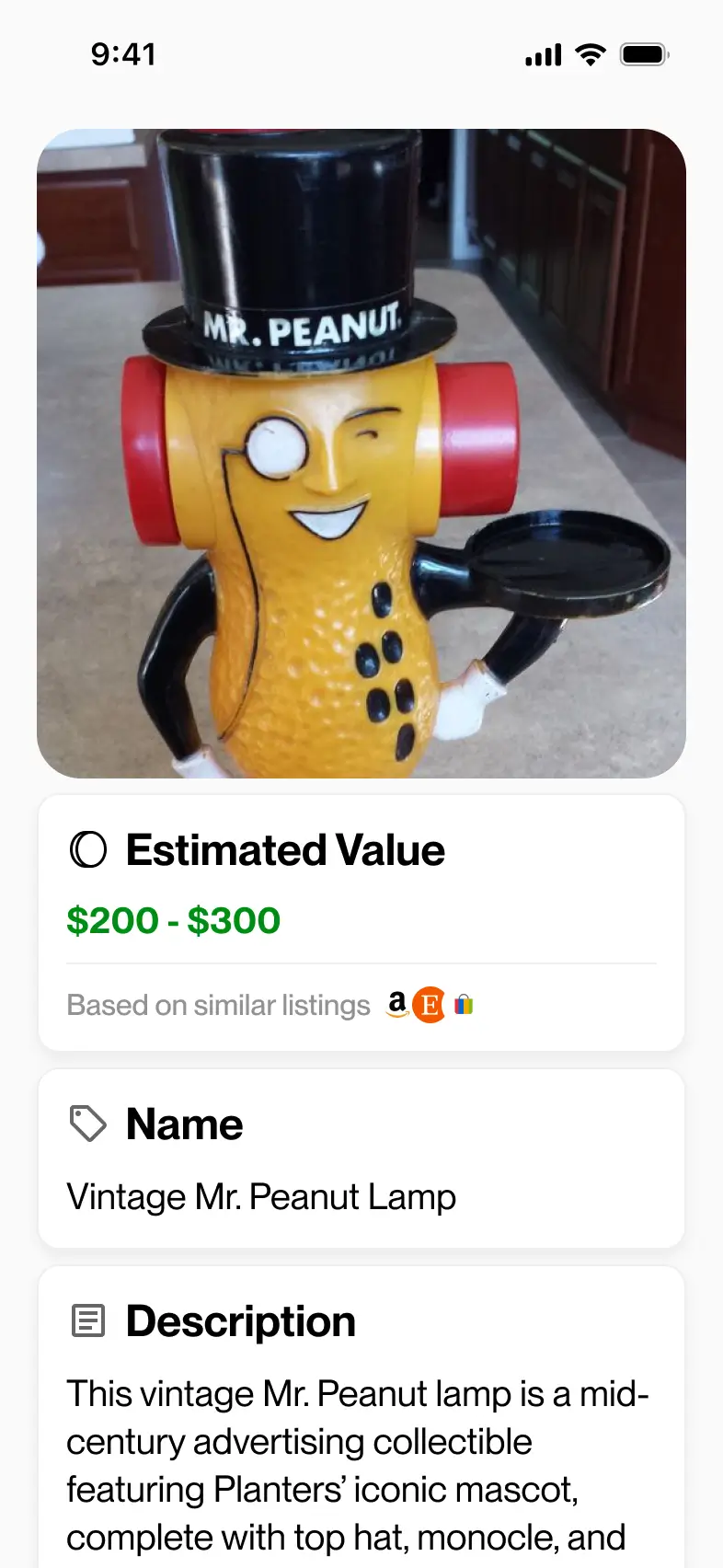
Your Phone Is a Secret Treasure Map: How AI Scanners Reveal the True Value of Your Antiques

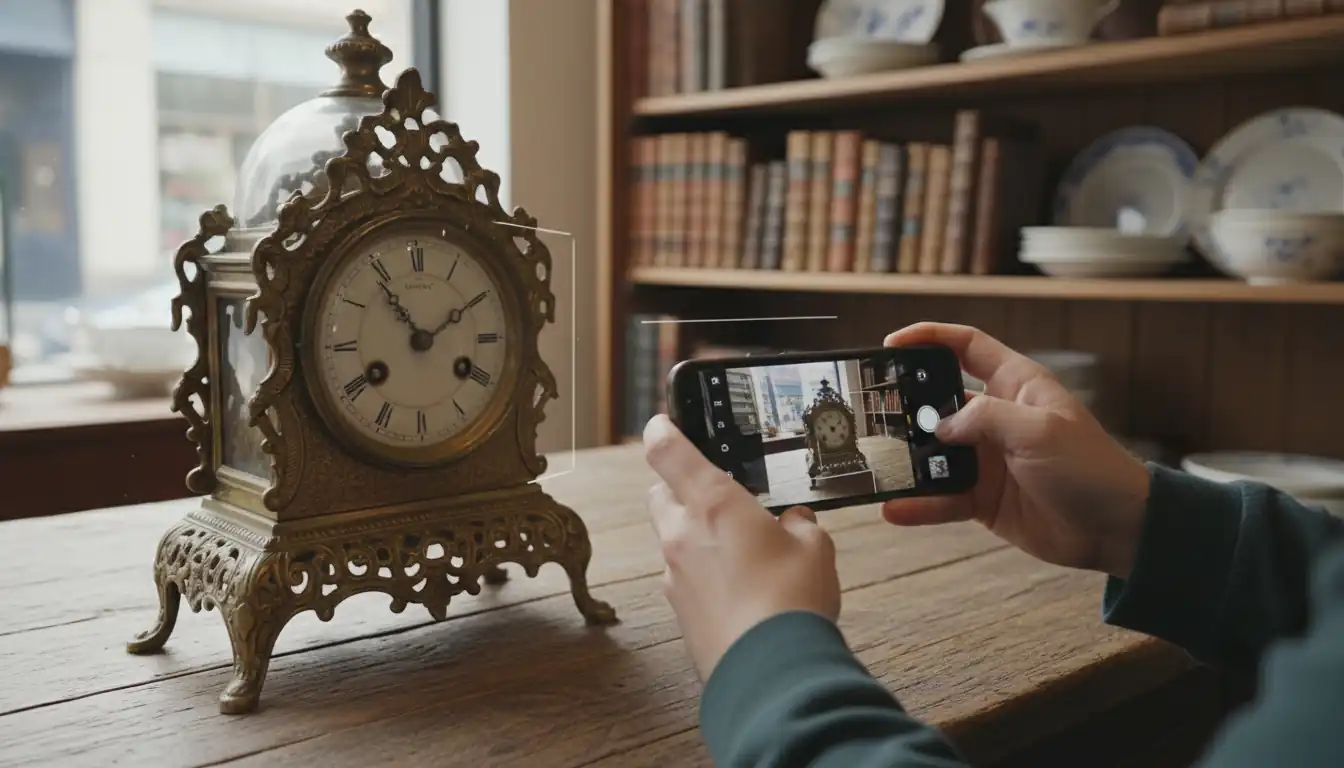
You stand in the corner of a crowded estate sale, eyes locked on a heavy, tarnished silver bowl. It has no obvious markings on the bottom, just a faint, stylized bird etched near the rim. Twenty years ago, you would have walked away or taken a blind gamble, hoping your gut instinct was worth the fifty-dollar price tag. You might have spent the next three nights hunched over a thick reference book, squinting at grainy black-and-white photos of silversmith hallmarks, only to realize you were looking at the wrong century entirely.
Those days of guesswork are fading into history. Your smartphone has become the most powerful tool in your collecting arsenal, acting as a bridge between a dusty physical object and a global database of historical knowledge. By simply pointing your camera at an item, you can peel back layers of grime and mystery to see the true story of an object’s creation, its journey through time, and its current standing in the modern market.
This shift isn't just about finding out what things are worth; it is about understanding the "why" behind the "what." In the following sections, we will explore how artificial intelligence has rewritten the rules of the antique trade, how you can use this technology to protect your family’s legacy, and how to ensure you never overpay for a reproduction again.
The Evolution of Antique Identification
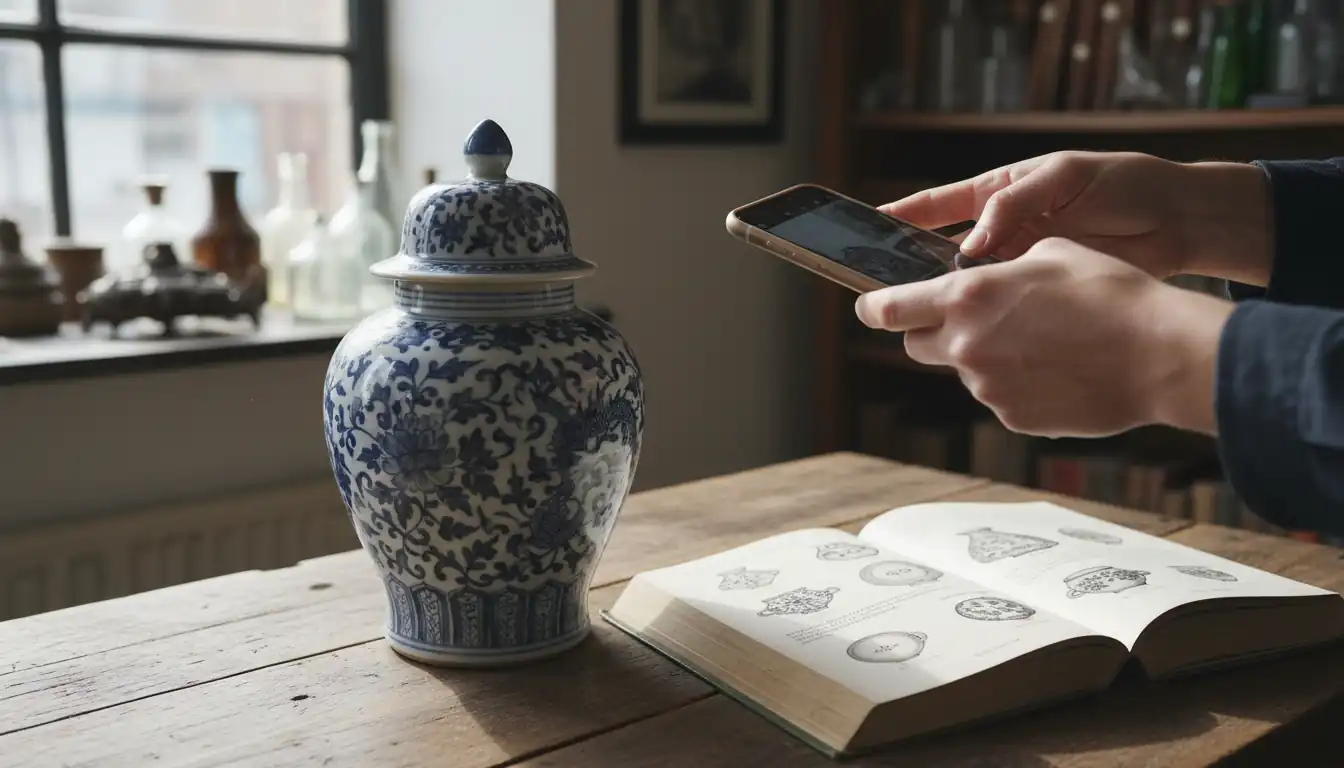
For decades, the "bible" of the antique world was the physical price guide. Collectors would carry dog-eared copies of Kovels’ or Miller’s, flipping through thousands of pages of text-heavy listings. These books were remarkable for their time, but they had a fundamental flaw: they relied on your ability to describe an object using the correct terminology. If you didn't know that a specific type of glass was called "carnival glass" or that a certain furniture leg was a "cabriole," you were essentially locked out of the information you needed.
The search process was a grueling exercise in trial and error. You would type vague descriptions into early search engines—"old green vase with flowers"—and be met with ten thousand irrelevant results. Identifying a maker's mark was even harder. Unless the mark was a clear name like "Tiffany" or "Wedgwood," you were forced to scroll through endless charts of symbols, crowns, and initials, hoping to find a match that looked "close enough." This friction often meant that valuable items were overlooked, while sentimental junk was hoarded under the mistaken belief it was a rare treasure.
From Physical Price Guides to Instant AI Scans
The transition to digital research initially just moved the books to the screen. You still had to type, you still had to describe, and you still had to guess. The real breakthrough came when software stopped trying to understand your words and started "seeing" the objects themselves. This is the leap from keyword searching to visual recognition.
Modern identification tools don't look for a description; they look for a visual signature. When you scan an item, the software analyzes the silhouette, the specific curvature of a handle, the way light hits a glaze, and the mathematical proportions of the piece. It compares these data points against millions of verified images in a fraction of a second. This removes the "vocabulary barrier" that kept many people from participating in the antique world. You no longer need to know the jargon to find the truth.
Why Visual Search Beats Keyword Hunting
Keywords are subjective. What you call "teal," a seller might call "peacock blue." What you describe as "art deco," might actually be "art nouveau." These linguistic discrepancies create massive gaps in research. Visual search bypasses language entirely.
- Pattern Recognition: AI can identify complex lace patterns or porcelain transfers that are nearly impossible to describe in a search bar.
- Mark Identification: Tiny, worn stamps on the bottom of a pewter mug are easily read by high-resolution cameras and matched against historical archives.
- Contextual Clues: Software can recognize the specific "hand" of an artist or the manufacturing quirks of a particular factory, even if the item is unsigned.
"The greatest challenge in antiquing was never the lack of information, but the difficulty of accessing it at the moment of discovery."
This technological shift has democratized the field. It has moved the expertise from the ivory tower of high-end auction houses directly into the palm of your hand. The relief of knowing—instantly—whether a find is a masterpiece or a mass-produced copy has changed the emotional experience of collecting from one of anxiety to one of exploration.
How AI Scanners Decode Hidden History
When you use an app like Relic to scan an antique, a complex series of events happens behind your screen in the blink of an eye. It isn't just taking a picture; it is performing a digital autopsy of the item’s visual characteristics. The AI breaks the image down into thousands of tiny geometric fragments, looking for the DNA of the object.
This process, known as computer vision, allows the software to distinguish between a genuine 18th-century mahogany chair and a 1920s revival piece. It looks at the joinery, the wear patterns on the wood, and the specific "vocabulary" of the carvings. While a human eye might see a "nice old chair," the AI sees a specific set of data points that correspond to a known workshop in Philadelphia circa 1760.
The Science of Visual Pattern Recognition
The AI is trained on vast datasets of museum-quality pieces, auction records, and historical archives. This training allows it to recognize "tells" that even seasoned collectors might miss. For example, in ceramics, the AI can analyze the "crackle" in a glaze. The way a glaze crazes over a hundred years is chemically and visually distinct from a modern reproduction that has been "aged" in a kiln.
- Texture Analysis: The software detects the difference between hand-hammered silver and machine-pressed metal.
- Form and Symmetry: It measures the proportions of a piece to see if they align with the aesthetic standards of a specific era, such as the strict geometric rules of the Federal period.
- Color Spectrometry: By analyzing the specific hues and pigments, the AI can determine if the dyes used in a textile are organic vegetable dyes or later synthetic chemicals.
Beyond the Price Tag: Origin and Provenance
A price is just a number, and in the world of antiques, numbers fluctuate. The real value lies in the story—the provenance and the origin. An AI scanner provides a comprehensive appraisal that includes where the item likely came from and who made it.
Imagine scanning a Mid-Century Modern sideboard. Instead of just giving you a dollar amount, the AI identifies it as a specific model by Danish designer Ib Kofod-Larsen. It tells you the factory where it was produced (Faarup Møbelfabrik) and the years it was in production. This historical context is what transforms an object from a piece of furniture into a piece of history.
| Feature | Traditional Research | AI-Powered Scanning |
|---|---|---|
| Speed | Hours or days | Seconds |
| Accuracy | Subjective/Human error | Data-driven/Objective |
| Depth | Limited to available books | Access to global databases |
| Ease of Use | Requires prior knowledge | Accessible to everyone |
This depth of data builds a level of confidence that was previously impossible for a hobbyist. You aren't just taking someone's word for it; you are looking at a digital confirmation backed by millions of data points. This is how you move from being a "buyer" to being a "connoisseur."
Maximizing Accuracy in Your Digital Appraisals
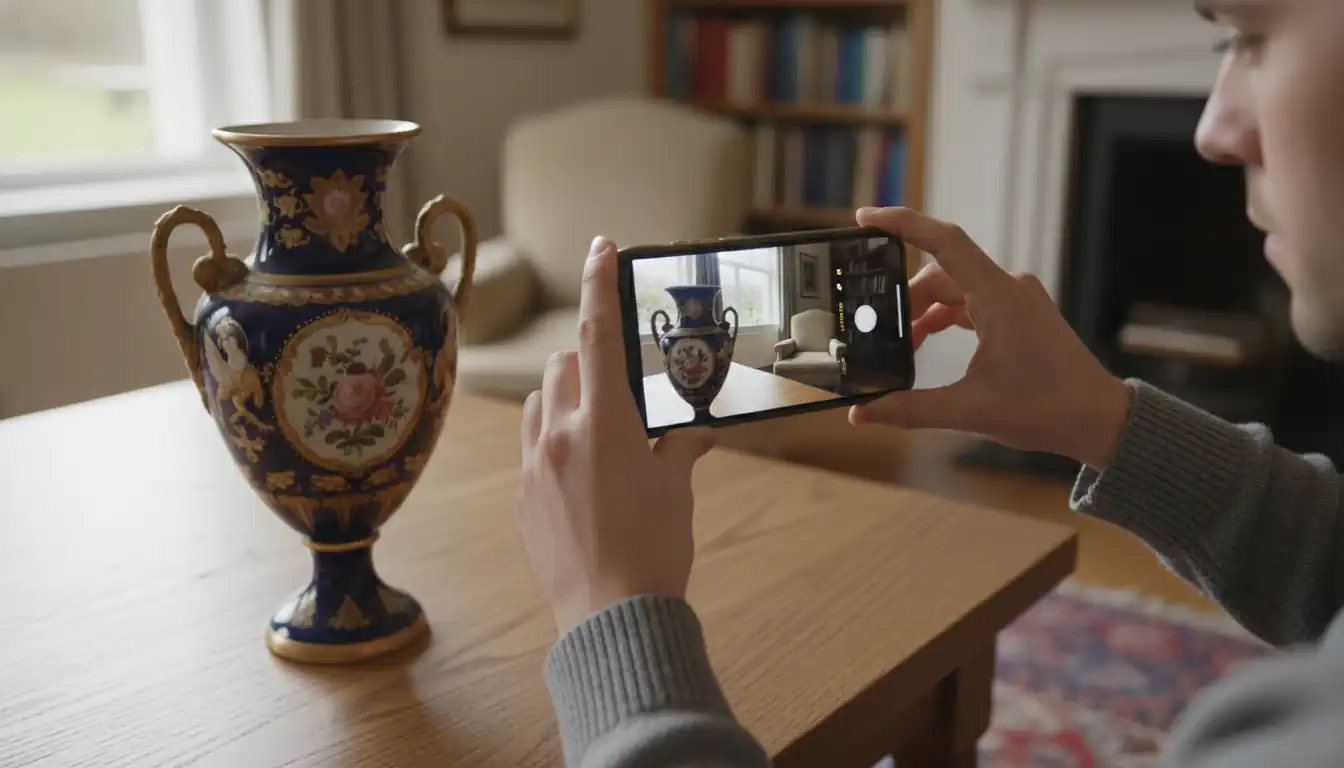
While the AI is incredibly powerful, it is only as good as the data you provide. Think of your phone's camera as the AI's eyes. If the eyes are blurry or the lighting is poor, the "brain" of the software will struggle to make an accurate identification. To get a professional-grade appraisal, you need to provide professional-grade input.
The goal is to eliminate variables that might confuse the software. Shadows, cluttered backgrounds, and lens flares can all distort the "visual signature" of your antique. By following a few simple steps, you can significantly increase the accuracy of your scans and ensure the valuation you receive is based on the true merits of the item.
Mastering the Perfect Scan Photo
You don't need a photography studio to get great results, but you do need to be intentional. The most important factor is lighting. Natural, indirect sunlight is your best friend. It reveals the true color and texture of an item without the harsh glares or deep shadows created by an overhead bulb or a camera flash.
- Neutral Backgrounds: Place your item against a solid, contrasting background. A white sheet or a plain wooden floor works well. This helps the AI isolate the object's silhouette.
- Multiple Angles: Don't just take a "face-on" shot. Capture the profile, the back, and especially the base or underside. This is where maker's marks and construction clues usually hide.
- Macro Details: If there is a specific detail—like a signature, a hallmark, or a unique bit of inlay—get a close-up. The AI uses these "micro-signatures" to confirm authenticity.
Verifying AI Results with Market Data
Once the app provides an identification and an estimated value, your next step is to ground that information in the current market. AI provides a "fair market value" based on historical data, but the market is a living thing. It breathes and shifts based on trends, geography, and even the time of year.
Check the results against "sold" listings on major auction platforms. Look for items that match yours exactly in terms of condition. A "mint condition" porcelain figurine is worth significantly more than the same model with a tiny, invisible hairline crack. Use the AI's identification as your starting point, then use your human judgment to adjust for the specific condition of the piece in your hands.
"A perfect photo is the difference between identifying a 'generic glass bowl' and a '1930s Lalique masterpiece.'"
By taking the time to photograph your items correctly, you are essentially "cleaning the lens" for the AI. This partnership between your physical effort and the software's digital intelligence is what leads to the most reliable appraisals.
Protecting Your Collection with Digital Inventories
Most people think of antique scanning as a tool for buying or selling. However, one of the most vital uses for an app like Relic is the preservation of what you already own. We often live among treasures without ever truly documenting them. If a disaster were to strike—a fire, a flood, or a burglary—could you prove to an insurance company exactly what you lost?
Creating a digital inventory is an act of stewardship. It ensures that the history and value of your belongings are recorded in a format that can't be lost in a move or destroyed in a basement flood. It moves your collection from a state of "vulnerable physical objects" to "secured digital assets."
Creating a Cloud-Based Catalog for Insurance
Insurance companies require "burden of proof." They don't just take your word that you had a collection of rare coins or a set of sterling silver flatware. They want photos, descriptions, and professional valuations. By scanning your household items, you are building a ready-made insurance ledger.
- Instant Documentation: Each scan creates a timestamped record of the item's existence and condition.
- Cloud Storage: Because these records are stored digitally, they are accessible from anywhere, even if your phone is lost or damaged.
- Professional Valuation: Having an AI-generated appraisal attached to each item gives you a solid starting point for a claim, rather than trying to remember what you paid for something twenty years ago.
Simplifying Estate Planning and Inheritance
The emotional weight of an inheritance is often compounded by the stress of not knowing what things are. When a loved one passes, family members are often left to sort through a lifetime of possessions, frequently feeling overwhelmed and unsure of what to keep, sell, or donate. This is where a digital catalog becomes a final gift to your heirs.
By documenting your collection now, you are providing a roadmap for the next generation. You can attach notes to specific scans—"This was your great-grandmother's wedding gift"—alongside the technical appraisal. This prevents valuable heirlooms from being accidentally sold for pennies at a yard sale and ensures that the financial value of your estate is fairly distributed. It turns a chaotic process into a structured, peaceful transition.
| Inventory Benefit | Why It Matters |
|---|---|
| Theft Recovery | Provides police with exact photos and markings for identification. |
| Damage Claims | Establishes "pre-loss" condition for insurance adjusters. |
| Equitable Distribution | Allows heirs to see the fair market value of items for fair sharing. |
| Historical Record | Preserves the "story" of the item for future generations. |
Securing your legacy isn't just about the money; it's about the peace of mind that comes from knowing your history is documented and protected.
Navigating the Market with Real-Time Data
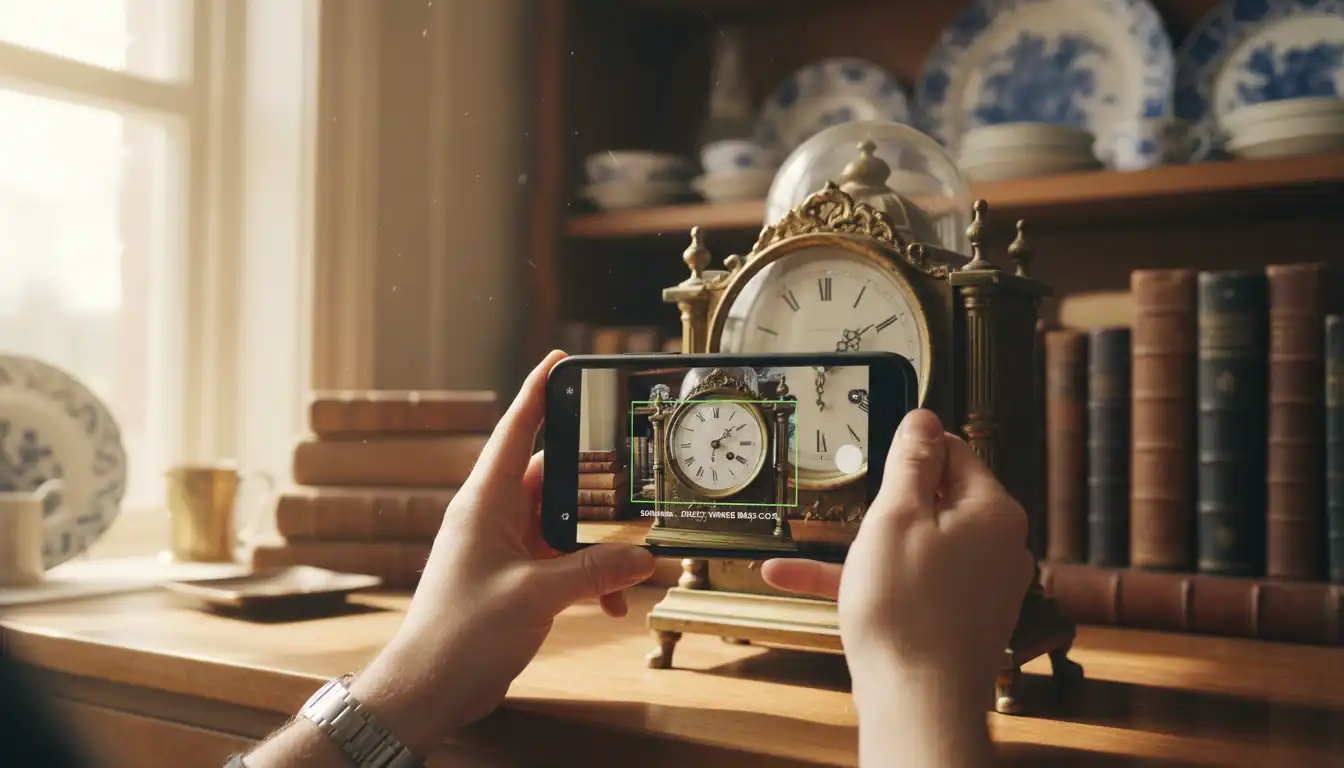
The antique market used to be a place where "insider knowledge" was the only currency that mattered. Professional dealers spent decades learning the subtle differences between a genuine period piece and a clever imitation. They had the advantage because they had the information. Today, that information gap has closed.
When you walk into a thrift store or an estate sale with an AI scanner, you are carrying the collective knowledge of a thousand experts. This "superpower" allows you to make split-second decisions with a level of confidence that used to take a lifetime to acquire. You can spot the diamond in the rough before the "pros" even make it across the room.
Spotting Trends Before the Dealers Do
The market for antiques is driven by trends. One year, everyone wants Victorian oak; the next, they are hunting for 1970s brutalist metalwork. AI scanners analyze massive amounts of sales data from across the globe, allowing them to identify which categories are "heating up."
- Market Arbitrage: You might find an item that is undervalued in your local market but in high demand in another region or on a specific online platform.
- Niche Identification: AI can help you find "sleeper" items—objects that look ordinary but belong to a highly collectible niche, such as specific types of industrial salvage or mid-century barware.
- Condition Alerts: The software can help you evaluate if a "bargain" is actually a good deal by identifying common repair marks that might devalue the piece.
Avoiding Common Scams and Reproductions
The most common pitfall for any collector is the "high-quality reproduction." In the early 20th century, many companies produced "centennial" versions of 18th-century furniture. To an untrained eye, they look identical. However, the construction methods and materials are vastly different.
An AI scanner acts as a lie detector. It looks for the "fingerprints" of the era. It checks for the presence of circular saw marks (which indicate a later date) versus hand-planed surfaces. It looks at the composition of the screws and the type of finish used. By using Relic as a "pro tool," you can verify the age of a piece in seconds, saving yourself from the heartbreak of a "too good to be true" find that turns out to be a modern fake.
This real-time data doesn't just help you buy; it helps you negotiate. When you can show a seller the exact history and current market value of an item, you are no longer just "haggling." You are having a professional conversation based on facts.
Conclusion
The world of antiques is no longer a closed book accessible only to those with deep pockets and decades of study. Your phone has unlocked a new era of discovery, turning every flea market, attic, and estate sale into a potential treasure map. By using AI to decode the hidden history of the objects around you, you are doing more than just finding bargains; you are connecting with the past in a way that was never before possible.
We have seen how visual search has replaced the frustration of keyword hunting, how computer vision can "see" the authenticity of a piece, and how a digital inventory can protect your family's legacy for years to come. Whether you are looking to turn a profit or simply want to know the story behind your grandmother’s favorite vase, the tools are now in your hands.
The next time you see a curious object catching the light in a dusty shop window, don't walk away wondering "what if." Pull out your phone, open Relic, and let the AI reveal the secret history waiting just beneath the surface. The treasure is out there—now you have the map to find it.
Identify antiques instantly
Point your camera at any antique, collectible, or vintage item. Get valuations, history, and market insights in seconds.
Download for iPhone