Your Silver Spoons Might Be Worth a Fortune: Decoding Manufacturer Symbols

That heavy, tarnished spoon sitting at the bottom of your kitchen drawer might look like a relic of a bygone era, but it could actually be a small fortune in disguise. Most people see old silverware as a chore to polish or a hand-me-down to be tucked away, yet these items carry a secret language etched into their surfaces. These tiny, often microscopic symbols are the keys to a history that spans centuries, continents, and social classes.
When you pick up a piece of antique silver, you aren't just holding a utensil; you are holding a legal document. For hundreds of years, silver was the most regulated commodity in the world, more strictly controlled than the currency in people's pockets. Every mark, every tiny lion, and every stylized letter tells a story about who made the piece, where they made it, and exactly how much pure silver is contained within the metal.
Understanding these marks is the difference between selling a piece for its "melt value"—the price of the raw metal—and realizing you own a masterpiece by a legendary silversmith like Paul Storr or Hester Bateman. This guide will walk you through the labyrinth of manufacturer symbols, from the rigid standards of the British Empire to the clever "pseudo-hallmarks" of American makers, and show you how modern technology can decode these mysteries in seconds.
The Anatomy of a Silver Hallmark
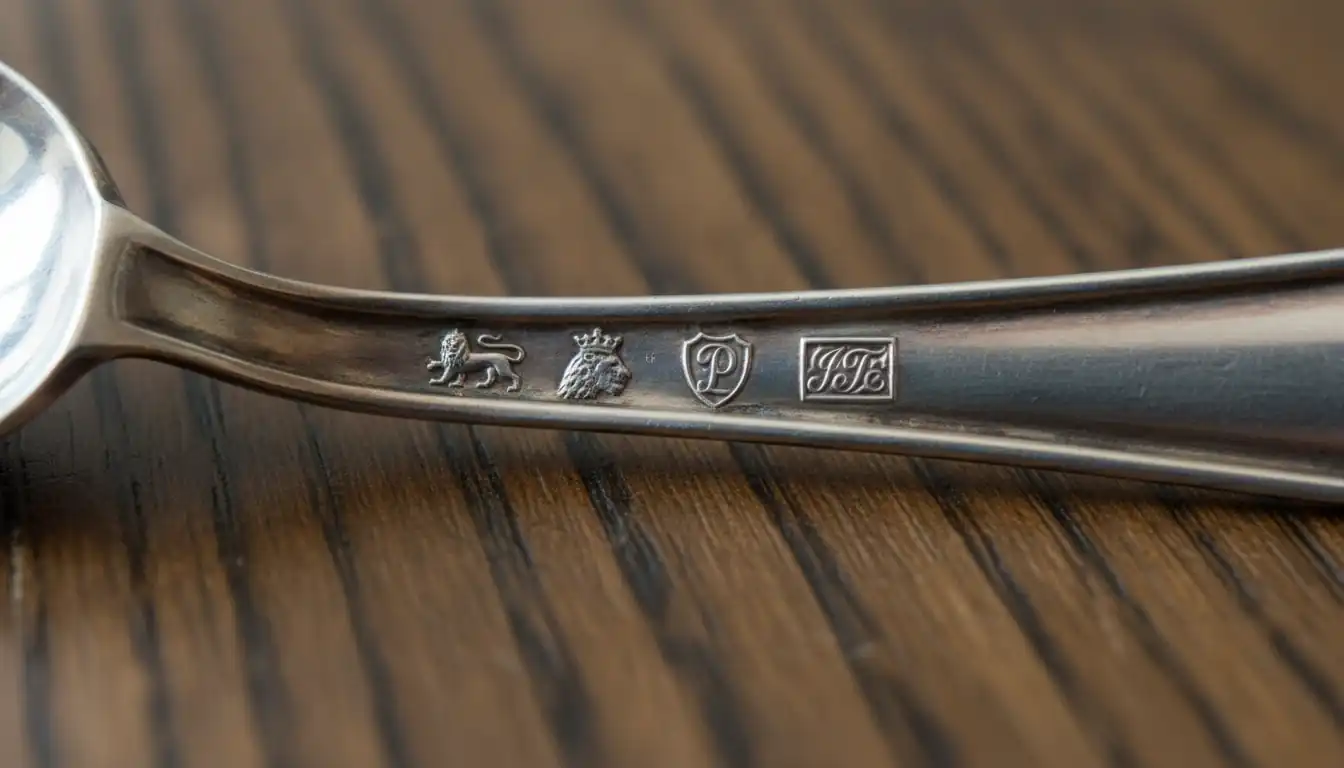
To the untrained eye, the back of a silver spoon looks like a series of random dents and scratches. However, these marks follow a highly structured system designed to prevent fraud. Think of a hallmark as a modern-day VIN on a car or a serial number on a high-end watch. It provides a foolproof way to verify the "purity" of the metal and the accountability of the person who sold it.
The British hallmarking system is the gold standard for collectors because it has remained remarkably consistent since the 1300s. If you can read a British hallmark, you can understand almost any silver marking system in the world. Traditionally, a complete set of marks consists of five distinct stamps, usually struck in a neat row.
The Traditional Five-Mark System
The first thing you will likely notice is the Standard Mark. In British silver, this is almost always the "Lion Passant"—a lion walking to the left with one paw raised. This symbol is a legal guarantee that the item is Sterling Silver, meaning it is at least 92.5% pure silver. If you see a lion, you know the metal is high quality. If you see a different symbol, like a figure of Britannia, it indicates an even higher purity of 95.8%.
Next is the Town Mark, which tells you where the piece was assayed (tested for purity). Each major city had its own unique symbol. London used a leopard’s head, Birmingham used an anchor, and Sheffield used a crown (though this changed to a rose in later years). Identifying the town mark is the first step in narrowing down the specific workshop where your spoon was born.
The Date Letter is perhaps the most ingenious part of the system. To prevent inspectors from getting lazy, the font and the shape of the shield surrounding the letter changed every year. An "A" in a square box from 1896 looks completely different from an "A" in an oval from 1916. This allows collectors to date a piece of silver to a specific twelve-month window.
The Duty Mark is a profile of the reigning monarch’s head. This was used between 1784 and 1890 to show that the appropriate tax had been paid to the crown. If your spoon has the head of King George III or Queen Victoria, you can immediately place it in the 18th or 19th century. Finally, we have the Sponsor’s Mark, also known as the Maker’s Mark.
Deciphering the Sponsor and Maker Marks
The Maker’s Mark is the "signature" of the silversmith or the firm that produced the item. Usually, this consists of two or three initials inside a geometric shape, like a shield or a rectangle. For example, the initials "PS" often indicate the work of Paul Storr, the most celebrated silversmith of the Regency era.
These marks were physically struck into the cold metal using a hardened steel punch. Because silver is a relatively soft metal, these marks can become "rubbed" or worn down over decades of polishing and use. A mark that was once crisp might now look like a faint smudge.
Pro Tip: When examining a worn mark, try looking at it under a raking light—a strong light source held at a low angle. This creates shadows in the indentations, making the faint outlines of the symbols much easier to see.
| Mark Type | What it Tells You | Common Example |
|---|---|---|
| Standard Mark | Metal Purity | Lion Passant (Sterling) |
| Town Mark | Location of Assay | Leopard's Head (London) |
| Date Letter | Year of Manufacture | "a" in a specific shield |
| Duty Mark | Tax Status | Monarch's Profile |
| Maker's Mark | The Manufacturer | "WB" (William Bateman) |
Regional Variations in Manufacturer Symbols
While the British system is a model of order, the rest of the world can be a bit more chaotic. As you move away from the UK, the symbols change, and the rules become more flexible. This is where many amateur collectors get tripped up, often mistaking silver-plated items for solid silver or dismissing valuable European pieces as "junk."
If you are wondering how to identify silver products from other regions, you have to look at the cultural context of the time. In the 19th century, silver was the ultimate status symbol. Manufacturers in America and Continental Europe knew that British silver was the most prestigious, so they often designed their own marks to look "English" even when they weren't.
American Silverplate vs Sterling Standards
Unlike the UK, the United States never had a federal hallmarking system. This meant that American silversmiths were essentially on the honor system. In the early days, they would simply stamp their name and the word "Coin" (indicating it was made from melted-down silver coins) or "Sterling."
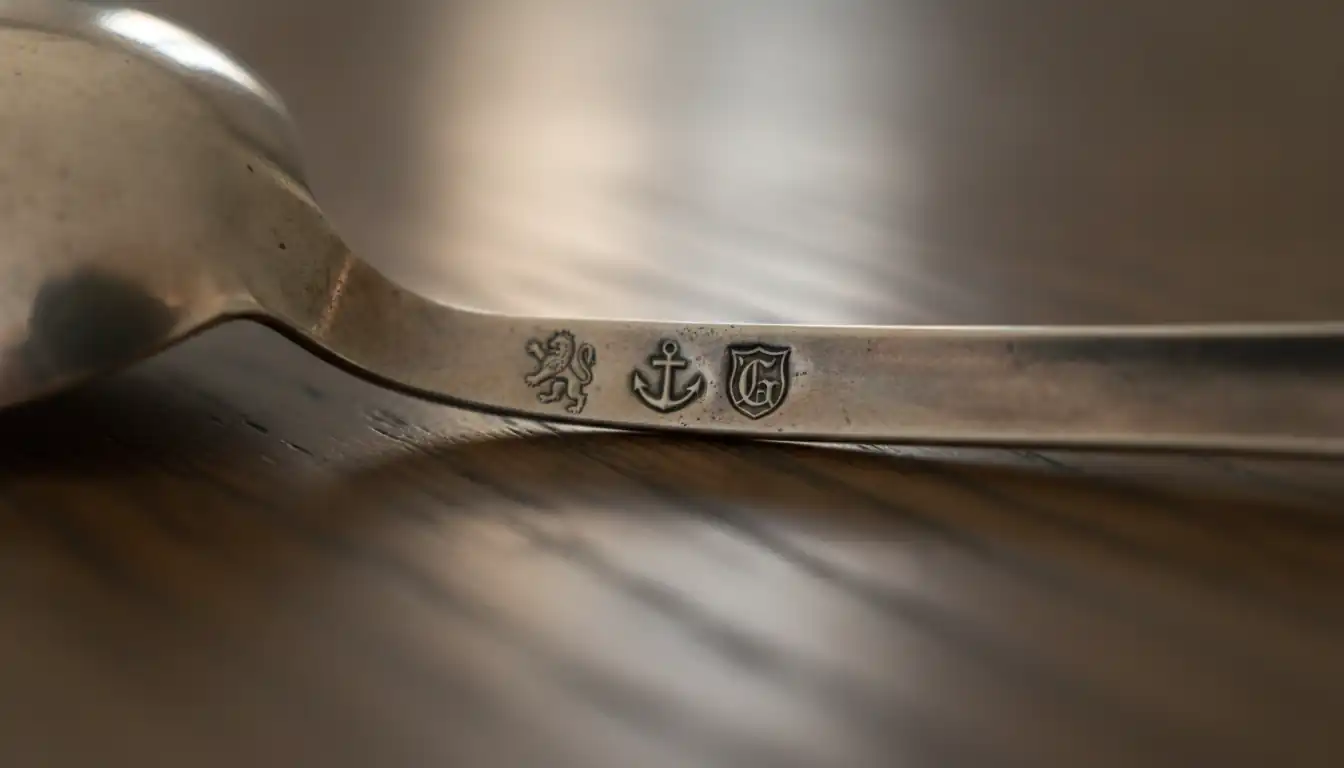
By the mid-1800s, major American firms like Gorham and Tiffany & Co. began using their own proprietary symbols. Gorham, for instance, used a three-part mark: a lion, an anchor, and a capital letter "G." To a casual observer, this looks remarkably like a British hallmark set. However, these are "pseudo-hallmarks." They weren't required by law; they were a branding exercise to make the silver look more "official."
The biggest trap for collectors is the distinction between Sterling and Silverplate. Many American manufacturers produced high-quality silverplate, which is a thin layer of silver bonded to a base metal like copper or brass. These pieces often carry impressive-looking logos and symbols, but they will also include tell-tale abbreviations:
- EPNS: Electro-Plated Nickel Silver
- EPBM: Electro-Plated Britannia Metal
- Quadruple Plate: A marketing term suggesting four layers of silver (though it’s still just plate)
Continental European Symbols and Pseudo-Hallmarks
In Europe, the symbols take on a completely different aesthetic. The French system, for example, is notoriously difficult to read because the marks are incredibly small. Instead of a lion, the French used the Minerva Head. If you see a tiny helmeted woman in a rectangle, you are looking at French silver. The purity is indicated by a small number "1" or "2" hidden in the corner of that tiny stamp.
German silver is much easier to spot once you know what to look for. After 1888, Germany standardized its marks to include a Crescent Moon and a Crown, accompanied by a decimal number like "800" or "835." This indicates the silver content is 80% or 83.5%—slightly lower than the British Sterling standard but still very valuable.
One of the most fascinating areas of regional marking is the "Hanau" silver from Germany. In the late 19th century, makers in Hanau specialized in creating "antique" silver in the style of the 17th and 18th centuries. They didn't just copy the style; they copied the old, defunct hallmarks. These are legal forgeries—pieces made to look old but stamped with symbols that never actually existed in a formal registry. Identifying these requires a keen eye for the style of the symbol rather than just the symbol itself.
Modern Tools for Instant Identification
For decades, identifying a manufacturer's symbol meant spending hours in a library or owning a massive, expensive library of reference books. The "bible" of the industry, Jackson's Hallmarks, is a thick volume containing thousands of tiny drawings of symbols. Trying to match a worn, 2mm-wide stamp on a spoon to a drawing in a book is a recipe for a headache.
Fortunately, the digital age has completely changed the game for collectors. You no longer need a PhD in Art History to figure out if your silver is a treasure or a trinket. Technology has bridged the gap between the physical object and the vast databases of historical records.
AI-Powered Appraisal with Relic
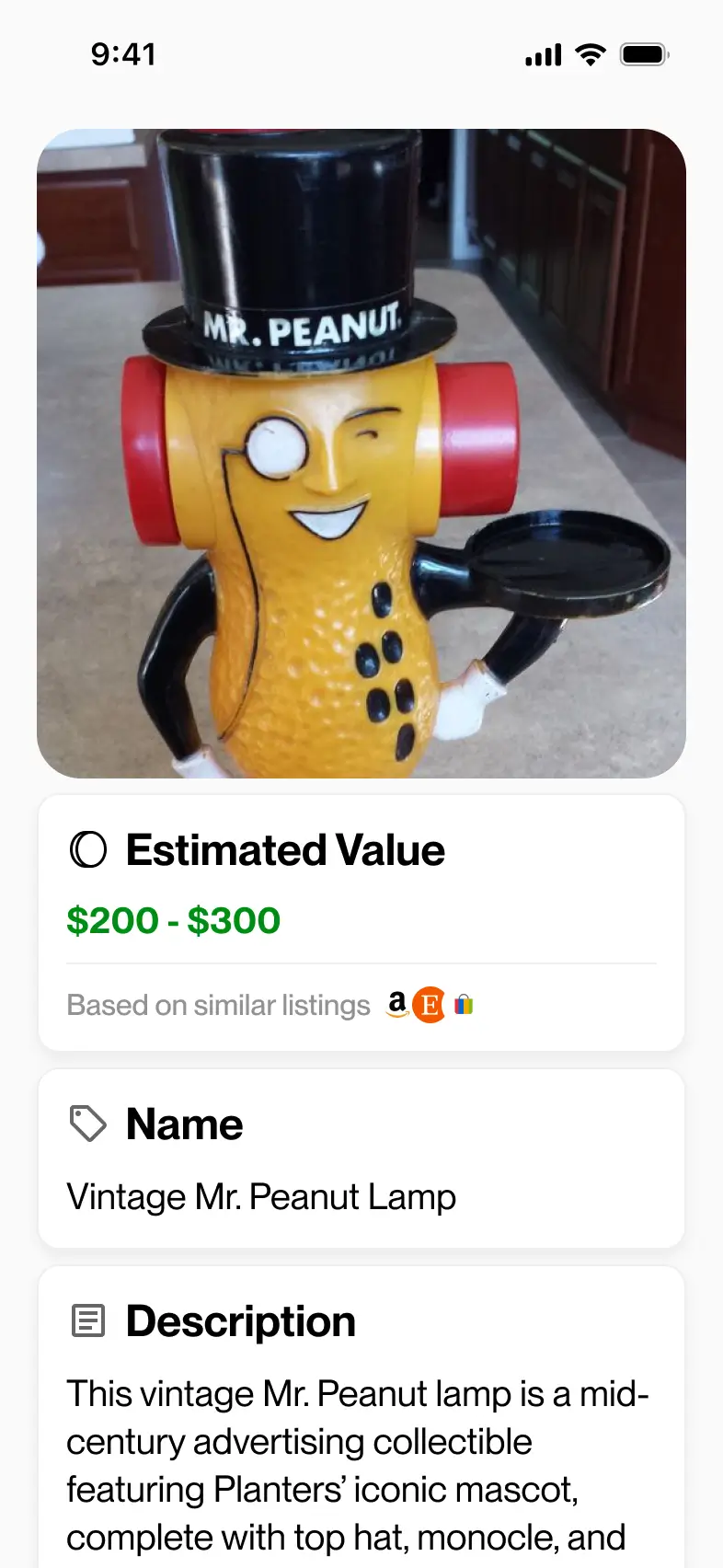
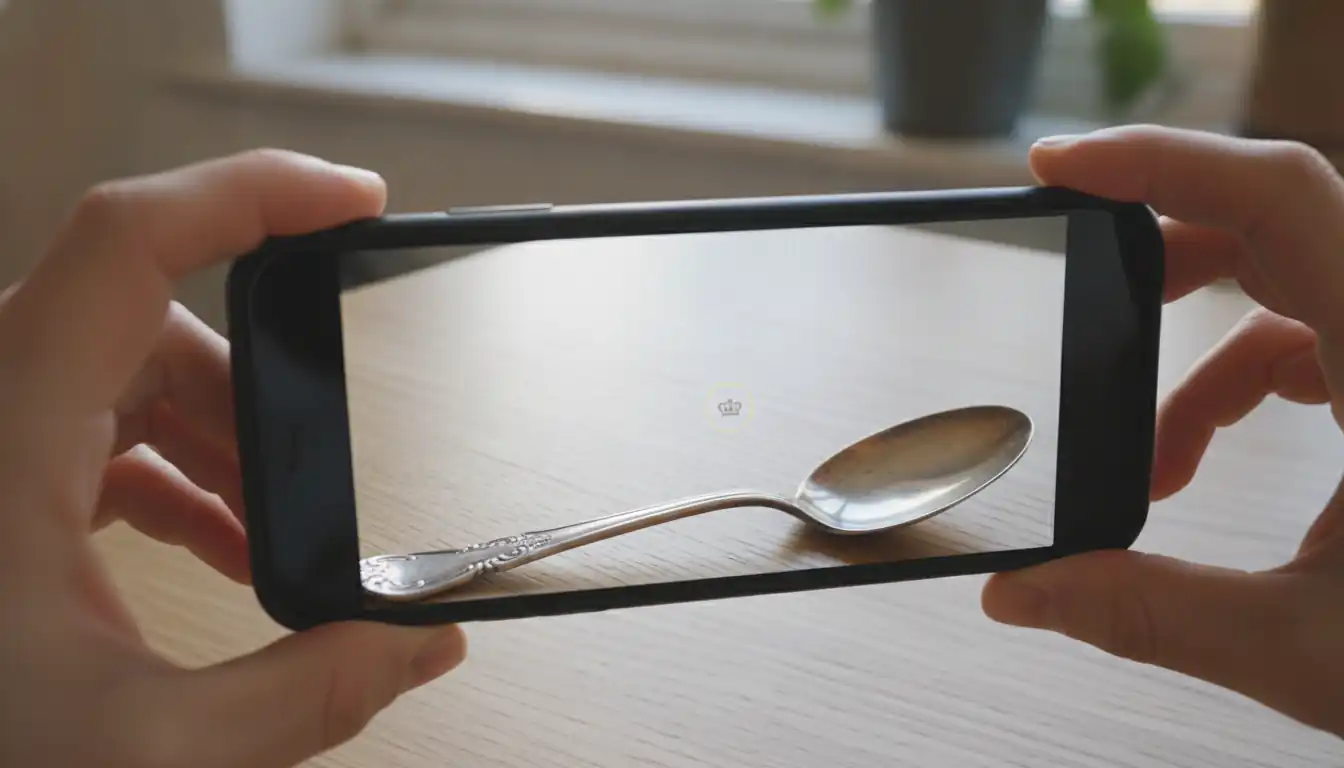
This is where the Relic app becomes an essential tool for anyone handling old silver. Instead of squinting through a magnifying glass and flipping through pages of "Jackson's," you can simply use your iPhone to get an answer. Relic uses advanced AI to identify and appraise antiques instantly.
When you encounter a mark that looks like a smudge, you can take a photo or upload one to the app. Relic’s AI is trained to recognize the specific geometries of manufacturer symbols, even when they are partially worn away. In seconds, the app provides:
- The Origin: Where the piece was made.
- The History: Who the manufacturer was and their significance.
- The Appraisal: A real-world valuation based on current market data.
This is a massive advantage for "pickers," estate executors, or anyone who finds themselves at a flea market with a potential find. You don't have to guess if a mark is a genuine 18th-century stamp or a 20th-century reproduction; the app does the heavy lifting for you.
Digital Databases vs Physical Reference Books
While physical books are great for deep academic research, they have significant limitations in the field. A book can't tell you what a piece sold for at an auction last week. It can't zoom in on a photo to see a hidden date letter.
Digital tools like Relic offer a searchable catalog of scanned items, allowing you to compare your spoon to thousands of others that have already been verified. This "crowdsourced" intelligence, combined with professional-grade AI, means that the average person now has more information at their fingertips than a professional dealer had thirty years ago. It levels the playing field, ensuring you don't accidentally sell a $500 spoon for $5 at a garage sale.
"The ability to identify a mark in the field is the difference between a missed opportunity and a career-defining find."
Spotting Forgeries and Altered Marks
As with any high-value item, the world of antique silver is full of deceptions. Once you learn to read the symbols, you must also learn to read the metal. Just because a spoon has a "Paul Storr" mark doesn't mean Paul Storr ever touched it. Forgers have been active for as long as silver has been valuable, and some of their methods are incredibly sophisticated.
One of the most common tricks is known as the Transposed Mark. This is a form of "Frankenstein" silver. A forger will take a genuine, hallmarked piece of silver—perhaps a small, inexpensive spoon—and cut the hallmark out of it. They then solder that genuine hallmark into a larger, more expensive, but unmarked piece of silver, like a coffee pot or a large tray.
Identifying Duty Dodgers and Transposed Marks
How do you spot a transposed mark? You have to look for the "halo." When a hallmark is original to a piece, it is struck directly into the metal, causing a slight displacement of the silver around the edges. If a mark has been soldered in, there will often be a faint, circular line around the marks where the two pieces of metal meet.
- The Breath Test: If you breathe on the silver to fog it up, the condensation will evaporate differently over a solder line than it will over solid silver. This can often reveal the "cut-out" where the mark was inserted.
- The "Ghosting" Effect: Genuine marks are hand-struck. This means the depth of the stamp might be slightly uneven. Modern fakes are often cast as part of the whole piece. Cast marks look "mushy" and lack the sharp, crisp edges of a steel punch.
Another historical deception is the "Duty Dodger." In the 18th century, silversmiths had to pay a tax on every ounce of silver they produced. To avoid this, some makers would create a piece, have it assayed and stamped, and then "stretch" the metal or add unmarked components to it later. While the marks are genuine, the piece itself has been altered, which can significantly affect its value to a serious collector.
The Physical Characteristics of Authentic Stamping
Authentic manufacturer symbols have a specific "feel." Because they were struck with a heavy hammer, you can often see a slight indentation on the reverse side of the metal if the piece is thin enough. This is called "bruising."
Modern laser-engraved fakes are perfectly flat and lack this physical impact. When you use an app like Relic, the AI looks for these specific physical characteristics—the way light hits the edges of the punch and the specific proportions of the letters—to help distinguish between a 200-year-old hand-struck mark and a modern computer-generated imitation.
Turning Identification into Market Value
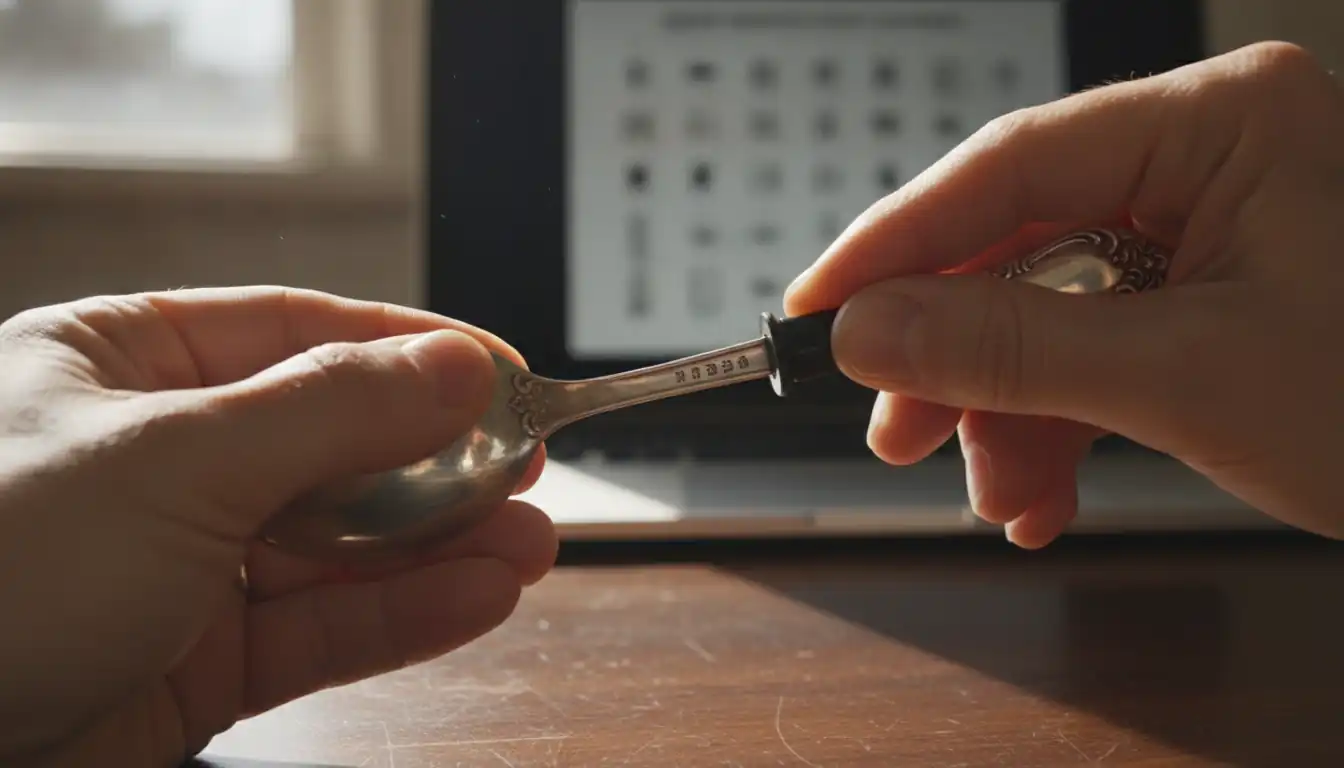
Once you have successfully identified the manufacturer and the date of your silver, you move into the most exciting phase: determining what it's actually worth. In the world of antiques, the "who" is almost always more important than the "what."
If you have a plain silver spoon that weighs 50 grams, its "melt value" is simply the current price of silver multiplied by its weight. At today's prices, that might be $30 or $40. However, if that same spoon bears the mark of a famous maker or comes from a specific, desirable period, its value could skyrocket into the thousands.
Why Manufacturer Rarity Beats Silver Weight
Collectors don't buy silver for the metal; they buy it for the craftsmanship and the history. A piece by Hester Bateman, known as the "Queen of English Silversmiths," is highly coveted because she was a successful female business owner in the 1700s—a rarity for the time. Her marks are simple, but her name adds a massive premium to the price.
Similarly, American silver by Paul Revere (yes, that Paul Revere) is among the most valuable in the world. A single spoon with his "REVERE" stamp can sell for tens of thousands of dollars at auction. Without the mark, it’s just an old piece of metal. With the mark, it’s a piece of American history.
| Maker | Era | Why They Are Valuable |
|---|---|---|
| Paul Storr | Regency (UK) | Exceptional detail and "heavy" grand style. |
| Tiffany & Co. | 19th-20th Century (USA) | Iconic branding and high-quality "925" standards. |
| Liberty & Co. | Arts & Crafts (UK) | Known for the "Cymric" line and avant-garde designs. |
| Georg Jensen | 20th Century (Denmark) | Modernist designs that remain timelessly popular. |
Documenting Provenance for Resale and Insurance
Identifying the mark is only half the battle; you also need to document it. If you ever plan to sell your silver or include it in a homeowners' insurance policy, you need a professional record of what it is. This is known as "provenance."
Using the Relic app provides you with more than just a quick answer; it gives you a digital record. The history and origin reports generated by the app serve as essential documentation. If you are selling on a platform like eBay or at a local auction house, having a report that confirms the maker, the purity, and the historical context makes your item much more attractive to buyers. It removes the "risk" for the buyer, which almost always results in a higher final sale price.
For insurance purposes, a detailed identification is vital. If your home were ever burglarized or damaged by fire, an insurance company would likely only pay you the "replacement cost" of a generic silver spoon unless you can prove yours was a rare 18th-century antique. Having your collection scanned and identified in an app like Relic ensures that you are protected for the true value of your items, not just their weight in metal.
Conclusion
The world of antique silver is a hidden map of history, written in tiny symbols that most people ignore. By learning the anatomy of a hallmark—from the British Lion Passant to the American manufacturer logos—you transform from a casual observer into a savvy collector. You begin to see the stories behind the objects: the tax wars of the 18th century, the rise of the American industrial giants, and the incredible skill of individual craftsmen who hammered their legacy into every piece.
While the traditional method of identifying these marks required years of study and a library of books, you now have a shortcut. Tools like the Relic app empower you to decode these symbols instantly, protecting you from forgeries and ensuring you never overlook a hidden treasure.
The next time you find a tarnished spoon at a yard sale or inherit a box of family "junk," don't just put it away. Take a closer look at the back of the handle. Use your phone to scan those tiny marks. You might find that you aren't just holding a piece of cutlery, but a valuable artifact waiting to be rediscovered. Your silver spoons might indeed be worth a fortune—you just need to know how to read what they’re telling you.
Identify antiques instantly
Point your camera at any antique, collectible, or vintage item. Get valuations, history, and market insights in seconds.
Download for iPhone