Your Thrift Store Find Could Be Worth Thousands—Here’s How to Decode Mystery Pottery Marks

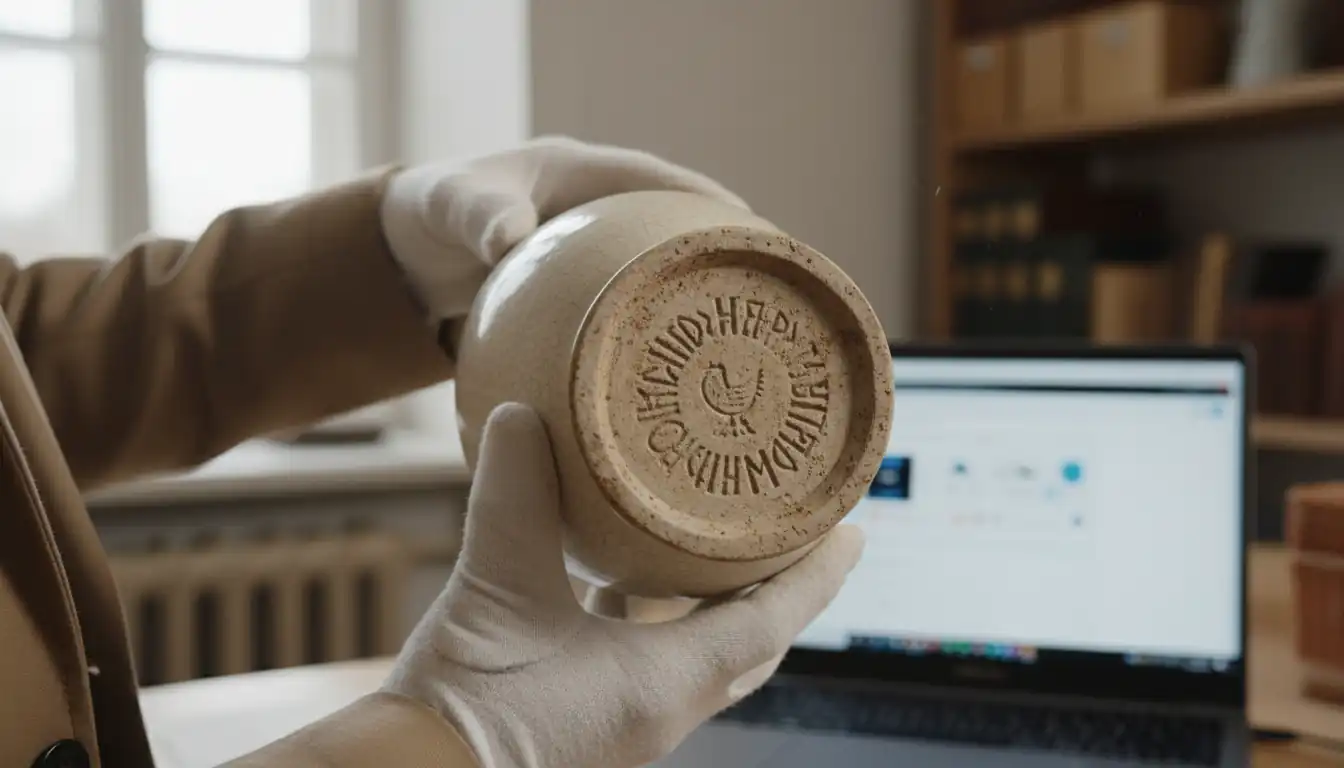
You are standing in the corner of a crowded thrift store, the air smelling faintly of old paper and dust. Your eyes land on a heavy, cream-colored vase tucked behind a stack of chipped dinner plates. You pick it up, feeling the cool weight of the porcelain, and flip it over. There, pressed into the clay, is a tiny, faded symbol—a crown, perhaps, or a stylized bird.
Is this a piece of history worth thousands of dollars, or a mass-produced souvenir from a mid-century gift shop? For decades, answering that question required a library of heavy reference books and hours of squinting at grainy black-and-white photos. The difference between a "sleeper" worth a fortune and a common household item often comes down to a single line or a specific shade of blue ink.
In this guide, you will learn how to transform from a casual browser into a savvy collector. We will explore the shift from traditional research to modern digital tools, decode the secret language of factory marks, and look at the technical artistry that makes a piece of pottery truly valuable. By the time you reach the end, you will have a professional-grade strategy for your next antique hunt.
The Digital Evolution of Pottery Identification
If you have ever spent an afternoon scrolling through blurry forum posts trying to identify a ceramic stamp, you have likely wondered: is there a pottery marks database online? The answer is a resounding yes, but the quality varies wildly. For years, the gold standard for researchers was The Potteries, a massive digital archive focusing on North Staffordshire pottery, or subscription services like Marks 4 Antiques. These sites are incredible resources, but they function like digital encyclopedias—you still have to know what you are looking for to find it.
The traditional method of identification is a game of "spot the difference." You find a mark, open a 500-page book like Kovel’s New Dictionary of Marks, and flip through thousands of tiny illustrations of anchors, lions, and crowns. It is a slow, methodical process that requires immense patience. If the mark on your vase is slightly smudged or the glaze is too thick, you might spend hours looking at the wrong century of production.
Navigating Online Databases
Online databases have certainly made things faster, but they still rely on your ability to describe what you see. If you search for "blue crown mark," you will be met with tens of thousands of results ranging from 18th-century German porcelain to 1950s Japanese imports. The challenge isn't finding information; it's filtering out the noise.
Most professional collectors use a combination of free community-driven sites and paid databases. Sites like Gotheborg are indispensable for Chinese and Japanese porcelain, offering side-by-side comparisons of genuine marks versus modern fakes. However, even the best database requires you to manually match your item to a tiny thumbnail on a screen. This is where the margin for human error is highest.
The Shift from Books to AI
We are currently witnessing the pinnacle of this technological evolution. The days of carrying a backpack full of reference books to an estate sale are over. Modern collectors are moving toward visual recognition technology that does the heavy lifting for them. Instead of scrolling through a database of five thousand different "A" monograms, you can now use your phone to bridge the gap between the physical object and the historical record.
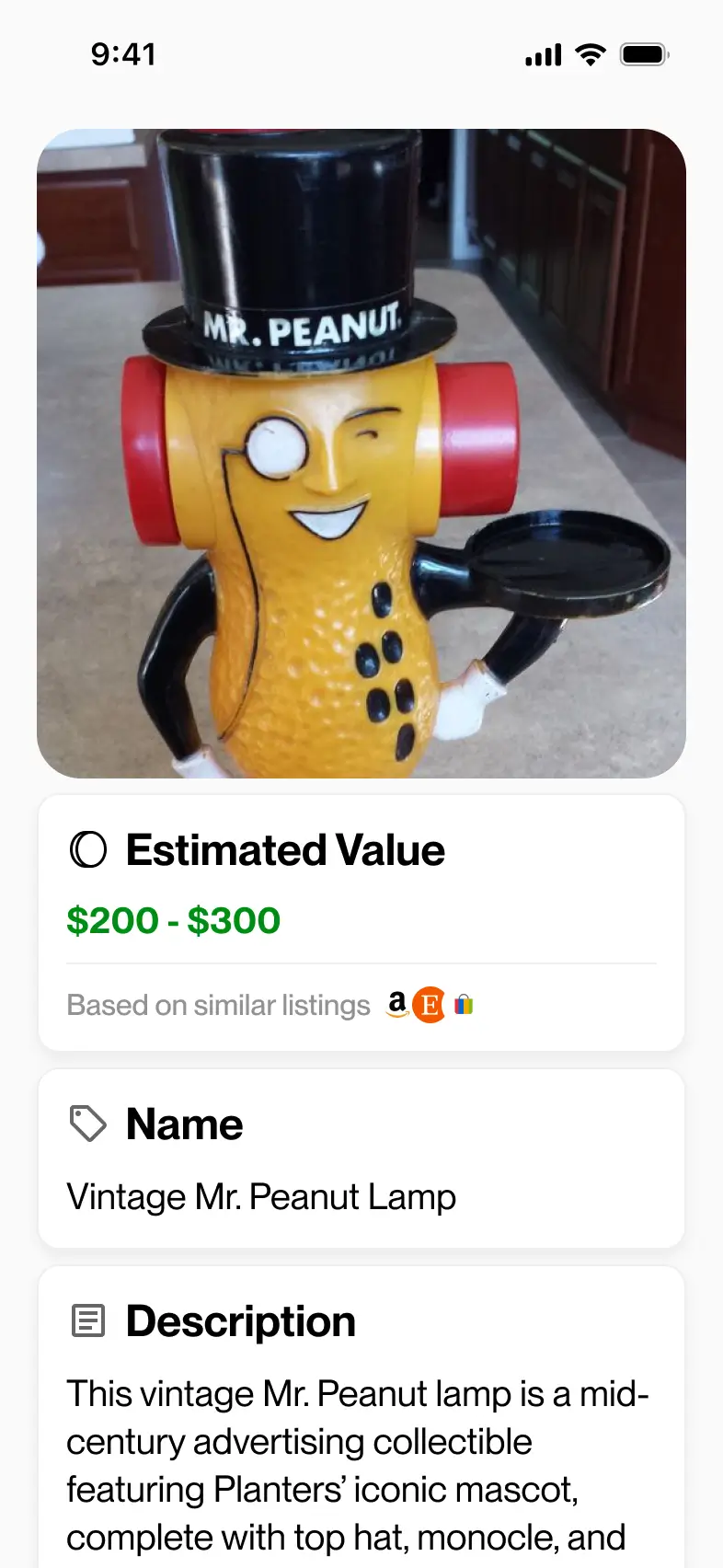
The Relic app represents the most significant leap in this field. By using advanced AI to analyze a photo of a pottery mark, Relic bypasses the manual search process entirely. It doesn't just look for a matching symbol; it evaluates the texture of the porcelain, the style of the piece, and the specific characteristics of the mark to provide a real appraisal and origin. This technology allows you to get a professional-grade identification in seconds, turning a high-pressure auction environment into a manageable, data-driven experience.
Decoding the Visual Language of Ceramic Monograms
To understand a pottery mark, you have to understand how it was applied. Think of a mark as a fingerprint left by the maker. It tells you not just who made the piece, but how the factory was organized and what era of technology they were using. When you look at the bottom of a piece of pottery, you are usually looking at one of three types of marks: incised, impressed, or underglaze.
Types of Pottery Marks:
- Incised Marks: These are hand-cut into the damp clay using a pointed tool. You will often see these on studio pottery or early earthenware. Because they are done by hand, they are often unique to the individual artist.
- Impressed Marks: These are made by pressing a metal or wooden stamp into the clay before it is fired. These are common in large-scale factories like Wedgwood or Minton. They are crisp, deep, and usually very consistent.
- Underglaze Marks: These are painted or printed onto the "biscuit" (fired but unglazed) clay before the final clear glaze is applied. These are the most common marks on fine porcelain and are often the most colorful.
Symbols vs Textual Hallmarks
There is a distinct difference between a factory logo and an artist’s monogram. Large factories, such as Royal Copenhagen or Meissen, used standardized logos to ensure brand consistency across thousands of pieces. These logos often evolved over decades, with small changes—like the addition of a dot or a change in the shape of a crown—signaling a specific year of production.
On the other hand, a ceramic monogram is often the personal signature of the decorator or the potter. In high-end studios like Rookwood or Moorcroft, you might find both a factory mark and an artist’s monogram. Learning to distinguish between the "company" and the "creator" is the first step in determining if you have a piece of mass-produced dinnerware or a unique work of art.
Understanding Date Codes and Factory Marks
Some of the most prestigious potteries used complex coding systems that allow you to date a piece to the exact year it was made. This is the "secret map" of the pottery world. If you know how to read these codes, you can often find value that other buyers miss.
| Factory | Dating System | What to Look For |
|---|---|---|
| Wedgwood | Three-letter code | The last letter represents the year (e.g., "O" for 1860). |
| Royal Worcester | Dot system | Dots added around the standard mark indicate the year after 1891. |
| Minton | Year cyphers | Small, impressed symbols like a triangle or a crescent moon. |
| Rookwood | Roman Numerals | Added below the "RP" flame mark to indicate the year after 1886. |
Pro Tip: If you see the word "Limited" or a country name like "Made in England," the piece almost certainly dates to after 1891 due to the McKinley Tariff Act, which required imports to the U.S. to be marked with their country of origin.
The Technical Artistry Behind the Mark
To truly appreciate a pottery mark, you have to understand the physics of the pottery wheel and the chemistry of the kiln. A mark is not just a label; it is a physical part of the object that has survived temperatures upwards of 2,000 degrees Fahrenheit. The clarity of a mark is often a direct reflection of the skill of the potter.
One concept often discussed in professional circles is the "3 pull rule." If you have ever wondered, "What is the 3 pull rule in pottery?" it refers to a technique used by master potters to achieve consistent wall thickness. A potter typically makes three distinct "pulls" of the clay upward from the wheel head to create the body of a vessel. This ensures the piece is structurally sound and even.
The 3 Pull Rule Explained
Why does this matter for identification? A piece made by a master who follows the 3 pull rule will have a perfectly flat, even base. This provides a superior "canvas" for the factory mark. When a piece is thrown poorly, the base may be uneven or too thick, causing the mark to distort or "slump" during the firing process. When you see a crisp, perfectly centered impressed mark, you are looking at the work of a highly skilled craftsman who understood the fundamental physics of their craft.
How Firing Affects Mark Clarity
Sometimes, a mark is nearly impossible to read because it is "ghosted" or blurry. This isn't always a sign of a fake; often, it’s a result of the glazing process. If a glaze is applied too thickly, it can pool in the indentations of an impressed mark, obscuring the details. Similarly, if a kiln is fired too hot, the clay can slightly vitrify and "melt" the edges of an incised signature.
This technical degradation is why manual identification is so difficult. A human eye might see a blurry blue smudge, but advanced AI tools can analyze the surrounding "topography" of the ceramic. By looking at the way the glaze breaks over the edges of the mark and comparing it to known factory standards, digital tools can often "see" through the blur to identify the maker.
Identifying High Value Marks in the Wild
Now we get to the exciting part: the hunt. When you are at an estate sale or a flea market, you need to be able to scan a table of ceramics and pick out the "sleepers." These are the items that look ordinary to the untrained eye but carry marks that signify immense value.
High-Value Marks to Memorize:
- Meissen Crossed Swords: Perhaps the most famous mark in history. Look for two crossed swords in cobalt blue under the glaze. Be careful, though—this is also the most faked mark in the world. Genuine Meissen marks have a specific "flow" to the paint that fakes rarely capture.
- Rookwood Flames: This American art pottery uses an "RP" monogram. Starting in 1886, a small flame point was added above the logo for each year. A mark with 14 flames (indicating 1900) is a hallmark of quality.
- The Sevres "L": Two interlocking "L"s usually signify Sevres porcelain. If there is a letter inside the "L"s, that is a date code. For example, an "A" indicates 1753.
Spotting Rare European Porcelain
European porcelain from the 18th and 19th centuries is the "blue chip" investment of the pottery world. However, the market is flooded with "Paris Porcelain" or "Dresden" style pieces that were made much later. To tell the difference, look at the quality of the porcelain itself. Is it translucent when held up to the light? Is the mark painted with a fine brush, or does it look like a modern stamp?
Relic is particularly useful in these high-stakes moments. When you find a piece of porcelain that feels "right" but the mark is partially obscured by age or wear, the app can analyze the shape of the vessel and the texture of the clay alongside the mark. This holistic approach provides a real appraisal that takes more than just the symbol into account, giving you the confidence to make a purchase.
Identifying Mid Century Modern Studio Pottery
Not all value is found in 200-year-old teacups. Mid-Century Modern (MCM) studio pottery is currently seeing a massive surge in value. Marks from makers like Lucie Rie or Hans Coper are often nothing more than a tiny, impressed letter or a simple geometric shape. These are frequently overlooked in thrift stores because they don't look "antique."
When hunting for MCM pieces, look for "unglazed" feet and minimalist marks. These pieces often rely on the beauty of the clay body itself. If you find a piece with a simple, cryptic mark, it is always worth a second look. These "mystery" marks are often the signatures of individual artists whose work is highly sought after by modern collectors.
Building Your Personal Identification Toolkit
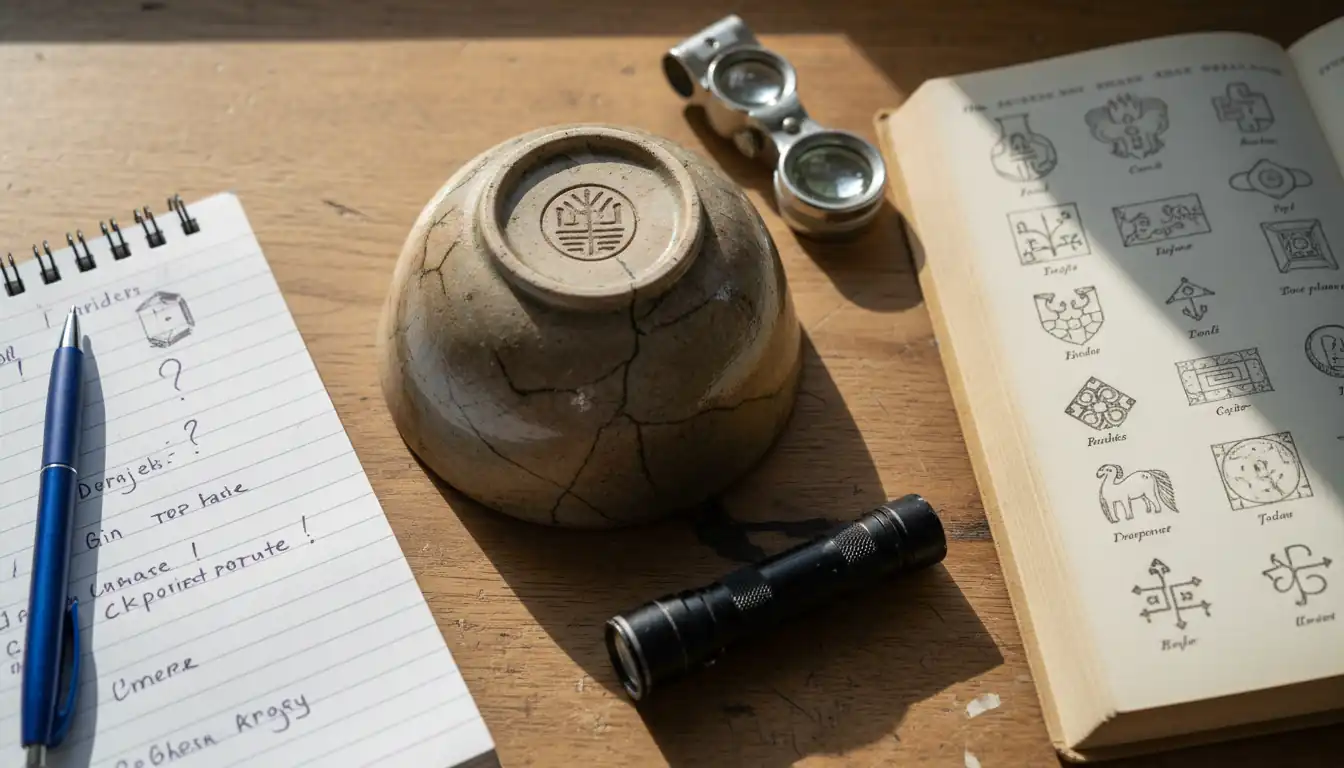
A professional collector doesn't rely on luck; they rely on a "stack" of tools that work together. While technology has changed the game, there is still a place for traditional research. The most successful hunters use a hybrid approach that combines the wisdom of the past with the speed of the future.
Leveraging Out of Copyright Resources
One of the best-kept secrets in the antique world is the wealth of books available because they are out of copyright. You can find massive, 19th-century compendiums of pottery marks on sites like Google Books or the Internet Archive for free. Books like Marks and Monograms on Pottery and Porcelain by William Chaffers are legendary. While the pricing information in these books is a century out of date, the historical drawings of the marks remain incredibly accurate.
The Professional's Toolkit:
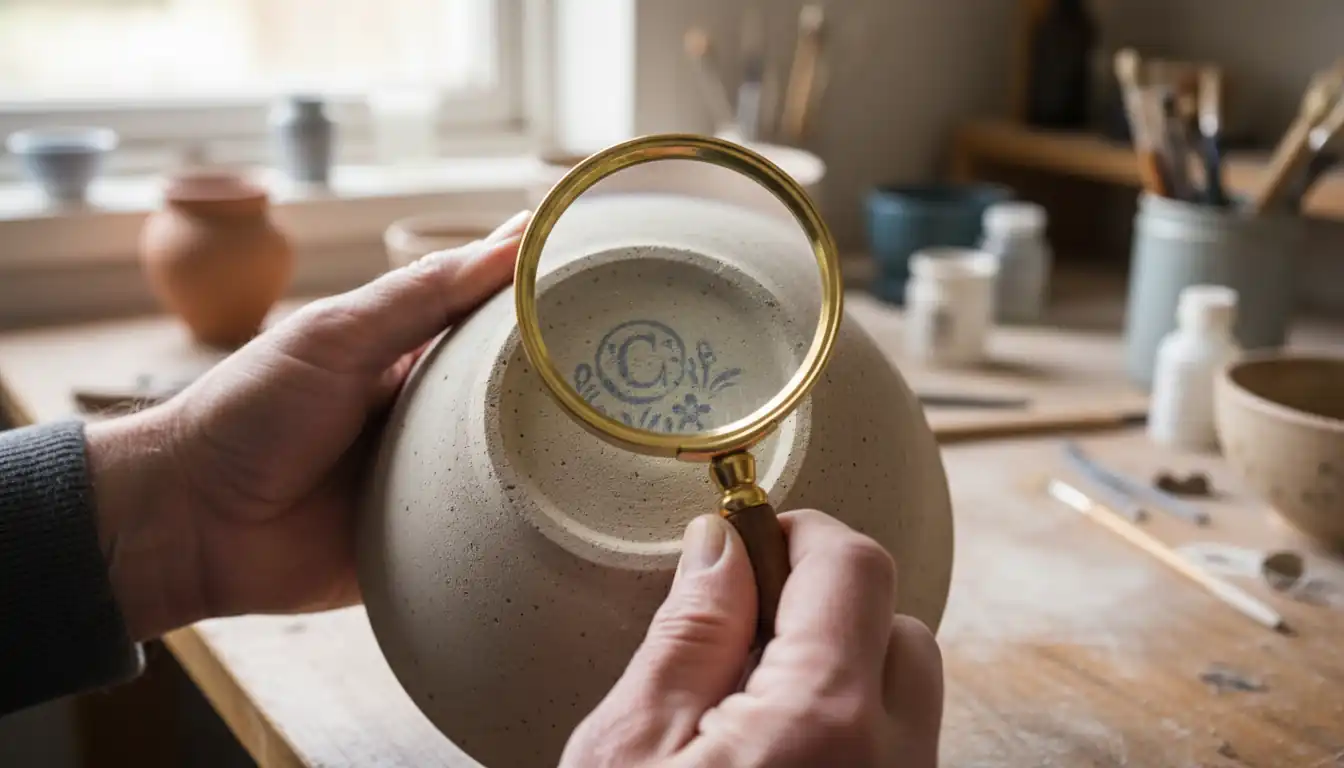
- A 10x Jeweler’s Loupe: Essential for looking at the "micro-crazing" in a glaze or the brushstrokes of a mark.
- A Blacklight: Used to detect repairs or "over-painting" that might be hiding a fake mark.
- Digital Reference Library: A folder on your phone containing screenshots of common marks you are hunting for.
- The Relic App: Your primary tool for instant identification and market valuation while in the field.
Integrating AI for Instant Appraisals
The most efficient workflow for a modern collector looks like this: You find an item, perform a quick visual check for damage, and then use Relic to get an instant history and origin. Once the app identifies the piece, you can use that information to cross-reference with your out-of-copyright digital books for deeper historical context.
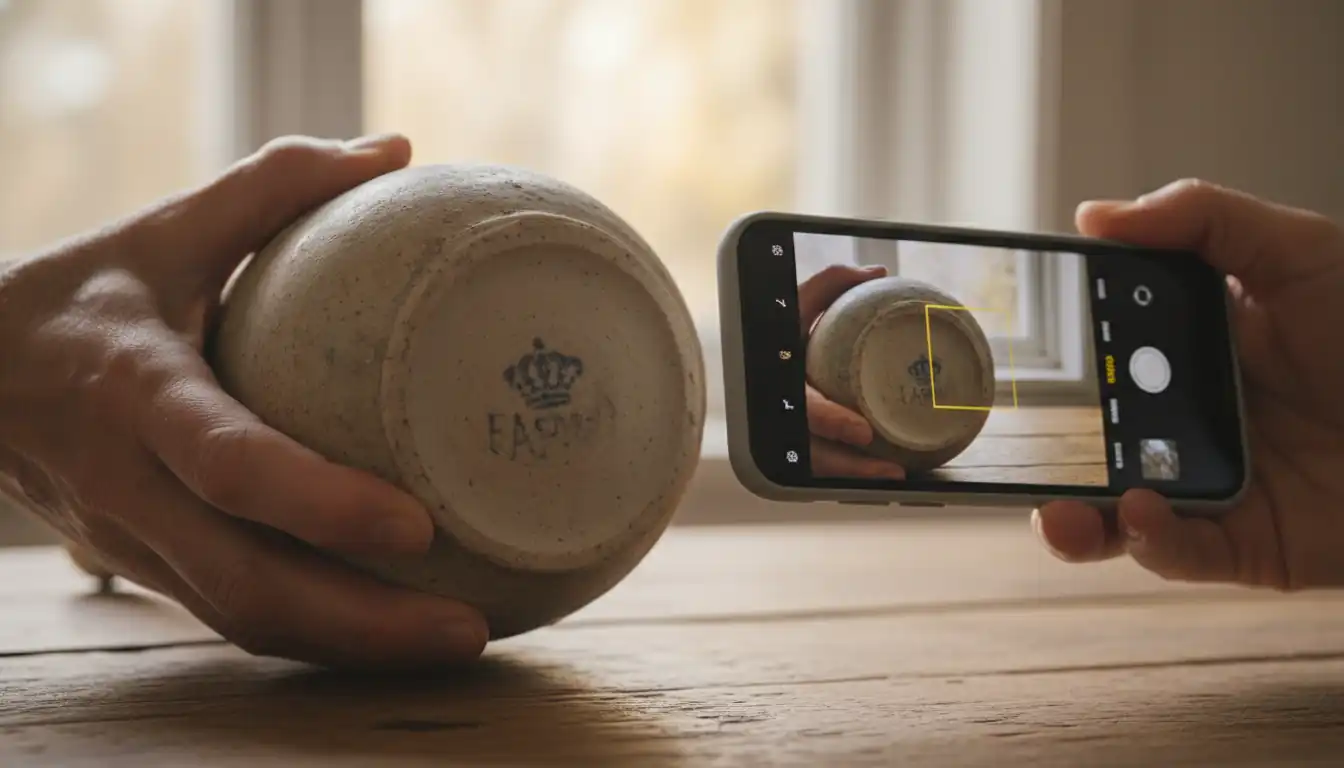
When taking a photo for the AI, make sure you are in a well-lit area. Avoid using a flash, as the glare on a shiny glaze can obscure the details of the mark. If the mark is impressed and hard to see, try holding a flashlight at a low angle to create shadows in the indentations. This "raking light" makes the mark pop, allowing the AI to analyze the contours more accurately.
"The goal isn't just to find a mark; it's to understand the story the mark is trying to tell."
By combining the deep historical data found in classic texts with the instant processing power of Relic, you eliminate the guesswork. You no longer have to wonder if you are looking at a genuine 18th-century piece or a 1970s reproduction. You have the data, the history, and the market value right in the palm of your hand.
Conclusion
Decoding mystery pottery marks is part science, part art, and part detective work. From the "3 pull rule" of the master potter to the complex date codes of the great European factories, every mark is a window into the past. While the traditional method of flipping through massive encyclopedias will always have a certain charm, the speed and accuracy of modern tools have changed the game for collectors.
Whether you are a seasoned dealer or someone who just enjoys the thrill of a weekend estate sale, having the right toolkit is essential. By understanding the visual language of ceramics and using the Relic app to bridge the gap between mystery and mastery, you can turn a simple hobby into a sophisticated pursuit. The next time you pick up a dusty vase and flip it over, you won't just see a squiggle—you'll see a story waiting to be told. Happy hunting.
Identify antiques instantly
Point your camera at any antique, collectible, or vintage item. Get valuations, history, and market insights in seconds.
Download for iPhone