Bolo Tie Value Guide
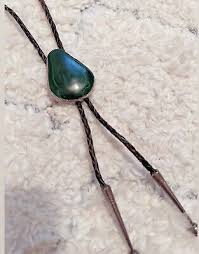
- Period
- 1950-1970
- Origin
- United States
- Materials
- leather, metal, green stone
- Category
- Bolo tie
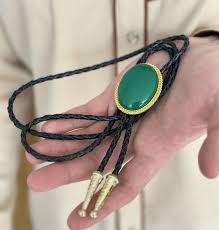
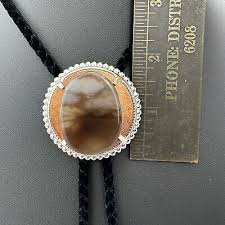
This mid-century bolo tie represents a quintessential piece of American Southwest history, originating from the design innovations of the late 1940s. As the official neckwear of Arizona, New Mexico, and Texas, these ties are highly collectible for their unique blend of silversmithing artistry and rugged Western utility.
What Is Bolo Tie Worth?
The typical price range for Bolo Tie is $75 - $90 based on recent sales. However, values can vary depending on the item's condition, rarity, and other factors such as:
- The specific type and quality of the green stone used in the central ornate clasp.
- The overall condition of the braided leather, including any fraying or stiffness from age.
- Historical provenance or maker's marks that link the piece to early Southwest silversmiths.
- Market demand for authentic 1950s-1970s Western accessories within the $75-$90 price range.
How to Identify Bolo Tie?
- Examine the clasp for mid-century metalwork styles consistent with the 1950-1970 era.
- Verify the braided leather cord for natural wear and authentic patina typical of vintage United States craftsmanship.
- Check the setting of the green stone to ensure it is securely integrated into the ornate metal slide.
- Look for characteristic weighted metal tips at the ends of the leather cord which balance the piece.
History of Bolo Tie
The bolo tie, also known as a bola tie or shoestring necktie, originated in the American Southwest. Its exact beginnings are debated, but popular lore credits silversmith Victor Cedarstaff in the late 1940s with inventing it after his silver-trimmed hatband blew off and he put it around his neck. The bolo tie gained popularity as a symbol of Western fashion and was officially designated as Arizona's state neckwear in 1971. It later achieved national recognition as the official neckwear of New Mexico in 2007 and Texas in 2007. It remains a distinctive accessory, often featuring intricate designs and natural stones.
Shop Similar
Related Items
Have an antique to identify?
Get an instant AI appraisal with values, history, and market insights.
Download for iPhone