Bust of Hermes Value Guide
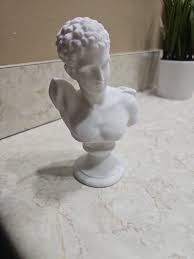
- Period
- 1850-1920
- Origin
- Europe
- Materials
- Parian ware
- Category
- Greek sculpture
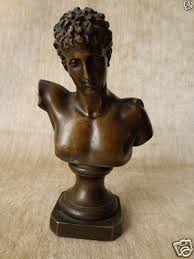
This Parian ware bust of Hermes represents the 19th-century fascination with Neoclassical aesthetics and the technical mastery of European porcelain manufacturers. Crafted to emulate the prestigious white marble of Paros, these busts allowed Victorian collectors to bring the elegance of classical Greek sculpture, specifically inspired by works like Praxiteles' Hermes, into their private homes.
What Is Bust of Hermes Worth?
The typical price range for Bust of Hermes is $100 - $180 based on recent sales. However, values can vary depending on the item's condition, rarity, and other factors such as:
- The physical condition of the delicate features, as chips to the nose or hair curls significantly reduce the $100-$180 price range.
- The presence of a manufacturer's mark from notable firms like Minton, Copeland, or Worcester which can push value to the higher end of the spectrum.
- The clarity and crispness of the casting, with more defined 'marble-like' details commanding higher collector interest.
- Overall size and the integrity of the pedestal base, ensuring it is original to the bust and not a later replacement.
How to Identify Bust of Hermes?
- Examine the surface for a distinct matte, unglazed finish that mimics the texture of fine statuary marble.
- Look for the characteristic creamy-white color unique to Parian bisque porcelain produced between 1850 and 1920.
- Check for sharp, detailed molding in the curly hair and facial features, which distinguishes high-quality European production from later reproductions.
- Inspect the base for potential impressed maker's marks or registration lozenges common in British and European porcelain of this era.
History of Bust of Hermes
Parian ware is a type of bisque porcelain, simulating marble, that was first developed in Britain in the 1840s. It was named after Paros, a Greek island renowned for its white marble, and was primarily used for statuary and decorative objects. Busts of classical figures like Hermes were popular decorative items in homes, especially during the Neoclassical period when there was a resurgence of interest in ancient Greek and Roman art and culture. This specific bust likely draws inspiration from classical Greek sculptures of Hermes, such as the famous 'Hermes and the Infant Dionysus' by Praxiteles.
Shop Similar
Salt Stone Carved BUST OF HERMES CONDUCTOR OF SOUL…
ebay.com
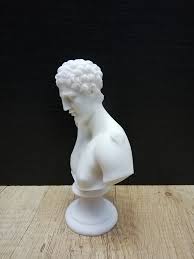
Hermes of Praxiteles Bust Head Ancient Greek Roman…
etsy.com

White Alabaster Bust of Hermes at 1stDibs
1stdibs.com
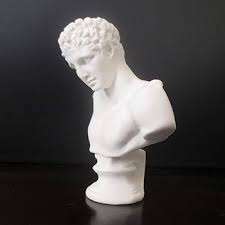
Amazon.com: Queenbox Mini Hermes Statue Ancient Gr…
amazon.com
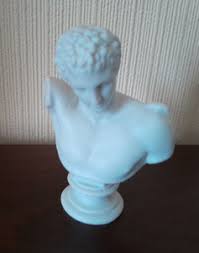
Hermes Bust | eBay UK
ebay.co.uk

Antique Hermes Bust in Carved Biscuit French Origi…
rocailleantiques.com
Related Items

Have an antique to identify?
Get an instant AI appraisal with values, history, and market insights.
Download for iPhone