Naxian Sphinx Value Guide

- Period
- 560 BC
- Origin
- Greece
- Materials
- Parian marble
- Category
- Greek sculpture
The Naxian Sphinx is a monumental votive offering from the island of Naxos to the Sanctuary of Apollo at Delphi, dating back to approximately 560 BC. This Archaic period masterpiece is highly collectible in a historical sense due to its unique synthesis of a woman's head, a lion's body, and avian wings, originally perched atop a massive 12.5-meter Ionic column.
What Is Naxian Sphinx Worth?
- Historical status as an invaluable cultural artifact held by the Delphi Archaeological Museum.
- Exceptional preservation of the Parian marble despite its age of over 2,500 years.
- Significance as a primary example of Naxian influence and wealth within the Panhellenic sanctuary.
- Priceless nature due to its role as a guardian of the Oracle of Delphi and its unique architectural height.
How to Identify Naxian Sphinx?
- Crafted from high-quality Parian marble, characteristic of the Archaic Greek period.
- Features the distinct 'Archaic smile' and stylized, braided hair typical of 6th-century BC sculpture.
- Identifiable by the specific anatomical combination of a female head, feline body, and upward-curving bird wings.
- Original fragments show evidence of being mounted on a tall, fluted Ionic column capital.
History of Naxian Sphinx
The Naxian Sphinx was a votive offering from the island of Naxos to the Sanctuary of Apollo at Delphi. It was erected around 560 BC and stood on a 12.5-meter-high Ionic column, making it a prominent landmark. The sphinx was a mythological creature with the head of a woman, the body of a lion, and the wings of a bird, often associated with riddles and guardianship. This particular sphinx served as a guardian of the Oracle of Delphi.
Shop Similar
Sphinx of Naxos - Wikipedia
en.wikipedia.org
.JPG)
File:EHGritaly 120305-04 (Sphinx, Delphi Museum).J…
commons.wikimedia.org

Circa 560 BC, the Sphinx of Naxos, from the Temple…
facebook.com
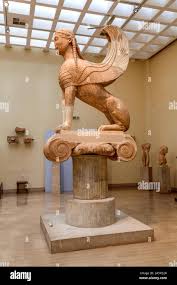
The Naxian Sphinx at the Delphi Museum, Greece Sto…
alamy.com
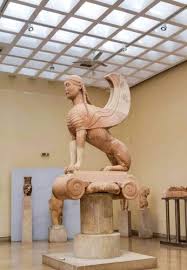
Ancient Delphi Greece: Oracle History, Sanctuary R…
togetherintransit.nl
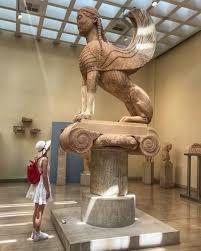
The Sphinx of the Naxians, 560 BC. Archaeological …
facebook.com
Related Items

Have an antique to identify?
Get an instant AI appraisal with values, history, and market insights.
Download for iPhone