Copper Still Value Guide
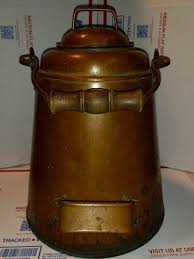
- Period
- 1880-1920
- Origin
- Unknown
- Materials
- Copper, wood
- Category
- Copper still
This antique copper still, dating from 1880-1920, features the classic alembic pot design and a distinctive conical top used for traditional small-scale distillation. These pieces are highly collectible due to copper's historical importance in removing sulfur compounds and its legacy in both alchemy and spirit production.
What Is Copper Still Worth?
The typical price range for Copper Still is $250 - $275 based on recent sales. However, values can vary depending on the item's condition, rarity, and other factors such as:
- The structural integrity of the copper pot and the presence of the original conical top significantly impact the $250-$275 valuation.
- The condition of the wooden components, which are prone to decay, plays a major role in determining the final market price.
- Historical provenance or evidence of use in specific 19th-century distillation operations can increase collector interest.
- The absence of modern repairs or soldered patches helps maintain the item's value as an authentic 1880-1920 artifact.
How to Identify Copper Still?
- Examine the pot for the classic rounded alembic shape and a matching conical top characteristic of the 1880-1920 era.
- Check for authentic construction materials, specifically the combination of hand-worked copper and period-appropriate wood accents.
- Look for signs of traditional craftsmanship in the joints and seams, which reflect the small-scale manufacturing techniques of the late 19th century.
- Verify the patina of the copper, which should show natural oxidation consistent with a century of age rather than modern chemical distressing.
History of Copper Still
Copper stills have been used for centuries, with early designs dating back to ancient Mesopotamia. They became particularly prominent in Europe from the Middle Ages onwards, evolving with advancements in alchemy and later, the production of spirits. The unique properties of copper, such as its excellent heat conductivity and its ability to remove sulfur compounds from alcohol vapor, made it the preferred material for distillation. This particular design, with its classic alembic shape, reflects a traditional approach to distillation, often found in home or small-scale operations throughout the 18th and 19th centuries.
Shop Similar
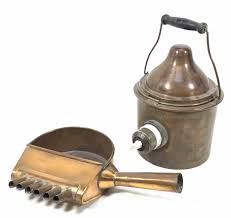
Sold at Auction: Vintage Candle Wax Pouring Tool &…
invaluable.com · $30
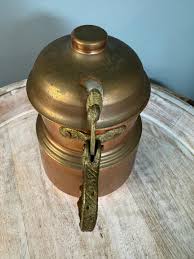
Vintage Copper and Brass Teapot: Hand Hammered Tur…
etsy.com · $43
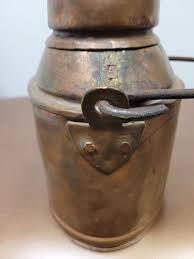
Antique Vintage Copper wrought Iron hanging bucket…
ebay.com · $125
Antique Copper Can Pail Jug Dairy Milk Can Cream R…
ebay.com · $168
SPANISH AMERICAN WAR ERA* USN TYPE COPPER KETTLE* …
ebay.com · $199
Large Antique Footed Copper Coal Scuttle Bucket W/…
chairish.com · $445
Have an antique to identify?
Get an instant AI appraisal with values, history, and market insights.
Download for iPhone