Damascene Bracelet Value Guide
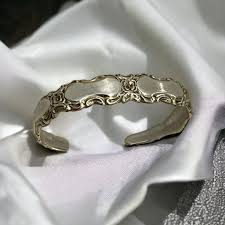
- Period
- 1920-1950
- Origin
- Spain
- Materials
- Gold-toned base metal, steel, gold foil, black enamel
- Category
- Damascene jewelry
This antique Damascene bracelet is a stunning example of the traditional metalworking artistry popularized in Toledo, Spain, between 1920 and 1950. These pieces are highly collectible for their meticulous hand-inlaid gold and silver foil designs set against a contrasting dark oxidized steel or black enamel base.
What Is Damascene Bracelet Worth?
The typical price range for Damascene Bracelet is $50 - $75 based on recent sales. However, values can vary depending on the item's condition, rarity, and other factors such as:
- Condition of the black enamel and gold foil inlay, as chips or wear significantly reduce the $50-$75 market value.
- Complexity of the design, with detailed natural motifs like birds and floral patterns commanding higher interest than simple geometric shapes.
- The integrity of the clasp and link connections, ensuring the bracelet remains wearable for modern collectors.
- Authenticity of the era, specifically pieces dating from the 1920s to 1950s resurgence in Spanish tourist jewelry.
How to Identify Damascene Bracelet?
- Look for the characteristic 'Toledo' style featuring intricate birds, flowers, or geometric patterns hand-etched into the metal.
- Check for a base of oxidized steel or black enamel which provides the signature dark background for the gold-toned foil.
- Examine the construction for linked panels joined by sturdy metal loops, typical of mid-century Spanish souvenir jewelry.
- Verify the presence of fine gold or silver foil inlays rather than simple surface painting or gold-toned plating.
History of Damascene Bracelet
Damascene is a traditional Spanish art form involving the inlaying of different metals into one another, typically gold or silver into a darker oxidized steel base. This style, popularized in Toledo, Spain, experienced a resurgence in the late 19th and early 20th centuries, often applied to jewelry for the tourist market. These pieces are cherished for their fine detailing, usually depicting natural motifs like birds, flowers, or geometric patterns.
Shop Similar
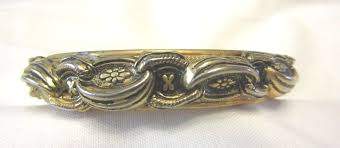
VINTAGE COSTUME JEWELRY GOLD TONE INTERLOCKING SOL…
ebay.com · $5
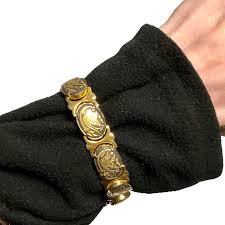
Vintage Jewelry Black and Gold Tone Dove Bird Dama…
rosesveryvintageshop.com · $20
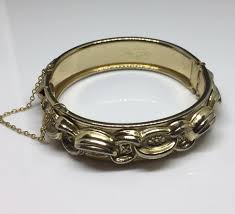
Whiting & Davis Chunky Gold Tone Repousse Hinged B…
etsy.com · $68
International Sterling Silver 925 Trianon Cuff Bra…
ebay.com · $100
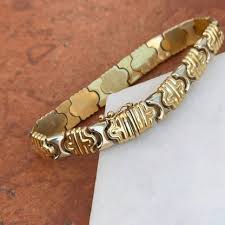
Estate 14KT White Gold + Yellow Gold Stampato Styl…
legacysaintjewelry.com · $2400
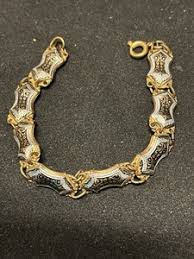
Damascene Bracelet | eBay
ebay.com
Related Items
Have an antique to identify?
Get an instant AI appraisal with values, history, and market insights.
Download for iPhone