Deacon's Bench Value Guide
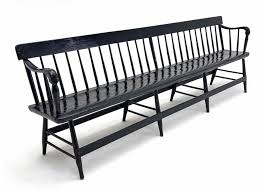
- Period
- 1880-1920
- Origin
- United States
- Materials
- Wood, paint
- Category
- Deacon's bench
Originating from the United States between 1880 and 1920, the Deacon's Bench is a hallmark of early American utility, originally designed for church officials. These benches are highly collectible for their robust construction and the unadorned, Shaker-inspired aesthetic that transitioned from public houses of worship into timeless household furniture.
What Is Deacon's Bench Worth?
The typical price range for Deacon's Bench is $700 - $850 based on recent sales. However, values can vary depending on the item's condition, rarity, and other factors such as:
- The condition and preservation of the original black painted finish significantly impact the $700-$850 price range.
- Structural integrity of the spindle back and the stability of the curved arms are critical for valuation.
- Authentic provenance linking the piece to early American public or church use can increase collector interest.
- The presence of original wood materials without modern replacements or significant structural repairs.
How to Identify Deacon's Bench?
- Look for the characteristic spindle back design paired with gently curved arms typical of the 1880-1920 era.
- Examine the finish for authentic aged black paint over original wood surfaces.
- Check for signs of hand-joined construction or early industrial joinery consistent with American manufacturing of the late 19th century.
- Verify the long, simple silhouette designed for multiple occupants, reflecting its ecclesiastical origins.
History of Deacon's Bench
The Deacon's Bench, often associated with early American and Shaker furniture, derives its name from its original use in churches. Deacons and other church officials would sit on these long, simple benches. These benches were designed for utility and durability, reflecting the straightforward, unadorned aesthetic favored by many early American communities. Their robust construction made them suitable for public spaces, and over time, they transitioned into common household furniture, valued for their ample seating and classic, timeless design.
Shop Similar
Sold at Auction: SPINDLE BACK LONG DEACON'S BENCH
invaluable.com · $200
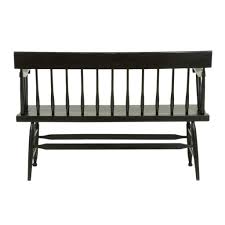
Vintage Deacon's Bench in Black | Grandview Mercan…
grandviewmercantile.com · $495
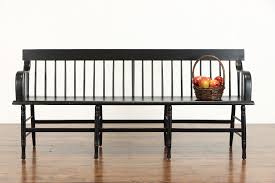
Country Farmhouse Antique 71" Hall or Deacon Bench
harpgallery.com · $1295
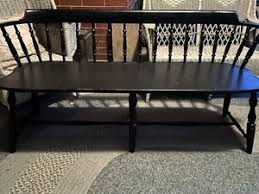
Windsor Bench | eBay
ebay.com
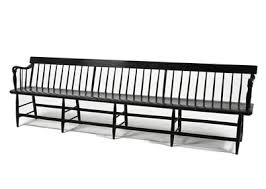
19th C. Deacon's Bench In Black Paint
liveauctioneers.com
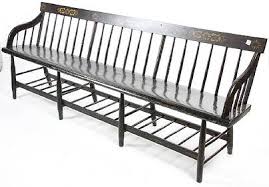
S.bent & Bros. Stenciled Deacon's Bench
liveauctioneers.com
Related Items
Have an antique to identify?
Get an instant AI appraisal with values, history, and market insights.
Download for iPhone