Embroidered Napkin Value Guide
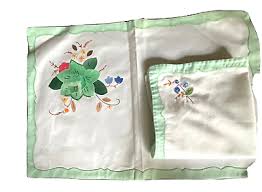
- Period
- 1940-1960
- Origin
- Unknown
- Materials
- Linen, cotton thread
- Category
- Embroidered napkin
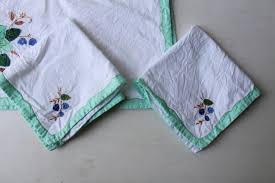
This mid-20th century linen napkin represents the enduring popularity of hand-stitched domestic artistry from the 1940s through the 1960s. Featuring delicate blue floral embroidery and a distinctive light green scalloped edge, it serves as a refined example of the era's preference for elegant, functional home textiles.
What Is Embroidered Napkin Worth?
The typical price range for Embroidered Napkin is $10 - $15 based on recent sales. However, values can vary depending on the item's condition, rarity, and other factors such as:
- The presence of the complete original set significantly increases the individual value of each napkin.
- Condition is paramount; the absence of yellowing, tea stains, or frayed scalloped edges maintains the $10-$15 price point.
- The intricacy and color vibrancy of the blue floral embroidery and green border.
- The structural integrity of the linen fabric, specifically looking for thinning or 'dry rot' from improper storage.
How to Identify Embroidered Napkin?
- Look for the characteristic light green scalloped edge stitching which was popular in mid-century designs.
- Examine the reverse side of the blue floral embroidery for slight irregularities indicative of hand-stitched cotton thread.
- Verify the base material is authentic white linen, which typically displays a crisp texture and natural slubs compared to modern synthetics.
- Check for the absence of modern care tags, as pieces from 1940-1960 were often part of larger handmade sets.
History of Embroidered Napkin
Embroidered linens have been a staple of home decor and personal accessories for centuries, reaching a peak in popularity during the Victorian era and continuing strong into the mid-20th century. These pieces were often hand-stitched, showcasing the skill and artistry of the maker. Napkins like this one would have been used for special occasions, adding a touch of elegance to the dining experience, or as decorative accents.
Shop Similar
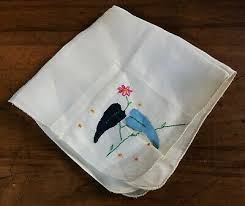
Vintage White Handkerchief with Floral Image - No …
ebay.com · $10
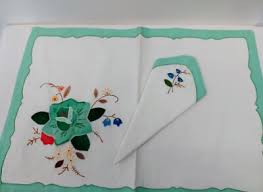
Vintage Placemats & Napkins with Inserts Set of 4 …
ebay.com · $15
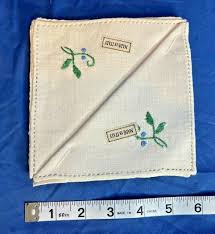
Vintage Ecru Linen Tablecloth & Napkin Set Italy H…
ebay.com · $25
Vintage Embroidered Applique Flower Placemat Set o…
etsy.com · $30
Vintage Embroidered Appliqué Flower Table Placemat…
ebay.com · $34
Vintage 1970s Embroidered Appliqué Tablecloth & Na…
ebay.com · $35
Related Items
Have an antique to identify?
Get an instant AI appraisal with values, history, and market insights.
Download for iPhone