Manton de Manila Value Guide
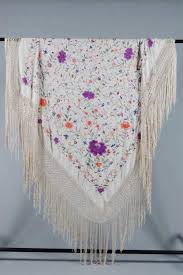
- Period
- 1900-1920
- Origin
- China
- Materials
- Silk, silk thread
- Category
- Manton de manila
The Manton de Manila is a masterpiece of Cantonese silk embroidery that became an iconic symbol of Spanish flamenco and high fashion. These 1900-1920 era shawls are highly collectible for their dense floral and bird motifs, representing a unique cultural fusion between Chinese craftsmanship and Spanish aesthetic tradition.
What Is Manton de Manila Worth?
The typical price range for Manton de Manila is $1,200 - $1,500 based on recent sales. However, values can vary depending on the item's condition, rarity, and other factors such as:
- Condition of the silk ground, specifically looking for shattering, dry rot, or staining which significantly lowers value.
- The complexity and density of the hand-embroidery, with full-coverage floral and bird scenes commanding higher prices.
- The length and preservation of the silk macrame fringe, as tangling or loss reduces the item's desirability.
- Provenance and age, with authentic early 20th-century examples valued between $1,200 and $1,500.
How to Identify Manton de Manila?
- Look for heavy, high-quality silk fabric that drapes with significant weight compared to modern synthetic reproductions.
- Examine the embroidery for hand-stitched irregularities; authentic pieces feature reversible patterns where the 'wrong' side is nearly as neat as the front.
- Identify the long, hand-knotted macrame fringe which is a hallmark of the 1900-1920 export style.
- Verify the motifs for traditional Cantonese influence, specifically vibrant birds and intricate floral arrangements typical of the era.
History of Manton de Manila
Originating in China, Mantones de Manila were luxury goods transported by the Manila Galleons to Spain via the Philippines, hence the name 'Manila shawl.' They became extremely popular in Spain, particularly in Andalusia, where they are an iconic accessory for flamenco dancers and traditional dress. Each shawl is a testament to intricate hand embroidery, often depicting vibrant flowers, birds, and sometimes oriental scenes, reflecting their Chinese heritage blended with Spanish tastes. They were also highly prized as decorative items and can be found draped over pianos or walls.
Shop Similar
Lot 62 - An embroidered Cantonese shawl, circa 192…
kerrytaylorauctions.com · £280
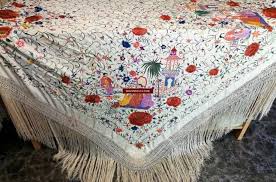
1161 Antique Double Sided Embroidery Manila Manton…
wovensouls.com · $4500
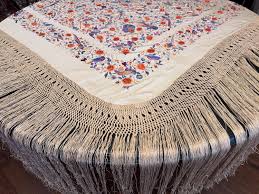
Antique Manila Silk Shawl. Antique Piano Shawl Fro…
etsy.com
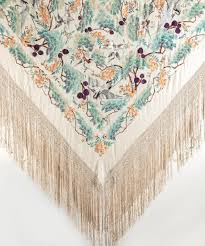
Sold at Auction: Embroidered raw silk Manila shawl
invaluable.com
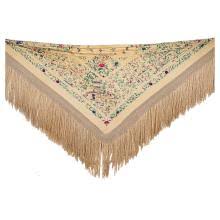
Sold at Auction: MANTÓN DE MANILA. ESPAÑA, SEGUNDO…
invaluable.com
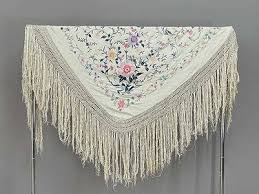
Chinese Embroidered Silk Piano Shawl
liveauctioneers.com
Related Items
Have an antique to identify?
Get an instant AI appraisal with values, history, and market insights.
Download for iPhone