Milk Glass Pedestal Cake Stand Value Guide
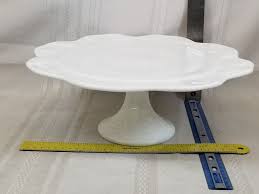
- Period
- 1940-1960
- Origin
- United States
- Materials
- Milk glass
- Category
- Milk glass
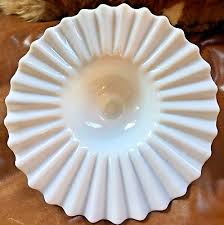
This mid-century American milk glass cake stand is a quintessential example of 1940-1960s kitchenware, prized for its opaque white finish that mimics fine porcelain. Its distinctive pedestal base and scalloped edges make it a highly sought-after piece for collectors of vintage glassware and functional home decor.
What Is Milk Glass Pedestal Cake Stand Worth?
The typical price range for Milk Glass Pedestal Cake Stand is $45 - $45 based on recent sales. However, values can vary depending on the item's condition, rarity, and other factors such as:
- Condition is paramount, as chips or 'flea bites' along the delicate scalloped edges significantly reduce the $45 market value.
- The presence of a maker's mark from notable US manufacturers like Fenton or Westmoreland can increase collector interest.
- Surface clarity and the absence of 'dishwasher haze' or staining preserve the aesthetic appeal and resale price.
- The structural integrity of the pedestal-to-plate bond is critical for both safety and collectible value.
How to Identify Milk Glass Pedestal Cake Stand?
- Check for the characteristic opaque white color and smooth, non-porous surface typical of mid-century American milk glass.
- Inspect the scalloped edge for uniform molding and the absence of modern machine-pressed seams.
- Verify the pedestal base construction, ensuring it is weighted correctly and shows appropriate wear for a 1940-1960 era piece.
- Look for a soft, translucent glow when held up to a strong light source, a hallmark of high-quality vintage milk glass.
History of Milk Glass Pedestal Cake Stand
Milk glass, a classic form of opaque or translucent glass, has been produced for centuries, with origins tracing back to 16th-century Venice. It gained widespread popularity in the 19th and early 20th centuries, particularly in America, for its affordability and versatility. Often used for decorative household items, it mimicked porcelain or opal glass and became a staple in many homes for serving and display.
Shop Similar
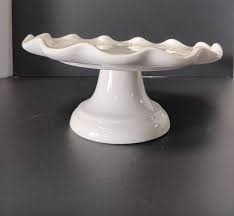
Ceramic Pedestal Cake Stand By Maioliche Jessica |…
ebay.com · $18
Colony Harvest Grapes & Leaves Pure White Milk Gla…
ebay.com · $41
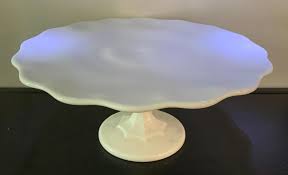
Indiana Glass Milk Glass Cake Plate | Indiana Glas…
etsy.com · $65
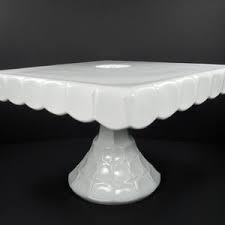
Indiana Glass Co Constellation Pattern White Milk …
etsy.com · $69
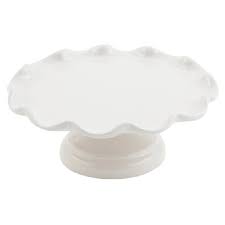
Bon Chef 9937IVYSPKLD - 8 Inch Cake Display Stand …
restaurantsupply.com · $118
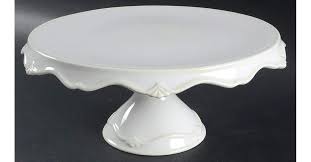
Pavillion 11" Diameter Pedestal Cake Stand by Prin…
replacements.com · $140
Related Items
Have an antique to identify?
Get an instant AI appraisal with values, history, and market insights.
Download for iPhone