Mola Textile Value Guide
- Period
- 1960-1980
- Origin
- Panama
- Materials
- Cotton fabric, thread
- Category
- Mola textile
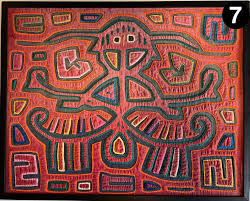
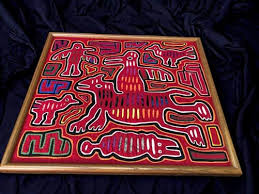
Molas are intricate textile art forms created by the Kuna people of Panama, originally serving as decorative panels for traditional women's blouses. This 1960-1980 example is highly collectible due to its complex reverse appliqué technique and vibrant depiction of abstract avian and anthropomorphic figures.
What Is Mola Textile Worth?
The typical price range for Mola Textile is $350 - $350 based on recent sales. However, values can vary depending on the item's condition, rarity, and other factors such as:
- The complexity and number of fabric layers used in the reverse appliqué process significantly impact the $350 valuation.
- The condition of the cotton fabric, specifically the lack of fading or fraying in the delicate threadwork.
- The rarity and detail of the abstract avian and anthropomorphic design compared to more common geometric patterns.
- Authenticity of origin from the Kuna Yala region of Panama and the age of the textile.
How to Identify Mola Textile?
- Examine the layers of cotton fabric for the signature reverse appliqué technique where upper layers are cut away to reveal underlying colors.
- Look for fine, nearly invisible hand-stitching that secures the intricate geometric and figurative patterns.
- Verify the 1960-1980 era through the specific color palette and the presence of traditional Kuna cosmological motifs.
- Check for the characteristic two-panel format, as these were originally designed for the front and back of a garment.
History of Mola Textile
Molas are traditional textile art forms made by the Kuna people of Panama and Colombia. They are created using a reverse appliqué technique, where multiple layers of fabric are sewn together, and sections are cut away from the upper layers to reveal the colors of the lower layers. Mola designs often depict geometric patterns, animals, or scenes from Kuna culture and cosmology. These intricate textiles are originally used as panels in women's blouses and have gained international recognition as a significant form of folk art.
Shop Similar
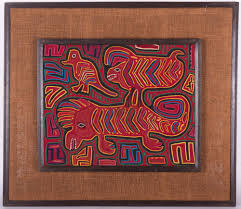
Lot - A Pair of framed Mola Textiles
linkauctiongalleries.com · $50
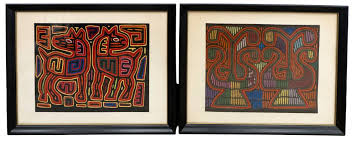
Lot - Pair Framed South American Mola Tapestries, …
weschlers.com · $70
Original 1970s Molas by the Kuna People of the San…
etsy.com · $112
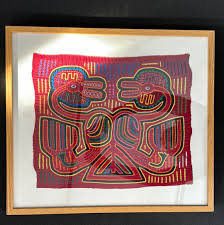
Mola textile from Panama – Alley Modern & More
alleymodernandmore.com · $350
1960s Original Handmade Stitch Arm Panama Textile …
theoldgrainery.com · $599
Shop | Chambers Interiors
chambersinteriors.com · $2800
Have an antique to identify?
Get an instant AI appraisal with values, history, and market insights.
Download for iPhone