What does the Occupied Japan stamp on the bottom mean?

By Ellen Whitlock ·
Occupied Japan on the base means the piece was made in Japan for export during the Allied occupation, which ended in 1952. The wording dates it but doesn't name the maker or make it rare. Most everyday pieces are typically worth roughly $5 to $40.
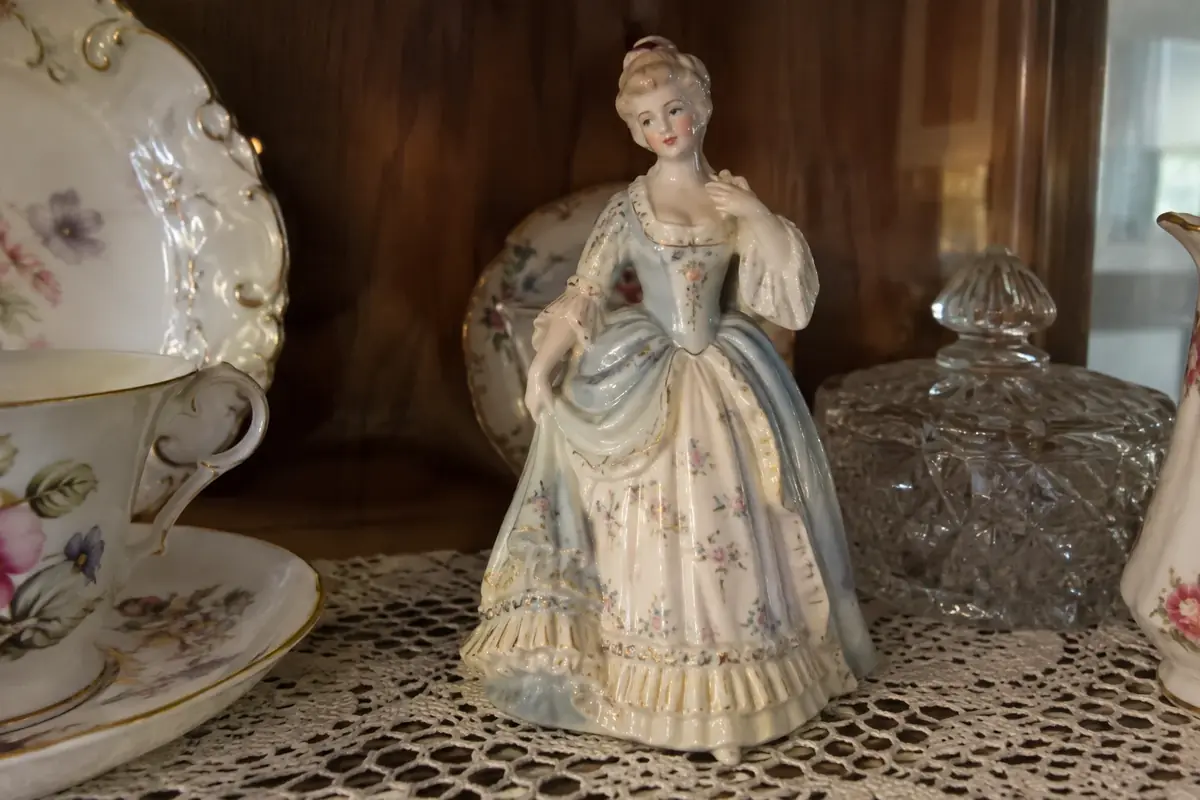
How to date a piece from the Occupied Japan stamp
Japan was under Allied occupation from September 2, 1945 until April 28, 1952. The wording tells you when a piece was made for export, not who made it, since the maker is named separately, in a logo or label. Turn yours over and match the mark.
| Mark | Years |
|---|---|
| NIPPONThe origin word on older exports, earlier than any Occupied Japan piece | 1891–1921 |
| JAPAN · before the warPlain "Japan" or "Made in Japan" on exports to the U.S., older than the occupation | 1921–1941 |
| MADE IN OCCUPIED JAPANThe full wording on post-war export pieces | 1946–1952 |
| OCCUPIED JAPANThe short form, accepted by U.S. Customs | 1946–1952 |
| JAPAN · during the occupationAlso allowed by Customs, so it can't place a piece on its own | 1946–1952 |
| JAPAN · after the occupationThe usual export wording afterward, newer than any Occupied Japan piece | 1952 on |
| Inside a maker's logoThe words set beneath or inside a maker's own logo | 1946–1952 |
| Paper label or cloth tagThe wording on a label or tag instead of a stamp | 1946–1952 |
| Added stamp · no dateA stamp a seller added to an unmarked piece, so it says nothing about real age |
The marking was required from February 1947 and dropped in December 1949, though many makers kept using it until the occupation ended.
Checking your Occupied Japan stamp
- Find the words. Look for "Occupied Japan" or "Made in Occupied Japan." These are the wordings that tie a piece to the occupation years.
- Check every surface. The wording can be a backstamp, a molded mark, a paper label or a cloth tag. On figurines, check the back as well as the bottom.
- Read the maker's name. Some makers placed the words beneath or inside their own logo, so the stamp may read as a brand first. A company name on the base is your next lead.
- Stop at plain "Japan." Customs allowed "Japan" and "Made in Japan" during the occupation, but the wording was also used before and after, so it does not settle the date.
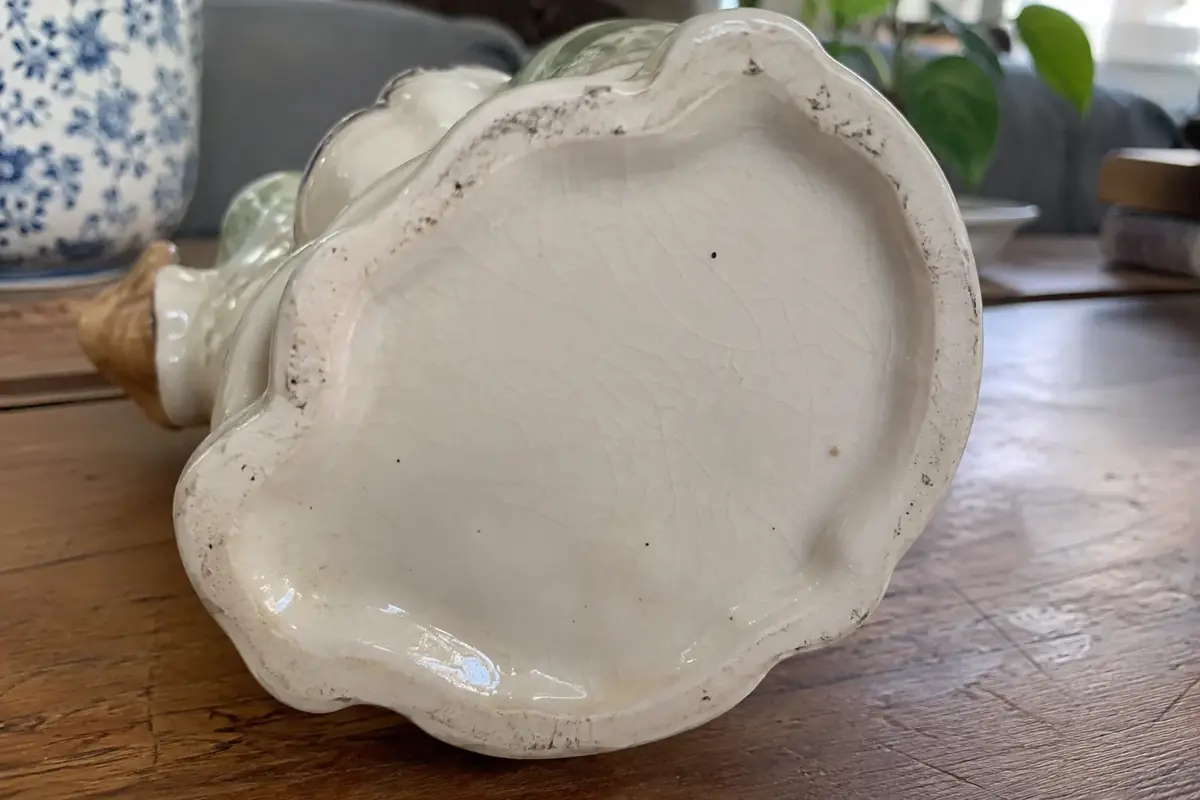
For other wording you may find on the base, see the pottery marks guide.
How much is an Occupied Japan piece worth?
Sound everyday pieces sell for little. According to Barnebys, auction results for figurines cluster at about $2 to $14. A newspaper antiques column gave a circa 1950 piece in perfect condition an insurance replacement value of $25 to $35.
The better end is higher. Texas Antique Mall lists its most valuable Occupied Japan figurines at $32 to $150 in asking prices. The mark confirms the era, but the piece sets the price.
What makes one Occupied Japan piece worth more?
- Quality
- Most Occupied Japan ware was dime-store stock, so better-made, larger or more detailed pieces stand out. Invaluable put a $30 to $300 estimate on one 8 5/8-inch pair in great condition.
- Condition
- Chips, cracks, crazing and fading cut into a value that is already modest.
- Pairs and sets
- Matching pairs and complete sets are worth more than single pieces. A pair of 12-inch bisque figures, a shepherd and shepherdess, brought $72 at an online auction in about 2009.
- A genuine mark
- Collectors typically pay more for a marked piece than for an identical unmarked one.
- Demand
- Interest has cooled from its peak. The mark meant more to collectors in the 1970s, who remembered the pieces from family homes, and today the pieces appeal mostly to buyers who like the history.
How can I tell if the stamp is real?
Some sellers have added their own stamp to pieces that were never marked. Vintage Unscripted says true marks sit under the glaze and added ones do not, unless the base is unglazed. Signs to check:
- A stamp that sits on top of the glaze
- An unglazed base, where the glaze test can't help. Get a second opinion if the mark looks off.
- Only "Nippon" or plain "Japan" wording, which is a different mark, not an early version of this one
Common Occupied Japan questions
Does "Occupied Japan" make my piece valuable?
Not by itself. The wording dates the piece but doesn't make it scarce, so its quality and condition matter more to the price.
Can a piece with no mark still be from the occupation years?
Yes. Not every Japanese piece from these years carried the wording. Without a mark or label, look for other clues, such as a maker's name.
Who made my Occupied Japan piece?
The wording doesn't say. Some makers, such as Noritake, put the words beneath their own logo, and Lenwile, Sango and Sagi built them into their hallmark.
How can I tell if an Occupied Japan stamp was added later?
Look at the glaze. A stamp that sits on top of it, rather than under it, is the warning sign, unless the base is unglazed. If a mark looks off, get a second opinion.