Is That Dusty Portrait a Masterpiece? 5 Signs an Antique Painting is Worth a Fortune

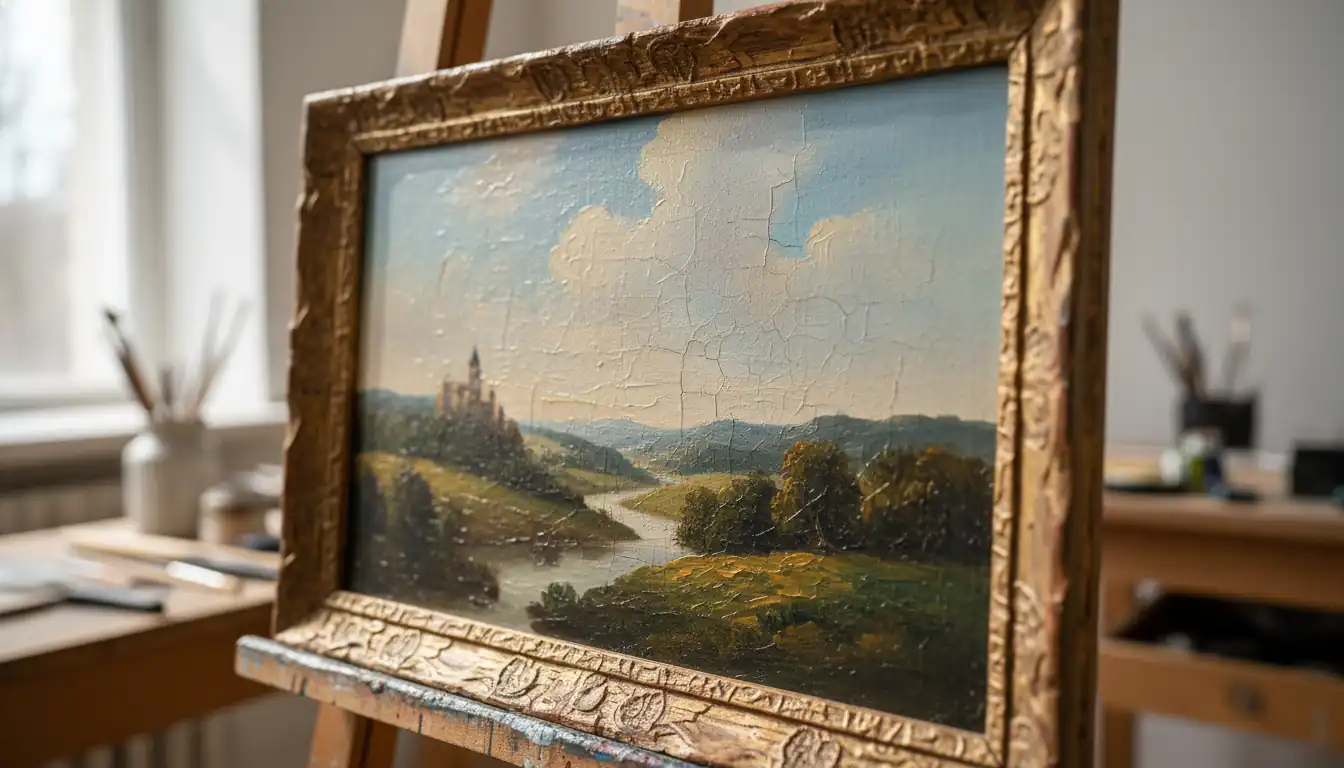
You are standing in a dimly lit corner of an estate sale, staring at a portrait that has seen better days. The varnish is so yellowed it looks like it was cleaned with tobacco juice, and the frame is chipped. Yet, there is something about the way the light hits the subject’s eyes that makes you pause. Is this a $50 piece of decorative junk, or have you just stumbled upon a lost masterpiece worth more than the house it’s sitting in?
The difference between a fortune and a flop often comes down to details that the untrained eye misses. Most people look for a signature first, but seasoned collectors know that a name on a canvas is the easiest thing to fake. To truly identify a valuable antique painting, you have to look at the "bones" of the object—the physical materials, the chemical changes of the paint, and the historical breadcrumbs left on the back of the frame.
In this guide, we will break down the five essential signs that a dusty painting is a high-value antique. You will learn how to read the surface of a canvas like a map, identify the "hand" of a master artist, and use modern tools to verify your find. By the time you finish reading, you will have the framework needed to spot a diamond in the rough at any auction or thrift store.
The Anatomy of Age in Canvas and Wood
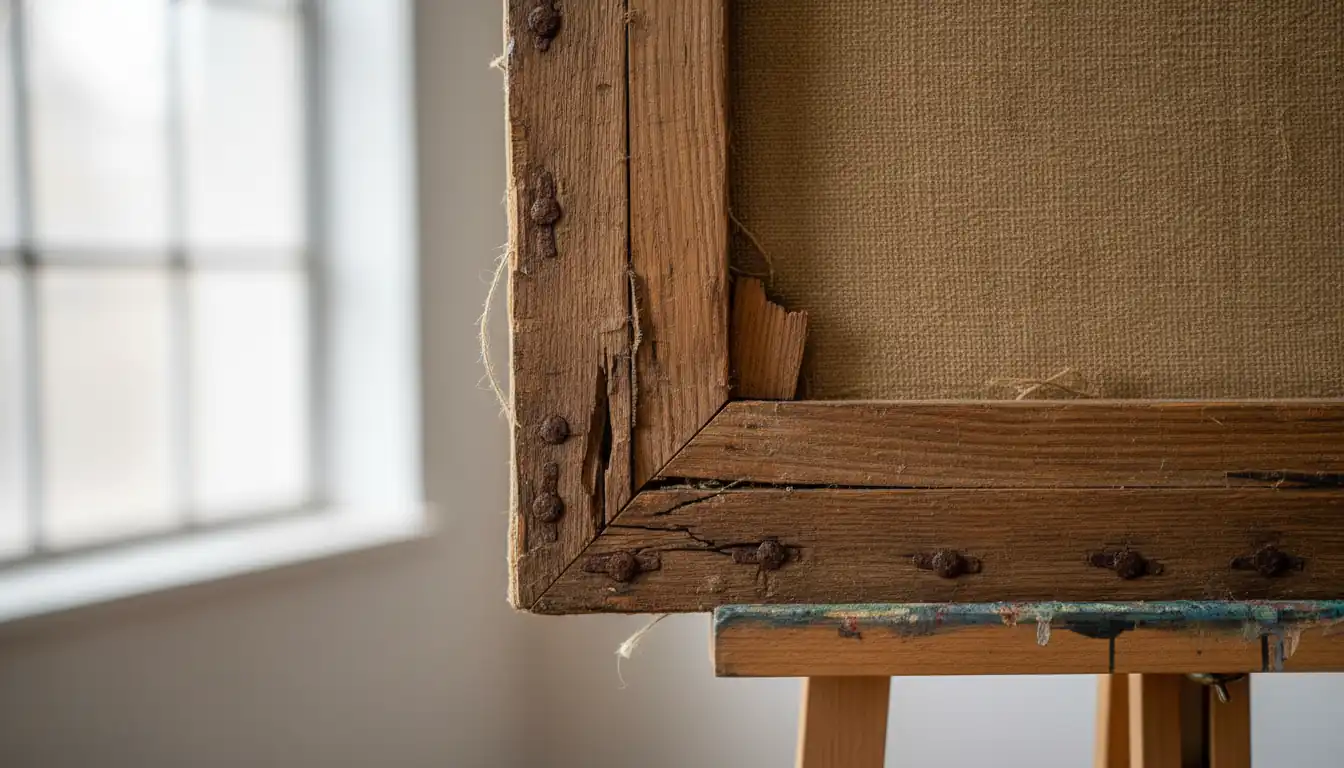
Before you worry about who painted the image, you must determine when it was painted. Authenticity starts with the physical structure of the piece. A 17th-century masterpiece cannot exist on a 20th-century machine-made canvas. Understanding the materials used by artists throughout history allows you to create a chronological baseline for any work you encounter.
Decoding Craquelure and Surface Patina
One of the most misunderstood signs of age is craquelure—the network of fine cracks that forms on the surface of an oil painting. These cracks occur because the different layers of a painting dry and expand at different rates. To understand why this happens, you have to look at the three rules of oil painting:
- Fat over Lean: Each successive layer of paint should have more oil ("fat") than the layer below it.
- Thick over Thin: Thicker layers of paint should be applied over thinner layers to ensure structural stability.
- Slow-drying over Fast-drying: Layers that dry slowly should be placed on top of layers that dry quickly.
When an artist follows these rules, the painting remains flexible for decades. However, over a century or more, the natural movement of the wooden support and the oxidation of the oil lead to cracking. Genuine craquelure is usually "alligator-like" or resembles a spiderweb. If you look closely with a magnifying glass, the cracks should be deep and sharp.
Forgers often try to mimic this by using fast-drying varnishes or even baking the canvas to force cracks. You can spot these fakes because the cracks often look "drawn on" or don't penetrate through to the lower layers of paint. A genuine antique will also have a "patina"—a subtle dulling of the colors caused by microscopic dust and environmental exposure that cannot be replicated with a simple brown wash.
Analyzing Stretcher Bars and Support Materials
If the front of the painting is the face, the stretcher bars are the skeleton. Before the mid-19th century, stretcher bars were hand-cut. If you see wood that is perfectly uniform with sharp, machine-cut edges, you are likely looking at a modern reproduction or a later copy.
| Era | Common Support Material | Stretcher Characteristics |
|---|---|---|
| 16th - 17th Century | Oak, Poplar, or Walnut Panels | Thick, hand-planed wood; often beveled at the edges. |
| 18th Century | Hand-woven Linen | Hand-carved wooden pegs (keys) used to tension the canvas. |
| 19th Century | Cotton or Fine Linen | Introduction of machine-cut wood and standardized sizes. |
| 20th Century | Mass-produced Canvas | Uniform weave; staples used instead of hand-forged nails. |
Look at the nails holding the canvas to the wood. Are they rusted and square-headed? That is a great sign. Are they shiny staples? That suggests the painting was either recently created or re-lined. While a re-lined painting can still be valuable, an original, untouched "marriage" between the canvas and its original 18th-century stretcher is a massive value-add for collectors.
Identifying the Artist Hand Beyond the Signature
A signature is a claim, but the brushwork is the proof. Many of the world’s most valuable paintings are unsigned, yet experts can attribute them to specific masters based on "the hand." This refers to the unique, almost subconscious way an artist moves their brush across the surface.
Brushwork Mastery and the Impasto Technique
When you look at a painting, don't just look at the image; look at the texture. High-value works often utilize "impasto," where paint is applied so thickly that it stands out from the surface. In the hands of a master, impasto creates highlights that catch actual physical light, giving the painting a three-dimensional quality.
Compare a 17th-century Dutch Master to a 19th-century Impressionist. A Dutch Master might use dozens of thin "glazes"—translucent layers of oil—to create a glowing skin tone. An Impressionist might use bold, "broken" brushstrokes where colors are mixed directly on the canvas. If the brushwork looks hesitant, muddy, or lacks a clear "rhythm," it is likely the work of an amateur or a student copying a master.
"The brushstroke is the artist's fingerprint. While a name can be forged in seconds, the muscle memory of a master's hand takes a lifetime to develop."
The Edward Hopper Effect: Style as a Fingerprint
Take Edward Hopper as an example. If you found a painting of a lonely diner or a sun-drenched New England porch, you wouldn't need to see his signature to suspect its value. His style is defined by a cinematic use of light and a sense of profound isolation.
If you are wondering about his most famous work, Edward Hopper's best painting is widely considered to be Nighthawks (1942), which perfectly encapsulates his ability to turn a mundane city scene into a psychological narrative. When you see that specific "Hopperesque" light—stark, geometric, and unforgiving—you are seeing a stylistic fingerprint.
If you find a painting that has a distinct "look" but you can't quite place the artist, this is where technology becomes your best friend. The Relic app allows you to take a photo of the brushwork and composition, using AI to analyze the patterns. It can suggest potential artists or schools of origin by comparing your photo to millions of known works. This bridges the gap between "I think this looks expensive" and "I know this is a 19th-century Hudson River School piece."
The Secret Language of the Verso
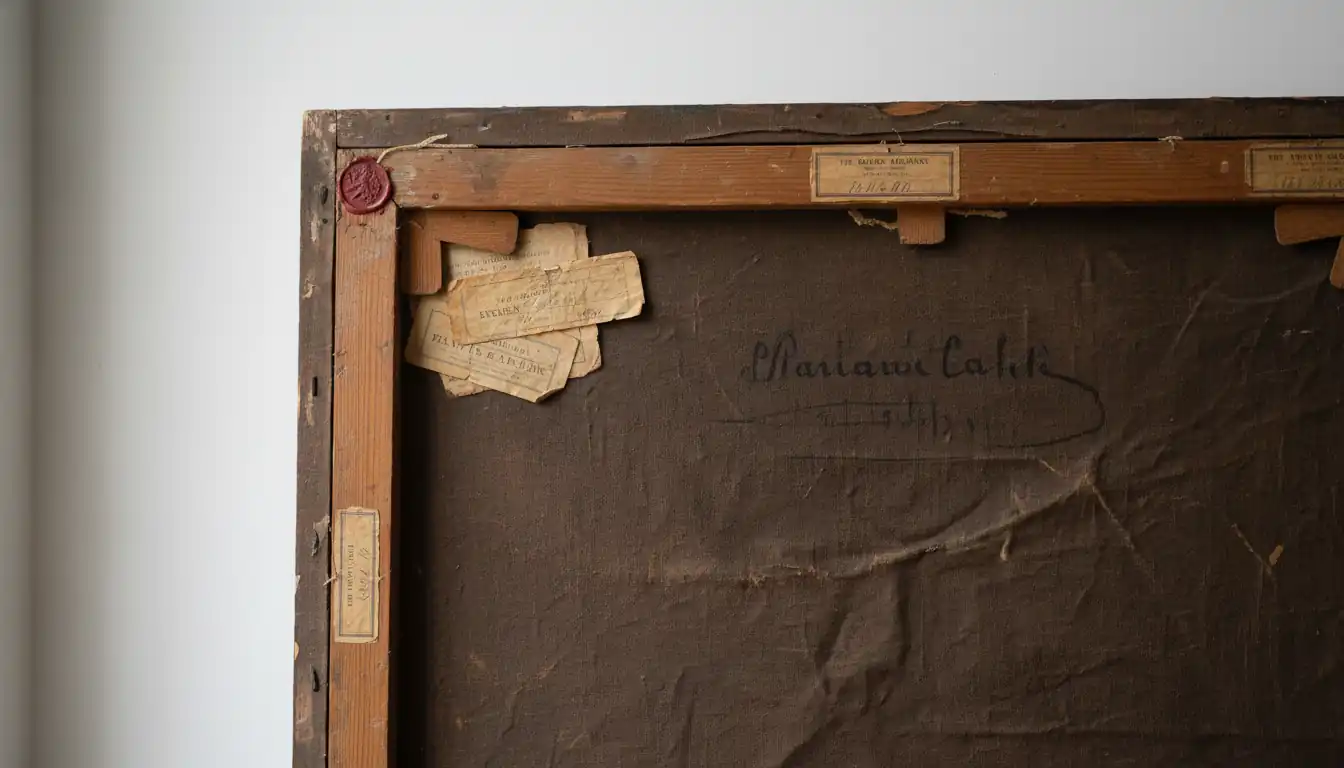
Most amateur collectors never look at the back of a painting, which is a huge mistake. The "verso" (the back) often contains more historical data than the front. It is the "paper trail" of the object’s life. A painting that has traveled through famous galleries or royal collections will almost always leave a mark on its reverse side.
Gallery Labels and Exhibition Stamps
Look for small, rectangular paper labels. These are often from 19th-century galleries in London, Paris, or New York. If you see a label from a prestigious dealer like Duveen Brothers or Knoedler & Co., you are likely holding something of significant value. These labels prove that the painting was once vetted by professional eyes.
Exhibition stamps are equally important. Sometimes, a painting was entered into a "Salon" or a museum exhibition. These stamps are often circular or oval and may be faded. They provide a "provenance"—a record of ownership—that can double or triple the value of a work. A painting with a documented history is much easier to sell than a "mystery" piece.
Deciphering Handwritten Notations and Inventory Marks
You might also find handwritten numbers in white chalk or black ink. These are often inventory marks from auction houses like Christie’s or Sotheby’s from decades ago. In some cases, you might find a wax seal. In 18th-century Europe, noble families often applied their family crest in red wax to the back of the frame or the stretcher bars to denote ownership.
- Wax Seals: Indicate aristocratic or royal provenance.
- Chalk Marks: Often point to a past auction appearance.
- Stenciled Numbers: Usually correspond to a specific museum or gallery inventory.
If you encounter an obscure crest or a faded gallery stamp, you don't have to be a historian to decode it. You can use Relic to photograph these marks. The app’s database can often match these symbols to historical records, helping you piece together the journey the painting took from a 19th-century parlor to a 21st-century estate sale.
Condition Red Flags and Restoration Realities
A common mistake is assuming a painting is worthless because it looks "dirty." In the art world, dirt is your friend; damage is your enemy. A thick layer of yellowed varnish can actually protect the original paint for centuries. The key is learning how to see through the grime to the "health" of the paint layer underneath.
Spotting Overpainting with UV Light
One of the most effective tools for any collector is a simple UV blacklight. When you shine a UV light on an antique painting in a dark room, the materials will "fluoresce" differently based on their age.
- Original Varnish: Usually glows a milky, greenish-yellow color.
- Modern Repairs: Appear as dark, "ink-like" spots.
- New Paint: Does not fluoresce the same way as 100-year-old lead-based pigments.
If you see large dark patches on a face or a critical part of the landscape, it means the painting has been "overpainted" to hide damage. While some restoration is acceptable, a painting that is 50% modern repair loses most of its investment value. You want to find "sleepers"—paintings that look terrible because of old varnish but show very little dark spotting under UV light.
The Impact of Yellowed Varnish on Market Value
Varnish is a protective layer made of natural resins (like dammar or mastic). Over 50 to 100 years, these resins oxidize and turn yellow or brown. This can make a vibrant blue sky look like a muddy green.
Many high-value "finds" are simply paintings from the 19th-century Belgian School or European landscapes that have been obscured by smoke and age. A professional cleaning can reveal the brilliant colors underneath, suddenly making the work desirable to modern decorators and collectors. However, you must be careful. If a painting has been "re-lined"—meaning a new canvas was glued to the back of the old one—it can sometimes indicate that the original canvas was rotting or brittle. While re-lining preserves the image, purists prefer "honest" wear over a heavily manipulated piece.
Modern Appraisal in the Palm of Your Hand
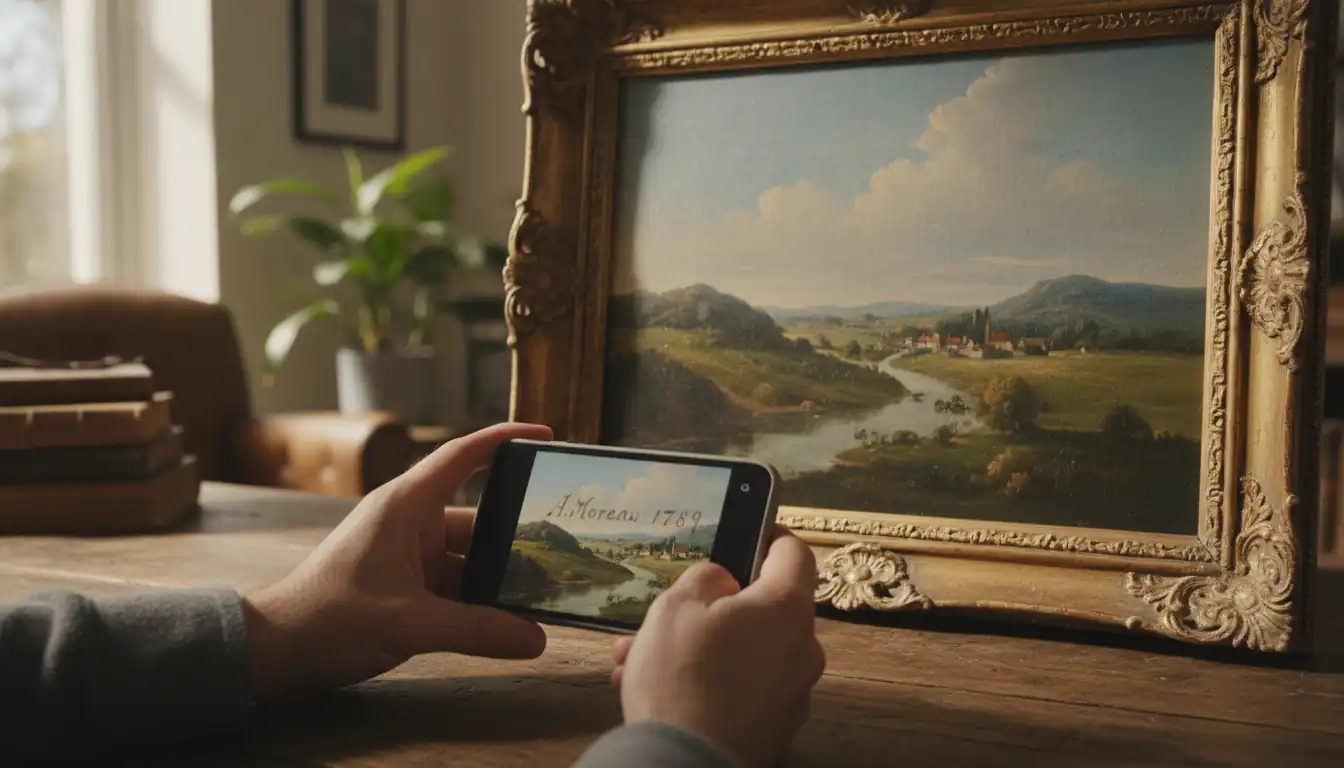
In the past, if you found a suspicious portrait at a flea market, you had two choices: take a massive financial risk and buy it, or pay a professional appraiser hundreds of dollars to look at it. Today, technology has democratized the process of art discovery. You no longer need a PhD in Art History to make an informed decision on the fly.
Using AI to Bridge the Expertise Gap
The Relic app has changed the way "pickers" and collectors approach the field. By using advanced AI, the app can analyze a photo of your find and provide a real appraisal, history, and origin in seconds. It looks at the composition, the brushwork patterns we discussed earlier, and even the historical context of the materials.
This is particularly useful when you are in a high-pressure environment like an auction. You can't always wait three days for a human expert to email you back. Having an instant "second opinion" allows you to bid with confidence. If the app identifies a painting as having the characteristics of a specific 19th-century school, you know exactly what your "ceiling" price should be.
Building a Digital Provenance Archive
Beyond just identifying a single item, modern tools allow you to catalog your collection. Every time you scan a painting with Relic, you are building a digital archive of your finds. This includes:
- Valuation Trends: See how similar works are performing at auction.
- Historical Context: Access data about the era and region the painting originated from.
- Origin Tracking: Keep a record of where and when you found the piece.
This digital trail is incredibly helpful if you ever decide to sell your find. Providing a potential buyer with a comprehensive report on the painting’s history and estimated value makes the transaction much smoother. You are moving from being a "lucky finder" to a "knowledgeable collector."
Conclusion
Finding a masterpiece in a dusty corner is the dream of every collector, but it rarely happens by pure luck. It happens because someone knew how to look past the dirt and the chipped frame. By understanding the "three rules of oil painting" and the chemistry of craquelure, you can verify the age of a work. By studying the "hand" of the artist rather than just the signature, you can identify quality. And by examining the "verso" for gallery labels and stamps, you can uncover the painting’s secret history.
The next time you see a portrait that seems to "speak" to you at a garage sale, don't just walk away. Check the stretcher bars. Look for the glow of old varnish. Use the Relic app to get an instant appraisal and see if your hunch matches the data. The art world is full of hidden treasures waiting to be rediscovered—you just need the right tools to see them.
Your next great find is out there. Are you ready to go scan it?
Identify antiques instantly
Point your camera at any antique, collectible, or vintage item. Get valuations, history, and market insights in seconds.
Download for iPhone