Is That Mirror a Masterpiece or a Modern Fake? 5 Telltale Signs of Real Antique Glass

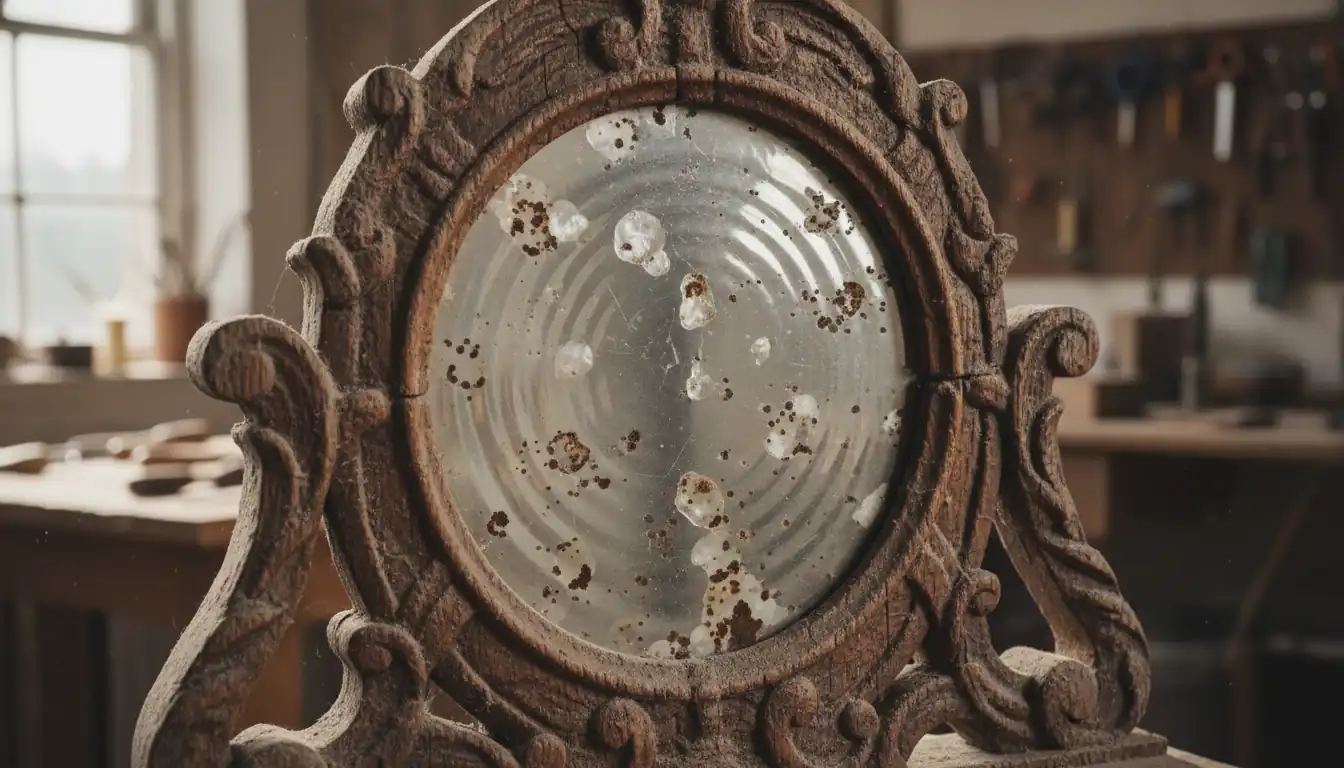
You are standing in the corner of a crowded estate sale, the air thick with the scent of old paper and floor wax. Tucked behind a stack of floral-print chairs is a mirror. Its frame is ornate, covered in a layer of dust that suggests it hasn’t been moved in decades. You catch your reflection, but the image is slightly distorted, shimmering like heat rising off a summer road. Is this a genuine 19th-century treasure, or a clever reproduction designed to mimic the passage of time?
Distinguishing between a true antique and a modern "shabby chic" imitation requires more than just a gut feeling. It requires an understanding of how materials were sourced, how craftsmen labored before the age of automation, and how chemistry behaves over a century of exposure to the elements. While a reproduction might capture the general aesthetic of an era, it rarely captures the microscopic flaws that define a masterpiece.
By the time you finish reading this guide, you will know how to look past the surface of the glass and into its very composition. You will learn to read the "fingerprints" left by pre-industrial tools and recognize the chemical signatures of long-abandoned silvering techniques. Whether you are a seasoned collector or a weekend thrifter, these five telltale signs will transform how you evaluate every mirror you encounter.
The Glass Surface and Visual Imperfections
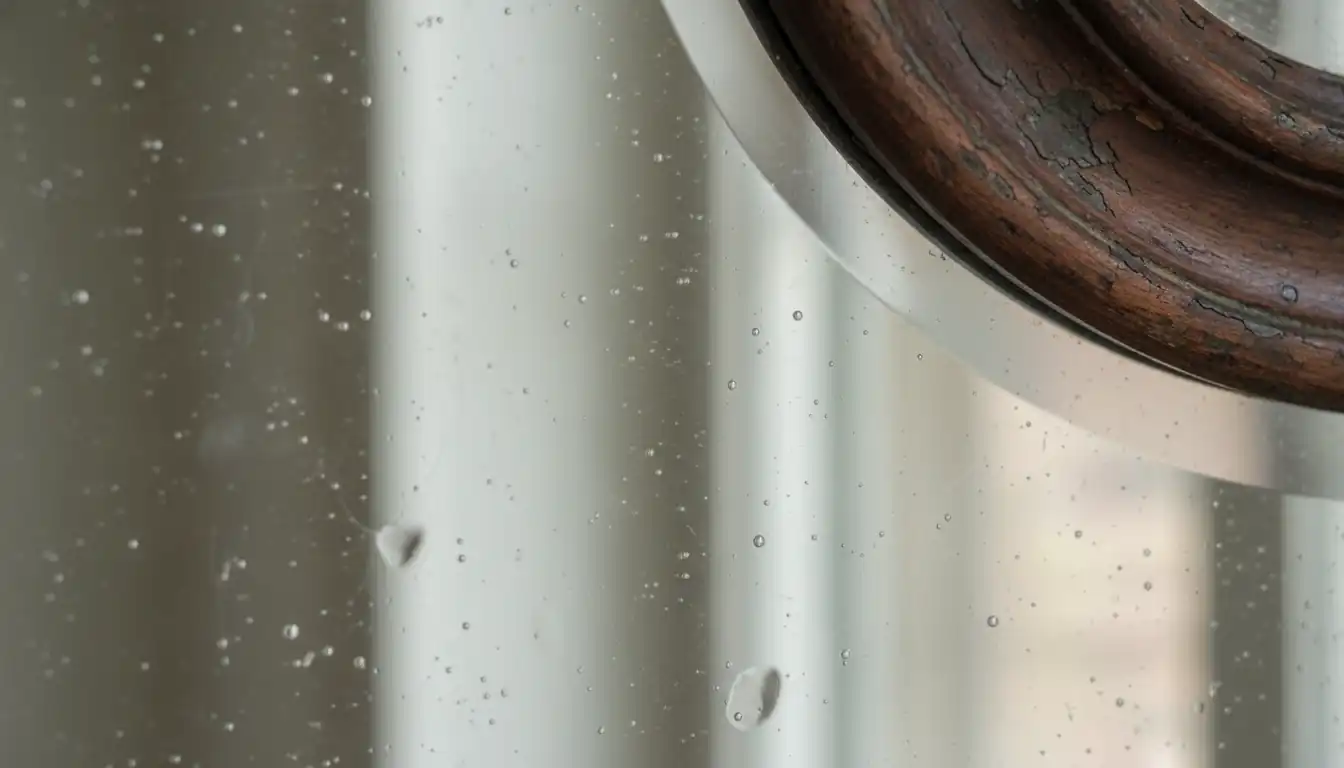
When you look at a modern mirror, you see a perfect, sterile reflection. This is the result of the "float glass" process, perfected in the 1950s, where molten glass is floated on a bed of molten tin to create a surface that is perfectly flat and uniform. Antique glass, however, was born from fire and human breath. Before the mid-20th century, glass was a character-rich material filled with the "scars" of its creation.
Identifying Hand-Blown vs. Plate Glass
To identify the age of a mirror, you must first understand how the glass itself was made. In the 18th and early 19th centuries, there were two primary methods: crown glass and cylinder glass. Crown glass was created by blowing a large globe of glass, then spinning it rapidly until centrifugal force flattened it into a disc. If you look closely at a crown glass mirror, you might notice very subtle concentric ripples that move outward from the center.
Cylinder glass, which became more common as the 19th century progressed, involved blowing a massive cylinder of glass, cutting it down the side, and flattening it while hot. This process created a "wavy" appearance. When you walk past an antique mirror and see your reflection "wobble" or shift, you are seeing the uneven thickness of the glass. Modern machines cannot replicate this specific type of distortion; reproductions often try to mimic it by using textured rollers, but the effect is repetitive and lacks the organic flow of hand-blown glass.
The Tell-Tale Bubbles and Seeds of Pre-Industrial Glass
If you want to find the soul of an antique mirror, look for the "seeds." These are tiny air bubbles trapped within the glass during the melting process. In the days before high-heat industrial furnaces, it was nearly impossible to get the molten glass hot enough to allow all the air to escape.
- Seeds: These are small, circular, or elongated bubbles. In very old glass, they may be quite numerous.
- Reams: These are faint, thread-like lines or "veins" within the glass. They aren't cracks; they are areas where the glass has a slightly different density or composition, creating a linear distortion.
- Striations: Look for subtle "waves" that look like water flowing over a stone. These occur because the glass was hand-leveled rather than machine-pressed.
| Feature | Antique Glass (Pre-1900) | Modern Glass (Post-1950) |
|---|---|---|
| Surface Texture | Wavy, uneven, organic | Perfectly flat and "dead" |
| Air Bubbles | Common (Seeds) | Non-existent |
| Clarity | May have a slight grey, green, or yellow tint | Crystal clear or blue-edged |
| Reflections | Distorted or "shimmering" | Precise and literal |
The presence of a single, perfectly round bubble isn't enough to confirm age, but a field of tiny seeds combined with a wavy surface is a strong indicator that the glass was manufactured before the industrial revolution reached its peak.
Decoding the Silvering and Backing Chemistry
The "silver" on the back of a mirror isn't always silver. In fact, the history of mirror-making is a history of evolving chemistry. By examining the reflective coating and how it has aged, you can narrow down a mirror’s origin to within a few decades. This is where the "chemical soul" of the piece reveals itself.
Mercury vs. Silver Nitrate Backing
Before 1840, the primary method for making glass reflective was a process involving tin and mercury. Craftsmen would apply a thin sheet of tin foil to the glass and then pour liquid mercury over it. The mercury would dissolve the tin, forming an amalgam that bonded to the glass.
Mercury mirrors have a distinct look that is difficult to describe but easy to recognize once you’ve seen it. They have a "cool," slightly blue or moonlight-colored reflection. Because mercury is a liquid metal, it often pools at the bottom of the mirror over a century or more, leaving the top of the glass slightly more transparent and the bottom more heavily silvered.
In the mid-19th century, the "silvering" process changed to use silver nitrate. This was safer for the workers and produced a warmer, more "golden" reflection. If you hold a white piece of paper up to the mirror, a silver nitrate mirror will often give the paper a slightly warm cast, whereas a mercury mirror will make it look crisp and cool.
Analyzing Oxidation and Desilvering Patterns
Time is the one thing a forger cannot truly replicate. As a mirror ages, the reflective backing begins to oxidize. This process is known as "foxing." You will see it as small black or grey spots, often creeping in from the edges where moisture has seeped between the glass and the frame.
- Authentic Foxing: Look for spots that appear "cloudy" or have soft, feathered edges. Authentic oxidation often happens in clusters and follows the path of moisture or air.
- Artificial Foxing: Modern reproductions often use acid or paint to mimic age. This usually results in spots that look too uniform, too dark, or "splattered" on. If the spots look like they were applied with a paintbrush or a sponge, they probably were.
- Desilvering: In very old mirrors, the silvering may actually flake off, leaving clear patches of glass. If you see "sparkles" within the black spots, that is often a sign of genuine mercury degradation.
Real age is messy. It doesn't follow a pattern. If the "distressing" on a mirror looks balanced or symmetrical, your internal alarm should go off.
Structural Clues in Frame Joinery and Materials
Once you have examined the glass and the silvering, it is time to look at the "skeleton" of the mirror. The frame and the backing board often hold the most definitive clues about a piece's age, as construction techniques have changed drastically over the centuries.
Hand-Carved Wood vs. Composition Moldings
In the 18th century, if you wanted an ornate frame, a master carver had to spend weeks chiseling it out of solid wood—usually walnut, mahogany, or oak. By the early 19th century, a new material called "composition" (or "compo") became popular. Compo is a mixture of resin, whiting, glue, and linseed oil. It was pressed into molds while warm and then applied to a simple wooden frame.
How can you tell the difference? Look for cracks. Because composition is a brittle material applied over a stable wood base, it almost always develops fine, hairline cracks over time as the wood underneath expands and contracts. If you look at the back of the carving, a hand-carved frame will show tool marks—small gouges and unevenness where the chisel hit the wood. A composition frame will be perfectly smooth on the back where it meets the wood.
Evaluating Hardware and Backing Boards
Flip the mirror over. The back of an antique mirror should never be pretty. In fact, the rougher it looks, the better.
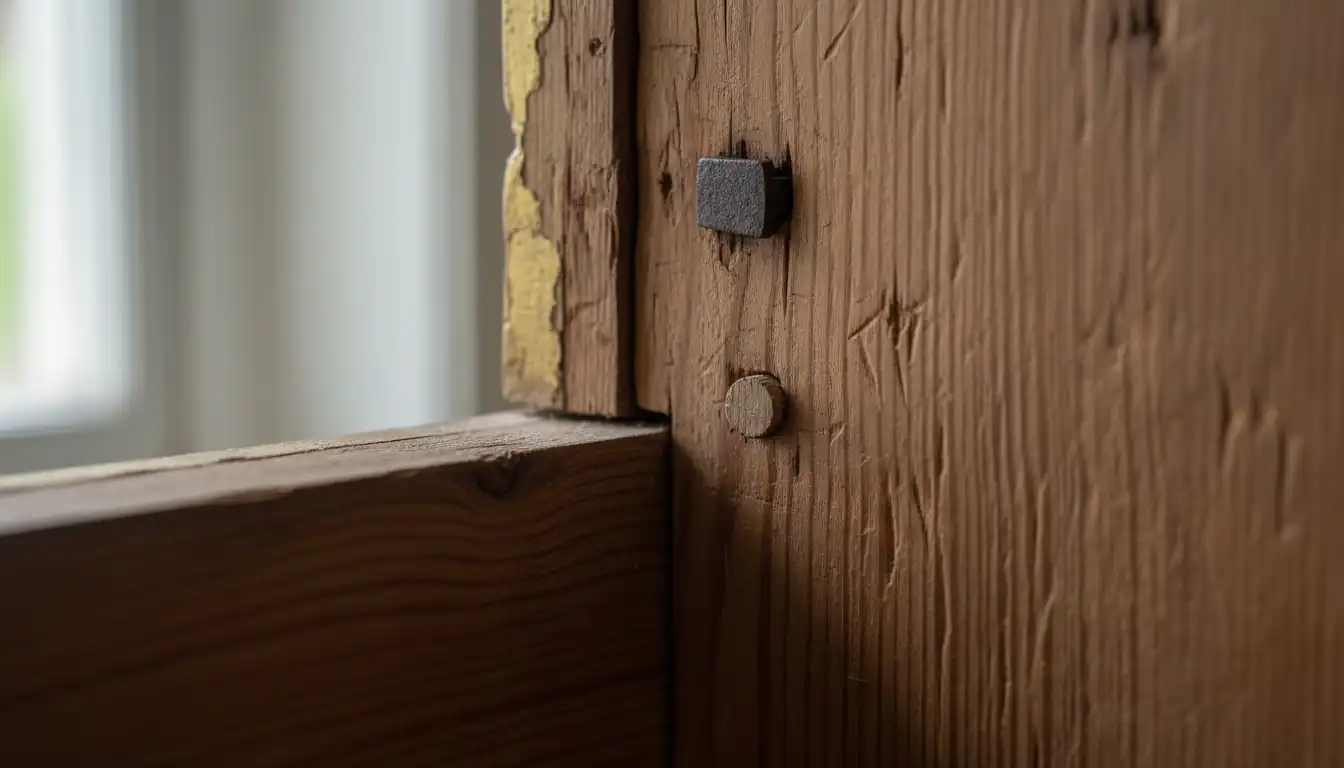
- Hand-Planed Marks: On mirrors made before the mid-19th century, the wooden backing boards were leveled by hand. You should be able to feel and see long, slightly uneven "scoops" in the wood left by a hand plane. Modern wood is sanded perfectly flat or shows the circular marks of a high-speed saw.
- Nails and Screws: Look at the fasteners. Hand-forged nails (pre-1800) are square and have irregular heads. Cut nails (1800-1890) are also somewhat square but more uniform. If you see shiny, perfectly round-headed nails or Phillips-head screws, the mirror has at least been repaired, if not entirely manufactured recently.
- Backing Material: Authentic antiques use solid wood planks to hold the glass in place. These planks are often dark with age (oxidation of the wood itself). If you see plywood, particleboard, or heavy cardboard, you are looking at a modern piece.
| Component | Antique Indicator | Modern Indicator |
|---|---|---|
| Joinery | Mortise and tenon, hand-cut dovetails | Staples, glue, or dowels |
| Backing | Rough-hewn solid wood planks | Plywood or MDF |
| Fasteners | Square-headed, dark, irregular nails | Round, shiny, uniform screws |
| Wood Texture | Hand-plane marks (ripples) | Smooth or circular saw marks |
Instant Appraisal Technology for the Modern Collector
Even with a keen eye, the world of antiques can be intimidating. The difference between a $200 reproduction and a $2,000 Regency original can come down to a few millimeters of glass thickness or the specific grain of a backing board. This is where modern technology bridges the gap between amateur enthusiasm and professional expertise.
Using AI to Map Glass Distortion and Origin
We are entering an era where your smartphone can see things the human eye might overlook. Advanced AI models are now capable of analyzing the "grain" of glass and the specific patterns of oxidation to determine if they match historical manufacturing data. By mapping the way light bends through the glass, these tools can distinguish between the organic "wobble" of 18th-century cylinder glass and the manufactured "wave" of a modern fake.
This technology doesn't just look at the surface; it compares the item against a massive database of known authentic pieces. It looks at the style of the carving, the type of wood, and the chemical signature of the foxing to provide a holistic assessment.
Relic: Your Pocket Expert for Real-Time Identification
If you find yourself at a flea market or an auction and need to make a quick decision, the Relic app is a powerful resource. Instead of carrying a library of reference books, you can simply take a photo of the mirror—including the frame and the backing. Relic uses its advanced AI to analyze the item, providing an instant appraisal that includes its likely history, origin, and estimated market value.
The app is particularly useful for identifying the "hidden" details we’ve discussed, such as distinguishing between hand-carved wood and composition molding. For collectors and professional dealers alike, having this kind of data in your pocket changes the stakes. It allows you to buy with confidence, knowing that the "masterpiece" you’ve found has the historical pedigree to back up its price tag. With over 20,000 reviews and a 4.9-star rating, it has become a staple for those who need professional-grade insights without the wait time of a traditional appraisal.
Assessing Market Value and Preservation Needs
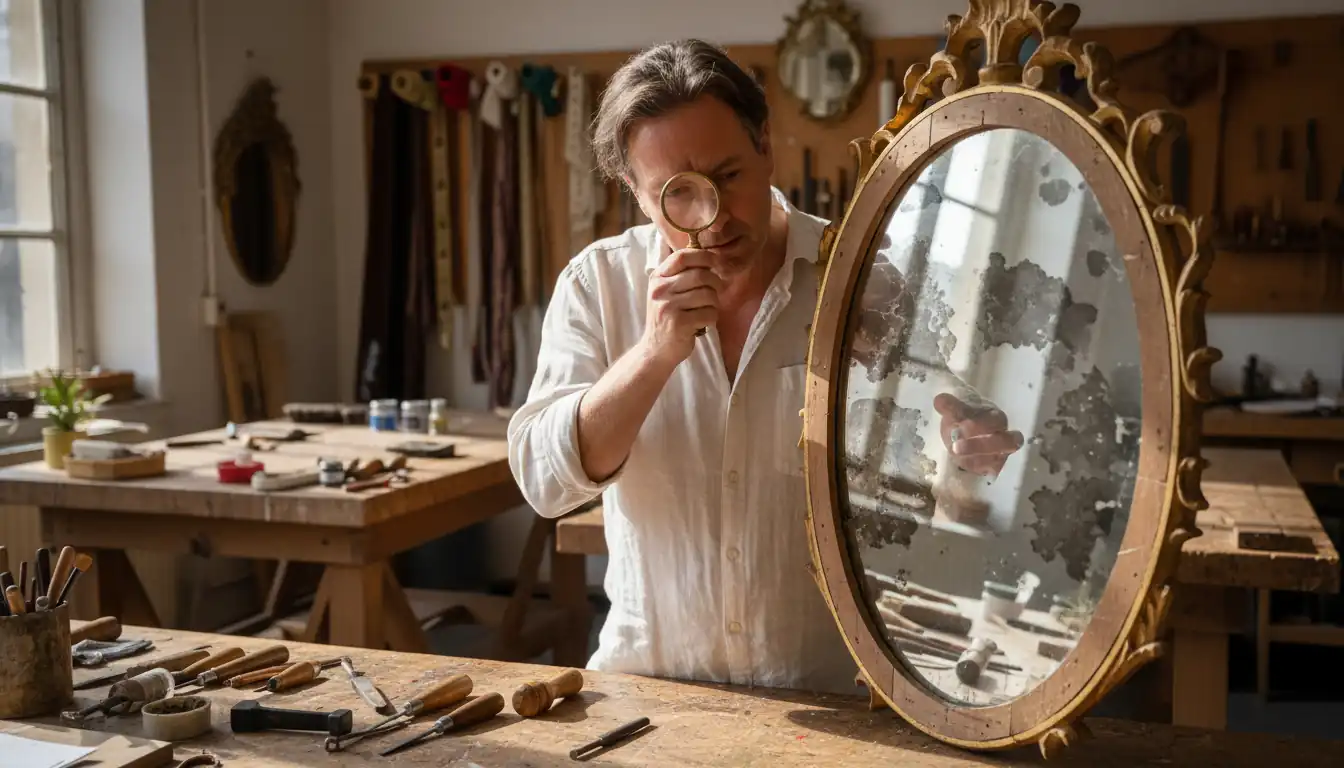
Once you have confirmed that your mirror is a genuine antique, the focus shifts from identification to stewardship. The value of an antique mirror is a delicate balance between its age, its rarity, and its condition. However, "condition" in the antique world doesn't mean "looking brand new."
The Impact of Condition on Resale Value
In many cases, a mirror with original, slightly foxed glass is worth significantly more than one that has been "restored" with modern glass. Collectors value the "originality" of a piece. If you replace the wavy, mercury-silvered glass with a modern sheet, you have essentially stripped the mirror of its historical value.
- Originality: The more original components (glass, frame, backing, gilding), the higher the value.
- Provenance: If you can use a tool like Relic to trace the mirror back to a specific maker or region, the value can increase exponentially.
- Gilding: On ornate frames, look for "water gilding." This is a process using gold leaf over a red or grey clay base (called "bole"). If you see a hint of red peeking through the gold on the high points of the carving, that’s a sign of high-quality, authentic gilding.
Protecting Antique Glass from Environmental Decay
Antique mirrors are sensitive to their environment. The very things that give them character—the silvering and the old wood—are vulnerable to modern living conditions.
Cleaning Warnings: Never use ammonia-based glass cleaners (like standard Windex) on an antique mirror. The chemicals can seep behind the glass and accelerate the delamination of the silvering, causing the foxing to spread aggressively. Instead, use a soft, dry microfiber cloth. If you must use moisture, apply a tiny amount of distilled water to the cloth, not the glass.
Environmental Control: Avoid hanging an antique mirror in a bathroom or a kitchen where humidity levels fluctuate. Moisture is the enemy of the silver-nitrate or mercury backing. Similarly, keep the mirror out of direct sunlight, which can dry out the wood frame and cause the composition moldings to crack and fall off.
Knowing the exact era of your mirror—whether it’s a heavy Victorian pier mirror or a delicate Federal-style piece—helps you choose the right conservation method. A 200-year-old frame requires different care than a 50-year-old one. By using technology to identify the specific materials and age, you can ensure that your find remains a masterpiece for another century.
Conclusion
Identifying a true antique mirror is an exercise in detective work. It requires you to look past the initial beauty of the piece and examine the "flaws" that tell its true story. From the wavy distortions of hand-blown glass to the square-headed nails in the backing boards, every element is a piece of a larger puzzle.
Remember that authenticity is found in the imperfections. A perfect reflection is the hallmark of the modern age, but a shimmering, slightly clouded reflection is a window into the past. By combining traditional observation techniques with modern tools like the Relic app, you can navigate the world of antiquing with the expertise of a seasoned pro.
The next time you see a dusty mirror in the back of a shop, don't just look at your reflection. Look at the glass, feel the frame, and check the backing. You might just be holding a piece of history in your hands. Your next step? Start practicing. Visit a local museum or a high-end antique dealer and apply these five signs to the pieces you see. The more you look, the more the glass will reveal.
Identify antiques instantly
Point your camera at any antique, collectible, or vintage item. Get valuations, history, and market insights in seconds.
Download for iPhone