Is That Pink Plate Worth $500? The Modern Way to Identify Rare Depression Glass Patterns

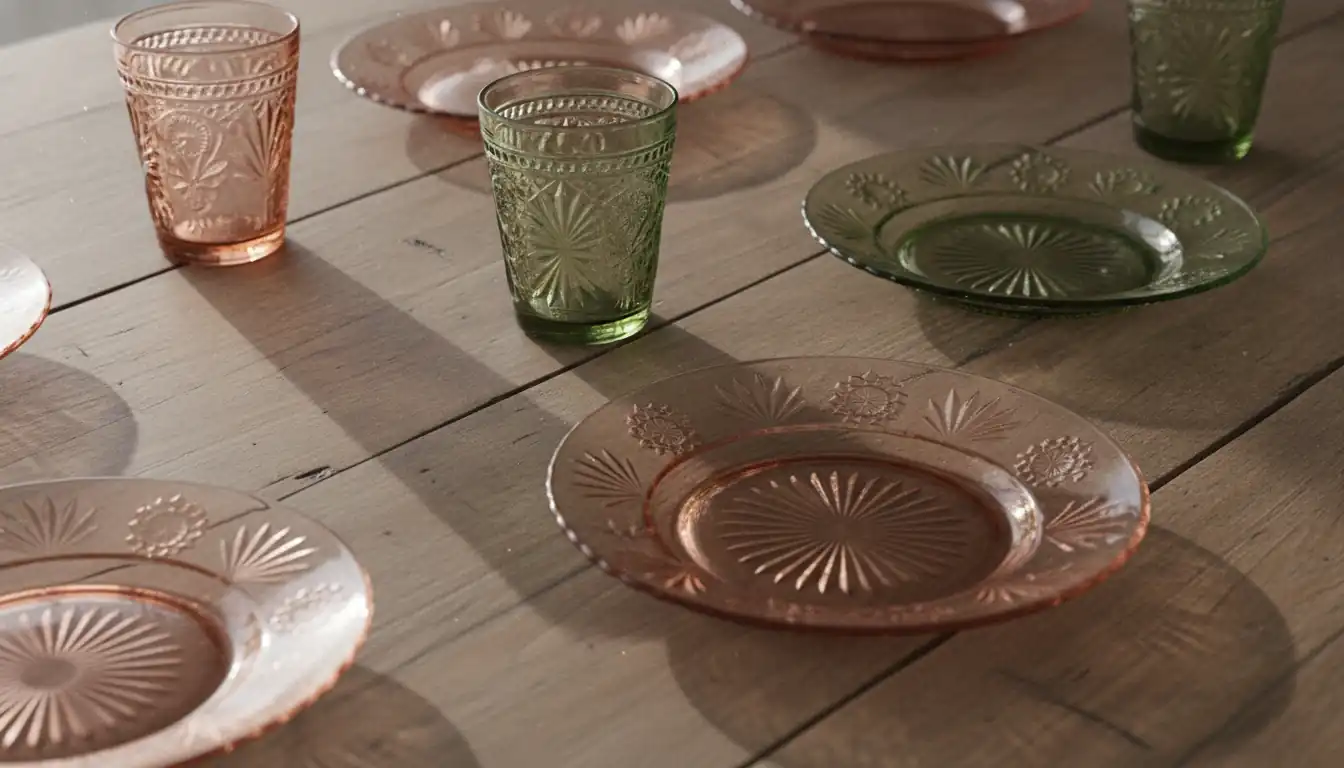
Imagine you are standing in a crowded thrift store, the air smelling of old paper and dust. Your eyes land on a stack of translucent pink plates tucked behind a chipped ceramic lamp. They look delicate, almost ethereal, with intricate floral patterns etched into the surface. You pick one up, feeling its surprising lightness. Is this a mass-produced piece of 1970s kitchenware, or have you just stumbled upon a rare piece of American history worth hundreds of dollars?
During the Great Depression, these vibrant pieces of glassware were the silver lining of a dark era. Companies like Anchor Hocking and Federal Glass churned out millions of pieces in shades of "Sunset Pink," "Paddy Green," and "Ritz Blue." They were given away in oatmeal boxes or handed out at movie theaters to keep spirits high and assembly lines moving. Today, what was once "free glass" has become a high-stakes treasure hunt for collectors who know exactly what to look for.
Identifying these pieces requires a blend of historical knowledge and a keen eye for detail. You have to look past the color and see the story written in the mold lines and the motifs. This guide will walk you through the visual language of the 1930s, the physical fingerprints left by long-gone factories, and the modern tools that make professional-grade appraisal accessible to anyone with a smartphone.
The Visual Language of the 1930s
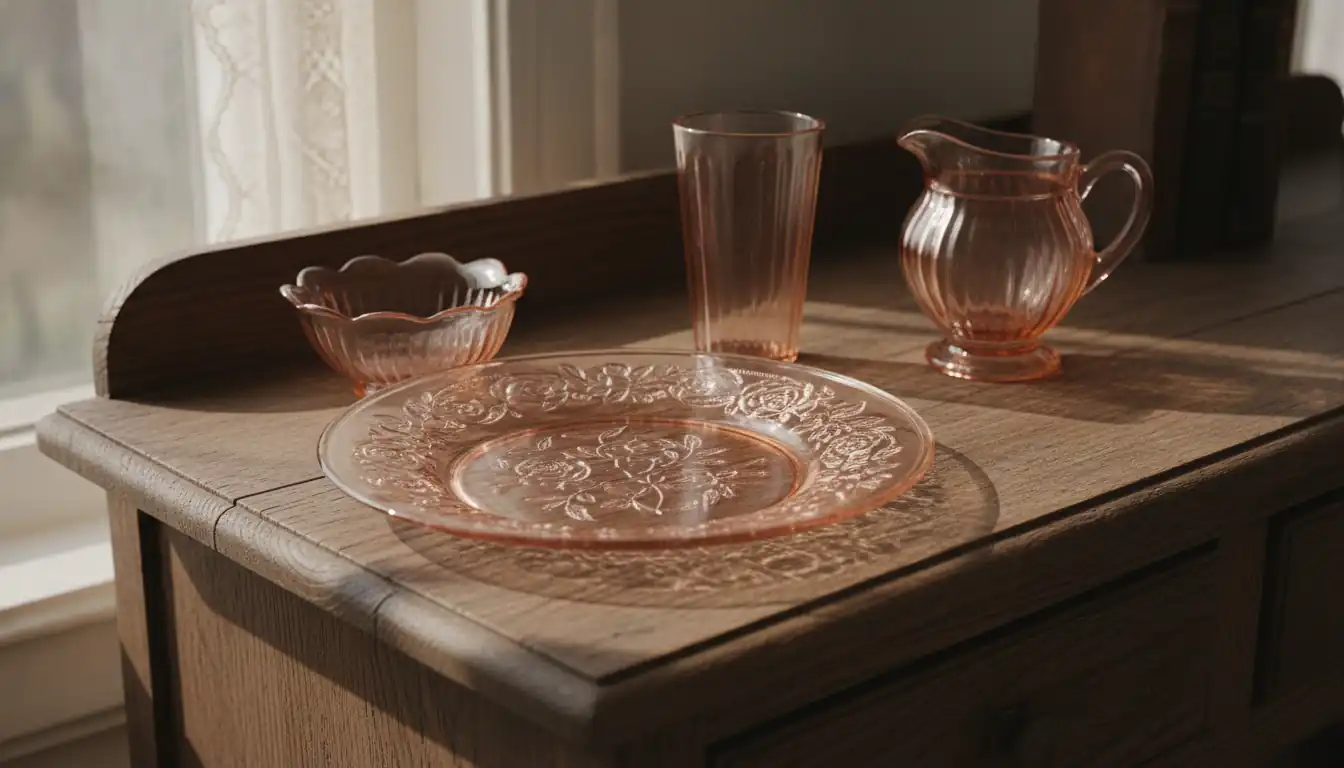
To the untrained eye, Depression glass can look like a chaotic jumble of colors and shapes. However, the designers of the 1930s followed specific aesthetic movements that allow us to categorize almost every piece into three primary styles. Understanding these styles is your first step in narrowing down thousands of possibilities into a single, identifiable pattern.
Decoding Geometric and Floral Motifs
The most common designs you will encounter fall into the floral category. These patterns were intended to bring a sense of garden-fresh beauty into homes that were often struggling. Take the "Cameo" pattern, for example. Produced by Hocking Glass Company, it features a tiny "Dancing Girl" surrounded by floral swags. When you run your finger over a floral piece, the mold should feel relatively deep. The flowers aren't just painted on; they are part of the glass itself, creating a tactile experience that defines the era.
On the opposite end of the spectrum are the geometric patterns. These were heavily influenced by the Art Deco movement, emphasizing symmetry, sharp angles, and machine-age precision. Patterns like "Tea Room" or "Pyramid" look like they belong in a high-end Manhattan skyscraper rather than a farmhouse kitchen. The lines are crisp, and the shapes are often octagonal or hexagonal. If the plate looks like it was designed with a ruler and a compass, you are likely looking at a geometric masterpiece.
Finally, there are the scenic patterns. These are the "storytellers" of the glass world. "Royal Lace" is perhaps the most famous, featuring incredibly intricate, lace-like scrolls that cover nearly every inch of the surface. These patterns were difficult to produce because any flaw in the mold would ruin the delicate "lace" effect. When you hold a scenic piece up to the light, the clarity of the glass should allow the pattern to pop, creating a three-dimensional effect that modern glass rarely achieves.
The Signature Colors of Major Glassworks
Color is often the first thing that draws you to a piece, but it is also a vital clue for identification. While many companies produced pink and green, certain shades are "signatures" of specific glassworks.
- Royal Ruby: This deep, blood-red glass was a hallmark of Anchor Hocking. It is bold, opaque, and highly sought after.
- Delphite: A pale, opaque blue glass that looks almost like ceramic. This was a specialty of the Jeannette Glass Company.
- Alexandrite: A rare, dichroic glass produced by Tiffin that changes color from lavender to blue depending on the light source.
- Topaz: A bright, sunny yellow that was a favorite of the Federal Glass Company.
Identifying the style is half the battle. Once you know if a piece is floral, geometric, or scenic, you have effectively eliminated 70% of the potential patterns in the reference books.
The visual style tells you the "what," but the physical construction tells you the "who" and "when." As you transition from looking at the pattern to feeling the glass, you begin to see the "scars" of the manufacturing process—the tiny imperfections that prove a piece was made in a 1930s factory rather than a modern plant.
Mastering Maker Marks and Mold Lines
Unlike modern fine china, Depression glass was rarely stamped with a clear brand name on the bottom. These were "utility" items, made quickly and cheaply. To find the identity of the maker, you have to look for much more subtle clues. You are looking for the "fingerprints" of the machines that pressed the molten glass into shape.
Identifying Anchor Hocking and Macbeth-Evans
Anchor Hocking is perhaps the most famous name in the industry. Their mark is a small "H" positioned over an anchor. However, this mark is often microscopic or hidden within the pattern itself. You might find it tucked into the center of a floral medallion or on the very edge of a plate's rim. If you don't see a mark, don't panic; many of their most famous lines, like "Moonstone," were never marked at all.
Macbeth-Evans, another titan of the era, is known for "Petalware." Their glass is often thinner and more translucent than their competitors. Instead of a mark, look for the way the glass terminates at the edges. Macbeth-Evans pieces often have a "fired-on" rim that feels smoother and more rounded than the sharp, pressed edges of Federal Glass. Federal Glass pieces often feature an "F" inside a shield, but again, this was usually reserved for their later or more "premium" lines.
Reading the Glass for Manufacturing Clues
Because this glass was mass-produced during a time of economic hardship, the quality control wasn't always perfect. These "flaws" are now the best way to verify age.
- Mold Lines: Look for thin, raised lines where the two halves of the metal mold met. On authentic Depression glass, these lines are often prominent and can be felt with a fingernail.
- Straw Marks: These look like tiny hairs or scratches embedded inside the glass. They aren't actually scratches; they are cooling lines caused by the glass temperature fluctuating during production.
- Bubbles: Small air bubbles, or "seeds," are common in authentic pieces. Modern reproductions are usually too "perfect" and lack these charming industrial hiccups.
| Feature | Authentic Depression Glass | Modern Reproduction |
|---|---|---|
| Mold Lines | Sharp, distinct, and easy to feel | Often smoothed over or buffed out |
| Surface Texture | May have "straw marks" or tiny bubbles | Usually perfectly smooth and clear |
| Weight | Surprisingly light for its size | Often feels heavy or "clunky" |
| Edge Feel | Can feel slightly sharp or "crisp" | Usually rounded and thick |
Finding these marks requires patience and good lighting. You might spend twenty minutes turning a plate under a lamp just to find a single cooling line. While this manual process is a rite of passage for many collectors, there is a faster way to process these complex physical details without needing a magnifying glass and a decade of experience.
Instant Identification with AI Technology
The traditional way to identify a mystery plate involved lugging a five-pound reference book to the antique mall and flipping through hundreds of grainy black-and-white photos. By the time you found the "Mayfair" pattern, someone else might have already bought the piece you were looking at. Today, technology has bridged the gap between the novice and the expert.
Using Relic to Scan Complex Patterns
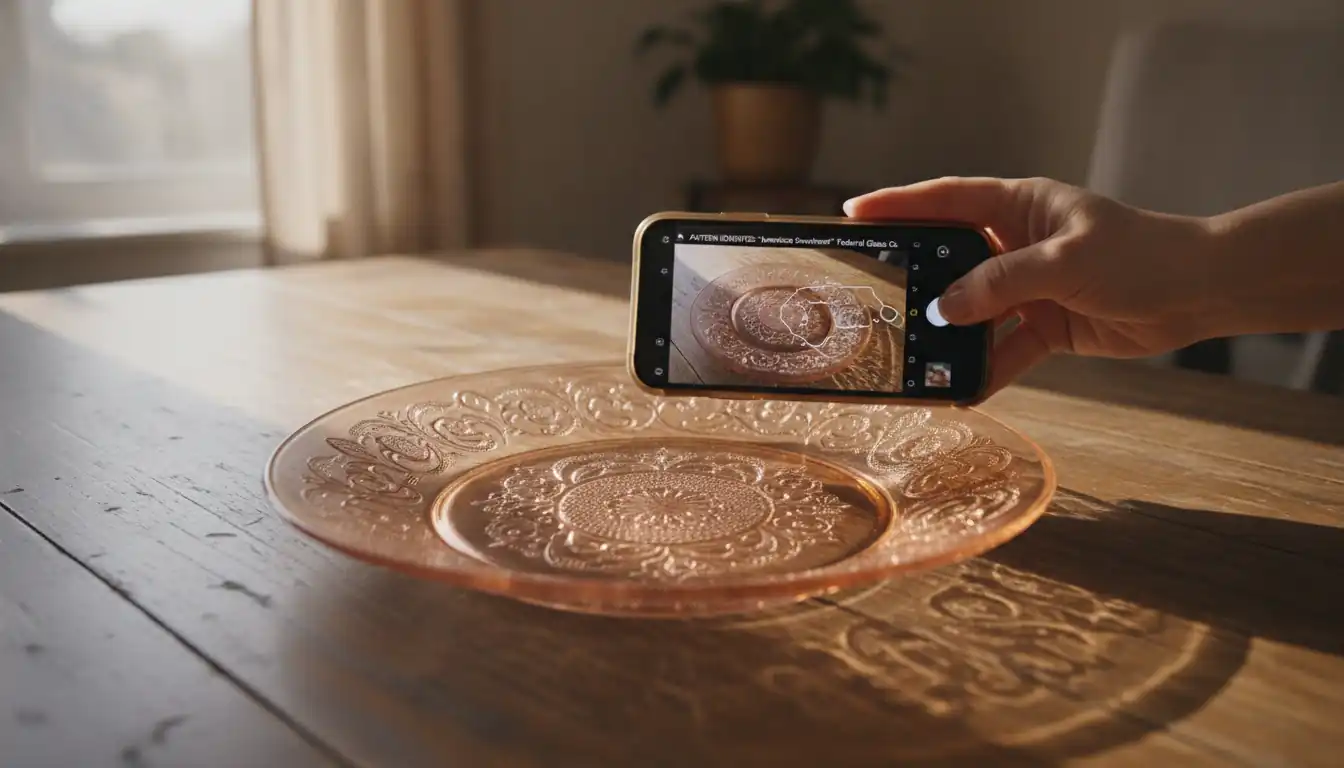
This is where the Relic app changes the game for modern pickers. Instead of guessing whether a pattern is "American Sweetheart" or "Petalware," you can simply open the app and take a high-resolution photo. Relic’s AI is trained on thousands of authentic patterns, allowing it to recognize the specific depth of a mold or the exact curvature of a floral swag that the human eye might miss.
For example, if you find a piece of "American Sweetheart" in Monax (a translucent white glass), the pattern is notoriously difficult to see because the glass is so thin. By uploading a photo to Relic, the AI analyzes the subtle shadows and highlights to provide an instant identification. It doesn't just tell you the name; it gives you the history of the Macbeth-Evans factory and a real-world appraisal based on current market data.
Moving Beyond Manual Reference Books
The beauty of using a tool like Relic is the speed of information. In the high-speed world of estate sales, you often have seconds to decide if a $20 investment is worth it.
- Instant Appraisal: Get a valuation based on recent auction results rather than outdated price guides.
- Historical Context: Learn which factory produced the piece and during which years.
- Cataloging: Keep a digital record of your finds, complete with photos and descriptions.
Using AI doesn't replace the joy of collecting; it enhances it. It removes the frustration of the "unknown" and replaces it with the confidence of a professional dealer. You no longer need to be a 30-year expert to find a treasure. However, once the AI identifies the pattern, you still need to perform a few manual checks to ensure the piece is both safe to use and an original pressing.
Spotting Reproductions and Safety Hazards
As Depression glass grew in popularity during the 1970s and 80s, several companies began producing "repros." These are new pieces made to look like the old ones. While some are sold honestly as decorative items, many find their way into antique shops labeled as originals. Furthermore, there are safety concerns regarding the chemical makeup of vintage glass that every collector should understand.
The Lead and Uranium Glass Question
One of the most common questions new collectors ask is: How to tell if Depression glass has lead?
Most Depression glass was "soda-lime" glass, which does not contain lead. However, some higher-end pieces or "Elegant Glass" from the same era (like Fostoria or Heisey) might. The easiest way to check is the "ring test." Tap the glass gently with your fingernail. Lead crystal will produce a long, clear, bell-like ring. Soda-lime glass will produce a dull "thud." If you want to be 100% certain, you can purchase a lead testing swab from a hardware store, though these are rarely necessary for standard Depression-era pieces.
Then there is the famous "glow." Many green Depression glass pieces contain trace amounts of uranium dioxide. When placed under a UV light (blacklight), this glass glows a vibrant, neon green. This is often called "Vaseline glass" if it is yellow-toned, or simply "Uranium glass" if it is green. It is generally considered safe for display, as the radiation levels are extremely low, but many collectors prefer not to eat off it daily.
Distinguishing Original Pressings from Modern Fakes
Reproductions can be tricky, but they almost always leave clues. Patterns like "Cherry Blossom," "Madrid," and "Ruth" were heavily reproduced.
- The "Greasy" Feel: Many 1970s reproductions have a slightly "slick" or greasy feel to the surface of the glass. This is due to the different chemical compositions used in modern manufacturing.
- Color Discrepancies: If you see a "Cherry Blossom" plate in a bright, neon blue, it’s a fake. The original pattern was never made in that color.
- Dull Details: Because fakes are often made from molds taken from original pieces, the details lose their sharpness. The "Dancing Girl" in a fake Cameo pattern might look blurry or bloated compared to the crisp lines of an original.
Always carry a small UV keychain light. It is the fastest way to verify uranium content and can often highlight repairs or cracks that are invisible to the naked eye.
Once you have confirmed that your piece is an authentic, safe-to-handle original, the final step is determining what it’s actually worth in today's market.
Determining Market Value and Rarity
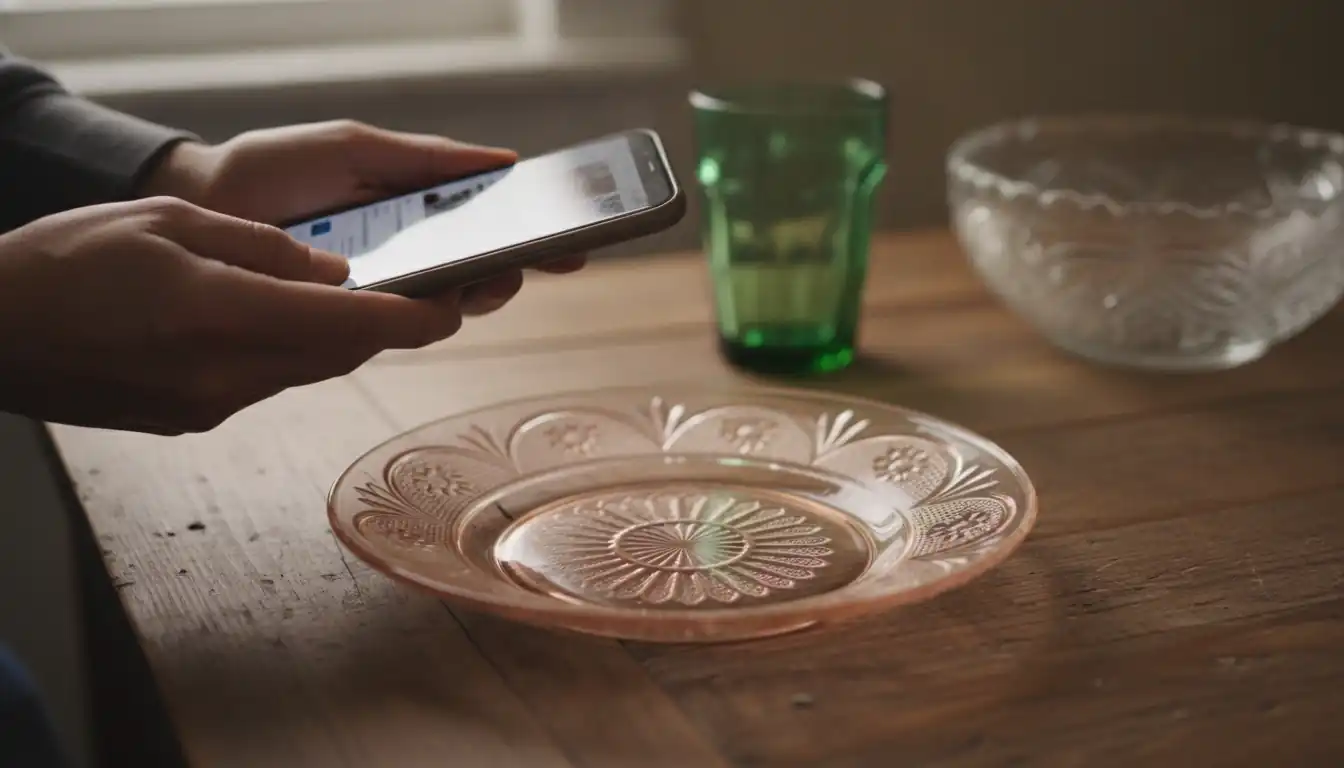
The economics of Depression glass can be baffling. Why would a pink "Miss America" plate sell for $15 while a green one sells for $50? The answer lies in a combination of original production numbers, surviving inventory, and current collector trends.
Scarcity Factors in Specific Colorways
In the 1930s, pink and green were the most popular colors, meaning they were produced in the highest volumes. Because there is so much of it left today, the prices stay relatively low. However, colors like "Royal Ruby" (red), "Ritz Blue" (cobalt), and "Amethyst" (purple) were often produced in smaller batches or for shorter periods.
| Pattern | Common Color Price | Rare Color Price |
|---|---|---|
| Royal Lace | Pink: $25 - $40 | Cobalt Blue: $150 - $300 |
| Moderntone | Amethyst: $15 - $25 | Cobalt Blue: $80 - $120 |
| Mayfair | Pink: $20 - $35 | Blue: $100 - $200 |
Rarity also applies to the type of dish. Dinner plates and water goblets are common. However, specialized items like butter dishes, salt shakers, and "refrigerator jars" are much harder to find. Because these items were used daily and often broken, a surviving butter dish in a rare pattern can easily fetch $500 or more.
Condition Grading for Maximum Resale
Even the rarest pattern can lose its value if the condition is poor. When appraising a piece, collectors look for three main "deal-breakers":
- Sick Glass: This is a permanent cloudiness caused by the glass being washed in modern dishwashers. The harsh detergents actually etch the surface of the glass. If the cloudiness doesn't wash off with vinegar, it’s "sick," and the value drops by 90%.
- Flea Bites: These are tiny chips, often found along the rim or the base. Run your finger gently along the edges; if it feels like a serrated knife, those are flea bites.
- Heat Cracks: Look for internal fractures, especially in handles or where the base meets the bowl. These are caused by pouring hot liquids into cold glass.
When you use a tool like Relic, the appraisal you receive assumes the piece is in "Excellent" condition. If your piece has "sick glass" or significant chips, you must adjust that value downward. A "Mint" condition piece is one that looks like it just stepped out of a 1934 department store—no scratches, no chips, and a brilliant, clear luster.
Conclusion
Identifying Depression glass is a journey through American industrial history. It requires you to look at the world through the eyes of a 1930s designer, noticing the subtle shift from floral elegance to Art Deco geometry. By mastering the "fingerprints" of the glass—the mold lines, the straw marks, and the signature colors—you transform from a casual observer into a savvy collector.
While the manual process of identification is rewarding, the integration of AI tools like Relic has made the hobby more accessible than ever. You can now walk into any antique mall with the power of a professional appraiser in your pocket, instantly separating the common $5 plate from the $500 treasure.
The next time you see a flash of pink or green in a dusty corner, don't walk away. Pick it up, check the mold lines, and let technology help you uncover the story hidden within the glass. Whether you choose to sell your finds or display them on your own table, you are preserving a piece of history that was meant to bring a little light into a dark time. Happy hunting!
Identify antiques instantly
Point your camera at any antique, collectible, or vintage item. Get valuations, history, and market insights in seconds.
Download for iPhone