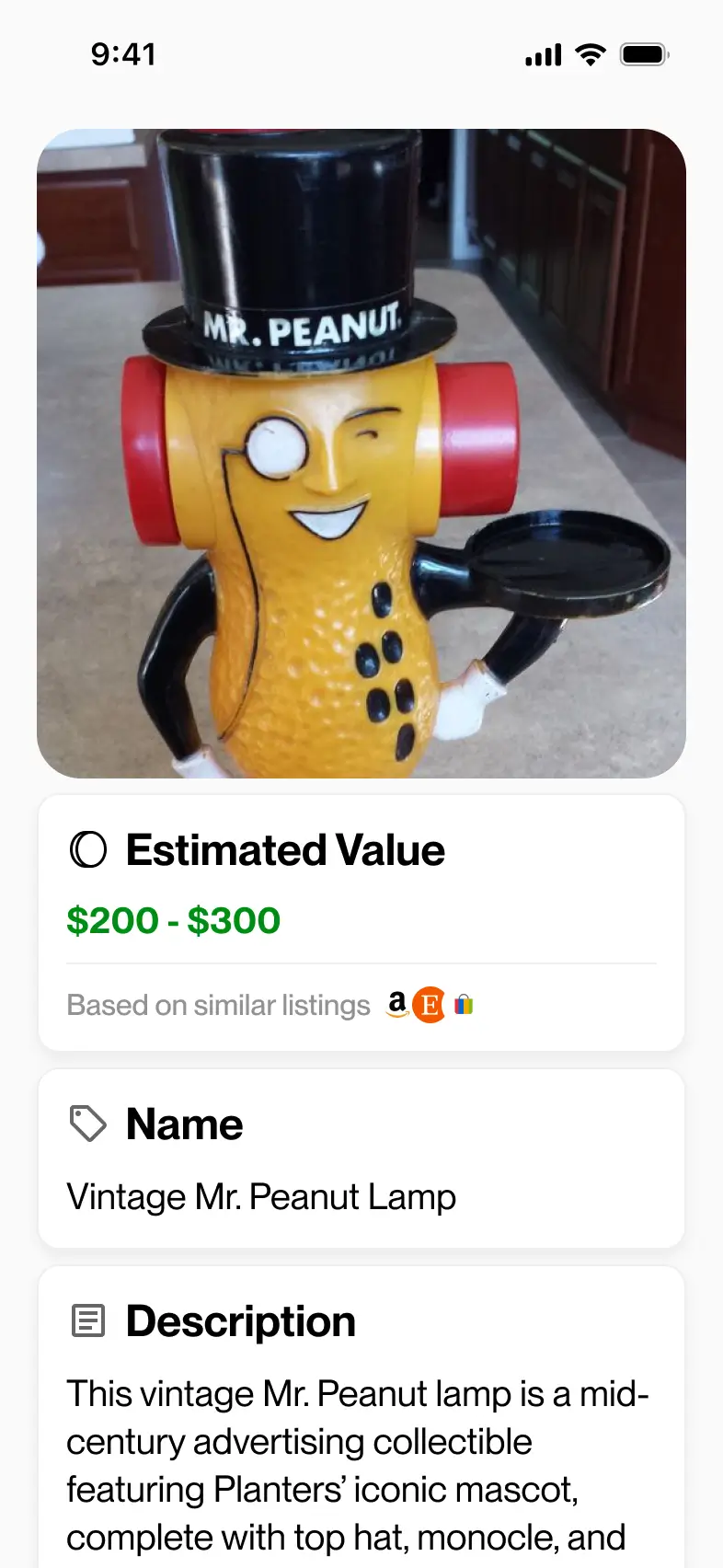
Is That Silver Tray a Masterpiece? Use Your Phone to Decode Mysterious Hallmarks

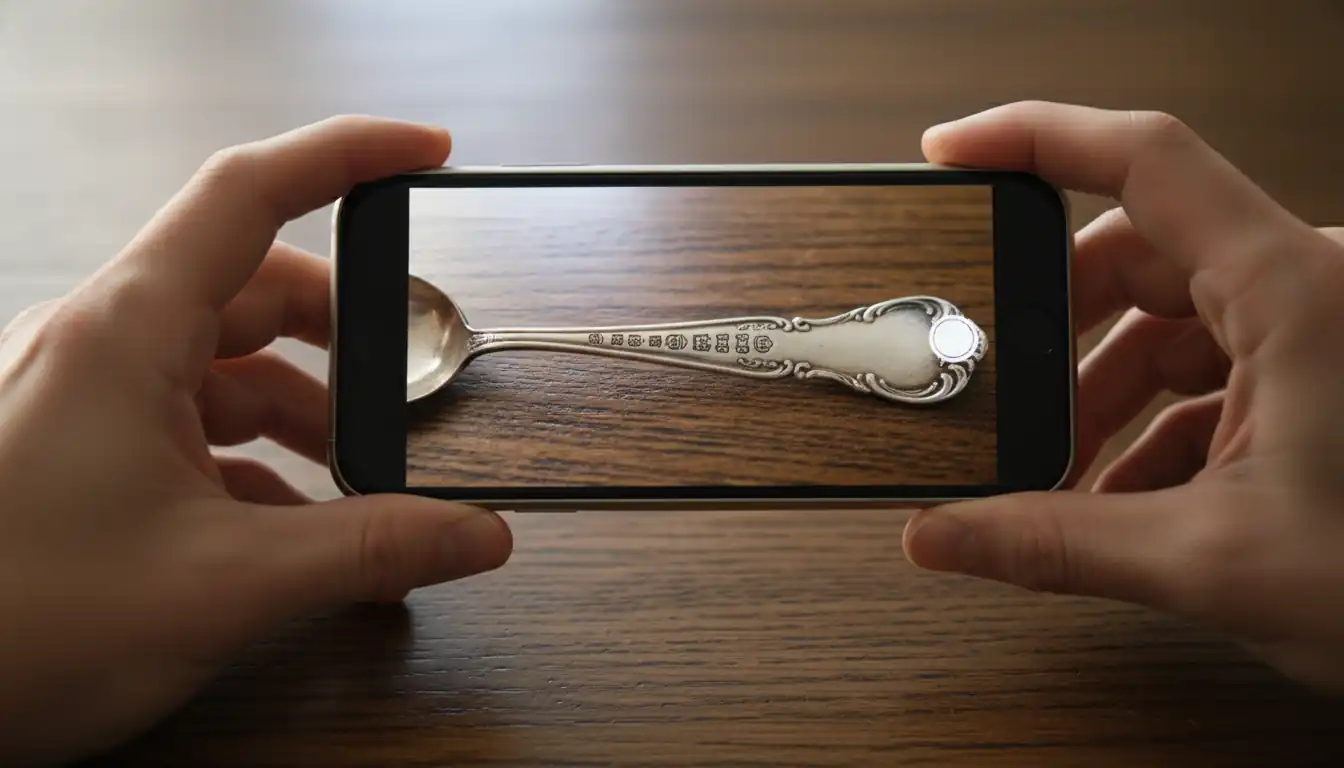
You are standing at a dusty table in the corner of a crowded estate sale, your eyes locked on a heavy, tarnished silver tray. To the untrained eye, it looks like a discarded piece of household metal, perhaps worth its weight in scrap. But as you flip it over, you notice a series of tiny, rhythmic indentations stamped into the underside. These aren't scratches or accidental dents; they are a sophisticated code that has been used for centuries to track the purity, origin, and authorship of precious metals.
Understanding these marks is the difference between buying a mass-produced plated trinket and discovering a museum-quality masterpiece from the Georgian era. These hallmarks act as a silent biography for every piece of silver ever made under a regulated system. They tell you exactly who held the hammer, which city oversaw the production, and the precise year the piece was assayed for its silver content.
By the time you finish reading this, you will understand how to read the "four pillars" of silver identification and why traditional research methods are being replaced by digital tools. You will learn how to spot the subtle differences between a hand-struck mark and a modern counterfeit, and how to use your smartphone to instantly translate these mysterious symbols into a comprehensive appraisal.
The Hidden Language of Silver Hallmarks
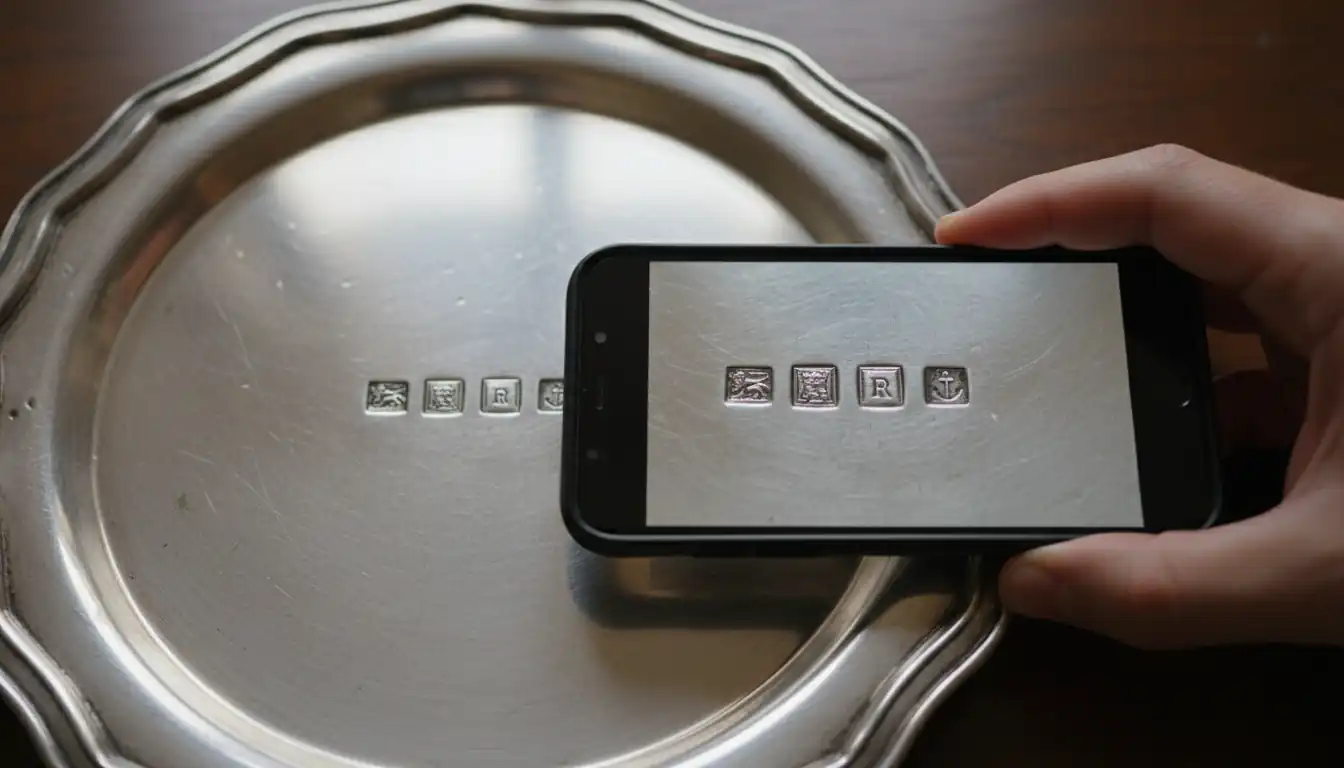
To verify a hallmark on silver, you must first understand that you are looking at a government-mandated system of consumer protection. Long before modern branding existed, the hallmark was a guarantee of quality. If a silversmith tried to sell a tray that was only 50% silver while claiming it was 92.5% (sterling), the hallmark system was the mechanism used to catch and punish them. This wasn't just about prestige; it was about the integrity of the currency, as silver was often tied directly to a nation's wealth.
Decoding the Four Pillars of Silver Identification
Most British and European silver follows a standardized four-part marking system. When you look at a piece of silver through a magnifying glass, you are searching for these specific stamps:
- The Purity Mark: This is the most critical stamp. In the British system, the "Lion Passant"—a lion walking with one paw raised—indicates that the item is Sterling Silver (92.5% purity). Other countries use different symbols, such as the Minerva head in France or the "800" stamp common in Germany and Italy.
- The Town Mark: This tells you where the item was tested and stamped. A leopard’s head indicates London, an anchor represents Birmingham, and a crown signifies Sheffield. These marks help you narrow down the specific guild or assay office responsible for the piece.
- The Date Letter: This is perhaps the most complex part of the code. Each year is represented by a letter of the alphabet. Once the alphabet ends, the font or the shape of the shield surrounding the letter changes. A "G" in a square shield might mean 1802, while a "G" in an oval shield could mean 1882.
- The Maker’s Mark: This is the "signature" of the silversmith or the workshop. It usually consists of two or three initials, such as "PS" for Paul Storr or "H.H" for Hester Bateman. Identifying this mark is often the key to a massive jump in valuation.
| Mark Type | Purpose | Common Example |
|---|---|---|
| Purity Mark | Confirms silver content | Lion Passant (Sterling) |
| Town Mark | Identifies the assay office | Anchor (Birmingham) |
| Date Letter | Identifies the year of manufacture | "a" (Specific to a cycle) |
| Maker's Mark | Identifies the craftsman | Initials (e.g., "WB") |
The Evolution of Maker Marks Through the Centuries
The history of the maker's mark is a history of labor and guild control. In the 14th century, Edward I of England decreed that no silver could be sold until it was "touched" by the leopard’s head. Originally, maker marks were symbols—a bird, a fish, or a specific tool—because many silversmiths were illiterate. As literacy rates rose, these symbols evolved into the initials we see today.
These marks weren't just for vanity. They were a trail of accountability. If a piece of silver failed the purity test at the assay office, the maker's mark allowed the authorities to trace the "substandard" metal back to the specific workshop. Over time, these marks became prestigious brands. A piece stamped with the mark of a master silversmith like Paul de Lamerie carries a premium that far exceeds the value of the silver itself.
The hallmark is the world's oldest form of consumer protection, predating modern food and drug regulations by over five hundred years.
Why Manual Research Often Fails Modern Collectors
If you have ever tried to identify a hallmark using a physical book while standing in a crowded shop, you know the frustration. The traditional "bible" of silver marks, such as Jackson's Silver & Gold Marks, is a massive volume containing over 10,000 illustrations. Carrying this to an auction or a flea market is impractical, and flipping through thousands of tiny line drawings while a seller waits for your offer is a recipe for stress.
The Limitations of Physical Reference Books
Physical books are static. They cannot account for the way a mark actually looks on a curved surface or how it ages over 200 years. A line drawing in a book shows a perfect, crisp stamp. In reality, you are often looking at a "rubbed" mark—one that has been worn down by centuries of polishing.
- The "Rubbed" Mark Problem: When silver is cleaned, a tiny layer of metal is removed. Over 200 years, the sharp edges of a date letter or a maker's initials can become soft and blurred. A manual search often fails here because the mark no longer matches the "perfect" illustration in the book.
- The Lighting Challenge: Reference books don't teach you how to read a mark in the dim light of an antique mall. Shadows can make a "C" look like an "O," or a "P" look like an "R," leading to a misidentification that could cost you thousands of dollars.
- The Portability Factor: You cannot bring an entire library to a "pick." If you see a piece of silver from a region you aren't familiar with, you are forced to either take a gamble or walk away.
Regional Variations and Obscure International Stamps
While the British system is highly organized, the rest of the world is a different story. Silver from the Middle East, India, and North Africa often uses a completely different set of symbols, sometimes based on Arabic calligraphy or regional flora.
For example, Egyptian silver uses a three-part mark including a lotus flower, while Russian silver uses "Zolotnik" numbers like 84 or 88. If you encounter a piece of Chinese Export Silver, you might find pseudo-hallmarks—marks designed to look like British stamps to appeal to Western buyers, but which actually identify a workshop in Canton. Without an encyclopedic knowledge of global silver history, these marks are nearly impossible to decode manually in the field.
Instant Identification with Advanced AI Technology
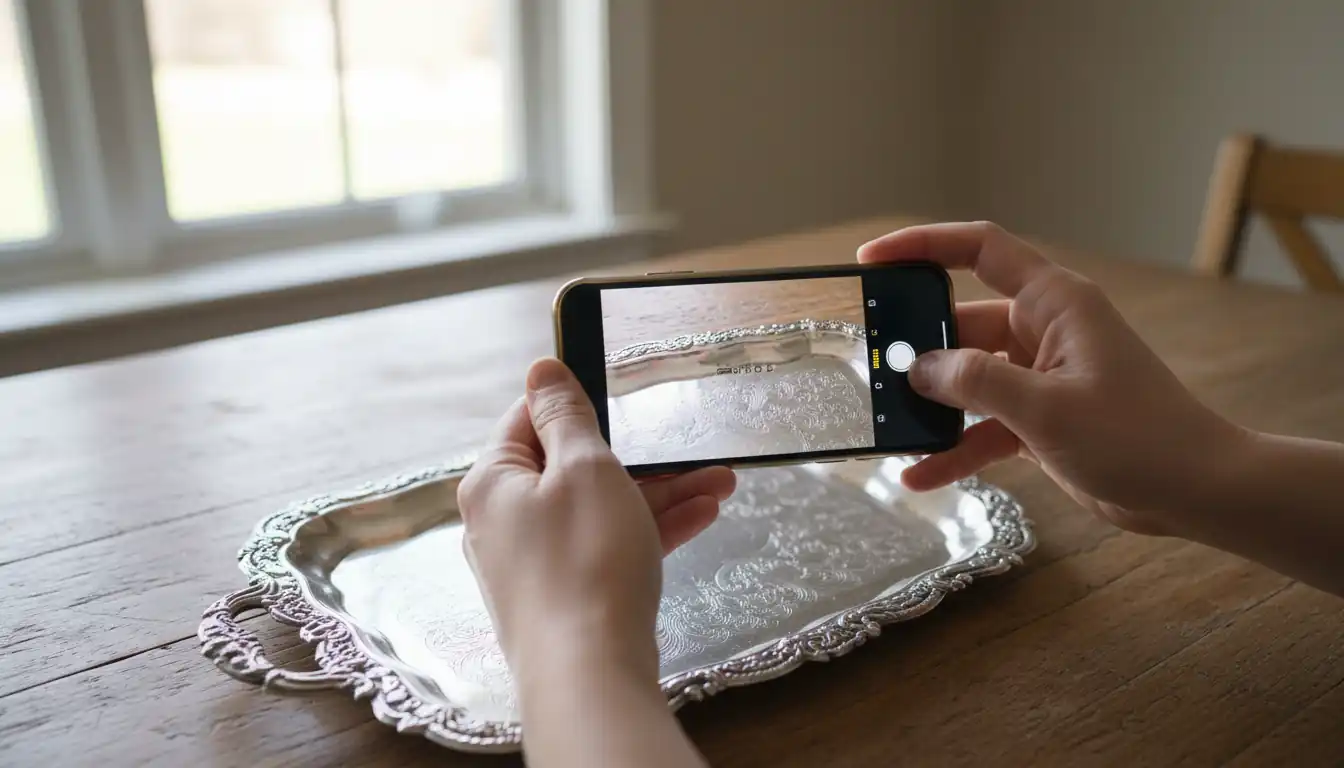
The difficulty of manual identification has created a need for a more efficient solution. This is where computer vision and artificial intelligence have changed the landscape for collectors. Instead of squinting through a loupe and cross-referencing a heavy book, you can now use your phone to do the heavy lifting.
Apps like Relic have bridged the gap between the amateur enthusiast and the professional appraiser. By using advanced AI, Relic allows you to take a photo of a mysterious hallmark and receive an instant identification. It doesn't just look for a match; it analyzes the geometry of the stamp, the font of the initials, and the specific shape of the surrounding shield to provide a comprehensive history and origin of the item.
How Computer Vision Reads Distorted Metal
Identifying a hallmark is significantly harder than identifying a face or a landmark. Silver is reflective, which creates "hot spots" and glare that can confuse standard camera software. Furthermore, hallmarks are often stamped on curved surfaces like the base of a goblet or the handle of a spoon, which distorts the proportions of the mark.
The technology behind Relic is designed to handle these specific challenges:
- Macro-Photography Optimization: The AI is trained to recognize patterns even when the image is taken at a very close range, where depth of field is shallow.
- Reflection Filtering: The algorithm can distinguish between the actual physical indentation of the stamp and the highlights caused by overhead lighting.
- Pattern Recognition: Even if a mark is 30% "rubbed" or worn away, the AI can compare the remaining fragments against a database of thousands of known marks to find the most likely match.
Relic and the New Era of Digital Appraisals
The true power of using an app like Relic isn't just in the identification—it's in the context. Once the app identifies a maker's mark or a date letter, it pulls from a vast database to tell you the story of that piece. You aren't just getting a name; you're getting a real appraisal and a history of the craftsman.
For a dealer or a serious collector, this speed is vital. In the seconds it takes to upload a photo, Relic provides:
- The Origin: Which city and country the piece came from.
- The Age: The exact year or period of manufacture.
- The Maker: A biography of the silversmith and their historical significance.
- The Value: A market-based estimate of what the item is worth in the current climate.
This level of detail used to take hours of library research. Now, it happens before you've even finished talking to the seller.
Beyond the Stamp: Assessing True Market Value
A hallmark tells you what a piece is, but it doesn't always tell you what it's worth. While the stamp is the foundation of valuation, several other factors influence the final price. A common mistake new collectors make is assuming that two pieces with the same hallmark have the same value.
Factoring in Provenance and Historical Context
Provenance—the history of who owned the item—can multiply the value of silver exponentially. A simple sterling silver teapot from 1850 might be worth $500 based on its weight and maker. However, if that same teapot was part of a documented set owned by a historical figure or a prominent family, its value could soar into the thousands.
Style also plays a massive role. The market for silver fluctuates based on interior design trends. Currently, the clean, geometric lines of Art Deco silver (1920s-1930s) often command higher prices than the highly ornate, "fussy" designs of the late Victorian era. Understanding the period style helps you understand why a smaller, lighter piece might be more valuable than a larger, heavier one.
Real-Time Market Data versus Static Estimates
The value of silver is tied to two different markets: the "spot price" of raw silver and the "collector value" of the antique.
- Spot Price: This is the melt value. If you have a heavily damaged tray that cannot be repaired, its value is simply its weight in silver.
- Collector Value: This is the premium paid for the artistry, the maker, and the age.
Relic provides an advantage here by offering real-time market data. While a price guide from five years ago might tell you a piece is worth $1,000, current auction results might show a decline or a surge in interest for that specific maker. Having access to live appraisal data ensures you don't overpay during a "hype" cycle or undersell a hidden gem.
Condition is the silent value-killer. A single deep scratch or a "pushed" foot on a silver bowl can reduce its collector value by 40%, regardless of how prestigious the hallmark is.
Protecting Your Collection from Sophisticated Fakes
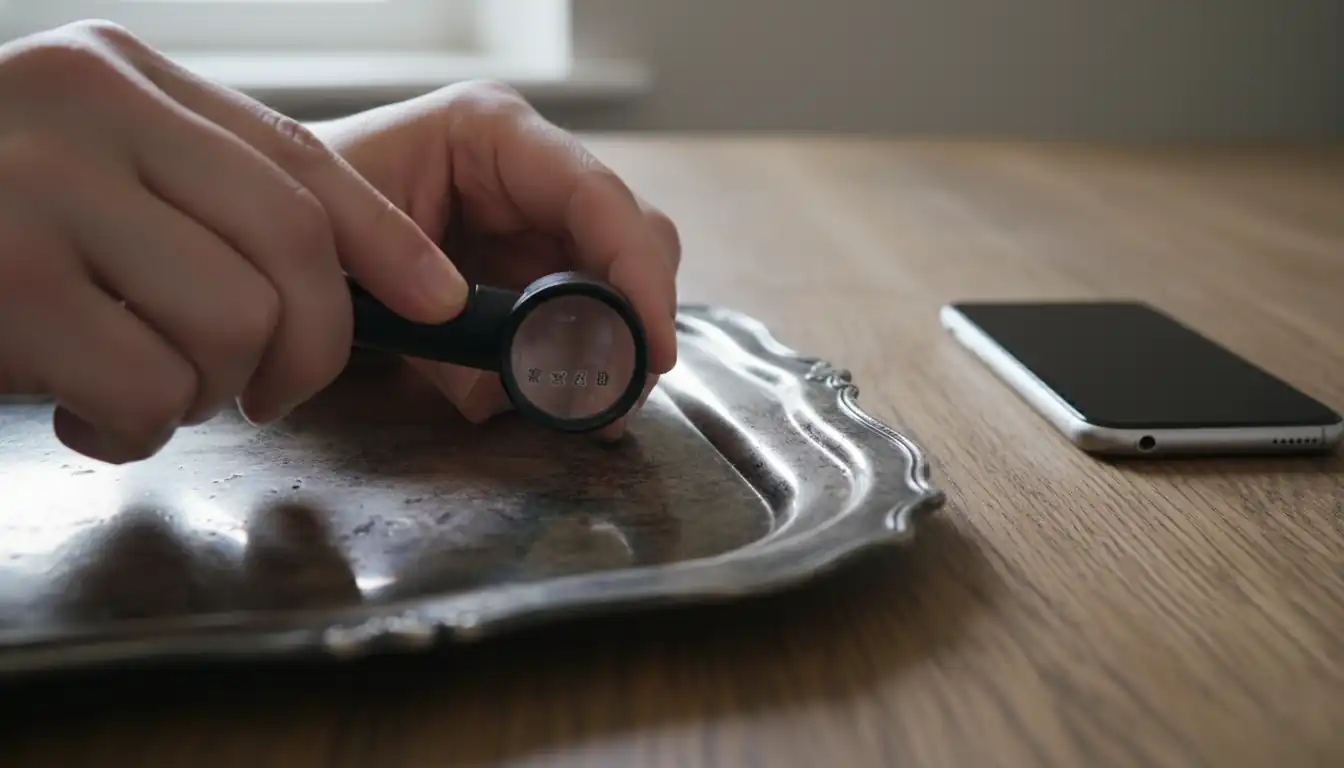
As the value of antique silver has risen, so has the quality of counterfeits. In the past, fakes were easy to spot—they were often silver-plated copper with "fantasy" marks that didn't exist in any reference book. Today, counterfeiters are much more sophisticated.
Spotting Laser-Etched Counterfeits and Cast Marks
Modern technology has given fakers new tools. One of the most dangerous is laser etching. A counterfeiter can take a plain, modern silver tray and laser-etch the marks of a famous 18th-century silversmith onto it.
- The "Too Perfect" Trap: Traditional hallmarks were struck by hand with a steel punch and a hammer. This creates a specific type of displacement in the metal. The edges of the mark should be slightly rounded, and there is often a slight "ghosting" or unevenness to the depth. Laser-etched marks are often too perfect, with vertical walls and a flat bottom that a hand-punch could never produce.
- Cast Marks: Some fakes are made by casting a copy of a genuine piece. This results in "soft" marks that look like they are melting into the silver. Because the mark was part of the mold rather than struck into the cold metal, it lacks the crisp definition of a real hallmark.
Verifying Purity Beyond the Surface Level
The most common trap for beginners is the "silver plate" vs. "sterling" confusion. Many silver-plated items carry marks that look remarkably like hallmarks. These are often called "duty marks" or "EPNS" (Electro-Plated Nickel Silver).
Using an AI tool like Relic provides a first line of defense. The app can recognize the specific fonts and spacing used in genuine historical stamps. If the spacing between the letters is inconsistent with the known punches used by a specific assay office in 1790, the AI can flag it as a potential counterfeit. This digital verification acts as a "sanity check," preventing you from making an expensive mistake based on a convincing-looking fake.
Conclusion
The world of antique silver is a landscape of hidden stories and encoded history. From the 14th-century guilds of London to the modern auction houses of New York, the hallmark has remained the definitive mark of truth. While the "four pillars" of purity, town, date, and maker provide the framework for identification, the sheer volume of data makes manual research a daunting task for the modern collector.
By understanding the technical anatomy of these marks and the historical context of the men and women who struck them, you transform a hobby into a sophisticated pursuit of value. You no longer see a tray; you see a document of 18th-century trade. You no longer see a spoon; you see the signature of a master craftsman.
The next time you find yourself at a sale, staring at a mysterious set of stamps, remember that you don't have to be a scholar to decode them. With the right knowledge and a tool like the Relic app in your pocket, you can instantly bridge the gap between curiosity and expertise. Whether you are looking to build a family legacy or find a hidden treasure to flip for a profit, your phone is now the most powerful magnifying glass you own. Download Relic today and start uncovering the masterpieces hidden in plain sight.
Identify antiques instantly
Point your camera at any antique, collectible, or vintage item. Get valuations, history, and market insights in seconds.
Download for iPhone