Stop Guessing: The Secret Language of Royal Doulton Backstamps Revealed

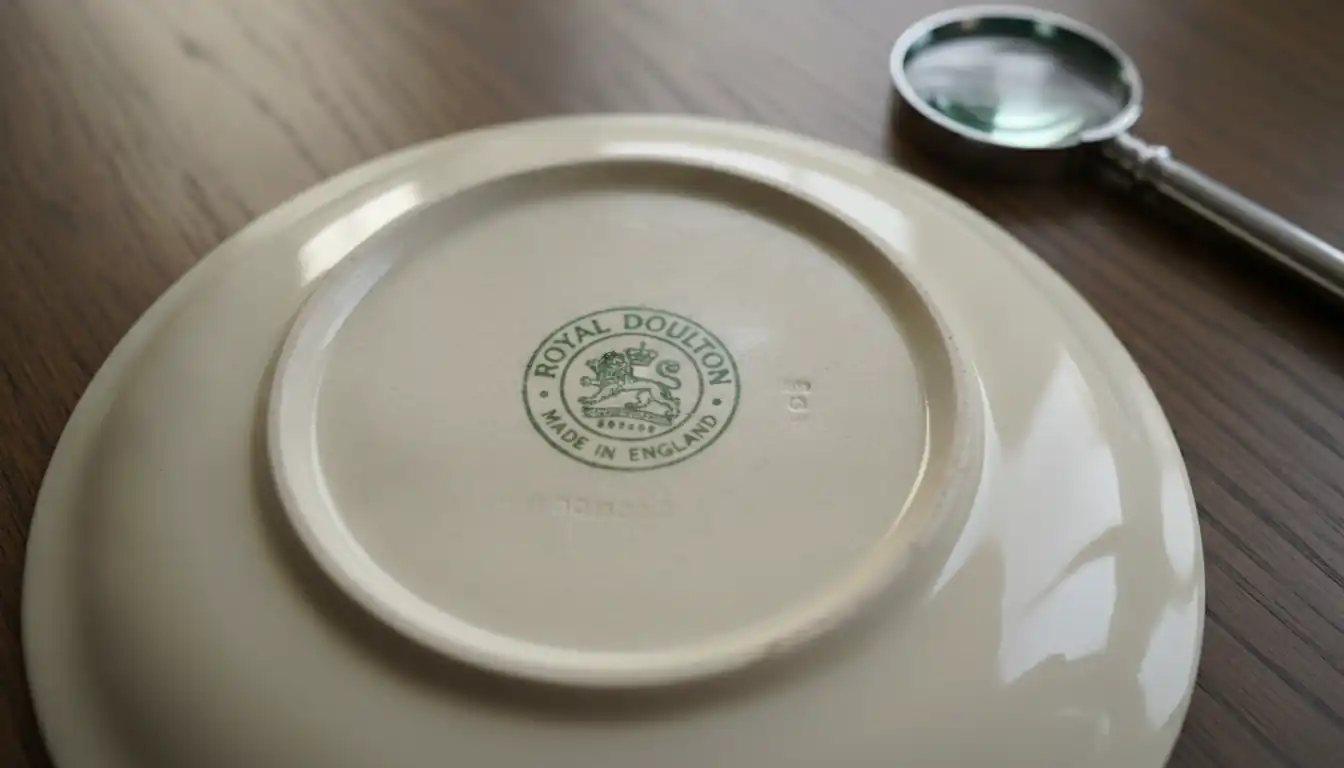
You are standing in a dusty corner of an antique shop, holding a cream-colored porcelain figurine that feels remarkably heavy for its size. You flip it over, and there it is: a small, circular stamp with a lion perched atop a crown. You know it’s Royal Doulton, but is it a common piece from the 1950s or a rare treasure from the turn of the century? The difference could be hundreds, even thousands, of dollars.
Most collectors treat these backstamps like a secret code they can’t quite crack. They squint at tiny numbers, scroll through endless forum posts, and hope they aren't misinterpreting a blurry smudge of ink. But these marks aren't just random decorations; they are a sophisticated language that tells the entire life story of the object in your hands.
By the time you finish reading this guide, you will be able to read a Royal Doulton backstamp like a professional appraiser. We are going to break down the visual anatomy of these marks, trace their evolution through history, and show you how to spot the subtle signatures of master artists. You will move from guessing to knowing, turning every antique hunt into a calculated search for value.
Anatomy of a Royal Doulton Mark
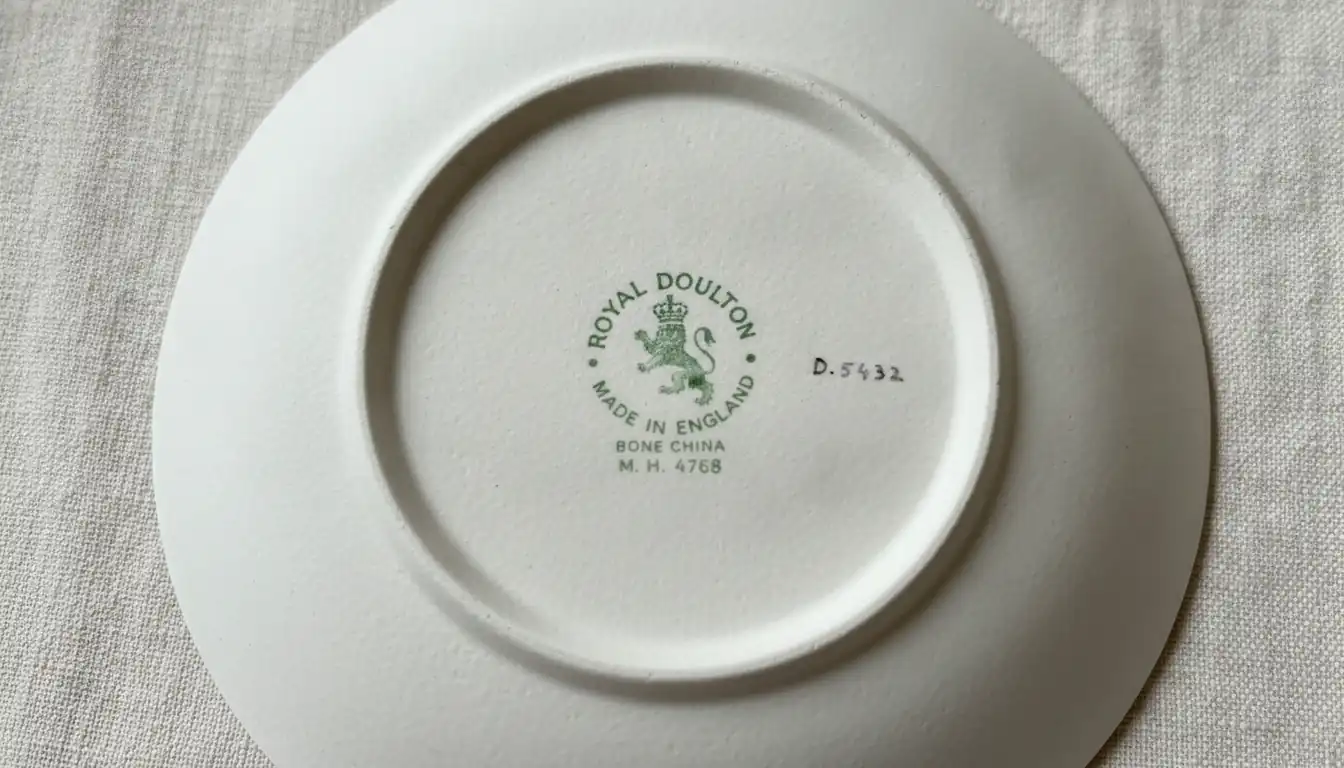
Think of a Royal Doulton backstamp as a fingerprint. While no two fingerprints are exactly alike, they all share common patterns—arches, loops, and whorls. In the world of Doulton, these patterns consist of three primary graphic elements: the interlocking "D" symbols, the lion, and the crown. Understanding how these pieces fit together is your first step in basic identification.
The Standard Lion and Crown Motif
The most recognizable version of the mark features a lion standing "passant" (on all fours with one paw raised) atop a crown. This isn't just a royal flourish; it represents the company’s prestige and its connection to the British monarchy. Surrounding this central image, you will usually find a circular band containing the words "Royal Doulton" and "England."
Inside that circle, look for the interlocking "D" symbols. These are often stylized to the point where they look like a geometric pattern rather than letters. They represent the Doulton family name and serve as the anchor for the entire design. If you see a mark that lacks the crown, you are likely looking at a piece made before 1901, as the crown was only added after the company received its Royal Warrant.
Deciphering Date Codes and Numbers
One of the most frequent questions collectors ask is: How can you tell how old a Royal Doulton is? The answer is hidden in a simple math problem printed right on the bottom of the piece. For pieces featuring the standard "lion and crown" mark used after 1927, Doulton utilized a numerical dating system that is remarkably consistent once you know the "base year."
To find the production year for these 20th-century pieces, you simply add the small number printed to the right of the backstamp to 1927. It sounds too simple to be true, but it works like a charm.
- A '1' next to the mark: 1927 + 1 = 1928
- A '15' next to the mark: 1927 + 15 = 1942
- A '23' next to the mark: 1927 + 23 = 1950
Pro Tip: If you see a "2" or a "3" that looks like it was stamped separately from the main logo, don't ignore it. These tiny digits are the keys to the kingdom when it comes to precise dating.
Beyond the date codes, you might see a four-digit number beginning with "HN." This is the "HN number," named after Harry Nixon, the head of the figure painting department. These numbers refer to specific models or "shapes." While they don't give you the exact year of production, they tell you when that specific design was first introduced to the catalog.
Evolution from Lambeth to Royal
To truly understand a mark, you have to understand the era it came from. Royal Doulton didn't start as the refined, bone-china powerhouse we know today. It began in the mud and smoke of Lambeth, London, making industrial stoneware and drainage pipes. The marks from this era look nothing like the elegant lion and crown of the 20th century.
The Early Doulton and Watts Era
In 1815, John Doulton partnered with Martha Jones and John Watts to form Doulton & Watts. The marks from this period (roughly 1815 to 1858) are often impressed directly into the clay rather than printed in ink. They are simple, utilitarian, and usually feature the words "Doulton & Watts, Lambeth Pottery, London."
These early stoneware pieces are heavy, salt-glazed, and have a rustic charm. If you find a piece with a simple "Doulton, Lambeth" impressed mark, you are holding a piece of Victorian history. These marks reflect a company that was still finding its artistic voice, focusing more on durability than decoration.
The Transition to Royal Status
The year 1901 changed everything. King Edward VII was such a fan of Doulton’s work that he granted the company a Royal Warrant. This allowed them to add the word "Royal" to their name and the crown to their backstamp. This is the single most important milestone for any collector to remember.
| Era | Mark Characteristics | Significance |
|---|---|---|
| 1815–1858 | Impressed "Doulton & Watts" | Early industrial stoneware period. |
| 1858–1901 | "Doulton, Lambeth" or "Pinder, Bourne & Co" | Expansion into artistic pottery and fine china. |
| 1901–1922 | Introduction of the Crown and "Royal" | Post-Royal Warrant; peak of prestige. |
| 1922–Present | Standardized Lion, Crown, and "Made in England" | Modern era with consistent branding. |
If your piece has the word "Royal" on it, it was made after 1901. If it just says "Doulton," it’s an earlier piece. This simple distinction helps you instantly categorize your find into a 19th-century "Lambeth" era or a 20th-century "Royal" era. The transition also marked a shift from the heavy, earthy stoneware of London to the delicate, translucent bone china produced in their Burslem factory in Stoke-on-Trent.
Artist Monograms and Series Ware
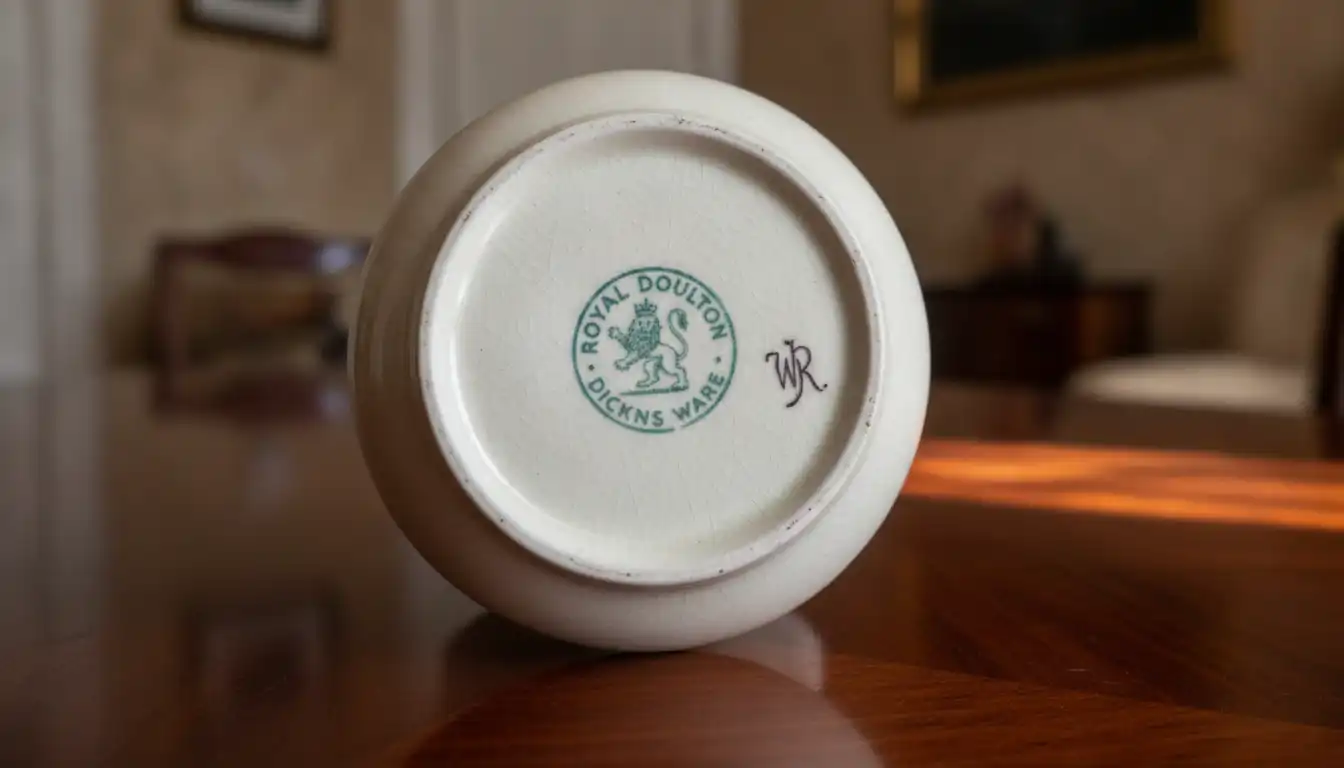
Once you’ve identified the era and the basic age of the piece, it’s time to look closer. Often, tucked away near the main backstamp, you will find tiny hand-painted initials or strange alphanumeric codes. These are not mistakes; they are the signatures of the people who made the piece famous.
Identifying Famous Artist Signatures
Royal Doulton was famous for its "studio" atmosphere, where individual artists were encouraged to develop their own styles. Finding an artist's monogram can increase the value of a piece by hundreds of dollars.
- Hannah Barlow (HB): Known for her incredible "sgraffito" technique, where she scratched drawings of animals into wet clay. Her initials are usually found incised into the base.
- George Tinworth (GT): Perhaps the most famous Doulton artist, known for his whimsical sculptures of mice and frogs. His "GT" monogram is a hallmark of high-end Victorian stoneware.
- Florence Barlow (FEB): Hannah’s sister, who specialized in painted birds and flowers. Her work is softer and more delicate than Hannah’s.
These monograms are often very small and can be easily confused with random scratches. However, they are usually placed with intention. If you see a set of initials that looks like it was painted with a fine brush or carved with a steady hand, it’s worth investigating.
Series Ware and Pattern Numbers
In addition to artist marks, you will often see "D" or "H" prefix numbers. These refer to "Series Ware"—items decorated with themes like Dickens characters, coaching scenes, or Robin Hood.
- 'D' Numbers: These usually refer to the pattern or the series. For example, "D2734" might correspond to a specific floral design used across plates, jugs, and bowls.
- 'H' Numbers: These are typically reserved for hand-painted items or Flambé ware. Flambé is that deep, blood-red glaze that Doulton perfected in the early 1900s. Because the glaze is so unpredictable in the kiln, these pieces are highly prized.
Identifying these secondary marks is like reading the "credits" at the end of a movie. The backstamp tells you the studio, but the monogram tells you the director.
Modern Identification Shortcuts with AI
For decades, the only way to identify these marks was to carry around a heavy, 500-page reference book or spend hours squinting at low-resolution PDF charts on the internet. Even then, it was easy to make a mistake. Is that a "1" or a "7" in the date code? Is the lion’s tail curved up or down? A single misinterpretation can lead to a valuation that is off by a factor of ten.
Why Manual Chart Reading Leads to Mistakes
The problem with manual identification is that ink fades and stamps wear down. Over a hundred years, a backstamp can become blurred or partially obscured by the glaze. Human eyes are prone to "confirmation bias"—we see what we want to see. If we hope a piece is from 1928, we might convince ourselves that a blurry smudge is a "1" date code.
Furthermore, Royal Doulton used dozens of slight variations of their mark for different types of ware. There are specific marks for "Titanian" ware, "Burslem" ware, and export-only items. Keeping track of all these variations is a full-time job for a professional historian.
Instant Appraisals with Relic
This is where modern technology steps in to bridge the gap between amateur curiosity and professional expertise. Instead of leafing through paper guides, you can now use the Relic app to get an instant, accurate identification.
Relic works by using advanced AI to analyze a photo of your backstamp. It doesn't just look at the words; it analyzes the specific geometry of the lion, the font of the lettering, and the placement of the crown. Within seconds, Relic provides a real appraisal, the history of the piece, and its origin.
For a collector at an estate sale or a dealer at a flea market, this is a total shift in how business is done. You no longer have to walk away from a piece because you aren't sure of its age. You take a photo, and Relic gives you the "peace of mind" that comes with AI-driven accuracy. It’s like having a master appraiser standing right next to you, whispering the answers in your ear.
Spotting Fakes and Assessing Value
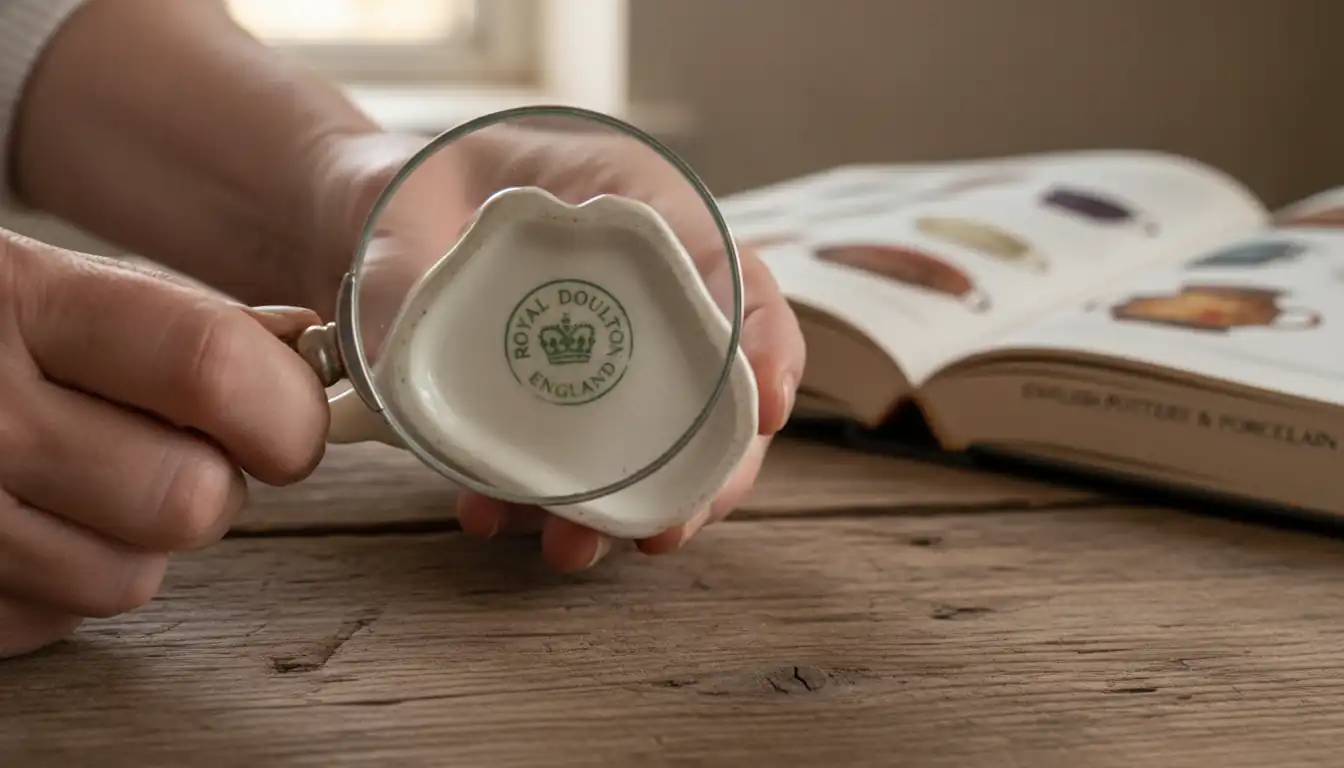
As with any high-value collectible, Royal Doulton has its fair share of counterfeits. Some are "honest" fakes—contemporary pieces made to look old—while others are deliberate attempts to deceive. Knowing how to spot these red flags is the final step in becoming a confident collector.
Red Flags in Counterfeit Backstamps
A genuine Royal Doulton backstamp was applied with precision, even in the early days. While there might be some natural fading, the quality of the mark should match the quality of the piece.
- Blurry or "Bleeding" Edges: Genuine marks were applied using high-quality transfers or stamps. If the edges of the lion or the letters look fuzzy or like the ink has "bled" into the porcelain, be suspicious.
- On Top of the Glaze: Most authentic Doulton marks are "underglaze," meaning they were applied before the final clear protective coating. If you can feel the texture of the mark with your fingernail, or if it looks like it was printed on top of the shiny surface, it’s likely a modern fake.
- Incorrect Font Styles: Counterfeiters often struggle to replicate the specific serif fonts used by Doulton in the early 20th century. Look for letters that seem too "modern" or "perfectly straight" compared to the slightly organic look of vintage stamps.
Factors That Drive Royal Doulton Prices
Once you are certain the piece is real, how do you determine what it’s worth? Value isn't just about age; it’s about a combination of factors that create "desirability" in the market.
1. Identifying 'Seconds' (Factory Rejects): Even a genuine mark can hide a secret about quality. Royal Doulton marked items with physical defects by either drilling a small hole through the center of the backstamp or by scratching/striking a line through the mark. These "seconds" have significantly lower market value than first-quality pieces.
2. Rarity of the Artist: As we discussed in section three, a piece signed by Hannah Barlow or George Tinworth will always command a premium. Their work is considered "fine art" rather than just "pottery."
3. Condition is King: A "hairline" crack (a tiny crack that doesn't go all the way through) can reduce the value of a Royal Doulton piece by 50%. Professional restoration can sometimes hide these flaws, but a keen eye—or a high-resolution photo analyzed by an app—will usually spot them.
4. The "Subject Matter" Appeal: Some series are simply more popular than others. For example, "Dickens Ware" has a massive global following, which keeps prices stable. Rare Flambé animals or limited-edition "Prestige" figurines are also highly sought after.
Conclusion
Cracking the code of Royal Doulton backstamps is a journey from the industrial roots of London’s Lambeth district to the refined elegance of the Royal Warrant. By understanding the basic anatomy of the lion and crown, calculating date codes, and recognizing the signatures of master artists, you have transformed from a casual observer into a knowledgeable collector.
You no longer have to wonder if that plate at the garage sale is a hidden gem or a common reproduction. You have the tools to identify the era, the artist, and the authenticity of any piece you encounter. And for those moments when the marks are too faint or the history too complex, tools like the Relic app are there to provide instant clarity and professional-grade appraisals.
The next time you hold a piece of Royal Doulton, don't just look at the design on the front. Flip it over, read the secret language on the bottom, and listen to the story it has to tell. Your next great find is waiting—and now, you’ll know exactly how to recognize it.
Identify antiques instantly
Point your camera at any antique, collectible, or vintage item. Get valuations, history, and market insights in seconds.
Download for iPhone