Stop Leaving Money on the Table: How to Spot Hidden Gems Using Your Smartphone

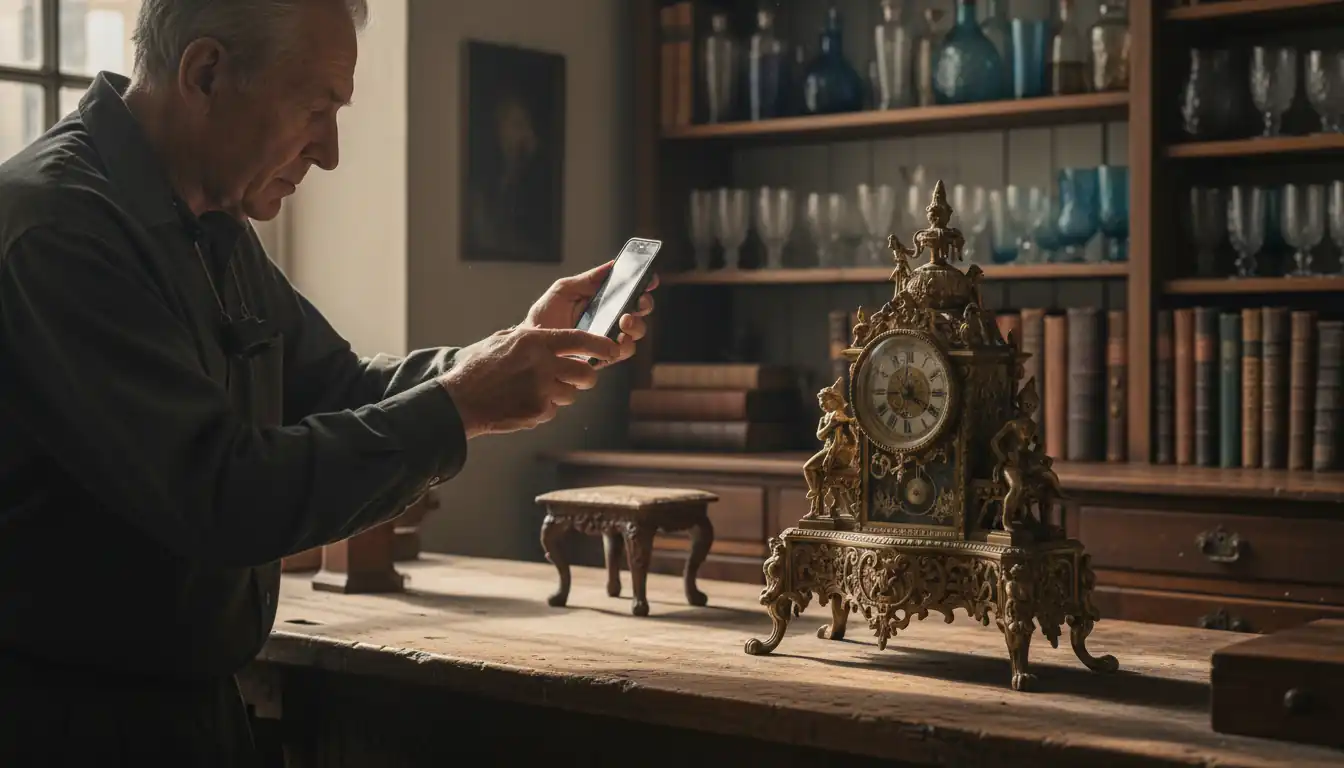
You are standing in a crowded, dusty barn at an estate sale in rural Pennsylvania. To your left, a stack of mid-century chairs; to your right, a table overflowing with tarnished silver and mismatched porcelain. You spot a small, heavy vase with an unusual iridescent glaze. Your gut tells you it might be Loetz, but your memory of the specific "Papillon" pattern is fuzzy. In the past, you would have had to gamble—pay the fifty dollars and hope you weren't buying a mass-produced reproduction, or walk away and risk leaving a four-figure profit on the table for the next picker.
The antique trade has always been a game of information asymmetry. The person who knows the most wins the most. For decades, that knowledge was locked away in expensive reference books, auction catalogs, and the brains of specialists who spent forty years in the field. But the barrier between "guessing" and "knowing" has evaporated. The smartphone in your pocket is no longer just a way to check your email or call the shop; it has become the most powerful appraisal tool ever created.
In this guide, we will explore how the most successful dealers are using mobile technology to identify hidden gems in seconds. You will learn how to move beyond "gut feelings" toward data-driven sourcing, how to navigate the complexities of global market valuations, and how to ensure your proprietary sourcing data stays private. By the time you finish reading, you will have a blueprint for modernizing your workflow and ensuring you never overlook a high-value item again.
Modern Sourcing Strategies for the Digital Dealer

The antique industry is currently undergoing its most significant shift since the advent of the internet. For years, the "digital revolution" in antiques mostly meant moving sales from physical storefronts to platforms like eBay or 1stDibs. However, the real revolution is happening at the point of discovery. The way dealers find and verify inventory is changing from a slow, academic process to a high-speed, data-driven sprint.
Transitioning from Gut Feeling to Data
Every experienced dealer relies on their "eye." It is that internal alarm that goes off when you see a certain curve of a chair leg or the specific weight of a glass bowl. This intuition is valuable, but it is also fallible. Human memory is prone to "false positives"—remembering a mark as being more prestigious than it actually is—and "false negatives," where you overlook a rare maker because their style doesn't fit your personal aesthetic.
Relying solely on your gut creates a ceiling for your business. You can only buy what you already know. If you are an expert in Victorian furniture but know nothing about 1970s Italian lighting, you are walking past money every single day. Modern sourcing strategies involve using technology to supplement your intuition. Instead of asking, "Do I recognize this?" the modern dealer asks, "What does the data say about this?" This shift allows you to expand into new niches instantly, effectively "borrowing" the expertise of a specialist through your device.
The Speed of the Modern Marketplace
The window of opportunity at an estate sale or a flea market has shrunk from hours to minutes. In the past, you might have had the luxury of taking a photo, going home to consult your library, and returning the next day. Today, if you don't buy it the moment you see it, someone else will. The competition is no longer just the local dealers you’ve known for years; it is a new generation of "pickers" who are tech-savvy and fast.
To stay competitive, your verification process must be instantaneous. The goal is to reduce the time between "discovery" and "decision" to under sixty seconds. This speed doesn't just help you secure items; it also prevents you from wasting time on "fools' gold." By quickly debunking an item that looks expensive but has no resale value, you free up your mental energy and capital for the items that actually matter.
The most successful dealers in the current market are those who treat information as a perishable commodity. The faster you can verify a find, the higher your profit margins will be.
Instant Identification Technology and Market Accuracy
The "magic" that allows a smartphone to identify a 200-year-old piece of pottery lies in advanced visual recognition and machine learning. These systems don't just "look" at a photo; they analyze thousands of data points—from the specific tension in a brushstroke to the chemical composition of a glaze's color—to find a match in a global database.
How AI Deciphers Maker Marks and Patterns
Maker's marks are the DNA of the antique world, but they are notoriously difficult to read. They can be faded, partial, or intentionally deceptive. Traditional research involved flipping through massive volumes of "Kovel's Antiques & Collectibles Price List" or specialized marks guides. AI has changed this by using pattern recognition that far exceeds human capability in low-visibility situations.
When you photograph a mark, the technology compares it against millions of known examples, accounting for variations in wear and tear. It can distinguish between a genuine Meissen "crossed swords" mark and a 19th-century "Paris porcelain" imitation that might fool the naked eye. This level of precision extends to patterns as well. If you find a single dinner plate from an obscure 1920s French set, the technology can identify the pattern name, the years of production, and the rarity of that specific colorway.
Relic and the Future of Visual Appraisals
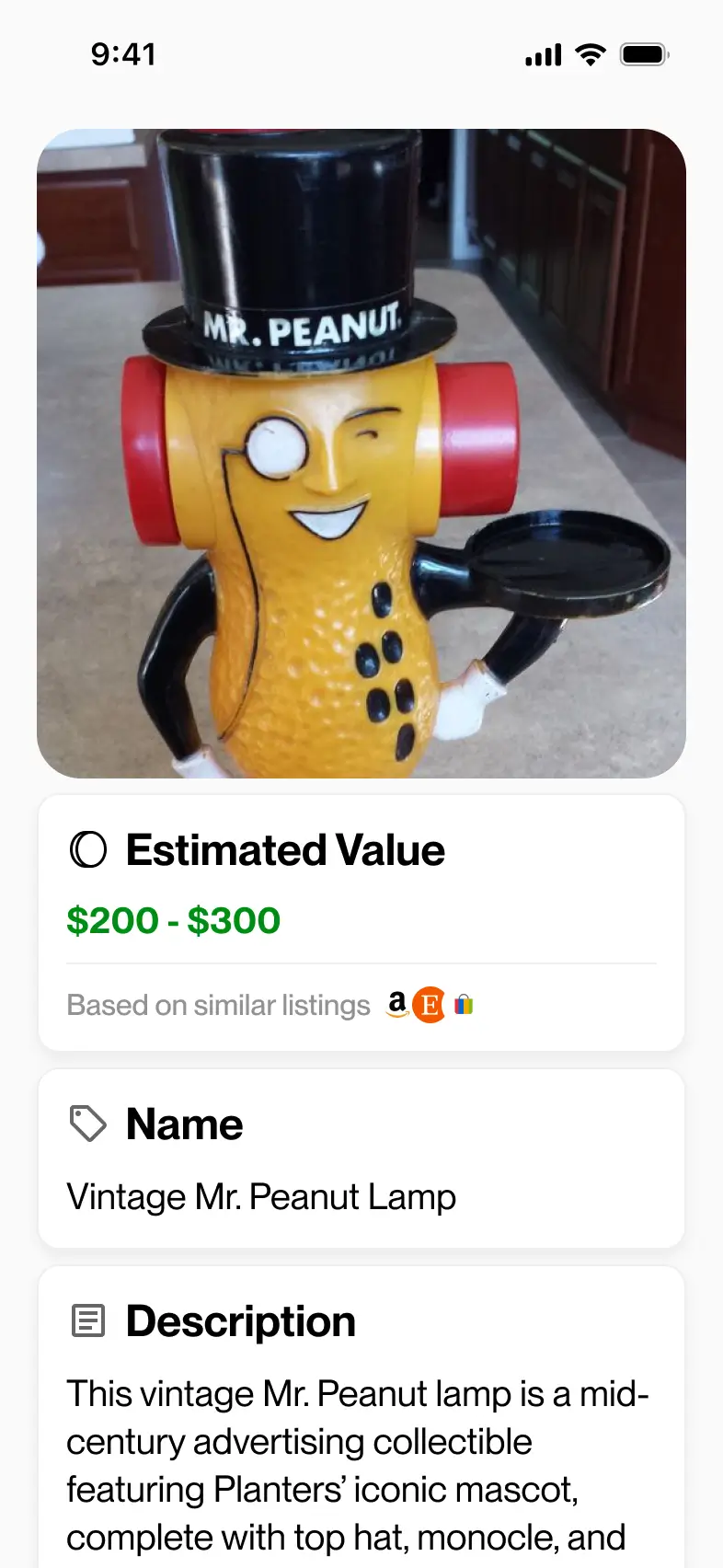
This is where specialized tools like Relic become indispensable for the professional dealer. Relic isn't just a search engine; it is a comprehensive antique identifier that functions as a digital specialist in your pocket. When you upload a photo to the Relic app, the AI doesn't just give you a name. It provides a real appraisal, a detailed history, and the origin of the item.
For example, if you encounter a piece of "tramp art" at a garage sale, Relic can analyze the notch-carving style and the type of wood used to provide context on its likely geographic origin and age. This turns a "cool looking box" into a "1910s Appalachian crown-of-thorns jewelry chest." Having this historical context and a real-time appraisal allows you to negotiate with confidence. You aren't just offering a price based on a hunch; you are offering a price based on a professional-grade identification.
| Feature | Traditional Research | Relic AI Identification |
|---|---|---|
| Search Time | 20-60 Minutes | 5-10 Seconds |
| Accuracy | Dependent on memory/books | Data-driven pattern matching |
| Context | Requires multiple sources | History, origin, and appraisal in one |
| Portability | Heavy books/Laptop | iOS Smartphone |
Navigating Global Valuations and Data Security
One of the biggest mistakes a dealer can make is assuming that the price of an item in their local town reflects its true global value. We are no longer operating in isolated local markets. A piece of Japanese export porcelain found in a thrift store in Oregon might have a modest value locally, but it could be a high-demand item for a collector in Tokyo or London.
Regional Price Disparities Across Europe and Asia
The value of an antique is often tied to its cultural "home." As wealth shifts globally, certain markets become much "hotter" than others.
- Europe: There is currently a massive resurgence in demand for 18th-century English "brown furniture" among younger European designers, while the US market for the same items remains relatively flat.
- Asia Pacific: The market for Chinese antiquities remains one of the most volatile and high-priced sectors. A "sleeper" item—an object misidentified by a local auction house—can sell for 100x its estimate if it finds the right buyer in the Asia Pacific region.
Modern apps help you bridge this gap by aggregating realized auction prices from across the globe. Instead of seeing what an item sold for at the local auction house down the street, you see what it fetched at Sotheby’s in Hong Kong or a boutique gallery in Paris. This allows for "digital arbitrage"—buying low in an undervalued local market and selling high to a global audience.
Protecting Your Proprietary Sourcing Data
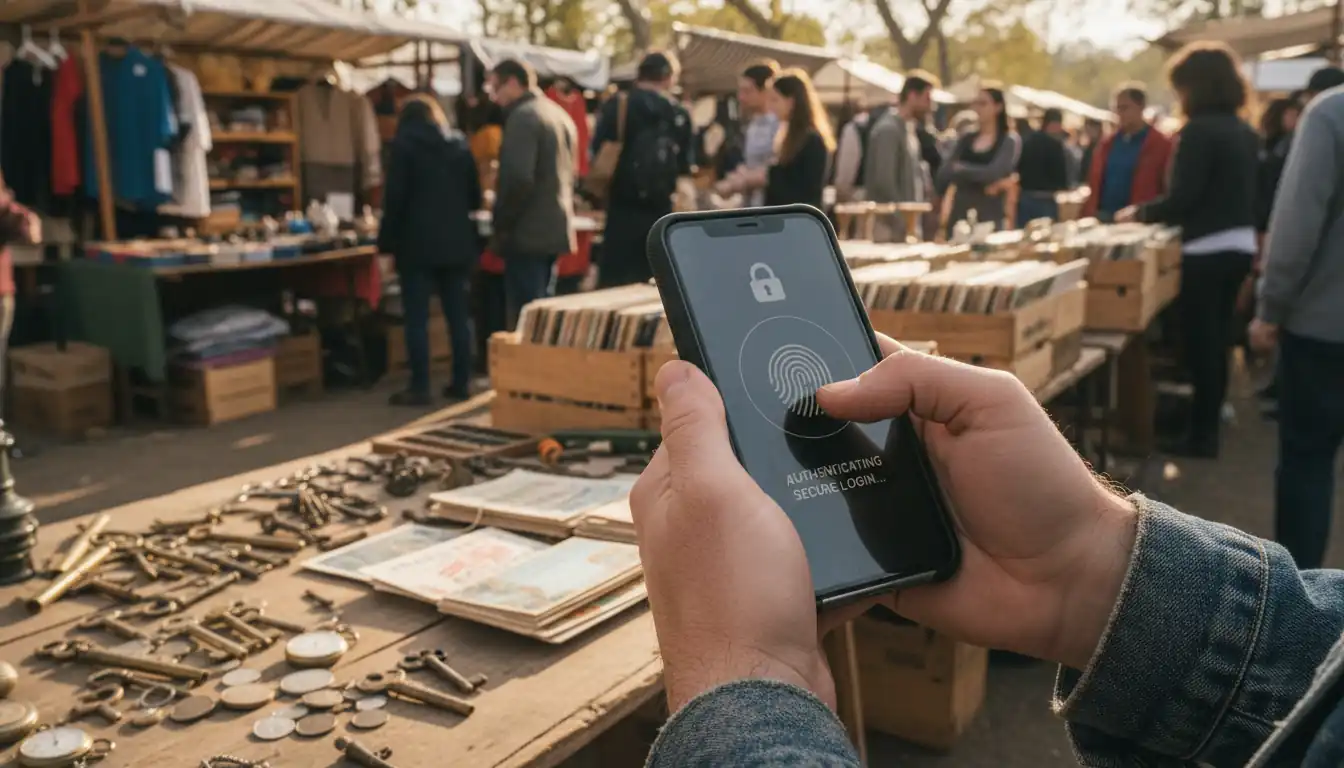
For a professional dealer, "where" you find your items is often more valuable than "what" you find. There is a valid concern among professionals that using mobile apps might result in their "secret spots" being leaked. If an app tracks your GPS location every time you scan a high-value item, could a competitor eventually find your favorite honey hole?
When choosing a tool, it is vital to understand how your data is handled. Professional-grade apps prioritize "Data Linked to You" and "Data Used to Track You" transparency. You want a tool that treats your scans as private property.
- Data Privacy: Ensure the app does not share your scan history or location data with third parties.
- Anonymity: Your "finds" should remain your finds. The history of what you have appraised should be for your eyes only, acting as a private digital catalog of your inventory rather than a public map for others to follow.
Your sourcing locations are your competitive advantage. A professional tool should enhance your knowledge without compromising your privacy.
Cutting Edge Features for High Volume Sellers
As we move into 2025, the technology surrounding antique identification is becoming more robust, focusing on the needs of high-volume sellers who handle hundreds of items a week. The "point and shoot" method is evolving into a more integrated ecosystem.
Advanced Image Recognition Updates
The latest updates in image recognition have solved two of the biggest headaches for dealers: low light and "noise."
- Low-Light Performance: Many of the best finds are hidden in dark basements, cramped attics, or under tables at 5:00 AM flea markets. New AI models are trained to "see" through graininess and shadows, identifying textures and marks that would have previously required a high-powered flashlight and a macro lens.
- Batch Processing: High-volume dealers don't have time to scan one item at a time. Upcoming features in the tech space are moving toward "batch scanning," where you can pan your camera across a shelf of items, and the AI flags the three or four pieces that have the highest statistical probability of being valuable.
Integration with Inventory Management Systems
The "Holy Grail" for a modern dealer is a fluid workflow where an item is identified, appraised, and listed for sale in a single motion. We are seeing a move toward apps that integrate directly with inventory management systems.
Imagine this: You scan a mid-century vase with Relic. The app identifies it as a 1956 Bitossi piece, provides a valuation of $400, and gives you the historical blurb. With one tap, that data—the photo, the description, and the price—is sent to your inventory software or drafted as a listing on your sales platform. This eliminates hours of manual data entry and allows you to turn over your capital much faster.
Designing a Workflow for the Field
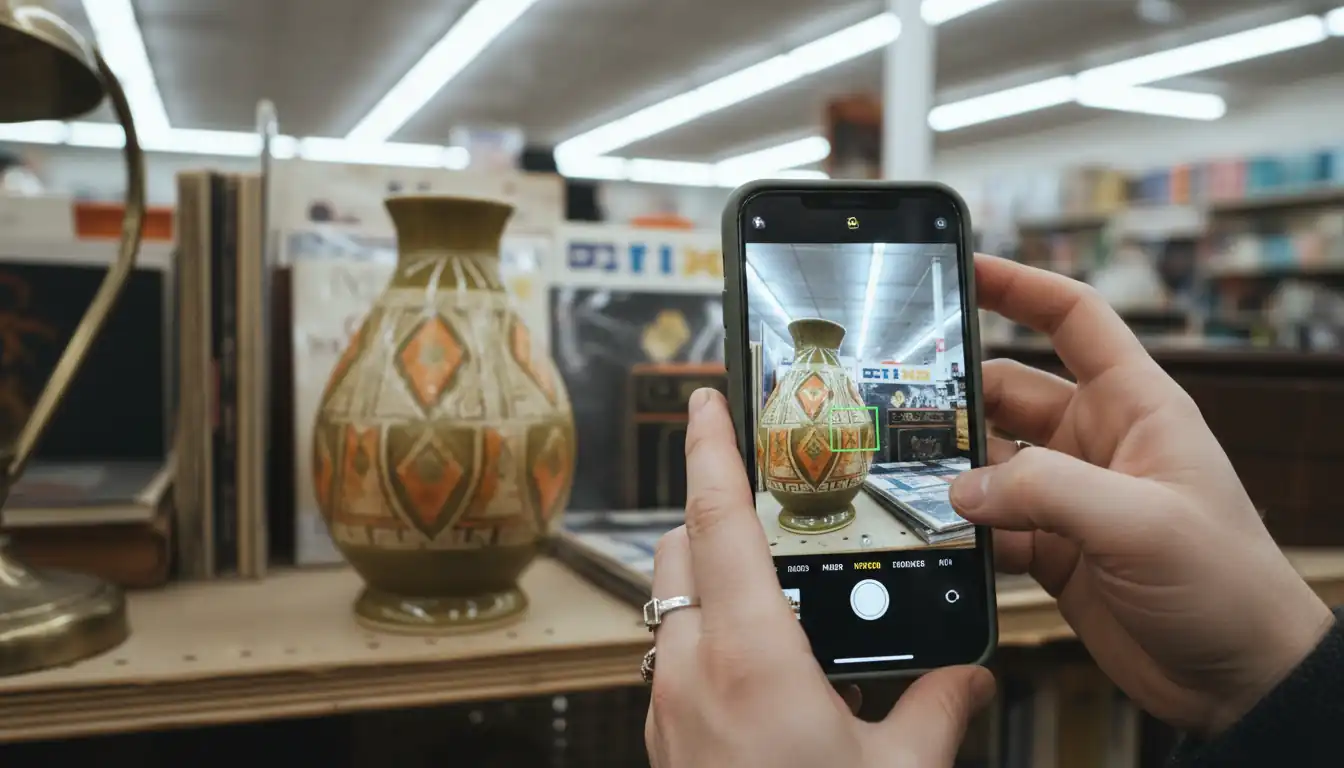
All the technology in the world is useless if it fails you in the heat of the moment. The physical reality of being a "picker" involves dust, rain, spotty cell service, and high-pressure situations where you only have seconds to make a move.
Accessibility in Harsh Lighting and Remote Locations
When evaluating an app for professional use, you must look past the flashy marketing and consider the UI/UX (User Interface/User Experience).
- High-Contrast Displays: Can you see the screen in the middle of a sun-drenched field?
- One-Handed Operation: You will often have an item in one hand and your phone in the other. The app must be navigable with a single thumb.
- Offline Capabilities: Many of the best estate sales are in "dead zones" with no LTE or 5G. The best tools have a "lite" version of their database stored locally or allow you to queue photos for identification the moment you hit a signal.
Community Ratings and Peer Validated Reviews
Don't just look at the number of stars an app has; look at who is leaving the reviews. A 5-star rating from a hobbyist who identified a common Mason jar is different from a 5-star rating from a professional dealer who used the app to authenticate a piece of George Ohr pottery.
Relic, for instance, maintains a 4.9-star rating from over 20,000 reviews. For a professional, that volume of feedback is a signal of reliability. It means the AI has been "trained" on a massive variety of real-world items, not just studio-quality stock photos. When you see a high rating from a community of serious collectors and dealers, you know the tool can handle the "weird" stuff you actually find in the wild.
Field Checklist for App Usability:
- Speed: Does the app open and get to the camera in under three seconds?
- Stability: Does it crash when you have 50 photos in your gallery?
- Clarity: Is the appraisal data easy to read at a glance, or is it buried under walls of text?
- Support: Is there a way to report a misidentification to help the AI learn?
Conclusion
The difference between a dealer who struggles to make a profit and one who consistently finds "hidden gems" is no longer just a matter of years spent in the trade. It is a matter of how effectively they use the tools available to them. By moving from a reliance on gut feeling to a data-driven approach, you open yourself up to a world of inventory that your competitors are simply walking past.
Technology like the Relic app has democratized expertise. You no longer need to be a specialist in every category to spot value. You just need the ability to take a clear photo and the wisdom to trust the data. Whether you are navigating the high-stakes world of international auctions or just trying to find a "sleeper" at a local garage sale, your smartphone is your most valuable asset.
Your next steps:
- Audit your current process: How many times a week do you walk away from an item because you aren't 100% sure of its value?
- Modernize your toolkit: Download a professional-grade identifier like Relic and practice using it on items you already own to see the depth of data it provides.
- Expand your horizons: Use the global valuation data to look for items that are undervalued in your region but high-demand elsewhere.
Stop leaving money on the table. The gems are out there—you just need the right eyes to see them.
Identify antiques instantly
Point your camera at any antique, collectible, or vintage item. Get valuations, history, and market insights in seconds.
Download for iPhone