Stop Overlooking These 5 Clues That Prove Your Antique Clock Is Worth a Fortune

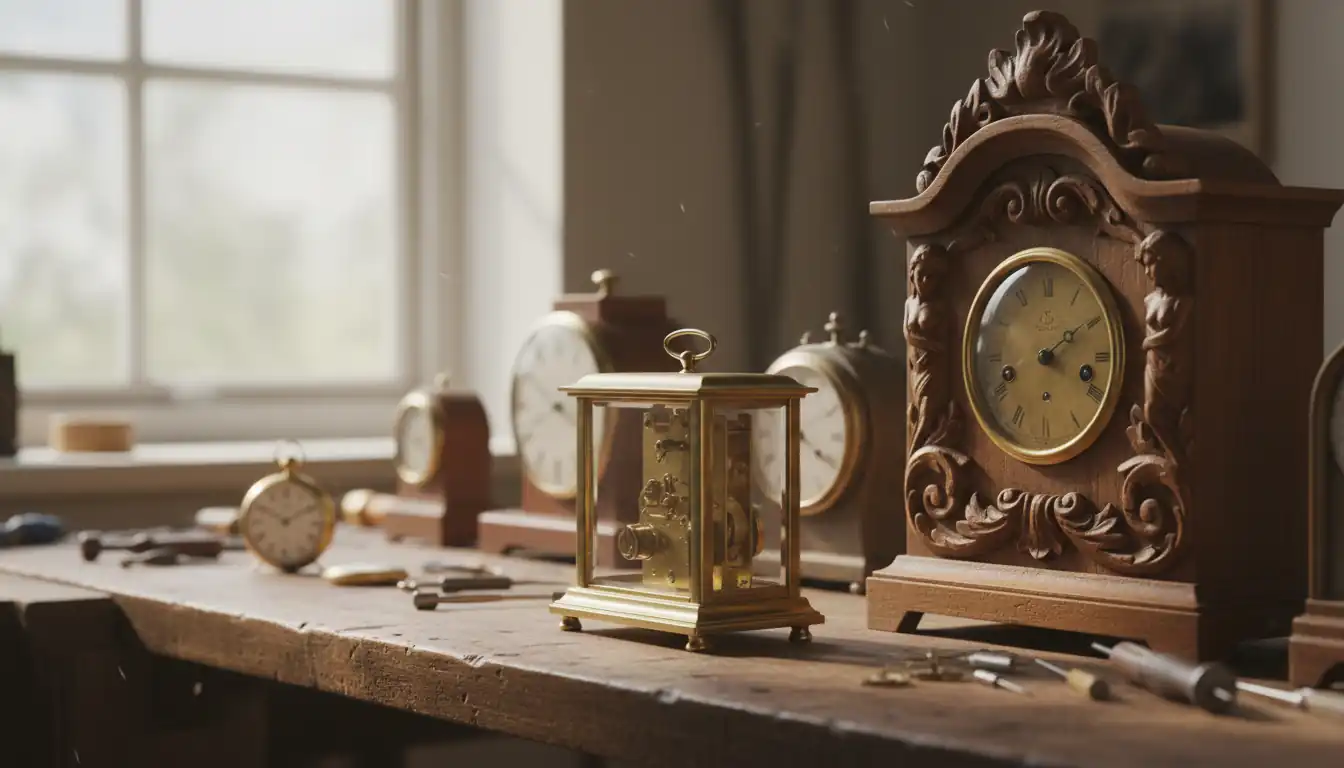
You are standing in a dimly lit estate sale, staring at a tall case clock that everyone else has walked past. It is dusty, the wood is dark, and the pendulum is tucked away in a corner. Your gut tells you there is something special here, but your brain is looking for a price tag that isn't there. Most people think a clock’s value is written on its face, but the real story is hidden in the gears, the joinery, and the weight of the brass.
Understanding the true value of an antique clock requires more than a passing glance at the dial. It involves a physical investigation that borders on forensic science. You have to know where to look, what to touch, and how to interpret the silent clues left behind by master horologists from centuries past. By the time you finish reading this, you will have the toolkit necessary to separate a mass-produced decorative piece from a museum-quality masterpiece.
The difference between a $50 yard sale find and a $50,000 auction highlight often comes down to five specific indicators. These clues are frequently overlooked by the casual observer, yet they are the first things a professional appraiser looks for. We are going to break down the anatomy of high-end clockmaking, the styles currently dominating the market, and the modern tools you can use to verify your finds in seconds.
The Anatomy of High Value Clockmaking
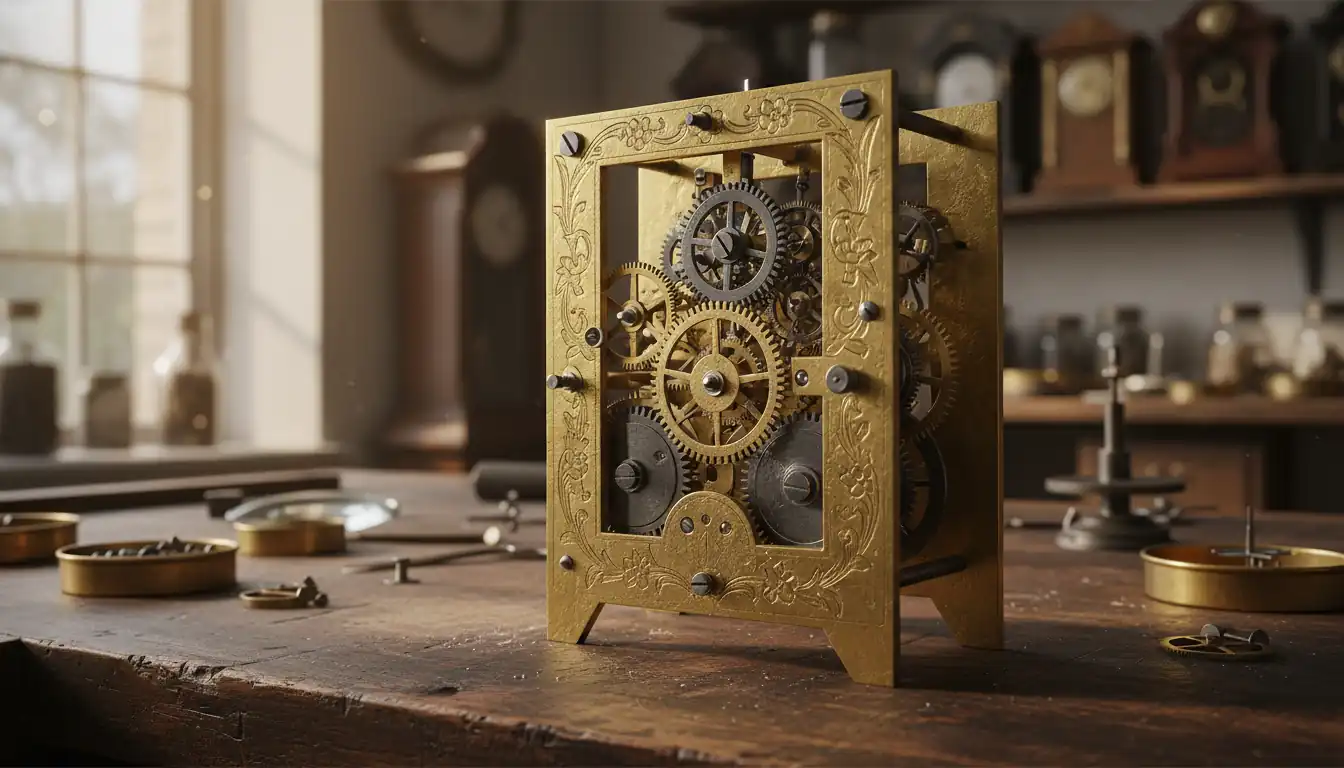
When you first approach an antique clock, your eyes naturally gravitate toward the dial. While the face of the clock can provide some information, it is often the least reliable indicator of true value. Dials can be replaced, repainted, or even faked. To find the real proof of quality, you need to look where the manufacturer didn't expect the average person to peek.
Hidden Maker Marks and Signature Locations
The most valuable signature on a clock is rarely the one painted on the glass or the paper dial. High-end makers, particularly those from the 18th and 19th centuries, often stamped their names directly into the brass movement. You will need a flashlight and perhaps a small mirror to see these. Open the back door of the clock case and look at the backplate—the solid brass plate that holds the gears in place.
A stamped name here, such as "E. Howard & Co.," "Seth Thomas" (in specific early iterations), or "Breguet," is a definitive mark of origin. Sometimes, the signature is hidden on the "front plate," which is the side of the movement directly behind the dial. This requires more effort to see, but finding a signature there often indicates a clock made before the era of mass production.
Don't stop at the movement. Check the interior of the wooden case. Makers often signed the inside of the door or the backboard with chalk, pencil, or a small paper label. These "hidden" signatures were often notes from the original cabinet maker or the person who assembled the clock. In the world of high-end antiques, a clock where the movement maker and the case maker are both identified is a rarity that commands a premium price.
Material Quality and Craftsmanship Indicators
If you want to know if a clock is worth money, you have to look at how it was built. High-value clocks were constructed using the finest materials available at the time. This means solid hardwoods like mahogany, walnut, or cherry. If you see a chip in the corner and it reveals a different, lighter wood underneath, you are looking at a veneer. While some high-end clocks use beautiful flame mahogany veneers, a solid wood construction is generally a sign of a more expensive original commission.
Look at the joinery of the case. If the clock has drawers or a removable hood, pull them out and look at the corners. Are they held together by staples and glue, or do you see hand-cut dovetails? Hand-cut dovetails are irregular; the "teeth" of the joint won't be perfectly uniform. This irregularity is a hallmark of a piece made by a skilled craftsman rather than a machine.
Pro Tip: Take a close look at the brass components. In high-quality clocks, the brass is thick and heavy. If the gears look thin, like they were stamped out of a sheet of metal, the clock was likely mass-produced. Thick, hand-finished gears with high tooth counts indicate a precision instrument designed to last for centuries.
| Indicator | High Value Sign | Low Value Sign |
|---|---|---|
| Movement Plate | Thick, engraved brass | Thin, stamped steel or brass |
| Case Joinery | Hand-cut dovetails | Staples, nails, or machine joints |
| Wood Type | Solid Mahogany, Walnut, Rosewood | Pine, Plywood, or cheap Veneer |
| Fasteners | Hand-turned blued steel screws | Modern Phillips or flat-head screws |
Sought After Styles and Mechanical Movements
The antique market is not a static thing. What was valuable twenty years ago might be stagnant today, while styles that were once ignored are now seeing a massive resurgence. If you are asking "What are the most sought after clocks?", you have to look at the intersection of mechanical genius and aesthetic trend.
The Resurgence of Mid-Century Modern and Art Deco
While 19th-century grandfather clocks will always have a market, the current "hot" sector involves 20th-century design. Collectors are currently obsessed with Mid-Century Modern (MCM) pieces. Names like George Nelson and Howard Miller are at the top of the list. A George Nelson "Ball Clock" or "Sunburst Clock" from the 1950s can easily outvalue a 100-year-old mantel clock simply because of the demand for that specific aesthetic.
Art Deco clocks from the 1920s and 30s are also seeing a spike in value. These clocks often use exotic materials like onyx, marble, and chrome. The value here lies in the "look." A clock that looks like it belongs in a Hercule Poirot mystery—with geometric shapes and bold typography—is a high-commodity item for interior designers and serious collectors alike.
Mechanical Complexity and Complications
Beyond the style of the case, the "complications" of the movement drive the price. A complication is any function the clock performs beyond simply telling the hour and minute. The more complications a clock has, the more valuable it generally is.
- Moon Phases: A dial that rotates to show the current phase of the moon.
- Calendar Work: Displays for the day of the week, the date, and sometimes even the month.
- Triple Chimes: Clocks that allow you to switch between different melodies, such as Westminster, Whittington, and St. Michael.
- Equation of Time: A very rare complication that shows the difference between "true" solar time and "mean" clock time.
One of the most sought-after mechanical marvels is the Atmos clock by Jaeger-LeCoultre. These clocks are essentially "perpetual motion" machines. They don't need a battery or winding; they run on changes in atmospheric pressure and temperature. A single degree of temperature change provides enough energy to run the clock for two days. Because of their unique engineering and elegant glass-case designs, Atmos clocks remain a blue-chip investment in the horological world.
Modern Verification and Identification Tools
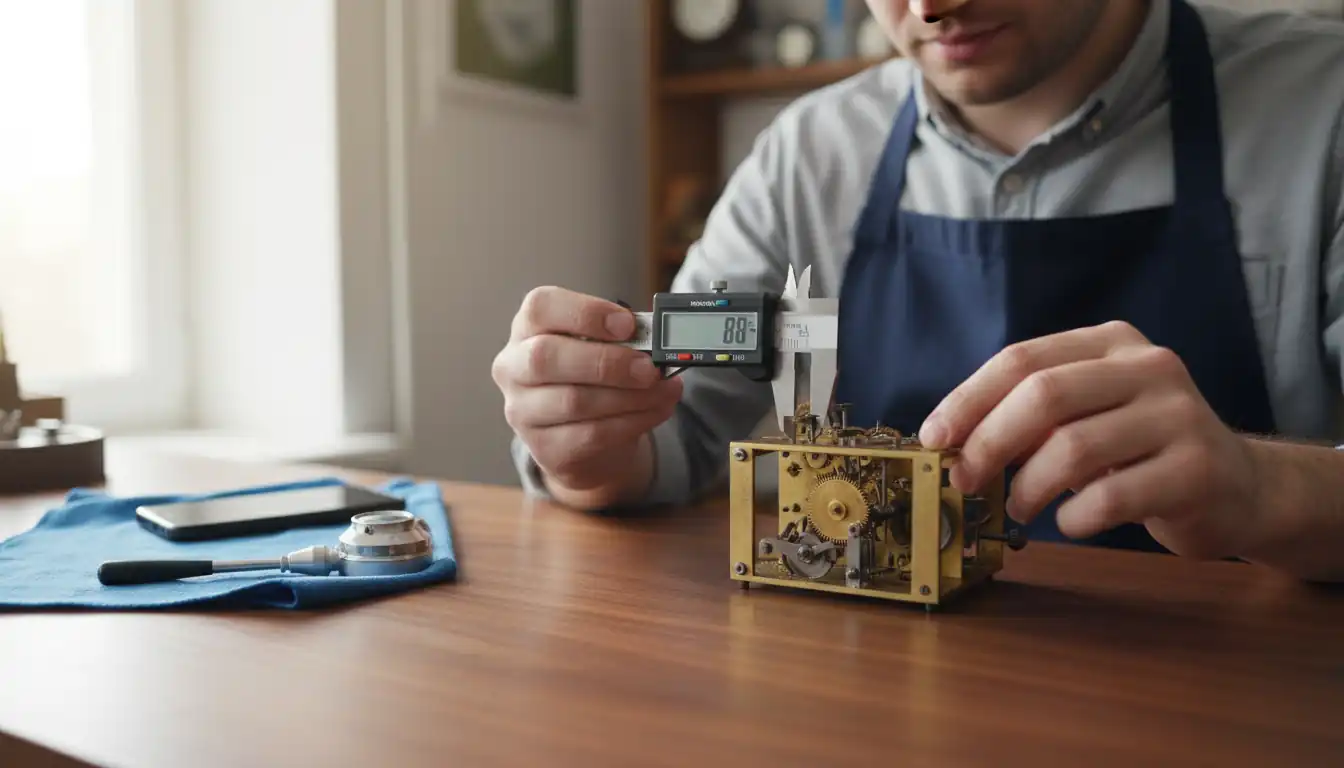
Identifying a clock is only half the battle. Once you think you’ve found something, you have to prove it. This is where many amateur pickers lose money—they misidentify a reproduction as an original, or they fail to see the signs of a "marriage" (where a high-end movement has been shoved into a cheap, unrelated case).
Distinguishing Genuine Patina from Artificial Aging
Value is often found in the "skin" of the clock. Genuine patina is the result of decades—or centuries—of oxidation and handling. On a brass movement, this looks like a dull, honey-colored glow. On wood, it’s a depth of color that can’t be replicated with modern stains.
"Bad" wear is easy to spot if you know what to look for. Look for "forced" aging, such as circular sanding marks under a dark stain, or rust that looks "crunchy" and orange rather than a dark, stable brown. If the clock smells like fresh chemicals or hardware store spray paint, walk away. A genuine antique should smell like old wax, dust, and perhaps a hint of machine oil.
Using AI to Decode Clock History Instantly
In the past, identifying a rare clock meant carrying around heavy reference books or spending hours on obscure internet forums. Today, technology has changed the game for collectors. If you are standing in front of a clock and aren't sure if that signature on the backplate is legitimate, you can use the Relic app to get an answer in seconds.
Relic works by using advanced AI to analyze photos of your find. You simply take a picture of the clock's face, the movement, or any markings you find, and the app provides a real appraisal, history, and origin of the item. It’s like having a professional appraiser in your pocket while you’re at a thrift store or an estate sale. For professionals like dealers or online sellers, this kind of instant market research is a necessity. Instead of guessing if a clock is a George Nelson original or a 1990s knockoff, Relic can verify the design and give you a valuation based on current market data.
The ability to instantly cross-reference a clock's mechanical features against a global database of known makers is the single biggest advantage a modern collector can have.
The Impact of Provenance and Condition
You might have a clock made by a famous maker, but if it has been "restored" poorly, its value could be cut in half. Conversely, a relatively common clock can become a fortune if it has the right paperwork. This is the "Is my clock worth money?" question answered through the lens of history and preservation.
Tracking Ownership History and Original Documentation
Provenance is the history of who has owned the clock. A clock that has been in the same family since 1820 is worth more than one bought at a random auction last year. Why? Because the "paper trail" proves its authenticity.
Look for these value-multipliers:
- Original Bill of Sale: A faded piece of paper from the 1800s showing what the original owner paid.
- Maker’s Labels: Paper labels pasted inside the case are fragile and often lost. If they are intact, the value jumps.
- Repair Marks: Look closely at the brass plates of the movement. You might see tiny, hand-scratched numbers and dates. These are the marks of horologists who serviced the clock over the years. A clock with a long history of professional service marks shows it was well-cared for by wealthy owners.
The Delicate Balance of Restoration and Value
There is a common misconception that a clock must be shiny and working to be valuable. This is false. In fact, "cleaning" a clock is the fastest way to destroy its value. If you take a 200-year-old clock and polish the brass until it looks like a new trophy, you have stripped away the history that collectors pay for.
- The "Working" Myth: A rare, non-working clock by a master maker is still worth ten times more than a common, perfectly ticking wall clock. Collectors expect to have to service a movement; they don't expect to find a pristine, untouched case.
- Originality is King: Original glass (look for ripples and bubbles), original weights, and the original pendulum are vital. If these have been replaced with modern parts, the clock is considered a "user" rather than a "collectible."
- Avoid DIY: Never use household cleaners, oils, or "Brasso" on an antique clock. The chemicals can react with the old metals and cause permanent damage.
Market Dynamics and Final Valuation
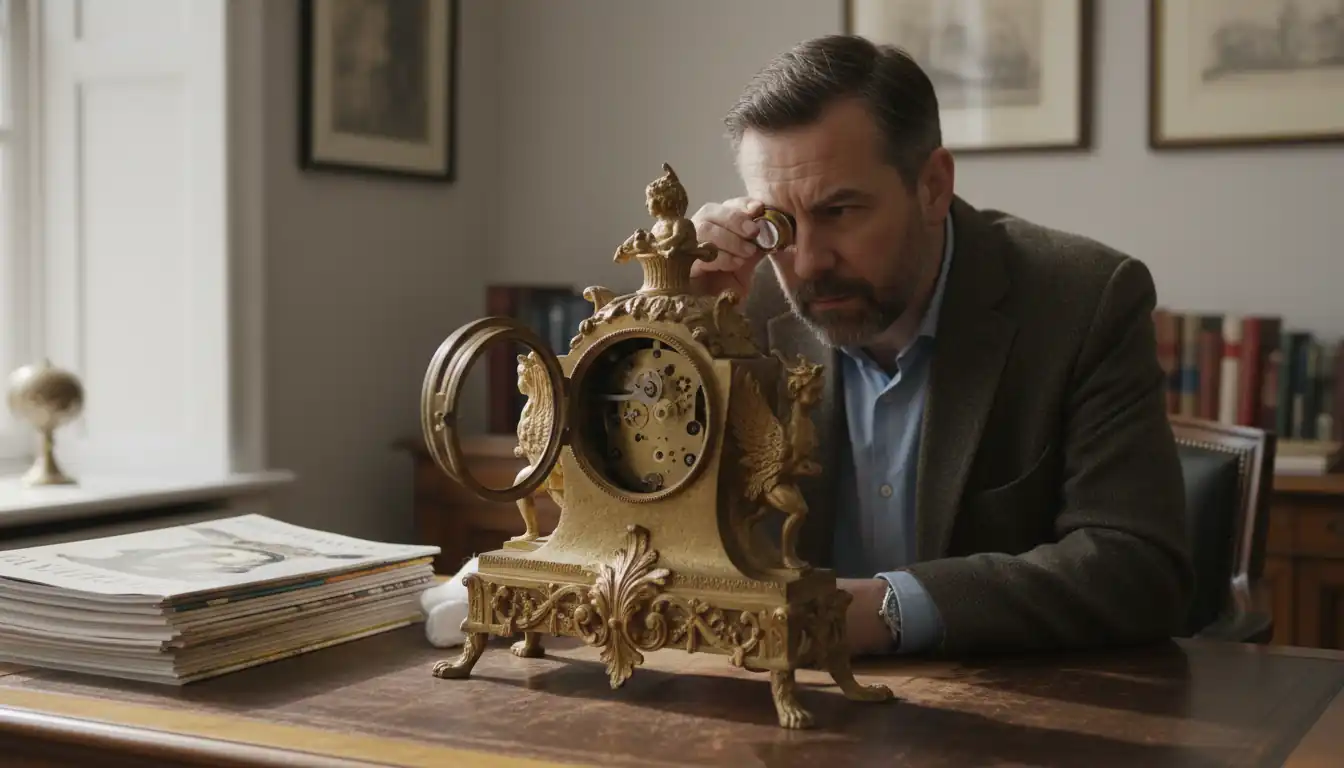
Once you have identified the clock and assessed its condition, you need to understand where it fits in the global market. A clock's value isn't a fixed number; it's a reflection of what someone is willing to pay in a specific place at a specific time.
Identifying Local versus Global Market Demand
Geography plays a massive role in valuation. For example, American "Banjo" clocks (a specific shape invented by Simon Willard) are highly prized in the United States, particularly in New England. However, they may not fetch the same prices at an auction in Paris or London. Conversely, French "Ormolu" (gilded bronze) clocks are a global currency; their opulence and high-quality gold plating make them desirable in every market from New York to Tokyo.
Understanding "Supply and Demand" means recognizing that rarity doesn't always equal value. A clock might be the only one of its kind, but if no one is collecting that specific style, the price will stay low. Currently, the market is moving away from "brown furniture" (large, dark wooden clocks) and toward "statement pieces" that fit into modern, minimalist homes.
Preparing Your Clock for Professional Valuation
If you believe you have found a clock worth a fortune, your next step is a professional appraisal. To get an accurate number, you need to provide the appraiser with the right information. Don't just send one blurry photo of the front.
The Professional Photography Checklist:
- The Dial: A clear, straight-on shot of the face and hands.
- The Movement: A photo of the backplate, focusing on any stamps or engravings.
- The Escapement: A photo of the part where the "ticking" happens (the anchor and escape wheel).
- The Case Construction: Photos of the hinges, the back of the wood, and any joinery (dovetails).
- The Accessories: Photos of the pendulum, the weights, and the winding key.
By providing these details, you allow an expert to see the "DNA" of the clock. They can tell from the shape of a screw or the thickness of a wire whether the piece is a genuine antique or a clever 20th-century reproduction.
Conclusion
Finding a valuable antique clock is a journey of discovery that requires patience, a keen eye, and the right tools. You now know that the true value is rarely on the surface. It is hidden in the thickness of the brass plates, the irregularity of hand-cut dovetails, and the silent history of repair marks scratched into the metal.
Remember that age is only one factor; style, mechanical complexity, and provenance are the real drivers of the market. Whether you are hunting for Mid-Century Modern icons or 18th-century mechanical marvels, the clues are there if you know where to point your flashlight.
Your next step is to go out and put these skills to the test. Check your own attic, visit a local estate sale, or browse a nearby antique mall. If you find something that piques your interest but you aren't quite sure of its origin, use the Relic app to bridge the gap between curiosity and certainty. With a single photo, you can transform a "maybe" into a "masterpiece." The world of horology is full of hidden treasures—now you have the map to find them.
Identify antiques instantly
Point your camera at any antique, collectible, or vintage item. Get valuations, history, and market insights in seconds.
Download for iPhone