Stop Walking Past These 10 Valuable Kitchen Antiques at Thrift Stores

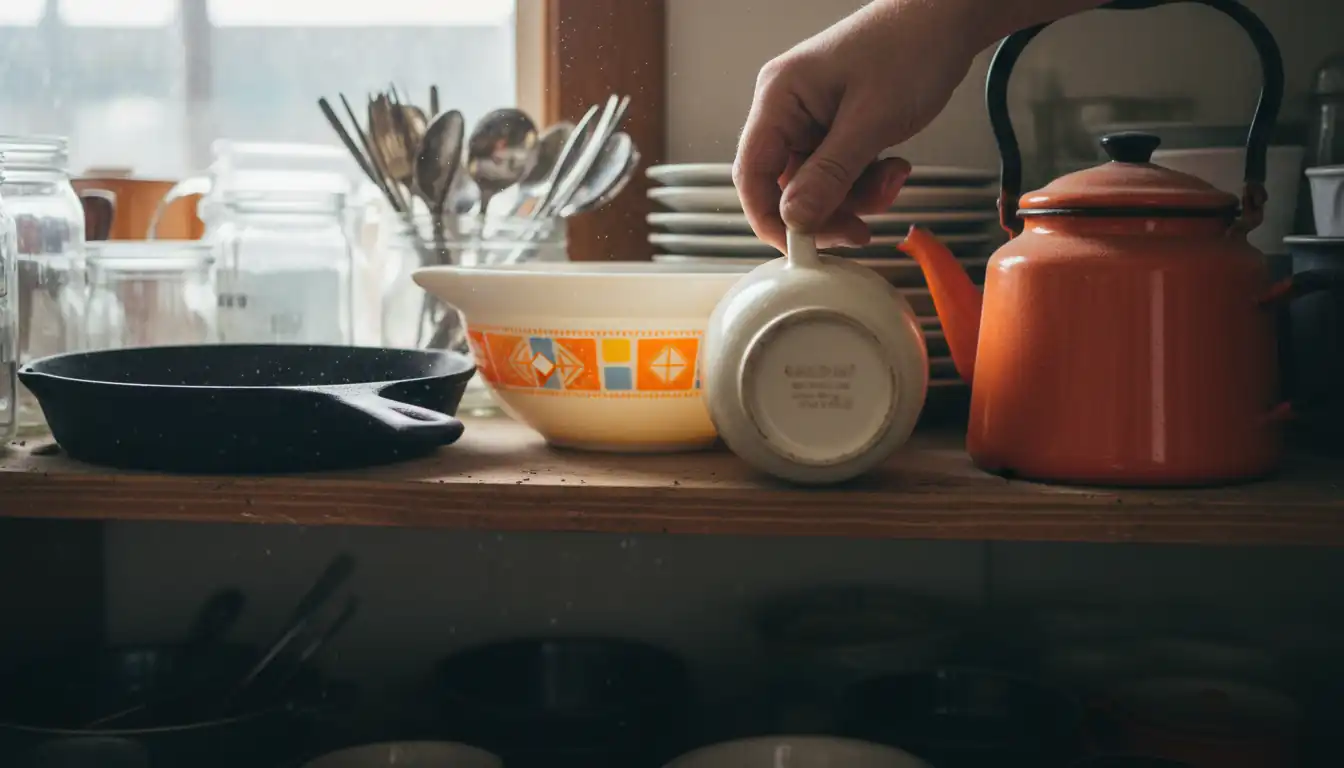
You are standing in the middle of a crowded thrift store. To your left, a mountain of discarded plastic containers. To your right, a shelf overflowing with chipped mugs and scratched non-stick pans. Most shoppers glance at this chaos and see nothing but clutter. They walk past the dull grey pans and the dusty glass bowls, heading straight for the furniture or the electronics.
They are making a mistake that costs them hundreds, sometimes thousands, of dollars in potential profit. The kitchen aisle is often the most undervalued section of any secondhand shop. While everyone else is fighting over mid-century modern chairs, the real treasures are hiding in plain sight among the ladles and the casserole dishes. These items aren't just old; they are examples of superior engineering and artistry that modern manufacturing rarely replicates.
By the time you finish reading this, you will have the "eyes" of a professional picker. You will know how to feel the difference between a cheap reproduction and a century-old masterpiece. You will understand the secret language of maker’s marks and the subtle glow of rare glass. Most importantly, you will stop walking past the wealth hidden in the kitchen aisle.
Heavy Metal Treasures in the Cookware Aisle
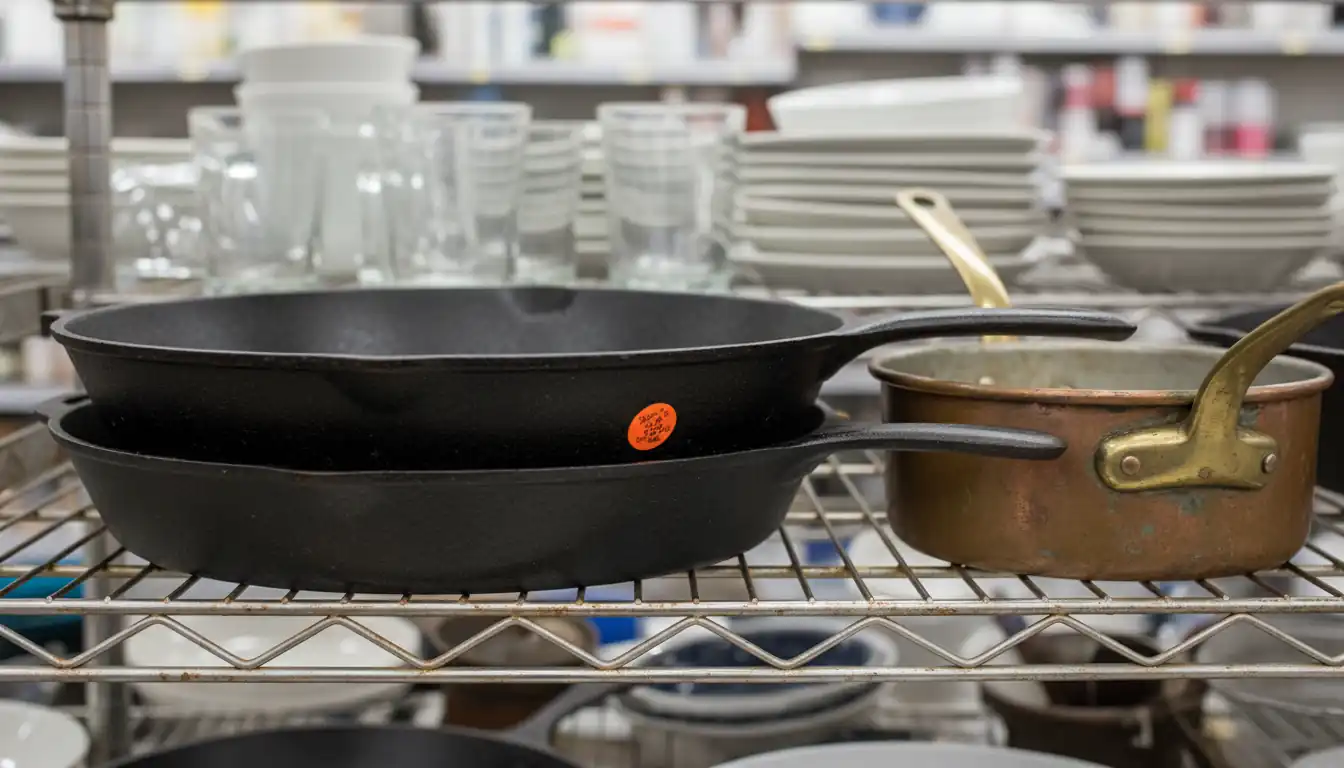
When you enter the cookware section, put your eyes away for a moment and use your hands. Quality in vintage cookware is almost always communicated through weight and texture. Modern pans are often thin, stamped out of sheets of aluminum or cheap steel. Antique cookware, however, was built to be an heirloom.
Cast Iron and Copper Essentials
The holy grail of the cast iron world is a name you’ve likely heard but perhaps never identified: Griswold. Founded in Erie, Pennsylvania, Griswold manufacturing produced what many consider the finest cast iron ever made. What makes a Griswold pan worth $200 while a modern pan is worth $20? It is the finish.
Modern cast iron has a pebbly, rough texture because it is sand-cast and left unpolished. A vintage Griswold or a high-quality Wagner pan (specifically those marked "Sidney, -O-") was machined down after casting. The interior surface is as smooth as a polished stone. When you run your hand across the inside of a vintage pan, it should feel silky, not grainy.
- The Logo Test: Look for the "Griswold" cross inside a circle. If the logo is large, it generally dates from 1920 to 1940 and carries a higher premium.
- Gate Marks: Flip the pan over. Do you see a raised, thin line running across the bottom? This is a gate mark. It indicates the piece was cast before 1890. While these pans are often "unmarked" (meaning they have no brand name), their age alone makes them highly collectible.
- Heat Rings: Many old pans have a raised rim around the outer edge of the bottom. This "heat ring" was designed to help the pan sit securely on the holes of a wood-burning stove.
Copper is the other heavy hitter. However, thrift stores are full of "copper-colored" tin pans that are worthless. To find the real treasure, look for heavy-gauge French copper. A real French copper pot will be incredibly heavy—often surprisingly so for its size. Look for stamps like "Made in France," "E. Dehillerin," or "Villedieu."
If the handle is attached with three large, chunky copper rivets and the interior is lined with a silvery metal (tin or stainless steel), you are likely holding a professional-grade tool. These pieces can retail for $300 to $600 even in used condition. Collectors covet the "hammered" finish, where you can see the individual marks of the craftsman’s mallet on the exterior.
Sought After Mid-Century Utensils
Don't ignore the bin of loose spoons and spatulas. While most of it is junk, specific brands from the mid-20th century have a cult following. Collectors are currently hunting for Flint Arrowhead and Ekco Forge utensils.
Why these brands? It comes down to the handles. During the 1950s and 60s, these companies used a material called Pakkawood. This is a pressure-treated wood laminate that is virtually indestructible and has a distinct, dark, multi-toned grain.
- Flint Arrowhead: Look for the small arrowhead logo stamped into the stainless steel. These tools feel balanced and "stiff" in the hand, unlike the flimsy plastic versions sold today.
- Ekco Forge: These often feature thick, ergonomic handles and high-quality rivets. A single "vanadium" steel spatula from this era can sell for $30 to $50 to a buyer looking to complete a vintage set.
| Item Type | Brand to Watch | Key Feature |
|---|---|---|
| Cast Iron | Griswold | Smooth, machined interior |
| Cast Iron | Wagner | "Sidney -O-" mark |
| Copper | E. Dehillerin | Heavy gauge, iron handles |
| Utensils | Flint Arrowhead | Pakkawood handles, arrowhead logo |
Visual Literacy for Glass and Pottery Patterns
Moving from the heavy metals to the shelving units requires a shift in your visual focus. Here, value isn't found in weight, but in pattern recognition. You are looking for specific "visual signatures" that stand out from the sea of generic white plates and clear glass bowls.
Anchor Hocking and Depression Glass
One of the most common high-value finds in thrift stores is "Moonstone" glass by Anchor Hocking. Produced in the 1940s, this pattern is easy to spot once you know what to look for. It features a "hobnail" design—raised bumps on the surface—but the tips of the bumps and the edges of the glass have an opalescent, milky white glow. It looks as if a cloud is trapped inside the glass.
Then there is the broader category of Depression glass. This was mass-produced glassware given away in cereal boxes or at movie theaters during the 1930s. Today, specific colors are worth a fortune.
- Uranium Green: This glass has a distinct, pale yellow-green tint. Its secret? It contains a small amount of uranium dioxide. If you carry a small UV flashlight, this glass will glow neon green under the light.
- Cobalt Blue: A deep, rich "Royal Blue." Brands like Hazel-Atlas produced beautiful patterns in this color that remain highly sought after.
- Pink and Amber: While common, look for complex patterns like "Mayfair" or "American Sweetheart." These are more valuable than plain, smooth pieces.
Pro Tip: When checking glass, always look for "straw marks." These are tiny, faint lines that look like cracks but are actually ripples from the cooling process in the 1930s. They prove the piece is an original, not a modern reproduction.
Blue Ridge and Hand-Painted Pottery
Pottery is often harder to identify because the marks on the bottom can be faded or non-existent. However, Blue Ridge pottery has a look that is unmistakable. Produced by Southern Potteries in Tennessee, every piece was hand-painted by local artists.
Look for bright, somewhat "naive" floral motifs. The brushstrokes are visible, and because they were hand-painted, no two pieces are exactly alike. The colors are typically vibrant—reds, yellows, and greens on a creamy white background. Collectors love these because they represent a specific era of American folk-industrial art.
How do you tell high-quality pottery from a cheap ceramic knock-off? Use the "translucency test." Hold a plate or cup up to a bright light and place your hand behind it. If it is true bone china, you will be able to see the shadow of your fingers through the material. Standard ceramic or stoneware is opaque and will block the light entirely. Bone china is significantly more valuable and indicates a higher level of craftsmanship.
The Science of Authentication and Condition Grading
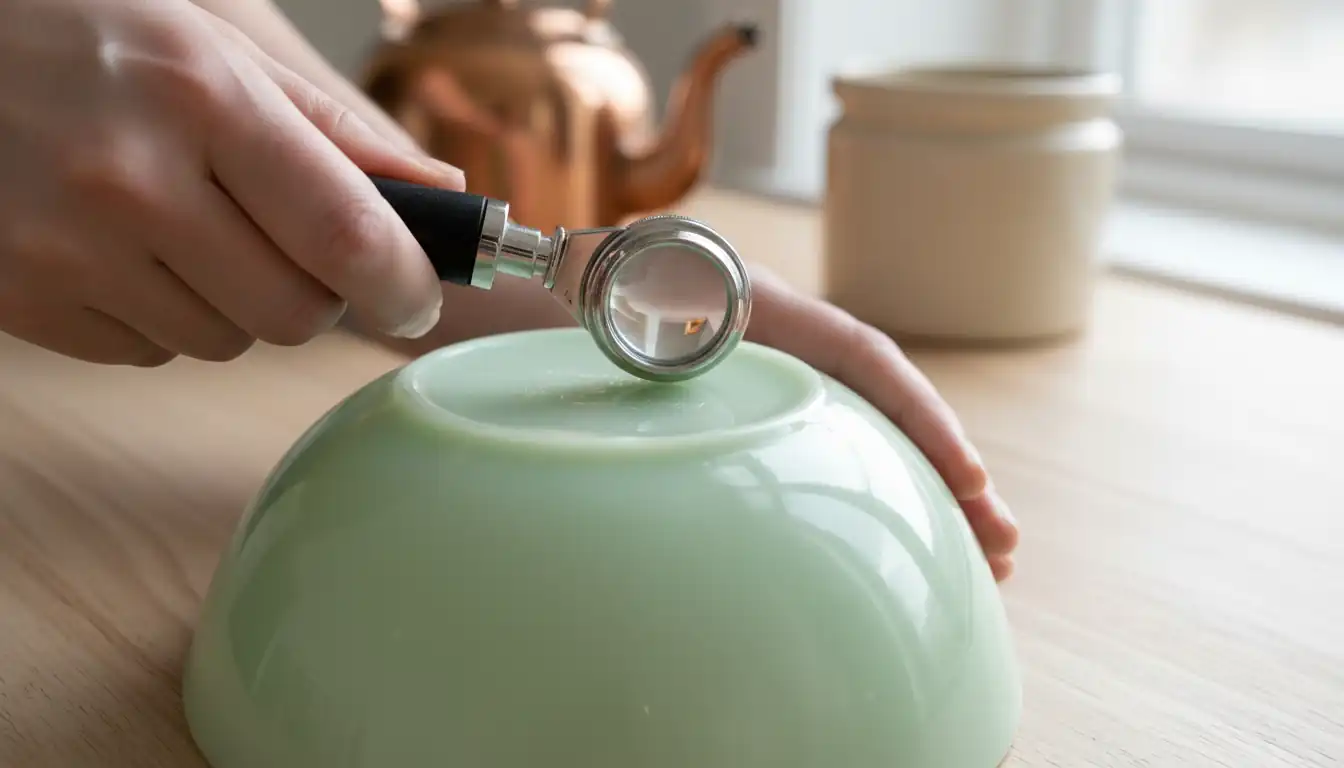
Finding a beautiful item is only half the battle. To be a successful picker, you must become a forensic investigator. You need to prove that the item is what you think it is and, more importantly, verify that it hasn't been secretly repaired.
Decoding Maker Marks and Stamps
The "backstamp" is the DNA of a kitchen antique. It tells you who made it, where it was made, and often, exactly when it was made.
- Occupied Japan: Items marked "Made in Occupied Japan" were produced between 1945 and 1952. These are highly collectible because they represent a very specific, seven-year window in history. You’ll find this mark on everything from salt shakers to fine china.
- English Registry Marks: If you find a piece of English pottery, look for a diamond-shaped mark. This is a Victorian registry mark. The letters and numbers in the corners of the diamond are a code that tells you the exact day, month, and year the design was registered.
- The "N" with a Crown: This is the mark of Capodimonte, but be careful. It is one of the most faked marks in the world. Real Capodimonte has a level of detail in the porcelain—tiny, delicate flower petals and realistic skin tones—that fakes cannot match.
Spotting Damage That Kills Value
In the world of antiques, condition is everything. A "mint" condition Griswold pan might sell for $200, while the same pan with a tiny hairline crack is worth $20.
- The Ping Test: This is essential for crystal and fine china. Hold the item loosely by the base and gently tap the rim with your fingernail or a wedding ring. High-quality lead crystal will produce a clear, long-lasting "ring" like a bell. Cheap glass will produce a dull "thud." If a piece of china has a hidden crack, it will also thud, even if the crack isn't visible to the eye.
- The "Feel" for Repairs: Run your fingernail along the edges of plates and the handles of cups. Professional restorers can use epoxy to fix chips and then paint over them. Your eyes might miss it, but your fingernail will feel the change in texture from the smooth glaze to the slightly softer epoxy.
- Grinding Marks: On glass, look at the base. If you see a dull, frosted area that looks out of place, someone may have ground down a "flea bite" (a tiny chip) to hide it. This significantly reduces the value to a serious collector.
Instant Appraisal Technology for the Modern Picker
Even the most experienced experts run into items that stump them. You might find a piece of pottery with a mark that looks like a series of squiggles, or a strange metal tool that looks like it belongs in a medieval torture chamber. In the past, you would have to buy the item, take it home, and spend hours scrolling through eBay or flipping through massive price guides.
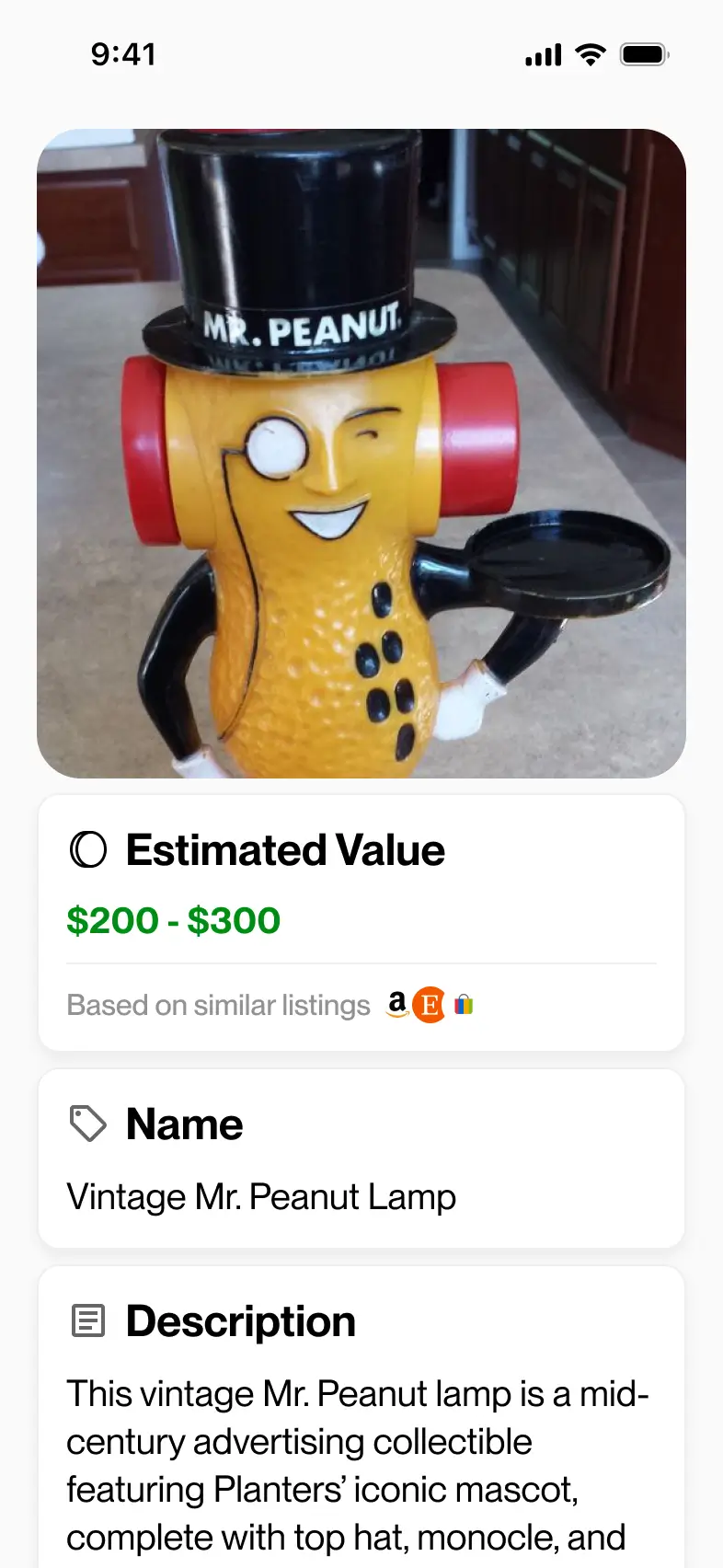
This is where technology has changed the game for the modern picker. Instead of guessing, you can now use the Relic app to get an answer in seconds. Relic is an iOS app designed specifically for this moment of uncertainty in the thrift store aisle.
When you find an item you don't recognize, you simply take a photo or upload one to the app. Relic uses advanced AI to analyze the shape, color, and maker's marks. It doesn't just give you a generic name; it provides a real appraisal, the history of the piece, and its origin. This is a professional-grade tool that essentially puts an antique appraiser in your pocket.
For example, if you find a piece of "Occupied Japan" pottery but aren't sure if the specific pattern is rare, Relic can provide the market insights you need to decide if it's worth the $10 price tag. With a 4.9-star rating from over 20,000 reviews, it has become a staple for dealers and online sellers who need to make quick, informed decisions. Using an app like Relic allows you to move from "I think this is valuable" to "I know this is valuable," which is the key to scaling a resale business or building a high-value collection.
Niche Collectibles and Resale Strategy
Once you’ve mastered the obvious categories like cast iron and glassware, it’s time to look at the "hidden" niches. These are the items that even seasoned pickers often overlook, leaving more profit for you.
Rare Cookbooks and Ephemera
Most people walk past the book section, but vintage cookbooks are a booming market. You aren't looking for the latest celebrity chef book. You are looking for two specific things:
- Community Cookbooks: These are usually spiral-bound books put together by local churches, Junior Leagues, or civic groups. Collectors look for these because they contain "lost" regional recipes. A 1950s community cookbook from a small town in Louisiana or a coastal village in Maine can sell for $50 to $100.
- First Editions of Classics: A first-edition "Joy of Cooking" (1931) or "Mastering the Art of French Cooking" by Julia Child can be worth thousands. Look for the date on the title page and check if it matches the copyright date.
Professional Barware and Mixology Tools
Mid-century modern (MCM) barware is currently one of the hottest categories in kitchen antiques. Look for names like Dorothy Thorpe and Napier.
- Dorothy Thorpe: She is famous for the "Allegro" design—glassware with a wide, 1-inch silver band around the rim. You might recognize these from the show Mad Men.
- Napier: This company made whimsical, high-quality silver-plated bar tools. Look for jiggers shaped like thimbles (marked "Only a Thimbleful") or cocktail shakers with unique mechanical features.
The Power of Bundling
A single vintage teacup might sit on your shelf for months. However, if you find a matching creamer and sugar bowl, you have a "set." Bundling is a powerful strategy for increasing your margins.
- The "Starter Kit" Bundle: If you find a great Griswold pan, look for a vintage Ekco spatula to pair with it. Selling them together as a "Vintage Chef’s Kit" often commands a higher price than selling them separately.
- Pattern Matching: If you find a Blue Ridge plate, keep a list of that pattern on your phone. When you find the matching bowl at another store three weeks later, you’ve just doubled the value of both pieces by making them part of a set.
| Niche Category | What to Look For | Why it's Valuable |
|---|---|---|
| Community Cookbooks | Spiral-bound, local groups | Rare regional recipes |
| Barware | Dorothy Thorpe | Iconic MCM aesthetic |
| Ephemera | Vintage advertising tins | Cross-collectible appeal |
| Bundles | Matching Creamer/Sugar | Higher perceived value |
Conclusion
The kitchen aisle of a thrift store is a landscape of hidden history and untapped value. From the "heft" of a French copper pot to the neon glow of Uranium glass, the clues to a valuable find are always there if you know how to read them. You now have the knowledge to identify the smooth finish of a Griswold pan, the hand-painted charm of Blue Ridge pottery, and the forensic marks of an authentic antique.
Remember that picking is a skill that rewards both the hands and the mind. Use your sense of touch to find quality metals, your eyes to spot rare patterns, and your phone to verify the history and value of your finds. Tools like the Relic app can bridge the gap between curiosity and expertise, ensuring you never leave a high-value item behind.
The next time you walk into a thrift store, don't just glance at the kitchen section. Step inside, start feeling the weight of the pans, and look closely at the marks on the bottom of the plates. Your next big find is likely sitting right there, waiting for someone with the right eyes to pick it up. Happy hunting.
Identify antiques instantly
Point your camera at any antique, collectible, or vintage item. Get valuations, history, and market insights in seconds.
Download for iPhone