That Colorful Vase Could Be Worth Thousands—Here’s How to Decode Murano Glass Markings

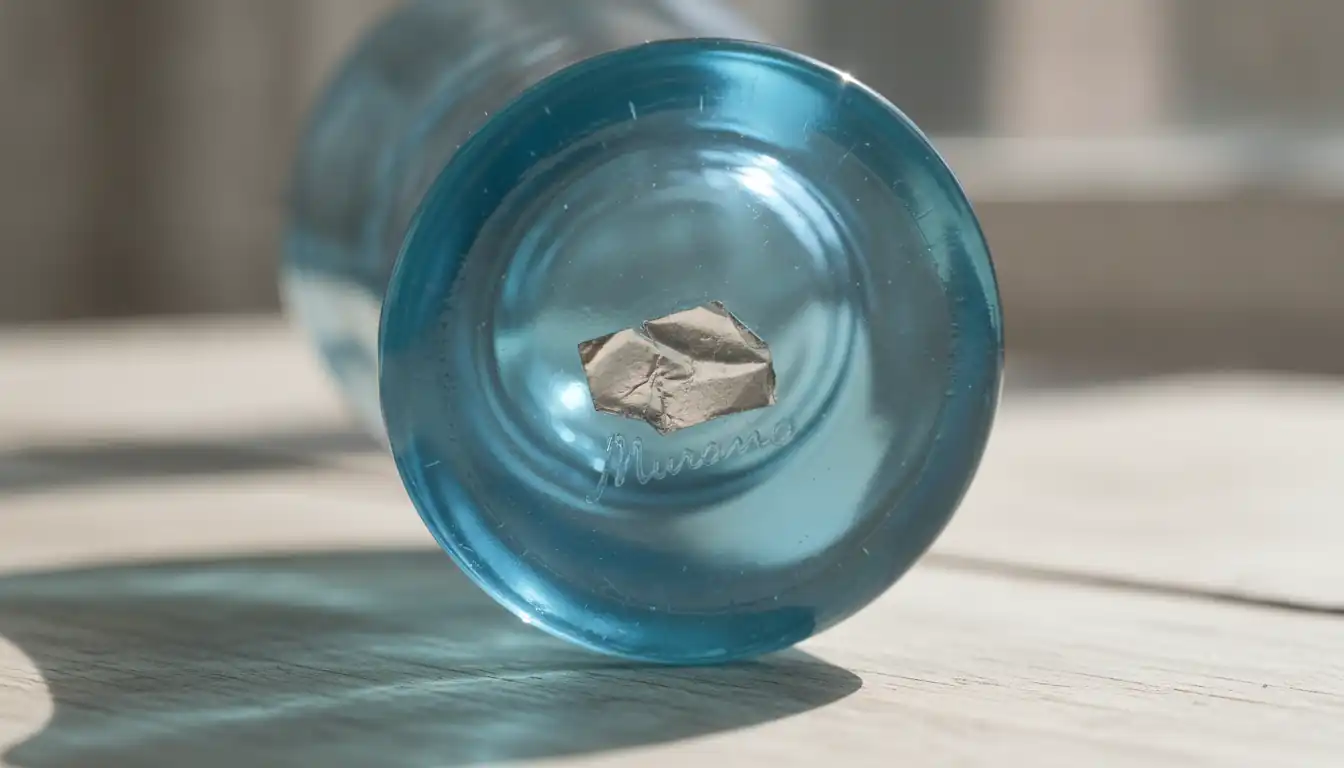
You are standing in a dusty corner of a local estate sale when a splash of vibrant, cobalt blue catches your eye. It is a heavy glass vase, swirling with flecks of real gold and shaped with a fluid grace that seems to defy the laws of physics. You pick it up, feeling the surprising weight of the piece, and flip it over to find a tiny, weathered gold sticker. Is this a masterpiece worth five figures, or a mass-produced souvenir from a mainland factory?
The difference between a "find of a lifetime" and a "pretty paperweight" often comes down to a few millimeters of ink or a faint scratch on the base. Murano glass has been the gold standard of luxury craftsmanship for over seven centuries, but its popularity has invited a flood of convincing imitations. Learning to decode the markings on these pieces is like learning a secret language spoken only by the masters of the Venetian lagoon.
This guide will walk you through the intricate world of Murano identification, from the evolution of 20th-century labels to the specific signatures of legendary artists. By the time you finish reading, you will have the tools to look past the surface beauty and see the true pedigree of the glass in your hands.
The Anatomy of Authentic Murano Markings
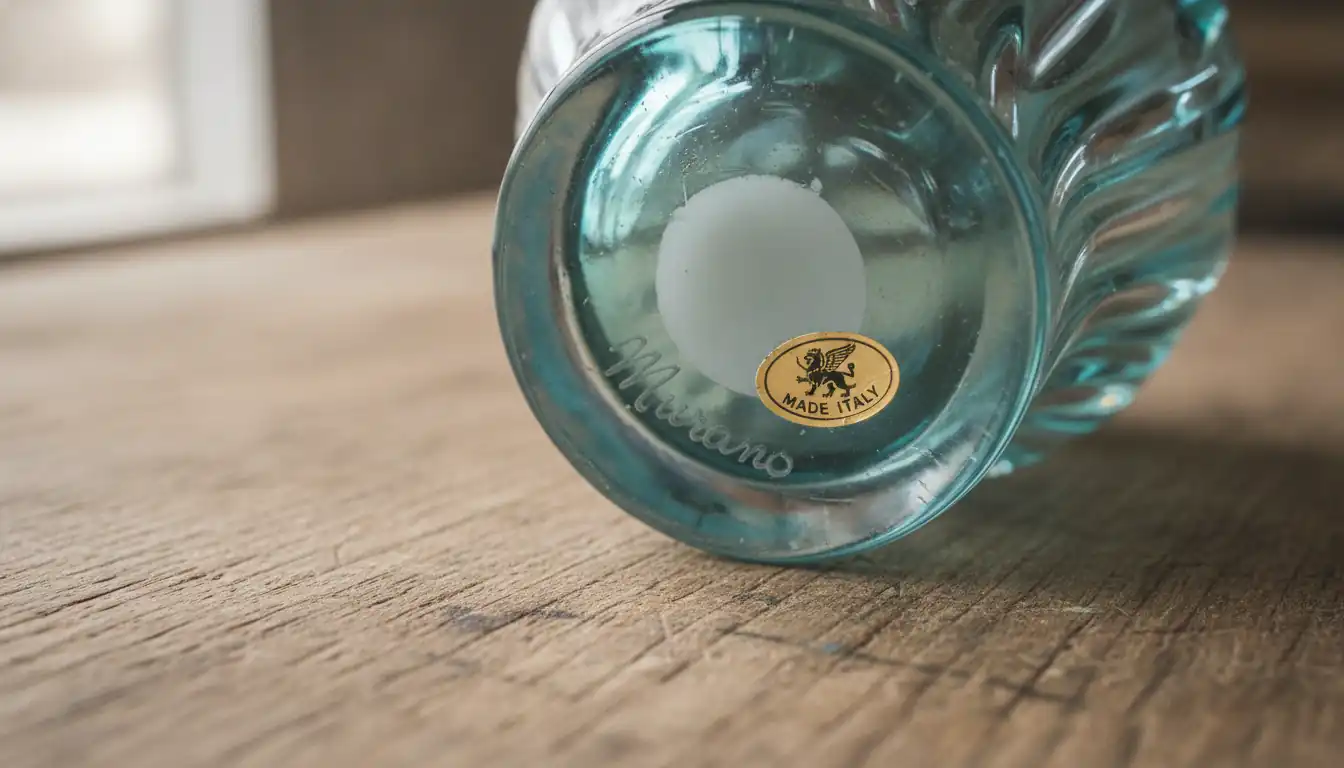
Identifying a piece of Murano glass often starts with a search for a physical mark, but the absence of one is not a dealbreaker. Many collectors are surprised to learn that for centuries, Murano glass was rarely signed or labeled at all. The concept of "branding" is a relatively modern development in the history of the island’s furnaces.
Evolution of Paper and Foil Labels
The most common way to identify a piece from the mid-20th century is through its paper or foil label. These labels were applied at the furnace before the piece was shipped to a showroom or exported. In the 1950s and 60s, labels were often made of thin metallic foil, usually in silver or gold tones, featuring the name of the furnace or the specific artist.
| Era | Label Characteristics | Common Text |
|---|---|---|
| 1950s - 1960s | Scalloped edges, metallic foil, often very small. | "Murano Glass," "Made in Italy," or furnace names like "Cenedese." |
| 1970s - 1980s | Clear plastic or paper stickers with bolder, modern fonts. | "Vetro Artistico Murano" begins to appear more frequently. |
| 1994 - Present | Official "Vetro Artistico® Murano" trademark with a security code. | Includes a specific furnace ID number and a hologram. |
The "Vetro Artistico Murano" trademark is a critical piece of history. Established by the Promovetro Consortium and protected by Italian law, this label was created to combat the rise of cheap imports. If you see a label with a "V" and a small glass-blowing tool (a borsella), you are looking at a piece that has been officially certified as authentic. However, remember that this specific trademark only exists on pieces made after 1994.
Deciphering Hand Engraved Signatures
Does all Murano glass have a stamp? The short answer is no. In fact, many of the most valuable pieces never had a permanent mark. Instead, they relied on paper labels that were often washed off by owners or lost over decades of use. This is why a lack of a signature doesn't automatically mean a piece is fake.
When a signature does exist, it is rarely a "stamp" in the way we think of a rubber stamp on paper. Instead, it is usually a hand-engraved mark. These are often found on the base of the piece, near the outer edge or around the pontil mark. These signatures were typically applied using a diamond-point tool or a vibrating engraver. Because they were done by hand, they are often faint, shaky, or difficult to read. You might need to hold the piece at a specific angle under a bright light just to see the ghostly outline of a name.
A signature is a promise of quality, but a missing signature is simply an invitation to look closer at the craftsmanship itself.
Recognizing the Marks of the Masters
When you move from general production pieces to the work of the "Maestros," the markings become more specific and significantly more valuable. These artists were the celebrities of the glass world, and their signatures act as a pedigree that can skyrocket a piece's value from hundreds to thousands of dollars.
Famous Signatures from Venini to Seguso
The names you want to look for are the titans of the 20th century. Archimede Seguso, for example, often signed his work with a very delicate, cursive "Archimede Seguso Murano." His signature is notoriously difficult to find because he placed it so subtly. If the signature looks like it was etched with a heavy hand or a thick machine, it is likely a later reproduction or a fake.
Venini is another name that commands top dollar. Their marking system changed frequently, which actually helps collectors date the pieces.
- Circular Acid Stamps: Used in the 1930s and 40s, these look like a faint, frosted circle with "Venini Murano Italia" inside.
- Linear Engravings: Later pieces often feature "venini" in all lowercase letters, followed by the year of production.
- Three-Line Marks: Some mid-century pieces feature "Venini / Murano / Italia" stacked in three distinct lines.
Identifying Furnace Specific Branding
Beyond individual artists, the "fornaci" (furnaces) themselves often had distinct branding. Barovier & Toso, one of the oldest glass-making families in the world, often used a signature that combined the family name with "Murano." Their signatures are typically found on the very bottom of the base, often tucked away near the edge.
Understanding the difference between a "Maestro" signature and a factory brand mark is essential. A Maestro signature, like "Loredano Rosin," indicates that the master himself worked on the piece. A factory mark, like "V. Nason & C.," indicates the piece was produced by a specific company, likely by a team of skilled artisans rather than a single celebrated master. Both have value, but the individual Maestro's hand is what collectors covet most.
Red Flags and the Murano Style Trap
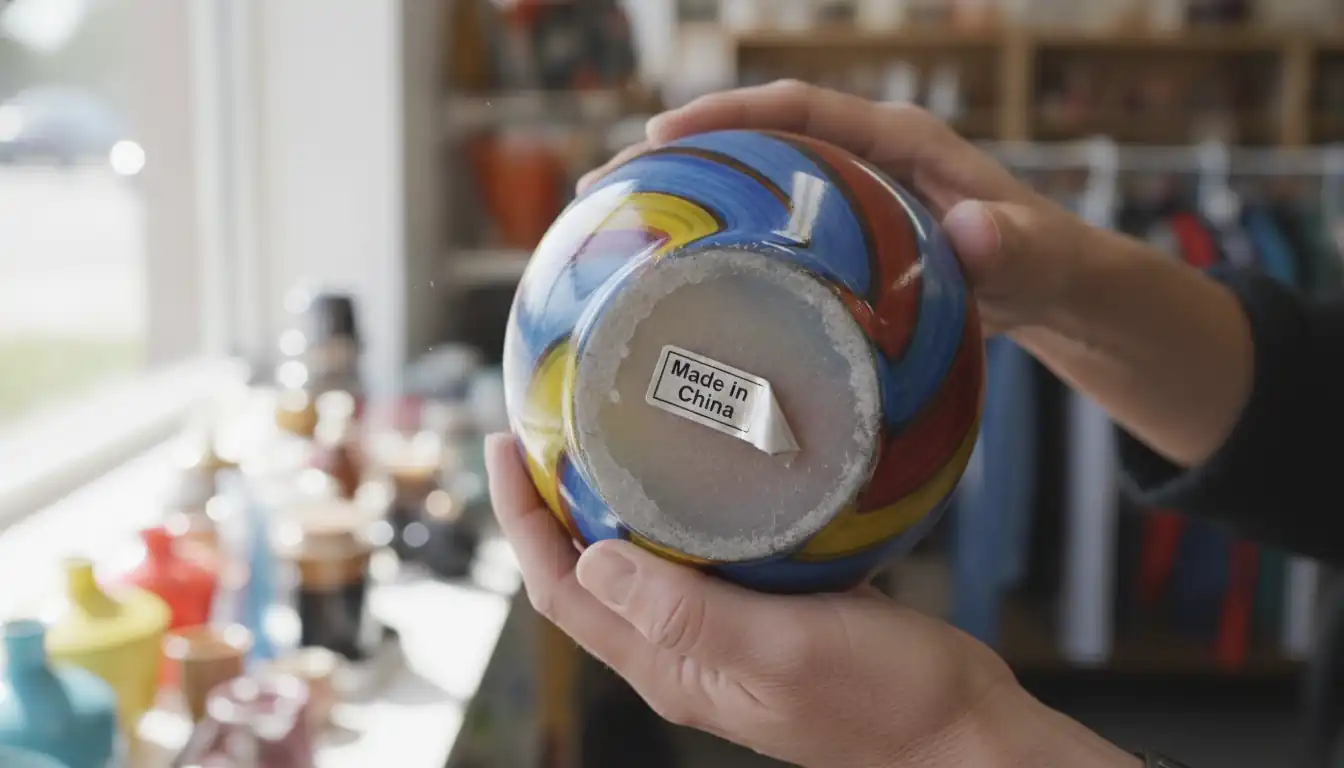
As you become more comfortable with authentic marks, you must also develop a healthy skepticism. The market is saturated with "Murano-style" glass. These pieces are often beautiful, but they lack the history, chemical composition, and investment value of true Venetian glass.
Warning Signs of Acid Etched Fakes
One of the most common ways counterfeiters trick buyers is through acid etching. While some authentic vintage pieces (like early Venini) used acid stamps, modern fakes use this technique to mimic hand-engravings. An authentic hand-engraved signature will have slight variations in depth and width, much like human handwriting. It will look "scratched" into the glass.
In contrast, a counterfeit acid-etched signature often looks too perfect. The lines will be uniform in thickness and have a slightly frosted, white appearance that looks "printed" rather than carved. If a signature looks like it was applied with a stencil, your alarm bells should be ringing.
The Meaning Behind Made in Italy Labels
The wording on a label is a massive tell. Authentic Murano glass will almost always specify "Murano." If you see a label that says "Made in Italy" or "Produced in Italy," you are likely looking at glass made on the Italian mainland. While still Italian, this glass is often mass-produced in factories near Florence or Naples and does not follow the traditional, multi-generational techniques of the Murano islanders.
- "Murano Style": This is a legal way of saying "this is a fake." It means the piece was made to look like Murano glass but was produced elsewhere, often in China or Eastern Europe.
- "Vetro Eseguito Secondo La Tecnica Dei Maestri Di Murano": This translates to "glass made according to the technique of the Murano masters." This is a common phrase on high-quality imports that are still not authentic Murano glass.
- "Cristalleria d'Arte": This often appears on labels for glass that is lead-based or machine-made, which is the opposite of the soda-lime, hand-blown tradition of Murano.
Modern Tools for Instant Glass Verification
In the past, identifying a mystery vase required lugging around heavy reference books or spending hours in library archives. If you were at a flea market and saw a piece you liked, you had to take a gamble. By the time you got home and researched it, the piece was usually gone.
Using AI to Identify Murano Patterns
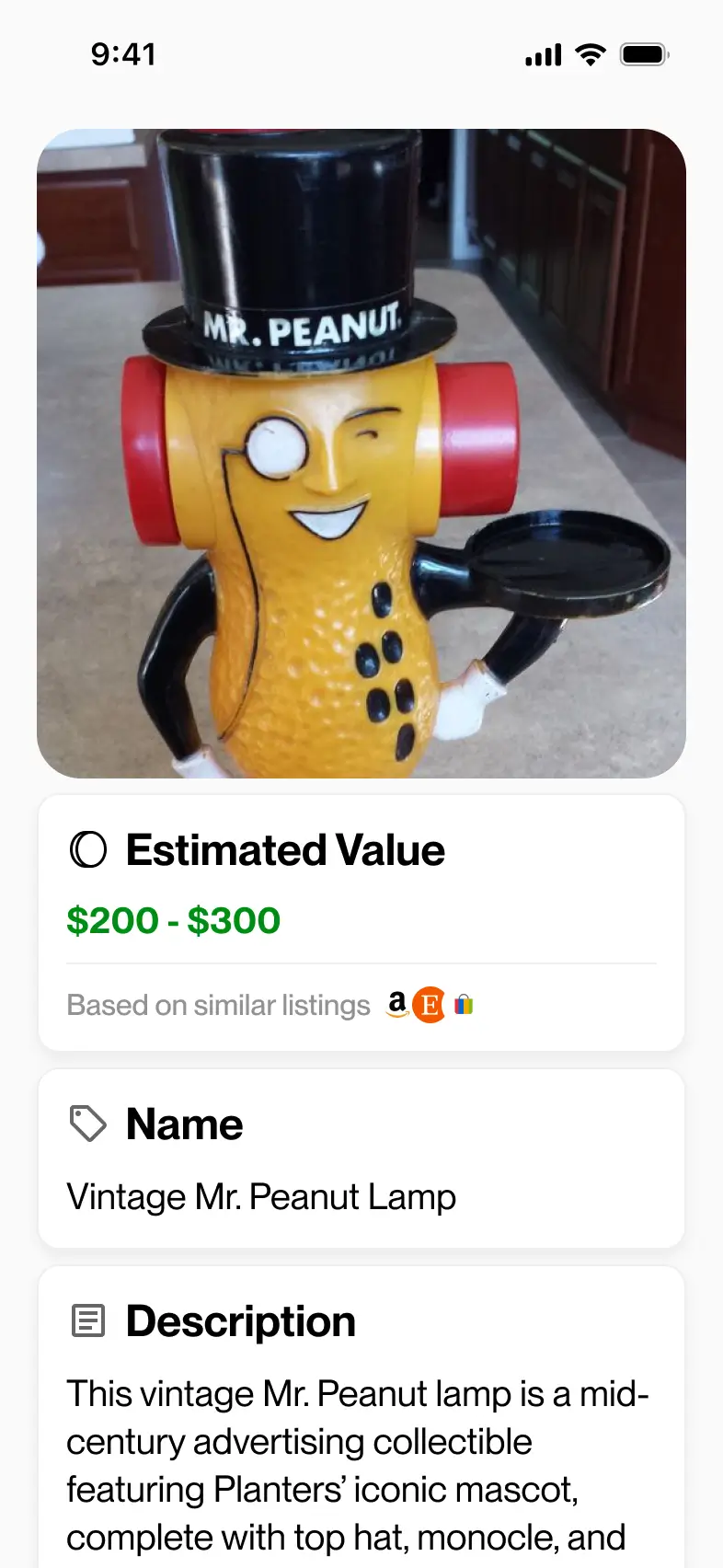
Technology has changed the game for modern collectors. You no longer have to rely solely on your memory of what a Seguso signature looks like. The Relic app has become a vital resource for anyone navigating estate sales or thrift stores. By simply taking a photo of the piece or its signature, Relic uses advanced AI to analyze the patterns, colors, and markings against a massive database of known authentic items.
The app can distinguish between the subtle "bullicante" (controlled bubble) patterns of a master and the haphazard bubbles of a cheap imitation. It can even read those faint, diamond-point signatures that are nearly invisible to the naked eye. This gives you an "expert in your pocket" who can provide history and origin details in seconds.
Leveraging Relic for Real Time Appraisals
One of the biggest challenges for a collector is knowing what to pay. Is that "Sommerso" vase worth the $200 asking price? Relic doesn't just identify the item; it provides a real appraisal value based on current market trends and historical auction data. With over 20,000 reviews and a 4.9-star rating, it has become a trusted tool for professional dealers and casual pickers alike. Having this data at your fingertips allows you to make confident decisions on the fly, ensuring you never overpay for a "Murano-style" fake or miss out on a genuine treasure.
Physical Evidence Beyond the Label
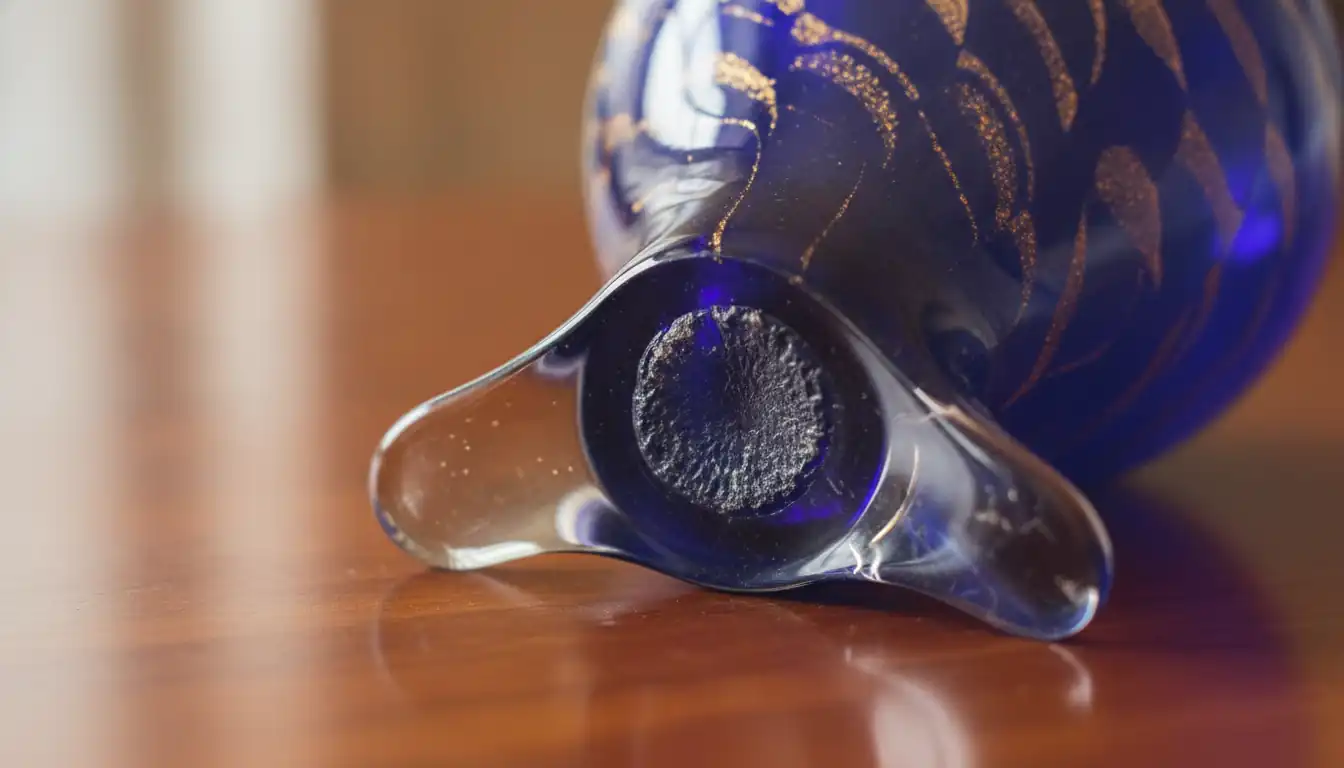
If a label is missing and there is no signature, you have to let the glass speak for itself. Authentic Murano glass has physical characteristics that are nearly impossible to replicate in a mass-production environment. These "tells" are the result of the specific minerals and techniques used on the island for centuries.
Pontil Marks and Hand Blown Imperfections
Every piece of hand-blown Murano glass begins its life attached to a metal rod called a pontil. When the piece is finished, the glassblower breaks it off the rod, leaving a scar on the bottom of the glass. This is the "pontil mark."
In authentic Murano glass, this mark is a sign of hand-craftsmanship. In many vintage pieces, the mark is left raw—a slightly rough, circular indentation. In higher-end or more modern pieces, the pontil mark is "ground" or "polished" flat, leaving a smooth, slightly concave circle that looks like a thumbprint in the glass.
If the bottom of your vase is perfectly flat, smooth, and looks like it was polished by a machine across the entire surface, it was likely mold-blown in a factory. Authentic Murano glass almost always shows some evidence of where it was joined to the rod.
Weight and Color Consistency in Authentic Glass
Murano glass is famous for its colors, which are achieved by adding minerals to the molten glass. Cobalt creates blue, gold leaf creates those famous shimmering flecks, and copper creates deep greens. Because these minerals are integrated into the glass itself, the color will never fade, peel, or scratch off.
- Weight: Murano glass is surprisingly heavy. Because it is made of soda-lime glass (which is denser than the lead crystal used in many other regions), even a small bowl should feel substantial in your hand.
- Clarity: While Murano glass can have intentional bubbles (bullicante), the glass itself should be clear and free of "cloudiness." Cheap imitations often have a grayish or yellowish tint to the clear sections of the glass.
- Gold and Silver Leaf: Murano masters often used 24k gold or 925 silver leaf. When you look closely, these should appear as tiny, irregular flakes suspended inside the glass, not as a uniform glitter or a painted-on surface.
The pontil mark is the belly button of the glass—a permanent reminder of its birth in the heat of the furnace.
Conclusion
Decoding Murano glass markings is a blend of art and science. It requires a sharp eye for detail, a bit of historical knowledge, and the right tools. Remember that a label is just one chapter of the story. You must look at the signature, the quality of the engraving, the wording of the "Made in Italy" stickers, and the physical evidence of the glass itself.
If you find a piece that checks all the boxes—a faint, hand-engraved signature, a polished pontil mark, and the weight of genuine soda-lime glass—you may be holding a piece of history worth thousands. The next time you see a colorful vase at a garage sale, don't just admire the color. Flip it over, look for the "thumbprint" of the master, and use tools like the Relic app to confirm your suspicions. Your next great find is waiting to be discovered; you just need to know how to read it.
Identify antiques instantly
Point your camera at any antique, collectible, or vintage item. Get valuations, history, and market insights in seconds.
Download for iPhone